Skip to content

Orange Fungus on Wood: Removal & Prevention Guide
Dealing with Orange Mold on Wood
Wondering how to remove orange fungus on wood? Start by removing the growth with a wood-safe cleaner, drying the material thoroughly, and eliminating the moisture that caused it in the first place.
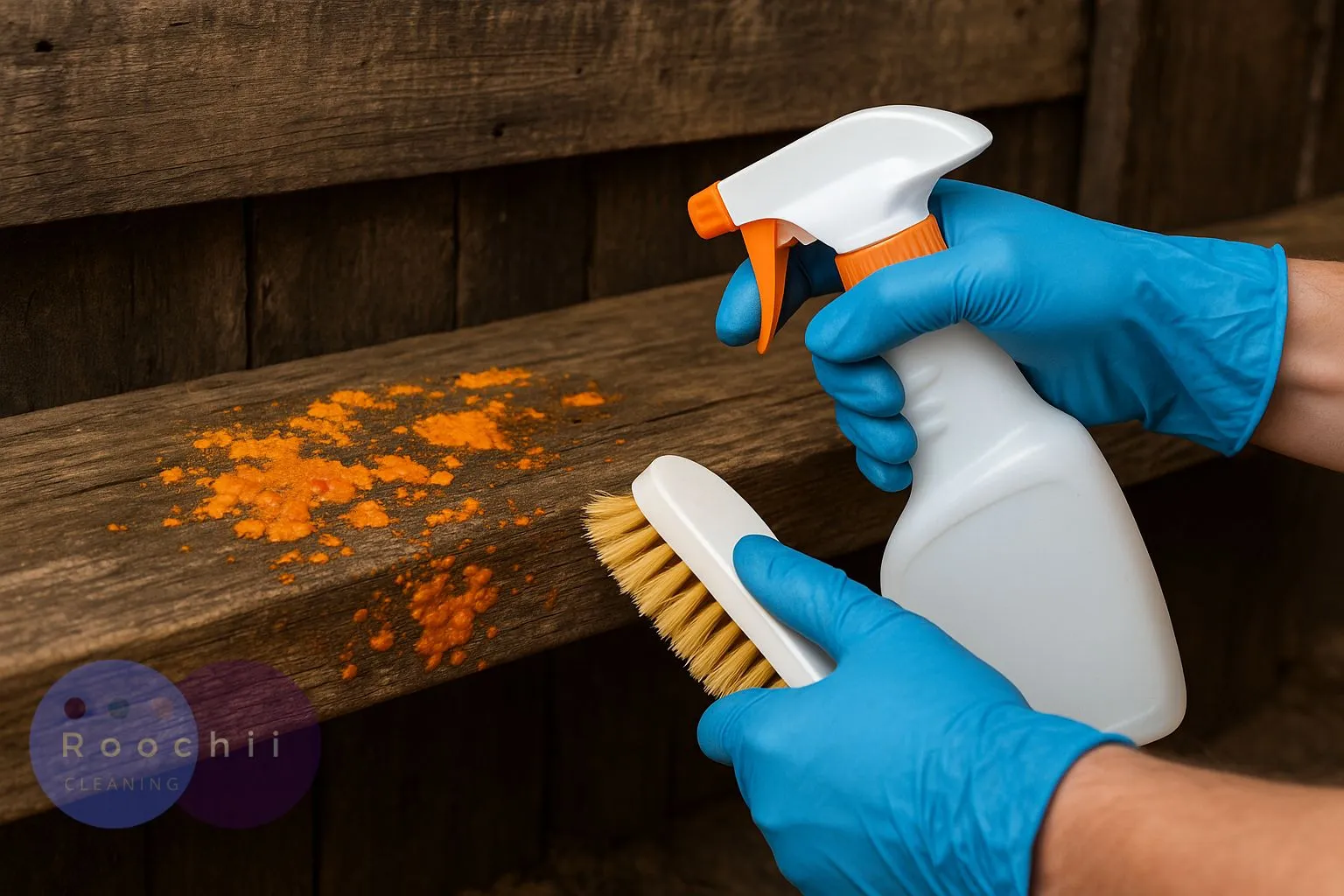
Orange fungus on wood can be slimy, powdery, or fuzzy, and it thrives anywhere wood stays damp. It usually shows up in shades of orange, rust, or peach. While it’s not as notorious as black mold, orange fungus can still stain wood, weaken it over time, and trigger mild allergy symptoms.
The good news? With the right method, you can clean it safely, stop it from returning, and protect your wood surfaces long-term.
In this article, we will discuss:
How to Get Rid of Orange Fungus: Step-by-Step Removal Guide
Removing orange fungus from wood isn’t a one-size-fits-all task. The best method depends on several factors, including:
- How deeply the mold has penetrated the wood fibers
- Whether the wood is sealed, painted, or raw and porous
- If the contamination is indoors or outdoors
- The overall severity and spread of the mold
Below is a detailed, easy-to-follow removal protocol that works for most situations, from light surface mold to deeper fungal stains.
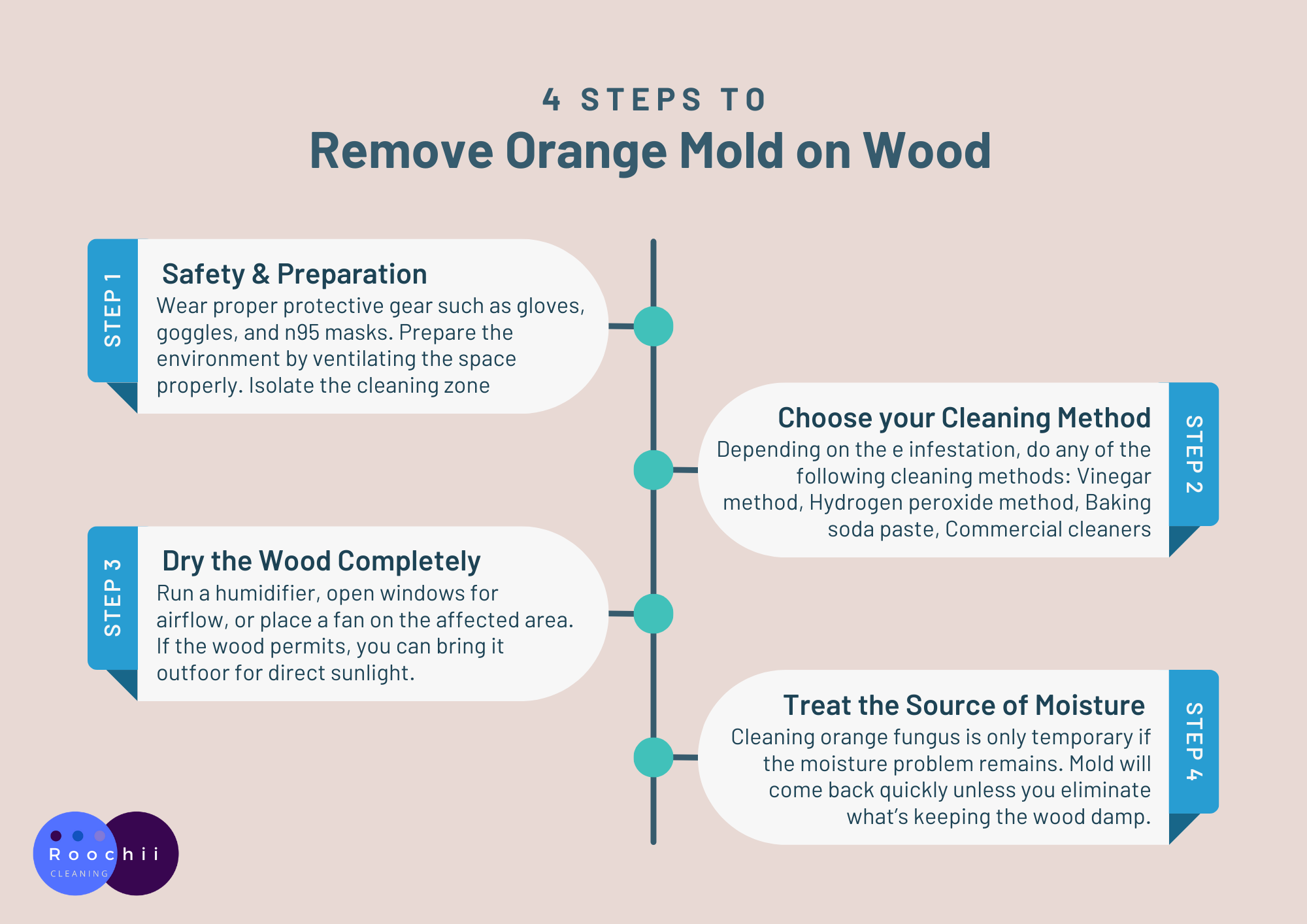
Step 1: Safety & Preparation
Before you start cleaning, prioritize your safety and prevent mold spores from spreading to other areas.
Wear proper protective gear:
- Gloves – to protect your skin from direct contact with mold spores, cleaning chemicals, and contaminated moisture.
- Goggles – to shield your eyes from airborne mold spores and from splashes of cleaning products while scrubbing.
- N95 or equivalent respirator – to filter out at least 95% of airborne particles, especially mold spores, which are easily inhaled during cleaning.
Prepare the environment:
- Ventilate the space by opening windows or running an exhaust fan
- Lay down towels, tarps, or plastic sheeting to catch drips and debris
- Remove absorbent items (cloth, cardboard, books, paper objects) from the area
If you’re working indoors, make sure to close doors or hang plastic sheeting to contain airborne spores. Mold spores spread easily; isolating the cleaning zone helps prevent later regrowth elsewhere.
Step 2: Choose the Correct Cleaning Method to Remove Mold from Wood
Different cleaning methods work better depending on whether your mold is shallow, stubborn, deep, or located on finished vs. unfinished wood.
Start with the gentlest option and work your way up if necessary.
Method A: Distilled White Vinegar (Best All-Purpose Option)
Vinegar is a highly effective natural cleaner. It penetrates porous wood better than bleach and kills many common mold species.
How to use distilled white vinegar for orange mold on wood:
- Pour undiluted vinegar into a spray bottle.
- Saturate the entire moldy area. Soak it thoroughly to reach mold inside the wood grain.
- Let it sit for 45–60 minutes.
- Scrub with a medium-bristle or soft-bristle brush.
- Wipe with a damp cloth.
- Dry the area completely.
Vinegar can leave a short-term odor, but this fades as the wood dries.
Method B: Hydrogen Peroxide (Best for Stubborn or Deeper Growth)
Hydrogen peroxide (3%) is antifungal, antibacterial, and great for mold embedded in raw or unfinished wood.
How to use:
- Apply 3% hydrogen peroxide generously to the wood.
- Allow it to sit and foam for 10–15 minutes as it breaks down organic matter.
- Scrub the area gently.
- Wipe clean and allow the wood to dry thoroughly.
Hydrogen peroxide is also useful for mold in structural areas like attic beams, crawl-space joists, and basement timbers.
Method C: Baking Soda Paste (Gentle for Finished or Painted Wood)
Baking soda is mildly abrasive, making it ideal for delicate surfaces or wood with varnish, stain, or paint.
How to use:
- Mix baking soda with a small amount of water to create a thick paste.
- Apply directly to the mold.
- Let sit for 5–10 minutes.
- Scrub gently using a soft brush.
- Rinse with a damp cloth.
- Dry thoroughly.
This method helps remove mold without damaging protective finishes.
Method D: Commercial Mold Cleaners
Use commercial products only when household solutions fail or the mold is severe.
Choose:
- Enzyme-based cleaners
- Wood-safe mold removers
- Professional-grade antifungal sprays
- Lysol’s Mold & Mildew Remover with Bleach
Avoid chlorine bleach. Bleach does not fully penetrate wood fibers. It can lighten the surface while allowing mold to regrow beneath, often causing worse discoloration over time.
Step 3: Dry the Wood Completely
Killing mold is only half the battle. Moisture control is what prevents it from coming back.
Effective drying methods include:
- Running a dehumidifier
- Placing a fan toward the affected area
- Opening windows for airflow
- Setting wood outdoors in direct sunlight (if removable and weather-safe)
For indoor wood, aim to reduce its moisture content to below 15%, which creates an environment where mold cannot thrive.
If you’re treating an attic, crawl space, or basement, sustained dehumidification may be necessary for long-term prevention.
Step 4: Treat the Source of Moisture
Cleaning orange fungus is only temporary if the moisture problem remains. Mold will come back quickly unless you eliminate what’s keeping the wood damp.
Look for common moisture sources such as hidden leaks behind walls or under sinks, dripping or sweating pipes, or insulation that has become damp. Moisture can also linger in materials like ceiling panels, fabric upholstery, or towels that don’t dry properly.
Indoors, watch for condensation on cold surfaces and areas with poor ventilation, especially bathrooms, kitchens, and laundry rooms.
Outdoors, check for roof leaks, clogged gutters, poor drainage, or wood that stays in contact with wet soil or pooled water.
Addressing these issues helps ensure the fungus doesn’t return after cleaning.
How to Prevent Orange Fungus From Coming Back
Once you’ve removed orange fungus, prevention becomes just as important as the cleanup itself.
Mold thrives in damp, stagnant environments, so long-term control focuses on reducing moisture, improving airflow, and protecting the wood. With consistent maintenance, you can greatly reduce the chances of mold returning.
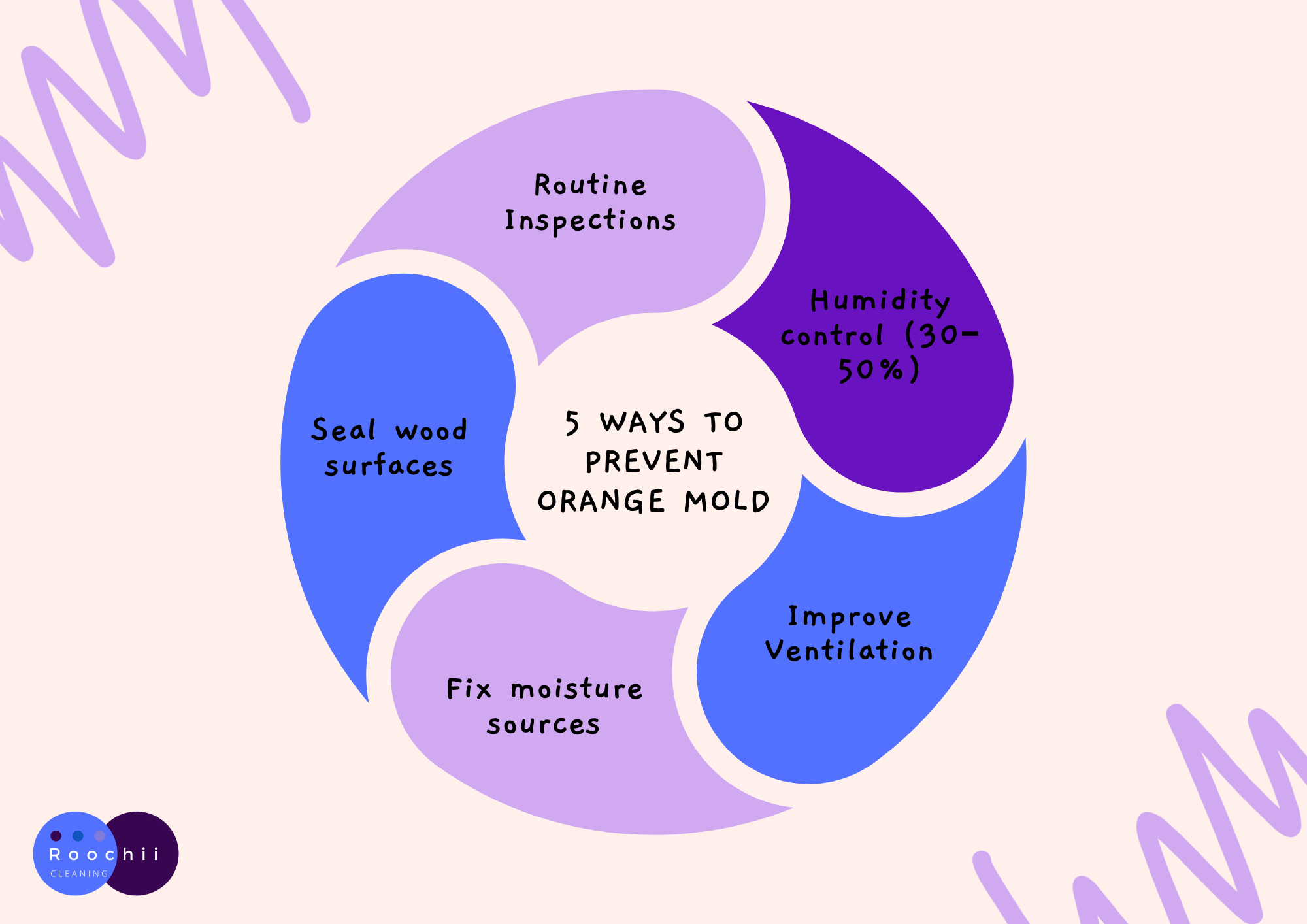
Control Indoor Humidity
Orange mold grows fastest when indoor humidity stays above 60%. The United States Environmental Protection Agency (EPA) recommends keeping humidity in the 30–50% range to create an environment where mold has trouble surviving.
Dehumidifiers are the easiest solution for basements, bathrooms, and laundry rooms, while air conditioners naturally reduce moisture during warm months. Ventilation fans and moisture-absorbing products can also help in smaller areas such as closets, cabinets, or under sinks where dampness tends to build.
Improve Overall Ventilation
Poor airflow allows moisture to linger on wood surfaces. Improving ventilation keeps areas drier and discourages fungal regrowth.
Even small changes, like leaving interior doors slightly open or avoiding placing furniture tightly against walls, can promote better circulation.
Address Moisture Problems at the Source
Long-term prevention requires eliminating the underlying moisture source. This includes repairing plumbing leaks, sealing gaps around windows where rain or condensation can enter, and insulating cold surfaces that tend to attract moisture. Outdoors, ensure that water drains away from the home’s foundation and wooden structures rather than pooling near them. Clean gutters regularly so water doesn’t overflow and soak exterior wood or siding.
Protect and Seal Wood Surfaces
Treating the wood itself creates a protective barrier that lowers the chance of mold returning. Mold-resistant paints and primers are effective for interior trim, window sills, and bathroom woodwork.
For natural wood, applying polyurethane, sealing oils, or weatherproofing products makes the surface more resistant to moisture absorption.
Perform Routine Inspections
Even with good moisture control, routine inspection is key to catching problems early.
Check high-risk areas each month. Look for early signs of discoloration, musty odors, or moisture buildup. Spotting mold early typically means an easier cleanup and fewer long-term issues.