Skip to content

How to Get Rid of Pink Mold in a Dishwasher and Keep It From Coming Back
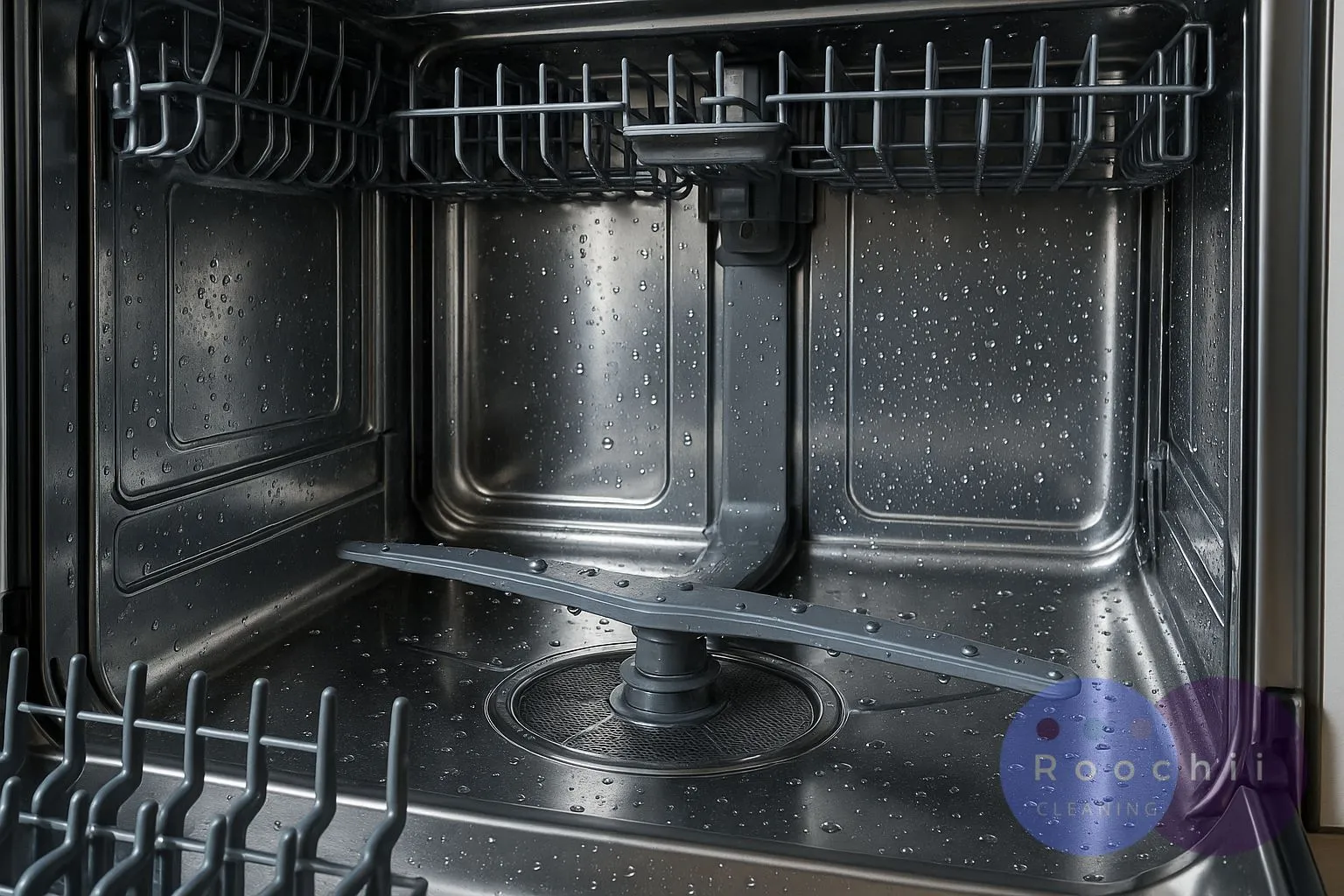
Can You Remove The Pink Mold Invading Your Dishwasher ?
That pink, slimy film inside your dishwasher is usually not mold at all. It is often associated with Serratia marcescens, a bacterium that can thrive where moisture and organic residue collect.
The good news is that you can usually tackle the problem with a thorough physical cleaning, proper dishwasher maintenance, and better drying. The important part is avoiding the temptation to throw several cleaners into the machine at once. Chemistry has a way of making a simple cleaning job much more complicated.
In this guide, you’ll learn what the pink residue in your dishwasher may be, why it keeps returning, how to clean the areas where it hides, and how to prevent the problem from becoming a recurring dishwasher chore.
Table of Contents
- What Is the Pink Mold in a Dishwasher?
- Why Does Pink Mold Keep Coming Back?
- Where to Look for Pink Residue in Your Dishwasher
- How to Get Rid of Pink Mold in Dishwasher
- What Cleaning Products Can You Use?
- How to Prevent Pink Mold in Dishwasher From Coming Back
- When Pink Residue May Point to a Dishwasher Problem
- When to Call a Professional if Pink Mold in Dishwasher Persists

What Is the Pink Mold in a Dishwasher?
Here’s the first surprise: pink mold isn’t actually mold at all.
The pink or reddish slime commonly called “pink mold” is often associated with Serratia marcescens, an environmental bacterium rather than a true fungal mold.
Serratia marcescens can occur in damp environments and may appear as pink, orange, or reddish discoloration. The Centers for Disease Control and Prevention (CDC) has documented the organism in damp household environments as well as healthcare-associated infections, so it is worth taking seriously without turning a small dishwasher cleanup into a household emergency.
The color is associated with a pigment produced by the bacterium. That means the pink film is a useful clue, but you should not assume that every pink or orange mark inside a dishwasher is Serratia marcescens. Mineral deposits, food residue, detergent buildup, rust, or other deposits can look similar.
Why It’s a Bigger Deal Than You Think
While Serratia marcescens may not sound as scary or as toxic black mold, ignoring it can lead to more serious consequences:
- Foul Odors: Pink mold gives off a musty, sour smell that lingers in your dishwasher and, eventually, on your dishes.
- Appliance Damage: Over time, it can clog spray arms, filters, and drains, reducing the efficiency of your dishwasher and even shortening its lifespan.
- Potential Health Risks: In rare cases, especially for people with compromised immune systems, Serratia marcescens exposure has been linked to respiratory issues and infections.
Why Does Pink Mold Keep Coming Back?
A dishwasher is designed to clean dishes, but that does not mean every part of the appliance gets equally clean.
The areas that tend to cause recurring buildup are usually the places where moisture, food residue, grease, detergent residue, and poor drainage overlap.
Moisture
Serratia marcescens is associated with damp environments. A dishwasher that remains wet between cycles provides a much better environment for recurring bacterial growth than one that dries thoroughly.
Closing the door immediately after every cycle can also trap humidity. If your machine’s design and manufacturer instructions allow it, leaving the door slightly open after the cycle can help the interior dry.
Food and grease residue
Small particles can collect around the filter, sump area, spray-arm openings, racks, door edges, and gasket.
That residue can create a film that gives microorganisms somewhere to attach. Removing the residue is therefore just as important as choosing a chemical cleaner.
Poor drainage
Standing water at the bottom of the dishwasher deserves attention.
A small amount of residual water may be normal for some models, but persistent pooling, slow drainage, foul odors, or repeated pink buildup can point to a clogged filter, blocked drain path, drainage-hose issue, or another appliance problem.
In that situation, repeatedly treating the interior with cleaning products will not solve the underlying cause.
Where to Look for Pink Residue in Your Dishwasher
Before cleaning, inspect the entire accessible interior rather than focusing only on the most visible pink patch.
Check:
- The rubber door gasket and folds
- The inside edge of the dishwasher door
- The bottom corners of the tub
- Around the filter assembly
- The area around the drain
- Spray-arm openings
- Undersides of racks
- Utensil baskets
- Crevices around removable components
- Areas where standing water or food debris collects
The gasket and door edges deserve special attention because they may not receive the same water flow as the main dishwasher tub.
If the pink residue is concentrated around one particular component, clean that component rather than assuming the entire appliance needs a stronger chemical treatment.
How to Get Rid of Pink Mold in Dishwasher
Once you’ve identified pink or reddish residue, the safest starting point is physical removal of the visible residue and buildup, followed by an appliance-appropriate cleaning cycle.
Before using any product, check your dishwasher owner’s manual. Manufacturers can specify which cleaners, cycles, temperatures, and materials are appropriate for a particular machine.
This step-by-step method ensures you clean every part of the dishwasher that pink mold loves to call home.

Step 1: Put on protective gear before cleaning
Before handling the pink residue or cleaning products, put on disposable or reusable household cleaning gloves.
Gloves help reduce direct skin contact with the residue and cleaning products. If you are using a product that can splash or irritate the eyes, wear appropriate eye protection as specified on the product label.
If the cleaning product label calls for additional protective equipment or ventilation, follow those instructions.
Keep children and pets away from the dishwasher while you are cleaning it, and make sure the area has adequate ventilation.
Step 2: Empty the dishwasher
Remove all dishes, cookware, utensils, and removable items.
You do not want food, dishes, or other household items exposed to loosened residue or cleaning products while you work.
If the racks or utensil basket are removable according to the manufacturer’s instructions, take them out so you can reach the areas underneath.
Step 3: Clean the filter
If your dishwasher has a removable filter, remove it according to the owner’s manual.
To clean:
- Rinse away loose food debris
- Clean the filter with warm water and appropriate amount of dish detergent (unless the manufacturer recommends a different method).
- Use a soft brush to loosen residue from the filter openings.
- Avoid metal brushes and aggressive scrubbing that could damage plastic parts, coatings, or other components.
This is an important step because a dirty filter can continue feeding the problem even after the rest of the dishwasher looks clean.
Step 4: Scrub the pink residue from the gasket and door
Now tackle the areas where the pink film is usually most noticeable.
Use a damp microfiber cloth with a small amount of appropriate dish detergent to wipe the:
- Rubber gasket
- Accessible gasket folds
- Bottom edge of the door
- Door frame
- Corners
- Accessible areas around the hinges
For stubborn buildup, use a soft-bristled cleaning brush.
Work the residue loose instead of simply wiping over it. Rinse or wipe away the loosened residue and detergent when the surface and appliance instructions allow it.
Do not pull the gasket out of place unless your dishwasher’s instructions specifically allow you to remove it.
Step 5: Clean the spray arms
Inspect the spray arms for food particles, mineral deposits, and pink residue.
If the spray arms are removable, take them off according to the manufacturer’s instructions and rinse them thoroughly.
Gently clear accessible openings with an appropriate soft tool if necessary.
Avoid forcing sharp objects deep into the spray-arm holes. You do not want to damage the openings or push debris farther inside.
Before continuing, make sure the spray arms can move freely.
Step 6: Clean the dishwasher interior
With the filter, gasket, and spray arms addressed, clean the accessible interior of the dishwasher.
Use a microfiber cloth and an appropriate detergent solution to wipe visible residue from:
- The bottom of the door
- Lower corners
- The area around the filter
- The drain area
- The lower edges of the tub
- Other areas with visible food or grease buildup
For narrow crevices, use a soft brush.
This physical cleaning step is important. If the pink film is sitting on top of food residue, grease, or detergent buildup, simply adding another chemical does not remove the material underneath.
Step 7: Choose one dishwasher-cleaning product if needed
Once the visible buildup is gone, decide whether your dishwasher needs an additional cleaning cycle.
If your dishwasher manufacturer permits it, a commercial dishwasher cleaner labeled specifically for dishwasher use can be a practical option.
Read the product label before using it. Check:
- How much product to use
- Whether the dishwasher should be empty
- Which cycle to select
- Whether detergent should be used
- Whether the product is intended for mineral deposits, grease, odors, or another type of buildup
- Any material restrictions
- Any required protective equipment or ventilation
Do not increase the concentration because the residue looks stubborn and do not add another household cleaner to the dishwasher because you think the first product needs “help.”
Use one product, wipe or rinse away residue if the surface and label allow it, let the area dry fully, then decide whether a second product is actually needed. Never layer wet products directly on top of each other.
Already Mixed Cleaning Products?
If you accidentally mixed cleaning products, stop adding anything else and move away from the area if you notice fumes or irritation.
Ventilate the area if you can do so safely, and follow the product labels or appropriate emergency guidance. Never add another cleaner to try to neutralize the mixture.
Step 8: Run the cleaning cycle according to the instructions
If the dishwasher manufacturer and product label both allow the treatment, run the recommended cycle with the dishwasher empty.
Do not add vinegar, bleach, baking soda, ammonia, or another cleaner unless the product and appliance instructions specifically permit that combination.
Step 9: Check the dishwasher again
When the cycle is finished, inspect the areas where pink residue tends to hide:
- Gasket
- Filter
- Drain area
- Spray arms
- Door edges
- Bottom corners
- Rack supports
- Other accessible crevices
If you still see residue, remove what remains instead of automatically increasing the amount or strength of the cleaning product.
If the pink buildup comes back quickly after a thorough cleaning, that is your cue to investigate the cause rather than keep escalating the cleaning chemicals.
Step 10: Dry the dishwasher
Once cleaning is complete, allow the interior and removable parts to dry thoroughly.
If possible, leave the door slightly open after a cycle as it can help moisture escape.
The real win here is not simply getting rid of the pink color for one afternoon. It is leaving the dishwasher cleaner, drier, and less hospitable to recurring buildup.
What Cleaning Products Can You Use?
The right product depends on what you are trying to remove and what your dishwasher manufacturer permits.
Cleaning products work differently because their chemistry is different.
Dishwasher cleaner
A commercial dishwasher cleaner can be useful for appliance buildup because it is formulated and labeled for a specific cleaning purpose.
Some products are designed to address mineral deposits, grease, odors, or other buildup. Others may carry specific sanitizing or disinfecting claims.
Use the product only according to its label.
A product’s disinfecting or sanitizing claim also applies only under the conditions specified on the label. Do not change the concentration, contact time, or application method and assume the same claim still applies.
Dish detergent
A small amount of ordinary dish detergent on a damp cloth can be useful for manually cleaning accessible residue on areas such as the gasket and door edges when the appliance manufacturer permits it.
Vinegar
Vinegar is an acidic cleaner because it contains acetic acid. Typical household vinegar is commonly around 4% to 5% acetic acid, although formulations vary.
Its acidity is also why vinegar should not automatically be treated as appropriate for every dishwasher component. Acidic products can interact differently with metals, finishes, seals, coatings, and mineral deposits.
If your dishwasher manufacturer permits vinegar for a particular cleaning task, use it according to those instructions and use it by itself. Do not mix vinegar with hydrogen peroxide or other cleaning agents.
Baking soda
Baking soda, or sodium bicarbonate, is mildly alkaline and mildly abrasive.
That combination can make it useful for some manual scrubbing jobs, but it does not make baking soda a universal dishwasher cleaner.
If it is permitted for a particular component or surface, avoid aggressive scrubbing on polished finishes, coated surfaces, aluminum, copper, brass, glass, mirrors, painted finishes, natural stone, wood finishes, appliance coatings, and other materials where abrasion or alkaline residue could cause damage.
How to Prevent Pink Mold in Dishwasher From Coming Back
You’ve done the dirty work and scrubbed your dishwasher clean. Now it’s your duty to make sure you can avoid dealing with pink mold again.
The key to long-term cleanliness is consistency, and these simple prevention strategies can make all the difference.
Clean the filter regularly
The filter catches food debris, so it is one of the first places to check when odors or residue start appearing.
Follow your dishwasher manufacturer’s cleaning schedule and inspect it sooner if you notice food buildup, poor drainage, or recurring pink residue.
Wipe the gasket and door edges
The gasket and door edges can collect moisture and residue that are easy to overlook.
A quick wipe during routine kitchen cleaning can stop buildup from becoming a bigger chore later.
Let the dishwasher dry
Moisture is pink mold’s best friend.
After a cycle, allow the interior to dry as much as your dishwasher design permits.
If possible, leave your dishwasher door slightly open. This way, trapped humidity will be able to escape, discouraging bacteria growth.
Remove large food scraps
Modern dishwashers are designed to handle food residue, so aggressive pre-rinsing is not always necessary.
Still, large food scraps and excessive grease should not be left on dishes before loading. Remove large pieces and follow the manufacturer’s loading instructions.
Load dishes so water can circulate
Overloading can interfere with water movement and leave areas inadequately cleaned.
Additionally, while modern dishwashers are powerful, leftover food particles can still collect and create residue that feeds bacteria. A quick rinse cuts down on buildup and lets the water move more freely.
Make sure the spray arms can rotate freely and that dishes are positioned according to the manufacturer’s loading recommendations.
Run the dishwasher’s maintenance cycle when appropriate
If your dishwasher has a cleaning or maintenance cycle, use it according to the owner’s manual.
You can also use a dishwasher cleaner when appropriate for the appliance and product label.
Pay attention to standing water
A little residual water may be normal for some models, but persistent pooling should not simply be ignored.
If water is consistently left behind, check the filter and drain path and consult the owner’s manual for troubleshooting guidance.
Deal with recurring buildup instead of repeatedly treating it
If the pink residue returns within days of cleaning, do not keep escalating the chemicals.
Look for the underlying cause: moisture, food residue, a dirty filter, restricted spray arms, poor drainage, or another appliance issue.

When Pink Residue May Point to a Dishwasher Problem
Sometimes the dishwasher needs cleaning. Sometimes the dishwasher itself needs attention.
Take a closer look if you notice:
- Persistent standing water
- Slow drainage
- Recurring foul odors
- Food remaining on dishes after a normal cycle
- Spray arms that do not rotate properly
- Pink residue returning shortly after cleaning
- Heavy buildup around the filter
- Leaks around the door or underneath the appliance
- Unusual cycle behavior
- A dishwasher that does not seem to heat or wash properly
If the same problem keeps returning despite thorough cleaning, investigate the appliance rather than repeatedly treating the interior with stronger products.
Check the owner’s manual first. For drainage, heating, pumps, electrical components, or inaccessible internal parts, contact a qualified appliance professional.
When to Call a Professional if Pink Mold in Dishwasher Persists
There are times when, no matter how thoroughly you clean or how consistently you maintain your appliance, pink mold keeps coming back. If that’s the case, it might be time to get expert help. This is where we at Roochii Cleaning can be your partner.
Here’s when it makes sense to put down the scrub brush and call some reinforcements:
1. Recurring Pink Mold Despite Cleaning
If you’ve followed all the steps and the mold still returns, it may be growing in areas you can’t reach, like internal hoses or drainage lines.
2. Foul Odors Won’t Go Away
A lingering musty smell could indicate that mold or bacteria have taken hold deep inside the dishwasher’s components, far beyond what a surface cleaning can fix.
3. Visible Mold Beyond the Dishwasher
If you notice pink mold appearing around your kitchen sink, walls, or baseboards near the dishwasher, it may signal a broader mold problem that needs professional assessment.
4. Standing Water or Drainage Problems
Water pooling at the bottom of the dishwasher or leaking beneath it could point to clogged or damaged plumbing. Moisture trapped in hidden places feeds mold, and a plumber or appliance technician is better equipped to resolve it.
5. Health Symptoms in the Household
If someone in your home is experiencing increased respiratory issues, allergies, or infections, especially after running the dishwasher, mold could be the culprit. It’s worth consulting both a mold remediation expert and a healthcare provider.
Benefits of Hiring a Pro
- Thorough Internal Cleaning: Certified cleaning professionals can access and sanitize areas that DIY methods can’t reach, like pumps, valves, and internal tubing.
- Diagnosis of Hidden Issues: A trained eye can identify drainage issues, seal failures, or internal damage contributing to the mold growth.
- Long-Term Solutions: Professionals often use industrial-grade disinfectants and offer warranties or follow-up visits, giving you peace of mind.
If you’re in the Denver area, for example, Roochii Cleaning offers professional cleaning services designed specifically to eliminate pink mold and prevent its return.
If your DIY methods aren’t cutting it, or if your health and appliances are already at risk, don’t hesitate to call in the experts. Sometimes, peace of mind is worth every penny.
Final Thoughts
Pink residue in your dishwasher is usually a sign that moisture and buildup have been sticking around where they should not. The fix is less about reaching for stronger cleaners and more about giving the dishwasher a thorough clean, paying attention to the filter, gasket, spray arms, and other areas where residue can collect.
Once you have removed the buildup, keeping the dishwasher dry and maintaining the filter and seals regularly can help prevent it from coming back. And if the pink residue keeps returning despite regular cleaning, it is worth looking at drainage, leaks, or other dishwasher issues that may be keeping the interior damp.
If you are not sure how to handle the buildup or the problem keeps coming back, you do not have to figure it out on your own. Professional cleaning help is available when you need it.
FAQ
Frequently Asked Questions on Cleaning Pink Mold in Dishwasher
Not necessarily.
What is commonly called “pink mold” in dishwashers is often associated with Serratia marcescens, a bacterium that can produce pink or reddish residue.
Pink residue should not be ignored, especially in an appliance used to clean dishes and utensils.
Avoid unnecessary contact with the buildup, wear household cleaning gloves while cleaning, and wash your hands afterward. If you have concerns about exposure or symptoms after contact, seek appropriate medical advice.
It can return when moisture, food residue, soap buildup, or other organic material remains in places that are easy to overlook. A dirty filter, damp gasket, clogged or poorly draining areas, and residue around the spray arms can all contribute to recurring buildup.
Check the door gasket, filter, bottom of the dishwasher tub, spray arms, detergent dispenser, door edges, and other areas where water and residue can collect.
If the pink residue keeps returning in the same area, pay particular attention to whether that spot stays unusually wet.
Regular maintenance is more effective than waiting until you see a buildup. Clean the filter regularly, wipe the gasket and door area, remove visible food residue, and periodically run a dishwasher-cleaning cycle according to your appliance and cleaner instructions.
Vinegar is an acidic cleaner, but it is not automatically appropriate for every dishwasher component or every appliance. If you use it, check your dishwasher manufacturer's guidance first and use it only where the appliance and product instructions allow it.
Consider professional help if the residue keeps returning after thorough cleaning, you notice leaks or drainage problems, there is persistent standing water, or you cannot safely access or clean the affected areas. Professional help can also make sense if you are unsure what is causing the recurring buildup.