What Cleaners Kill Norovirus? Effective Disinfectants That Actually Work
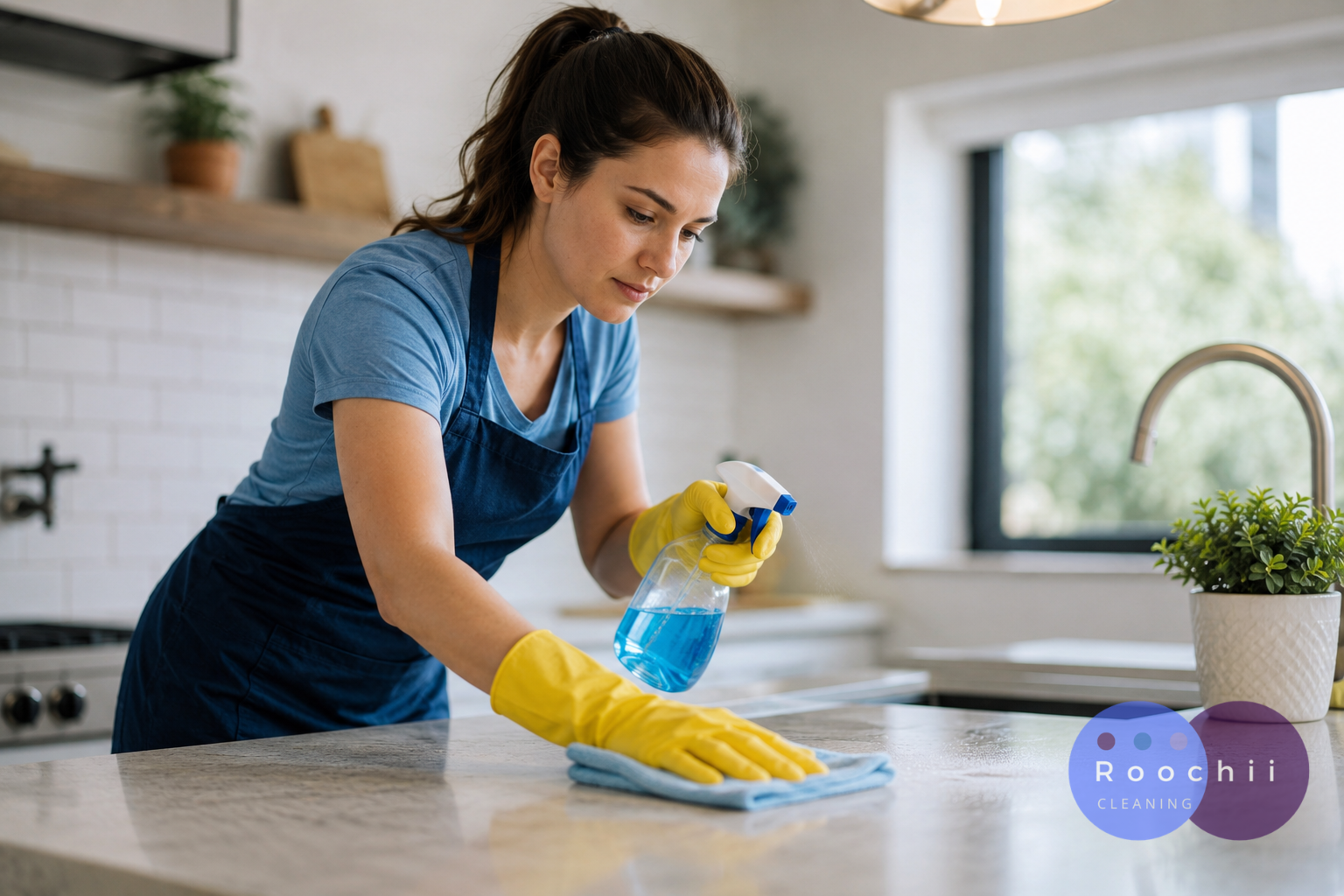
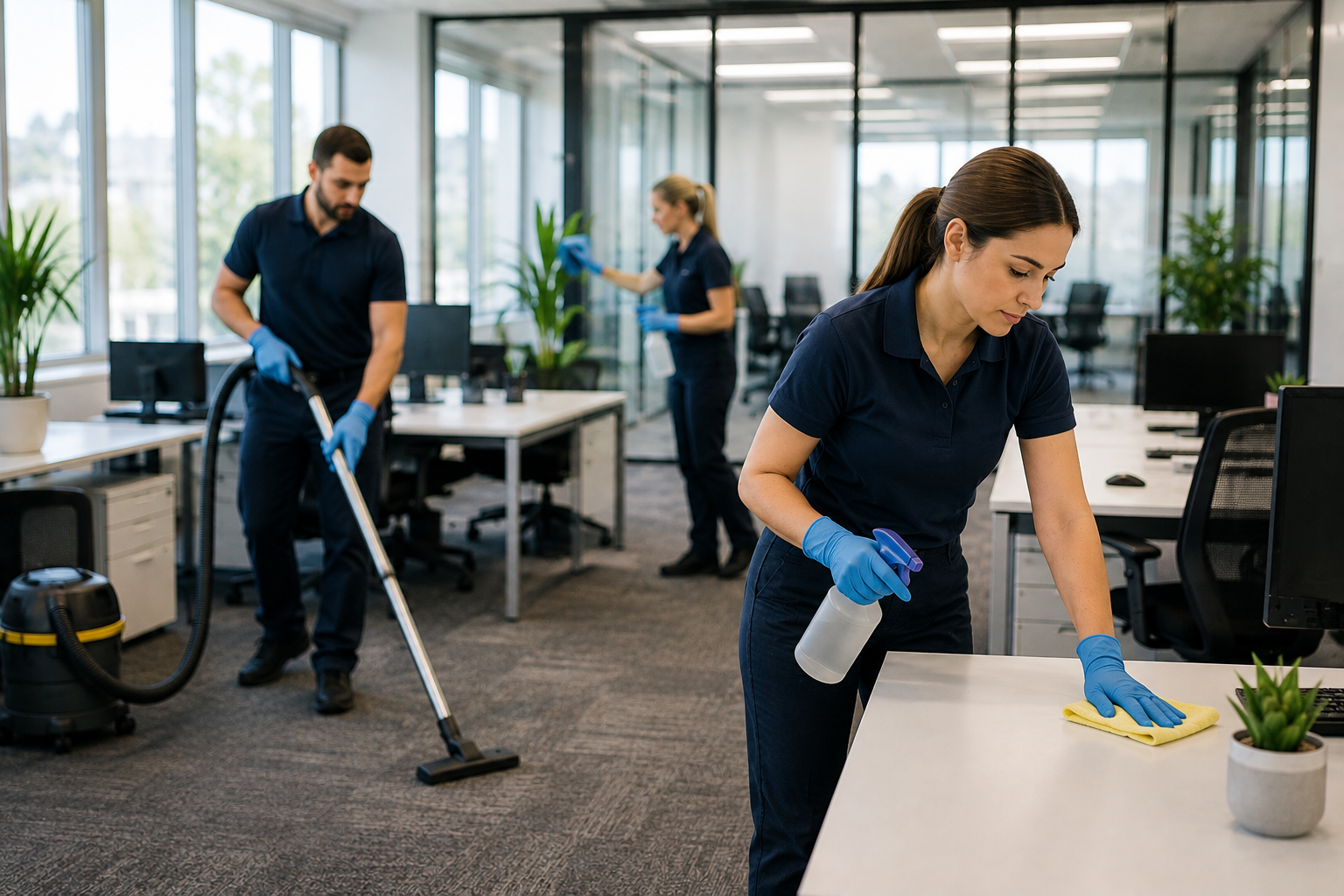
Woman disinfecting a kitchen countertop with cleaning spray and gloves during household norovirus surface cleaning.

Why Choosing the Right Cleaner for Norovirus Matters

Norovirus has a nasty talent for turning an ordinary week into a full-scale household cleanup operation. One minute everything feels normal, and the next you’re Googling what cleaners kill norovirus while clutching a spray bottle like it’s emergency equipment. 

Unfortunately, this virus is far tougher than many people realize. Some everyday cleaners barely slow it down, and even products labeled “disinfecting” may not actually eliminate it.

That’s when many households realize ordinary cleaners may not be enough. Between bleach ratios, EPA-approved disinfectants, contact times, and surface safety warnings, cleaning after norovirus can quickly become overwhelming.

The good news is that norovirus can be eliminated with the right products and techniques. The key is knowing which disinfectants actually work, how to use them properly, and which cleaning myths to ignore.

In this guide, you’ll learn exactly what disinfectants kill norovirus, which products work best on different surfaces, what mistakes to avoid, and how to properly disinfect your home after an outbreak. Keep reading before your “all-purpose cleaner” gives you a false sense of confidence.

Understanding why norovirus survives so easily helps explain why some cleaners work while others fail completely.

Table of Contents

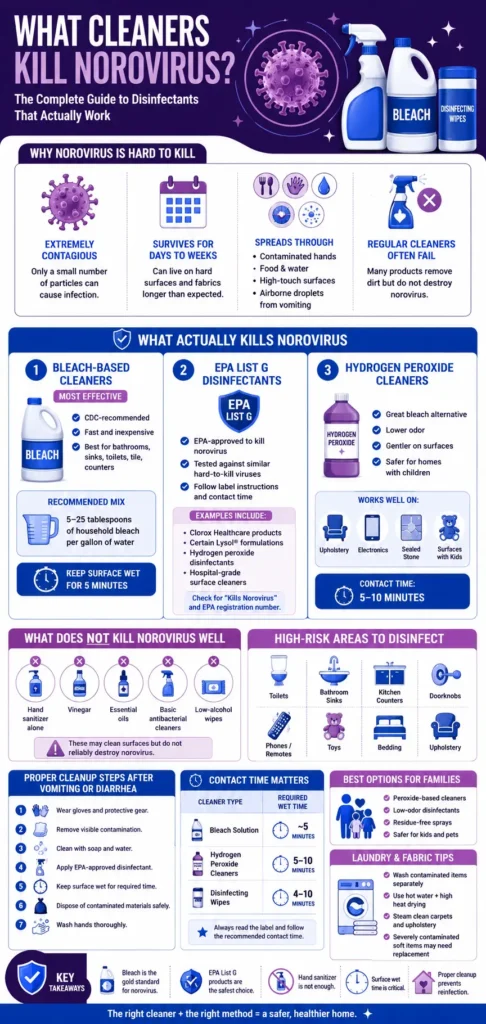
Infographic explaining what cleaners kill norovirus, including bleach-based cleaners, EPA List G disinfectants, hydrogen peroxide cleaners, contact times, high-risk surfaces, and proper norovirus cleanup steps.

Why Norovirus Is So Difficult to Kill

Norovirus spreads quickly and survives in places most viruses cannot. It only takes a small number of viral particles to infect another person. That makes surface contamination a major problem during outbreaks.

The virus also resists many standard cleaning methods. Wiping a surface with soap or basic disinfecting sprays often is not enough. Some products kill bacteria but fail against norovirus entirely.

How Norovirus Spreads on Surfaces

Norovirus spreads through contaminated food, water, hands, and surfaces. High-touch items like doorknobs, faucets, phones, and light switches become common transmission points.

Vomiting events create another challenge. Tiny airborne droplets can settle on nearby objects and fabrics. That means contamination may spread farther than most people expect.

How Long Norovirus Can Live on Household Items

Norovirus can survive on hard surfaces for days or even weeks under certain conditions. Soft materials like carpets and upholstery may also hold viral particles longer than expected.

Common household items that may remain contaminated include:

  • Remote controls
  • Bathroom counters
  • Bedding
  • Kitchen handles
  • Toys
  • Upholstered furniture

Without proper disinfection, the virus may continue circulating through the home.

Why Regular Household Cleaners Often Fail

Many cleaners are designed to remove grime rather than destroy viruses, and some may contain ingredients commonly found in toxic cleaning products. Products labeled “antibacterial” may not work against norovirus at all.

Norovirus has a protective outer structure that helps it resist weaker disinfectants. Alcohol-based cleaners, especially low-concentration formulas, are often less effective than bleach-based products.

What Cleaners Kill Norovirus Most Effectively

The most effective norovirus disinfectants are EPA-registered products proven to work against hard-to-kill viruses. Bleach remains one of the most reliable choices for household disinfection.

Hydrogen peroxide formulas and certain hospital-grade disinfectants can also be effective when used correctly.

Bleach-Based Cleaners and Why They Work

Bleach contains sodium hypochlorite, which breaks down viral particles effectively. The CDC recommends bleach solutions during norovirus outbreaks because they work quickly on hard surfaces.

For household use, diluted bleach solutions are commonly prepared using:

  • 5 to 25 tablespoons of household bleach per gallon of water
  • Prepare fresh bleach mixtures daily
  • Proper ventilation during use

Bleach works best on nonporous surfaces like tile, sinks, toilets, and counters.

EPA List G Disinfectants Explained

EPA List G includes disinfectants approved for use against norovirus. These products have been tested against similar viral strains and meet federal disinfection standards.

Common EPA List G products include:

  • Clorox Healthcare Bleach Germicidal Cleaner
  • Lysol Brand III Disinfectant Spray
  • Clorox Healthcare Hydrogen Peroxide Cleaner
  • Oxivir TB Spray
  • Purell Professional Surface Disinfectant

Not every disinfectant within the same brand has been tested for norovirus effectiveness, so confirm that the product appears on EPA List G or carries approved virus claims.

For official EPA guidance, visit the EPA List G disinfectants page.

Hydrogen Peroxide Cleaners for Norovirus

Hydrogen peroxide disinfectants offer a bleach alternative with less odor and lower surface damage risk, especially when using Green Seal-certified cleaning products. Some accelerated hydrogen peroxide formulas kill norovirus effectively when used with proper contact times.

These products are often safer for:

  • Upholstery
  • Sealed stone surfaces
  • Electronics
  • Child-safe environments

However, they may cost more than bleach solutions.

Accelerated Hydrogen Peroxide vs Bleach

Both disinfectants work well, but each has strengths and weaknesses.
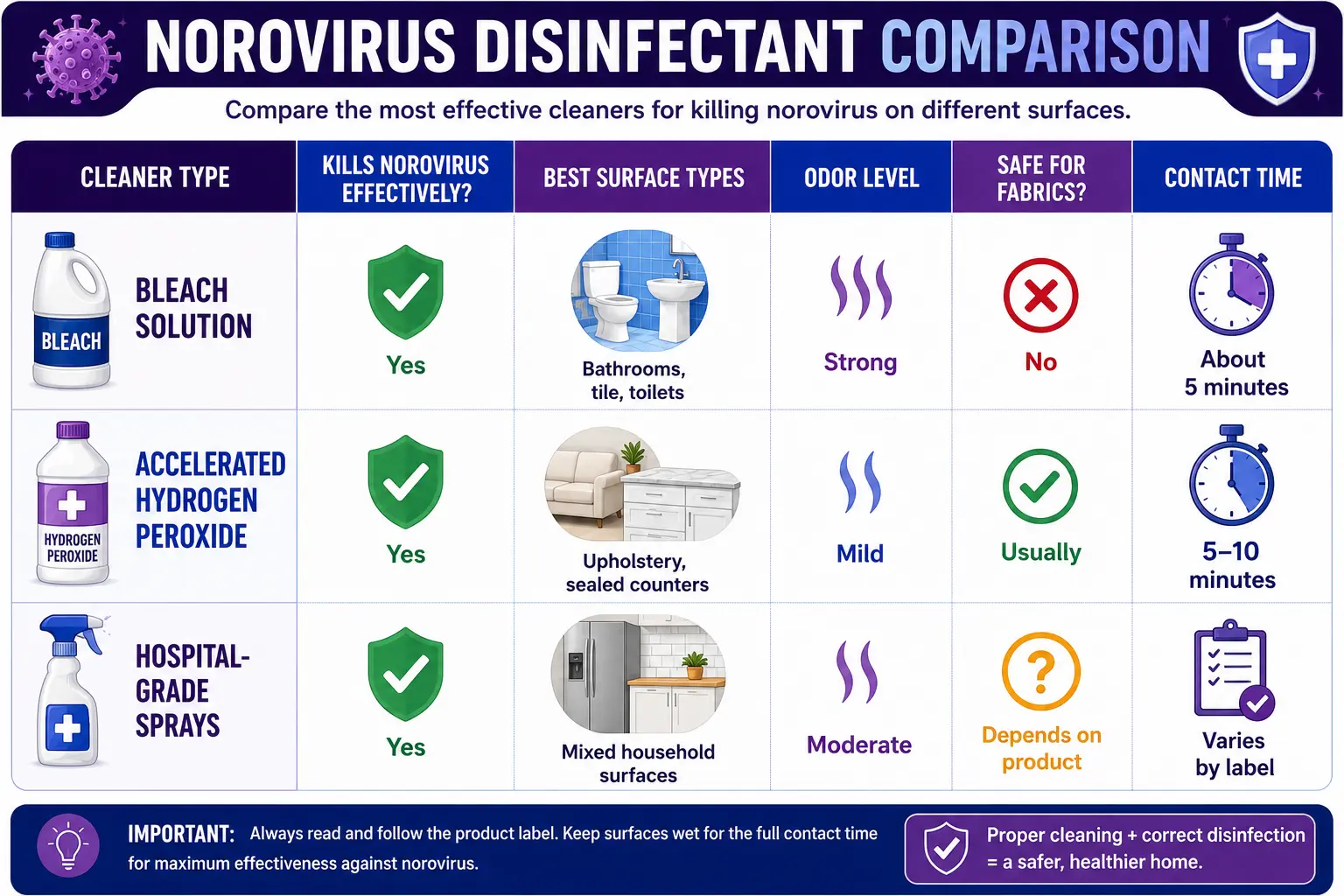
Comparison infographic showing what cleaners kill norovirus, including bleach solution, accelerated hydrogen peroxide, and hospital-grade disinfectants with contact times, odor levels, surface compatibility, and fabric safety information.

Bleach remains the fastest and cheapest solution for large contamination areas.

What Disinfectant Kills Norovirus Fastest?

Bleach-based disinfectants generally kill norovirus faster than most alternatives. Some hospital-grade products also work rapidly if used according to label instructions.

Speed depends on:

  • concentration
  • surface type
  • contact time
  • cleaning method

A product cannot work properly if wiped away too soon.
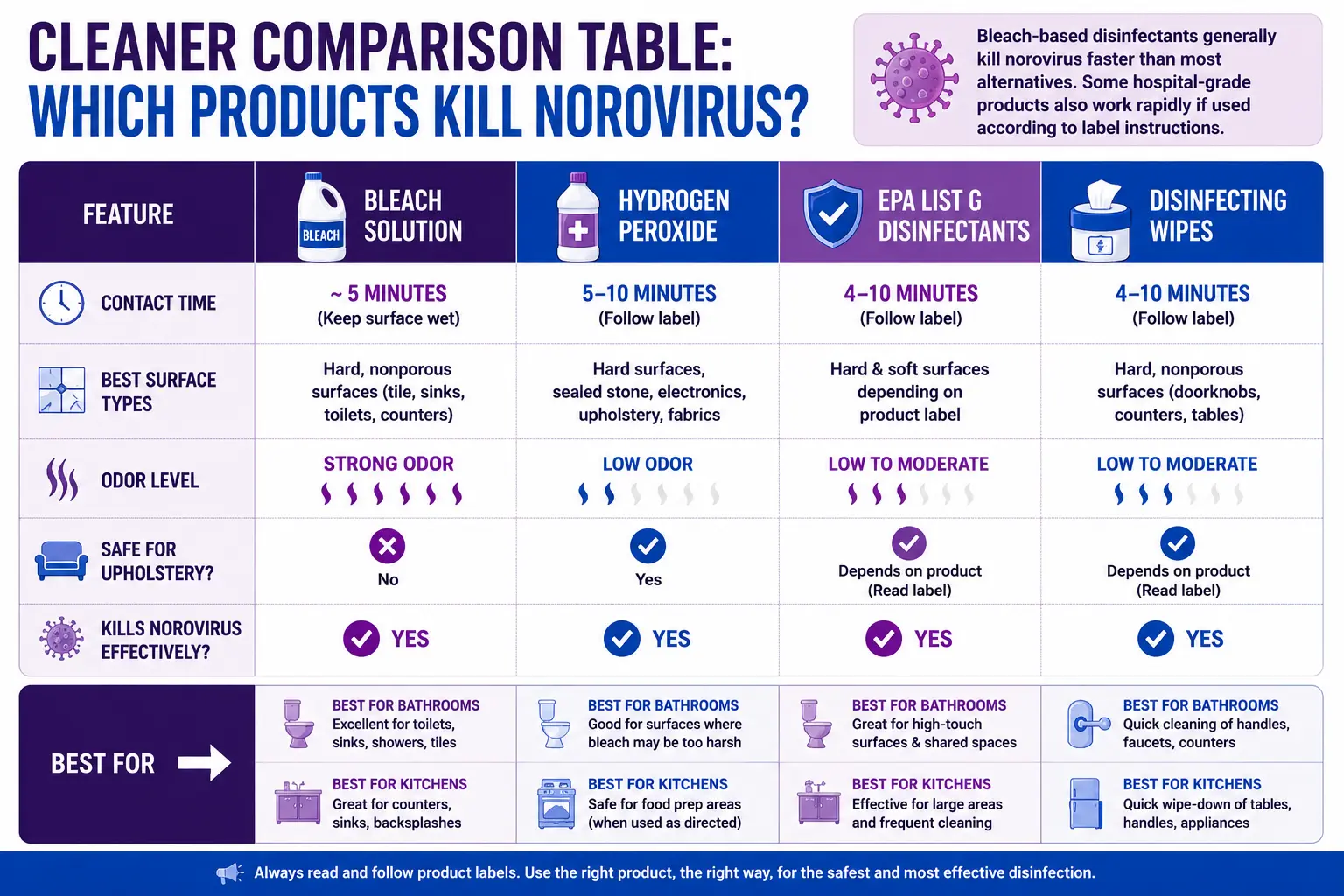
Cleaner comparison infographic showing what cleaners kill norovirus, including bleach solution, hydrogen peroxide, EPA List G disinfectants, and disinfecting wipes with contact times, odor levels, upholstery safety, and recommended household surfaces.

Knowing which products fail against norovirus is just as important as knowing which disinfectants work. 

What Does NOT Kill Norovirus

Many popular cleaning methods provide a false sense of security.

Why Hand Sanitizer Is Less Effective

Alcohol-based sanitizers may reduce some germs but often perform poorly against norovirus. Soap and water remain the preferred hand-cleaning method.

Handwashing should last at least 20 seconds.

Do Vinegar and Natural Cleaners Work?

Vinegar cleans surfaces but does not reliably kill norovirus, even though many people use water and vinegar for cleaning around the home. Essential oils and natural sprays also lack strong evidence against the virus.

Natural cleaners may help with odor removal but should not replace disinfectants during outbreaks.
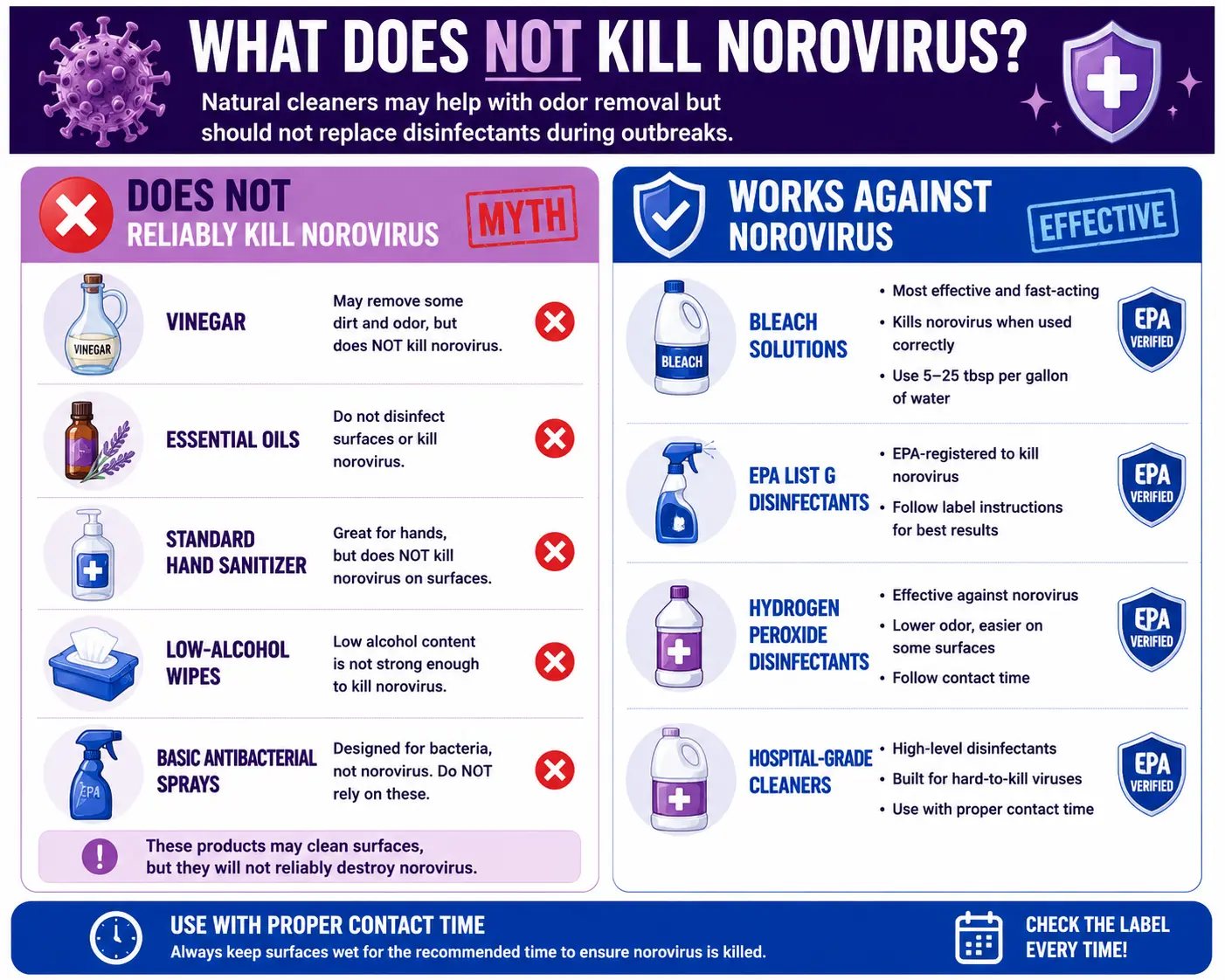
Myth-versus-fact infographic explaining what does not kill norovirus, comparing ineffective cleaners like vinegar, essential oils, and standard hand sanitizer with effective disinfectants such as bleach solutions, EPA List G products, hydrogen peroxide cleaners, and hospital-grade disinfectants.

Why Alcohol Wipes Often Fail

Many alcohol wipes evaporate too quickly. Low alcohol concentrations also reduce effectiveness against tough viruses.

That means surfaces may appear clean while remaining contaminated.

Common Cleaning Mistakes That Spread Norovirus

Common mistakes include:

  • using expired disinfectants
  • wiping surfaces dry too soon
  • reusing dirty cloths
  • forgetting high-touch surfaces
  • skipping laundry disinfection

One contaminated towel can undo an entire cleanup effort.

Knowing which disinfectants work is only part of the process. Comparing how different products perform on specific surfaces can make cleanup decisions much easier during an outbreak.

Cleaner Comparison Table: Which Products Kill Norovirus?

Some disinfectants work better on hard surfaces, while others are safer for fabrics and electronics. 

Bleach vs Lysol vs Clorox Comparison

Product

EPA-Approved for Norovirus

Best Use

Bleach Solution

Yes

Bathrooms, tile, toilets

Clorox Healthcare Bleach

Yes

High-risk contamination

Lysol Brand III Spray

Yes

Hard surfaces

Oxivir TB Spray

Yes

Upholstery-safe surfaces

Always verify EPA registration before relying on any disinfectant.

Does Lysol Kill Norovirus?

Only certain Lysol formulas appear on EPA List G for norovirus disinfection.

Products such as Lysol Brand III Disinfectant Spray appear on EPA List G, while many standard disinfecting wipes do not. Verify that the product includes approved virus claims and federal registration information before relying on it during outbreak cleanup.

Contact time also matters. Even EPA-approved products may fail if surfaces dry too quickly or are wiped down before the recommended disinfection time is complete.

Sprays vs Wipes vs Concentrates

Sprays cover larger surfaces more evenly. Wipes are convenient but may dry out before reaching proper contact time.

Concentrated disinfectants:

  • reduce long-term cost
  • allow stronger solutions
  • require careful mixing

Sprays remain the most practical option for large cleanup jobs.

Contact Time Requirements by Product

Product Type

Average Contact Time

Important Usage Notes

Bleach Solution

About 5 minutes

Surface should remain visibly wet during the full contact period

Hydrogen Peroxide Disinfectants

5–10 minutes

Reapply if surfaces dry too quickly

Disinfecting Wipes

4–10 minutes

One wipe may not keep larger surfaces wet long enough

Contact time refers to how long a disinfectant must remain visibly wet on a surface to properly kill viruses.

Reapply disinfectant if surfaces stop remaining visibly wet during the required disinfection period.

Many wipes lose moisture too quickly to disinfect larger surfaces effectively. Wiping surfaces dry immediately after spraying may also reduce effectiveness.

How to Choose the Right Norovirus Disinfectant for Your Home

The best disinfectant depends on the surface, contamination level, and how quickly cleanup must happen. Some products work better for large bathroom disinfection jobs, while others are safer for electronics, upholstery, or homes with children and pets.

Bleach-based disinfectants remain the strongest option for heavy contamination on hard, nonporous surfaces. They work especially well in bathrooms, around toilets, and on sealed tile or sinks. Bleach is also one of the most affordable solutions for large cleanup areas, although the strong odor and surface sensitivity can make it less practical for everyday use.

Hydrogen peroxide disinfectants are often easier to use around sensitive surfaces because they produce less odor and lower discoloration risk. These products are commonly preferred for:

  • upholstery
  • sealed stone countertops
  • electronics-safe cleaning
  • shared living spaces with limited ventilation

Disinfecting wipes work best for small touch-up cleaning jobs and frequently handled surfaces like light switches, remote controls, and phones. However, wipes may dry too quickly on larger surfaces and sometimes fail to maintain the full contact time needed to kill norovirus effectively.

Concentrated disinfectants can be useful for households managing repeated illness outbreaks because they allow larger quantities of cleaning solution to be prepared at a lower long-term cost. The tradeoff is that concentrates require careful measuring and dilution before use.

Choosing the right disinfectant is often a balance between effectiveness, surface safety, odor tolerance, and ease of use. Checking EPA registration details and following proper contact times matter just as much as the product itself.

Safe Surface Compatibility Chart
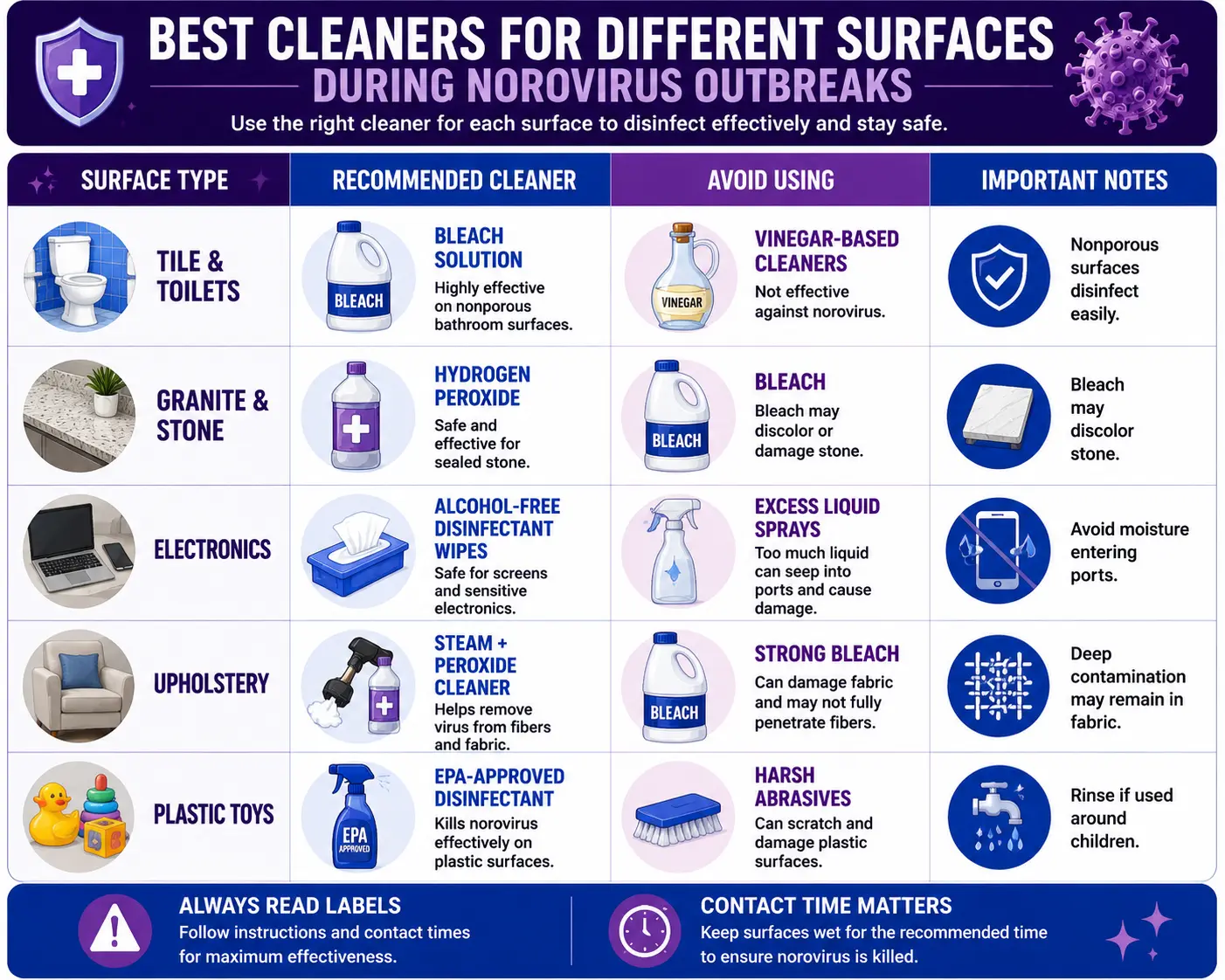
Infographic showing the best cleaners for different surfaces during norovirus outbreaks, including bleach for tile and toilets, hydrogen peroxide for stone, disinfectant wipes for electronics, steam and peroxide cleaners for upholstery, and EPA-approved disinfectants for plastic toys.

Even effective disinfectants may perform differently depending on the surface being cleaned. Hard countertops, upholstery, electronics, and carpets all require different cleaning approaches.

How to Verify Whether a Cleaner Works Against Norovirus

Not every product claiming to disinfect actually works against norovirus.

How to Read EPA Labels Correctly

Look for the following details on disinfectant labels:

  • EPA registration number
  • norovirus or virus claims
  • contact time instructions
  • dilution guidance
  • surface compatibility warnings

Most EPA-approved products display an “EPA Reg. No.” near the back label or underneath the active ingredients section.

Labels contain important details many people overlook, especially during outbreak cleanup situations.

Understanding EPA Registration Numbers

EPA registration numbers confirm a disinfectant has passed federal testing requirements for approved claims.

Most products display this information as follows:

EPA Reg. No. XXXXX-XX

You can search this number directly through the EPA database to confirm whether a product appears on EPA List G for norovirus disinfection.

This helps confirm whether a disinfectant has been tested for virus-related claims rather than relying only on front-label marketing.

What “Kills Norovirus” Really Means on Packaging

Some labels say products kill “norovirus surrogates” rather than the actual virus. This still matters because testing uses similar viral strains.

Products without verified virus claims may not disinfect surfaces reliably during outbreaks.

How to Find EPA List G Products

EPA List G products can be searched online by:

  • brand name
  • active ingredient
  • registration number

Keeping the EPA List G reference available can simplify disinfectant selection during outbreaks.

What Products Kill Norovirus on Different Surfaces

Different surfaces require different cleaning approaches. Using the wrong disinfectant may damage materials or leave contamination behind.

Bathroom Surface Cleaning Protocol

Bathrooms are high-risk contamination zones during outbreaks. Focus on toilets, sinks, faucets, handles, and floors.

Recommended steps:

  1. Remove visible contamination
  2. Wash surfaces with soap and water
  3. Apply disinfectant
  4. Leave surfaces wet for required contact time

Kitchen Counter and Food Area Disinfection

Food preparation areas need extra caution. Avoid harsh bleach residue near food-contact surfaces unless labels allow it.

Hydrogen peroxide disinfectants often work well in kitchens because they leave less residue.

How to Clean Carpets and Rugs After Vomiting

Soft surfaces are much harder to disinfect than nonporous materials because norovirus particles can settle deep into fibers and padding.

Start by removing visible contamination using disposable towels and gloves. Avoid scrubbing aggressively because it may spread contamination farther into the fabric.

Then:

  • steam clean the area using high heat if possible
  • apply a fabric-safe disinfectant approved for soft surfaces
  • allow the material to dry completely
  • vacuum only after the area is fully dry

Because carpets and rugs are porous, complete disinfection is more difficult than cleaning hard surfaces. If contamination soaks deeply into carpet padding, causes persistent odors, or repeatedly reappears after cleaning, replacement may be safer than continued disinfection attempts.

Disinfecting Mattresses, Couches, and Upholstery

Upholstery, mattresses, and fabric furniture absorb contamination quickly, which makes complete disinfection more difficult than cleaning hard surfaces.

Steam cleaning combined with peroxide-based disinfectants may help reduce contamination on lightly exposed fabrics, but porous materials can trap viral particles beneath the surface where disinfectants may not fully reach.

Unlike tile or sealed countertops, soft materials cannot always be fully disinfected after severe contamination events.

However, porous materials can trap viral particles beneath the surface where disinfectants may not fully penetrate.

In severe cases, replacement may be safer than repeated cleaning attempts, especially if:

  • contamination reaches inner cushioning or foam
  • odors remain after drying
  • moisture becomes trapped inside materials
  • staining continues after multiple cleanings

Allow all fabrics and upholstery to dry completely after cleaning because trapped moisture may contribute to mold growth and lingering odors.

Cleaning Electronics and High-Touch Devices Safely

Avoid spraying disinfectants directly onto phones, keyboards, tablets, or remote controls because excess moisture may damage internal components. Instead, apply disinfectants to a cloth or use pre-moistened, electronics-safe wipes.

Pay extra attention to:

  • phone screens
  • remote controls
  • light switches
  • gaming controllers
  • shared keyboards

These surfaces are touched frequently and can spread contamination throughout the home during outbreaks.

Sanitizing Children’s Toys and Shared Items

Hard plastic toys are usually easier to disinfect than fabric or plush toys because nonporous surfaces allow disinfectants to work more effectively.

After using disinfectants on children’s toys, rinse surfaces if the label instructions recommend it, especially for toys that younger children may place in their mouths.

Choosing the right disinfectant matters, but proper cleanup technique is just as important during active norovirus outbreaks.

How to Properly Disinfect After a Norovirus Outbreak

Cleaning after norovirus requires more than quick wiping, and some households may prefer professional cleaning support after major contamination events. The process should focus on containment and proper disinfection timing.

What to Do Immediately After Vomiting or Diarrhea

Quick action can reduce the spread of norovirus throughout the home. The first few minutes after contamination are especially important because viral particles may spread through airborne droplets and nearby surfaces.

As soon as vomiting or diarrhea occurs:

  1. Keep other people and pets away from the area
  2. Open windows or improve ventilation if possible
  3. Wear disposable gloves and a mask before cleaning
  4. Avoid vacuuming immediately because it may spread particles into the air
  5. Remove nearby fabrics, towels, or soft materials that may have been exposed
  6. Begin disinfecting contaminated surfaces as quickly as possible

Fast cleanup helps reduce the chance of contamination spreading to bathrooms, kitchens, furniture, and high-touch surfaces.

Step-by-Step Cleanup After Vomiting or Diarrhea

  1. Wear gloves and protective gear
  2. Remove visible contamination carefully
  3. Seal contaminated materials in plastic bags
  4. Clean surfaces with soap and water
  5. Apply EPA-approved disinfectant
  6. Allow required contact time
  7. Wash hands thoroughly afterward

Rushing through cleanup often spreads contamination farther.
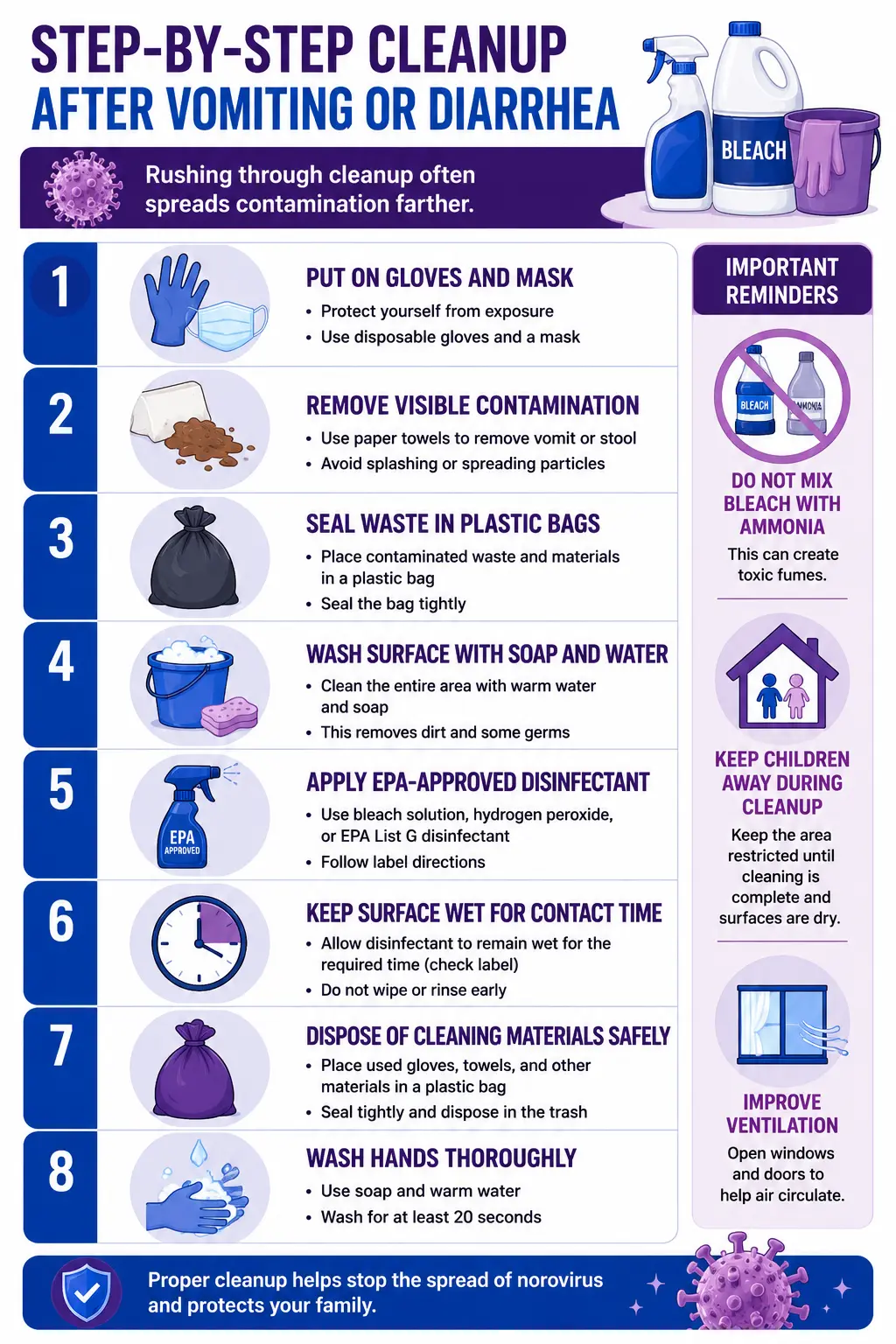
Step-by-step infographic showing how to clean up after vomiting or diarrhea during a norovirus outbreak, including wearing gloves, removing contamination safely, applying EPA-approved disinfectants, maintaining contact time, and disposing of waste properly.

Protective Equipment You Should Wear

Protective gear helps reduce exposure during cleanup.

Recommended items include:

  • disposable gloves
  • masks
  • eye protection
  • disposable aprons

Protective gear may seem unnecessary at first, but outbreaks can spread quickly within households.

Proper Bleach-to-Water Ratios

Bleach dilution ratios depend on the severity of contamination and the type of surface being disinfected.

General household disinfection may require:

Situation

Recommended Bleach Ratio

Light surface cleaning

5 tablespoons per gallon of water

Vomit or diarrhea cleanup

20–25 tablespoons per gallon of water

Always prepare bleach solutions fresh daily because diluted bleach loses effectiveness over time.

Bleach works best on nonporous surfaces like the following:

  • tile
  • toilets
  • sinks
  • sealed countertops

Avoid using bleach on:

  • natural stone
  • unsealed wood
  • delicate fabrics
  • some metal finishes

Never mix bleach with:

  • ammonia
  • vinegar
  • other cleaning chemicals

That combination creates dangerous fumes and may cause serious respiratory irritation.

How Long Surfaces Must Stay Wet to Kill Norovirus

Proper contact time remains essential for effective disinfection, especially on frequently touched household surfaces.

Ventilation may shorten drying time, so treated surfaces should be checked periodically during disinfection.

Safe Disposal of Contaminated Materials

Dispose of gloves, towels, masks, and cleaning cloths immediately after use. Double-bagging contaminated waste adds extra protection.

Wash hands thoroughly even after glove removal.

Best Practices to Prevent Norovirus Spread at Home

Consistent cleaning habits lower the risk of spreading the virus through the household.

Proper Handwashing Techniques

Wash hands:

  • after bathroom use
  • before eating
  • before cooking
  • after cleanup

Soap and warm water remain more effective than sanitizer alone.

Laundry Cleaning Guidelines

Wash contaminated laundry separately using:

  • hot water
  • high heat drying
  • detergent plus bleach if safe

Avoid shaking contaminated fabrics before washing.

Preventing Reinfection Within Households

Continue disinfecting shared surfaces even after symptoms improve. People may still spread the virus for days after recovery.

Avoid sharing the following during active illness and early recovery:

  • towels
  • drinking glasses
  • utensils
  • bedding

Bathrooms and kitchens often require repeated daily disinfection because these areas contain the highest concentration of shared-contact surfaces.

Shared Bathroom and Kitchen Safety Tips

Shared bathrooms and kitchens often become the main contamination points during norovirus outbreaks because multiple people touch the same surfaces throughout the day.

Focus on disinfecting high-touch areas frequently, including:

  • faucet handles
  • toilet flush handles
  • refrigerator doors
  • microwave buttons
  • cabinet handles
  • light switches

If possible, sick household members should use a separate bathroom during active illness. When that is not possible, disinfect bathroom surfaces after each use.

Avoid preparing food for others while symptoms are active and for at least 48 hours after recovery. Shared towels, hand towels, and kitchen cloths should also be replaced frequently during outbreaks.

Small daily habits often make a major difference in reducing household transmission.

How Long to Continue Disinfecting After Illness

Experts often recommend extra disinfection for at least 48 hours after symptoms stop.

That timeline helps reduce household reinfection risk.

Even with proper cleaning and prevention, many households still have questions about disinfectants, reinfection risks, and surface contamination.

Best Norovirus Cleaning Products for Different Household Situations

Choosing the right product depends on your surfaces, budget, and household needs.

Best Disinfectants for Families With Children

Families often prefer:

  • peroxide-based cleaners
  • low-odor formulas
  • residue-free sprays

Safety matters when disinfecting toys and food areas.

Best Norovirus Cleaners for Sensitive Surfaces

Hydrogen peroxide products provide a gentler option for sensitive surfaces and households sensitive to bleach fumes.

Best Budget-Friendly Norovirus Cleaning Solutions

Diluted household bleach remains one of the cheapest and most effective options available.

A few dollars’ worth of bleach can outperform expensive disinfectant sprays.

When Hospital-Grade Disinfectants Make Sense at Home

Hospital-grade disinfectants are typically designed for healthcare environments where stronger pathogen control standards apply. Many contain higher-performance active ingredients or faster contact times than standard household cleaners.

These products may be especially useful during the following:

  • repeated household illness
  • severe contamination events
  • shared living situations
  • caregiving environments


Final Thoughts: The Best Way to Kill Norovirus and Keep Your Home Safe

Norovirus spreads quickly, survives on surfaces for long periods, and resists many common cleaners. Effective disinfection requires the right products, proper contact times, and careful cleanup methods.

Keeping EPA-approved disinfectants, disposable gloves, and proper cleaning supplies readily available can make future outbreaks easier to manage and help limit the spread of illness across shared household surfaces.

Key Takeaways for Effective Norovirus Disinfection

Remember these essentials:

  • bleach works best on hard surfaces
  • EPA List G products matter
  • hand sanitizer alone is not enough
  • contact time is critical

When to Replace Contaminated Household Items

Some soft materials may remain difficult to disinfect completely. Heavily contaminated pillows, rugs, or mattresses may need replacement after severe outbreaks.

Building a Norovirus Cleaning Checklist for Future Outbreaks

Keeping supplies ready can reduce stress during future illnesses.

A useful checklist includes the following:

  • disposable gloves
  • bleach or EPA-approved disinfectant
  • paper towels
  • laundry sanitizer
  • masks
  • trash bags

Keeping effective disinfectants on hand makes outbreak cleanup faster and less stressful.

FAQ

FAQs About Norovirus Cleaning Products

Leave a Reply

Your email address will not be published. Required fields are marked *