Skip to content

How to Remove Mold From Towels Safely: A Step-by-Step Guide
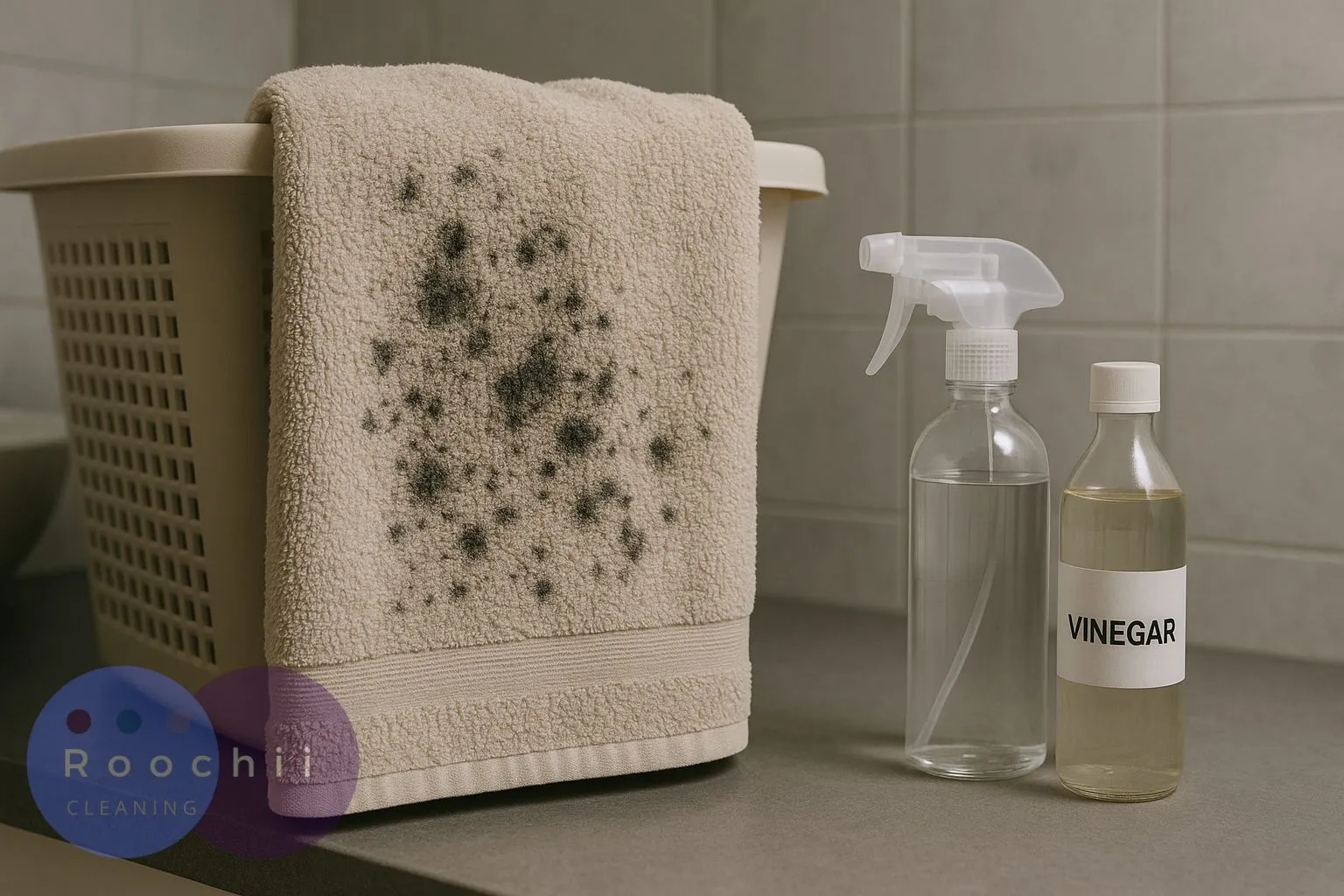
What Can Black Specks on My Towel Be?
Spotted black marks or noticed a musty smell on a bath towel? A washable towel with limited discoloration may be worth cleaning, but one with widespread fuzzy growth, damaged fibers, or persistent odor is often better replaced.
For a towel that can be washed safely, handle it without shaking, check its care label, wash with laundry detergent at the warmest temperature allowed, and dry it fully.
If discoloration remains, consider one label-approved fabric treatment before deciding whether to keep the towel.
Towels are excellent at holding water. Knowing when to let go, apparently, isn’t one of their strengths.
Can You Save a Moldy Towel or Should You Replace It?
A small, recent mildew-like stain on a machine-washable towel does not automatically mean the towel must be thrown away.
Assess the condition first, especially if it has been wet in a closed hamper for days.
Wash It, Check It, or Replace It?
Use the condition of the towel, not just the color of the stain.
| What You Notice | Decision | Next Action |
|---|---|---|
| Small marks or musty smell; washable, strong fabric | ✓ Try Washing | Launder with detergent as the care label allows. Dry completely. |
| Stain remains, but towel is sound and odor-free | ! Check Condition | Consider one fabric-labeled stain treatment; a dark stain alone is not proof of active mold. |
| Heavy growth, damaged fibers, sewage exposure, or repeated odor | × Replace / Seek Advice | Avoid repeated chemical soaking; discard appropriately or consult a textile specialist. |
Safety reminder: If you have respiratory or immune-related vulnerabilities, avoid directly handling heavily moldy materials.
- Try a careful wash if the towel is machine-washable, the affected area is limited, the fabric is structurally sound, and it has not been exposed to sewage or other contaminated water.
- Replace the towel if growth is extensive, the fabric is brittle, or a musty odor remains after appropriate washing.
- Avoid handling heavily moldy towels yourself if you have significant respiratory sensitivities or immune concerns.
- For valuable or nonwashable fabric, consult a professional textile cleaner rather than using household bleach or improvised soaking recipes.
Visible dark staining can remain after cleaning without proving that mold is still growing.
Make the keep-or-replace decision using odor, repeated growth, fabric condition, and exposure concerns, not color alone.
How to Identify Mold on Towels
Spotting mold on towels early can save you time, effort, and sometimes even the towel itself.
Possible clues include black, gray, or greenish patches, a musty odor, and spots concentrated around folds that remained damp.
But dye transfer, lint, body-product residue, and other stains can also resemble mold. Appearance and smell alone cannot identify the organism.
What if the towel smells musty but has no spots?
A sour or musty smell may come from prolonged dampness, detergent and fabric-softener residue, or an odor-prone washing machine.
Start by washing correctly and fully drying the towel. If several clean loads smell the same way, inspect the washer gasket, detergent drawer, and storage area before blaming every towel.
What if the same black spots return?
Repeated spots after clean, dry storage may indicate unresolved moisture or surviving contamination, but stains can also persist permanently after the original problem is addressed.
If the towel again becomes visibly moldy or still smells musty after a careful rewash, replacement is reasonable.
How to Remove Mold From Towels: Step by Step
These steps are for washable towels with limited suspected mold or mildew. It is not for removing heavy mold growth.
Check both the towel and washer care instructions before starting.

1. Handle and sort the towel without shaking
If you notice visible mold on your towel, put on gloves before handling it.
Pick it up gently without shaking or brushing it, as this can release mold particles into the air.
Keep the towel separate from clean laundry by placing it directly in the washing machine or in a designated laundry bag until you’re ready to wash it. Once you’re done handling the towel, wash your hands thoroughly.
2. Check the care label and pretreat only if suitable
Look for the fiber content, allowable wash temperature, and bleach symbols.
For visible stains, a small amount of laundry detergent or a labeled fabric stain remover can be used according to its directions.
Do not rub aggressively into looped terry, embroidery, or fragile fibers.
If an additional treatment is needed, select only one product labeled for the towel: a suitable oxygen-based laundry stain remover for compatible colors or chlorine laundry bleach for specifically bleach-safe fabrics.
Follow the manufacturer’s dose, placement, and contact-time directions. Do not use a universal homemade soak ratio.
3. Wash with detergent using the warmest care-label-safe setting
Use the appropriate type and amount of laundry detergent and choose the warmest cycle allowed by the care label.
Make sure not to overload the drum.
Wash visibly affected towels separately on the first attempt so you can judge the result and avoid mixing them with clean, ready-to-use linen.
CDC’s household laundry guidance recommends detergent, the recommended water temperature, and complete drying.
4. Check the stain, then dry completely
Inspect the towel before a high-heat dryer cycle if a visible stain remains, since heat may set some stains.
If the fabric allows, repeat one label-approved pretreatment and wash once. Otherwise, replace it rather than running cycles again and again.
Once the towel is acceptable to keep, tumble-dry on the appropriate setting or line-dry with enough airflow until every seam and folded edge is dry.
5. Recheck the towel and washing machine
If the same towel still smells musty, or several loads do, check that the washer drum, door gasket, and dispenser are clean and able to dry.
Run the washer’s designated cleaning cycle with its manufacturer-recommended cleaner, never an improvised mixture of bleach and vinegar.
Do not store towels while they are even slightly damp, as moisture is one of the causes of mold.
Which Laundry Products Are Appropriate for Moldy Towels?
Laundry detergent is the starting point.
A stain-removing additive may help with discoloration, but the right choice depends on the towel’s fiber, colorfastness, care symbols, the product’s label, and the washing-machine instructions.
Which Laundry Product Should You Use?
Check your towel's care label first. Detergent is the best starting point.
| Laundry Product | White Cotton | Colored Towels | Delicate Fibers |
|---|---|---|---|
| Laundry Detergent pH varies by formula | ✓ Start Here | ✓ Start Here | Specialty Care |
| Oxygen Laundry Bleach Example: diluted pH up to 11 | If Label Allows | If Colorfast | Avoid Wool/Silk |
| Chlorine Bleach Example product pH: 11.8–12.4 | Bleach-Safe Only | Usually Avoid | Avoid |
Home remedies: Vinegar, household peroxide, and baking soda are not first-line mold treatments. Use fabric-labeled laundry products instead.
Never mix: Bleach with vinegar or ammonia, or vinegar with peroxide. Follow product labels for any approved laundry combinations.
Example pH values vary by product and dilution; they do not represent the final wash water. Sources: OxiClean and Clorox SDS .
White cotton towels versus colored and delicate towels
- White, chlorine-bleach-safe cotton or polyester towels: a labeled laundry chlorine-bleach product may be used at the dose printed on the product. White color alone does not guarantee compatibility.
- Colored, colorfast cotton or polyester towels: choose a labeled oxygen-based fabric stain remover only when the care label and product permit it. Color-safe does not mean safe for every dye or trim.
- Wool, silk, mohair, leather, spandex-rich items, fragile embroidery, or dry-clean-only textiles: avoid chlorine bleach and any stain treatment not explicitly approved for that material. Seek specialist care for valued items.
What About Vinegar, Hydrogen Peroxide, and Baking Soda?
These household products aren’t the best starting point for moldy towels.
Vinegar may be unsuitable for some washing machines, hydrogen peroxide can fade colored fabrics, and baking soda is not a disinfectant.
Stick with laundry detergent first, then consider a fabric-approved stain remover if needed.
Never mix bleach with vinegar, ammonia, or other cleaners. Vinegar and hydrogen peroxide can also react to form irritating peracetic acid.
Use one product at a time, follow label instructions, and complete the rinse and drying process before considering another treatment.
What Causes Mold on Towels and Why Does It Return?
The usual problem is moisture that does not escape.
A thick towel left bunched on a hook, stuffed into a closed hamper, forgotten in the washer, or stored before its seams dry creates favorable conditions for mold and other odor-causing microorganisms.
- Slow drying: folds, thick cotton loops, poor bathroom airflow, and high humidity keep the towel damp longer.
- Storage: closed hampers and crowded linen shelves can hold moisture against the fibers.
- Laundry residue: excessive detergent or fabric softener may leave an odor-holding film and reduce towel performance.
- Washer maintenance: residue in a door gasket, detergent drawer, or drum can contribute to recurring odors.
A musty smell alone cannot tell you whether mold survived a wash.
Correct the drying and storage conditions, use a measured dose of detergent, and investigate the washer if several loads are affected.
How to Prevent Mold on Towels
Once you’ve gone through the trouble of removing mold from towels, the last thing you want is for it to come back.
Prevention is really about one thing: denying mold the damp, stagnant conditions it loves.
A few smart habits, you can keep your towels fresh, fluffy, and fungus-free.
Make complete drying the everyday rule
Hang used towels opened out on a bar or rack rather than piled up or folded while wet.
Run bathroom ventilation during and after showers and let the room dry rather than relying on a fixed number of fan minutes.
Do not leave washed towels sitting in a closed machine.
Store clean linen only when fully dry
Check thick hems before folding and use a dry cabinet or shelf with enough space for airflow.
If the linen closet smells damp, correct that moisture source before filling it with fresh laundry.
Keep the wash routine simple
Wash towels regularly based on use, household health needs, and how quickly they dry.
Use the care-label-safe temperature, the correct amount of detergent, and appropriate drying. Fabric-softener buildup is worth reducing if absorbency and odors are a problem.
Maintain the washer according to its manual
Follow the machine’s clean-washer cycle and recommended cleaner, and keep accessible gaskets and dispensers clean.
Manufacturers such as Whirlpool caution that repeated vinegar cleaning may damage components, so do not make vinegar a standard washer-maintenance shortcut.
Towel Treatment & 7-Day Drying Tracker
Decide whether to wash or replace a towel, record your cleaning treatment, and track drying conditions and recurring odors over seven days.
The Bottom Line: Clean, Dry, or Replace
For a lightly affected, washable towel, careful detergent laundering followed by complete drying is the first reasonable approach.
Use only fabric-compatible, properly labeled treatments for stains and never improvise chemical combinations.
If the fabric is damaged, growth is extensive, or the odor keeps returning after an appropriate rewash, replace the towel and investigate why it stayed damp.
For broader routine housekeeping needs, Roochii Denver’s cleaning team provides general home-cleaning services.
FAQ
Frequently Asked Questions on Mold on Towels
There is no reliable single clock for every towel.
Growth depends on moisture, temperature, airflow, the fabric, and existing contamination, so the useful rule is to dry towels promptly after use and avoid leaving wet laundry closed up.
No. Chlorine bleach belongs only on textiles whose care labels and the selected bleach product allow it.
Many colored, elasticized, wool, silk, and delicate towels are not compatible. Use an appropriate labeled oxygen-based laundry product for colorfast items when needed.
The effect depends on the fiber and frequency, but it should not be treated as a universal cleaner.
Some washer manufacturers advise against routine vinegar use because of component damage.
For a visibly affected towel, begin with a separate load as a practical precaution and to assess the result.
Sunlight and outdoor airflow can help a towel dry thoroughly, which reduces lingering moisture.
However, do not rely on sunlight alone to eliminate mold or to replace proper washing.
There is no universal need for monthly chemical 'deep cleans.'
Wash towels regularly with measured detergent and the temperature permitted by the care label. Give special attention to drying, storage, and the washing machine if odors persist.