Skip to content

Does Bleach Kill Pink Mold Effectively?
Is Bleach Effective On Mold?
You don’t need a degree in microbiology to deal with pink mold. Here’s the bottom line: yes, bleach can kill pink mold, but only on the surface, and only temporarily.
If you were hoping for a magic fix, sorry to disappoint. Bleach is more of a short-term bouncer than a long-term eviction notice.
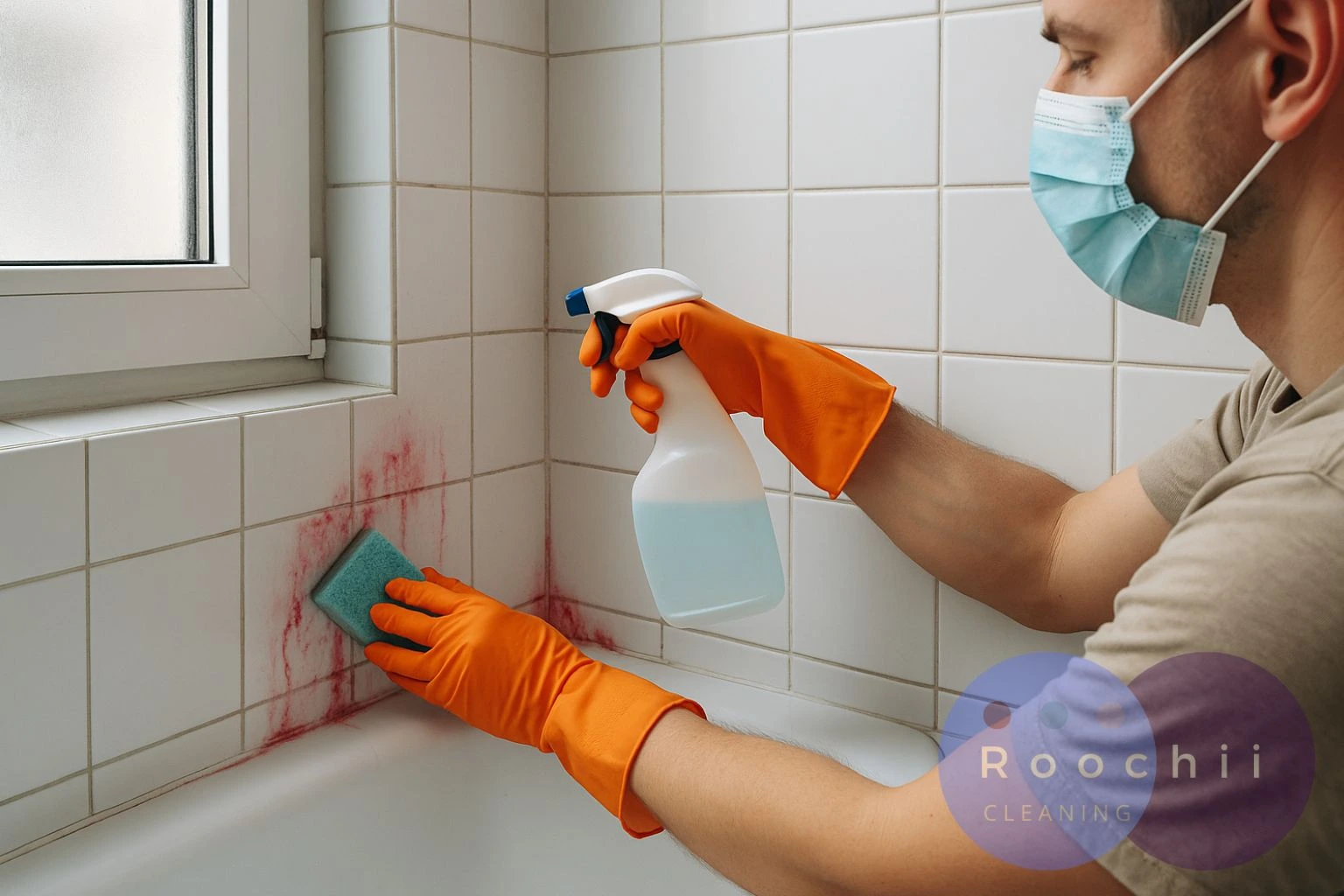
That pink stuff creeping along your shower tiles? It’s not even true mold. It’s usually a bacteria called Serratia marcescens, and while bleach might get it out of sight, it doesn’t always get rid of the deeper colonies or prevent them from returning with a vengeance.
In this guide, we’ll break down whether bleach is truly worth it, how fast it works, what it can and can’t do, and what might be way better at keeping pink mold away for good.
Table of Contents
How To Remove Pink Mold With Bleach
Here’s a step-by-step guide to removing pink mold from virtually any surface in your home. It will help you maximize the cleaning power of bleach while protecting your health and avoiding surface damage. Common problem areas, such as shower curtains, shower stains, dishwasher slime, or humidifier residue, often harbor pink mold without warning.
You might also notice patches on your fabrics, particularly in your towels, bathroom walls, ceiling discoloration, or a persistent pink ring in the toilet bowl, all of which can be treated using the same safe and effective methods outlined below.
What You’ll Need To Kill Pink Mold With Bleach
- Household bleach (unscented is best)
- Spray bottle
- Gloves and eye protection
- Ventilation (open windows, turn on fans)
- Scrub brush or sponge
- Clean cloths or paper towels
Step-by-Step Guide to Remove Pink Mold Using Bleach
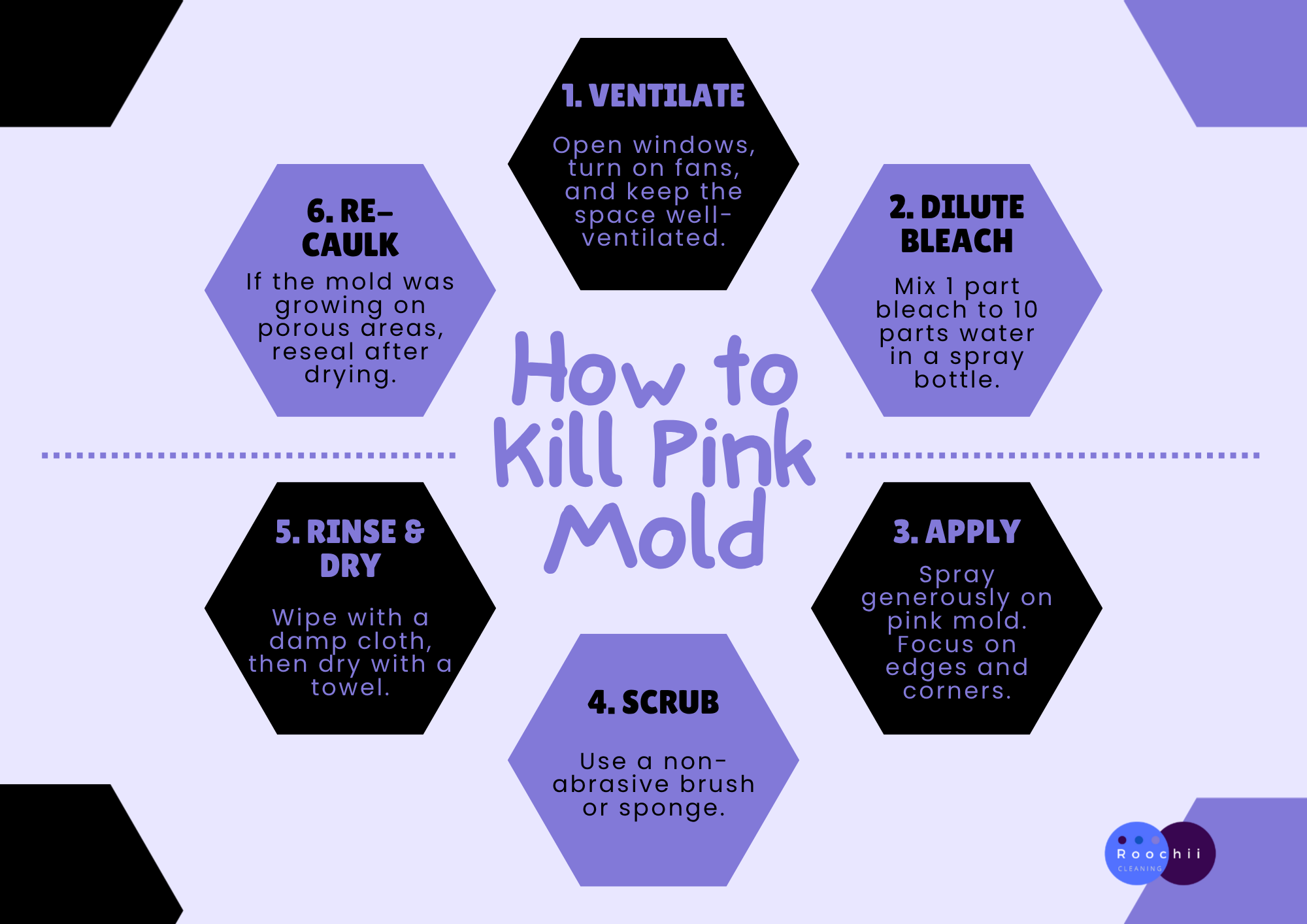
1. Ventilate the Area
Before you even open the bleach bottle, make sure your bathroom or cleaning area is properly ventilated. Open windows, turn on exhaust fans, and if possible, leave the door ajar.
Bleach fumes can cause irritation to the eyes, nose, and lungs, especially in small, enclosed spaces, as stated in a 2022 article on the health effects of sodium hypochlorite. Wearing a mask can also help reduce exposure.
2. Dilute the Bleach Safely
Never use bleach at full strength. Mix 1 part bleach to 10 parts water in a clean spray bottle. This diluted solution is strong enough to kill bacteria and disinfect without damaging most surfaces or evaporating too quickly.
3. Apply to the Affected Area
Generously spray the diluted bleach directly onto the pink mold. Make sure the entire affected area is covered, especially around edges, seams, or corners where bacteria can hide.
Let the solution sit undisturbed for at least 10–15 minutes to allow the bleach to fully break down the bacterial cell walls.
4. Scrub Away the Residue
After the dwell time, use a non-abrasive sponge, toothbrush, or scrub brush to gently scrub the area. The pink stain should begin lifting immediately.
Take your time, especially with textured surfaces or grout lines.
5. Rinse and Dry Thoroughly
Once you’ve scrubbed the area clean, wipe it down with a damp cloth or rinse with warm water to remove any lingering bleach. Then, use a dry towel or paper towel to absorb all residual moisture.
Remember: Moisture is pink mold’s best friend. Leaving it behind will only encourage a comeback.
6. Seal or Re-Caulk (Optional but Recommended)
If the mold was growing on old caulking, cracked grout, or porous surfaces, consider sealing or re-caulking after the area is completely dry. This prevents bacteria and moisture from creeping back in. You can use mold-resistant caulk or a grout sealer to add a long-term barrier.
Better Alternatives for Killing Pink Mold
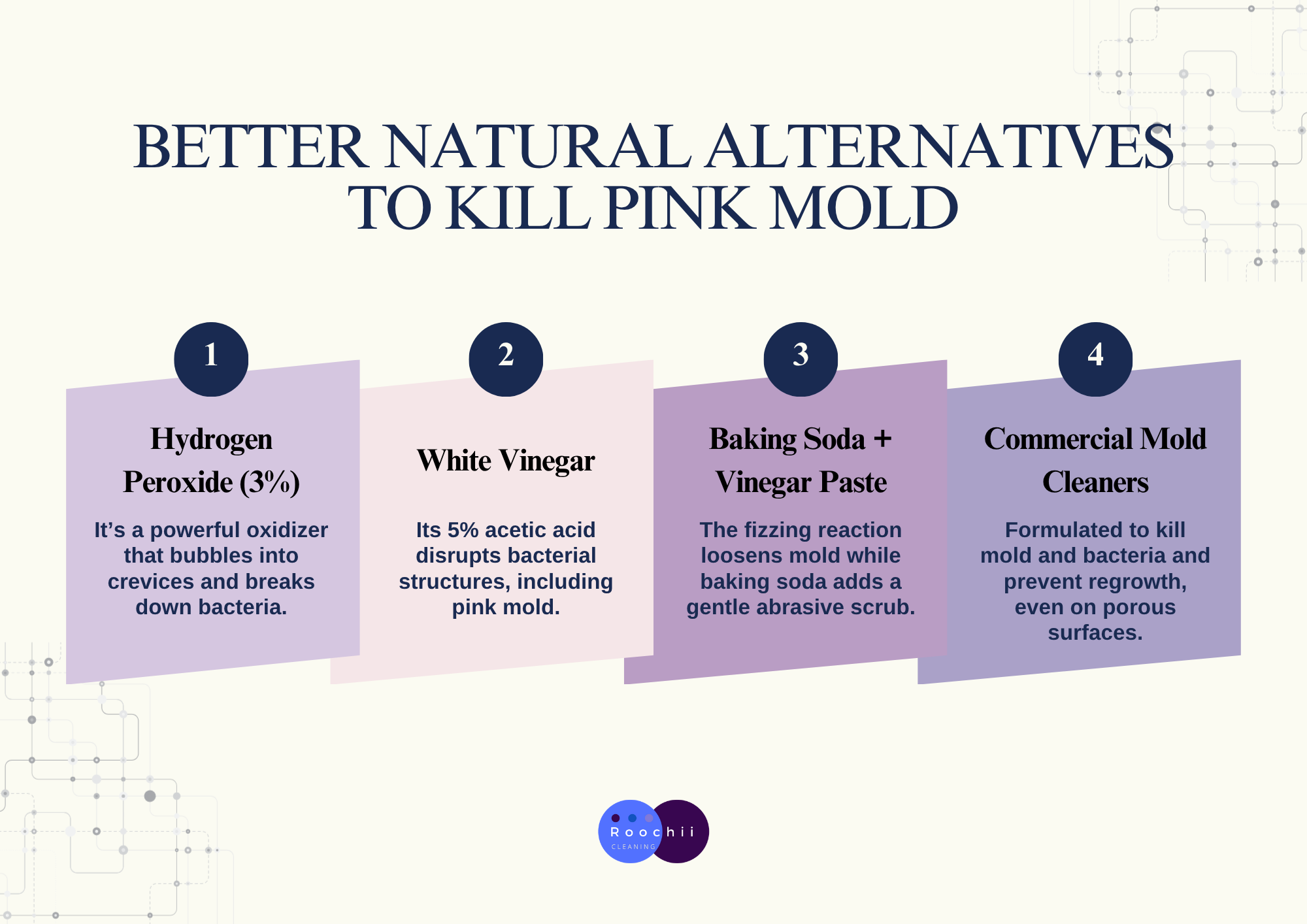
Here are trusted alternatives that not only kill pink mold but also help prevent it from coming back.
A. Hydrogen Peroxide (3%)
Hydrogen peroxide is a strong, natural oxidizer that destroys bacteria at a cellular level. Unlike bleach, it breaks down into oxygen and water, making it safer for both the environment and your surfaces.
- Why it works: It bubbles on contact, helping lift grime and kill mold in the nooks and crannies of porous materials like grout and unsealed tile.
- How to use: Pour 3% hydrogen peroxide into a spray bottle (no dilution needed), spray the affected area, let it sit for 10–15 minutes, then scrub and rinse.
- Bonus: It’s safe for most materials and doesn’t leave behind residues that encourage regrowth.
B. White Vinegar
You might have wondered if only vinegar could kill mold. Yes! White distilled vinegar is a tried-and-true natural cleaner that’s particularly effective against bacteria and mold spores.
- Why it works: Vinegar is acidic (around 5% acetic acid), which disrupts the structure of many mold species, including Serratia marcescens.
- How to use: Spray undiluted white vinegar directly on the pink mold and let it sit for at least an hour. Then scrub, rinse, and dry the area.
- Tip: Use weekly in moisture-prone areas to help prevent pink mold from forming again.
C. Baking Soda + Vinegar Paste
This combo is perfect for grout lines and textured surfaces, where pink mold tends to cling tightly.
- Why it works: Baking soda provides a mild abrasive texture for scrubbing, while vinegar delivers the acidity needed to kill bacteria.
How to use:
- Mix baking soda with just enough vinegar to create a paste.
- Apply to the affected area and let it fizz for 5–10 minutes.
- Scrub with a toothbrush or grout brush.
- Rinse and dry thoroughly.
D. Commercial Mold Cleaners
Sometimes natural methods aren’t enough, especially for recurring or heavy infestations. In that case, commercial-grade cleaners designed specifically for mold and bacteria are worth considering.
One reliable option is Lysol’s Mold & Mildew Remover and Disinfectant Spray, which not only kills mold on contact but also helps prevent it from coming back. It’s particularly effective on non-porous surfaces and ideal when you’re dealing with stubborn growth in damp areas.
- Why they work: These products are formulated to penetrate porous materials, kill mold on contact, and create a protective barrier that deters regrowth.
Conclusion: Is Bleach the Best Way to Kill Pink Mold?
Bleach is useful, but not the ultimate solution.
Yes, it kills pink mold fast on non-porous surfaces. Yes, it disinfects. And yes, it makes everything look clean. For a little bit.
But unless you’re pairing bleach with drying, sealing, and better bathroom ventilation, you’ll likely see that pink slime creep back in a few days or weeks.
So use bleach as a first responder because it’s cheap, powerful, and easy to use. But make sure that it’s not the only solution you do.
If pink mold is persistent, or if it shows up on porous surfaces, bring in the stronger (and smarter) reinforcements. And when you’ve exhausted everything, you can always call in the help of professional deep cleaning services.