What Cleaning Products Should Not Be Mixed: 8 Dangerous Combinations
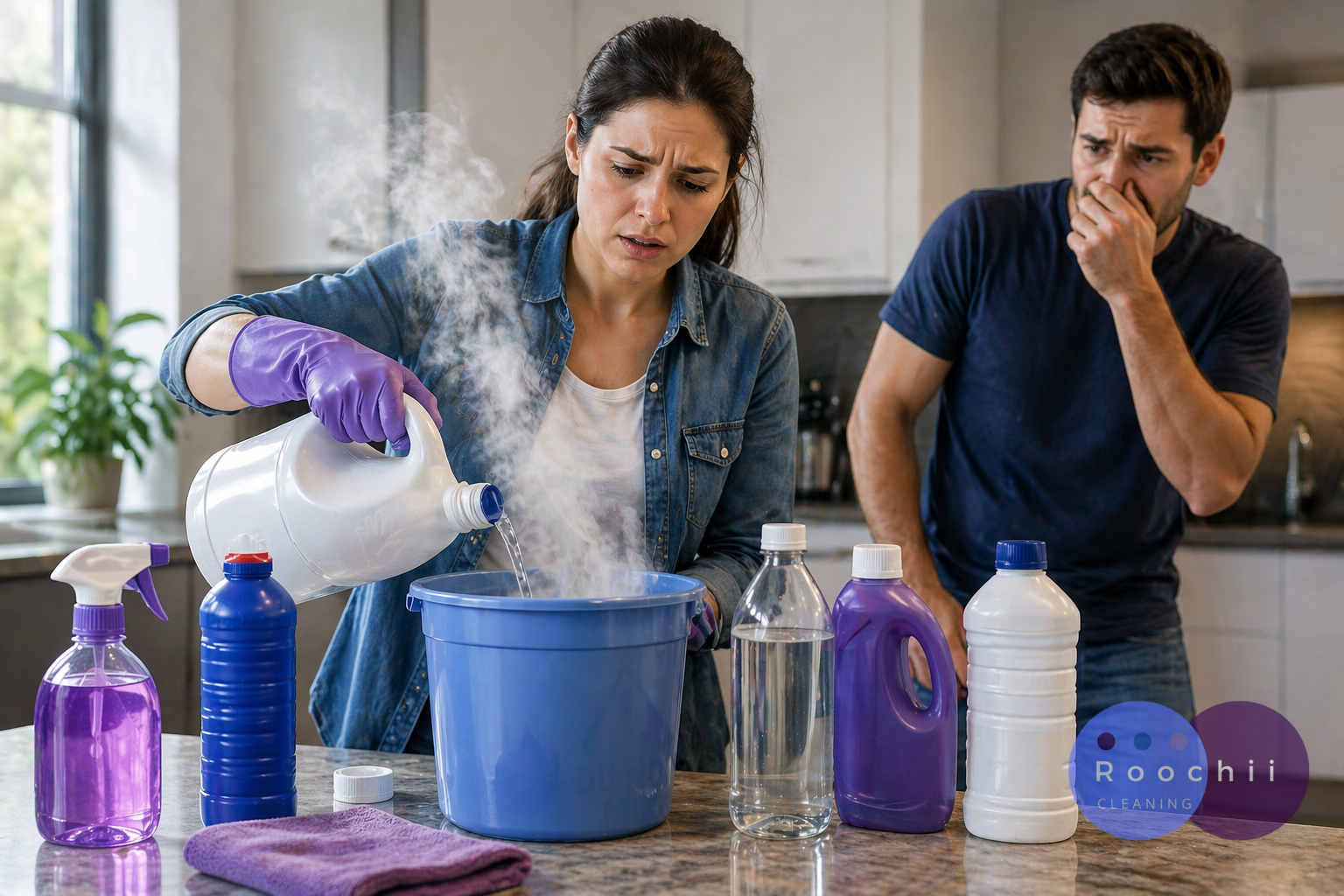
Woman mixing cleaning products in a bucket causing fumes, showing what cleaning products should not be mixed and the risks of chemical reactions

Why Shouldn’t You Mix Cleaning Products?

Ever mixed two cleaning products thinking it would make the job easier, only to notice a strong smell or sudden irritation? It may seem like a shortcut, but your lungs may not agree.

Knowing what cleaning products should not be mixed is essential for preventing dangerous chemical reactions at home.

Many household cleaners are effective and safe on their own, but combining them can trigger harmful reactions. These reactions may release toxic gases, corrosive compounds, or irritating vapors.

These effects can impact the eyes, skin, and lungs, and in some cases may lead to breathing problems or chemical burns.

Accidental mixing is more common than many people realize. According to the National Poison Data System, thousands of household cleaning product exposures involve mixtures of common cleaners.

One reason this happens so often is that many cleaners are marketed for similar purposes. People may assume combining products will make cleaning faster or more powerful. However, some ingredients can react unpredictably when mixed, sometimes creating toxic fumes within seconds.

Understanding which cleaning products should never be mixed helps prevent one of the most common household chemical hazards.

Table of Contents 

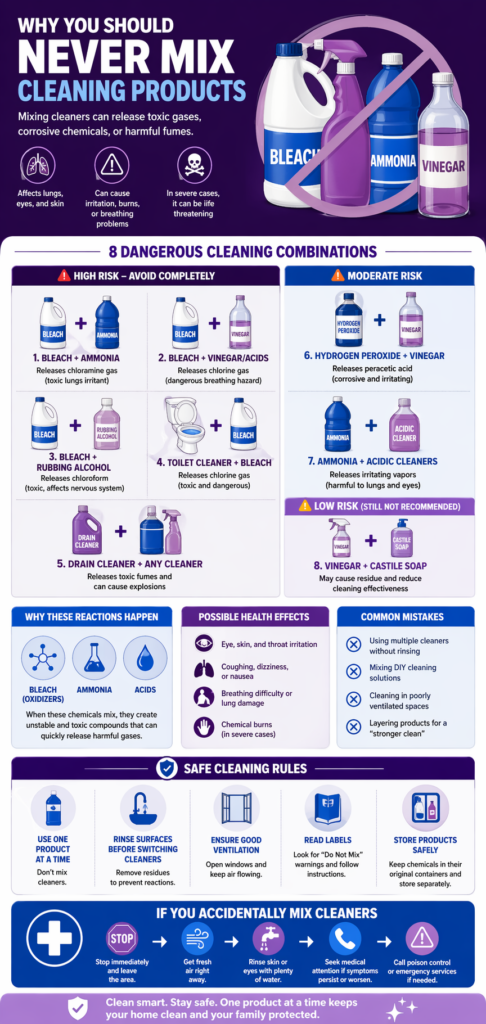
Infographic showing what cleaning products should not be mixed, including 8 dangerous combinations like bleach and ammonia, and their health risks

Why Mixing Cleaning Products Can Be Dangerous 

Mixing cleaning products may seem like a quick way to boost cleaning power, but it’s one of the most common and risky household cleaning mistakes. Many cleaners contain active chemicals designed to work safely on their own. When combined or even used back-to-back without rinsing, these ingredients can react and release harmful gases or corrosive compounds.

Health agencies warn that improper use of cleaning products is a frequent cause of exposure.

When certain cleaners mix, they can trigger chemical reactions that:

  • Release toxic gases into the air
  • Create corrosive substances that burn skin and eyes
  • Cause breathing problems, nausea, or dizziness

In fact, a clinical report from the University of Missouri, Kansas City School of Medicine documented cases of severe lung inflammation caused by exposure to mixtures of household products.

How Chemical Reactions Happen 

Many cleaning hazards occur when three major chemical groups interact: oxidizers, acids, and ammonia-based compounds.

Oxidizers, such as chlorine bleach, are powerful disinfectants designed to destroy bacteria and viruses. When bleach reacts with other chemicals, it can release highly irritating gases.

These reactions happen when chemicals interact and release unstable compounds into the air. Even small amounts can produce fumes, especially in enclosed spaces with limited ventilation.

Another overlooked risk is sequential use. If one product is applied to a surface and another cleaner is used immediately afterward without rinsing, residues can still react and produce the same harmful gases.

Severity Levels of Exposure 

Health effects from mixed cleaning chemicals can range from mild irritation to medical emergencies, depending on concentration and ventilation.

  • Mild irritation is the most common outcome. Symptoms may include eye watering, throat irritation, coughing, or mild skin redness after inhaling or touching fumes.
  • Respiratory distress can occur when toxic gasses irritate the airways. Individuals may experience persistent coughing, chest tightness, shortness of breath, or dizziness. People with asthma or respiratory conditions are especially vulnerable.
  • Chemical burns may occur if corrosive substances contact the skin or eyes. This can lead to redness, blistering, or severe irritation requiring medical attention.
  • Emergency-level exposure can occur when high concentrations of toxic gas are inhaled in enclosed spaces.

These risks highlight why mixing cleaning products rarely improves cleaning performance and can significantly increase health hazards. Using one product at a time, following label instructions, and ensuring proper ventilation are the safest ways to maintain an effective and healthy cleaning routine.

Why Bleach Is Especially Reactive 

Bleach is one of the most commonly used disinfectants in household cleaning, but it is also one of the most chemically reactive ingredients found in cleaning products. The active ingredient in most household bleach is sodium hypochlorite, a compound classified as a strong oxidizer.

Oxidizers work by breaking down the chemical structures of bacteria, viruses, stains, and organic matter. This process makes bleach extremely effective for disinfecting surfaces.

However, sodium hypochlorite reacts easily with other chemicals commonly found in household cleaners. Two of the most dangerous reactions involve ammonia and acids.

For example, if bleach is used after applying a toilet bowl cleaner that contains acids, even small amounts of residue can react and release chlorine gas. This can happen quickly, especially in enclosed spaces like bathrooms where ventilation is limited.

As explained earlier, bleach reacts with certain chemicals to form harmful gasses. While some products simply lose effectiveness when combined, bleach can create entirely new compounds that are hazardous to inhale or touch.

For this reason, some households choose bleach-free cleaning alternatives. Products based on hydrogen peroxide, alcohol, or other disinfecting agents can provide effective cleaning while reducing the risk of dangerous chemical reactions.

Most Dangerous Cleaning Product Combinations

Some cleaning product combinations are especially dangerous because they trigger chemical reactions that release toxic gases or corrosive compounds, so they should never be used together.

Below are the most common combinations and what happens when they are mixed.
 

Product A

Product B

Reaction Produced

Risk Level

Bleach

Ammonia

Chloramine gas

High

Bleach

Vinegar or acidic cleaners

Chlorine gas

High

Bleach

Rubbing alcohol

Chloroform and hydrochloric acid

High

Hydrogen peroxide

Vinegar

Peracetic acid

Moderate–High

Drain cleaner

Another drain cleaner

Toxic fumes and heat buildup

Very High

Toilet bowl cleaner

Bleach

Chlorine gas

High

Vinegar

Castile soap

Soap residue (reduced cleaning effectiveness)

Low

Ammonia

Acidic cleaners

Irritating chemical vapors

Moderate

1. Bleach and Ammonia 

This is one of the most dangerous and well-known cleaning chemical reactions. The Centers for Disease Control and Prevention (CDC) even warns against mixing bleach with anything as it can become toxic.

Bleach contains sodium hypochlorite, while ammonia is found in many glass cleaners, floor cleaners, and multipurpose sprays.

What forms: Chloramine gas

Symptoms: Coughing, chest tightness, burning eyes, throat irritation, shortness of breath

Severity level: High  

Why people accidentally mix it: This reaction often occurs when someone cleans a surface with an ammonia-based glass cleaner and then uses bleach for disinfecting without rinsing first. Because both products are commonly used in bathrooms and kitchens, it’s easy to apply them sequentially during the same cleaning routine.

2. Bleach and Vinegar (or Other Acidic Cleaners) 

Bleach should never be mixed with vinegar or any acidic cleaner. When these substances combine, they trigger a chemical reaction that releases chlorine gas.

Chlorine gas was historically used as a chemical weapon and can quickly irritate the respiratory system when inhaled. Even small amounts can cause symptoms, especially in enclosed areas

Bleach contains sodium hypochlorite, while vinegar and many toilet bowl cleaners contain acidic compounds.

What forms: Chlorine gas

Symptoms: Burning eyes, coughing, throat irritation, chest tightness, breathing difficulty

Severity level: High

Why people accidentally mix it: Both bleach and vinegar are widely used for disinfecting and removing stains or mineral buildup. People often apply vinegar to remove scale or soap scum and then use bleach afterward to sanitize the area, not realizing that leftover residue can trigger a dangerous reaction.

3. Bleach and Rubbing Alcohol 

Mixing bleach with rubbing alcohol (isopropyl alcohol) can produce chloroform, a chemical compound that releases toxic vapors. Chloroform exposure can affect the nervous system and may cause dizziness, confusion, or fainting if inhaled in sufficient amounts. Because both products are commonly used for disinfecting surfaces, this reaction can occur unintentionally during routine cleaning.

Bleach contains sodium hypochlorite, while rubbing alcohol is commonly used as a disinfectant and sanitizing agent.

What forms: Chloroform and hydrochloric acid

Symptoms: Dizziness, headache, nausea, confusion, breathing irritation

Severity level: High

Why people accidentally mix it: This often happens when people wipe surfaces with rubbing alcohol after previously cleaning with bleach. If the bleach residue has not been rinsed away, the alcohol can react with it and form chloroform vapors.

3. Hydrogen Peroxide and Vinegar 

While hydrogen peroxide and vinegar are often viewed as safer or more natural cleaning options, mixing them creates a corrosive substance called peracetic acid. The Institute for Environmental Research and Education (IERED) warns against mixing the two because it can go wrong in uncontrolled conditions.

Hydrogen peroxide is a disinfectant, while vinegar contains acetic acid.

What forms: Peracetic acid

Symptoms: Skin irritation, eye irritation, throat discomfort, breathing irritation

Severity level: Moderate to High

Why people accidentally mix it: Many DIY cleaning guides recommend both ingredients for disinfecting surfaces. People sometimes combine them in a spray bottle or apply them at the same time in hopes of creating a stronger cleaner.

4. Drain Cleaners and Any Other Cleaning Product 

Drain cleaners are designed to be extremely powerful and should always be used on their own. Mixing them with other cleaners or even another drain cleaners can be extremely dangerous.

Some drain cleaners contain sodium hydroxide (lye), while others use sulfuric acid or oxidizing chemicals.

What forms: Toxic fumes, extreme heat buildup, or violent chemical reactions

Symptoms: Chemical burns, toxic gas exposure, severe irritation

Severity level: Very High

Why people accidentally mix it: When a clog doesn’t clear after using one product, people may immediately try another brand or formula. Mixing these chemicals inside the drain can cause dangerous reactions within the pipes.

6. Toilet Bowl Cleaner and Bleach 

Many toilet bowl cleaners contain strong acids designed to dissolve mineral deposits and stains. When these acidic cleaners come into contact with bleach, they release chlorine gas.

Toilet bowl cleaners often contain hydrochloric acid, while bleach contains sodium hypochlorite.

What forms: Chlorine gas

Symptoms: Burning eyes, coughing, throat irritation, breathing difficulty

Severity level: High

Why people accidentally mix it: People sometimes try to boost disinfecting power by adding bleach to the toilet after applying toilet bowl cleaner. If the cleaner has not been fully rinsed away, the mixture can release chlorine gas.

7. Vinegar and Castile Soap 

While this combination does not produce toxic gases, it still causes a chemical reaction that reduces cleaning effectiveness. When vinegar (an acid) is mixed with Castile soap, it breaks down the soap molecules and forms a cloudy residue known as soap curd.

Vinegar contains acetic acid, while Castile soap is made from plant-based oils and alkaline soap compounds.

What forms: Soap residue (soap curd)

Symptoms: None directly, but leaves film and streaks on surfaces

Severity level: Low

Why people accidentally mix it: Many DIY cleaning recipes include both vinegar and Castile soap as natural cleaning ingredients. When combined in the same container, the mixture separates and becomes less effective.

8. Ammonia and Acidic Cleaners 

Ammonia can react with acidic cleaners to create irritating vapors that affect the respiratory system. While this reaction is not always as severe as bleach-related mixtures, it can still cause discomfort and breathing irritation.

Ammonia is commonly found in glass cleaners, while acidic cleaners are used for removing mineral deposits and soap scum.

What forms: Irritating gases and chemical vapors

Symptoms: Coughing, throat irritation, eye irritation, breathing discomfort

Severity level: Moderate

Why people accidentally mix it: This usually happens when multiple bathroom cleaners are used in a short time without rinsing surfaces in between. Residue from an acidic cleaner can react with ammonia-based products applied afterward.  

These risks can be avoided by following simple but effective cleaning practices.

How Accidental Mixing Happens 

Many dangerous cleaning reactions don’t happen because someone intentionally mixes products together. In most cases, accidental mixing occurs during everyday cleaning routines, often when people try to clean quickly or assume multiple products will work better together.

Common Ways Cleaning Products Get Mixed Accidentally 

  • Cleaning a toilet with multiple products: A person may use a toilet bowl cleaner first and then apply bleach or a disinfecting spray shortly afterward. If the first product contains acidic ingredients, leftover residue can react with bleach and release harmful gases.
  • Using multiple sprays in a small bathroom: Glass cleaner, disinfectant spray, and mildew remover may all be used within minutes in a poorly ventilated space. Even if the products are applied to different surfaces, their fumes can mix in the air.
  • Mixing DIY cleaning recipes: Some homemade cleaning tips suggest combining ingredients like vinegar, hydrogen peroxide, or baking soda. While some combinations are harmless, others can create irritating or unstable chemical reactions.
  • Applying cleaners on surfaces without rinsing first: Residue from a previous cleaner can remain active even after it dries. Applying another product too soon may cause a chemical reaction on the surface.
  • Mixing products inside household drains: Pouring different cleaners down the sink or toilet can cause reactions inside the pipes. In some cases, gases may travel back up into the room.
  • Layering products for a “stronger clean”: Some people believe combining products will increase cleaning power. In reality, this often reduces effectiveness while increasing chemical risks.

Using cleaning wipes after spraying another product is another common scenario. The wipe may contain its own cleaning agents that react with residue left on the surface. Similarly, mixing products in a bucket or mopping water without checking ingredients can create unintended chemical combinations.

Understanding how these situations occur makes it easier to prevent them with safer cleaning habits.

How to Identify Cleaning Products That Should Not Be Mixed 

Preventing dangerous mixing starts with knowing how to recognize risky products.

Here’s what to look for:

  • Active ingredients such as bleach, ammonia, acids, or hydrogen peroxide
  • Warning labels with terms like “Danger,” “Warning,” or “Do Not Mix”
  • Hazard symbols indicating corrosive or toxic substances

Many common household products contain these ingredients even if they are not clearly labeled on the front. For example, glass cleaners often contain ammonia, while toilet bowl cleaners and limescale removers typically contain acids such as hydrochloric acid. Bleach-based cleaners are usually labeled as disinfectants or whitening agents.

Reading the ingredient list on the back label can help identify these compounds. Look for terms such as sodium hypochlorite (bleach), ammonia, or acidic compounds. Even if the product seems familiar, ingredients can vary between brands, so checking labels regularly is a good safety habit.

It’s also important to be cautious with DIY or online cleaning recipes. Even though it may be commonly advised online, it’s not always safe to do.

Not all advice accounts for chemical reactions, and mixing products without proper knowledge can be unsafe.

When in doubt, the safest approach is simple: don’t mix products unless the manufacturer specifically says it’s safe.

Safe Cleaning Practices to Prevent Dangerous Mixing 

Preventing dangerous chemical reactions during cleaning doesn’t require specialized training. It comes down to using simple, consistent safety habits.

Professional cleaners follow strict protocols to protect themselves and the environments they work in, but the same principles apply at home. By following a few science-based precautions, you can significantly reduce the risk of chemical exposure while maintaining an effective cleaning routine.

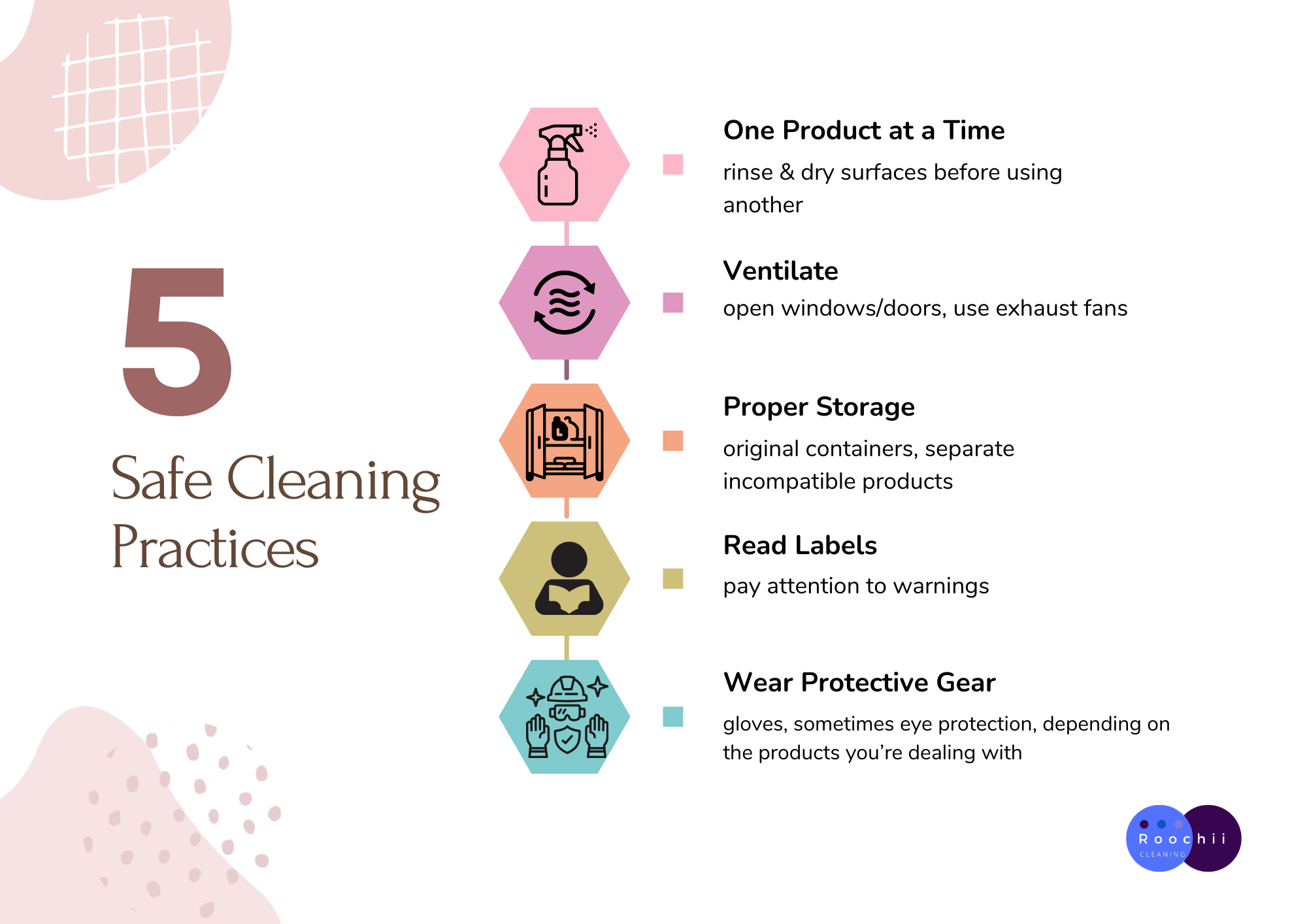
Infographic showing what cleaning products should not be mixed and 5 safe cleaning practices like using one product at a time and proper ventilation

A. Follow the One-Product-at-a-Time Rule 

The safest approach to cleaning is straightforward: use only one product at a time on a surface.

Different cleaners contain different chemical families that can react when combined. Even if the reaction isn’t immediately visible, harmful gases can still form.

If you need to switch to another cleaner:

  1. Stop and rinse the surface first
  2. Remove all visible residue
  3. Allow the area to dry before applying the next product

This simple habit prevents most accidental chemical reactions during household cleaning.

B. Rinse Thoroughly Between Products 

Residue left behind from a previous cleaner can still react with the next one you use. Thoroughly rinsing surfaces with water removes leftover chemicals and reduces the risk of mixing products unintentionally.

For example, if a surface still contains traces of bleach and an acidic cleaner is applied, the reaction can produce chlorine gas even if the products were not mixed directly.

C. Prioritize Proper Ventilation 

Ventilation reduces the concentration of chemical vapors in indoor air. Without adequate airflow, fumes can build up quickly, especially in small enclosed spaces like bathrooms, laundry rooms, and closets.

Best practices include:

  • Opening windows and doors when possible
  • Using bathroom or kitchen exhaust fans
  • Avoiding heavy cleaning in enclosed spaces without ventilation

These steps help disperse fumes and reduce irritation to the eyes, throat, and lungs.

D. Store Cleaning Products Safely 

Proper storage is an often overlooked safety measure. Storing incompatible products together increases the chance of accidental mixing or spills.

Follow these guidelines:

  • Keep cleaners in their original labeled containers
  • Never transfer chemicals into food containers or unlabeled bottles
  • Store bleach away from ammonia-based or acidic cleaners
  • Keep products in a cool, dry cabinet with good ventilation

For households with children or pets, storage is even more important. Cleaning chemicals should be kept out of reach or in locked cabinets, as accidental ingestion is one of the most common reasons for poison control calls involving household products.

E. Read Labels Before Every Use 

Even familiar products can contain ingredients you may not expect. Always take a moment to read the label, especially when using a cleaner you haven’t used recently. Pay attention to warnings like “Do Not Mix” or “Use in a Well-Ventilated Area.”

F. Use Basic Protective Gear 

Wearing gloves can help protect your skin from irritation or chemical exposure. In some situations, eye protection may also be helpful, especially when using stronger cleaners or working in tight spaces.

Safe Cleaning Checklist   

Safety Step

What To Do

Why It Matters

Use One Product at a Time

Apply only one cleaner to a surface before switching to another.

Prevents chemical reactions between incompatible ingredients.

Rinse Surfaces Fully

Wash the surface with clean water and wipe away residue before using another product.

Removes leftover chemicals that could react with the next cleaner.

Ensure Good Ventilation

Open windows, use exhaust fans, or allow fresh air circulation while cleaning.

Reduces buildup of fumes that can irritate lungs and eyes.

Store Products Properly

Keep cleaners in their original containers and store incompatible products separately.

Prevents accidental mixing, misuse, and spills.

Read Labels Carefully

Check instructions and warnings before each use.

Labels provide critical safety guidance such as “Do Not Mix.”

What to Do If Cleaning Products Are Mixed by Accident 
Accidents can happen, even when you’re being careful. If cleaning products are mixed unintentionally, acting quickly and calmly can help reduce the risk of injury.

A. Stop Cleaning Immediately 

As soon as you realize products may have mixed, stop cleaning right away. Do not continue scrubbing the surface or attempt to dilute the mixture with another cleaner. Adding more chemicals can intensify the reaction and release additional fumes.

Just as importantly, do not attempt to “neutralize” the mixture with another household product. Many dangerous exposures occur when people try to fix a reaction by adding more cleaners. The safest response is to leave the mixture undisturbed.

B. Leave the Area and Get Fresh Air 

As recommended by the American Lung Association, you have to move away from the area right away, especially if you notice strong odors or fumes. Fresh air helps reduce exposure and lowers the chance of breathing in harmful gases.

If it’s safe to do so:

  • Open windows and doors
  • Turn on exhaust fans
  • Keep the area closed off until fumes dissipate

C. If Exposure Occurs

Chemical exposure can occur through several routes. The response depends on how contact happened.

Inhalation Exposure 

If fumes are inhaled:

  1. Move to fresh air immediately
  2. Loosen tight clothing
  3. Rest and breathe slowly

Seek medical help if you experience persistent coughing, chest tightness, or breathing difficulty.

Skin Contact 

If the mixture touches your skin:

  1. Rinse the affected area with running water for at least 15 minutes
  2. Remove contaminated clothing or gloves
  3. Wash gently with mild soap after rinsing

If skin irritation continues or burns develop, seek medical advice.

Eye Contact 

If chemicals splash into the eyes:

  1. Flush the eyes with clean, lukewarm water for at least 15 minutes
  2. Avoid rubbing your eyes
  3. Remove contact lenses if possible during rinsing

Medical attention may be needed if irritation or vision problems persist.
 

Accidental Ingestion 

If someone accidentally swallows cleaning chemicals:

  1. Do not induce vomiting
  2. Rinse the mouth with water if the person is conscious
  3. Contact Poison Control immediately

D. When to Call Poison Control or Emergency Services 

If you are unsure about the level of exposure, contacting Poison Control Center (1-800-222-1222) can provide immediate guidance.

Seek emergency medical care if any of the following symptoms occur:

  • Severe difficulty breathing
  • Chest pain or tightness
  • Persistent vomiting
  • Severe eye pain or vision changes
  • Confusion or loss of consciousness

These may indicate a serious chemical exposure requiring urgent treatment.


Conclusion: Why Cleaning Products Should Not Be Mixed

Understanding what cleaning products should not be mixed is essential for maintaining a safe home. While many household cleaners are effective on their own, combining them or using them too quickly one after another can trigger dangerous chemical reactions.

Some of the most hazardous combinations involve common ingredients. For example, bleach and ammonia can produce chloramine gases that irritate the lungs, while bleach and acidic cleaners like vinegar or toilet bowl cleaners can release chlorine gas. Even mixtures that appear harmless, such as hydrogen peroxide and vinegar, can form corrosive compounds when combined improperly. These reactions often occur quickly and may be more dangerous in enclosed spaces like bathrooms or laundry rooms where fumes can build up.

The safest approach is to follow a few simple principles: use one cleaning product at a time, rinse surfaces thoroughly before switching cleaners, and read product labels carefully. Proper ventilation and safe storage also help reduce the risk of accidental exposure.

Most cleaning accidents happen unintentionally, often due to rushed routines or misinformation.

When in doubt, keeping things simple is always the safest choice.

FAQ

Frequently Asked Questions on Mixing Cleaning Products

Leave a Reply

Your email address will not be published. Required fields are marked *