Skip to content

Where Should Cleaning Supplies Be Stored?
Where Should Cleaning Supplies Be Stored at Home: Safety First
So, where should cleaning supplies be stored? Simple: in a cool, dry, well-ventilated spot that’s out of reach of children, pets, and anyone who thinks drinking bleach is a bold life choice.
The truth is, most of us just shove bottles under the sink and hope for the best. But that “junk drawer for chemicals” approach can backfire. Sometimes literally.
Strong cleaning chemicals don’t just smell bad; if stored wrong, they can leak, react, or even create toxic fumes that turn your kitchen into a low-budget science experiment.
Safe storage, along with the best cleaning tips, can make a huge difference in keeping your home fresh, healthy, and hazard-free.
In this article, you’ll learn:
Best Places to Store Cleaning Supplies in the Home
When it comes to storage, different spaces will have different needs. The right spot depends on both safety and convenience.
Below, you can see the most common areas people use, along with practical tips to make each one safer and more organized.
A. Kitchen and Pantry Cleaning Supplies Storage Options
The kitchen is often the cleaning central, but it’s also where food is prepared, which means storage mistakes can be a problem.
One of the most common spots for cleaning products is under the kitchen sink. This works if you live alone or with adults, but in homes with children, this can be risky
If you’re keeping supplies here, make sure safety comes first.
Keeping your cleaning supplies safe and organized doesn’t have to be complicated. You can tuck them under the sink, arrange them in bins, or dedicate an entire space to storage. These will all make a big difference.
Tips For Kitchen Storage
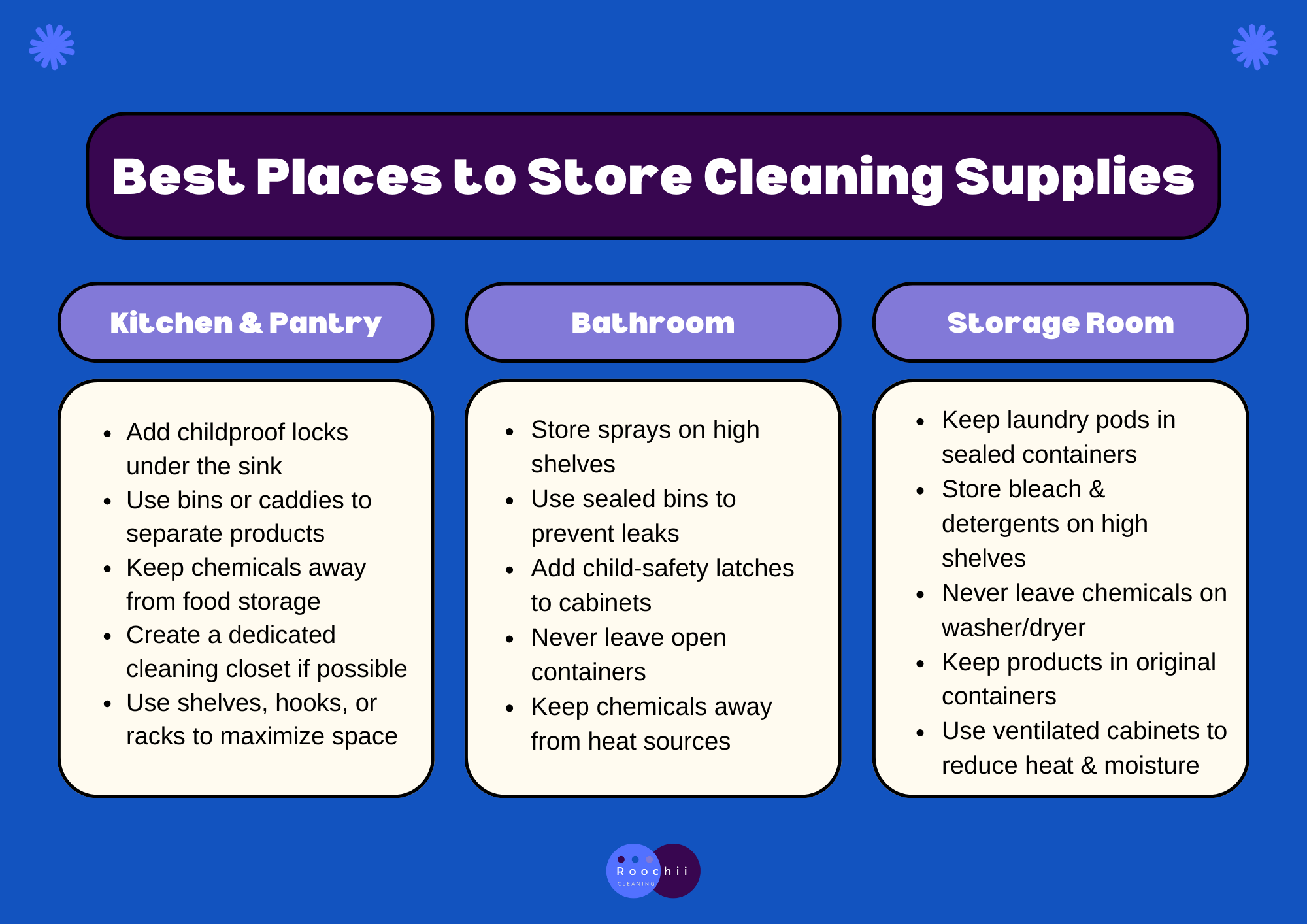
- If storing under the sink, add a childproof lock to prevent little hands from getting curious.
- Use bins or caddies to separate products like dish soap, sprays, and wipes to avoid spills.
- Keep all chemicals away from food storage areas (no mixing with pasta and canned goods).
- For larger homes, consider a dedicated cleaning closet or tall pantry cabinet for safe, organized storage.
- Add shelves, hooks, or door racks to maximize vertical space for mops, dusters, and spray bottles.
B. Bathroom Cleaning Supplies Storage Safety
Bathrooms are a convenient place to keep toilet bowl cleaners, sprays, and scrubbing brushes.
But with constant humidity and smaller storage areas, it can also be one of the riskiest. High moisture levels can cause products to degrade faster, and kids often have easy access to bathroom cabinets.
If you do store cleaners here, use sealed containers and keep them high up or behind childproof locks. Always separate chemicals from personal care items to avoid confusion.
Tips for Bathroom Storage
- Store cleaning sprays and scrubs on a high shelf, away from toiletries and medications.
- Use sealed bins or organizers to protect products from humidity and leaks.
- Install child-safety latches on low bathroom cabinets.
- Never leave open containers or half-used products lying around.
- Keep products away from heaters or hot water pipes, since some chemicals are flammable.
C. Laundry Room Cleaning Supplies Storage Safety
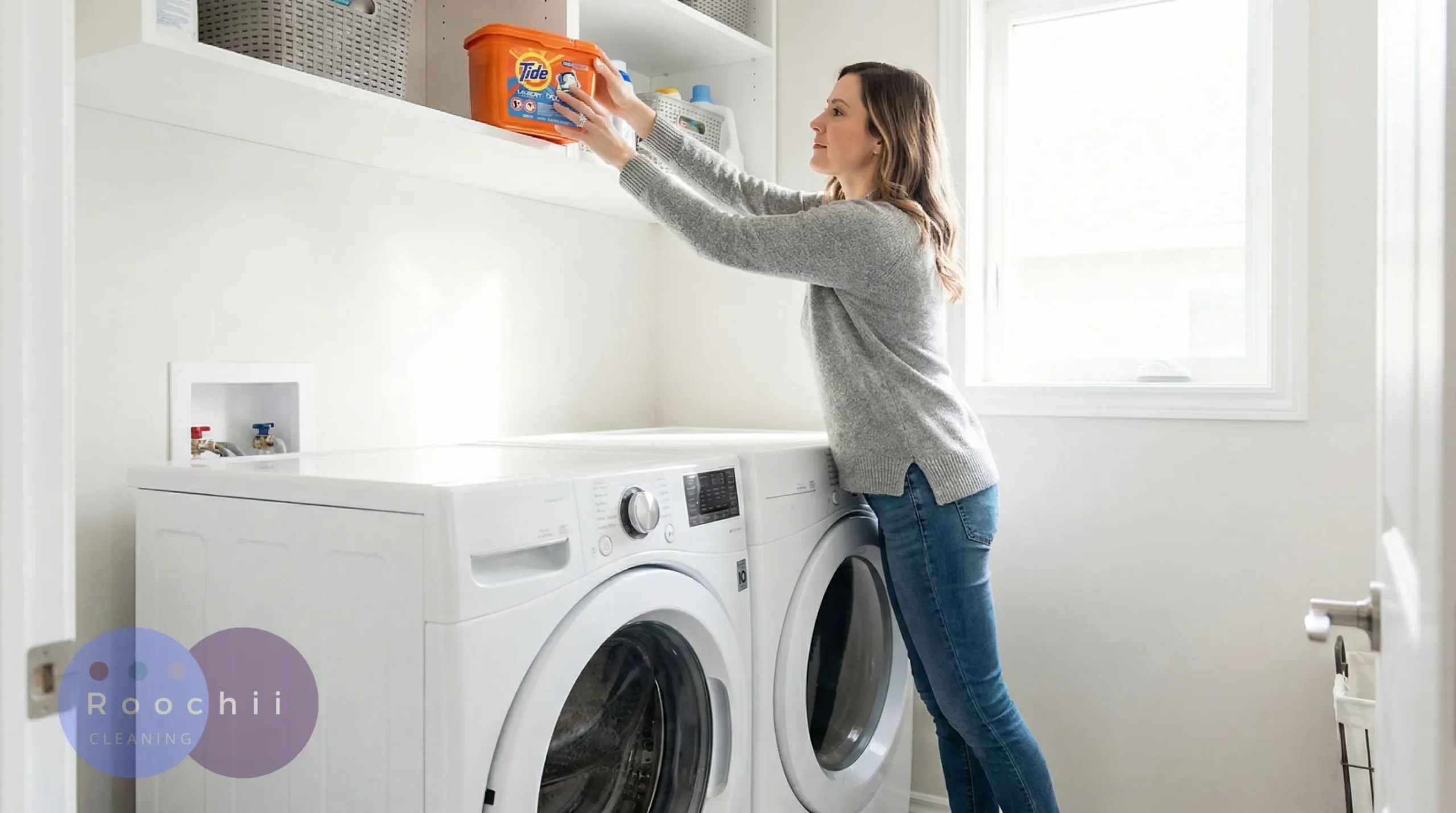
The laundry room tends to attract the heavy-duty stuff in cleaning: bleach, detergents, stain removers, and those infamous laundry pods.
But because it’s a high-traffic area, it’s easy to leave products out in the open where kids or pets can reach them. In fact, a survey by the American Cleaning Institute revealed that 35% of adults admit to storing liquid laundry packets within reach or sight of children. This is a habit that significantly increases the risk of accidental exposure, not only to children, but to adults alike.
To keep this space safe, use cabinets or shelves above washer/dryer height. Consider adding ventilation if the room gets hot or damp.
Tips for Laundry Room Storage
- Always store laundry pods in sealed containers and keep them out of sight.
- Place bleach, detergents, and stain removers on high shelves or in locked cabinets.
- Never leave chemicals sitting on top of the washer or dryer where they can spill.
- Store powders and liquids in their original containers to avoid dangerous mix-ups.
- Add a ventilated cabinet to reduce heat and moisture damage.
Smart Storage Tips for Small Homes and Apartments
Not everyone has the luxury of having a lot of space in their homes. Some can’t have a separate room or cabinet for cleaning supplies. In smaller spaces, figuring out where cleaning supplies should be stored can feel like a game of Tetris.
With limited cabinets and closets, it’s tempting to stash sprays under the bed or wedge a mop behind the couch (no judgment, we’ve all been there). But with a little creativity, even the tiniest apartment can have a safe, organized cleaning setup.
The trick is to think vertically, use multi-purpose storage solutions, and keep only the essentials on hand. That way, your supplies stay accessible without eating up precious square footage.
Tips for Small Space Cleaning Supply Storage
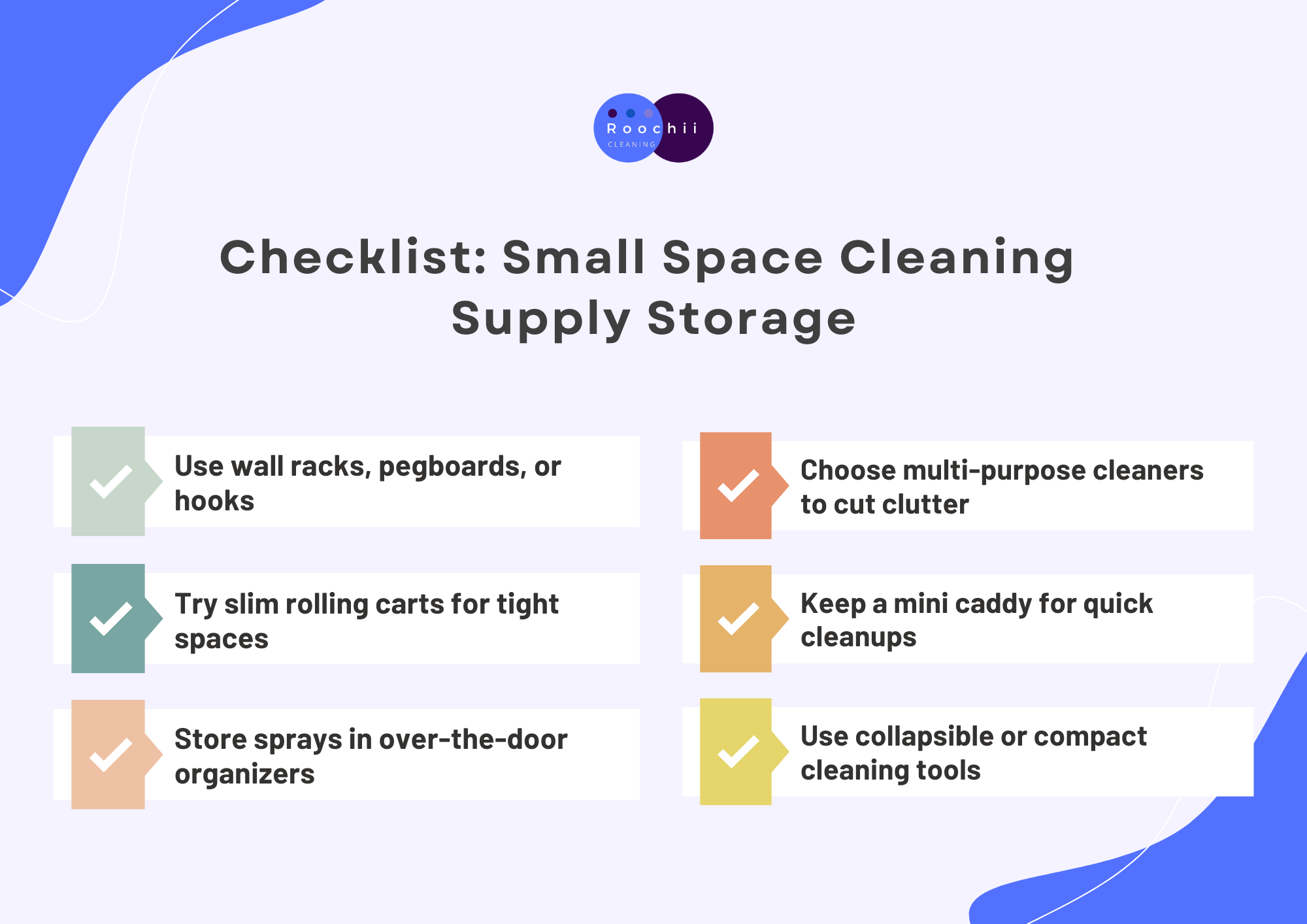
- Use vertical space with wall-mounted racks, pegboards, or hanging hooks.
- Try a slim rolling cart that fits between appliances or in narrow hallways for everyday products.
- Store sprays and wipes in over-the-door organizers for closets, pantries, or bathrooms.
- Opt for multi-purpose cleaners instead of a dozen single-use products to cut down on clutter.
- Keep a mini caddy under the kitchen sink or in the bathroom for quick cleanups.
- If you’re truly tight on space, consider collapsible or compact cleaning tools that tuck away neatly.
It’s okay for space to run short. If it’s a big struggle for you, especially when time’s an issue, too, booking a deep cleaning service can be a lifesaver, giving your home a fresh reset without the stress.