How to Clean Muddy Paws & Protect Your Home
Why Learning How to Clean Muddy Paws Matters
For pet owners, muddy paw prints are practically unavoidable. What starts as a few harmless prints can quickly turn into a trail that somehow reaches every room in the house.
That’s why understanding how to clean muddy paws properly is more important than many people realize. What starts as a few harmless prints can quickly turn into a frustrating cleaning problem if it isn’t handled the right way.
The biggest mistake many homeowners make is waiting too long to deal with the mess. What could have been a quick wipe often turns into a deeper cleaning task once mud settles into fibers, grout lines, and textured surfaces. When it’s left to dry, those particles settle deeper into fibers, grout lines, and floor textures. A small delay can transform a quick wipe into a stubborn stain.
Using the wrong cleaning method can make things worse. Scrubbing too aggressively, applying excess water, or using the wrong products can spread dirt further or push it deeper into surfaces. Instead of solving the problem, these mistakes often make muddy stains harder to remove and may even damage delicate surfaces over time.
The good news is that cleaning muddy paw prints becomes much easier with the right approach. A simple, consistent routine can prevent stains before they settle and reduce the effort needed to keep your home clean.
Here’s how to clean muddy paws properly and keep your floors, carpets, and furniture protected.
Table of Contents
- Why Muddy Paw Prints Become So Difficult to Remove
- The Difference Between Cleaning the Source vs Cleaning the Surface
- How to Clean Muddy Paws Properly Before They Enter Your Home
- How to Clean Muddy Paw Prints Off Carpet Without Damaging Fibers
- How to Clean Muddy Paw Prints Off Hardwood, Tile, and Laminate Floors
- How to Clean Muddy Paw Prints Off Car Seats and Upholstery
- How to Stop Muddy Paw Prints Before They Happen
- Common Mistakes When Cleaning Muddy Paw Prints
- When Professional Cleaning Is Necessary
Why Muddy Paw Prints Become So Difficult to Remove
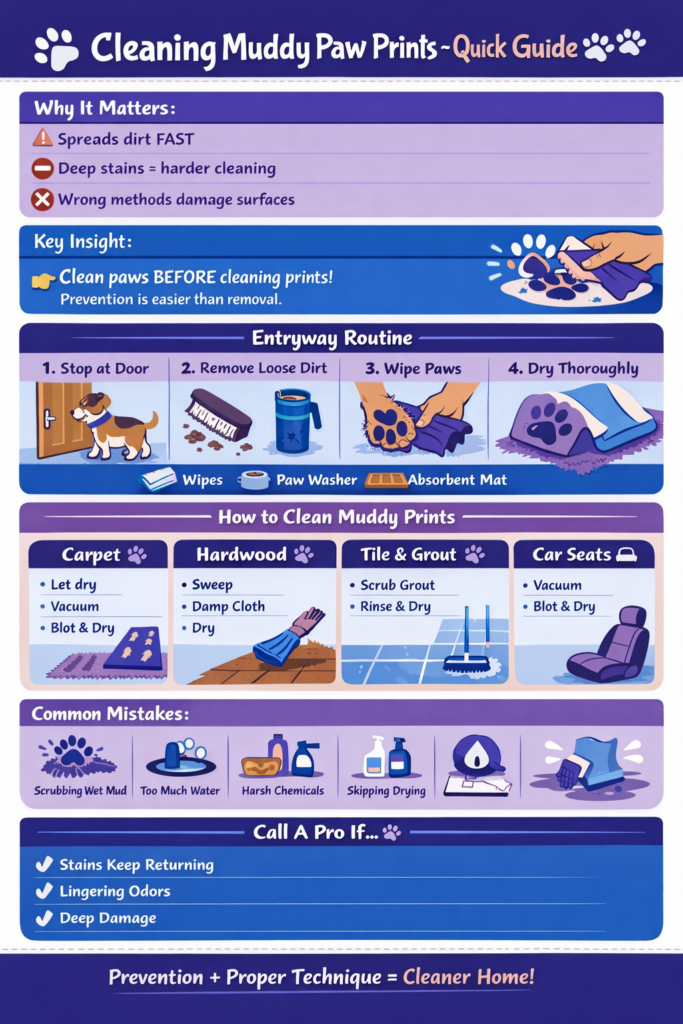
Mud seems harmless at first, but its structure makes it difficult to remove later. Wet soil contains fine particles, organic matter, and water that bind together easily. When a dog walks across indoor surfaces, these particles transfer directly from paw pads into floors, carpets, and fabrics.
Carpet is especially vulnerable because of its fiber structure. Wet mud slips between the fibers and settles near the base of the carpet pile. Once it dries, the soil hardens and anchors itself inside the fibers.
Drying is where the real problem begins. As moisture evaporates, soil particles tighten their grip on surrounding fibers and textures. This bonding process makes the stain harder to lift with simple wiping.
Many homeowners respond by scrubbing the area aggressively, but it pushes dirt deeper instead of removing it.
A better approach focuses on controlled removal instead of friction. The basic process looks like this:
- Allow thick mud to dry slightly before disturbing it
- Remove loose soil first using gentle brushing or vacuuming
- Apply minimal moisture to lift remaining residue
- Blot rather than scrub to prevent spreading
Using this sequence reduces fiber damage and removes soil more efficiently. It also prevents muddy stains from expanding across the surface.
The Difference Between Cleaning the Source vs Cleaning the Surface
Most people focus only on cleaning the mess after it appears. They search for ways to remove paw prints from floors or carpets. While this helps, it treats the symptom rather than the source.
The real source of muddy prints is the dog’s paws. Every step indoors transfers moisture and soil onto multiple surfaces. By the time stains are visible, mud has already spread through the home.
Cleaning paws before the dog enters creates a much easier solution. This prevents mud from bonding with flooring or fabric fibers.
The most effective strategy uses two simple layers of defense:
- Step 1: Clean the paws at the entry point
- Step 2: Address any prints that still appear
This two-step system dramatically reduces the effort needed later. Preventing mud from entering the home is far easier than removing dried stains from multiple surfaces.
Once you understand how soil bonds with materials, cleaning becomes more predictable.
How to Clean Muddy Paws Properly Before They Enter Your Home
The Immediate Entryway Routine (Fast Method for Daily Use)
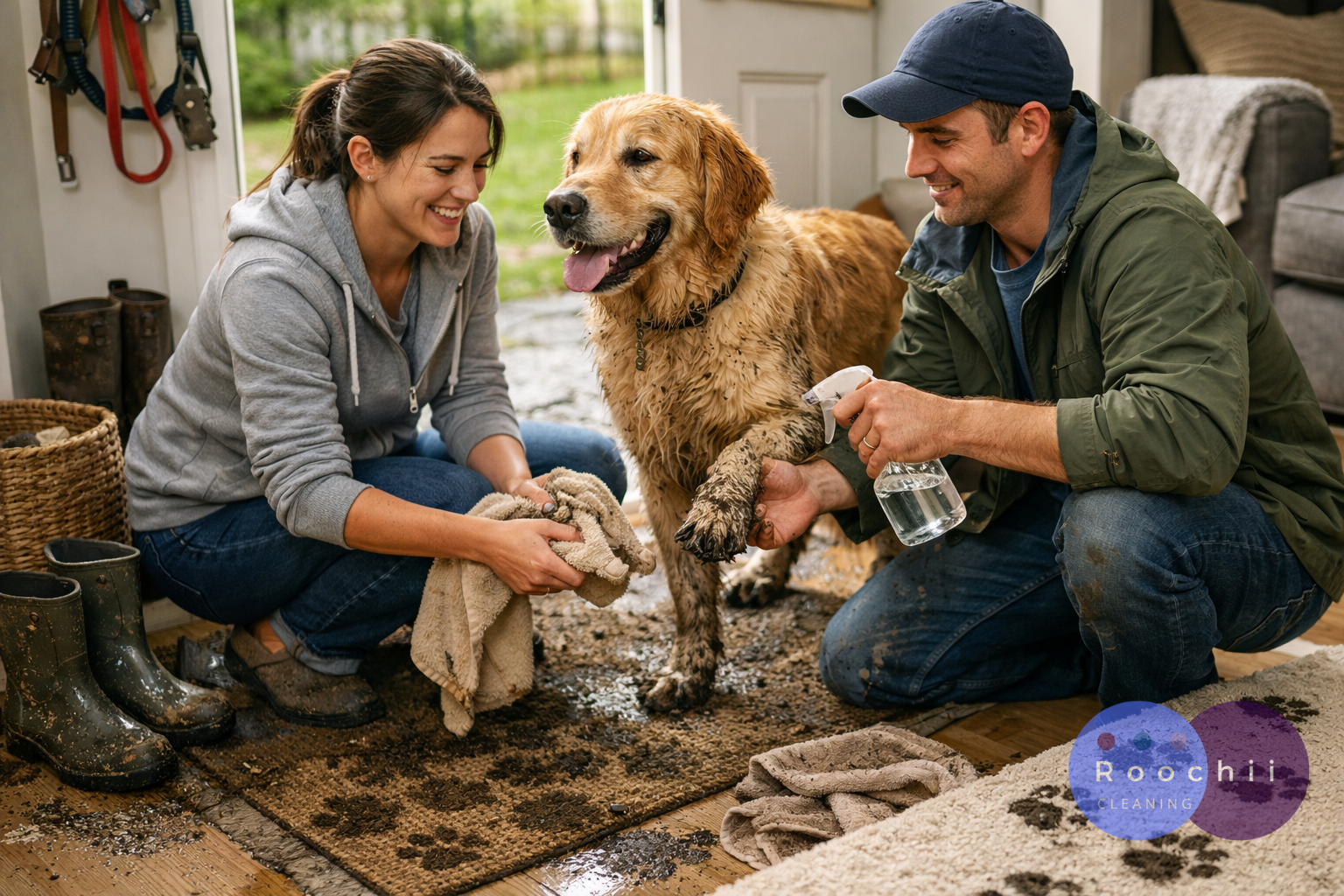
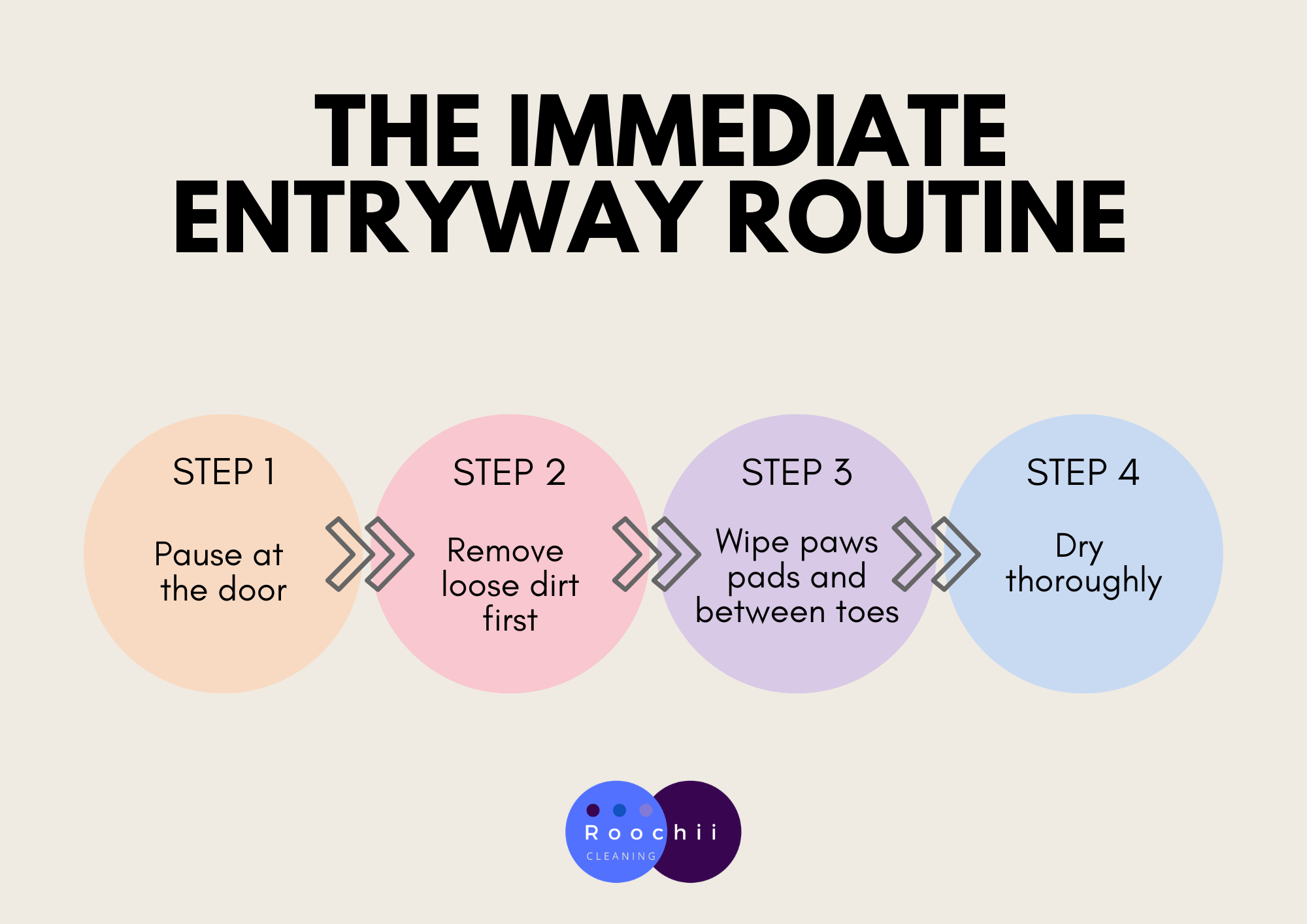
The easiest way to manage muddy paw prints is to stop them at the door. A quick routine takes less than a minute and prevents bigger cleaning tasks later. Consistency matters more than doing it perfectly every time.
1. Pause at the Door
Start by stopping your dog right at the entry point. This creates a clear boundary and limits how far mud can spread indoors. Even a few steps inside can leave marks across multiple surfaces.
Training your dog to wait also makes cleaning easier over time. Use simple commands and reward calm behavior. This turns the routine into a habit instead of a struggle.
2. Remove Loose Dirt First
Before using any water or wipes, remove loose debris. Gently tap or brush each paw to shake off visible dirt.
If dirt is dry or flaky, this step alone can remove most of it. Skipping this often makes cleaning harder later. It also reduces how much moisture you will need.
3. Wipe Paw Pads and Between Toes
Use a damp microfiber towel or pet-safe wipe for this step. Focus on the paw pads and the spaces between the toes. Mud often collects in these areas and transfers later.
4. Dry Thoroughly
Dry each paw using a clean towel before letting your dog inside. Moisture can carry fine dirt and still leave marks on floors. Drying also helps protect your flooring from water spots.
Pay attention to fur around the paws, especially for long-haired dogs. Damp fur can drip and spread dirt after cleaning. A fully dry paw reduces this risk.
When to Rinse vs When to Wipe Only
Not all muddy paws require the same approach. The level of dirt should guide your cleaning method. Using too much water can create new problems instead of solving them.
For light mud or dust, wiping is usually enough. A damp microfiber towel or pet-safe wipe can remove surface dirt quickly.
Heavy mud requires a rinse to break down thick buildup. Use a small amount of lukewarm water to loosen soil from the paw pads. Avoid soaking the entire paw unless necessary.
Paw health should also guide your decision. Frequent soaking can dry out paw pads or cause irritation. Always dry paws thoroughly and check for debris or small stones after cleaning.
A practical rule to follow:
- Use wipes for light dirt and quick cleanups
- Rinse only when mud is thick or caked on
- Keep water use minimal and controlled
- Always dry paws completely
Tools That Make Cleaning Muddy Paws Easier
Having the right tools near your entryway makes cleaning faster and more consistent. A simple setup helps you handle muddy paws without delay.
Keeping everything within reach also makes it easier to stick to the routine.
Here are the things you need to make cleaning more efficient:
- Microfiber Towels – Highly absorbent and effective at lifting dirt without spreading it. They work well for both wiping and drying paws, and they can be reused after washing.
- Paw Washers – Designed for heavier mud, these tools use water and soft bristles to clean paws evenly. They help remove dirt from hard-to-reach areas without aggressive scrubbing.
- Pet-Safe Wipes – A quick option for light dirt and daily use. These wipes are gentle on paw pads and convenient for fast cleanups at the door.
- Absorbent Mats – Placed at entry points to catch moisture and dirt before it reaches your floors. They reduce the amount of mud that needs to be cleaned from paws in the first place.
How to Clean Muddy Paw Prints Off Carpet Without Damaging Fibers
Why Letting Mud Dry First Is Critical
It may feel natural to clean mud right away, but wet mud is harder to control. When mud is still damp, it spreads easily and sinks deeper into carpet fibers. Acting too quickly often makes the stain larger and more difficult to remove.
Letting mud dry slightly changes how it behaves. As moisture evaporates, the soil becomes crumbly and easier to lift. This allows you to remove most of the dirt before introducing any liquid.
Dry removal reduces the risk of pushing particles deeper into the carpet. It also helps preserve the structure of the fibers. Less moisture means less chance of long-term damage or discoloration.
A simple rule works well here. If the mud is thick or wet, wait until it dries before cleaning. If it is already dry, start with dry removal right away.
Step-by-Step Carpet Cleaning Process
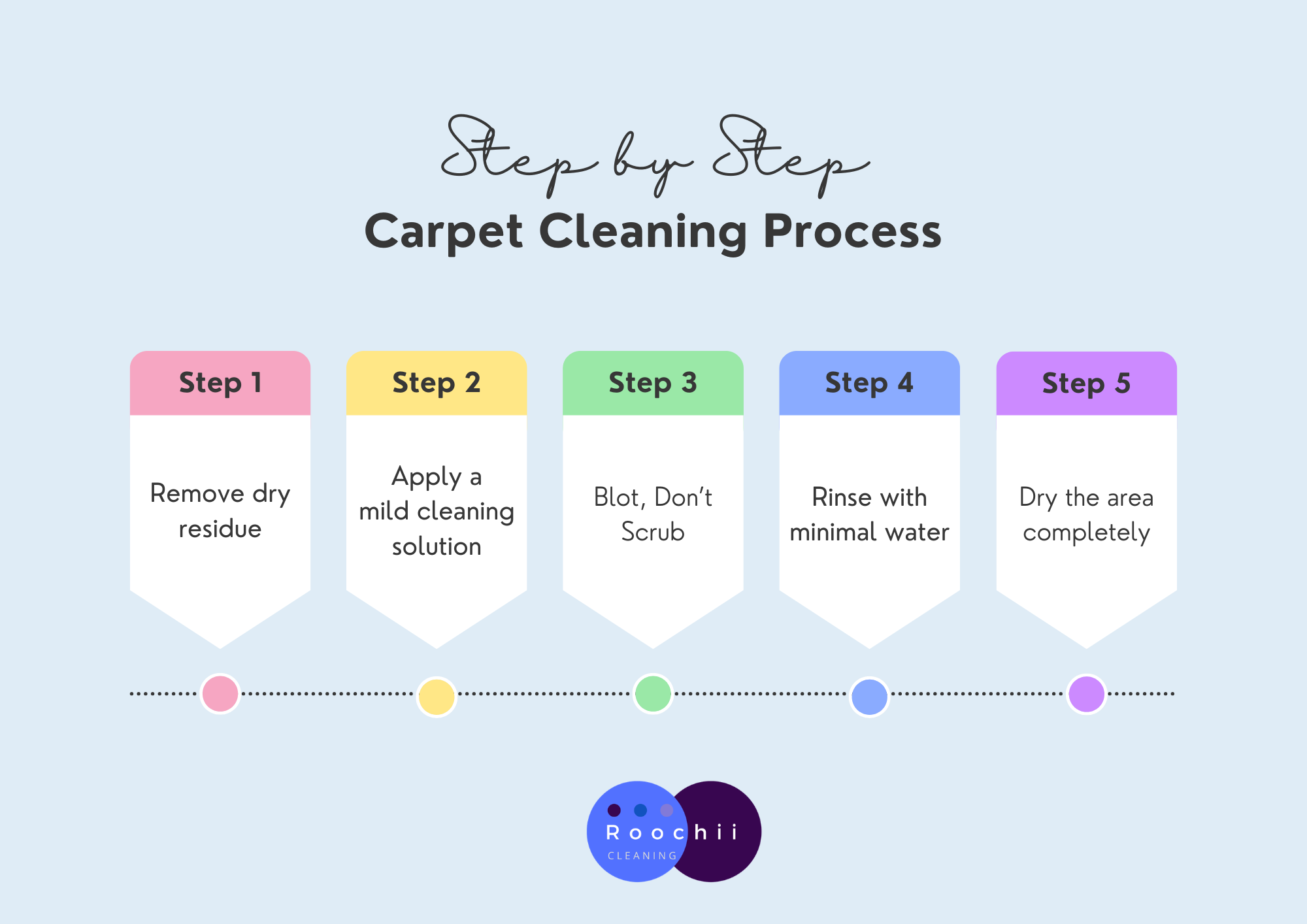
Cleaning carpet the right way requires a controlled approach. The goal is to remove soil in layers instead of forcing it out all at once. Each step builds on the previous one.
Step 1: Remove Dry Residue
Start by vacuuming the affected area or gently brushing off dried mud. This removes loose particles sitting on the surface. Avoid pressing too hard, as this can push dirt deeper.
Step 2: Apply a Mild Cleaning Solution
Mix a small amount of mild detergent with lukewarm water. Lightly apply the solution to the stained area using a clean cloth. Do not pour water directly onto the carpet.
Step 3: Blot, Don’t Scrub
Use a clean towel to blot the area gently. Blotting lifts dirt without spreading it further. Scrubbing can damage fibers and widen the stain.
Step 4: Rinse with Minimal Water
Dampen another cloth with clean water and blot the area again. This removes any leftover cleaning solution. Keep moisture levels low to avoid soaking the carpet.
Step 5: Dry the Area Completely
Place a dry towel over the area and press gently to absorb moisture. Good airflow helps speed up drying and prevents musty smells. Avoid walking on the area until it is fully dry.
Preventing Odors and Recurring Stains
Even after cleaning, carpets can develop odors if moisture or residue remains. Mud often contains organic material that can create smells over time. Proper drying is key to preventing this issue.
For ongoing prevention, regular maintenance makes a difference:
- Vacuum high-traffic areas frequently
- Clean muddy paws before your dog enters
- Use rugs or runners in entryways
- Address new stains as soon as they appear
Learning how to clean muddy paws and their prints properly reduces long-term carpet damage. It also keeps your home cleaner with less effort over time.
How to Clean Muddy Paw Prints Off Hardwood, Tile, and Laminate Floors
Safe Cleaning for Sealed Hardwood
Sealed hardwood floors require a careful approach to avoid damage. Moisture is the main concern, as excess water can seep into seams and cause warping. Using controlled cleaning methods helps protect the finish while removing dirt.
Step 1: Remove Loose Dirt First
Start by sweeping or using a dry microfiber cloth to pick up loose soil. This prevents scratching when you begin wiping. Small particles can act like grit if dragged across the surface.
Step 2: Use a Damp, Not Wet, Cloth
Lightly dampen a microfiber cloth with water or a wood-safe cleaner. Wring it out well before use. Too much moisture can damage the protective seal over time.
Step 3: Wipe in the Direction of the Grain
Follow the natural grain of the wood when cleaning. This helps lift dirt more effectively and reduces streaks. It also keeps the finish looking even.
Step 4: Dry Immediately After Cleaning
Use a dry cloth to remove any remaining moisture. Leaving water on hardwood can lead to dull spots or damage. Quick drying keeps the surface in good condition.
Cleaning Tile and Grout Without Spreading Dirt
Tile is more resistant to moisture, but grout lines can trap dirt easily. Mud often settles into these lines and becomes harder to remove if ignored. A focused method helps clean both surfaces without spreading the mess.
Step 1: Sweep or Vacuum the Area
Remove loose dirt before adding any moisture. This step prevents mud from turning into a thin film across the tile. It also keeps grout lines from filling with more debris.
Step 2: Use a Mild Cleaning Solution
Mix a small amount of floor cleaner with warm water. Apply it using a mop or cloth, keeping the surface lightly damp. Avoid flooding the area with water.
Step 3: Focus on Grout Lines
Use a soft brush to clean grout lines gently. Work in small sections to avoid spreading dirt. Targeted cleaning keeps grout from darkening over time.
Step 4: Rinse and Remove Residue
Wipe the area again with clean water to remove leftover solution. Residue can attract more dirt if left behind. Keep the rinse light to maintain control.
Step 5: Dry the Surface
Use a dry mop or towel to remove excess moisture. This prevents water spots and reduces the chance of slipping. Dry floors also resist new dirt buildup.
Preventing Long-Term Floor Wear
Repeated muddy paw traffic can wear down floors over time. Dirt particles act like abrasives and slowly affect the surface. Preventive habits help extend the life of your flooring.
A. Clean Paws Before Entry
Stopping mud at the door reduces how much reaches your floors. A quick wipe or rinse makes a noticeable difference. This is the most effective first step.
B. Use Entry Mats and Rugs
Place absorbent mats near entrances to catch dirt and moisture. Rugs help protect high-traffic areas from repeated exposure.
C. Clean Spills and Prints Quickly
Fresh mud is easier to remove than dried stains. Address prints as soon as you notice them. This prevents buildup and reduces cleaning effort.
D. Maintain a Regular Cleaning Routine
Sweep or mop floors regularly to remove fine particles. Consistent maintenance prevents dirt from accumulating. It also keeps surfaces looking well-maintained.
How to Clean Muddy Paw Prints Off Car Seats and Upholstery
Cleaning Fabric Car Seats Correctly
Fabric car seats absorb moisture quickly, which makes muddy paw prints harder to remove if ignored. Mud can settle into the fibers and leave behind visible stains once it dries. Acting in the right order helps lift dirt without spreading it.
Step 1: Let Mud Dry Before Cleaning
If the mud is still wet, give it time to dry slightly. Dry mud is easier to remove without pushing it deeper into the fabric. This step reduces the size of the stain.
Step 2: Vacuum Loose Dirt First
Use a handheld vacuum or brush to remove dry particles. Focus on seams and textured areas where dirt collects. Removing loose debris prevents smearing during cleaning.
Step 3: Apply a Light Cleaning Solution
Mix a small amount of mild detergent with warm water. Dampen a cloth and apply it gently to the stained area. Avoid soaking the seat, as excess moisture can spread the stain.
Step 4: Blot Instead of Scrubbing
Press a clean towel onto the stain to lift dirt. Blotting keeps the stain contained and protects the fabric fibers. Scrubbing can damage the material and push dirt deeper.
Step 5: Dry the Area Thoroughly
Use a dry towel to absorb remaining moisture. Leave windows open or allow airflow to speed up drying. A fully dry seat prevents odors and water marks.
Cleaning Leather Seats Without Causing Cracks
Leather seats require a gentler method to avoid damage. Mud can still leave marks, but improper cleaning can dry out the material. Keeping the leather balanced is key.
Step 1: Wipe Away Surface Dirt
Use a dry or slightly damp microfiber cloth to remove loose dirt. This prevents scratching during deeper cleaning. Always work gently across the surface.
Step 2: Use a Leather-Safe Cleaner
Apply a small amount of leather cleaner to a soft cloth. Avoid using water alone, as it can dry out the material. Use products designed specifically for leather care.
Step 3: Clean in Small Sections
Work on one area at a time to maintain control. This prevents over-application of product and ensures even cleaning. Focus on visible paw prints first.
Step 4: Wipe Off Residue
After cleaning, use a clean cloth to remove any leftover product. Residue can dull the finish and attract dust. A clean surface helps maintain the look of the leather.
Step 5: Condition the Leather
Apply a leather conditioner after cleaning. This restores moisture and prevents cracking over time. Regular conditioning keeps seats flexible and durable.
Preventing Heat-Set Stains in Vehicles
Car interiors heat up quickly, especially when parked in the sun. Heat can cause muddy stains to set into fabric or upholstery. Once this happens, stains become harder to remove.
A. Clean Stains as Soon as Possible
Fresh mud is easier to remove before heat dries it further. Delaying cleaning allows the stain to bond with the material. Quick action reduces long-term marks.
B. Avoid Leaving Mud in a Hot Car
High temperatures accelerate drying and stain setting. Even a short time in a warm car can make stains more stubborn.
Clean or at least blot the area before leaving the vehicle.
C. Keep Cleaning Supplies in Your Car
Having wipes or a towel available helps you act immediately. This prevents stains from sitting for long periods. Small tools make a big difference in maintaining upholstery.
D. Use Seat Covers for Protection
Seat covers create a barrier between muddy paws and upholstery. They are easier to clean and can be removed when needed. This adds an extra layer of protection.
How to Stop Muddy Paw Prints Before They Happen
Entryway Defense System Setup
Preventing muddy paw prints starts at your home’s entrance. A well-prepared entryway acts as a barrier that stops most dirt before it spreads indoors.
Here are some small adjustments that can reduce cleaning time across every surface:
- Layer Your Entry Mats – Use two mats, one outside and one inside the door. The outdoor mat removes larger debris, while the indoor mat absorbs moisture. This layered setup catches dirt in stages. As the International Sanitary Supply Association (ISSA) states, the entryway matting is your first line of defense.
- Keep Cleaning Tools Within Reach – Store towels and wipes near the door. Easy access helps you clean paws immediately instead of delaying.
- Create a Designated Cleaning Spot – Choose a specific area where your dog pauses after coming in. This keeps dirt contained in one location. Over time, your dog will associate this spot with the routine.
- Use Floor Protection in High-Traffic Areas – Place rugs or runners near entryways and hallways. These areas receive the most paw traffic. Extra coverage reduces wear and limits how far mud spreads.
A simple entryway system supports your routine and makes it easier to stay consistent. It also reduces the effort needed for cleaning floors, carpets, and furniture later.
Behavioral Training That Reduces Indoor Mess
Training plays a key role in managing muddy paw prints. Dogs can learn to pause, wait, and cooperate during cleaning. This reduces movement and prevents dirt from spreading indoors.
A. Teach a “Wait” Command at the Door
Teaching your dog to pause at the door creates a controlled cleaning moment and prevents mud from spreading unexpectedly, as stated in a scholarly article from Michigan State University.
B. Reward Calm Behavior
Use treats or praise when your dog stays still during cleaning. Positive reinforcement builds cooperation over time. A calm dog makes the process faster and easier.
C. Limit Sudden Movement Indoors
Excited dogs tend to run inside, spreading mud quickly. Encourage calm entry by guiding them slowly. This reduces the number of surfaces affected.
D. Build a Routine After Walks
Repeat the same steps after every outdoor trip. Dogs respond well to consistency and structure. Over time, the routine becomes automatic.
Training does not eliminate mud, but it controls how it enters your home. Combined with proper cleaning, it greatly reduces indoor mess.
Outdoor & Seasonal Prevention Strategies
Outdoor conditions often determine how much mud your dog brings inside. Adjusting your yard and routine can reduce how much dirt reaches your dog’s paws.
Prevention outside is just as important as cleaning inside.
- Improve Drainage in Your Yard – Areas that collect water turn into mud quickly. Adding gravel, mulch, or drainage solutions helps keep surfaces drier. Less mud outside means less cleaning inside.
- Choose Cleaner Walking Paths – Avoid overly muddy trails when possible. Stick to paved or well-maintained paths during wet conditions.
- Trim Fur Around Paw Areas – Long fur around paws can trap mud and moisture. Keeping this area trimmed helps reduce buildup.
- Adjust Routine During Rainy Seasons – During wet weather, expect more frequent cleaning. Shorter walks or controlled play areas can help manage exposure. Planning ahead reduces unexpected mess.
Knowing how to clean muddy paws is only part of the solution. Preventing mud before it enters your home saves time and protects your surfaces over the long term.
Common Mistakes When Cleaning Muddy Paw Prints
Even well-intentioned cleaning can make muddy paw prints harder to remove or damage your surfaces. Understanding these common pitfalls can save time, prevent stains, and protect carpets, upholstery, and flooring.
A. Scrubbing Wet Mud Into Fibers
One of the most common mistakes is scrubbing mud while it is still wet. Wet mud spreads easily and sinks deeper into carpet fibers or fabric. This turns a small spot into a larger, more stubborn stain.
Scrubbing also creates friction that pushes dirt further into the material. Instead of lifting the soil, it embeds it more firmly.
A better approach is to let mud dry slightly before touching it. Once dry, remove loose particles first, then clean what remains.
B. Over-Wetting Carpets and Floors
Using too much water is another frequent issue. While water helps loosen dirt, excess moisture spreads mud and carries it deeper into surfaces.
Over-wetting carpets can lead to longer drying times and potential odors. This is a constant reminder from the Carpet and Rug Institute as well. Moisture trapped beneath fibers creates an environment where smells can develop. It can also weaken the carpet backing over time.
Hard floors face a different risk. Water can seep into seams or edges, which may lead to swelling or damage.
To avoid this mistake:
- Use minimal water during cleaning
- Apply moisture gradually instead of all at once
- Dry surfaces quickly after cleaning
- Avoid pouring water directly onto stains
Controlling moisture keeps surfaces protected and improves cleaning results.
C. Using Harsh Cleaners That Damage Surfaces
Strong cleaning products may seem effective, but they can cause more harm than good. Harsh chemicals can discolor fabrics, weaken carpet fibers, or strip protective finishes from floors. Damage may not appear immediately but builds over time.
Choosing the right product makes a difference. Use mild, surface-safe cleaners designed for specific materials. Always test a small area before applying any solution widely.
Simple guidelines help prevent damage:
- Avoid bleach or strong chemical cleaners
- Use products designed for carpet, wood, or upholstery
- Test cleaning solutions on a hidden area first
- Rinse lightly to remove residue
By steering clear of these common errors, you prevent permanent stains, protect surface integrity, and make future cleanups faster. Using correct techniques ensures your floors, furniture, and car interiors stay clean and long-lasting, even with pets.
When Professional Cleaning Is Necessary
Some muddy paw prints require more than surface cleaning. In some cases, DIY steps just don’t work, especially when the paw prints have settled in. In these cases, professional cleaning may be the most effective solution.
Professional cleaning may be needed when:
- Stains return after drying
- Odors linger despite cleaning
- Carpet padding has absorbed moisture
- High-traffic areas look worn or dull
Professional cleaning services use equipment designed to reach deep below the surface. These systems remove dirt, moisture, and residue that household tools cannot access. This makes a noticeable difference in both appearance and hygiene.
Final Thoughts on How to Clean Muddy Paws Effectively
Learning how to clean muddy paws is not just about removing dirt after it appears. The real benefit comes from combining prevention with proper cleaning. A simple system reduces effort and keeps your home in better condition.
The most effective approach uses a two-layer system. First, clean your dog’s paws at the door before they step inside. Second, handle any remaining prints quickly using the right method.
This works because it controls the source of the mess. Less dirt enters your home, which means fewer stains and less buildup.
Routine matters more than reacting to problems. A quick wipe at the door takes less time than dealing with dried stains later. Small actions done consistently make a noticeable difference.
Consistency also helps your dog adjust to the process. Repeating the same steps reduces movement and makes cleaning easier. Over time, it becomes a normal part of coming inside.
Quick action, proper technique, and knowing when to seek deeper cleaning all contribute to a cleaner, more manageable home, especially with cats or dogs.
FAQ
FAQs About How to Clean Muddy Paws
The fastest way to clean muddy paws is to stop your dog at the door and follow a simple routine. Start by removing loose dirt using a quick shake, gentle tapping, or a dry towel. This prevents mud from spreading during cleaning.
Next, use a damp microfiber cloth or pet-safe wipe to clean the paw pads and between the toes. Focus on areas where mud tends to collect. Keep the process controlled to avoid over-wetting the paws.
Finish by drying each paw thoroughly with a clean towel. Keeping a towel or wipes near the entryway makes this process faster and easier to repeat daily.
The safest daily method focuses on gentle cleaning with minimal moisture. For light dirt, a damp microfiber towel or pet-safe wipes are usually enough.
Avoid using harsh chemicals or strong soaps, as they can dry out or damage the skin. If mud is heavier, use a small amount of lukewarm water to rinse only the affected areas.
Muddy paw prints can become permanent if they are not handled properly. When mud dries, soil particles bond with carpet fibers and settle deep within the pile. This makes stains harder to remove over time.
Immediate scrubbing often makes the problem worse. It pushes dirt deeper and spreads the stain across a larger area. Instead, letting mud dry slightly and removing loose debris first improves results.
Most stains can be removed if treated correctly and early. However, repeated buildup or improper cleaning can lead to lasting discoloration. Using the right method helps protect carpet fibers and prevents long-term damage.
Start by removing dry mud using a soft broom or dry microfiber cloth. Loose particles should always be cleared before adding moisture.
Next, use a lightly damp cloth with water or a wood-safe cleaner. Wipe gently in the direction of the wood grain.
Finish by drying the area immediately with a clean towel. This step prevents water spots and protects the surface.
You do not always need to rinse muddy paws. The decision depends on how much dirt is present.
Rinsing is more useful when mud is thick or stuck between the toes. In these cases, a small amount of lukewarm water helps loosen the buildup. Avoid soaking the entire paw unless necessary.
Rainy conditions increase the chances of muddy paw prints, but a few changes can help reduce the problem. Start by setting up an entryway routine with cleaning tools ready to use.
Cleaning paws before your dog enters is the most effective step. This removes most of the mud before it reaches your floors.
You can also reduce exposure by choosing cleaner walking paths or improving drainage in your yard. Shorter walks or controlled play areas help limit how much mud your dog picks up. Combining prevention and routine keeps your home cleaner.
The best method depends on the seat material. For fabric seats, let mud dry first, then vacuum loose dirt before using a mild cleaning solution. Blot the stain gently instead of scrubbing to avoid spreading it.
For leather seats, start by wiping away surface dirt with a soft cloth. Use a leather-safe cleaner to remove remaining marks. Avoid excess water, as it can dry out or damage the material.
In both cases, drying the area thoroughly helps prevent odors and residue. Keeping wipes or a towel in your car allows you to clean mud quickly before it sets into the upholstery.