Skip to content

How to Keep Pet Hair Off Furniture: 15 Simple Tips That Actually Work
Why Pet Hair on Furniture Is Such a Common Problem
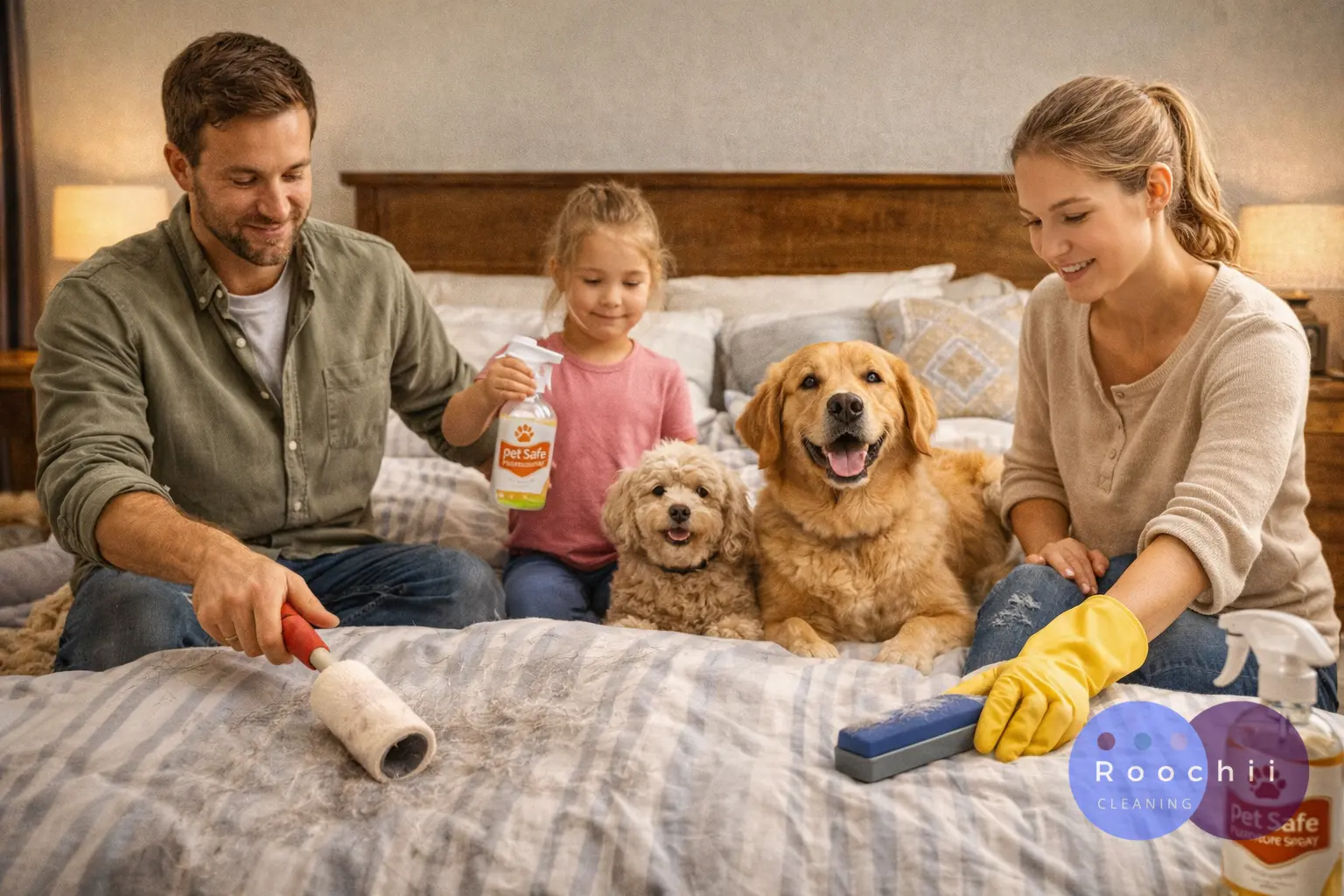
Pet hair has a way of appearing everywhere. One moment your couch looks clean. The next, your dog or cat has quietly redecorated it with fur. Sofas, chairs, and cushions are magnets for loose hair, especially if your pet enjoys claiming the best seat in the house.
Pet hair builds up quickly in homes with dogs or cats, especially when you are trying to keep a clean house with cats. You vacuum, wipe, and lint roll, yet the fur always finds its way back. Learning how to keep pet hair off furniture does not require complicated tools or constant cleaning. Small changes in routine can make a big difference.
Fortunately, several simple techniques can control pet hair buildup, and many of them overlap with practical house cleaning tips for pet owners. Simple household tricks, better furniture choices, and regular grooming can help keep fur under control. Some methods take only seconds, and others help prevent the problem before it starts.
If you are tired of brushing hair off your couch every time you sit down, keep reading. The tips below will help you reduce pet hair buildup and make furniture much easier to maintain.
Table of Contents
- Why Pet Hair Sticks to Furniture
- How to Keep Pet Hair Off Couches and Upholstered Furniture
- 15 Effective Ways to Remove Pet Hair From Furniture
- Best Cleaning Tools for Removing Pet Hair From Furniture
- Furniture Materials That Resist Pet Hair
- How Grooming Your Pet Reduces Hair on Furniture
- Household Hacks to Prevent Pet Hair on Furniture
- How to Reduce Pet Hair in Your Home Overall
- Common Mistakes That Make Pet Hair Problems Worse
- Quick Pet Hair Removal Routine (10-Minute Method)
Why Pet Hair Sticks to Furniture
Pet hair sticks to furniture for several reasons. Static electricity, fabric type, and shedding cycles all play a role.
Static Electricity and Why Pet Hair Clings to Fabric
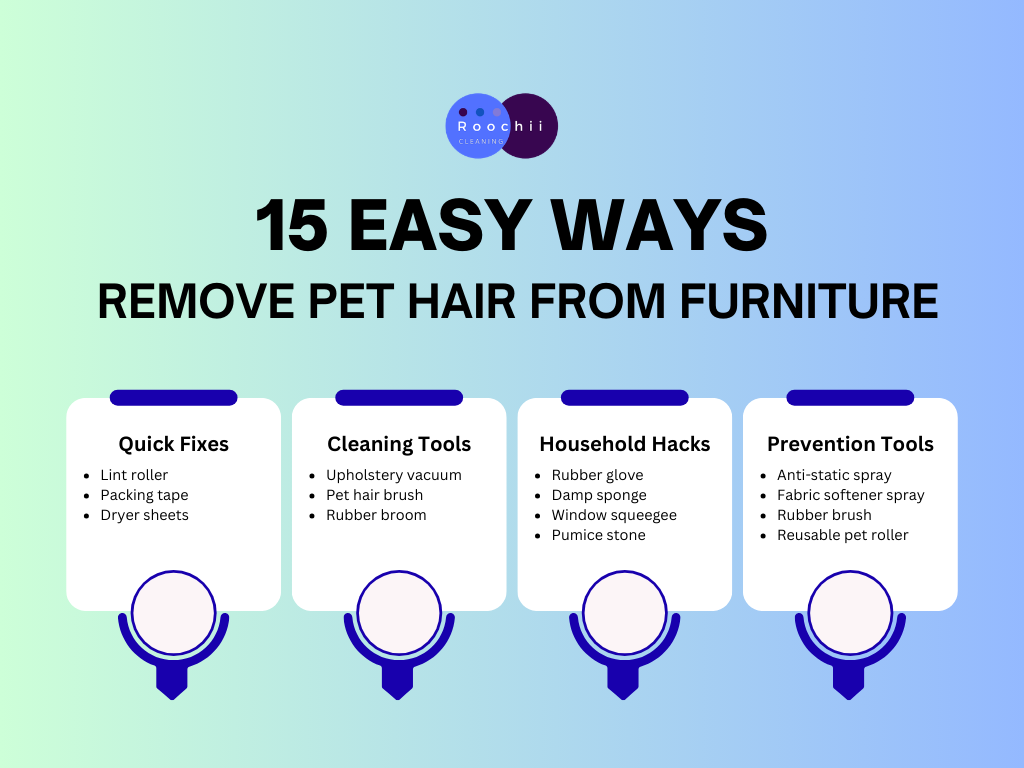
Static electricity plays a big role in how pet hair behaves. When fabrics rub together, they create a small electric charge. That charge attracts lightweight fibers such as pet fur.
Dry indoor air increases static buildup. During colder months, heating systems remove moisture from the air. As a result, hair sticks more strongly to upholstery and blankets.
Reducing static helps loosen hair from fabric surfaces. Anti-static sprays, dryer sheets, and light moisture can reduce this effect. Even wiping furniture with a slightly damp cloth can help break the charge.
Furniture Materials That Attract the Most Pet Hair
Some furniture fabrics hold onto pet hair more than others. Soft woven materials often trap fur deep in the fibers. Once hair settles into these fabrics, removing it becomes harder.
Common fabrics that attract hair include:
- Velvet
- Corduroy
- Wool blends
- Loosely woven upholstery
These materials act like tiny hooks that catch loose fur.
Smooth fabrics perform better for pet owners. Leather, microfiber, and tightly woven synthetic fabrics tend to release hair more easily. Hair stays on the surface rather than embedding in the fibers.
How Pet Shedding Cycles Affect Hair Buildup
Pets shed year-round, but shedding often increases during seasonal changes. Many dogs and cats lose extra fur in spring and fall as their coats adjust to temperature shifts.
Heavy shedding can quickly overwhelm furniture and floors. Even daily cleaning may not keep up during these periods.
Regular grooming reduces the amount of loose hair in your home. Removing excess fur directly from your pet prevents much of it from reaching your couch or chairs.
How to Keep Pet Hair Off Couches and Upholstered Furniture
Furniture protection is one of the easiest ways to control fur. Instead of cleaning constantly, you can limit how much hair reaches your couch in the first place.
These strategies also help you learn how to keep pet hair off furniture without constant cleaning.
Use Washable Couch Covers or Slipcovers
Couch covers create a barrier between your furniture and pet hair. Hair collects on the cover instead of embedding into the upholstery.
Slipcovers are easy to remove and wash. A quick laundry cycle removes most fur and keeps furniture looking fresh.
Benefits of couch covers include:
- Protecting expensive upholstery
- Faster cleaning
- Easy washing
Choose covers made from durable fabrics that resist hair buildup.
Choose Pet-Friendly Couch Materials
If you plan to buy new furniture, consider pet-friendly materials. Some fabrics resist fur and stains better than others.
Good options include:
- Leather or faux leather
- Microfiber
- Tightly woven synthetic fabrics
These materials make cleaning easier because hair stays on the surface.
Avoid delicate or textured upholstery when possible. Thick woven fabrics often trap hair and require more effort to clean.
Train Pets to Stay Off the Couch
Training pets to avoid furniture can reduce hair buildup. While this may not work for every household, many pets can learn simple boundaries.
Helpful strategies include:
- Providing comfortable pet beds
- Rewarding pets for staying off furniture
- Blocking furniture access when unsupervised
Consistency is key. Pets respond best when household rules stay the same every day.
Use Pet Blankets or Couch Throws
Pet blankets and couch throws can help protect upholstery from pet hair. Instead of letting pets sit directly on the couch, place a washable blanket where they usually rest.
When the blanket collects fur, you can simply wash it instead of cleaning the entire couch. This is one of the easiest ways to keep pet hair off furniture while still allowing pets to relax on the couch.
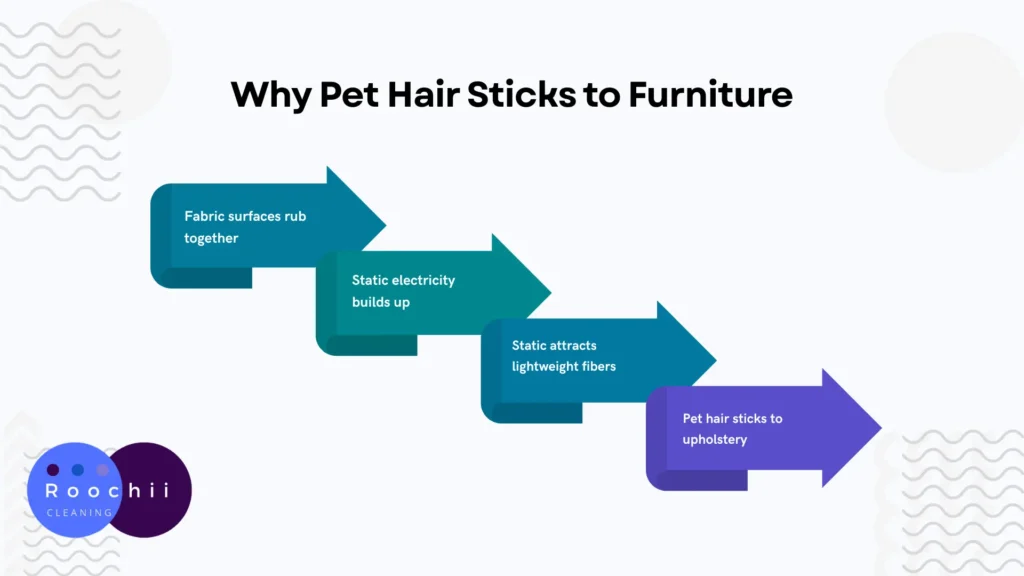
15 Effective Ways to Remove Pet Hair From Furniture
Even with prevention, some hair will still reach furniture. These practical techniques help remove fur quickly and efficiently.
A. Use a Rubber Glove to Gather Pet Hair
Rubber gloves create friction that pulls hair from fabric surfaces. Put on a glove and rub the furniture in short strokes.
The hair gathers into clumps that are easy to remove. Rinse the glove occasionally to keep it working effectively.
This method works well on sofas, chairs, and car seats.
B. Use a Damp Sponge or Microfiber Cloth
A slightly damp sponge can collect loose hair from upholstery. Light moisture helps fur stick to the sponge instead of the furniture.
Use gentle strokes across the fabric surface. Rinse the sponge frequently to remove collected hair.
Microfiber cloths work in a similar way. Their fine fibers attract hair and dust.
C. Use a Lint Roller for Quick Cleanup
Lint rollers provide a fast solution for small areas. The sticky sheets lift hair from fabric with minimal effort.
They are useful for:
- Couch cushions
- Throw pillows
- Fabric chairs
Keep a lint roller nearby for quick touch-ups between deep cleanings.
D. Use a Window Squeegee to Pull Hair From Fabric
A window squeegee can remove deeply embedded hair from upholstery. The rubber edge pulls fur toward the surface.
Run the squeegee across the fabric in one direction. Hair will collect along the blade and form small piles.
This method works especially well on thick couch fabrics.
E. Try a Pumice Stone for Stubborn Embedded Hair
Pumice stones are effective for removing stubborn hair. The textured surface grabs fur from fabric.
Use light pressure and move the stone in one direction. Too much force can damage delicate fabrics.
Test this method on a hidden area first to ensure it does not affect the material.
F. Use Dryer Sheets to Reduce Static and Lift Hair
Dryer sheets reduce static electricity on upholstery. Lower static helps loosen fur from the fabric.
Lightly wipe furniture with a dryer sheet. The sheet will pick up hair while also reducing future buildup.
This trick works well during dry winter months.
G. Vacuum Furniture With Upholstery Attachments
Vacuum cleaners remain one of the most reliable cleaning tools. Upholstery attachments help reach tight spaces and soft fabrics.
Focus on areas where hair collects most:
- Seat cushions
- Furniture seams
- Armrests
Regular vacuuming prevents hair from embedding deeply into fabric.
H. Use a Pet Hair Removal Brush
Specialized pet hair brushes are designed for furniture surfaces. These tools use rubber or textured materials to pull hair from fabric.
Many brushes are reusable and require no sticky sheets. A few quick passes often remove large amounts of fur.
They are especially useful for daily maintenance.
I. Try a Fabric Softener Spray
A diluted fabric softener solution can help loosen pet hair. Mix a small amount of softener with water in a spray bottle.
Lightly mist the furniture and wipe the surface with a cloth. The softener reduces static and releases trapped hair.
Avoid soaking the fabric. A light mist works best.
J. Use a Reusable Pet Hair Roller
Reusable rollers collect fur without disposable sheets. These rollers use adhesive surfaces or textured fabric.
Simply roll the tool across upholstery. Most models include a compartment that stores collected hair.
They are useful for frequent cleaning.
K. Use Packing Tape for Small Areas
Packing tape can remove hair from tight spots. Wrap a piece of tape around your hand with the sticky side facing outward.
Press the tape gently against the fabric. Hair sticks to the adhesive and lifts away easily.
This trick works well on corners and seams.
L. Use a Rubber Broom for Larger Furniture
Rubber brooms create static that attracts hair. While often used on floors, they also work on large upholstered surfaces.
Run the broom across the couch or fabric furniture. Hair gathers into clumps that can be removed quickly.
This method is useful when dealing with heavy shedding.
M. Vacuum Furniture Seams and Crevices
Hair often hides in seams and corners. These areas trap fur that regular cleaning may miss.
Use narrow vacuum attachments to reach these spaces. Removing hidden hair helps prevent it from spreading across furniture.
Regular seam cleaning improves overall results.
N. Use a Slightly Damp Rubber Brush
A rubber brush combined with light moisture can remove stubborn fur. The rubber grips hair while moisture reduces static.
Use gentle strokes across the surface. Hair should collect quickly into visible clumps.
This method works well for thick upholstery.
O. Use Anti-Static Spray on Upholstery
Anti-static sprays reduce the electric charge that attracts fur. A light application helps prevent hair from clinging to furniture.
Spray the product lightly and allow it to dry before use. Reapply occasionally to maintain the effect.
This step can reduce hair buildup over time.
In addition to these simple household methods, several specialized cleaning tools are designed to remove pet hair from furniture more efficiently.
Best Cleaning Tools for Removing Pet Hair From Furniture
Some tools make pet hair removal faster and easier. Investing in the right equipment can save time during regular cleaning.
Pet Hair Vacuums With Upholstery Attachments
Many vacuum cleaners include attachments designed for pet hair. These tools create strong suction while protecting delicate fabrics.
Look for features such as:
- rotating brush heads
- strong suction power
- upholstery tools
These features help remove deeply embedded fur.
Reusable Pet Hair Rollers
Reusable rollers offer a convenient cleaning option. Unlike disposable lint rollers, they collect hair in a reusable chamber.
Advantages include:
- no replacement sheets
- quick cleaning
- easy storage
They are useful for daily furniture maintenance.
Electrostatic Pet Hair Removal Brushes
Electrostatic pet hair brushes use static charge to attract loose fur from furniture surfaces. These brushes are especially useful for larger furniture surfaces where lint rollers would require many sheets. They can collect large amounts of hair in just a few passes.
Many reusable brushes can collect large amounts of hair quickly. They are also environmentally friendly because they do not require disposable adhesive sheets.
Furniture Materials That Resist Pet Hair
The type of furniture you choose can affect how easily hair collects. Some materials make cleaning much easier.
Best Furniture Materials for Pet Owners
| Furniture Material | Pet Hair Attraction | Cleaning Difficulty | Why It Works |
| Leather | Low | Easy | Hair stays on the surface and wipes off easily |
| Faux Leather | Low | Easy | Smooth surface prevents hair from embedding |
| Microfiber | Low | Easy | Tight weave keeps hair from getting trapped |
| Tightly Woven Synthetic Fabrics | Low | Easy | Dense fibers prevent fur from sinking into the fabric |
| Velvet | High | Difficult | Thick fibers trap hair deep in the material |
| Chenille | High | Difficult | Soft texture catches loose fur easily |
| Corduroy | High | Difficult | Grooves hold pet hair and make removal harder |
| Wool Blends | Medium to High | Moderate | Fibers attract and hold loose hair |
If you live with pets, choosing the right upholstery can make cleaning much easier. Smooth surfaces like leather allow pet hair to sit on top of the material rather than becoming trapped in fibers.
Tightly woven fabrics such as microfiber are also good choices because hair cannot easily sink into the weave. Avoid thick textured fabrics such as velvet or chenille if pet hair buildup is a major concern.
How Grooming Your Pet Reduces Hair on Furniture
Reducing shedding at the source makes a big difference. Regular grooming removes loose hair before it spreads around the home.
Regular grooming and cleaning habits also support many useful cleaning tips for cat owners.
Best Brushes for Dogs and Cats That Shed
Different pets require different grooming tools. Brushes designed for shedding pets remove loose fur effectively.
Common grooming tools include:
- slicker brushes
- de-shedding tools
- rubber grooming brushes
Using the right brush improves results.
How Often You Should Groom Your Pet
Most pets benefit from grooming several times each week. Long haired breeds may require daily brushing.
Frequent brushing removes loose fur before it falls onto furniture. It also keeps coats healthy.
Regular grooming reduces overall shedding in the home.
Diet and Nutrition That Support Healthy Fur
Nutrition affects coat quality. Pets with balanced diets often shed less than those with poor nutrition.
Omega fatty acids support healthy skin and fur. Quality pet food can improve coat condition and reduce excessive shedding.
Consult a veterinarian for dietary recommendations.
Household Hacks to Prevent Pet Hair on Furniture
Simple household tricks can make cleaning easier. Many common items help reduce hair buildup.
Using Dryer Sheets to Neutralize Static
Dryer sheets reduce static electricity on fabrics. This helps loosen fur from upholstery.
Wiping furniture with a sheet can collect hair while preventing future buildup.
The Balloon Static Trick for Lifting Pet Hair
A balloon can attract hair through static charge. Rubbing the balloon across upholstery causes hair to cling to it.
This method works best on lightweight fabrics.
Using Rubber Cleaning Tools Around the Home
Rubber cleaning tools generate friction that gathers hair. These tools work well on couch cushions, fabric chairs, and even pet beds. Running a rubber brush across these surfaces gathers loose fur into clumps that can be removed quickly.
They are inexpensive and easy to use.
Use a Slightly Damp Microfiber Cloth
A slightly damp microfiber cloth can quickly collect loose pet hair from furniture surfaces. The fibers in microfiber naturally attract dust and hair, making it an effective quick-clean tool.
Lightly wipe cushions and armrests to gather hair into small clumps that are easy to remove.
How to Reduce Pet Hair in Your Home Overall
Managing hair throughout the home reduces how much reaches furniture.
Use HEPA Air Purifiers to Capture Loose Fur
HEPA air purifiers capture airborne pet hair and dander. This reduces the amount of loose fur settling on furniture.
Air purifiers work best when placed in rooms where pets spend the most time. Running a purifier continuously can capture floating fur and dander before it settles on couches, chairs, and other surfaces. Over time, this can noticeably reduce how much pet hair collects on furniture.
Vacuum High-Traffic Areas More Often
Pet hair spreads easily through daily activity. Many owners look for ways to keep their home clean with a dog. Regular vacuuming removes hair before it reaches furniture surfaces.
Focus especially on areas near furniture where pets sleep or play. Pet hair often spreads from floors to couches and chairs when people sit down or move around the room. Regular vacuuming helps stop that transfer before fur builds up on upholstery.
Control Shedding During Seasonal Changes
Shedding increases during certain times of the year. Extra grooming during these periods can reduce hair buildup.
During heavy shedding periods, brushing pets daily can significantly reduce loose fur around the home. Removing excess hair before it falls onto floors or furniture is one of the most effective ways to control seasonal hair buildup.
Common Mistakes That Make Pet Hair Problems Worse
Some habits unintentionally increase hair buildup.
Ignoring Static Electricity
Static causes fur to cling strongly to fabrics. Without addressing static, cleaning becomes more difficult.
Reducing static helps prevent hair from sticking.
Using the Wrong Vacuum Attachments
Standard vacuum heads may struggle on upholstery. Using proper attachments improves suction and cleaning efficiency.
Specialized tools remove fur more effectively.
Skipping Regular Pet Grooming
Lack of grooming allows loose fur to spread around the home. Regular brushing significantly reduces hair on furniture.
Even a few minutes of grooming each day can help.
Quick Pet Hair Removal Routine (10-Minute Method)
A simple routine can prevent pet hair from building up on furniture throughout the week. Spending just a few minutes each day can keep couches and chairs looking much cleaner.
Step-by-Step Daily Cleaning Routine
Follow these simple steps:
- Brush pets briefly to remove loose hair
- Use a lint roller or rubber glove on furniture
- Vacuum couch cushions if needed
This routine takes only a few minutes.
Weekly Deep Cleaning Checklist
Once each week, perform a deeper clean:
- vacuum upholstery thoroughly
- clean furniture seams
- wash couch covers or blankets
Regular maintenance prevents heavy buildup.
Final Thoughts: Simple Habits That Keep Pet Hair Off Furniture
Managing pet hair requires a mix of prevention and cleaning. Simple habits such as grooming pets regularly, choosing furniture materials that resist fur, and using practical cleaning tools can make a noticeable difference.
The techniques above provide simple ways to keep pet hair off furniture. Consistent routines help prevent hair from building up on couches, chairs, and other upholstery. Over time, these small steps make furniture easier to maintain and keep living spaces more comfortable.
If pet hair cleanup starts to feel overwhelming, professional house cleaning in Denver can help keep furniture and living spaces cleaner with less effort.
FAQ
FAQs About Keeping Pet Hair Off Furniture
Completely eliminating pet hair is difficult if pets use the furniture. However, grooming pets regularly, using couch covers, and cleaning frequently can greatly reduce buildup.
Rubber gloves, lint rollers, and upholstery vacuums are among the simplest methods. These tools collect hair quickly without damaging fabrics.
Leather does not trap hair like fabric upholstery. Pet hair stays on the surface and can be wiped away easily.
Dryer sheets reduce static electricity and help loosen hair from fabric surfaces. They can also collect some hair during cleaning.
Static electricity and textured fabrics allow hair to cling to furniture. Dry air and heavy shedding also increase buildup.
Vacuum cleaners with strong suction and upholstery attachments work best. Models designed for pet hair often include rotating brushes and specialized tools.