Skip to content

House Cleaning Tips for Pet Owners: A Complete Guide for Dog & Cat Owners
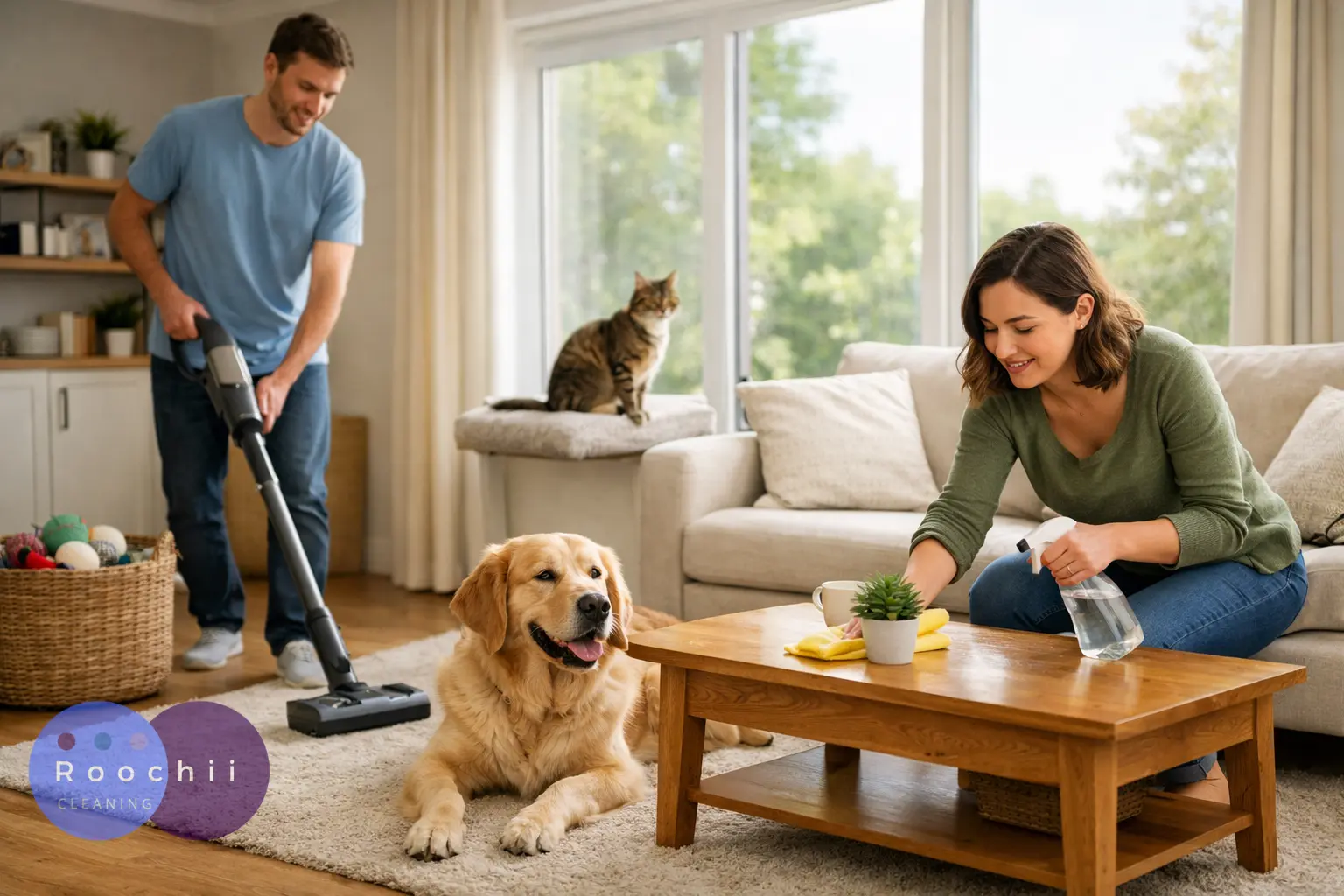
The Real Challenges of Cleaning in a Pet-Friendly Home
A clean home and a happy pet can coexist, but not without a plan.
Living with dogs or cats means accepting that mess is part of the package. Shedding, tracked litter, muddy paw prints, and lingering odors are not signs of poor housekeeping. They are predictable outcomes of sharing your space with animals. The solution is not endless scrubbing. It is using smarter, pet-friendly home cleaning methods that address the source of the mess while keeping your pets safe.
The real challenge is knowing what actually works. Which products are safe? Which tools reduce effort? Which routines prevent buildup before it starts?
If you are ready to stop reacting to mess and start managing it strategically, this article will guide you through effective and expert-backed house cleaning tips for pet owners. Keep reading and learn more about how you to keep your home pet-friendly and clean.
Understanding Pet Messes: Why Traditional Cleaning Methods Fall Short
Grooming vs. Cleaning: How to Reduce Shedding Before It Takes Over Your Home
Shedding feels like a cleaning problem, but it actually starts as a grooming issue.
Regular grooming reduces the volume of loose hair before it lands on your floors, furniture, and clothing. When you brush consistently, you remove dead undercoat, distribute natural oils evenly, and reduce the amount of fur that eventually floats through your home.
Here is what effective grooming actually accomplishes:
- Removes loose undercoat before it sheds indoors
- Minimizes dander accumulation
- Reduces hair clumping on upholstery
- Keeps skin healthier, which can reduce excessive shedding
For heavy shedders, daily brushing during peak seasons makes a noticeable difference. It does not eliminate fur, but it significantly lowers the volume you have to clean later.
Why Grooming Alone Is Not Enough
Even well-brushed pets release fine hair and microscopic dander. These particles settle into fabric, HVAC systems, and carpets. Cleaning remains essential in shared living spaces, especially in homes with allergies. Think of grooming as upstream prevention and cleaning as downstream control. When both work together, the effort feels manageable instead of overwhelming.
The balance between grooming and cleaning is what keeps shedding from taking over your home. One reduces the source. The other maintains the environment.
Identifying the Real Sources of Pet Odor and How to Eliminate Them Properly
Pet odor rarely comes from “just the dog” or “just the cat.” It develops from multiple sources that build up over time.
Understanding where the smell originates is what separates temporary fixes from lasting solutions.
Fur Oils and Dander Buildup
Pets naturally produce oils that protect their skin and coat. These oils transfer to furniture, flooring, and bedding. Over time, they oxidize and create a stale scent.
Dander, though microscopic, settles deep into soft surfaces like couches, curtains, and carpets.
To manage this effectively:
- Wash pet bedding weekly
- Vacuum with a HEPA filter
- Replace HVAC filters regularly
- Groom consistently to reduce oil transfer
Prevention at the source reduces odor before it spreads.
Urine Residue and Enzyme Activity
Urine odor persists because of uric acid crystals. Even when a stain disappears, these crystals remain and reactivate with moisture.
Surface cleaners only mask the smell. Enzyme-based cleaners break down the compounds causing them. Proper treatment requires saturation, dwell time, and thorough drying.
Litter Ammonia and Hidden Moisture
Litter boxes release ammonia as waste breaks down. Inconsistent scooping intensifies the smell. Moisture from wet paws, bedding, or spills also encourages bacterial growth.
Daily maintenance, proper ventilation, and moisture control prevent lingering odors. When you address the source instead of masking the scent, odor control becomes predictable and manageable.
Pet-Safe Surface Cleaners That Protect Your Pets and Your Home
Surface cleaners do more than shine countertops. They leave behind residues that pets walk across, lie on, and sometimes lick.
Choosing pet-safe surface cleaners is not about buying “natural” products. It is about understanding ingredients and exposure risk. Dogs and cats spend far more time in contact with floors and low surfaces than humans do.
Common Cleaning Ingredients to Avoid in Pet-Friendly Homes
Ammonia can irritate respiratory systems and may encourage repeat marking because its scent resembles urine. Improperly diluted bleach can cause paw irritation and breathing issues. Phenols, commonly found in some disinfectants, are especially dangerous for cats.
Heavy artificial fragrances also pose risks. Strong scents may mask odors but can trigger sensitivity in enclosed spaces.
Essential oils require caution. While marketed as natural, many oils are unsafe for cats and certain dog breeds. Cats lack specific liver enzymes needed to metabolize certain compounds.
When reviewing products, avoid:
- Phenolic compounds
- High-concentration ammonia
- Undiluted bleach
- Strong synthetic fragrances
- Tea tree, eucalyptus, or citrus oils around cats
Safety comes first. When in doubt, choose milder, clearly labeled alternatives.
How to Choose Safe Commercial Cleaning Products for Pets
Marketing language can be misleading. “Green” or “natural” does not automatically mean pet-safe.
Read labels carefully. Look for transparent ingredient lists and clear usage instructions. Products with EPA Safer Choice certification provide an added layer of reassurance because ingredients are evaluated for safer chemical standards.
Enzyme-based cleaners are particularly useful for pet households. They neutralize odor-causing compounds instead of masking them. Hypoallergenic formulas reduce irritation risks for sensitive animals.
When evaluating products:
- Verify active ingredients
- Check for dilution requirements
- Confirm surface compatibility
- Follow drying and rinsing instructions
Choose products based on function, not fragrance. “Clean” should mean neutral and fresh, not heavily scented.
Smart selection reduces health risks and simplifies maintenance.
House Cleaning Tips for Pet Owners That Actually Work
Simple ingredients often work well for routine maintenance.
Diluted white vinegar helps deodorize sealed surfaces. Baking soda absorbs odor in carpets and soft furnishings. Mild dish soap handles light grease and surface dirt when rinsed thoroughly.
Hydrogen peroxide can disinfect certain surfaces, but it must be used cautiously. It may discolor fabrics and should never be mixed with vinegar or other cleaners.
When using DIY solutions:
- Test on a small hidden area first
- Avoid oversaturating carpets
- Rinse surfaces when necessary
- Allow complete drying before pet contact
DIY methods work best for maintenance, not heavy disinfection. They support regular upkeep while minimizing chemical exposure.
Structured Cleaning Schedules That Simplify Life with Pets
A Simple Daily Cleaning Checklist for Pet Owners
Daily cleaning is not about perfection. It is about prevention. Quick declutters and resets keep fur, dirt, and odor from spreading beyond control. When done consistently, they take less than fifteen minutes.
Focus on high-traffic and high-contact areas first:
- Entryways where paws bring in debris
- Living room floors and rugs
- Around food and water bowls
- Litter boxes or potty zones
- Pet beds and favorite resting spots
Spot issues immediately. Blot accidents as soon as they happen. Wipe muddy prints before they dry. Empty litter clumps daily. Small delays often turn into larger cleanups.
A handheld vacuum or lightweight stick vacuum makes daily fur removal easier. Keep cleaning tools accessible instead of stored away. Convenience increases consistency. Wipe down surfaces where coat oils collect, especially baseboards and lower walls. Clean bowls daily to prevent bacterial buildup.
When daily maintenance becomes routine, your home stays controlled without demanding hours of effort.
A Weekly Cleaning Routine to Control Fur, Odor, and Dander
Weekly cleaning builds on daily maintenance. This is where deeper control happens.
Set aside time for tasks that prevent long-term accumulation:
- Deep vacuum carpets and upholstered furniture
- Wash pet bedding and washable covers
- Mop floors with pet-safe cleaners
- Wipe down frequently contacted surfaces
- Clean litter boxes thoroughly before refilling
Vacuum slowly rather than quickly. Multiple passes lift embedded fur more effectively than rushing through the room. Washing pet bedding weekly reduces oil transfer and odor buildup. Use fragrance-free detergent when possible.
Mopping removes residue that daily sweeping misses. Focus especially on entry areas and around feeding stations. Consistency reduces stress. When weekly tasks become predictable, they prevent the need for exhausting deep-clean sessions later.
Monthly and Seasonal Deep Cleaning Tasks for Pet-Friendly Homes
Monthly cleaning addresses what routine maintenance cannot fully reach.
Replace or clean HVAC filters to reduce circulating dander. Vacuum vents and baseboards where dust settles. Clean mattresses and large upholstered pieces to remove embedded allergens. Consider steam cleaning carpets if shedding or accidents have been frequent. Deep extraction removes residue that surface cleaning cannot reach.
Declutter pet zones regularly. Remove worn toys, clean storage bins, and inspect scratching posts or dog beds for wear. Seasonal transitions deserve extra attention:
- Increase grooming during heavy shedding periods
- Wash curtains and larger fabric items
- Check air purifiers and filters
- Rotate washable rugs if needed
Seasonal resets restore balance. They refresh the home and reduce hidden buildup that gradually impacts air quality and odor.
Special Cleaning Considerations for Unique Living Situations
How to Maintain a Clean Small Apartment with Dogs or Cats
The key is reducing spread rather than increasing effort.
Start with smart storage. Keep grooming tools, lint rollers, and cleaning supplies accessible but organized. Use closed hampers to prevent fur from transferring to clean clothing. Store pet items in designated bins to avoid visual clutter.
Airflow becomes essential in compact spaces. Open windows daily when possible. Use fans to circulate stagnant air. If ventilation is limited, consider a compact air purifier with a HEPA filter.
Focus on containment:
- Place washable mats at entry points
- Use litter mats to reduce tracking
- Cover favorite resting spots with washable throws
- Vacuum high-traffic areas daily
Noise-friendly vacuums matter in small spaces. Loud machines can feel disruptive in tight quarters, especially for sensitive pets.
Minimalist cleaning reduces overwhelm. Fewer decorative textiles mean fewer surfaces for hair to collect. Streamlined layouts simplify maintenance.
In a small apartment, cleaning success depends on systems.
Cleaning Strategies for Homes with Pet Allergies and Sensitive Individuals
Pet allergies are often triggered by dander, not fur. Dander is microscopic and airborne, which makes control more technical than visible cleaning alone.
Use vacuums equipped with true HEPA filters to trap fine particles. Replace HVAC filters regularly. Sealed filtration systems prevent allergens from re-entering the air.
Consider adding air purifiers in bedrooms and living spaces. These reduce circulating allergens and improve overall air quality.
Frequent vacuuming matters more than deep cleaning alone. Focus on:
- Carpets and rugs
- Upholstered furniture
- Curtains and soft furnishings
- Pet sleeping areas
Washing frequency should increase in allergy-sensitive homes. Wash pet bedding weekly or more often during heavy shedding. Clean throws, blankets, and pillow covers consistently.
Hard flooring surfaces are generally easier to manage than wall-to-wall carpeting. If possible, reduce heavy fabric layers that trap dander.
Allergy control requires consistency, not intensity. When filtration, washing, and vacuuming work together, symptoms often become manageable without compromising pet companionship.
Final Thoughts: Expert-Backed Advice for Pet-Safe Cleaning
Veterinary guidance emphasizes ingredient safety and proper dilution. Enzyme cleaners work by breaking down odor-causing molecules. Scientific research supports HEPA filtration for dander control.
Cleaning with intention protects both your home and your pets.
A clean home with pets is not a myth. It is a system. When you apply smart, safe, and consistent pet-friendly home cleaning methods, your space becomes calmer, healthier, and far easier to maintain.
FAQ
FAQs on House Cleaning Tips for Pet Owners
Choose products labeled pet-safe and free from phenols and strong fragrances, and rinse when recommended.
Weekly surface cleaning and monthly deep cleaning work well for most homes.
Many are not safe for cats and some dogs. Consult veterinary guidance before use.
Combine frequent grooming with consistent vacuuming.
Use enzyme cleaners that break down uric acid crystals completely.
Vinegar deodorizes but does not neutralize urine enzymes fully. Enzyme cleaners work better.