The Ultimate Guide to Pet Safe Floor Cleaners (Non-Toxic, Vet-Approved & Effective)
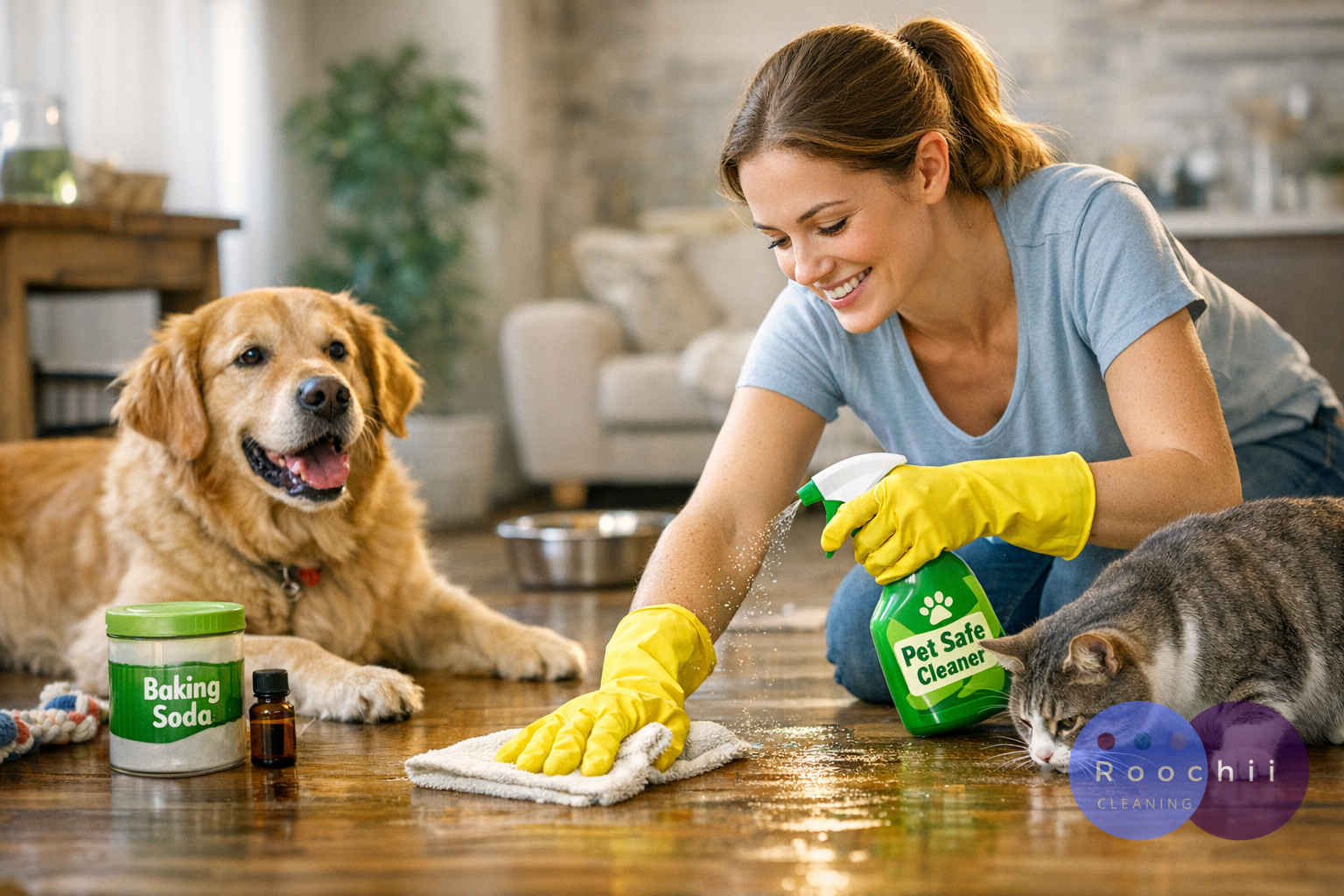
Using pet safe floor cleaners on hardwood floor with dog and cat nearby

Why Pet Safe Floor Cleaners Matter for Every Pet Owner

Keeping your home clean when you’ve got pets sounds simple enough… until you realize your floor cleaner might be the very thing putting them at risk. Many everyday cleaning products contain chemicals that seem harmless to us but can irritate, sicken, or even harm our furry companions. And let’s be honest, pets aren’t exactly known for avoiding freshly mopped floors.

That’s where pet safe floor cleaners come in. These are specially formulated solutions designed to clean effectively and safely. They avoid leaving behind toxic residues your pet might lick, absorb, or inhale. But here’s the tricky part: not all “natural” or “eco-friendly” cleaners are actually safe for pets.

In this guide, we’ll break down what truly makes a cleaner pet-safe, which ingredients to avoid, and how to choose the best option for your specific floors and pets. You’ll also discover practical tips, DIY solutions, and vet-backed advice to keep your home both clean and safe.

Let’s get started and make your cleaning routine safer and more effective.

Table of Contents

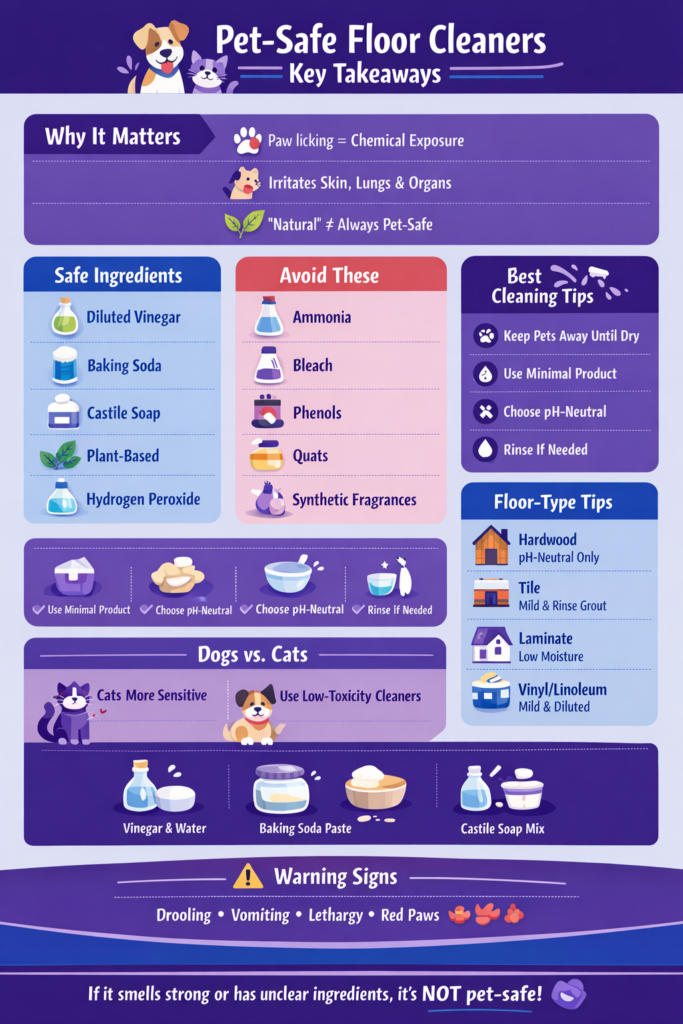
Pet safe floor cleaners key tips and ingredients summary

What Are Pet Safe Floor Cleaners and Why Do They Matter?

Pet safe floor cleaners are specially formulated cleaning products designed to remove dirt, bacteria, and odors without exposing pets to harmful chemicals. Unlike standard cleaners, these solutions focus on minimizing toxicity, reducing residue, and avoiding ingredients that can irritate or harm animals.

The reason this matters comes down to how pets interact with their environment. Dogs and cats walk barefoot across floors, then lick their paws as part of normal grooming. Some pets even lick surfaces directly. This behavior increases their exposure to any chemical residue left behind after cleaning. A small amount for humans can quickly become a problem for pets due to their size and behavior.

Another key issue is absorption. Chemicals can enter a pet’s body not only through ingestion but also through their skin and paw pads. Over time, repeated exposure may lead to symptoms such as irritation, digestive problems, or respiratory discomfort. Cats are especially vulnerable because their bodies process certain chemicals less efficiently.

It’s also important to understand that “safe for humans” does not mean safe for pets. Many household cleaners are tested with human use in mind, not animal exposure. This gap often creates hidden risks inside otherwise clean homes.

Switching to pet-safe options reduces these risks without sacrificing cleanliness, especially when you follow proven house cleaning tips for pet owners. It allows you to maintain hygiene while protecting your pets from avoidable exposure. Since floors are one of the most used surfaces in any home, that small change can make a noticeable difference.

What Cleaners Are Safe for Pets? (Quick Answer Guide)

If you’re looking for a quick answer, pet safe floor cleaners are those made with simple, non-toxic ingredients that do not leave harmful residues behind. These cleaners prioritize safety without compromising basic cleaning performance.

At a glance, safe options include mild, naturally derived substances that break down easily and do not build up on surfaces. These are less likely to irritate your pet’s skin or cause issues if accidentally ingested during grooming.

Safe ingredients include:

  • Diluted vinegar
  • Baking soda
  • Plant-based surfactants
  • Castile soap
  • Low-concentration hydrogen peroxide

On the other hand, many conventional cleaners contain harsh chemicals designed for strong disinfection. While effective, these can pose risks when used in homes with pets.

Unsafe ingredients to avoid:

  • Phenols
  • Ammonia
  • Chlorine bleach
  • Synthetic fragrances
  • Quaternary ammonium compounds

A good rule of thumb is this: if a cleaner has a strong chemical smell or requires heavy ventilation, it’s likely not ideal for frequent use around pets.

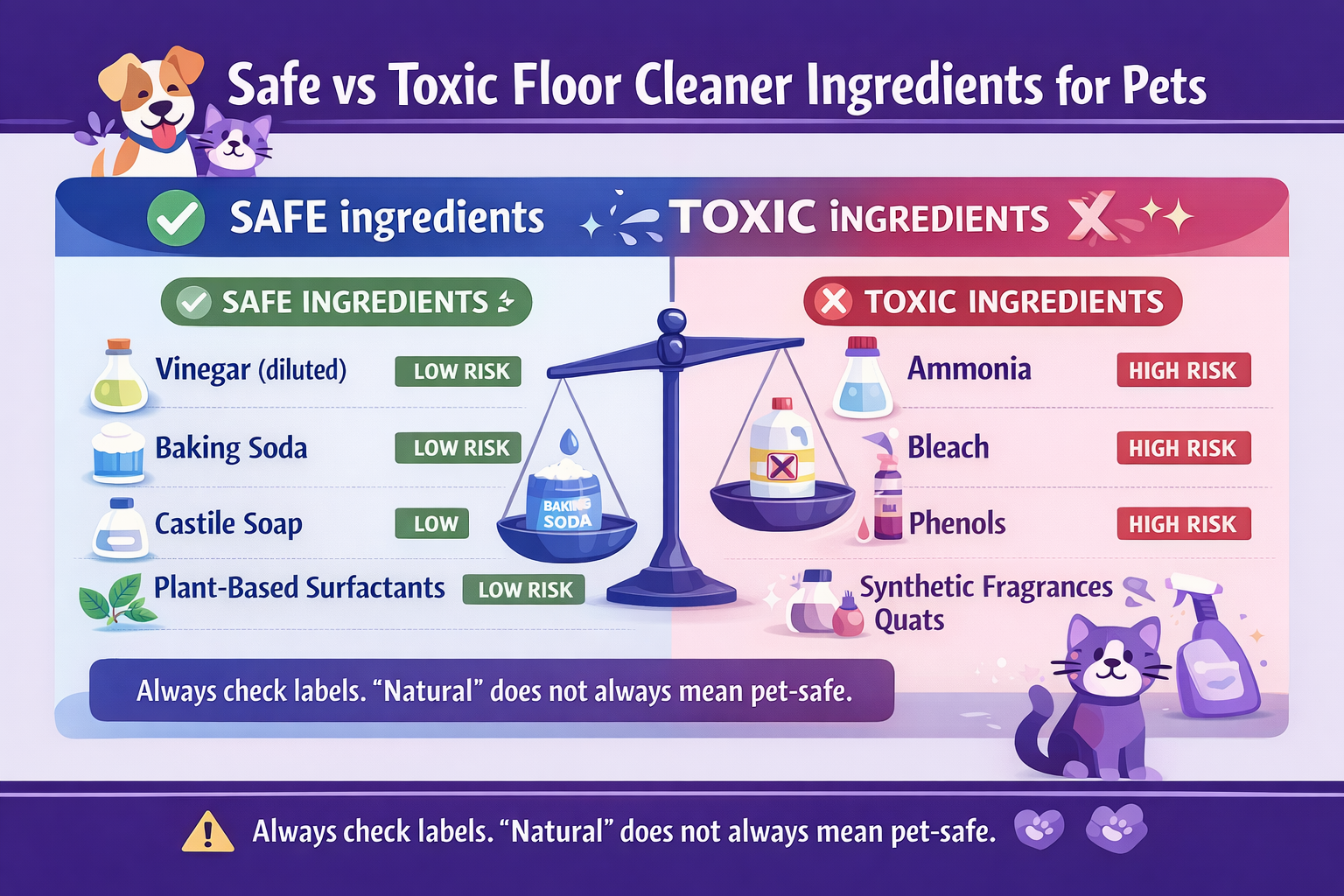
Safe vs Toxic Floor Cleaner Ingredients

Pet safe floor cleaners comparison of safe and toxic ingredients

Understanding these basics helps you make faster, safer choices. It also prevents relying on misleading labels like “green” or “natural,” which don’t always guarantee pet safety.

Harmful Ingredients to Avoid in Floor Cleaners

Many cleaning products contain chemicals that are effective for sanitation but risky for pets. Knowing what to avoid is one of the most important steps in choosing safer alternatives.

Phenols and Their Toxic Effects on Pets

Phenols are commonly found in disinfectants and antibacterial cleaners. They can be especially dangerous for cats, whose bodies struggle to break them down. Exposure may lead to liver damage, neurological issues, or severe illness.

Ammonia and Respiratory Irritation

Ammonia produces strong fumes that stay close to the ground, right where pets breathe. This can irritate the eyes, nose, and lungs. Repeated exposure may worsen respiratory sensitivity over time.

Bleach and Chemical Burns

Bleach is widely used for disinfecting, but it is harsh. It can cause skin irritation on paws and may lead to internal damage if ingested. Even diluted bleach solutions can leave behind residues that pets encounter later.

Artificial Fragrances and Essential Oil Risks

Fragrances often contain multiple synthetic compounds that are not clearly listed. Some essential oils, such as tea tree or citrus oils, can also be harmful. Cats are particularly sensitive due to their grooming behavior.

Quaternary Ammonium Compounds (Quats)

Quats are found in many antibacterial cleaners. They tend to cling to surfaces, increasing the chance of exposure. Pets can absorb or ingest these residues after walking across treated floors.

Alcohol-Based Cleaners and Residue Risks

Alcohol evaporates quickly, but frequent use may dry out paw pads and skin. This can lead to discomfort or cracking over time.

Avoiding these ingredients significantly reduces the risk of accidental exposure and creates a safer environment for pets.

What Makes a Floor Cleaner Truly Pet Safe?

Not every cleaner labeled “pet-friendly” is truly safe. A genuinely pet-safe floor cleaner is defined less by marketing claims and more by how the product is formulated, tested, and used. Instead of focusing only on ingredients, this section explains the qualities that make a cleaner safer for pets in real-world conditions.

Non-Toxic and Biodegradable Formulations

Pet-safe cleaners should break down naturally without leaving behind harmful chemical traces. Biodegradable formulas reduce the risk of long-term exposure, especially in homes where pets spend most of their time on the floor. These formulations also help limit environmental impact, which is an added benefit for households prioritizing sustainability.

Residue-Free Cleaning Performance

Residue is one of the biggest hidden risks for pets. Even mild cleaners can become harmful if they leave behind a film on the floor. That residue can transfer onto paws and fur, eventually being ingested during grooming. A truly pet-safe cleaner should either rinse away cleanly or be formulated to leave minimal to no residue once dry.

pH-Neutral Solutions

The pH level of a cleaner matters. Highly acidic or alkaline cleaners can irritate paws, skin, and sensitive areas. pH-neutral products are gentler on surfaces and safer for repeated contact, making them better suited for households with pets who spend a lot of time on the floor.

Certifications and Transparency

Reliable safety certifications can help separate truly pet-safe cleaners from products that rely on vague claims. Look for indicators such as the following:

  • EPA Safer Choice certification
  • Cruelty-free testing
  • Clear ingredient disclosure

These certifications show that a product has undergone safety evaluation rather than relying solely on marketing language.

Veterinary-Backed Safety Principles

Veterinary professionals generally recommend cleaners with simple formulations and minimal additives. Products with fewer harsh chemicals, fragrances, and preservatives reduce the likelihood of irritation or toxicity. Transparency in labeling also helps pet owners make informed decisions and avoid unnecessary risks.

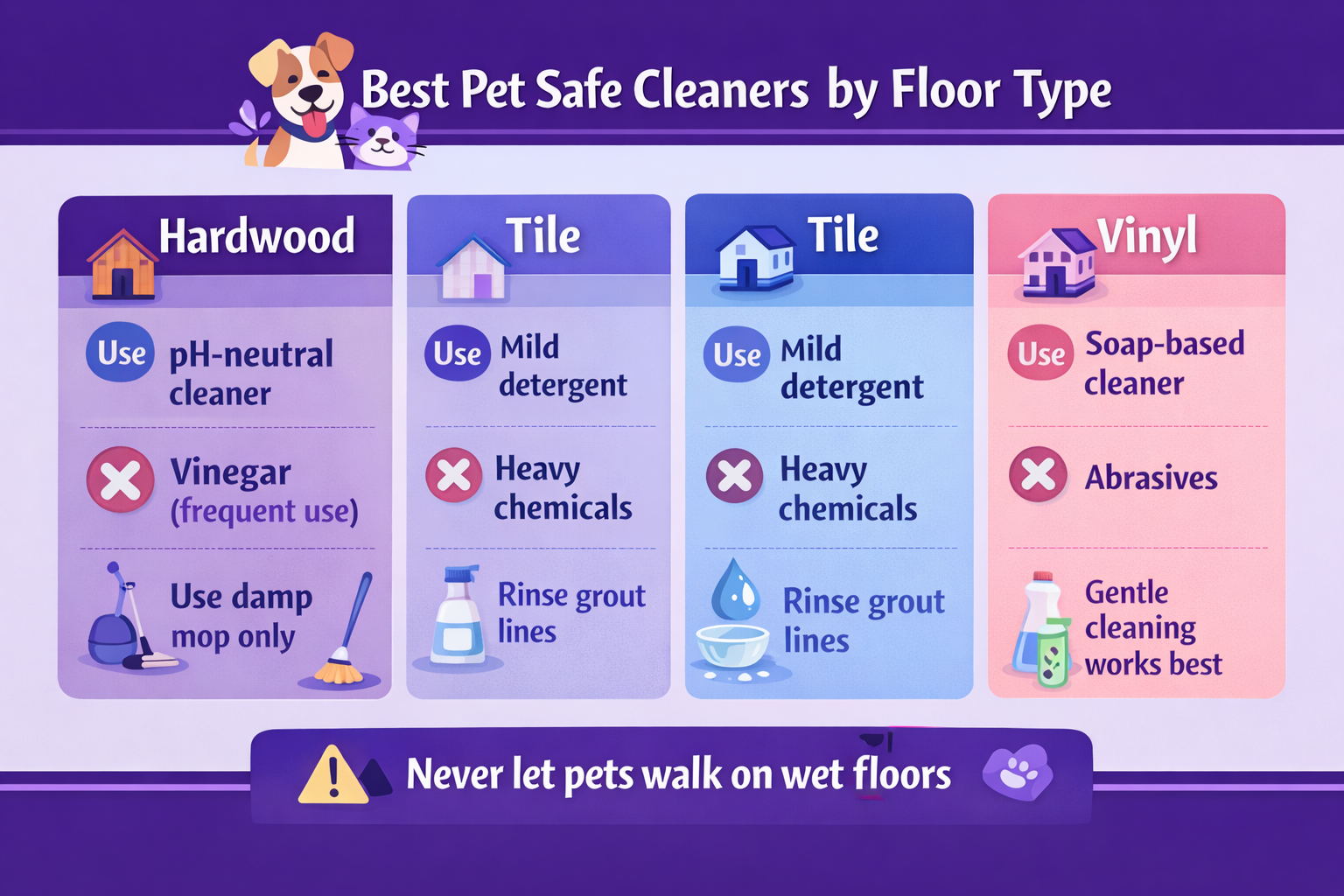
Best Pet Safe Floor Cleaners by Floor Type

Pet safe floor cleaners guide showing safe cleaning methods for hardwood, tile, and vinyl floors

Not all floors react the same way to cleaning products. Using the wrong solution can damage surfaces or leave residues that increase the risk to pets. Choosing the right pet-safe floor cleaners for your flooring type helps maintain both safety and durability.

Best Pet Safe Floor Cleaners for Hardwood Floors

Hardwood floors require gentle care. Excess moisture can cause warping, while harsh chemicals can strip the finish. Use pH-neutral cleaners specifically designed for wood surfaces.

Avoid vinegar for regular cleaning, as its acidity may dull the finish over time. Instead, choose water-based cleaners with minimal ingredients. Always use a damp mop rather than soaking the floor.

Safe Cleaners for Tile Floors

Tile is more durable and easier to clean. Mild detergents or diluted vinegar solutions work well. However, grout lines can absorb residues, so rinsing after cleaning is recommended.

Stick to simple solutions and avoid heavy chemical disinfectants unless necessary. This prevents chemicals from staying in grout lines where pets can be exposed later.

Pet Safe Options for Laminate Flooring

Laminate floors are sensitive to moisture. Too much liquid can seep into seams and cause damage. Use spray cleaners or lightly damp cloths.

Choose residue-free formulas to prevent streaking and reduce exposure risk for pets. Avoid abrasive products that can wear down the protective layer.

Vinyl and Linoleum Floor Cleaning Solutions

These surfaces are relatively low-maintenance. Mild soap-based cleaners or diluted solutions are usually sufficient. Avoid strong chemicals that may degrade the material over time.

Across all floor types, the goal remains the same: effective cleaning with minimal residue and no harsh chemicals.

Best Pet Safe Floor Cleaners for Dogs vs Cats

Dogs and cats have different sensitivities, which affects how you should approach cleaning.

Why Cats Are More Sensitive to Chemicals

Cats lack certain liver enzymes that help process toxins. This makes them more vulnerable to chemical exposure. Their grooming habits also increase ingestion risk.

Even small amounts of residue can become problematic over time. This is why extra caution is needed in homes with cats.

Safe Floor Cleaners for Dogs

Dogs are generally less sensitive but still at risk. Larger dogs may tolerate minor exposure better, but repeated contact can still lead to irritation.

Focus on low-residue cleaners, especially in high-traffic areas where dogs spend most of their time.

Multi-Pet Household Cleaning Considerations

If you have both cats and dogs, always choose products safe for the more sensitive animal. This simplifies your routine and reduces risk.

Avoid mixing different cleaning products, as chemical interactions can create new hazards.

Puppies and Kittens: Extra Safety Measures

Young pets explore the world by licking and chewing. This increases their exposure significantly. Use the mildest cleaning options and ensure floors are completely dry before letting them roam.

Store-Bought vs DIY Pet Safe Floor Cleaners

Choosing between commercial and homemade cleaners depends on your needs, budget, and cleaning habits

Examples of popular commercial pet-safe floor cleaners include:

  • Plant-based multi-surface cleaners
  • Enzymatic pet cleaners for odor removal
  • pH-neutral wood floor cleaners labeled safe for pets.

Pros of Commercial Pet Safe Cleaners

  • Consistent formulation
  • Ready to use
  • Often tested for safety standards

These products are convenient and reliable for regular use.

Cons of Commercial Cleaners

  • May contain undisclosed ingredients
  • Can be more expensive over time

Even products labeled as “safe” should be checked carefully. 

Benefits of Homemade Cleaning Solutions

DIY cleaners give you full control over ingredients. They are often more affordable and easy to prepare using common household items.

They also reduce exposure to unnecessary additives.

When DIY Cleaners Are NOT Recommended

Homemade solutions may not be strong enough for disinfecting after illness or contamination. In such cases, carefully chosen commercial cleaners are more effective.

Using a mix of both options often provides better results for most households.

DIY Pet Safe Floor Cleaner Recipes That Actually Work

Simple recipes can handle most everyday cleaning needs while keeping pets safe.

Vinegar and Water Solution (All-Purpose Cleaner)

Mix equal parts vinegar and water. This works well for tile and vinyl floors. It helps remove odors and light stains.

Avoid using this frequently on hardwood floors due to its acidity.

Baking Soda Scrub for Tough Stains

Sprinkle baking soda on the affected area and add a small amount of water to form a paste. Gently scrub and rinse.

This method is effective for spot cleaning without introducing harsh chemicals.

Lemon-Free Natural Cleaner (Pet-Safe Alternative)

Instead of citrus oils, combine vinegar with a small amount of mild soap. This avoids ingredients that may be harmful to pets, especially cats.

Castile Soap Floor Cleaner

Add a few drops of castile soap to warm water. This creates a gentle cleaning solution suitable for most surfaces.

These recipes are simple, effective, and reduce unnecessary chemical exposure.

How to Clean Floors Safely with Pets at Home

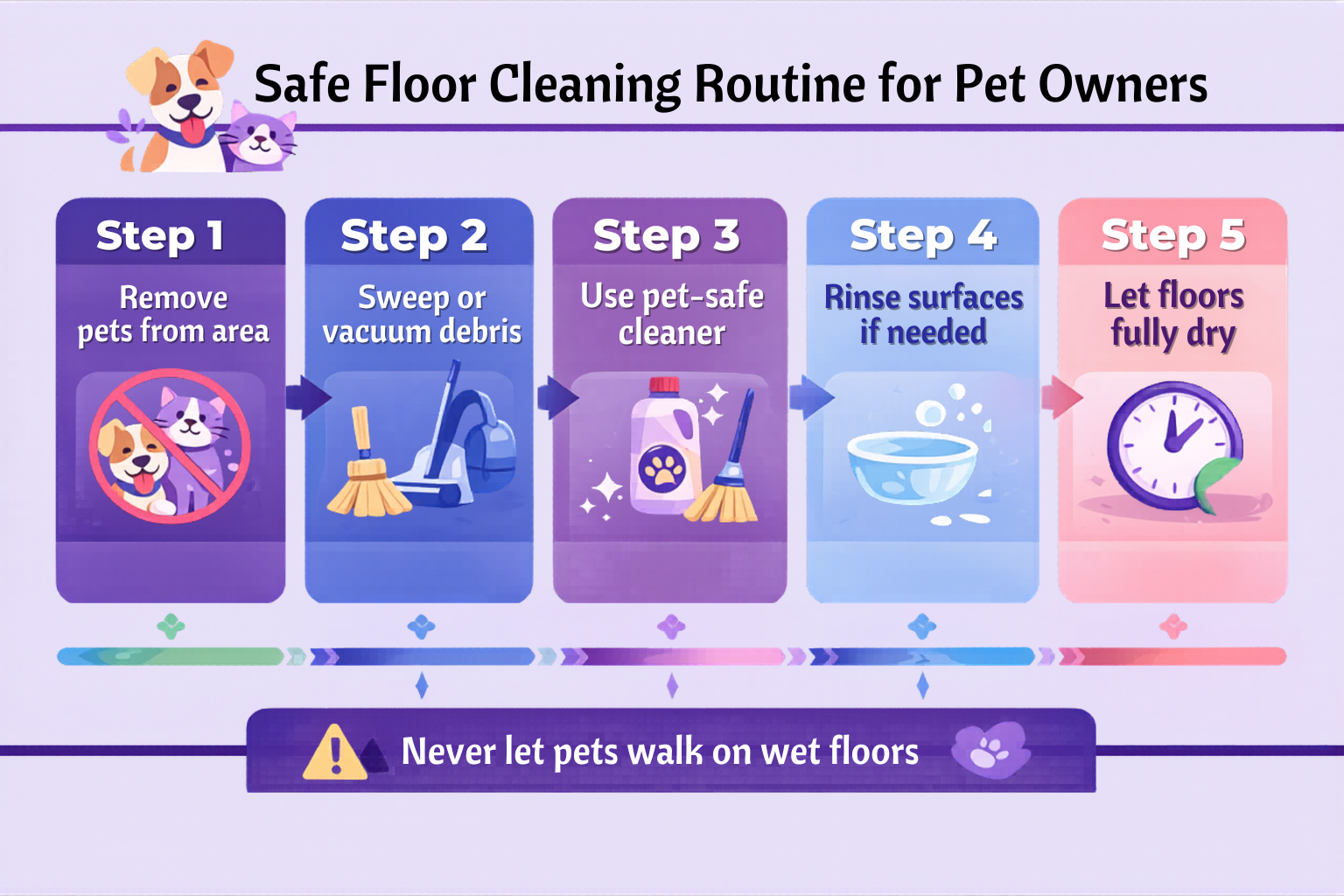
Pet safe floor cleaners step by step cleaning routine for pet owners

Cleaning routines matter just as much as the products you use.

Step-by-Step Pet Safe Cleaning Routine

  1. Move pets out of the area
  2. Sweep or vacuum first
  3. Clean using a mild solution
  4. Rinse if needed
  5. Allow floors to dry fully

This process reduces both residue and exposure.

How Long to Wait Before Letting Pets Back

Always wait until floors are completely dry. Damp surfaces can transfer chemicals to paws more easily.

Reducing Chemical Residue Risks

  • Use minimal product
  • Avoid layering multiple cleaners
  • Rinse surfaces when possible

Small adjustments can make a big difference in safety.

Cleaning Frequency for Pet Owners

  • Sweep daily to remove debris
  • Mop weekly for maintenance
  • Spot clean as needed

Consistent cleaning reduces the need for stronger products.

Pet Safe Floor Cleaner Comparison Table

Choosing between options becomes easier when you compare them side by side.

Cleaner Type

Safe for Dogs

Safe for Cats

Floor Compatibility

Residue Risk

Vinegar Solution

Yes

Yes

Tile, Vinyl

Low

Castile Soap

Yes

Yes

Most surfaces

Low

Bleach Cleaner

No

No

Tile only

High

Ammonia Cleaner

No

No

Hard surfaces

High

This table highlights how simple solutions often outperform harsher chemicals in terms of safety.

Vet-Approved Tips for Keeping Your Home Clean and Pet Safe

Professional advice adds another layer of confidence when choosing cleaning methods.

What Veterinarians Say About Floor Cleaners

Vets generally recommend avoiding strong chemical cleaners in areas where pets spend time. Simpler solutions are often safer and sufficient for routine cleaning.

Signs Your Pet Was Exposed to Toxic Cleaners

Watch for the following symptoms:

  • Excessive drooling
  • Vomiting
  • Lethargy
  • Red or irritated paws

Early signs should not be ignored.

Emergency Steps if Your Pet Is Affected

  • Remove your pet from the area
  • Rinse paws or affected skin with water
  • Contact a veterinarian promptly

Quick action can prevent more serious complications.

Eco-Friendly vs Pet Safe Floor Cleaners: Are They the Same?

Eco-friendly products are designed to reduce environmental impact. However, this does not always mean they are safe for pets.

Some “green” cleaners still contain essential oils or other compounds that may irritate animals. Labels can be misleading if you rely on them alone.

Pet-safe products focus specifically on reducing harm to animals. This includes avoiding ingredients known to cause toxicity or irritation.

The safest approach is to review ingredient lists rather than relying on marketing claims.

Common Mistakes Pet Owners Make When Cleaning Floors
Even with the right products, mistakes can increase risk.

  • Using too much cleaner, which leaves residue
  • Skipping the rinse step
  • Using essential oils without proper research
  • Letting pets walk on wet floors

These habits may seem minor, but they can lead to repeated exposure over time.

Being mindful of how you clean is just as important as what you use.


Final Thoughts: Choosing the Best Pet Safe Floor Cleaners for Your Home

Choosing the right pet safe floor cleaners comes down to understanding both ingredients and habits. The safest approach is to use simple, low-residue solutions that clean effectively without exposing pets to unnecessary risks.

Focus on avoiding harmful chemicals such as ammonia, bleach, and synthetic fragrances. Instead, choose products with clear ingredient lists and mild formulations. Matching your cleaner to your floor type also helps prevent damage and reduces residue buildup.

It’s also worth paying attention to how you clean. Using too much product, skipping rinsing, or allowing pets onto wet floors can increase exposure. Small adjustments in your routine can make a noticeable difference in safety.

If you prefer DIY solutions, stick to proven combinations like diluted vinegar or castile soap. For more demanding cleaning tasks, you may want to consider professional house cleaning services in Denver to ensure your home stays safe and well-maintained.

A clean home should not come at the expense of your pet’s health. With the right choices, you can maintain a hygienic space while keeping your pets safe, comfortable, and free from avoidable exposure.

FAQ

Frequently Asked Questions About Pet Safe Floor Cleaners

Leave a Reply

Your email address will not be published. Required fields are marked *