Skip to content

Does Vinegar Kill Pink Mold?
Understanding Vinegar’s Effectiveness Against Pink Mold
You’ve probably looked at it and thought, “Well, vinegar works on pretty much everything. Surely it can handle this, right?” And the answer is… partly yes.
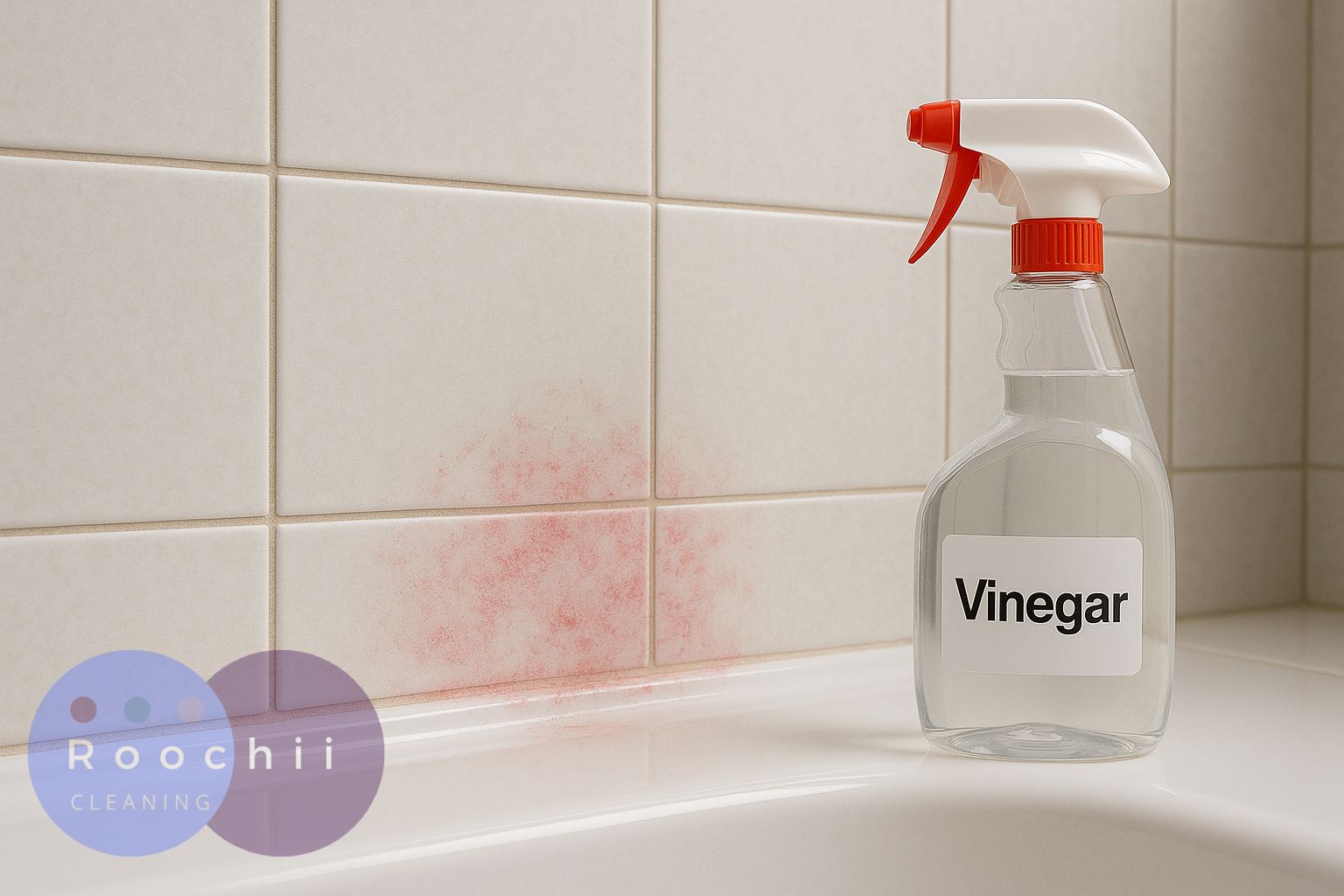
Vinegar can kill pink mold on hard, non-porous surfaces like tiles, glass, and shower curtains. But if you’re asking, does vinegar kill pink mold deep in porous materials like grout, wood, or drywall? Not really. That’s where the battle gets a little tougher.
Pink mold is that slimy, salmon-colored houseguest that pops up in showers, around sinks, and anywhere damp. It doesn’t pay rent, it stains everything it touches, and yes, it has the nerve to keep coming back even after you’ve scrubbed for hours.
Vinegar is one of those pantry staples that feels like it should do it all, but with pink mold, the results aren’t always one-and-done.
Table Of Contents
- What Is Pink Mold in the Shower?
- The Science Behind Vinegar as a Cleaning Agent
- Does Vinegar Kill Pink Mold?
- How to Use Vinegar to Remove Pink Mold
- Where Can You Use Vinegar for Pink Mold?
- Safety Tips When Cleaning Pink Mold with Vinegar
- Alternative Cleaning Solutions for Pink Mold
- Preventing Pink Mold Growth
What Is Pink Mold in the Shower?
“Pink mold” is the common name for the slimy pink, reddish, or orange buildup that can appear around shower drains, grout, shower curtains, sinks, and other damp bathroom surfaces.
In many cases, this growth is associated with bacteria such as Serratia marcescens. Bathroom studies have also identified other microorganisms in pink biofilms, so the color alone does not identify one specific organism.
Serratia marcescens is found in damp environments, including bathrooms, where it can appear as pink, orange, or red discoloration because of the pigment prodigiosin.
These growths can become persistent because bathrooms provide several conditions microorganisms need to grow: moisture, damp surfaces, and residues from soap, shampoo, skin oils, and other organic material.
That is also why pink buildup can return after cleaning. Removing the visible film without addressing moisture and residue leaves the conditions that allowed it to develop in the first place.
The Science Behind Vinegar as a Cleaning Agent
Vinegar contains acetic acid, which makes it an acidic cleaner. Household vinegar products vary in strength and formulation. For example, a common distilled white vinegar product is sold at 5% acidity, while NIOSH notes that vinegar can contain acetic acid in the 5% to 8% range.
Vinegar samples also show variation in measured pH. Published measurements of commercial vinegars have found acidic pH values around 2.8 to 3.9.
That variation matters. You should not treat every vinegar product as though it has exactly the same acidity or pH.
Acetic acid can help loosen certain residues and has antimicrobial activity under some conditions. However, antimicrobial activity in a study does not automatically turn a bottle of household vinegar into a registered surface disinfectant.
Cleaning and disinfecting are different jobs.
Cleaning removes dirt, organic matter, residue, and visible buildup. Disinfecting is a specific antimicrobial claim that depends on the product, target microorganism, surface, application method, and contact time.
If your goal is disinfection, use an EPA-registered disinfectant labeled for the intended surface and microorganism. Follow the product’s directions, including any required pre-cleaning, application method, contact time, ventilation, rinsing, and other precautions.
For routine pink bathroom buildup, vinegar may be useful as part of the cleaning process, particularly when the growth is light and the surface is appropriate for acidic cleaning.
The acidity that makes vinegar useful for some cleaning tasks is also why it can damage certain materials.
Does Vinegar Effectively Kill Pink Mold?
Vinegar can help reduce and remove light pink bacterial buildup from some hard, washable surfaces, but there is no universal guarantee that household vinegar will completely eliminate every pink biofilm.
Its effectiveness depends on factors such as the vinegar product, the amount of buildup, the surface, how well the area is physically cleaned, and whether the moisture and residue that support regrowth are addressed.
For a small amount of pink buildup on acid-tolerant surfaces such as ceramic tile, porcelain, or glass, vinegar may be a reasonable cleaning option.
For porous, damaged, or acid-sensitive materials, vinegar may be inappropriate. And if the pink growth keeps returning, repeatedly applying vinegar without addressing moisture, soap residue, or ventilation is unlikely to solve the underlying problem.
How to Use Vinegar to Remove Pink Mold

If you are dealing with a small amount of pink buildup on a surface that can safely be cleaned with an acidic product, vinegar can be part of a basic cleaning process.
The goal is to loosen and remove the visible buildup, not simply leave vinegar sitting on the surface and assume the problem has been disinfected.
Here’s a step-by-step guide to using it effectively:
Step 1: Protect Yourself Before Cleaning Pink Mold
Before you start, protect your hands and eyes from contact with the buildup and cleaning solution.
Pink mold may not seem as hazardous as black mold, but it can still cause skin irritation, respiratory discomfort, and allergic reactions in some people, as proven by multiple cases and studies.
The EPA recommends wearing rubber gloves to protect your hands, and using a mask and goggles if you’re cleaning a larger area or working in a poorly ventilated bathroom. Open a window or turn on an exhaust fan to improve airflow.
If the affected area is large, heavily contaminated, difficult to clean, or associated with significant moisture damage, consider whether DIY cleaning is appropriate before starting.
Step 2: Choose an Appropriate Vinegar Product
For routine household cleaning, use a commercially prepared vinegar product according to its intended use.
A common distilled white vinegar is 5% acidity, but vinegar products can vary. Do not assume that a stronger acid concentration is automatically better. Higher concentrations of acetic acid can increase the risk of skin, eye, and surface damage.
Use the product as supplied unless its directions specifically state otherwise.
Never mix vinegar with hydrogen peroxide, bleach, ammonia, or another cleaning chemical to make it “stronger.”
Step 3: Apply Vinegar to the Affected Surface
Apply the vinegar to the pink buildup according to the product’s intended use and the surface manufacturer’s care instructions.
Avoid unnecessarily soaking the area because excess moisture can contribute to continued growth.
For shower walls, tile, and other vertical surfaces, apply enough product to treat the affected area without creating unnecessary runoff or pooling.
Step 4: Allow Time for the Cleaner to Work
This is the part where patience pays off.
There is no universal contact time for household vinegar that guarantees the elimination of pink biofilm, so simply allow the product to remain on the affected area long enough to loosen the buildup.
If you are using an EPA-registered disinfectant instead of vinegar, follow the exact contact time stated on that product’s label.
Do not assume that leaving vinegar on a surface for a longer period automatically makes it a more effective disinfectant. The objective here is simple: loosen the residue so it can be physically removed.
Pro Tip: If you’re cleaning vertical surfaces like showers or walls, spraying and then pressing a few vinegar-soaked paper towels against the area can help keep the vinegar in place for longer contact.
Step 5: Scrub Away the Pink Buildup
Once the vinegar has had time to work and the buildup has been treated, physically remove it with a cleaning tool appropriate for the surface.
A soft or non-abrasive brush can be useful for ceramic tile and other appropriate hard surfaces.
Use extra care around grout, caulking, painted finishes, and other materials that can be scratched, softened, or damaged.
Work the cleaner into the visible buildup and remove the residue rather than simply spreading it across the surface.
For stubborn buildup, several gentle passes may be more appropriate than repeatedly increasing the amount of chemical applied.
Step 6: Remove Residue From the Surface
After scrubbing, remove the loosened pink buildup and remaining cleaning residue according to the surface and product instructions.
If the material can be safely rinsed, rinse it with clean water and remove the remaining residue.
For surfaces that should not be saturated, use an appropriate damp cloth or cleaning method instead.
Inspect the surface clearly. The important part is to physically remove the loosened material and avoid leaving unnecessary moisture behind.
Step 7: Dry the Area Completely
Moisture is the number one reason pink mold keeps coming back. After rinsing, use a towel, microfiber cloth, or squeegee to dry the surface thoroughly. Continue ventilation after cleaning when practical.
Leaving dampness behind is like sending pink mold a written invitation to return.
If pink buildup repeatedly returns, do not simply keep applying vinegar. Look for the underlying conditions that are allowing it to grow, including persistent dampness, poor ventilation, soap residue, leaking fixtures, or surfaces that remain wet for long periods.
Where Can You Use Vinegar for Pink Mold?
Vinegar’s acidity can help with certain residues, but that same acidity can damage surfaces that are sensitive to acidic cleaners. It’s important to consider the material you’re cleaning.
Surfaces That May Be Appropriate
Vinegar may be appropriate for some acid-tolerant hard, washable surfaces such as:
- Ceramic tile
- Porcelain
- Glass
The exact product and the manufacturer’s care instructions still control.
Surfaces That Need Caution
Use caution with:
- Grout
- Caulking and sealants
- Painted finishes
- Some metal fixtures
- Finished wood
- Rubber components
- Surfaces with manufacturer-specific cleaning requirements
Repeated exposure to acidic cleaners can affect some finishes and materials even when a single cleaning does not cause obvious damage.
Surfaces to Avoid
Do not use vinegar on acid-sensitive natural stone such as:
- Marble
- Limestone
- Travertine
- Other calcium-carbonate-based stone
These materials contain calcium-carbonate minerals that can react with acids. Vinegar can etch or dull their surfaces.
Granite also needs more caution than the old article suggests. Granite is not automatically interchangeable with marble or limestone, and mineral composition varies. Some granite species and some sealers can be affected by acidic solutions, so follow the stone manufacturer’s or supplier’s care guidance.
If a surface manufacturer specifies a pH-neutral cleaner, use the recommended product instead of improvising with vinegar.
Safety Tips When Cleaning Pink Mold with Vinegar
Vinegar is one of the safest and most affordable natural cleaners for tackling pink mold, but just because it’s “natural” doesn’t mean you can dive in without precautions.
To make sure your mold-cleaning mission is safe and effective, keep these tips in mind:
Ensure Proper Ventilation When Using Vinegar on Pink Mold
Vinegar has a strong acidic odor that can be irritating in an enclosed bathroom.
Always open a window, switch on the exhaust fan, or prop open the bathroom door while cleaning. Avoid deliberately inhaling concentrated vapors.
Adequate airflow not only keeps you comfortable but also helps dry the area faster, reducing the chances of mold making a comeback.
If cleaning causes significant coughing, breathing difficulty, eye irritation, or other concerning symptoms, stop cleaning and move to fresh air. Seek appropriate medical or poison-control guidance if symptoms are significant or persistent.
Never Mix Vinegar with Bleach or Harsh Chemicals
Do not mix vinegar with bleach, hydrogen peroxide, ammonia, or other cleaning chemicals as a DIY way to make a stronger cleaner. Combining household products can create unexpected chemical reactions, irritating vapors, or other hazardous substances.
Mixing an acid such as vinegar with chlorine bleach can release chlorine gas, while vinegar and hydrogen peroxide can react to form peracetic acid. These reactions depend on the products and conditions involved, so the result cannot be predicted simply by comparing or averaging their individual properties.
Use one cleaning product at a time, remove its residue when appropriate, and let the surface dry before deciding whether another product is needed. Never layer wet cleaning chemicals directly on top of each other.
If You Already Mixed Vinegar and Hydrogen Peroxide
Stop using the mixture and do not add bleach, ammonia, baking soda, another cleaner, or any other chemical to it.
If it is safe to do so, move away from the mixture and ventilate the area. Do not deliberately smell it or lean over the container.
If it contacts your skin or eyes, rinse thoroughly with water. For significant exposure, persistent coughing, trouble breathing, or other concerning symptoms, contact your local poison center or seek medical attention.
Test Vinegar on Surfaces Before Applying Liberally
Vinegar is safe for most bathroom and kitchen surfaces, including tiles, porcelain, glass, and plastic. However, it can etch and damage natural stone like marble, travertine, granite, and limestone.
Always test vinegar on a small, hidden area first, or better yet, avoid using it on delicate stone altogether. For those surfaces, a pH-neutral cleaner is a safer choice.
Clean and Disinfect Your Cleaning Tools
One commonly overlooked step: don’t forget to clean the cleaning tools.
Reusable brushes and cloths should be cleaned according to their care instructions after use. Do not soak cleaning tools in homemade chemical mixtures simply to disinfect them.
Remove visible residue and allow reusable tools to dry completely before storing them.
Heavily contaminated disposable materials may be better discarded rather than reused.
Avoid Breathing in Mold Spores During Cleaning
While vinegar helps kill and loosen pink mold, scrubbing can release tiny particles and spores into the air. Wearing a mask reduces your chances of inhaling these irritants, especially if you’re cleaning a shower or bathroom with poor airflow.
Alternative Cleaning Solutions for Pink Mold
Vinegar is only one possible cleaning option, and it just isn’t strong enough especially if you’re dealing with a full-scale pink mold invasion.
Here are some alternatives you can use when vinegar just isn’t enough:
-
Hydrogen Peroxide – Hydrogen peroxide can be useful for some hard, washable surfaces when the product and surface instructions allow its use. However, do not assume that a household peroxide solution is automatically a registered disinfectant. If you need disinfection, use a product labeled for the intended purpose.
-
Baking Soda – Mildly alkaline and abrasive, it can help with light scrubbing on selected surfaces, such as some uncoated ceramic tile and porcelain, but it is not a disinfectant.
-
Commercial Cleaners – For stubborn buildup, a commercially formulated bathroom or hard-surface cleaner may be more appropriate. If the product makes a disinfecting claim, use an EPA-registered product labeled for the intended surface and microorganism.
If the infestation is large or keeps coming back despite your best efforts, it may be time to call Roochii Cleaning’s deep cleaning service. After all, some battles are best left to the pros.
Preventing Pink Mold Growth in Your Home
The best way to deal with pink mold? Stop it before it starts.
Prevention might not be all that fun, but it’s definitely easier than scrubbing slimy biofilm off your shower tiles every week.
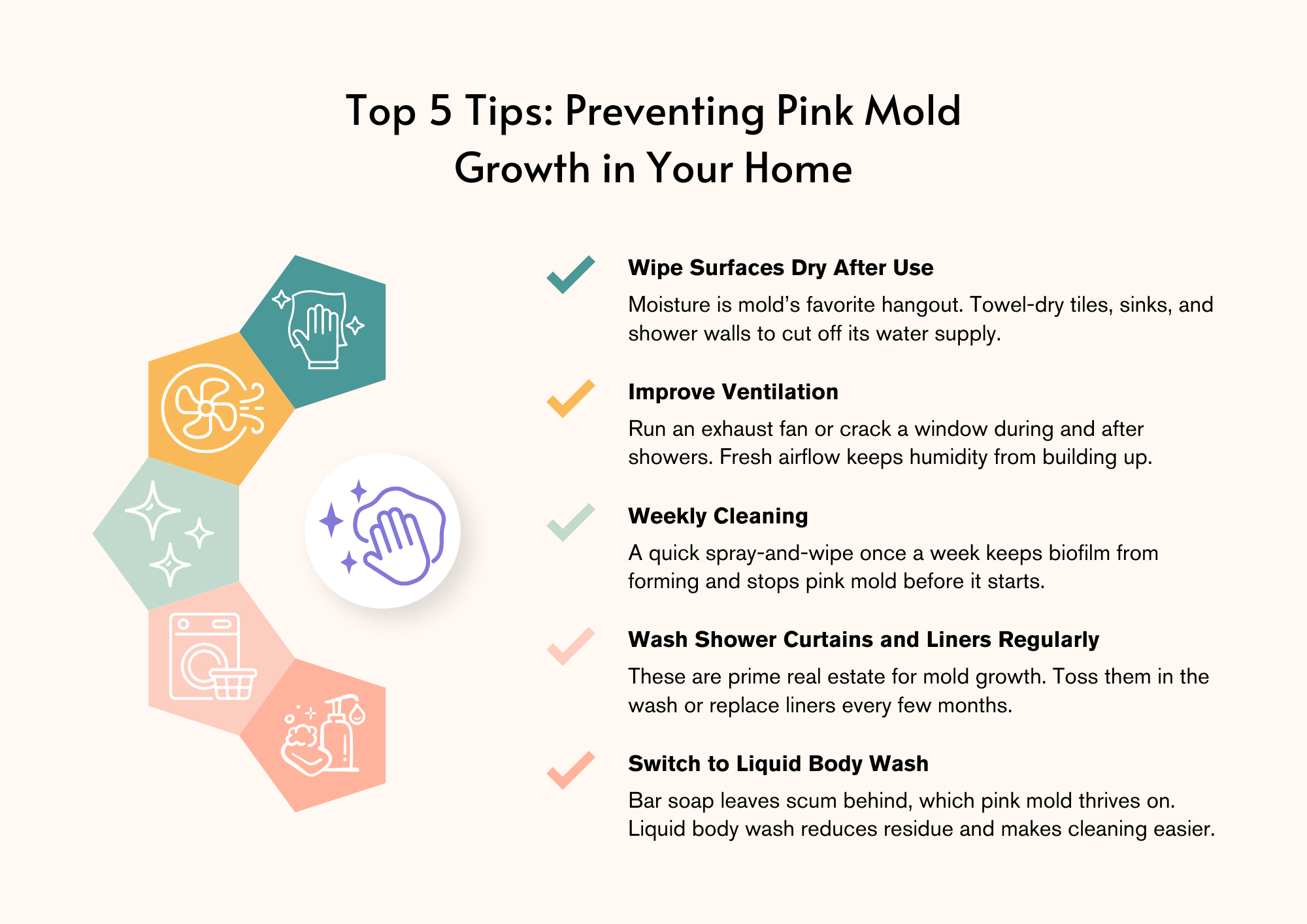
With a few simple habits, you can keep pink mold from ever feeling “at home” in your home.
-
Keep surfaces dry. Pink mold loves moisture. Wipe down your shower after use and fix leaky faucets. Use a squeegee or clean microfiber cloth to remove standing water when practical.
-
Improve ventilation. Run an exhaust fan or crack a window during and after showers. If the bathroom remains humid for long periods, improve ventilation or use a dehumidifier where appropriate.
-
Remove soap scum and product residue. Regularly clean shower walls, tubs, sinks, and other areas where residue accumulates.
-
Wash shower curtains and liners. They’re prime real estate for mold growth. Clean washable curtains and liners according to their care instructions, and replace materials that are damaged or cannot be adequately cleaned.
-
Maintain a regular cleaning schedule. Regular cleaning helps prevent residue and biofilm from accumulating. Choose a cleaner appropriate for the surface and focus on removing moisture and residue consistently.
Think of it this way: preventing pink mold is like brushing your teeth. Do it regularly, and you’ll avoid bigger, nastier problems down the road.
Final Thoughts: The Efficacy of Vinegar in Mold Cleaning
Vinegar can help reduce and remove light pink bacterial buildup from some hard, washable surfaces, but it should not be treated as a guaranteed disinfectant or complete solution for every case.
The most effective cleaning approach is to physically remove the buildup, clean away soap and other residues, dry the affected area, and correct the moisture conditions that allow the pink biofilm to return.
Use vinegar for cleaning only on surfaces that are appropriate for acidic solutions, and never mix it with bleach, hydrogen peroxide, ammonia, or other cleaning chemicals.
If the growth is widespread, recurring, hidden, or affecting materials that cannot be thoroughly cleaned, vinegar may not be enough. In those situations, address the underlying moisture problem and choose a cleaning or remediation method appropriate for the affected material.
FAQ
Frequently Asked Questions on Using Vinegar for Pink Mold
It can kill some of it, but not always completely.
Larger infestations may require stronger disinfectants.
There is no universal vinegar contact time that guarantees elimination of pink biofilm. Allow the product to remain on the affected area long enough to loosen the buildup according to the product and surface instructions, then physically remove the residue.
If you need disinfection, use an EPA-registered product and follow its labeled contact time.
No. Mixing the two releases toxic chlorine gas that's bad for your health. It’s not just a bad idea, it’s also dangerous.
It can cause urinary tract infections, respiratory issues, and skin irritation, especially in people with weak immune systems.
There is no need to use vinegar on a fixed schedule simply to prevent pink buildup.
Regularly remove soap residue, keep shower surfaces dry, and maintain ventilation.
There is no reliable household cleaning method that should be described as killing pink mold instantly.
Cleaning involves physically removing the buildup, while disinfection requires an appropriately labeled product, surface, target microorganism, application method, and contact time.
Vinegar may help remove some existing buildup, but it should not be treated as a stand-alone prevention method.