Skip to content

Why We Think Cleaning Is Faster Than It Is: Media, Marketing, and Convenience Culture
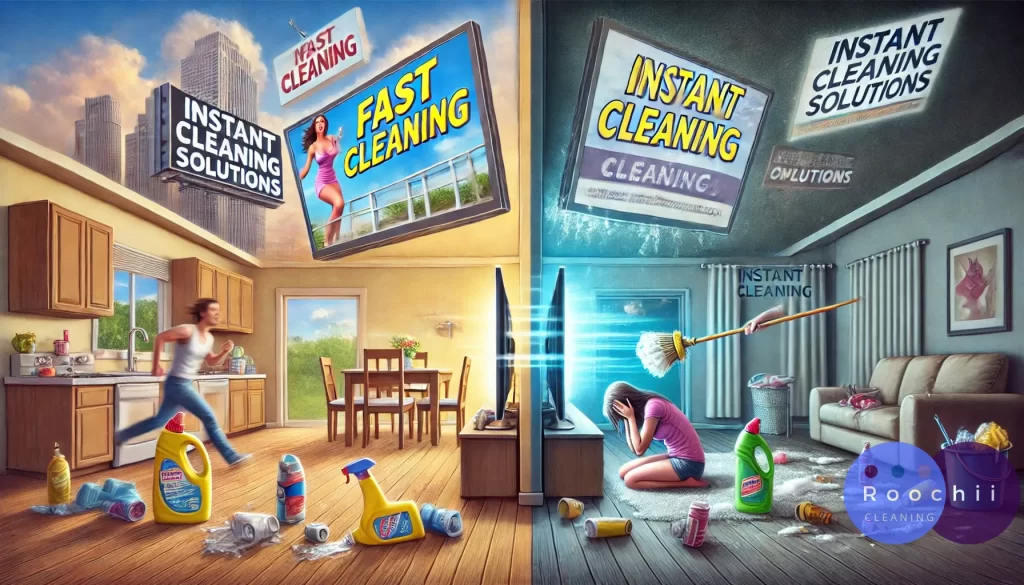
Why Do We Underestimate the Time Cleaning Takes?
Cleaning often looks deceptively simple. A few sprays of cleaner, a quick pass with the vacuum, and suddenly the room looks brand new. Movies, social media, and television commercials have trained us to believe that deep cleaning can be squeezed into a lunch break.
The reality is very different.
A thorough deep clean takes time because it involves hundreds of small tasks that rarely make it into the final edit of a television show or a 30-second advertisement. Dust has to be removed before surfaces are disinfected. Cleaning products need time to work. Hidden corners, light switches, baseboards, and vents all require attention if you want more than just a surface-level clean.
If you’ve ever wondered why cleaning always seems to take longer than expected, you’re not alone. Psychology, marketing, and modern convenience culture all shape our expectations in ways we rarely notice.
Deep cleaning isn't slow because you're doing it wrong. It takes time because thorough cleaning involves dozens of small tasks, product dwell times, and careful attention to detail that TV shows, social media, and advertisements rarely show. Understanding why cleaning feels slower than expected helps you plan more realistically and achieve better results.
Table of Contents
- Why We Consistently Underestimate Cleaning Time
- The Psychology Behind Unrealistic Cleaning Expectations
- How Movies, TV, and Social Media Distort Reality
- Why Cleaning Product Advertisements Feel Almost Magical
- Convenience Culture and the Demand for Speed
- What Actually Happens During a Professional Deep Clean?
- How Long Does a Deep Clean Actually Take?
- How to Set More Realistic Cleaning Expectations
Why We Consistently Underestimate Cleaning Time
Almost everyone has experienced this.
You plan to spend an hour cleaning your kitchen, only to discover three hours have disappeared. Suddenly you’re washing cabinet doors you hadn’t noticed before, scrubbing the microwave, cleaning behind the toaster, emptying the trash, and wondering how one room generated so much work.
The problem isn’t poor planning. It’s just that most people picture the visible parts of cleaning while overlooking the dozens of smaller tasks that happen before, during, and after the main job.
Deep cleaning isn’t one task. It’s a sequence of many smaller tasks working together.
For example, here at Roochii Cleaning, in just one room, a deep clean might involve:
- Dusting ceiling fans, blinds, and moldings – 15-30 minutes
- Vacuuming furniture crevices and under cushions – 15-45 minutes
- Wiping down baseboards, door handles, and light switches – 10-20 minutes
- Scrubbing floors and deep-cleaning carpets/rugs – 20-60 minutes
Each task may only take a few minutes, but together they create a much longer cleaning session than most people anticipate.
The Psychology Behind Unrealistic Cleaning Expectations
If you’ve ever started cleaning thinking, “This shouldn’t take long,” only to look up two hours later wondering where the time went, you’re experiencing something psychologists have studied for decades.
Our brains aren’t very good at estimating how long complex tasks will take, especially tasks made up of dozens of smaller steps. Cleaning is one of the best examples because it’s easy to remember the end result, but surprisingly difficult to remember everything it took to get there.
Three common psychological biases help explain why cleaning almost always feels faster in our heads than it does in real life.
The Planning Fallacy
The planning fallacy is our tendency to underestimate how long future tasks will take, even when we’ve done them many times before.
Instead of picturing every step, our brains jump straight to the finished result.
You might think:
“I’ll clean the kitchen this afternoon.”
But your brain skips over everything between “start” and “finished,” including:
- Clearing clutter from countertops
- Moving small appliances
- Letting degreasers sit long enough to loosen grime
- Wiping cabinets and backsplash
- Scrubbing the sink and faucet
- Emptying the trash
- Vacuuming and mopping the floor
- Putting everything back where it belongs
Each task only takes a few minutes, but together they can easily turn a one-hour estimate into a three-hour cleaning session.
Time Compression Bias
Our memories simplify routine chores.
A week after cleaning, you probably won’t remember wiping every light switch, washing microfiber cloths, or waiting for cleaners to work. You’ll simply remember that you “cleaned the kitchen.”
Because our brains compress those smaller steps into one memory, the next cleaning session feels like it should take less time than it actually will.
The Invisible Work Effect
Some of the most time-consuming parts of cleaning are the least noticeable.
Professional cleaners often refer to these as the “hidden” or “invisible” tasks because they don’t dramatically change how a room looks, even though they’re essential for a thorough clean.
These include:
- Filling buckets and spray bottles
- Changing vacuum attachments
- Rinsing or replacing dirty microfiber cloths
- Waiting for cleaning products to dwell
- Carrying supplies between rooms
- Washing reusable cleaning tools
These small jobs are rarely shown in social media videos or advertisements, but they often account for a significant portion of the total cleaning time.
How Movies, TV, and Social Media Distort Reality
Our minds already simplify cleaning in hindsight. Add heavily edited TV shows, social media videos, and commercials into the mix, and it’s easy to see why so many people expect deep cleaning to happen much faster than it actually does.
The Montage Effect
The portrayal of cleaning tasks in movies and TV shows often employs montage sequences to condense time and simplify complex activities, creating an impression that such chores are quick and effortless.
This cinematic technique can influence viewers’ perceptions, making them underestimate the actual time and effort required for real-life cleaning tasks:
Scrubbing kitchen grease buildup (can take 30+ minutes)
Removing stains from upholstery (often requires multiple cleaning steps)
Disinfecting high-touch areas like door handles and light switches
In reality, those missing minutes or hours include all the repetitive work viewers never see.
Home Makeover Shows
Home makeover shows often portray dramatic transformations that seem to happen in a single afternoon. But behind the scenes, professional cleaners, organizers, and decorators spend days working on the space.
For instance:
“Clean House” was a reality television series that aired from 2003 to 2011. The show featured a team of experts, including a host, designer, yard sale coordinator, and a “go-to guy” (handyman), who collaborated to declutter, clean, and renovate homes. Each episode showcased the team’s comprehensive approach to transforming cluttered spaces, emphasizing that such makeovers require significant time and professional assistance.
The reality?
Dusting blinds alone can take 15-30 minutes per set.
Deep-cleaning a small kitchen may take 1.5-3 hours (including scrubbing appliances and floors).
Cleaning an entire home can take 8+ hours, not just 30 minutes of TV time.
These misleading portrayals set unrealistic expectations, making real cleaning feel like it’s taking too long when, in fact, it’s simply thorough.
Social Media’s Highlight Reel
Platforms like TikTok, Instagram Reels, YouTube Shorts, and other short-form video apps have turned cleaning into a popular form of entertainment. These videos are satisfying to watch because they focus on dramatic transformations, not the work required to achieve them.
Most creators compress hours of cleaning into videos that last less than a minute, making even the toughest cleaning jobs appear quick and effortless.
Social media also creates an “expectation gap.“ When viewers repeatedly watch perfectly edited cleaning videos, they begin to associate deep cleaning with quick results. Then, when their own cleaning sessions involve waiting for products to work, repeated scrubbing, and dozens of small tasks, it can feel as though they’re doing something wrong, when they’re simply experiencing what thorough cleaning actually looks like.
A video may last 45 seconds, but the cleaning behind that transformation often takes several hours.
Why Cleaning Product Advertisements Feel Almost Magical
Cleaning product commercials are designed to showcase dramatic results in as little time as possible. While they’re great at highlighting what a product can do, they rarely show the full cleaning process required to achieve those results in a real home.
“One Wipe” Doesn’t Tell the Whole Story
Cleaning ads show stains disappearing instantly, making people believe that a simple spray or wipe eliminates dirt effortlessly. In reality:
- Cleaning products need “dwell time” to break down grime before wiping.
- Tough stains often require multiple treatments.
- Surfaces need scrubbing, not just a single swipe.
For example, while a degreaser might loosen kitchen grime, you’ll still need to scrub for 10-20 minutes to remove stubborn buildup completely.
Editing Creates the Illusion of Speed
Commercials often remove the slowest parts of cleaning.
They rarely show:
- repeated scrubbing
- multiple applications
- drying time
- rinsing
- changing cleaning cloths
- preparing surfaces beforehand
Instead, viewers see only the dramatic transformation.
It’s entertaining marketing, but it creates unrealistic expectations.
Technology Helps, But Doesn’t Eliminate Work
Robot vacuums, steam mops, and cordless vacuums can certainly reduce effort.
However, they don’t eliminate tasks such as:
- dusting furniture
- cleaning corners
- scrubbing grout
- washing baseboards
- cleaning inside appliances
- removing soap scum
- wiping cabinet doors
Technology improves efficiency, but it doesn’t replace detailed cleaning.
Convenience Culture and the Demand for Speed
Our expectations about cleaning aren’t shaped by psychology, movies, or advertising alone. They’re also influenced by the way modern life is designed.
From same-day delivery and instant streaming to one-click shopping and food delivered within minutes, we’ve become accustomed to getting results quickly. That mindset can carry over into household chores, making deep cleaning feel unusually slow when it’s actually following the pace required to do the job thoroughly.
Why Modern Society Prioritizes Fast Results
Today’s fast-paced world has conditioned us to expect instant results. Naturally, we assume cleaning should be just as quick.
This leads to:
- People rushing through cleaning tasks, missing key areas.
- Shortcuts like air fresheners instead of deep cleaning.
- Disappointment when cleaning takes longer than expected.
The Shift from Deep Cleaning to Surface Cleaning
With work, family, and social commitments, deep cleaning often takes a back seat. Many rely on:
- Quick surface wipes instead of detailed scrubbing.
- Robot vacuums and automatic cleaners.
- Professional cleaning services for deep cleans.
While these approaches help keep a home looking tidy between cleanings, they don’t replace the need for occasional, thorough deep cleaning. Hidden dust, grease, soap scum, and buildup still require time, patience, and a systematic approach to remove effectively.
What Actually Happens During a Professional Deep Clean?
One of the biggest misconceptions about professional cleaning is that cleaners simply work faster.
In reality, professional cleaners usually work more systematically, not magically. Experience helps eliminate wasted movement, but thorough cleaning still takes time because every room contains dozens of individual cleaning tasks.
Rather than cleaning randomly, our cleaning team follows a top-to-bottom workflow. This approach minimizes unnecessary backtracking, prevents dust and debris from falling onto already-clean surfaces, and helps ensure that no important details are overlooked.
A typical deep clean may include:
High Areas
Cleaning starts at the highest points in the room where dust naturally settles and can fall onto lower surfaces.
- Ceiling fans
- Air vents
- Light fixtures
- Crown molding
- Upper shelves
Mid-Level Surfaces
Once the dust above has been removed, attention shifts to the surfaces people interact with every day.
This often includes:
- Shelves
- Window sills
- Doors and door frames
- Furniture
- Decorative items
- Switch plates
High-Touch Areas
These are the surfaces touched most frequently throughout the day and are often overlooked during routine cleaning.
Examples include:
- Cabinet handles
- Light switches
- Door handles
- Remote controls
- Appliance controls
- Handrails
Lower Areas
Only after higher surfaces have been cleaned do professionals move to lower sections of the room.
This includes:
- Baseboards
- Furniture legs
- Floor edges
- Under furniture (when accessible)
- Corners where dust and pet hair collect
Floors Come Last
Floors are intentionally cleaned last because dust and debris naturally fall downward during the cleaning process. Vacuuming and mopping too early would only mean cleaning the same area twice.
By working from top to bottom, professional cleaners can clean more efficiently while still being thorough.
By the time every step is complete, a single room can easily require 45 to 90 minutes, depending on its size, condition, clutter level, pets, and the amount of built-up soil.
How Long Does a Deep Clean Actually Take?
While every home is different, the estimates below provide a more realistic picture of how long common deep-cleaning tasks typically take.
| Cleaning Task | Typical Time |
|---|---|
| Dusting ceiling fans and blinds | 15 to 30 minutes |
| Cleaning light fixtures and vents | 10 to 20 minutes |
| Scrubbing kitchen appliances | 1 to 2 hours |
| Deep cleaning a bathroom | 45 to 90 minutes per bathroom |
| Vacuuming and mopping floors | 30 to 60 minutes |
| Cleaning behind and under furniture | 20 to 40 minutes per room |
| Deep cleaning a standard kitchen | 1.5 to 3 hours |
| Entire 2-3 bedroom, 2-bath home | 4 to 8 hours |
A home that receives routine maintenance generally takes less time to deep clean than one that hasn’t been thoroughly cleaned in several months.
How to Set More Realistic Cleaning Expectations
Once you understand why cleaning often takes longer than expected, it becomes easier to plan your time, reduce frustration, and focus on quality instead of speed. Deep cleaning isn’t about rushing through a checklist. It’s about completing dozens of small tasks that work together to create a cleaner, healthier home.
Here are a few ways to approach cleaning more realistically:
Think in Tasks, Not Rooms
Instead of telling yourself, “I’m going to clean the kitchen,” break the job into smaller, specific tasks such as decluttering, cleaning the countertops, scrubbing the stovetop, wiping cabinet fronts, or mopping the floor. Smaller goals are easier to estimate and less overwhelming to complete.
Build Dwell Time Into Your Routine
Many cleaning products need a few minutes to loosen grease, soap scum, or mineral buildup before wiping.
Rather than standing around waiting, use that time to:
- Dust nearby surfaces
- Empty trash cans
- Organize countertops
- Clean another small area
This keeps your cleaning session moving without adding extra time.
Expect the Hidden Work
Some of the most time-consuming parts of cleaning happen behind the scenes.
Moving furniture, changing vacuum attachments, rinsing microfiber cloths, replacing trash liners, and putting everything back in its place all take time, even though they don’t dramatically change how a room looks. Planning for these “invisible” tasks can make your cleaning sessions feel far less frustrating.
Prioritize Progress Over Perfection
A home doesn’t need to be deep cleaned all at once to stay clean.
Instead:
- Focus on the rooms that need the most attention.
- Leave lower-priority tasks for another day.
- Maintain a regular cleaning schedule to prevent heavy buildup.
Small, consistent cleaning sessions are usually more effective than trying to tackle the entire house in one day.
Final Note: Cleaning Takes Time, And That’s Okay
The belief that cleaning should be quick doesn’t come from a single source. It’s shaped by the way our brains estimate time, reinforced by television, social media, and advertising, and strengthened by a culture that values speed and convenience.
Deep cleaning isn’t slow because you’re doing something wrong. It’s time-consuming because thorough cleaning involves dozens of connected tasks, careful attention to detail, and a systematic process that simply can’t be compressed into a 30-second commercial or a one-minute social media video.
Once you understand what really goes into a deep clean, it’s easier to set realistic expectations, plan your time more effectively, and appreciate why quality cleaning is measured by thoroughness, not speed.
FAQ
Frequently Asked Questions About Deep Cleaning Time
A typical deep clean for a three-bedroom, two-bathroom home usually takes 4 to 8 hours, depending on the home's condition, level of clutter, the presence of pets, and whether one cleaner or a team is performing the work.
It includes tasks beyond surface cleaning, like scrubbing grout, vacuuming furniture crevices, and disinfecting high-touch areas.
Professional cleaners are generally more efficient because they follow proven workflows, use specialized equipment, and have experience identifying problem areas.
However, a thorough deep clean still requires time and attention to detail.
- Declutter first
- Use the right cleaning tools
- Follow a step-by-step cleaning checklist
Break large projects into smaller sessions, focus on one room at a time, maintain a regular cleaning schedule, and remember that deep cleaning is a process rather than a race.