Skip to content

How to Clean HEPA Filter: A Complete Maintenance Guide
Is It Possible To Clean and Maintain HEPA Filters?
One of the simplest ways to have a clean home is going beyond clean surfaces. It also involves taking proper care of the HEPA filters in your air purifiers, vacuums, and HVAC systems. And if you’ve ever paused mid-cleaning and wondered how to clean a HEPA filter without ruining it, you’re definitely not the only one.
At Roochii Cleaning, we know that a clean home is all about what happens behind the scenes: inside your air purifiers, vacuums, and HVAC systems. But even the best HEPA filters need proper care to keep doing their job effectively.
The good news? Once you understand which type of HEPA filter you have, knowing how to clean, maintain, or replace it becomes surprisingly simple.
In this guide, we’ll walk you through:
How to Clean a HEPA Filter: Step-by-Step Guide
A. Cleaning a Washable HEPA Filter (Rinse-Safe HEPA)
Washable HEPA filters are designed to withstand gentle water rinsing. However, they must be handled carefully to avoid damaging the filter fibers.
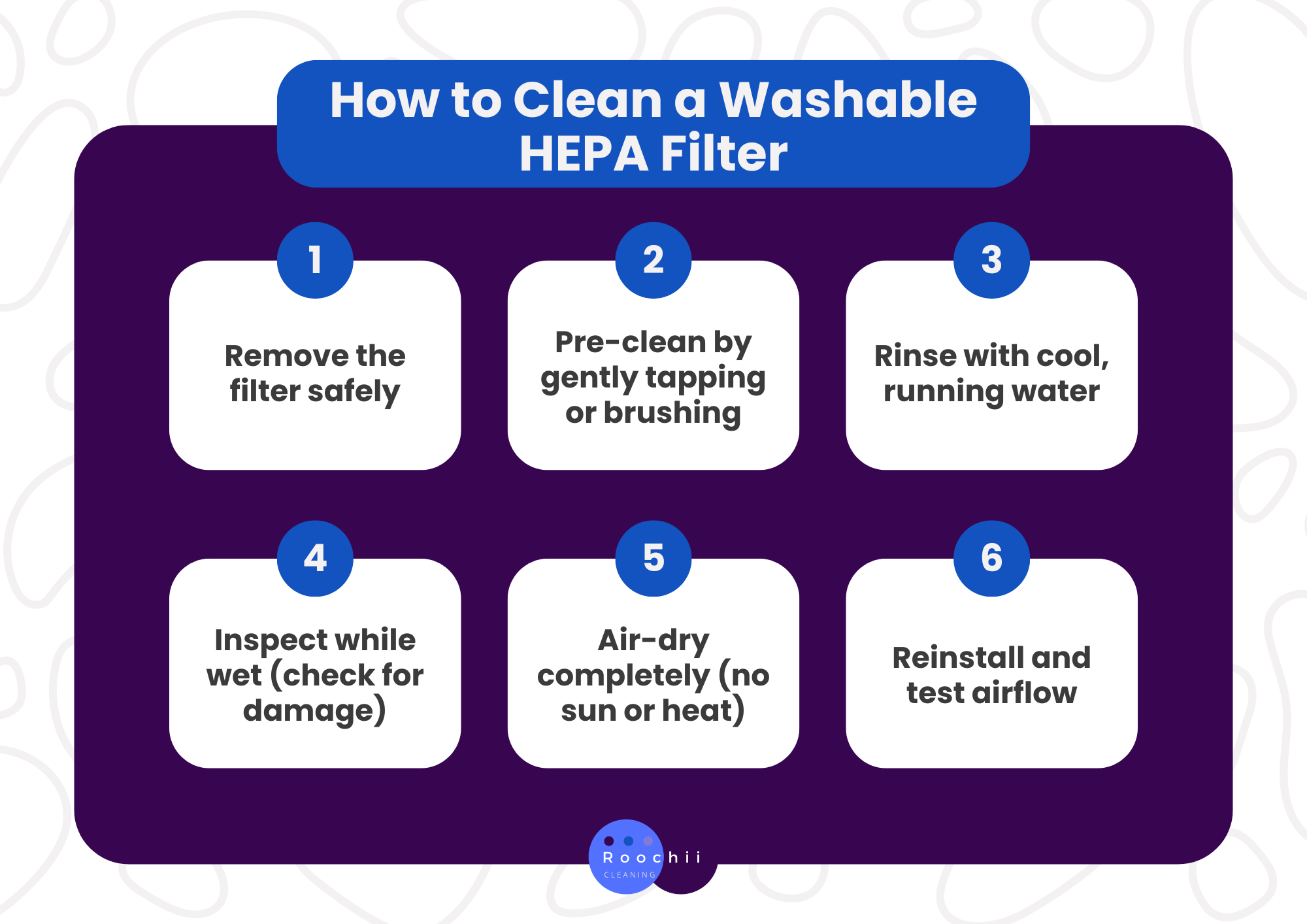
Step 1: Remove the filter from the device
Turn off and unplug your HEPA-filtered vacuum, air purifier, or appliance. Gently pull out the HEPA filter without tapping or squeezing it.
Step 2: Pre-Clean by Removing Loose Debris
Lightly tap the filter against your palm or over a trash bin to dislodge loose debris. Avoid hard knocks that might distort the filter frame.
If the filter has a protective mesh, you may gently brush away visible dust with a soft cloth.
Tip: Do this outdoors if possible. Washable filters often release a surprising amount of fine dust.
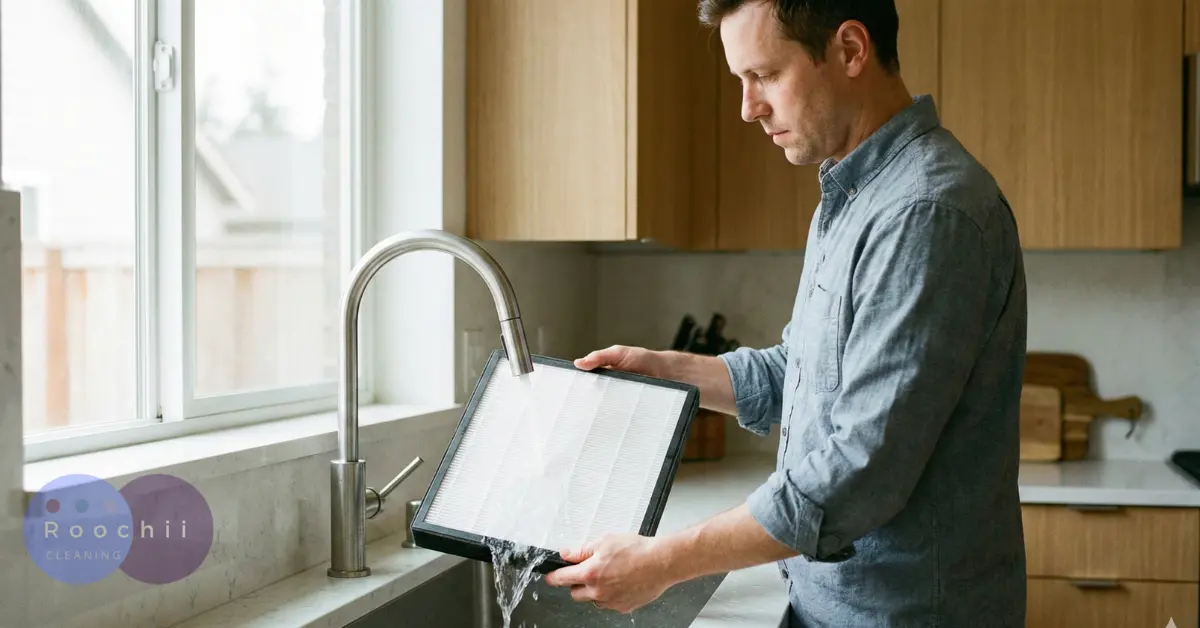
Step 3: Rinse under Cool, Running Water
Hold the filter under a gentle stream of water. Rinse from the clean side out so debris flows away instead of deeper into the fibers.
Chemicals and friction break down the fiber mesh, reducing filtration effectiveness. So make sure to never:
- Use hot water
- Use soap, detergents, or cleaning chemicals
- Scrub the filter fibers
- Use high-pressure spray nozzle
Exposure to chemical decontamination agents affect HEPA filters negatively, as stated in the technical bulletin “Effects of Decontamination Agents on HEPA Filters.”
Step 4: Inspect the Filter While Wet
Once the filter has been rinsed, take a moment to inspect it carefully while it’s still wet.
Look inside the pleats to check for any remaining dust or debris. If you notice stubborn buildup, you can repeat the gentle rinsing process, but avoid scrubbing or using any tools that might damage the fibers.
As you examine the filter, also check for signs of wear, such as small tears, frayed edges, or warping. If you spot any damage, it’s best to replace the filter entirely, as a compromised HEPA filter cannot provide effective filtration even after cleaning.
Step 5: Let the Filter Air-dry Completely
Place the filter in a well-ventilated area for 24–48 hours. It must be 100% dry before returning it to the unit because any moisture can cause mold growth inside your device.
Tip: Do not place it in direct sun, on heaters, or use blow-dryers.
Step 6: Reassemble and Restart the Device
Once the filter is completely dry:
- Carefully place it back into the device and ensure it sits securely in its original position.
- Reattach any panels or covers that were removed during disassembly, making sure everything is properly aligned and locked into place.
- After plugging the appliance back in, turn it on and allow it to run so you can confirm that airflow has improved.
Keep in mind that even a well-cleaned washable HEPA filter won’t perform exactly like a brand-new one, but you should notice a clear difference in the device’s efficiency.
B. Cleaning a Permanent HEPA Filter (Non-Washable but Reusable)
Step 1: Remove the Filter Carefully
Avoid bending or twisting the filter. Permanent HEPA filters typically have multiple layers and frames that can warp easily.
Step 2: Vacuum the Surface Gently
Use a vacuum cleaner with a soft brush attachment and low suction.
- Vacuum only the outer mesh
- Do not press the nozzle directly onto the filter fibers
- Avoid dislodging the internal pleats
Step 3: Lightly Tap Away Remaining Dust
Tap gently against a soft surface to remove loosened particles. Never knock it against a hard surface, which can deform the frame.
Step 4: Reinstall and Check for Airflow
Put the filter back into the device securely.
If airflow is still weak or dust escapes when the device runs, it may be time to replace the filter.
C. How to “Clean” a True HEPA Filter (Non-Washable)
True HEPA filters are not meant to be cleaned with water, scrubbing, or compressed air.
However, you can safely remove loose debris without affecting the internal structure.
Safe Method for Non-Washable HEPA Filters
- Lightly tap the filter against your palm only
- Never use compressed air as it can blow holes in the fibers
- Never rinse or wash
- Never vacuum directly on the filter fibers
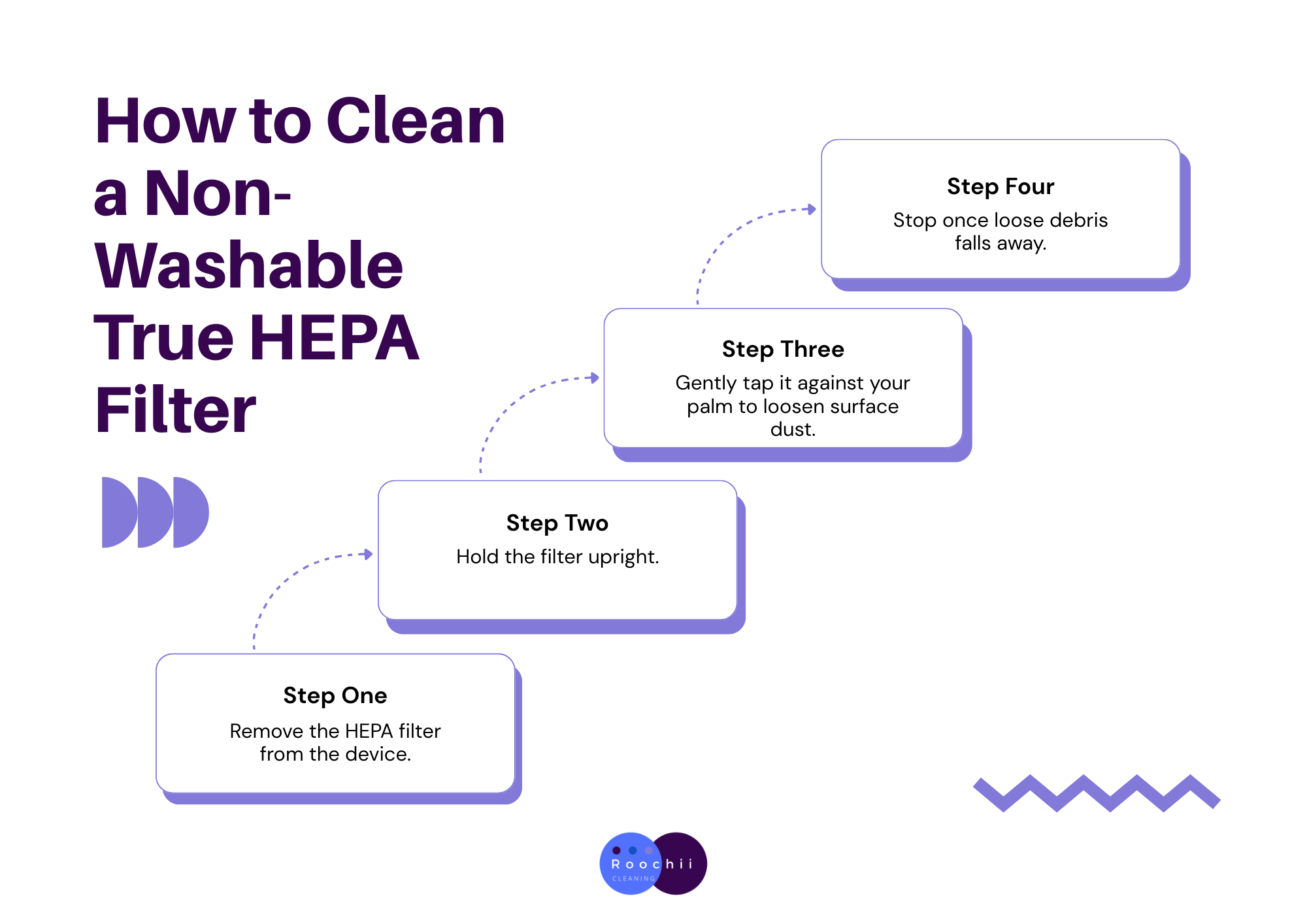
If your True HEPA filter is clogged, musty, or damaged, replacement is the only safe option.
D. Common Mistakes to Avoid When Cleaning HEPA Filters
- Using soap or cleaning solutions: They break down filter fibers
- Using hot water: It warps and weakens the material
- Using compressed air: Creates micro-tears in the filter media
- Reinstalling while damp: Leads to mold growth and foul odors
-
Cleaning filters marked “non-washable”: Permanently reduces HEPA efficiency
When to Replace vs. When to Clean Your HEPA Filter
Knowing whether to clean or replace your HEPA filter can save you money while ensuring your air purifier or vacuum performs at its best.
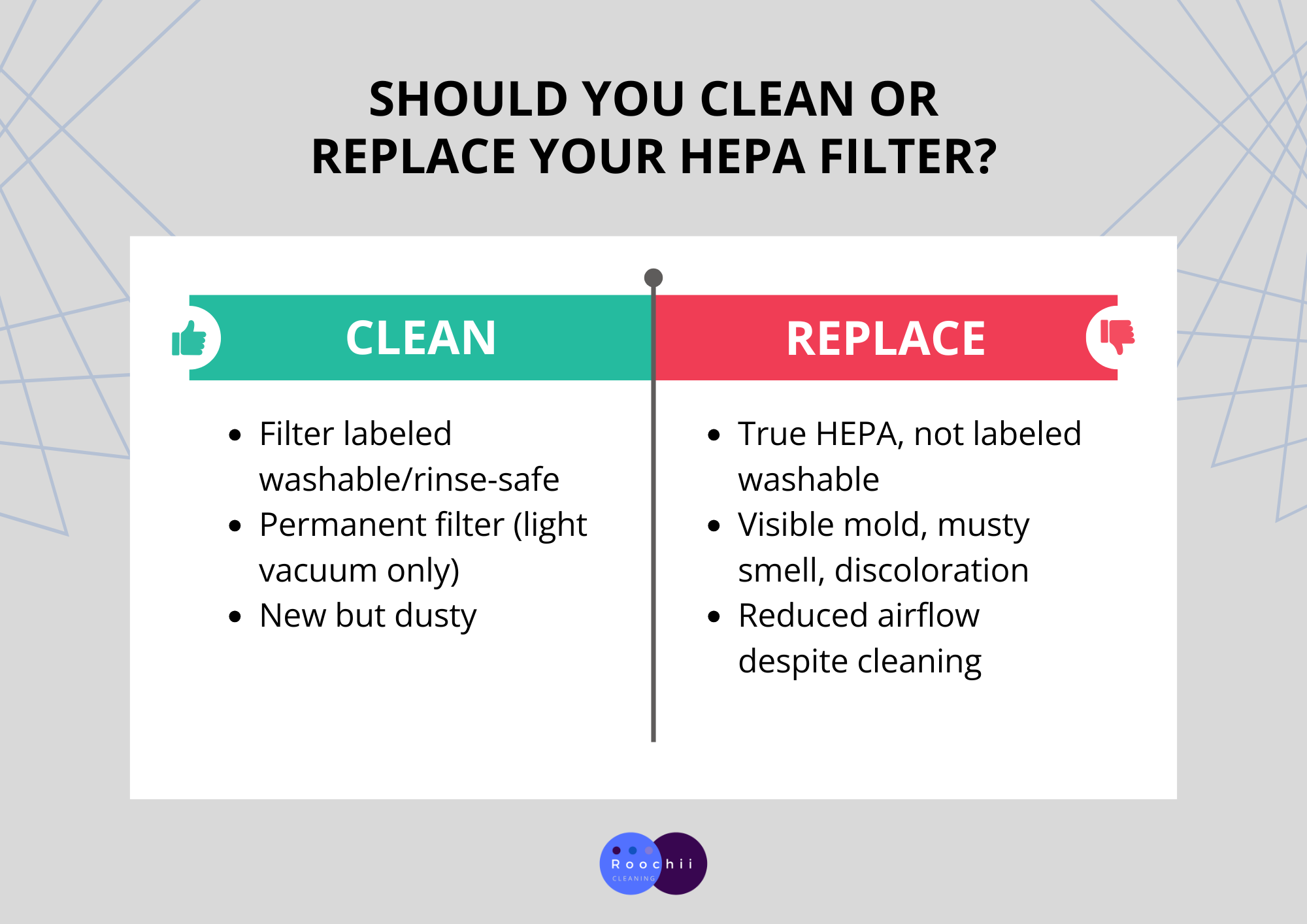
Quick Decision Guide: To Clean or To Replace HEPA Filter?
Your Filter is Washable
TO CLEAN. If the filter is labeled “washable” or “rinse-safe,” you can clean it under cool running water. Rinse gently, avoid scrubbing, and ensure it is completely dry before reinstalling.
Your Filter is Permanent
TO CLEAN. These filters cannot be rinsed but can be “dry-cleaned” with a soft brush attachment on a vacuum or by gently tapping away loose dust.
Your Filter is a True HEPA
TO REPLACE. True HEPA filters should not be washed, vacuumed directly, or cleaned with compressed air. If the filter becomes dirty, clogged, or damaged, replacement is the only safe and effective option.
Your Filter is Discolored, Musty, or Airflow is Reduced
TO REPLACE. Any filter, washable or not, that shows signs of mold, odor, staining, moisture, or severe clogging should be replaced immediately to protect both air quality and your device.
Your Filter is New but Dusty
TO CLEAN. If the filter collected dust during shipping or storage, clean it according to its type: rinse only if it’s washable, vacuum gently if it’s permanent, and avoid cleaning entirely if it’s True HEPA.
Conclusion: Keeping Your HEPA Filter at Peak Performance
Maintaining a HEPA filter is more than keeping your device running. It’s more about protecting the quality of the air you breathe. It doesn’t matter what kind of HEPA filter you may possess, but following the proper cleaning procedure ensures it performs safely and efficiently.
While washable and permanent filters can benefit from gentle maintenance, non-washable HEPA filters rely solely on timely replacement to maintain their filtration strength.
Understanding your filter type, recognizing the signs of wear, and knowing when cleaning is no longer enough are key to maximizing both performance and longevity.