How to Clean Coffee Maker with Vinegar: Powerful & Easy Guide

A Guide to Cleaning a Coffee Maker with Vinegar
If your coffee suddenly tastes bitter, weak, or just off, your coffee maker, not your beans, may be the problem. Over time, mineral deposits and residue can build up inside the machine, affecting both performance and flavor.
If your machine sounds like it’s struggling, it’s probably not having a bad day; it just needs a proper cleaning.
One of the simplest and most effective ways to fix this is by learning how to clean coffee maker with vinegar. Vinegar helps break down buildup, remove residue, and restore your machine’s ability to brew properly.
In this guide, you’ll learn exactly how to clean coffee maker with vinegar, what type of vinegar works best, and how to do it safely without damaging your machine.
Keep reading to learn the exact step-by-step process, the right vinegar to use, and how to avoid common mistakes that can affect your coffee’s taste.
Table of Contents
- Quick Answer: How to Clean Coffee Maker with Vinegar
- Safety Tips Before Cleaning with Vinegar
- How to Clean Coffee Maker with Vinegar (Step-by-Step Guide)
- Why Vinegar Works for Coffee Maker Cleaning
- What Kind of Vinegar to Use in Coffee Maker
- Vinegar vs. Commercial Descalers: Which Is Better?
- How to Clean Different Types of Coffee Makers With Vinegar (By Machine Type)
- Common Mistakes When Cleaning With Vinegar & How To Avoid Them
- Signs Your Coffee Maker Needs Cleaning
- How Often Should You Clean Your Coffee Maker
Quick Answer: How to Clean Coffee Maker with Vinegar
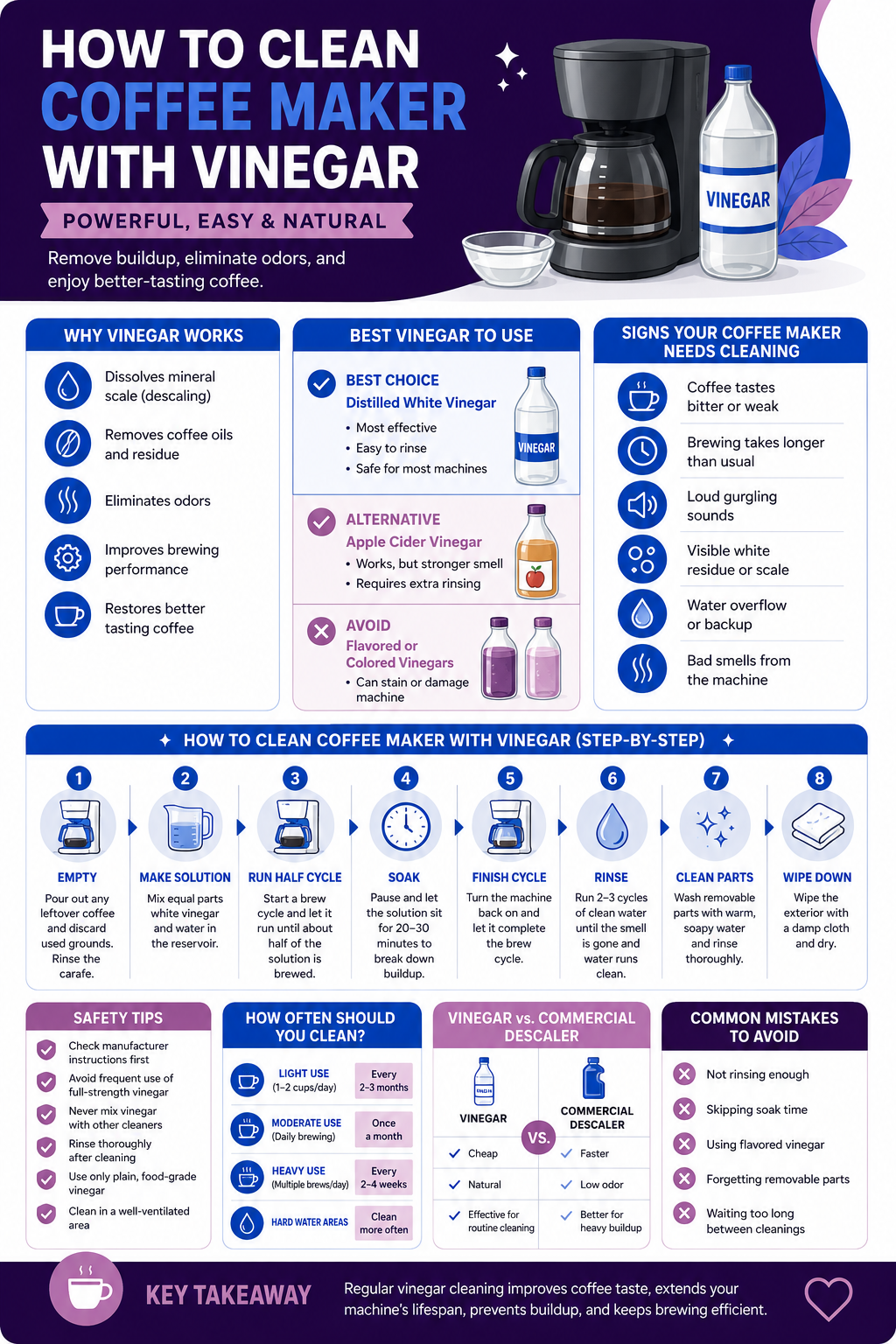
To clean a coffee maker with vinegar, mix equal parts distilled white vinegar and water and pour it into the reservoir. Run a brew cycle until halfway, pause for 20–30 minutes, then complete the cycle. Finish by running 2–3 cycles with clean water to remove any vinegar residue.
Want the complete step-by-step process? Follow the detailed guide below.
Safety Tips Before Cleaning with Vinegar
Taking a few precautions before cleaning can help protect your coffee maker and ensure the process goes smoothly.
Check Your Manufacturer’s Instructions
Some coffee maker brands recommend using only specific descaling solutions. Using vinegar may void the warranty or affect internal components in certain models.
Avoid Frequent Use of Full-Strength Vinegar
While vinegar is safe for occasional deep cleaning, repeated use of undiluted vinegar may wear down rubber seals and internal parts over time.
Rinse Thoroughly After Cleaning
Incomplete rinsing can leave behind a strong vinegar smell or taste, which may affect your next few brews.
Use Only Plain, Food-Grade Vinegar
Avoid flavored, colored, or specialty vinegars, as they can leave residue or damage your machine.
Avoid Mixing Vinegar with Other Cleaners
Vinegar should be used on its own when cleaning your coffee maker. Mixing it with other cleaning products can create unwanted reactions or leave behind residues that may affect both your machine and the taste of your coffee.
Clean in a Well-Ventilated Area
Vinegar has a strong smell, especially during the heating and brewing process. To make the experience more comfortable, clean your coffee maker in a well-ventilated area or open a window to allow the odor to dissipate more quickly.
How to Clean Coffee Maker with Vinegar (Step-by-Step Guide)
These steps apply to most standard drip coffee makers, single-serve machines, and compact brewers.
However, always check your manufacturer’s instructions to be 100% sure.
Step 1: Empty the Coffee Maker
Pour out any leftover coffee and discard used grounds from the filter basket.
Make sure the carafe is rinsed and free of old coffee residue. Starting clean gives better results.
Step 2: Make the Vinegar Cleaning Solution
Start by preparing a vinegar solution strong enough to break down mineral deposits but gentle enough not to damage your machine.
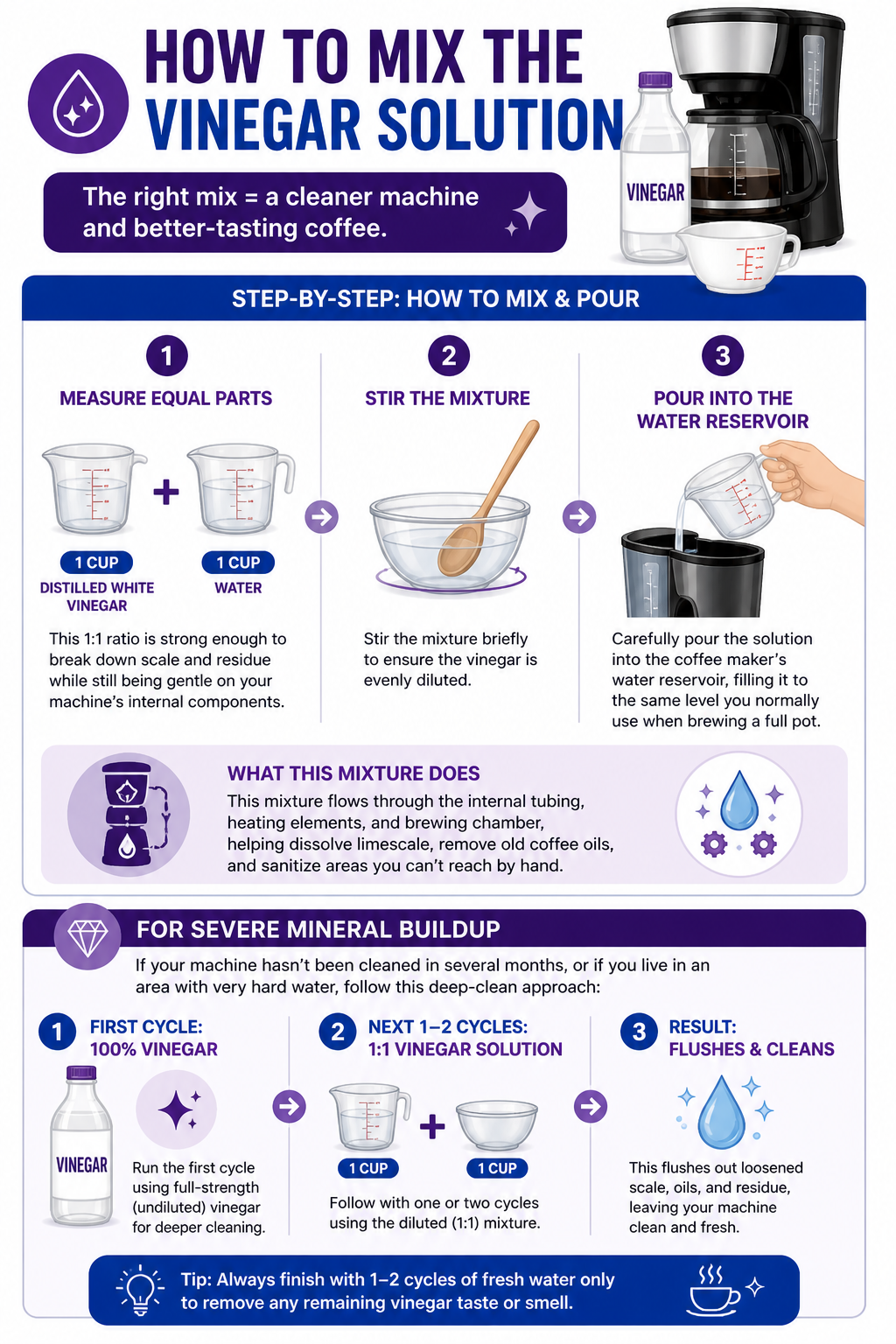
Using full-strength vinegar is safe for most machines, but it will require extra rinsing, especially if you’re sensitive to the smell. This stronger approach helps tackle stubborn discoloration, slow brew times, and chalky buildup inside the reservoir.
Step 3: Run the First Brew Cycle
Turn on the coffee maker and start a brewing cycle without adding coffee grounds.
- Let the machine run until about half of the solution has brewed into the carafe
- This usually takes 5–7 minutes, depending on your machine
Step 4: Pause & Let It Soak
Turn off the machine (or press pause if available) and let the vinegar solution sit inside for 20–30 minutes.
This soaking period helps:
- Loosen hardened mineral deposits
- Break down stubborn coffee oils
- Clean internal components more effectively
Step 5: Complete the Brew Cycle
Turn the coffee maker back on and allow it to finish the remaining brew cycle.
- This flushes out loosened buildup from inside the machine
- Make sure all the liquid has passed through into the carafe
Step 6: Rinse Thoroughly
Fill the reservoir with fresh, clean water and run a full brew cycle with only water.
For best results:
- Rinse 2 times if you used diluted vinegar
- Rinse 3–4 times if you used full-strength or apple cider vinegar
Continue rinsing until the vinegar smell disappears and the water runs clean.
Step 7: Clean the Removable Parts
There will be parts that vinegar won’t be able to reach. If they’re detachable, remove them and clean these components.
These usually are:
- Carafe
- Filter basket
- Reusable filters
- Water reservoir lid
- Drip tray (if applicable)
Wash with warm, soapy water or place dishwasher-safe parts in the dishwasher.
Step 8: Wipe Down the Exterior
Don’t forget the outside! Use a cloth lightly dampened with a vinegar-and-water mix to wipe the following:
- Machine housing
- Control panel (avoid soaking buttons)
- Warming plate (when cool)
This removes splashes, fingerprints, and coffee drips.
For Severe Mineral Buildup (Use with Caution)
If your coffee maker hasn’t been cleaned in several months or shows heavy limescale buildup, you can use full-strength (undiluted) vinegar for a deeper clean.
When to use it:
- Brew time has become significantly slower
- Visible white or chalky residue is present
- A standard 1:1 solution hasn’t been effective
How to use it safely:
- Run one cycle only using full-strength vinegar
- Follow immediately with 1–2 cycles of a diluted (1:1) vinegar solution
- Finish with 2–3 clean water rinse cycles
Important precautions:
- Do not use full-strength vinegar regularly
- Avoid using it on machines with manufacturer restrictions
- Overuse may wear down rubber seals and internal components over time
Why Vinegar Works for Coffee Maker Cleaning
Vinegar has long been a go-to cleaning solution for homeowners because of its versatility, safety, and effectiveness.
Vinegar’s cleaning power comes from naturally occurring acetic acid, which tackles two of the biggest problems that affect your coffee maker’s performance and taste.
It’s one of the most effective natural cleaning solutions for coffee makers, thanks to its ability to break down mineral buildup and residue. Here’s why:
1. Vinegar Dissolves Mineral Scale (Descaling)
Most tap water contains minerals like calcium and magnesium. Over time, these minerals build up inside your coffee maker’s internal tubing, heating element, and reservoir.
This buildup, commonly known as limescale, can cause:
- Slow or uneven water flow
- Longer brewing times
- Inconsistent water temperatures
- Weaker extraction and bitter coffee flavors
Vinegar’s mild acetic acid breaks down these mineral deposits, as proven by an article from the Russian Journal of Applied Chemistry. This means that acetic acid can soften and dissolve these minerals so they flush out during the cleaning cycle. This restores proper water circulation and allows the heating element to function efficiently again.
2. Vinegar Neutralizes Odors and Cuts Through Coffee Oils (Deodorizing)
As coffee brews, natural oils from the beans coat the basket, carafe, and internal components of the machine.
When you use your coffee maker a lot, these oils oxidize and become rancid, contributing to:
- Sour-smelling machines
- Off-tasting coffee
- A damp, musty odor in the reservoir
Vinegar naturally deodorizes by breaking down these oily residues and neutralizing smells. It also helps reduce bacterial and fungal growth which are common issues in moist appliances that rarely dry completely.
What Kind of Vinegar to Use in Coffee Maker for Best Results
Different vinegars have different uses and properties. When it comes to cleaning a coffee maker, the type of vinegar you choose makes a big difference.
While all vinegars share acidic properties, not all of them are suitable or safe for running through your machine.
Here’s what to use, what to avoid, and why it matters.
1. Distilled White Vinegar (Recommended)
Distilled white vinegar is the best choice for cleaning a coffee maker because it is clear, effective, and easy to rinse.
2. Apple Cider Vinegar (Alternative)
Apple cider vinegar can work for mold, but it’s not ideal. It has a stronger smell and may require additional rinse cycles to remove any lingering odor. It’s also less effective for breaking down heavy mineral buildup compared to distilled white vinegar.
3. Flavored or Specialty Vinegars (Avoid)
Avoid using flavored or specialty vinegars such as balsamic, wine, or infused varieties. These can leave behind residue, strong odors, or staining that are difficult to remove from your machine.
Vinegar vs. Commercial Descalers: Which Is Better?
Vinegar is a popular and effective way to clean a coffee maker, but it’s not the only option. Commercial descaling solutions are specifically designed to remove mineral buildup and may offer faster or more convenient results. If you prefer to clean the coffee maker with vinegar, it helps to understand how it compares to these alternatives.
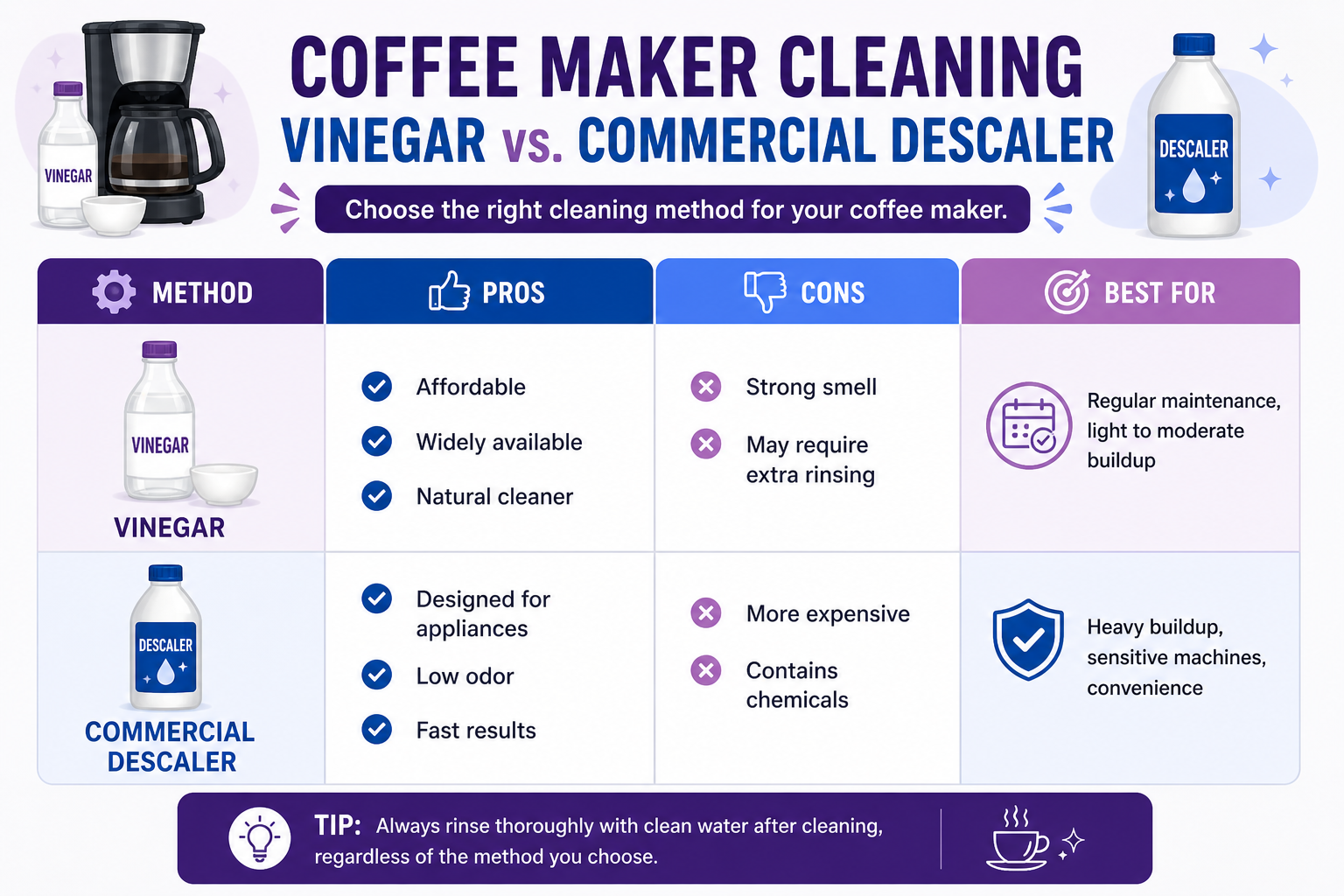
When to Use Vinegar
- You want a low-cost, natural solution
- Your machine has light to moderate buildup
- You don’t mind running extra rinse cycles
When to Use a Commercial Descaler
- Your machine has heavy limescale buildup
- You want faster, odor-free cleaning
- Your manufacturer recommends it
For most households, vinegar works well for routine cleaning and maintenance. However, if your coffee maker has heavy limescale buildup or you prefer a quicker, low-odor option, a commercial descaler may be the better choice.
How to Clean Different Types of Coffee Makers with Vinegar (By Machine Type)
Not all coffee makers work the same way. While the basic vinegar cleaning method is similar, a few adjustments can help you clean your machine more effectively and safely.
Drip Coffee Makers
This is the most common type and follows the standard method outlined above.
- Use a 1:1 vinegar and water solution
- Run a full brew cycle
- Pause halfway for soaking
- Rinse thoroughly 2–3 times
Best for: Standard home coffee machines
Single-Serve Coffee Makers (Pod Machines)
Single-serve machines require a slightly modified approach.
- Remove any coffee pod before cleaning
- Fill the reservoir with the vinegar solution
- Run brew cycles without inserting a pod
- Repeat until the reservoir is empty
- Rinse with clean water 2–3 times
Tip: Some machines have a “descale mode.” Use it if available.
Espresso Machines
Use caution when cleaning espresso machines with vinegar.
- Some manufacturers recommend avoiding vinegar
- Use a diluted solution only (never full-strength)
- Run a short cycle through the system
- Flush thoroughly with water multiple times
Always check your manual before using vinegar
Coffee Makers with a Cleaning/Descale Mode
Many modern machines include a built-in cleaning function.
- Add vinegar solution to the reservoir
- Activate the “clean” or “descale” mode
- Let the cycle complete automatically
- Rinse thoroughly afterward
This is the easiest and safest method when available
Common Mistakes When Cleaning With Vinegar & How to Avoid Them
Even though cleaning a coffee maker with vinegar is simple, it’s easy to make some mistakes if you’re still unsure what you’re doing.
Many homeowners run into these issues more often than expected. In one case, flavored vinegar was used as a substitute, which left a strong, lingering odor in the machine.
To make sure your first (or fiftieth) attempt goes smoothly, here are the common mistakes to avoid:
- Using too much vinegar without enough rinsing – This leads to lingering odors and a vinegary taste in your next brews.
- Forgetting to clean the removable parts – Mineral deposits and old coffee oils build up in areas vinegar won’t reach.
- Using vinegar too infrequently – Your machine needs regular care and not just when the coffee tastes bad or when you feel like it.
- Cleaning with flavored or colored vinegar – These can stain or damage your machine. This is also stated in the NSF International consumer cleaning guides.
- Skipping the soaking period – The pause between cycles is what loosens heavy buildup.
Signs Your Coffee Maker Needs Another Cleaning
Even with regular maintenance, your coffee maker can develop buildup over time. Recognizing these signs early can help you clean it before performance issues get worse.
- Coffee tastes bitter or weak: This often means residue and buildup are affecting the extraction process, resulting in inconsistent flavor.
- Brew time is slower than usual: Mineral deposits can restrict water flow inside the machine, causing longer brewing cycles.
- Machine makes louder gurgling sounds: Unusual noises may indicate internal blockages as water struggles to pass through buildup.
- White or brown residue in the reservoir: Visible buildup is a clear sign that minerals and coffee oils have accumulated over time.
- Water overflows or backs up: This can happen when internal pathways are partially blocked by limescale or residue.
- Strange odors from inside the machine: Lingering smells are often caused by old coffee oils or moisture-related buildup.
If you notice any of these signs, it’s a good indication that your coffee maker is due for a cleaning cycle.
How Often Should You Clean Your Coffee Maker?
How often you clean your coffee maker depends on how frequently you use it and the type of water in your area.
General Guidelines
- Light use (1–2 cups per day): Clean every 2–3 months
- Moderate use (daily use): Clean once a month
- Heavy use (multiple brews per day): Clean every 2–4 weeks
If You Have Hard Water
Mineral buildup happens faster in areas with hard water.
- Clean your coffee maker more frequently
- Watch for signs like white residue or slower brewing
Don’t Forget Weekly Maintenance
In addition to deep cleaning:
- Rinse the carafe and filter basket regularly
- Wipe down the exterior
- Empty and dry the reservoir when possible
Pro Tip!
If your coffee starts to taste bitter or your machine slows down, don’t wait. Run a cleaning cycle right away.
Even if you follow a regular cleaning schedule, it’s important to watch for these signs, as buildup can occur faster depending on usage and water quality.
Final Note: Keep Your Coffee Maker Clean for Better-Tasting Brews
Cleaning your coffee maker with vinegar is one of the simplest and most effective ways to keep your machine running smoothly. With a quick cleaning cycle and regular maintenance, you can remove buildup and residue, eliminate lingering odors, and enjoy consistently better-tasting coffee.
Staying on top of routine cleaning doesn’t just improve flavor. It also helps extend the life of your coffee maker and prevents performance issues over time.
If you ever find yourself short on time or dealing with stubborn buildup that won’t go away, getting professional help can make the process easier. A thorough deep cleaning can restore your appliances and keep everything working efficiently without the hassle.
FAQ
FAQs About Cleaning Coffee Makers with Vinegar
Use a 1:1 ratio of distilled white vinegar and water for most cleaning cycles. If your machine has heavy buildup, you can use full-strength vinegar once, followed by proper rinsing and diluted cycles to flush out residue.
Most coffee makers should be cleaned once a month with regular use. If you brew multiple times a day or have hard water, cleaning every 2–4 weeks is recommended. Occasional users can clean every 2–3 months.
Yes, but it’s not ideal. Apple cider vinegar has a stronger smell and may require extra rinse cycles to fully remove the odor. Distilled white vinegar is still the best option for most machines.
Vinegar is safe for most coffee makers when used correctly and in moderation. However, frequent use of full-strength vinegar may wear down internal components over time. Always follow your manufacturer’s guidelines if available.
Run 2–3 full cycles of clean water after the cleaning process. If the smell lingers, you can run one cycle with water and a small amount of baking soda, followed by another plain water rinse.
If your coffee still tastes off, try running additional rinse cycles, cleaning removable parts more thoroughly, or replacing your filter. Persistent issues may indicate deeper buildup or worn components.
Vinegar can help reduce light mold and bacteria due to its acidity, but it may not fully eliminate heavy mold growth. For severe cases, deeper cleaning or specialized cleaning solutions may be required.
Yes, for regular maintenance using a diluted (1:1) solution. However, avoid frequent use of full-strength vinegar, as it may cause wear over time.