HEPA Vacuum Cleaners: Is It Better?

What Makes HEPA Filters Unique?
Ever wondered if HEPA vacuum cleaners are better for dust removal? In a word: absolutely. If regular vacuums are like trying to catch glitter with your hands, HEPA vacuums are the tool that actually gets every last speck.
They’re not just for germaphobes or people with an unhealthy obsession with air quality. HEPA vacuum cleaners trap fine particles, allergens, and dust mites with flawless precision, leaving regular vacuums coughing in their own dust trail.
And while vacuum cleaners with HEPA filters aren’t magic, they come impressively close.
In this guide, we’ll break down how HEPA filter vacuum cleaners work, what makes them unique, and whether they’re worth the investment for your specific needs.
Table of Contents
The Science Behind Dust Removal: How HEPA Vacuums Work
You’ve probably heard about HEPA vacuum cleaners, especially if you’re concerned about dust, allergies, or general air quality. But what actually makes these machines better? The secret lies in the HEPA filter..
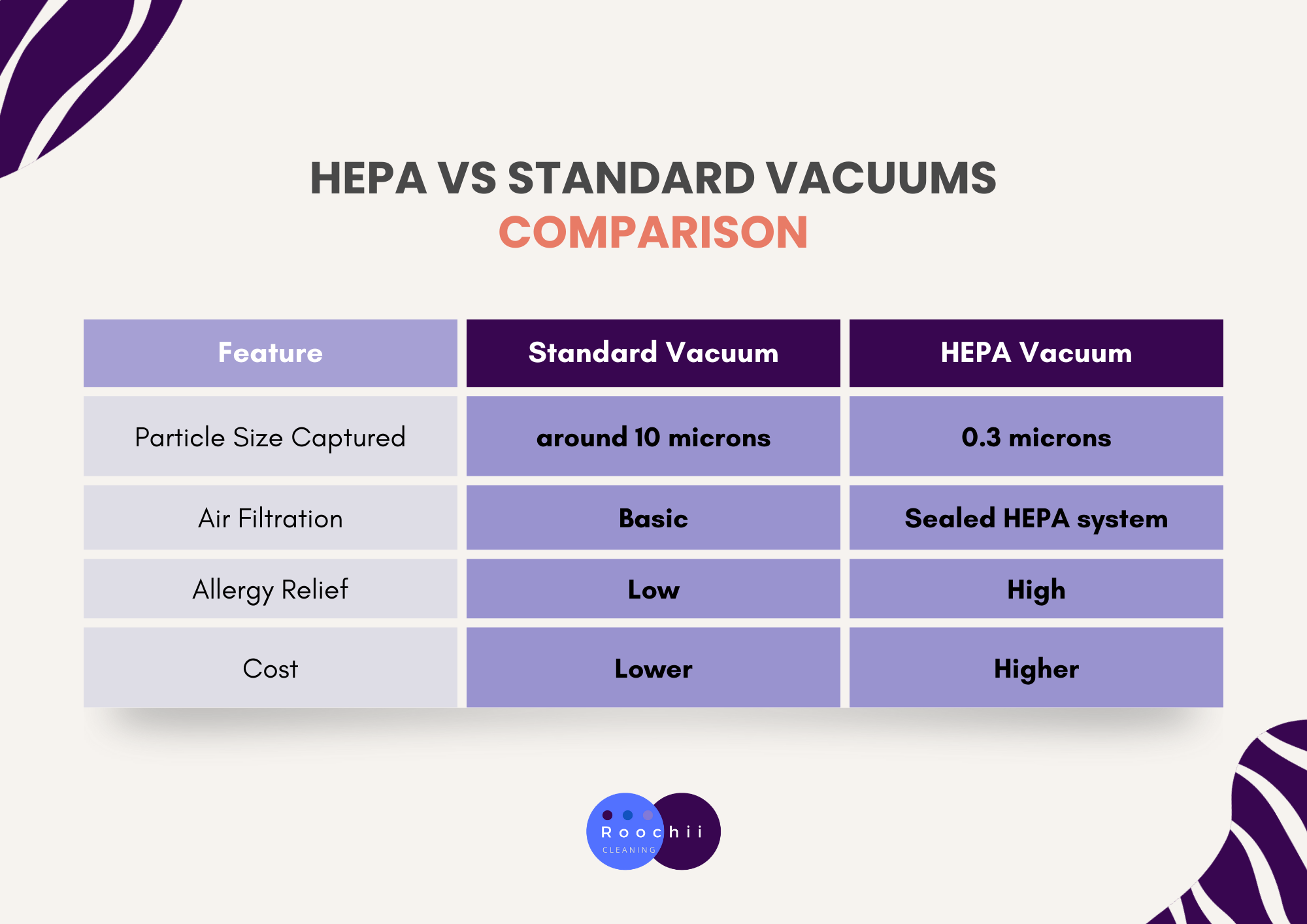
HEPA stands for High-Efficiency Particulate Air. A HEPA filter is engineered to trap at least 99.97% of particles as small as 0.3 microns. We’re talking as fine as dust mite fragments, pollen, pet dander, mold spores, and even some bacteria. These are the very particles that trigger sneezing fits, asthma attacks, and a general feeling of poor indoor air.
Unlike standard filters, HEPA filters are built using a dense web of glass or synthetic fibers. This tightly woven structure forces air to twist and turn as it passes through, creating multiple opportunities for dust and allergens to get trapped. The three mechanisms behind this are:
- Interception: Particles following the air stream get snagged on the filter fibers.
- Impaction: Larger particles collide with the fibers and stick.
- Diffusion: Tiny particles move erratically and bump into fibers more often, increasing the chance they’ll be caught.
But to truly work as intended, the vacuum system must be completely sealed, meaning all air entering the vacuum must pass through the HEPA filter before being released. If there’s any air leakage, it compromises the filter’s efficiency, releasing dust back into the room.
Are HEPA Vacuum Cleaners Better for Dust Removal?
Let’s address the question head-on: Are HEPA vacuum cleaners actually better for removing dust? The answer is a strong yes.
What Sets HEPA Vacuum Cleaners Apart
Here’s what gives them the edge over standard vacuums:
- Superior filtration: HEPA filters catch smaller particles than standard filters ever could.
- Cleaner exhaust air: HEPA vacuums don’t just clean your floors. They also purify the air by keeping dust from blowing back out.
- Improved indoor air quality: Especially in homes with pets, kids, or allergy sufferers, this means breathing easier every day.
- Reliability: HEPA vacuums maintain high performance over time if well-maintained.
When Do You Need a HEPA Vacuum?
While HEPA vacuums are an excellent choice for most households, there are certain situations where they’re practically essential.
Here’s when you shouldn’t settle for anything less:
- If you or your family have allergies or asthma: The ultra-fine filtration dramatically reduces airborne irritants like pollen, pet dander, and dust mites.
- If you have pets: Pet fur may be obvious, but their dander (tiny skin flakes) can be more irritating and harder to capture.
- If you live in a high-dust environment: Homes in urban areas, near construction, or with open windows accumulate fine dust quickly.
- If you’ve recently renovated: Lead dust and construction residue can be hazardous and are best handled with HEPA vacuum for lead dust removal.
- If you have infants, elderly, or immunocompromised individuals at home: Air quality directly affects health and comfort, especially for vulnerable groups.
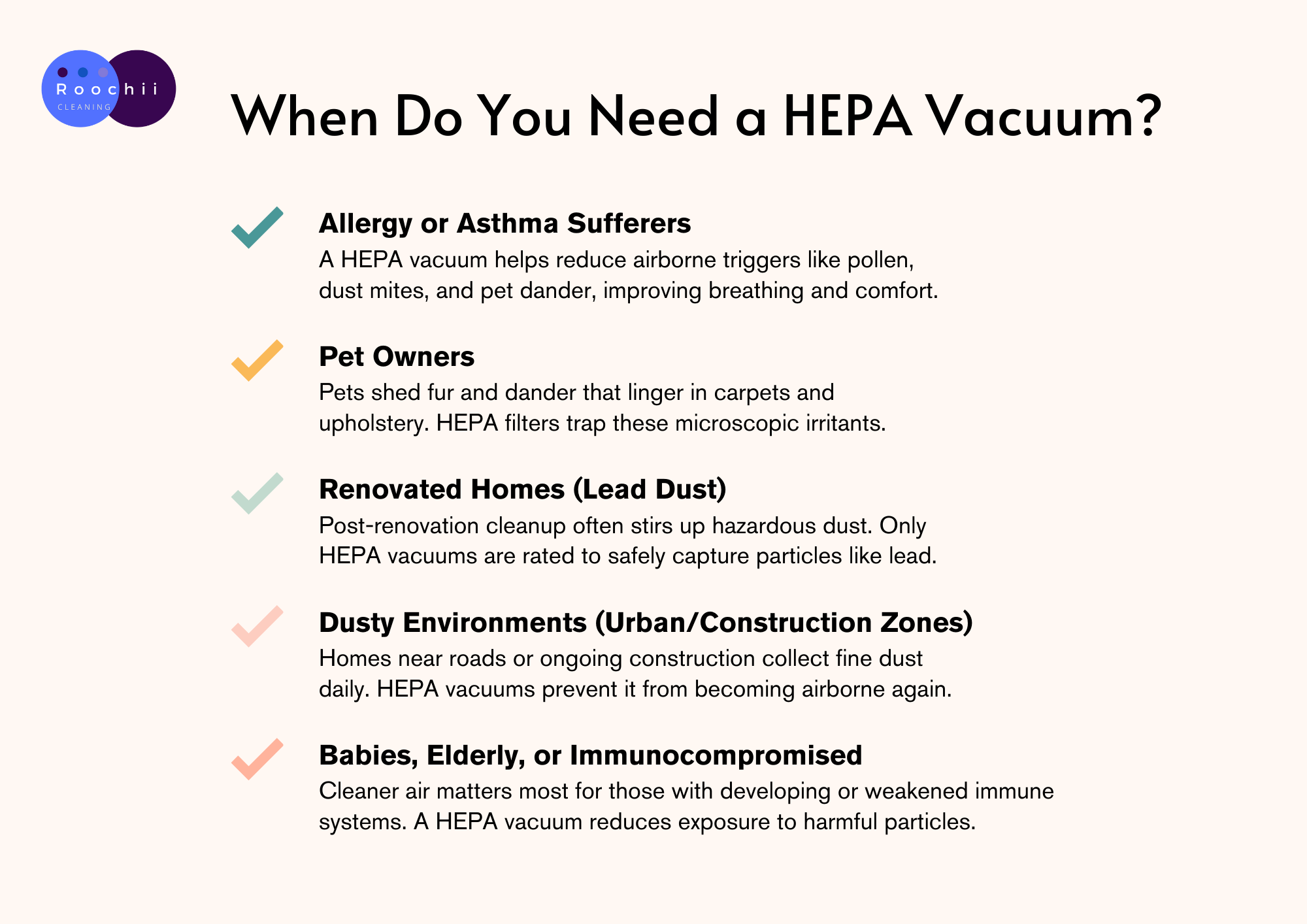
If you fall into one or more of these categories, a HEPA vacuum becomes a practical necessity.
Misconceptions About HEPA Vacuums
There’s a lot of confusion surrounding HEPA vacuums, especially with marketing terms being thrown around.
Let’s set the record straight.
A. “All HEPA vacuums are the same.”
False. Some vacuums claim to be “HEPA-type” or “HEPA-like,” but don’t meet actual HEPA standards. Look for “True HEPA” certification.
B. “If it has a HEPA filter, it must work perfectly.”
False. Unless the vacuum has a sealed system, dirty air can still leak out before reaching the filter.
C. “HEPA filters last forever.”
No. Filters need replacing after a certain period or amount of use. Clogged filters reduce suction and efficiency.
D. “HEPA vacuums eliminate odors and gases.”
Only partially. HEPA handles particulates, not volatile organic compounds (VOCs) or smells. For that, a carbon filter is needed.
E. “HEPA is only useful for allergy sufferers.”
False. Anyone can benefit from cleaner air, especially in high-dust or pet-filled homes.
Final Thoughts: Are HEPA Vacuums Worth It?
If you’re serious about reducing dust and improving indoor air quality, HEPA vacuum cleaners are absolutely worth the investment. They go beyond surface cleaning, capturing microscopic allergens and fine particles that regular vacuums often miss. This level of filtration can make a real difference, especially for people with allergies, asthma, or pets at home.
That said, HEPA vacuums can cost a bit more and require periodic filter maintenance. But the return is peace of mind: cleaner air, better dust control, and a noticeably healthier home.
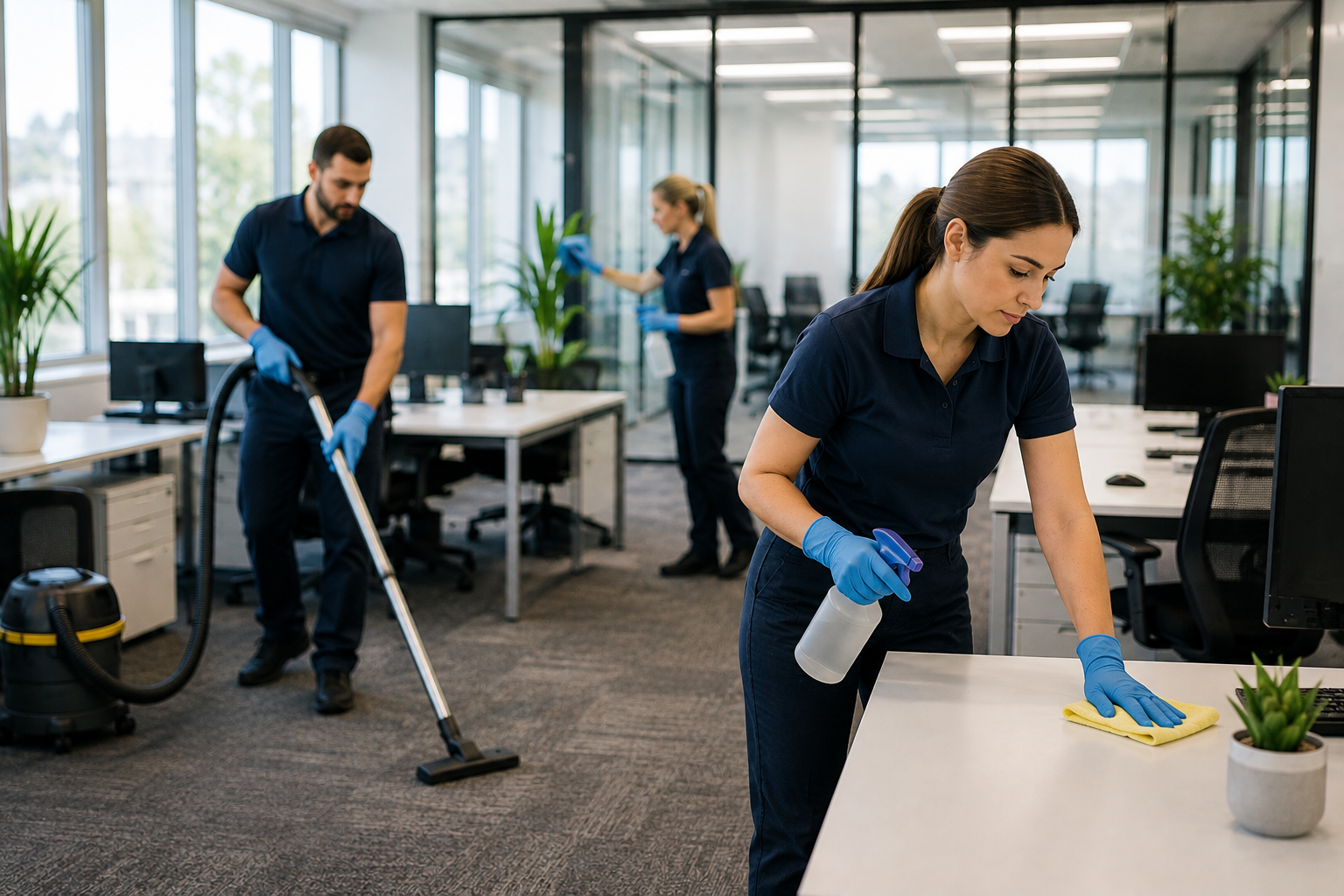
And if you’re not ready to purchase one yourself, consider hiring a professional cleaning service that uses HEPA vacuum cleaners, like Roochii Cleaning. It’s a practical way to enjoy the same benefits without the upfront cost or upkeep.
Either way, investing in HEPA-level cleaning is a smart move for a cleaner, healthier living environment.
FAQ
FAQs About HEPA Vacuum Cleaners
Cleaning standards are detailed guidelines that outline how cleaning tasks should be performed to ensure health, safety, and consistency.
No. Many vacuums use basic filters that don’t trap fine particles.
HEPA vacuums capture significantly smaller particles and prevent them from being released back into the air. Standard vacuums often recirculate fine dust.
Most HEPA filters are not washable unless specifically labeled as such. Always follow the manufacturer’s instructions.
Yes, they excel at removing both visible hair and microscopic allergens like dust mites, making them ideal for pet owners.