HEPA Filter for Pet Dander: Does It Really Reduce Odors?
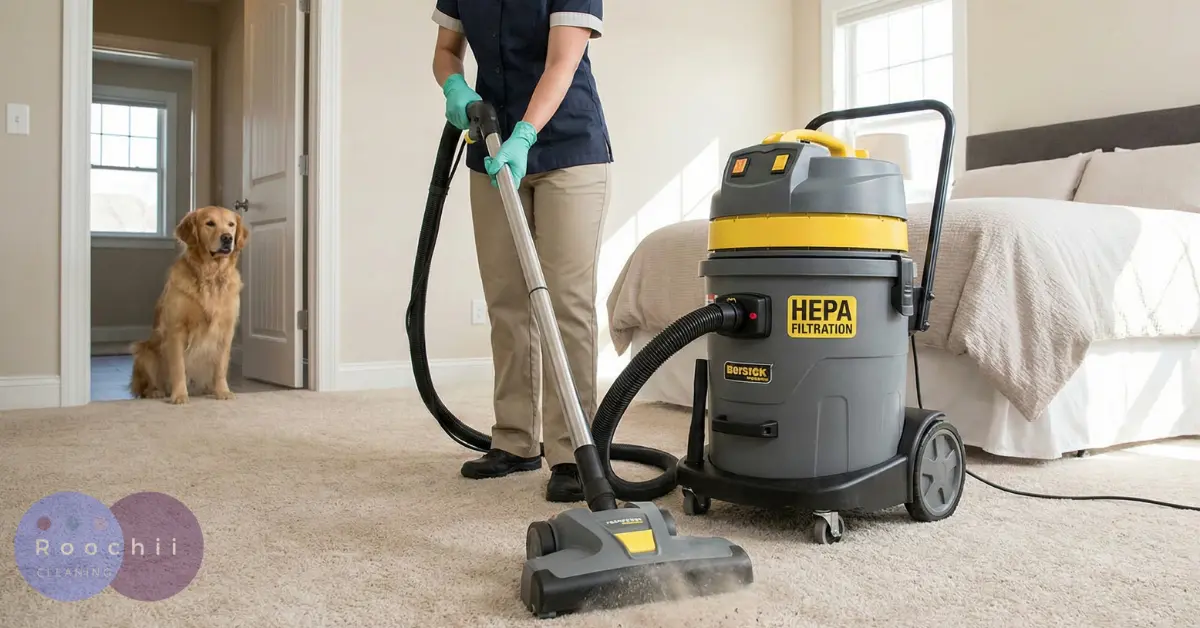
Professional vacuum cleaner with a HEPA filter for pet dander removing pet hair and allergens from carpet in a home with a dog

Do HEPA Filters Really Remove Pet Dander and Odors?

If you’ve ever wondered whether a HEPA filter for pet dander can actually help reduce all that floating fluff and the odors that tag along, the short answer is yes. With a few important caveats.

HEPA filters are excellent at capturing the tiny allergenic particles your pets shed, and when paired with activated carbon, they can also help tame those lingering pet smells that mysteriously survive even your deepest cleaning days.

But how do HEPA filters actually work, and can they really make a noticeable difference in a pet-heavy home? In this guide, we’ll break down what they do, what they don’t do, and how to choose the right setup to keep your air fresher.

Table of Contents 

Understanding Pet Dander and Allergens 

What is Pet Dander? 

Pet dander refers to the tiny flakes of skin that pet animals (especially cats and dogs) shed.

It’s not just the visible hair or fur, but microscopic skin particles, proteins from saliva, fur, and more. These particles are light and can float through the air, land on surfaces such as carpets, couches, curtains, and later get stirred back up when people or pets move around, or you vacuum.

Why is Pet Dander an Allergen Problem?  

Pet dander is an allergen problem because it’s made up of tiny, lightweight skin flakes that pets naturally shed. These particles contain proteins from an animal’s skin, saliva, and urine, which are what actually trigger allergic reactions in people.

Unlike pet hair, dander is microscopic and easily becomes airborne. It spreads throughout the home, clinging to furniture, carpets, clothing, and even walls.

Once in the air, it can be inhaled or come into contact with the eyes and skin, leading to:

  • Sneezing
  • Congestion
  • Itchy Eyes
  • Coughing
  • Asthma symptom

Research shows that airborne pet allergens can be reduced significantly by proper air filtration. For example, one study from 2022 found an 89 % reduction in airborne Can f 1 (dog allergen) when using a HEPA air cleaner in a dog’s room.

Because of this, reducing exposure to pet dander is not only about removing hair or vacuuming. It must also include capturing airborne particles before they land or re‑enter the breathing zone.

Do HEPA Filters Help With Pet Dander and Allergies? 

The short answer is yes. HEPA filters do help reduce pet dander and allergy symptoms, but they aren’t a complete solution on their own.

Let’s unpack what they can and cannot do, especially in a pet‑heavy home.

How HEPA Filters Help With Pet Dander 

Because of the combined mechanisms it has, a true HEPA filter captures at least 99.97 % of particles that are 0.3 microns or larger, which includes most pet dander and other common allergens.

Here’s how the filtering process works, as stated by a journal article from 2021:

1. Interception 

As air passes through the filter, particles like pet dander follow the airflow.

When these particles come close enough to a fiber, they “brush” against it and get caught. Think of it like walking through a hallway and your sleeve lightly catching on a door handle. The particle sticks instead of continuing on.

2. Impaction 

Larger particles, like visible bits of fur or debris, are heavier and can’t change direction as quickly as the moving air can. Instead of flowing smoothly around the fibers, they crash straight into them and become lodged.

3. Diffusion 

The tiniest particles behave differently.

Because they’re so small, they don’t travel smoothly with the airflow. Instead, they zigzag and bounce around unpredictably (a behavior called Brownian motion). This random movement increases the chance that they’ll collide with a fiber and stick.

Microscopic allergen proteins, such as those from a pet’s saliva or skin, are often captured this way.

As the air continuously circulates through the purifier, more and more of these particles are removed, leaving cleaner air behind.

For best results, make sure to:

  • Keep doors and windows closed when running the purifier.
  • Clean or replace the filter as recommended by the manufacturer.
  • Pair it with regular grooming and cleaning habits to control shedding.

Do HEPA Filters Remove Pet Odors and Allergens?

HEPA filters are excellent at removing solid particles from the air, including pet dander, fur fragments, pollen, and dust. These particles are what trigger most pet-related allergy symptoms, and a true HEPA filter is specifically engineered to trap them with very high efficiency.

However, odors are a different story.
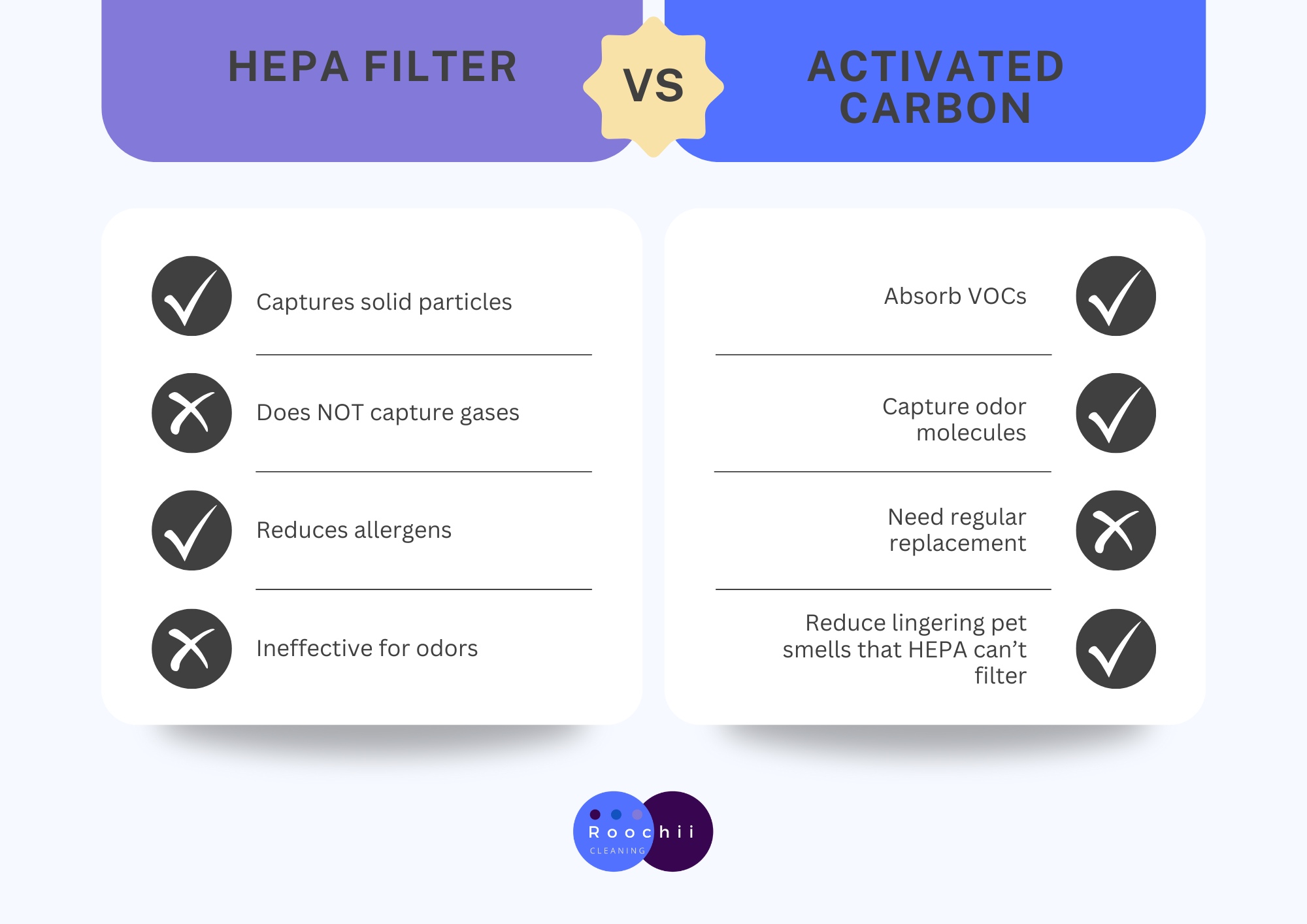
Comparison chart explaining how a HEPA filter for pet dander differs from activated carbon in capturing allergens, gases, and pet odors

Why HEPA Filters Don’t Remove Pet Odors 

Pet odors, or general pet “musk,” are caused by gaseous molecules and volatile organic compounds (VOCs), which are far too small to be captured by a HEPA filter’s fibrous structure.

It can stop a microscopic dander protein, but as proven by an article from The Institute for Environmental Research and Education, a HEPA filter can’t trap gas. That means:

  • HEPA = great for allergies
  • HEPA ≠ effective for odors

This is why a HEPA-only air purifier may improve allergy symptoms but still leave the smell of pets lingering in the room.

Where Activated Carbon Comes In 

To truly address odors, most high-quality HEPA systems include a separate activated carbon (or charcoal) filter.

Activated carbon is extremely porous. A single gram can have hundreds of square meters of surface area and this surface area is full of tiny adsorption sites that bind odor molecules.
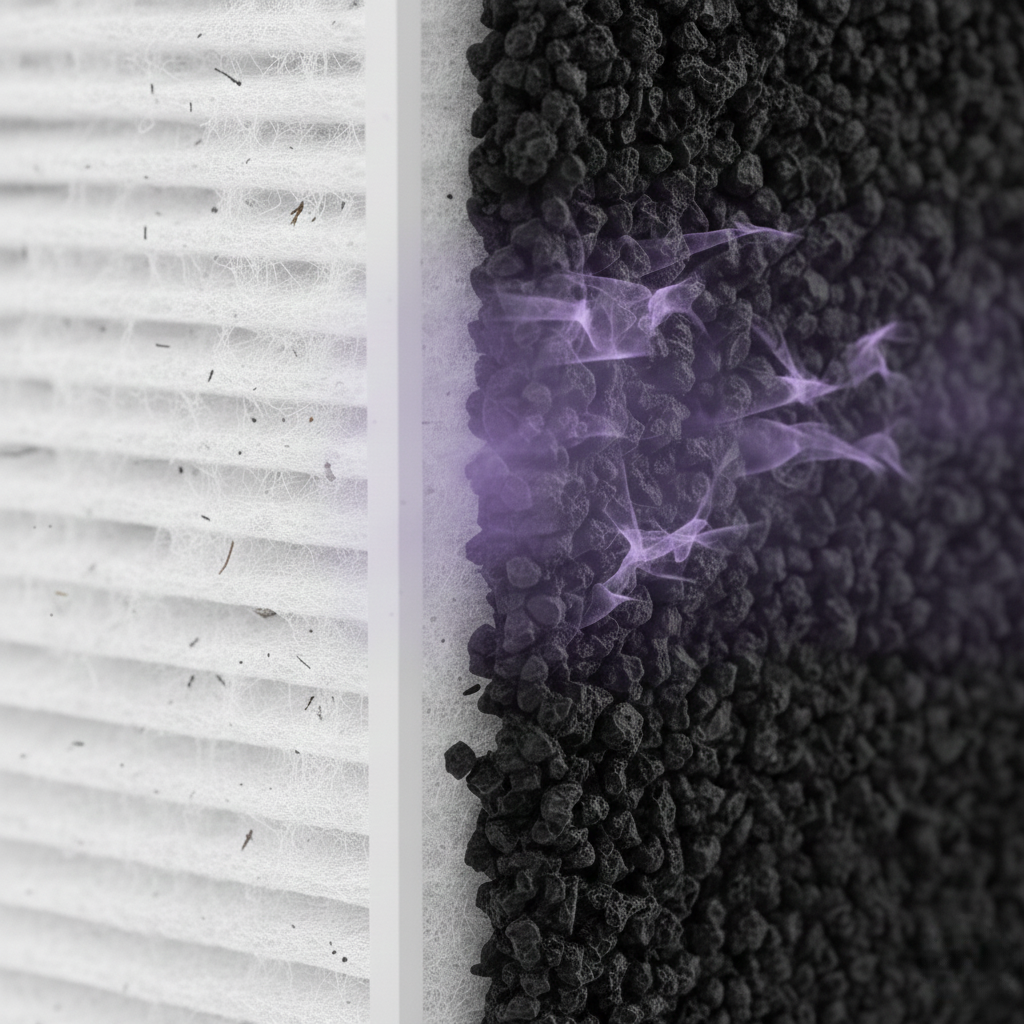
Close-up view of a HEPA filter for pet dander alongside activated carbon material showing how particles and odors are trapped

Here’s how it works:

  1. As air flows through the carbon layer, odor-causing gasses stick to the carbon’s pores.
  2. Over time, the carbon becomes saturated and must be replaced to stay effective.
  3. Carbon does not “kill” odor molecules; it captures and holds them so they’re no longer circulating in the air.

When you combine both technologies (HEPA filter and activated carbon), you get a powerful, well-rounded air cleaning system.

Can Vacuuming Alone Remove Pet Dander? 

Regular vacuuming is essential but not sufficient on its own, especially when you’re cleaning in a home with cats or dogs.

Standard vacuums often release fine particles back into the air through their exhaust, redistributing allergens rather than removing them.

If you or someone in your household is sensitive to pet dander, use a vacuum with a built-in HEPA filter. These models capture allergens more effectively and prevent them from re-entering the environment.

Even then, vacuuming only removes what has settled on floors and upholstery. not what’s still airborne. That’s why combining HEPA air purification with consistent cleaning delivers the best results.

HEPA Filters vs. Other Solutions 

There are many types of air-cleaning technologies on the market, but they don’t all work the same way, and they certainly don’t offer the same level of protection against pet dander and allergens.

Understanding these differences can help you choose the most effective solution for your home.

Regular Non-HEPA Filters 

Many HVAC systems and entry-level air purifiers use basic fiberglass or pleated filters. While these filters help capture larger particles like visible dust or bits of fur, they are not dense enough to trap microscopic allergenic proteins found in pet dander.

As a result:

  • Allergy-causing particles pass straight through
  • Air quality improvements are minimal
  • These filters offer little relief for individuals with pet sensitivities

If you’re relying on a standard HVAC filter alone, you may see little to no improvement in symptoms.

Ionizers and Electrostatic Filters 

Ionizers work by releasing charged ions into the air.

These ions cause airborne particles to clump together or stick to nearby surfaces, including walls, furniture, or a collector plate inside the purifier. This is proven true by the U.S. Environmental Protection Agency.

While this can remove some particles from the breathing zone, this method has limitations:

  • Many fine allergens remain suspended and never get collected.
  • Particles that do settle on surfaces can easily become airborne again.
  • Some ionizers produce ozone, a lung irritant that may worsen symptoms for people with asthma or allergies.

Because of this, ionizers are generally not recommended as a primary solution for pet-allergen control.

UV Light Purifiers 

Ultraviolet (UV-C) light systems are designed to kill bacteria, viruses, and mold spores by damaging their DNA.

This makes them helpful for sanitizing air that passes through the device, but they don’t remove physical particles like dander, hair, or dust. UV purifiers:

  • Target microorganisms, not allergens
  • Don’t trap airborne particles
  • Often work best when paired with a separate filtration system

For pet owners, UV light can be a useful supplement, but it’s not a stand-alone solution for allergen removal.

When it comes to trapping fine allergens, a certified HEPA filter remains the gold standard.

It’s safe, efficient, and proven to reduce exposure significantly when used properly.


Final Thoughts: Choosing the Best HEPA Filter for Pet Allergies 

Creating a healthier home for you and your pets doesn’t require complicated steps. All you need is the right combination of tools and consistent habits.

A true HEPA filter remains one of the most effective ways to reduce airborne pet allergens, especially when paired with activated carbon filtration for odor control. But even the best air purifier works only as part of a bigger strategy.

For even better results, combine HEPA filtration with regular vacuuming using a HEPA-equipped vacuum cleaner, washing pet bedding, and keeping grooming routines consistent. Together, these habits dramatically reduce the allergen load in your home and help maintain cleaner, fresher indoor air.

And if you don’t have a HEPA-equipped vacuum (or just don’t want to tackle the pet-hair battle yourself), you can call in the pros. Many cleaning services, including Roochii Cleaning, use commercial-grade HEPA vacuums that capture far more fine dander than standard household models.

FAQ

FAQs on HEPA Filters and Pet Dander and Odors

Leave a Reply

Your email address will not be published. Required fields are marked *