...

Can You Use a Magic Eraser on Glass?
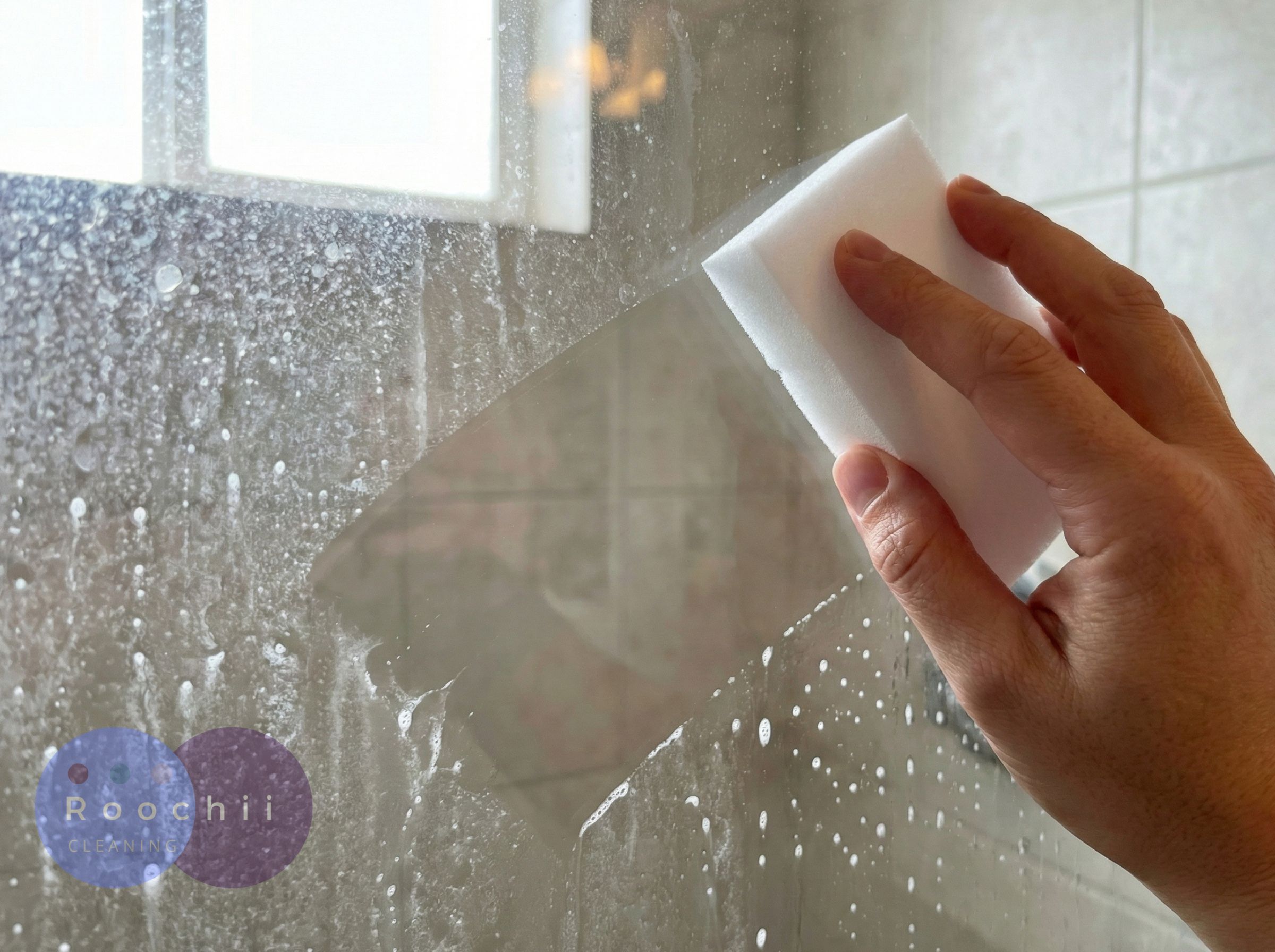
Close-up of a hand using a magic eraser on glass shower door to wipe away heavy soap scum, revealing a clear streak.

Understanding Magic Erasers 

So, can you use Magic Eraser on glass without ruining it? The simple answer is yes, but with caution.

Magic Erasers are popular for cleaning all kinds of tough messes around the house. People use them on walls to remove scuff marks, in kitchens to tackle greasy buildup, and in bathrooms to fight off soap scum and hard water stains.

On glass, they can be really effective at making surfaces look clear again, especially on shower doors and oven windows. Just remember to go gently. Scrubbing too hard can leave tiny scratches, particularly on delicate or coated glass.

Use them the wrong way, and you might end up with a scratched mess you’ll regret every time the sunlight hits it.

So let’s clear things up. In this article, you’ll learn:

Can You Use a Magic Eraser on Glass? The Truth Revealed 

If you’re wondering whether magic eraser works on glass, the practical answer is yes. On most plain, uncoated glass, at least. It’s because of how a Magic Eraser actually works.

A Magic Eraser is basically a dense foam. In fact, they are made from melamine foam, which acts like an ultra-fine sandpaper, according to  a 2014 study on cleaning sponges.

That makes them surprisingly effective at tackling tough stains, soap scum, and hard water spots on glass surfaces.

When you dampen it, the texture helps gently scrub away all those stubborn layers that make glass look dirty. These are things like soap scum, hard water spots, greasy fingerprints, or even marker smudges.

Think of it as giving your glass a mini-polish. Instead of just wiping the surface like a cloth would, the sponge gets into those tiny spots and hazy outlines that sprays and paper towels often miss.

Magic Eraser works so well because its texture can reach into tiny spots that regular cloths can’t. That’s why a few quick wipes often clean shower doors, oven windows, and plain mirrors better than sprays and paper towels.

Benefits of Using Magic Erasers on Glass Surfaces 

For many homeowners, the appeal of a Magic Eraser comes down to its versatility. And when it comes to glass, it can actually solve problems that other cleaning products struggle with.

Let’s look at the biggest benefits you’ll notice when using a Magic Eraser on glass surfaces.
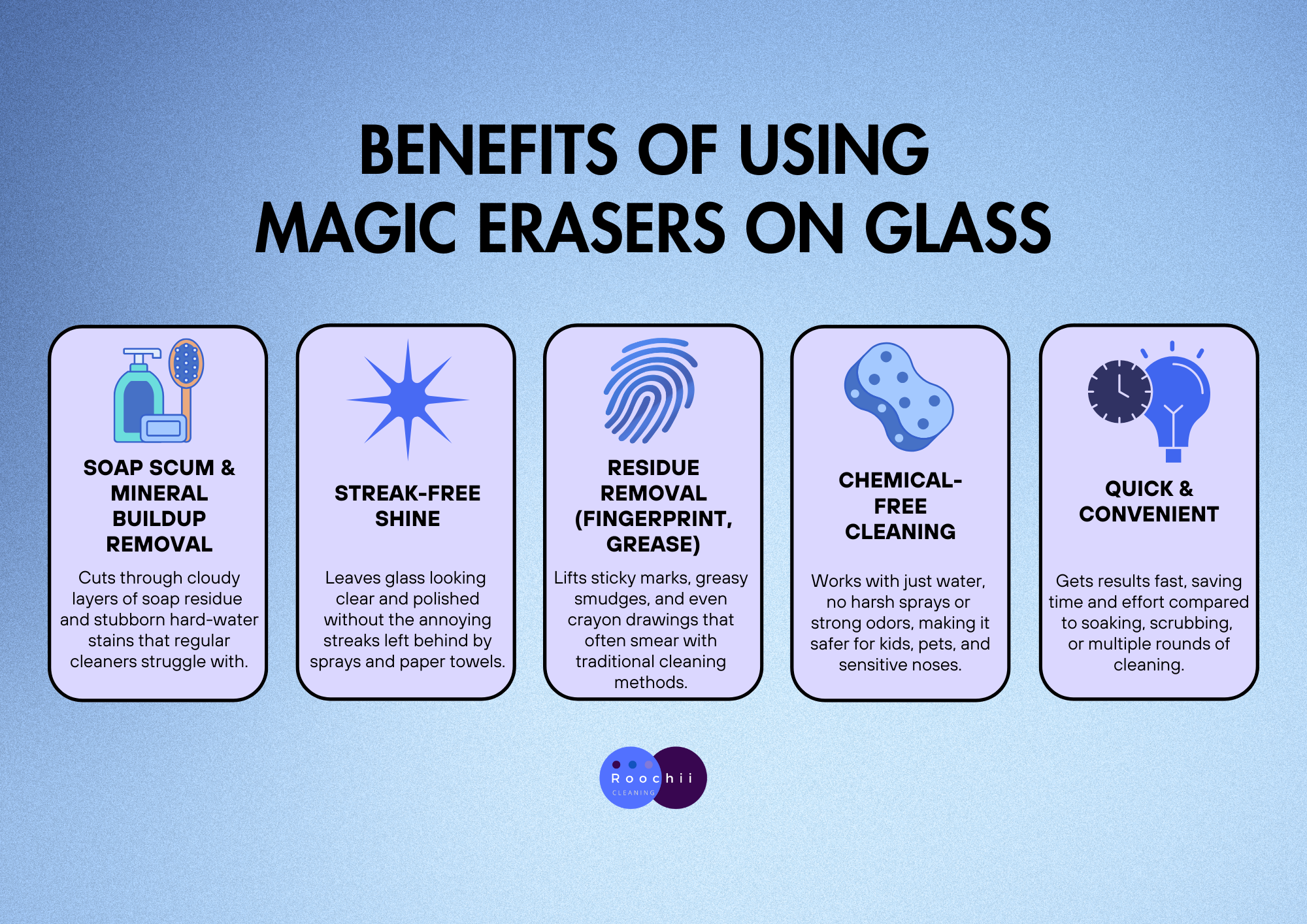
Infographic titled "Benefits of Using Magic Erasers on Glass" listing five advantages: soap scum removal, streak-free shine, residue removal, chemical-free cleaning, and quick convenience.

A. Cuts Through Soap Scum and Mineral Build-Up 

Soap film has a way of clinging to glass in a cloudy, stubborn layer. A Magic Eraser’s micro-abrasive texture is uniquely good at breaking through that layer without requiring harsh chemicals.

Similarly, hard water deposits, which show up as chalky white spots or streaks, are notorious for resisting glass cleaners. The abrasive structure of the Magic Eraser buffs away these mineral outlines, often restoring its original look in just a few strokes.

B. Provides a Streak-Free Shine 

Glass is notorious for streaks, and that’s why it can be frustrating to clean them. Wiping with a regular cloth can leave behind fibers, residue, or those dreaded streaky patterns that show up the moment sunlight hits the window.

A Magic Eraser doesn’t rely on liquid cleaner, so you avoid the problem of excess fluid spreading unevenly. Instead, it works with plain water, leaving behind a smoother finish that looks clearer in natural light.

C. Removes Residue Other Cleaners Miss 

Sticky fingerprints, grease splatters, dried toothpaste, and even crayon marks on glass are all common annoyances. Unlike sprays that just smear, a Magic Eraser’s fine texture actually lifts the residue away, making it a handy fix for kitchens, bathrooms, and even glass coffee tables.

D. Quick and Convenient 

A Magic Eraser can often tackle in minutes what might otherwise require soaking, scrubbing with multiple products, or repeating cycles of spray and wipe. For example, you can clear cloudy soap scum off a shower door in just a few swipes instead of mixing vinegar with water before wiping and rinsing it.

Potential Risks and Drawbacks of Using Magic Erasers on Glass 

While the benefits of using a Magic Eraser on glass are impressive, it’s not a one-size-fits-all solution. Because the sponge works by micro-abrasion, it brings with it certain risks that every homeowner should weigh before scrubbing away.

A. Risk of Micro-Scratches  on Glass

Even though melamine foam feels soft to the touch, its structure is similar to a very fine sandpaper. On plain glass, when used gently, this usually isn’t a problem. But apply too much pressure or repeatedly scrub in one spot, and you may leave behind micro-scratches that catch the light.

Over time, these scratches can dull the glass surface, making it look cloudy or hazy instead of clear. On windows, that means reduced transparency and more noticeable glare when sunlight hits. In some cases, these micro-abrasions also make glass slightly more prone to catching dirt, since the surface texture becomes less smooth.

B. Damage to Coated or Treated Glass 

Not all glass is just glass. Many modern surfaces come with specialized coatings to enhance performance:

  • Shower doors may have hydrophobic treatments that help repel water and reduce soap scum buildup.
  • Windows may include low-emissivity coatings that boost energy efficiency.
  • Mirrors often have protective backings at their edges.
  • Car windows may have tints, films, or defroster lines.

Magic Erasers can wear away or degrade these coatings, sometimes in a single cleaning session.

The result? A patchy surface where the coating is visibly thinner or, in the case of tinted film, complete removal.

C. Not Ideal for Large Surfaces 

Because Magic Erasers break down quickly, they aren’t designed for cleaning big areas like entire sliding glass doors or walls of windows. You’ll find yourself going through multiple sponges, which can make the method less practical and more costly compared to traditional glass cleaners and microfiber cloths.

D. False Expectation: It Can’t Fix Damage 

It’s worth stressing that while a Magic Eraser can remove residue on glass, it cannot fix deeper issues.

Permanent etching from hard water, scratches from sand, or chips in the glass aren’t problems that a sponge can solve. Trying to scrub them away with more force only makes the situation worse.

Assess your situation before going in and using a Magic Eraser.

Best Practices for Using Magic Erasers on Glass 

If you decide that what you’re cleaning could use some Magic Erasers, remember that technique matters.

The difference between a clean and streak-free result and accidental scratches often comes down to how you use it. By following a few best practices, you can maximize the benefits while minimizing the risks.
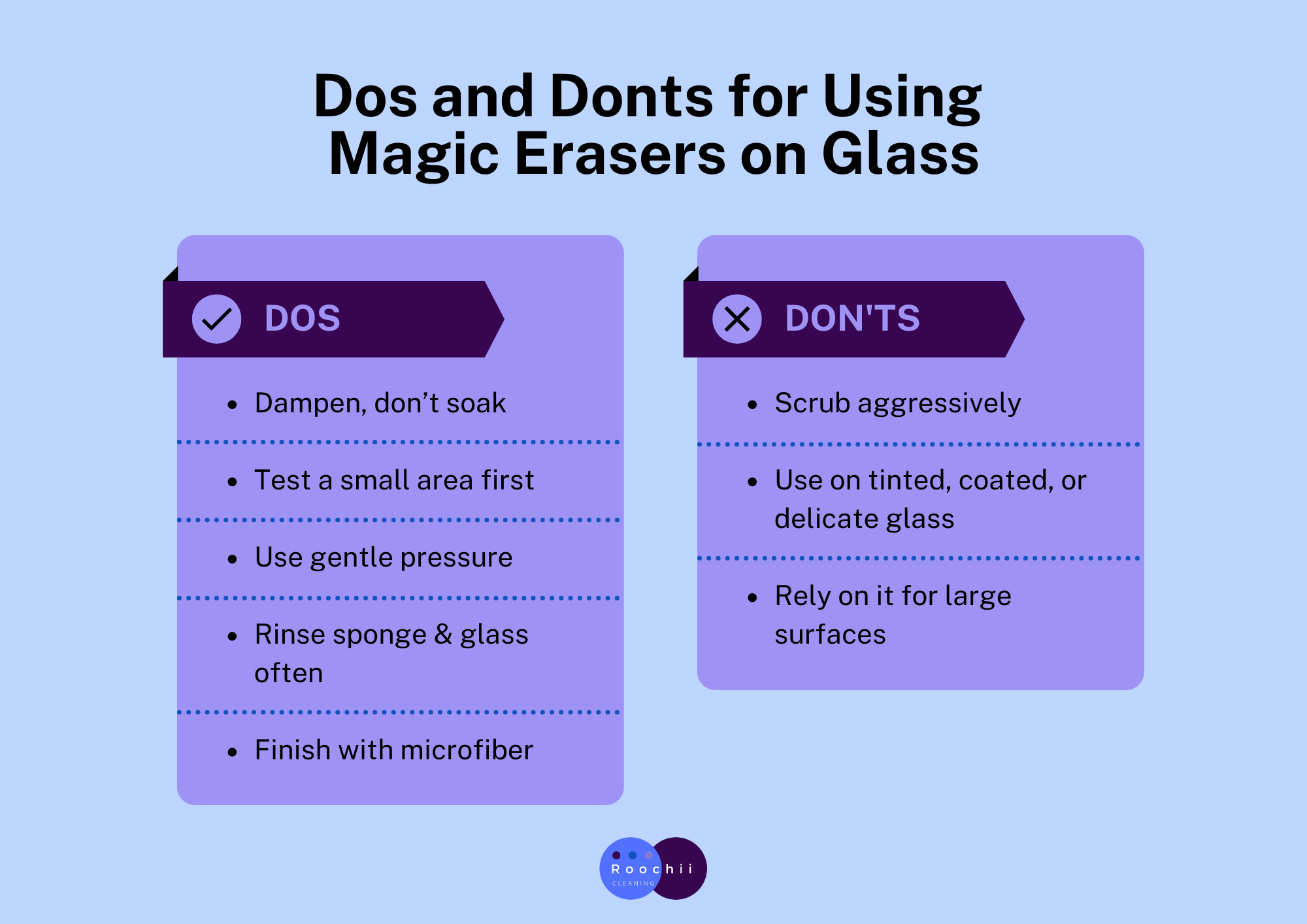
Infographic titled "Dos and Donts for Using Magic Erasers on Glass" comparing best practices such as using gentle pressure and testing small areas against mistakes like aggressive scrubbing or using on tinted glass.

A. Dampen the Sponge, Don’t Soak It 

A lot of people make the mistake of soaking the sponge in water, thinking it would be faster to clean if it’s very wet. But the truth is that a damp Magic Eraser works best.

Run it under water, squeeze out the excess, and aim for a slightly moist sponge. If it’s too dry, the abrasiveness increases and may scratch more easily. If it’s too wet, the sponge becomes mushy and less effective.

B. Always Test a Small Area First 

Before committing to the entire surface, try the Magic Eraser on a discreet corner of the glass. This test spot will help you see whether the sponge leaves scratches, dullness, or other unwanted marks.

C. Use Gentle, Consistent Pressure 

If you have heavy hands, this might be a bit of a problem. When using a Magic Eraser, there’s no need to use force. The melamine foam is doing the work at a microscopic level, so even if it might seem like nothing’s happening, something is!

Light, circular motions or short strokes are ideal. If a spot doesn’t come off immediately, return to it gently rather than increasing pressure.

D. Rinse the Glass and Sponge Frequently 

Both glass and sponges attract grit. Even a few grains of sand or tiny mineral particles can turn the sponge into a scratching hazard. To avoid this, rinse the glass surface before you start, and rinse the sponge regularly as you clean. This keeps abrasive debris from becoming trapped between the sponge and the glass.

E. Wipe with a Microfiber Cloth Afterwards 

Once you’ve finished with the Magic Eraser, always follow up with a microfiber cloth.

This step removes any loose sponge particles and ensures a streak-free finish. Microfiber is particularly good at catching dust and lint, which helps keep the glass crystal clear.

F. Save Magic Erasers for the Right Jobs 

Magic Erasers shine on certain tasks, specifically glass. Think shower doors, mirrors, and uncoated windows.

How effective it is can seem surprising sometimes, that’s why we’ve had clients in Roochii Cleaning think that it’s a magic cleaning item. They tend to use it on almost all surfaces that need cleaning. But that might end up damaging those surfaces.

Avoid using Magic Erasers on sensitive items like eyeglasses, touchscreens, tinted windows, or decorative glassware. By reserving them for heavy-duty cleaning, you extend the life of your glass surfaces and avoid preventable damage.

Alternative Cleaning Methods for Glass Surfaces 

Magic Erasers aren’t the only way to get your glass looking brand new.

If you want to play it safe, here are some tried-and-true alternatives:

A. Vinegar and Water Solution 

A simple 50/50 mix of vinegar and water works wonders on glass, especially for hard water stains.

Weizmann Institute Science Panorama explains that acetic acid (vinegar) chemically dissolves mineral scale and helps sanitize surfaces thanks to its acidity.

Spray it on, let it sit for a minute, and wipe with a microfiber cloth.

B. Baking Soda Paste for Stubborn Spots 

For tough stains, mix baking soda with a little water to make a paste. Apply gently to the spot, then wipe away with a damp cloth.

C. Commercial Glass Cleaners 

When in doubt, a high-quality glass cleaner paired with a microfiber cloth gets the job done without any risk of scratching.

D. Steam Cleaning 

If you’re dealing with large glass surfaces like shower doors, a handheld steam cleaner can loosen up soap scum and grime without the need for abrasives.


Conclusion: Make Use of Magic Erasers for Glass Cleaning 

Using Magic Eraser on glass can be a powerful tool for removing soap scum, water spots, and fingerprints when used properly. With care, it’s like a magic cleaning item.

But if your glass has special coatings or if you scrub too hard, you may be harming it more than cleaning it.

The safest approach? Use the Magic Eraser gently, test it first, and follow up with microfiber for a polished finish. If you’d rather not risk scratches, vinegar, baking soda, or traditional glass cleaners are reliable alternatives.

FAQ

Frequently Asked Questions About Using Magic Erasers on Glass

Leave a Reply

Your email address will not be published. Required fields are marked *