Skip to content
Move-Out Cleaning vs Deep Cleaning: The Ultimate Guide

The moving truck is packed, and your new home awaits. But as you take one last look around, you see grime clings to the kitchen backsplash, dust has settled on ceiling fans, and stubborn stains remain on the carpet. Suddenly, the excitement is replaced with stress. Will a quick wipe-down be enough, or a professional cleaning service is needed to restore the home?
Many people struggle to decide between move-out cleaning vs deep cleaning, unsure which service fits their situation best. Both provide thorough cleaning but serve different purposes. Choosing the wrong one could lead to unnecessary costs, wasted effort, or even losing part or the entirety of a security deposit.
A properly cleaned home is not just about appearances. It is often a requirement. Renters need a squeaky clean property to secure their full deposit. Homeowners preparing to sell must also make their property market-ready. Landlords want a well-maintained home for new tenants. Move-out cleaning vs deep cleaning is not just a matter of preference. It can also determine whether a home meets expectations for its next phase.
In this guide, we will compare move-out cleaning vs deep cleaning, breaking down their key differences, benefits, and ideal use cases. By the end, you will know exactly which service best suits your needs, ensuring a smooth transition and a perfectly clean home.
Table of Contents
What is Deep Cleaning?
Deep cleaning is a comprehensive cleaning service designed to remove dirt, bacteria, and buildup that accumulates over time. Unlike standard cleaning, which only focuses on basic surface-level tasks, deep cleaning targets areas such as baseboards, window blinds, vents, fans, doors, and door trim to eliminate deep-embedded dirt and grease. This service is beneficial for those who have not had professional cleaning in several months or who want a fresh start in their place.
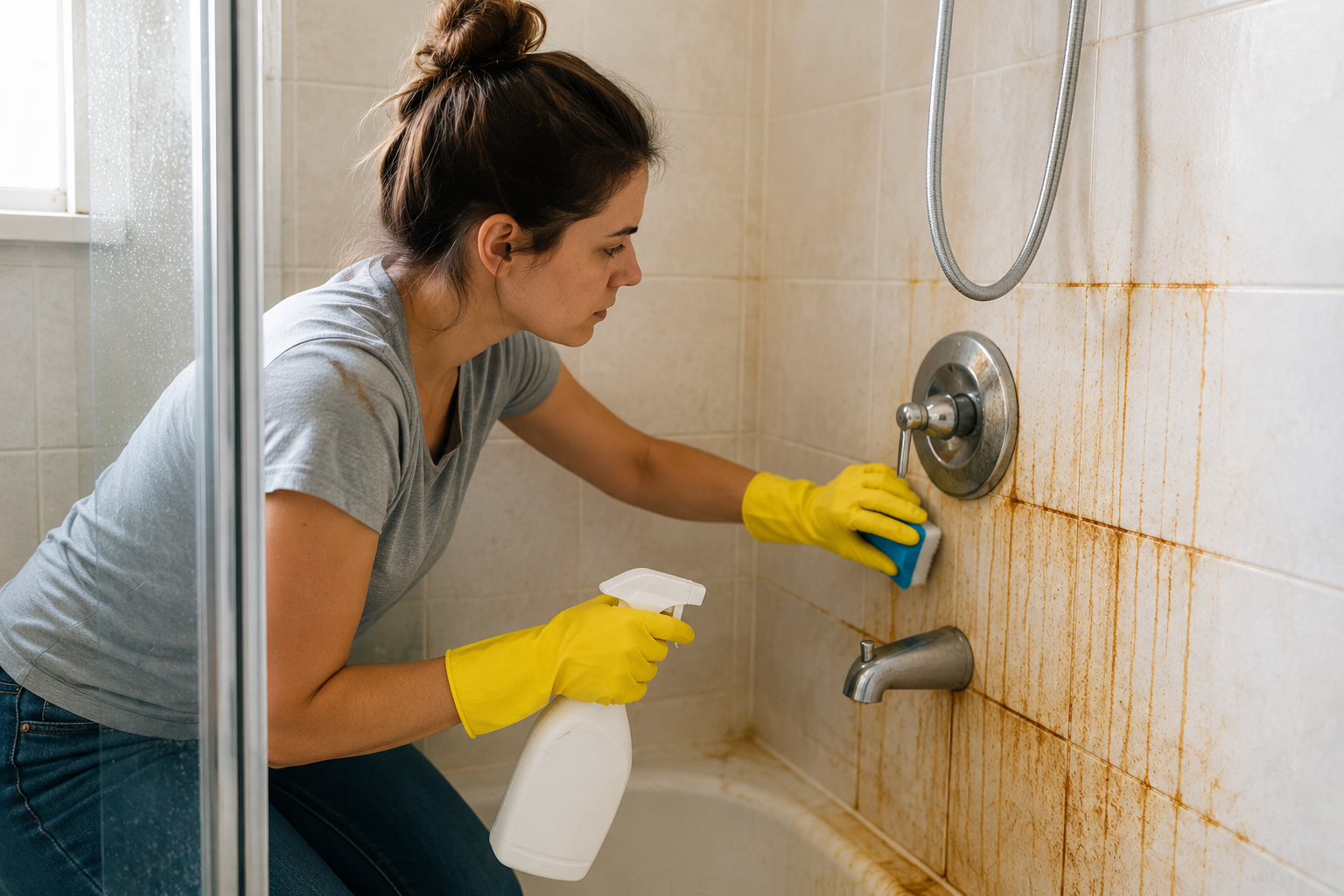
Deep cleaning goes beyond regular dusting and mopping, for it also involves scrubbing, sanitizing, and reaching deep into areas that are often overlooked in routine cleaning. Professional deep cleaning services ensure that a home is not just neat, but truly clean, eliminating germs, allergens, and deep-seated dirt that may not be visible to the naked eye.
What Does Deep Cleaning Include?
A deep cleaning service typically covers:
-
- Washing floors, doors, baseboards, window blinds, vents, fans, and door trim to remove dust, grease, and stains.
-
- Deep scrubbing of bathrooms, including disinfecting toilets, sinks, and showers.
-
- Cleaning kitchen surfaces, such as stovetops, countertops, and backsplashes.
-
- Dusting and sanitizing high-traffic areas, such as living rooms and bedrooms.
-
- Wiping the exterior of appliances to remove grease and fingerprints.
In deep cleanings, it is also typical for clients to include the oven, fridge, dishwasher, and sometimes walls, if specifically requested. These additional services are entirely based on the client’s preference and budget, as each appliance typically adds 30 to 60 minutes per man-hour to the overall cleaning time. The primary goal of deep cleaning is to sanitize and refresh the home, ensuring a thorough and customized clean.
However, inside cabinets are usually not done since they are occupied with food, but once again, it can be added to the deep cleaning package per the client’s request.
How Often Should You Get a Deep Cleaning?
For first-time clients, deep cleaning is strongly recommended before any type of cleaning to ensure that your home reaches a baseline level of cleanliness that can be maintained for a long time.
For regular or continual clients who already use professional cleaning services, the recommended deep cleaning frequency depends on their cleaning schedule:
-
- Weekly or Biweekly Clients – Deep cleaning is recommended every quarter or (3-4 months).
-
- Monthly Clients – Deep cleaning should be scheduled every five to three (3) months.
-
- Clients Who Schedule Every Two Months – Due to the longer interval, their cleaning falls under an hourly rate structure, and deep cleaning should be done quarterly as well.
What is Move-Out Cleaning?
Move-out cleaning is a specialized service designed to restore a property to its original condition before a tenant or homeowner vacates. Unlike deep cleaning, which focuses on maintaining a home for current occupants, move-out cleaning is intended to prepare a home for its next occupiers.
This type of cleaning is particularly important for renters who want to secure their full security deposit and for homeowners who need to ensure that their property is clean and presentable for new buyers or tenants. Many landlords and real estate agents require move-out cleaning before a property is listed for sale or rental.
What Does Move-Out Cleaning Include?
Move-out cleaning includes all tasks covered in deep cleaning but goes further by addressing the interiors of appliances, cabinets, and closets. This service ensures that the entire home is thoroughly cleaned and well-prepared before being handed over to a landlord, buyer, or new tenant.
Move-out cleaning involves:
-
- Scrubbing floors, walls, and frequently touched surfaces.
-
- Cleaning inside all major appliances, including refrigerators, ovens, microwaves, and dishwashers.
-
- Wiping down and sanitizing the interiors of cabinets, drawers, and closets.
-
- Removing spoiled food, spills, and residue from kitchen appliances.
- Removing spoiled food, spills, and residue from kitchen appliances.
Since move-out cleaning requires greater attention to detail, it typically takes longer than deep cleaning. Cleaning the inside of major appliances and storage areas adds extra time, with each major appliance like refrigerators and ovens requiring approximately 30 – 60 minutes to clean thoroughly.
For a thorough analysis on how the mind perceives cleaning time, read our Why We Think Cleaning is Faster Than It Is: Media, Marketing & Convenience Culture article.
Who Typically Requires Move-Out Cleaning?
Move-out cleaning is most commonly used by:
-
- Tenants moving out of a rental property – Many renters hire a move-out cleaning service to ensure the home meets the landlord’s expectations, helping them secure their full security deposit.
-
- Landlords preparing a home for new tenants – Some landlords arrange move-out cleaning before showing the rental unit to new occupants. Often, they use the previous tenant’s security deposit to cover the cost, ensuring the property is well-maintained and ready for the next renters.
-
- Real estate agents or homeowners selling a property – When listing a home for sale, sellers or property managers often invest in move-out cleaning to enhance the property’s appeal to potential buyers. A well-maintained home can make a stronger impression, helping to attract more offers and speed up the sale process.
- Real estate agents or homeowners selling a property – When listing a home for sale, sellers or property managers often invest in move-out cleaning to enhance the property’s appeal to potential buyers. A well-maintained home can make a stronger impression, helping to attract more offers and speed up the sale process.
Move-out cleaning is a practical service for anyone transitioning out of a home, ensuring the property is in its best condition before the next resident comes in.
Key Similarities Between Move-Out Cleaning vs Deep Cleaning
Both deep cleaning and move-out cleaning focus on degreasing rather than just dusting, making them more intensive than standard cleaning. These services target baseboards, vents, fans, window blinds, window sills, and furniture, ensuring the removal of built-up grime and grease.
Other common areas that require degreasing in both deep cleaning and move-out cleaning include:
-
- All kitchen and bathroom surfaces – including countertops, sinks, stovetops, backsplashes, and cabinets.
-
- Toilets and shower areas – ensuring a sanitized and refreshed space.
-
- All floors – mopped and scrubbed for a thorough clean.
- All floors – mopped and scrubbed for a thorough clean.
While kitchens, bathrooms, and floors are also covered in standard cleaning, what sets deep cleaning and move-out cleaning apart is the added level of intensity. Typically, the floors, shower floors, and toilets in deep and move-out cleans require:
-
- Stronger cleaning chemicals to break down tough grime.
-
- More cleaning passes to remove buildup fully.
-
- Stronger agitation methods for a deep and lasting clean.
Key Differences Between Move-Out Cleaning vs Deep Cleaning
Scope of Cleaning
The biggest difference between deep cleaning and move-out cleaning is what areas are included in the service.
-
- Deep cleaning covers all standard cleaning tasks but focuses on more detailed scrubbing and sanitizing. Interior appliance cleaning is not included unless the client requests it.
-
- Move-out cleaning includes interior cleaning of refrigerators, ovens, cabinets, and drawers. We also remove or dispose of any remaining contents inside these appliances, including expired food, spills, and residue.
- Move-out cleaning includes interior cleaning of refrigerators, ovens, cabinets, and drawers. We also remove or dispose of any remaining contents inside these appliances, including expired food, spills, and residue.
Time and Effort Required
The time required for deep cleaning and move-out cleaning varies depending on the level of detail involved and the overall condition of the home.
Generally, deep cleaning services for a two-bedroom, one-bathroom home takes approximately 3 hours, as it includes tasks like degreasing baseboards, window blinds, window sills, vents, and backsplashes, among others.
However, what extends the time of a deep cleaning is the fact that:
The Home is Dirtier, Requiring More Passes and Dwell Time
-
- Floors need multiple passes – A dirty hardwood floor may require at least three passes, with each pass taking 30 minutes, significantly adding to the cleaning time.
-
- Baseboards throughout the house accumulate deep-embedded dirt – If baseboards haven’t been deep cleaned in a while, they require thorough agitation to remove built-up dirt and grime. This process involves scrubbing by hand or using a pole scrubber, followed by drying the surface with a microfiber towel. Since each wall-length section can take approximately 15 minutes, the total cleaning time can quickly add up depending on the number of walls in the home.
-
- Vents accumulate deep debris in each small crevice – Over time, dust, grease, and other airborne particles build up in vents, requiring detailed cleaning to remove embedded grime. Cleaning each vent thoroughly can sometimes take up to 20 minutes, depending on the level of buildup.
- Vents accumulate deep debris in each small crevice – Over time, dust, grease, and other airborne particles build up in vents, requiring detailed cleaning to remove embedded grime. Cleaning each vent thoroughly can sometimes take up to 20 minutes, depending on the level of buildup.
Window Blinds Are Another Major Factor in Time Extension
-
- Small 1-inch vinyl blinds are particularly time-consuming, as they require delicate agitation to prevent breaking.
-
- A typical home may have 12 windows, with each window taking around 20 minutes of labor to ensure a thorough clean.
- A typical home may have 12 windows, with each window taking around 20 minutes of labor to ensure a thorough clean.
Move-out cleaning, on the other hand, takes longer due to its extensive scope. For the same two-bedroom, one-bathroom home, move-out cleaning can take approximately 4 hours or more.
The extra time is necessary because:
-
- Floors take twice as long to clean – Since there is no furniture to break up dirt collection, dust and debris accumulate across the entire floor, requiring more sweeping and mopping.
-
- Inside cabinets and pantries must be deep cleaned – Cleaning inside cabinets adds substantial time because reaching deep into corners requires ladders in many cases.
-
- Ovens require at least 30 minutes of dwell time – Move-out ovens are often full of carbonized grease, meaning a strong degreaser needs to sit before it can be scrubbed away. Thorough agitation is required to fully remove baked-on residue.
-
- Refrigerators must be fully disassembled – Cleaning out a fridge is not just wiping down shelves; every compartment, shelf, and drawer must be removed and scrubbed as many areas have hard-to-reach crevices that require detailed attention and significant agitation to clean properly.
- Refrigerators must be fully disassembled – Cleaning out a fridge is not just wiping down shelves; every compartment, shelf, and drawer must be removed and scrubbed as many areas have hard-to-reach crevices that require detailed attention and significant agitation to clean properly.
Cost Considerations
Although deep cleaning and move-out cleaning are charged at the same hourly rate of $95 per hour, the total cost depends on the time required. Deep cleaning is generally less expensive because it requires fewer hours.
Move-out cleaning costs more overall due to the additional labor involved in cleaning inside appliances, cabinets, and closets. Each major appliance, like refrigerators and ovens, can take up to 30 – 60 minutes to clean properly, which increases the total service duration. While the hourly rate remains the same, the extra time and effort required for move-out cleaning naturally result in a higher overall cost.
For a clearer comparison, at Roochii Cleaning in Denver, a two-bedroom, one-bathroom home typically requires:
-
- 2 hours for standard cleaning.
-
- 2.75 hours for deep cleaning.
-
- 3.5 hours for move-out cleaning.
| Move Out Cleaning | Deep Cleaning | |
| The Premier Customer Experience | ✔ | ✔ |
| The Kitchen Wash: Cabinets, Counters | ✔ | ✔ |
| The Bathroom Wash: Cabinets, Counters | ✔ | ✔ |
| Floors Vacuumed and/or Mopped | ✔ | ✔ |
| Touch Points: Switches, Handles, Doorknob, Cabinet | ✔ | ✔ |
| The Kitchen Exfoliation: Removal of Medium/Heavy | ✔ | ✔ |
| The Bathroom Exfoliation: Removal of Medium/Heavy | ✔ | ✔ |
| Inside Oven, Fridge, Dishwasher, and Cabinets | ✔ | ✘ |
| Blinds, Drapes, Valances, Upholstery | Disinfected | Disinfected |
| Ceiling Fans, Blades, Lights, and Lamp Shades | Washed | Washed |
| Furniture and Belongings | Washed | Washed |
| Door and Window Frames, Ledges, and Locks | Washed | Washed |
| Baseboards and Molding | Washed | Washed |
| Covid 19 Measures Taken | ✔ | ✔ |
Choosing the Right Cleaning Service for Your Needs
Deciding between deep cleaning and move-out cleaning depends on your specific circumstances and the level of cleaning required. If you are staying in your home and need a thorough refresh, deep cleaning is the right choice. If you are moving out, ensuring the home is left in good condition is essential. Move-out cleaning provides a comprehensive thorough clean, including interior appliance, cabinet, and closet cleaning, ensuring no residue or dirt is left behind.
Both services require attention to detail and professional expertise to ensure the job is done effectively. Investing in the right cleaning service not only saves time and effort but also ensures that your home, whether occupied or vacated, meets high cleanliness standards.
If you are still unsure which service best suits your needs, consulting with a professional cleaning company can help you make an informed decision, providing peace of mind and a properly maintained home.
FAQ
Cleaning Services Questions
No, you do not need to be present during the cleaning, as many clients provide access via a key or security code. However, being available at the beginning or end of the service allows you to communicate any specific instructions. A reputable cleaning company should wear body cameras throughout the cleaning process to ensure transparency and accountability.
It’s best to schedule at least one to two weeks in advance, especially during peak seasons like move-out periods or holidays, as availability may be limited.
Yes, most cleaning companies provide all necessary cleaning supplies and equipment. Most cleaning companies use Green Seal-certified products and HEPA vacuums, which are environmentally friendly and effective in removing dust and allergens.
If any areas were missed or not cleaned to expectations, prompt feedback is encouraged so your concerns can be addressed right away. If the issue cannot be resolved, the cleaning company you hired may arrange for another cleaning service to complete the job.
To make the cleaning process efficient, remove clutter and personal items from floors, countertops, and furniture. Ensure access to all areas that need cleaning and communicate any specific concerns in advance. This helps the cleaning team work efficiently and focus on key areas.