Skip to content

10 Questions to Ask a Cleaning Service Before Hiring (Avoid Costly Mistakes)
Game-Changing Questions to Ask Cleaning Service Providers to Avoid Scams and find the right fit
Hiring a cleaning service can be a game-changer, giving you more time to focus on what truly matters. For those hiring a cleaner for the first time or considering a new service, making the wrong choice can lead to unnecessary frustration. From hidden fees to inconsistent results, there are clear signs of a bad cleaning lady or company that you can spot by asking the right questions. Many consumers think they know what to ask, but as you can see in this reddit article, professional guidance is necessary.
This guide covers the most important questions to ask a cleaning service, explains why each one matters, and shows you what trustworthy companies should be able to answer. By the end, you’ll know how to compare providers, spot warning signs, and hire a cleaning service that fits your home and your expectations.
Jovany Explains: 10 Must-Ask Questions Before Hiring a Cleaning Company
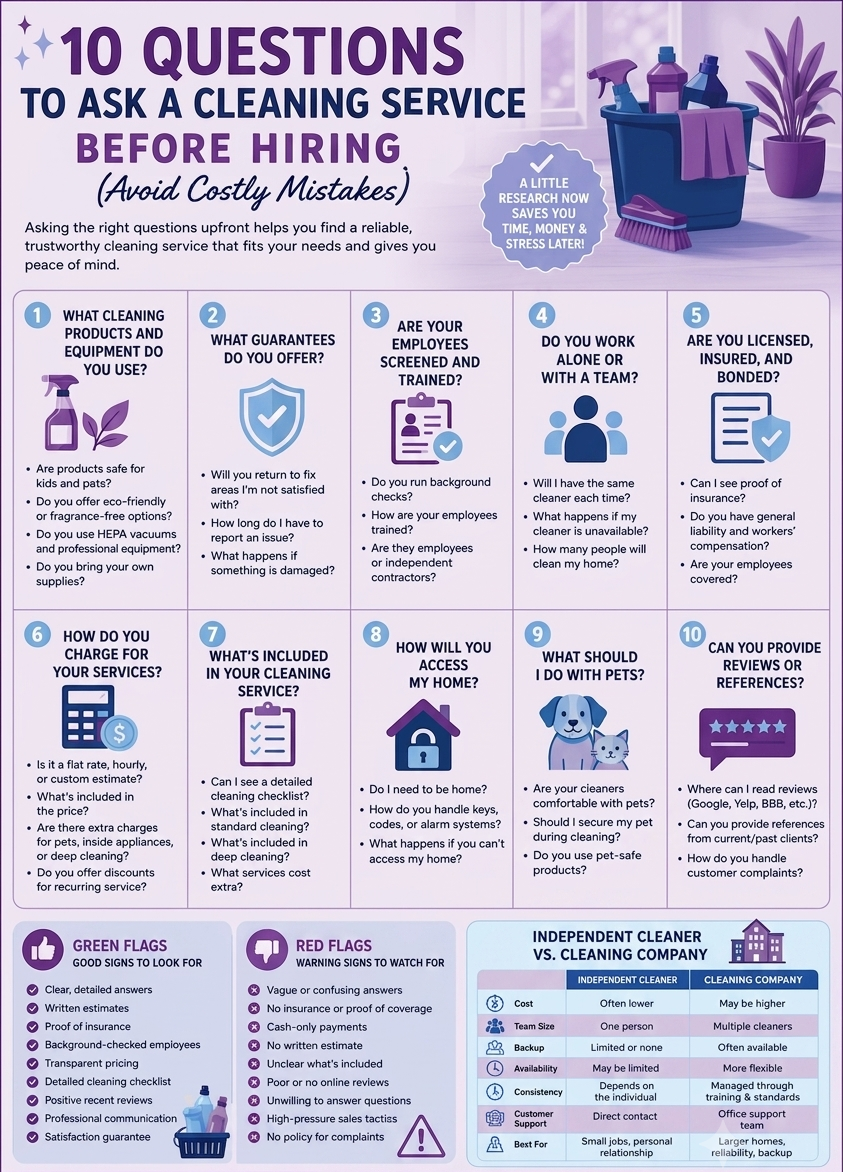
1. What Cleaning Products and Equipment Do You Use?
The products and equipment a cleaning service uses affect far more than how your home looks when they’re finished. They can influence indoor air quality, surface protection, allergy management, and even the lifespan of your flooring, countertops, and furniture.
A professional cleaning company should be able to explain not only which products they use, but also why they use them and whether they’re appropriate for your home.
Why This Question Matters
Different homes have different needs.
A family with young children may prioritize low-odor products. Someone with asthma may benefit from HEPA-filter vacuums. Homes with marble countertops, hardwood floors, or specialty finishes require cleaners designed for those materials.
Professional cleaners should be able to adjust their approach instead of using the same products in every home.
Are Their Cleaning Products Safe?
Many companies advertise “green” or “eco-friendly” cleaning, but those terms don’t always mean the same thing.
Trusted companies often use biodegradable, hypoallergenic products to protect your home and the environment, but a reputable company should explain their products clearly instead of relying on marketing buzzwords.
Traditional cleaners can be harmful. The Environmental Working Group found that 30 popular products emitted over 530 volatile organic compounds (VOCs) with 193 of them hazardous. These chemicals have been linked to breathing problems, reproductive issues, and even cancer.
Do They Use Professional Equipment?
Tools matter. Cleaning equipment often has a bigger impact than cleaning chemicals.
Ask whether they use:
- HEPA-filter vacuums
- Microfiber cleaning systems
- Professional-grade mops
- Steam cleaners where appropriate
- Extension tools for high dusting
HEPA vacuums are particularly valuable because they trap extremely small particles instead of releasing them back into the air. Asthma Australia recommends them for improving air quality, especially in homes with respiratory conditions.
Do They Bring Their Own Supplies?
Some cleaning companies provide everything, while others expect homeowners to supply certain products or equipment.
Before booking, ask:
- Do you bring all cleaning products?
- Do you supply vacuum cleaners?
- Can you use my preferred products if requested?
- Is there an extra charge for specialty products?
Knowing these details beforehand helps avoid surprises on cleaning day.
Green Flags
- Explains products confidently
- Offers alternatives for allergies
- Uses professional equipment
- Understands different surface materials
- Can explain why specific products are chosen
Red Flags
- Cannot identify products being used
- Says every surface gets the same cleaner
- Uses vague phrases like “our secret formula”
- Doesn’t know whether products are safe around children or pets
2. What Guarantees Do They Offer for Your Satisfaction?
Even experienced cleaners occasionally miss a small detail. The difference isn’t whether mistakes happen. It’s how the company responds when they do.
A trustworthy cleaning service should stand behind its work with a clear satisfaction guarantee and an easy process for resolving concerns.
Why This Question Matters
Companies that are confident in their quality usually have straightforward policies for handling customer feedback.
Instead of making excuses, they explain:
- How quickly concerns should be reported
- Whether they’ll return to fix missed areas
- How customer satisfaction is measured
- What happens if expectations aren’t met
Ask About Their Guarantee
Most companies claim they’ll fix any issues. But is that enough? While redoing a missed task shows basic accountability, it may also signal gaps in training or quality control.
Questions worth asking include:
- What happens if I’m unhappy with the cleaning?
- Will someone return to correct missed areas?
- Is there a time limit for reporting issues?
- How do you handle complaints?
The answers reveal how seriously the company takes customer service.
For example, Roochii Cleaning sets the bar high with this bold offer: “If you’re not satisfied with our cleaning services, we’ll hire a competitor to clean your home.” Guarantees like this give you peace of mind and show they take your satisfaction seriously.
Read Reviews Carefully
Don’t just take their word for it. Look at reviews on trusted platforms, ask for client references, or check in with friends and neighbors.
Pay close attention to how the company responds to criticism. Do they try to make things right, or do they ignore complaints? A pattern of responsiveness can tell you a lot about how they treat their clients long-term.
Green Flags
- Clear satisfaction guarantee
- Responsive customer service
- Transparent complaint process
- Professional responses to reviews
Red Flags
- No written guarantee
- Defensive responses to complaints
- No explanation of how issues are resolved
- Avoids discussing customer feedback
3. Are Your Employees Properly Screened and Trained?
When you hire a cleaning service, you’re inviting people into your home. Professional training and employee screening help protect both your property and your peace of mind.
Why This Question Matters
Cleaning isn’t simply wiping surfaces and vacuuming floors.
Professional cleaners need to understand:
- Different flooring materials
- Stone countertop care
- Safe chemical use
- Cross-contamination prevention
- Proper equipment handling
Without training, even well-intentioned cleaners can accidentally damage expensive surfaces.
Do They Run Background Checks?
Quality companies carefully vet employees before hiring. A solid screening process often includes ID verification, criminal history checks, employment background, and license validation.
According to TruDiligence, thorough vetting reduces risks like theft, fraud, or unsafe behavior, protecting both clients and employees. Always confirm that the service you’re considering takes this seriously.
What Training Do Employees Receive?
Cleaning isn’t just about wiping surfaces or dusting off. It requires proper training. Skilled cleaners should know how to handle different materials, tools, and products without causing damage.
Certifications from organizations like the Institute of Inspection, Cleaning, and Restoration Certification (IICRC) are a strong sign of professionalism. They show the company invests in developing staff expertise and upholding industry best practices.
At Roochii Cleaning, we’ve seen expensive damage caused simply because someone wasn’t trained on different materials. One homeowner had dull spots left on a marble countertop after vinegar was used, while another had swollen hardwood boards after excessive water was applied. Proper training helps prevent these avoidable mistakes.
Do These Companies Rely on Subcontractors?
Some companies outsource their staff, which can result in inconsistent quality. Research published in the Journal of Hospitality and Tourism Technology found that outsourcing often leads to service declines due to uneven training and standards.
For consistent results, it’s safer to hire companies that employ and train their own teams.
Green Flags
- Structured onboarding
- Ongoing training
- Background screening
- Clear quality control process
- Consistent cleaning standards
Red Flags
- Cannot explain employee training
- No quality inspections
- High employee turnover
- Vague hiring process
4. Do You Work Alone or With a Team?
Whether a cleaner works independently or as part of a cleaning company isn’t necessarily a deal-breaker, but it can affect scheduling, consistency, communication, and the overall experience.
Understanding how the company operates helps you choose the option that best fits your household.
Independent Cleaner vs. Cleaning Company
Independent cleaners often provide personalized service and may charge lower rates because they have fewer overhead costs. However, they may also have limited availability, especially if they’re sick, on vacation, or fully booked.
Cleaning companies typically have multiple employees, allowing them to provide backup cleaners, maintain consistent schedules, and complete larger jobs more efficiently.
| Feature | Independent Cleaner | Cleaning Company |
|---|---|---|
| Cost | Often lower | May be higher |
| Backup Cleaner | Usually unavailable | Often available |
| Scheduling Flexibility | Limited | Greater flexibility |
| Customer Support | Direct communication | Dedicated office support |
| Team Size | One person | One or more cleaners |
| Quality Control | Varies | Usually managed through inspections |
Neither option is automatically better. The right choice depends on your priorities.
Questions to Ask
- Will the same cleaner visit my home each time?
- What happens if my regular cleaner is unavailable?
- How many people will clean my home?
- How long should the cleaning take?
Knowing what to expect helps avoid surprises on cleaning day.
Green Flags
- Explains staffing clearly
- Offers backup coverage
- Introduces replacement procedures
- Maintains consistent cleaning standards
Red Flags
- Doesn’t know who will arrive
- Frequently changes cleaners without notice
- Cannot estimate cleaning time
- No backup plan for absences
5. Are You Licensed, Insured, and Bonded?
One of the most important questions you can ask is whether the cleaning service has appropriate insurance and protection in place.
Accidents are uncommon, but they can happen. Insurance protects both you and the cleaning company if something goes wrong.
Why This Matters
Imagine a cleaner accidentally damages an expensive appliance or slips while working inside your home.
Without proper insurance, resolving these situations can become much more complicated.
Professional cleaning companies should be transparent about the protection they carry.
Ask About Insurance
A reputable company should be able to explain whether they have:
- General liability insurance
- Workers’ compensation insurance (where applicable)
- Bonding or employee dishonesty coverage
You don’t need to become an insurance expert, but you should understand what protections are available.
Ask for Proof
Don’t feel uncomfortable asking for documentation.
Professional companies are accustomed to these questions and should be willing to provide proof of insurance if requested.
Insurance and bonding aren’t just legal protections; they’re signs of professionalism. Companies that carry proper coverage show they’re serious, legitimate, and committed to protecting their clients.
Green Flags
- Provides proof upon request
- Clearly explains coverage
- Employees are properly insured
- Transparent about policies
Red Flags
- “We’ve never needed insurance.”
- Refuses to discuss coverage
- Doesn’t know what’s included
- Avoids answering questions directly
6. How Do You Charge for Services?
Pricing is one of the most important details to clarify before hiring a cleaning service. It’s not only about finding the lowest one, but understanding what you’re paying for.
Transparent rates help you budget confidently and prevent any unpleasant surprises down the road.
Why This Question Matters
The lowest quote isn’t always the best value, and the highest price doesn’t automatically guarantee better service. Cleaning companies use different pricing models, include different tasks, and may charge extra for services that another company considers standard.
Before comparing prices, make sure you’re comparing the same level of service. Asking how a company calculates its rates and what the quote includes can help you avoid hidden fees, unexpected add-ons, and misunderstandings after the cleaning is complete.
Do They Charge by the Hour or Offer Flat Rates?
Some companies bill by the hour, while others use flat rates for specific jobs or recurring cleanings. Hourly pricing can work well for smaller spaces but may feel unpredictable. Flat rates provide more consistency, making it easier to plan for regular service.
Can They Provide a Clear Estimate?
If you’re considering an hourly service, ask for an upfront estimate of how long the job will take and what the final cost might be. A good company should be able to give you a realistic range based on your home’s size and the type of cleaning you need.
Are There Extra Fees You Should Know About?
Not all cleaning tasks are included in the base price. Services like deep cleaning, oven scrubbing, or organizing may come with additional charges. Discuss these ahead of time so you know exactly what is and isn’t covered.
Green Flags
- Written estimate
- Transparent pricing
- Explains optional add-ons
- No hidden fees
Red Flags
- Gives only vague price ranges
- Won’t explain charges
- Adds unexpected fees afterward
- Refuses to provide written estimates
7. What’s Included in Your Cleaning Service?
One of the biggest reasons homeowners feel disappointed after a cleaning appointment is mismatched expectations.
Not every cleaning company offers the same services, so it’s important to clarify exactly what’s included in their packages before you book.
Why This Question Matters
A low quote can quickly become expensive if it doesn’t include the tasks you expected. That’s why asking “What’s included?” is just as important as asking about the price.
Before you compare costs, make sure you’re comparing the same level of service. A detailed cleaning checklist helps you see exactly what each company will do, which services are optional, and whether additional charges may apply.
What Do Standard Cleaning Packages Cover?
Most standard cleaning services handle the basics: dusting, vacuuming, mopping, and general tidying. But don’t assume extras like oven scrubbing, fridge cleaning, or window washing are part of the deal; they often come at an additional cost.
In fact, many homeowners on Reddit’s cleaning Q&A threads mention being caught off guard by tasks they assumed were included but weren’t. Asking ahead of time helps you avoid those frustrations.
Ask for a Cleaning Checklist
Professional companies often provide a written checklist showing exactly what’s covered during each visit.
For example:
| Standard Cleaning | Deep Cleaning |
|---|---|
| Dusting | Detailed dusting, including hard-to-reach areas |
| Vacuuming | Vacuuming with furniture moved where appropriate |
| Bathroom cleaning | Scrubbing grout buildup |
| Kitchen surface cleaning | Cleaning inside appliances (when included) |
| Floor mopping | Cleaning baseboards, doors, and trim |
Having a checklist reduces misunderstandings and makes it easier to compare providers.
Can You Customize the Service to Your Needs?
A good cleaning service should offer flexibility. For example, busy families may want frequent sanitizing of high-touch surfaces, while professionals might prefer help with decluttering or organization. Custom packages allow you to prioritize what matters most in your home.
Customization also allows cleaners to use the safest methods for different materials throughout the home.
For example, sealed stone countertops, hardwood floors, delicate upholstery, and stainless steel appliances all require different cleaners, cloths, and drying techniques. Matching the cleaning process to the surface helps prevent premature wear while producing better long-term results.
Green Flags
- Detailed cleaning checklist
- Written scope of work
- Explains optional services
- Sets realistic expectations
Red Flags
- “We clean everything.”
- No written service list
- Vague answers
- Changes what’s included after booking
8. How Will You Access My Home?
For busy families and professionals, it’s common for cleaners to work while no one is home.
Giving someone access to your home requires trust. Before your first appointment, ask how the cleaning service handles keys, entry codes, alarms, and other security details so everyone knows what to expect.
Why This Question Matters
A professional cleaning service should have clear procedures for accessing your home while protecting your privacy and security. Knowing these procedures in advance helps prevent missed appointments, lockouts, and confusion on cleaning day.
What Are the Access Options?
Most cleaning companies offer flexible solutions, such as:
- Key handoff: leaving a spare key with the cleaner or company.
- Lockbox: storing your key in a secure box with a code.
- Access codes: providing temporary codes for smart locks or security systems.
Each option has its pros and cons, so choose the method you’re most comfortable with.
What Security Measures Do They Follow?
A professional cleaning service should have clear policies for entering and leaving your home. Ask how they secure your property once the cleaning is complete: locking up, resetting alarm systems, or confirming by text or email.
Green Flags
- Clear procedures for home access
- Secure handling of keys and access codes
- Flexible options for homeowners
- Good communication before arrival
Red Flags
- No process for handling keys
- Unclear arrival procedures
- Doesn’t explain how access information is protected
- Poor communication before appointments
9. What Should I Do With Pets During Cleaning?
Pets bring joy to a home, but they can also create challenges when cleaners are at work. Talking about this in advance ensures comfort for both your furry friends and the cleaning team.
Most professional cleaners enjoy working in pet-friendly homes, but every animal reacts differently to unfamiliar people, equipment, and noises. Discussing cleaning your house with pets before the appointment helps create a safer and less stressful experience for everyone.
Why This Question Matters
Vacuum cleaners, open doors, and unfamiliar visitors can make some pets anxious. Planning ahead reduces the risk of escapes, interruptions, or accidental injuries while allowing cleaners to work more efficiently.
Do Cleaners Have Preferences About Pets?
Some cleaners are completely fine working around pets, while others may prefer they’re kept in a separate room or taken out during the service. Clarifying expectations helps avoid disruptions and keeps both your pet and the cleaners safe.
Should You Introduce Your Pet to the Cleaner?
A quick introduction can make a big difference. Meeting the cleaner beforehand helps reduce your pet’s anxiety and makes the environment feel less threatening. It also gives the cleaner a chance to understand your pet’s temperament.
Green Flags
- Comfortable discussing pets before arrival
- Respects your pet’s routine
- Uses products according to label directions
- Communicates clearly about safety concerns
Red Flags
- Doesn’t ask whether pets are present
- Ignores instructions about your pet
- Leaves doors open unnecessarily
- Rushes through pet-related questions
10. Can You Provide References or Reviews?
One of the best ways to gauge a cleaning company’s reliability is through the experiences of past clients. References, reviews, and even awards can help you avoid scams and hire a service you can trust.
Why This Question Matters
Anyone can describe their service as reliable or professional. Reviews from real customers help you verify whether those promises are reflected in day-to-day service.
Instead of focusing only on the overall rating, look for comments about punctuality, communication, consistency, professionalism, and how the company responds when problems arise.
Can They Share References from Past Clients?
A reputable cleaning service should have no hesitation in providing references. Speaking directly with past clients gives you firsthand insight into their professionalism, punctuality, and quality of work. If a company avoids this request, consider it a red flag.
What Do Online Reviews Reveal?
Check reviews across multiple sources, such as:
- Yelp
- Better Business Bureau
- Local community groups
If the company provides references, ask previous customers questions like:
- Have you used them for a long time?
- Do they arrive when scheduled?
- How do they handle concerns?
- Would you hire them again?
Both positive and negative reviews matter. The balance helps you set realistic expectations.
Do Awards and Recognitions Add Credibility?
Local and industry awards show that a company has earned trust not just from clients but also from the wider community. For instance, the Nextdoor Neighborhood Award highlights businesses that neighbors consistently recommend and rely on.
These recognitions act as third-party proof of quality and reliability, giving you extra confidence in your choice.
Green Flags
- Large number of recent reviews
- Consistent positive feedback
- Professional responses to criticism
- Happy to provide references when appropriate
Red Flags
- Very few reviews
- Reviews that appear fake or repetitive
- Unanswered customer complaints
- Refuses to discuss previous customer experiences
Green Flags vs. Red Flags When Hiring a Cleaning Service
Even if a company answers all ten questions, pay attention to how they communicate. Professionalism often shows up in the details.
| Green Flags | Red Flags |
|---|---|
| Clear, detailed answers | Vague or inconsistent responses |
| Written estimates | Verbal pricing only |
| Proof of insurance | Avoids discussing insurance |
| Background-checked employees | Cannot explain hiring practices |
| Transparent service checklists | Unclear what’s included |
| Positive recent reviews | Numerous unresolved complaints |
| Professional communication | Slow or unreliable responses |
| Clear satisfaction guarantee | No process for resolving issues |
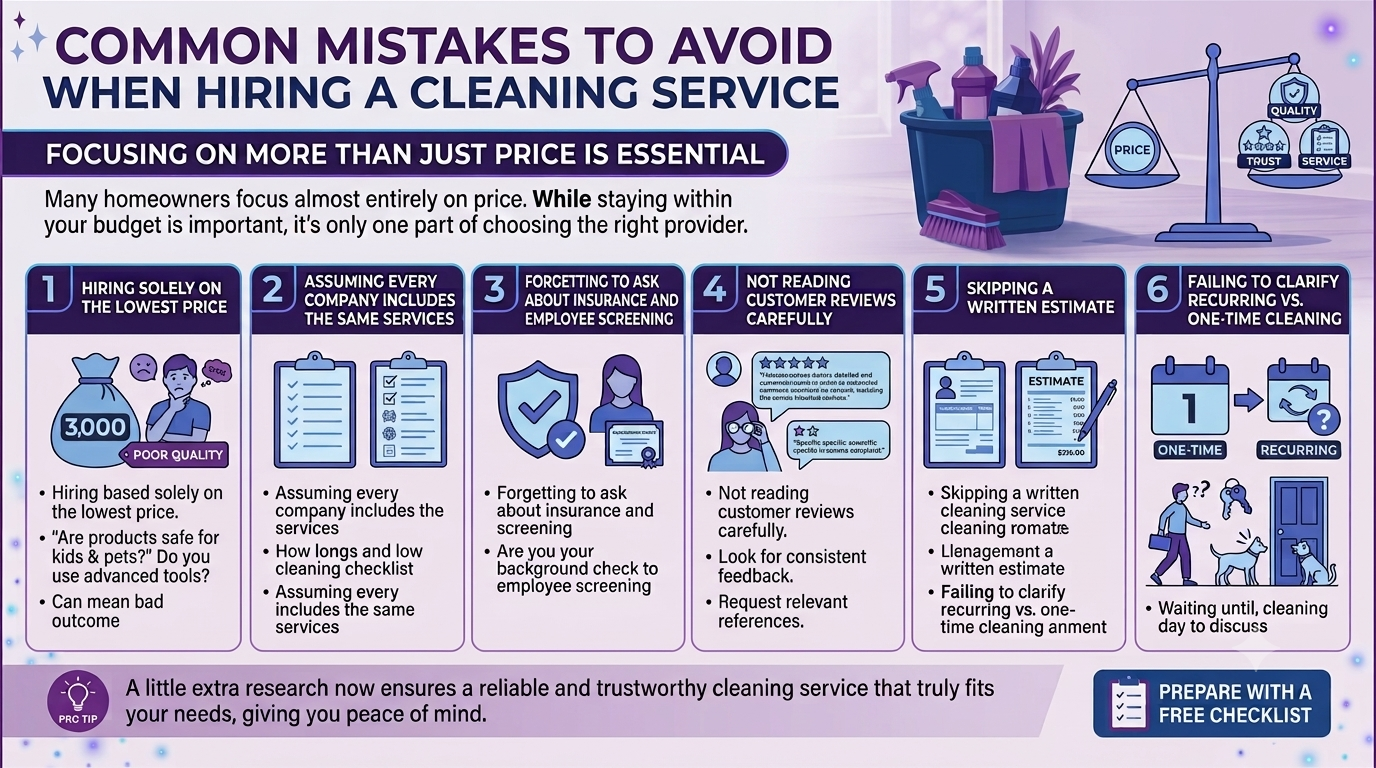
Common Mistakes to Avoid When Hiring a Cleaning Service
Many homeowners focus almost entirely on price. While staying within your budget is important, it’s only one part of choosing the right provider.
Avoid these common mistakes:
- Hiring based solely on the lowest price.
- Assuming every company includes the same services.
- Forgetting to ask about insurance and employee screening.
- Not reading customer reviews carefully.
- Skipping a written estimate.
- Failing to clarify recurring versus one-time cleaning expectations.
- Waiting until cleaning day to discuss pets or home access.
Taking a few extra minutes to ask questions before booking can help prevent misunderstandings later.
Final Thoughts
Hiring a cleaning service can be a game-changer for busy parents and professionals, but only if you choose the right one. By asking these 10 essential questions about products, insurance, client satisfaction, pricing, and employee vetting, you can make an informed decision that meets your needs.
A reputable cleaning company should showcase transparency and professionalism by making all essential information easily accessible on their website. This not only reflects their commitment to thoroughness but also builds trust with potential clients.
If you’re ready to evaluate cleaning services, start with Roochii Cleaning, where all the details you need are readily available on our website for your convenience.
For companies wishing to convince their management to hire a cleaning company visit ACE Cleaning systems excellent article on this topic.
FAQ
Essential Questions About Hiring and Working with a Cleaner
When hiring a cleaner, inquire about their experience, cleaning methods, and products used. Ask if they are insured and bonded, what services are included, and whether they bring their own supplies. Discuss pricing, guarantees for satisfaction, and how they handle feedback or complaints. This helps ensure their service meets your specific needs.
In three hours, a cleaner can typically complete standard cleaning tasks for a small to medium-sized home, such as vacuuming, mopping, dusting, and cleaning bathrooms and kitchens. The specific output will depend on the cleaner's efficiency and your priorities, so communicate clearly about what tasks are most important to you.
When hiring a house cleaner, it's important to ask about their experience, cleaning techniques, and the products they use to ensure they align with your preferences. Additionally, check whether they are insured and bonded for your peace of mind. Don’t forget to discuss their availability, pricing, and whether they can provide client references—this helps confirm their reliability and professionalism.
During a walkthrough, ask about the specific cleaning tasks they will perform in each area of your home. Discuss high-priority spaces, unique cleaning needs, and any items that require special attention or care. Verify their cleaning schedule, preferred products, and their approach to handling fragile or delicate items.
Getting estimates from at least three reputable cleaning services gives you a better understanding of pricing, services, and overall professionalism.
Both options have advantages. Independent cleaners may offer lower rates and more personalized service, while cleaning companies often provide backup staff, structured training, customer support, and greater scheduling flexibility.
The ideal schedule depends on your household, lifestyle, pets, and budget. Some homes benefit from weekly or biweekly cleaning, while others only need monthly service or occasional deep cleaning.