Skip to content

Apple Cider Vinegar vs White Vinegar for Cleaning

Using Vinegar for Cleaning Your Home
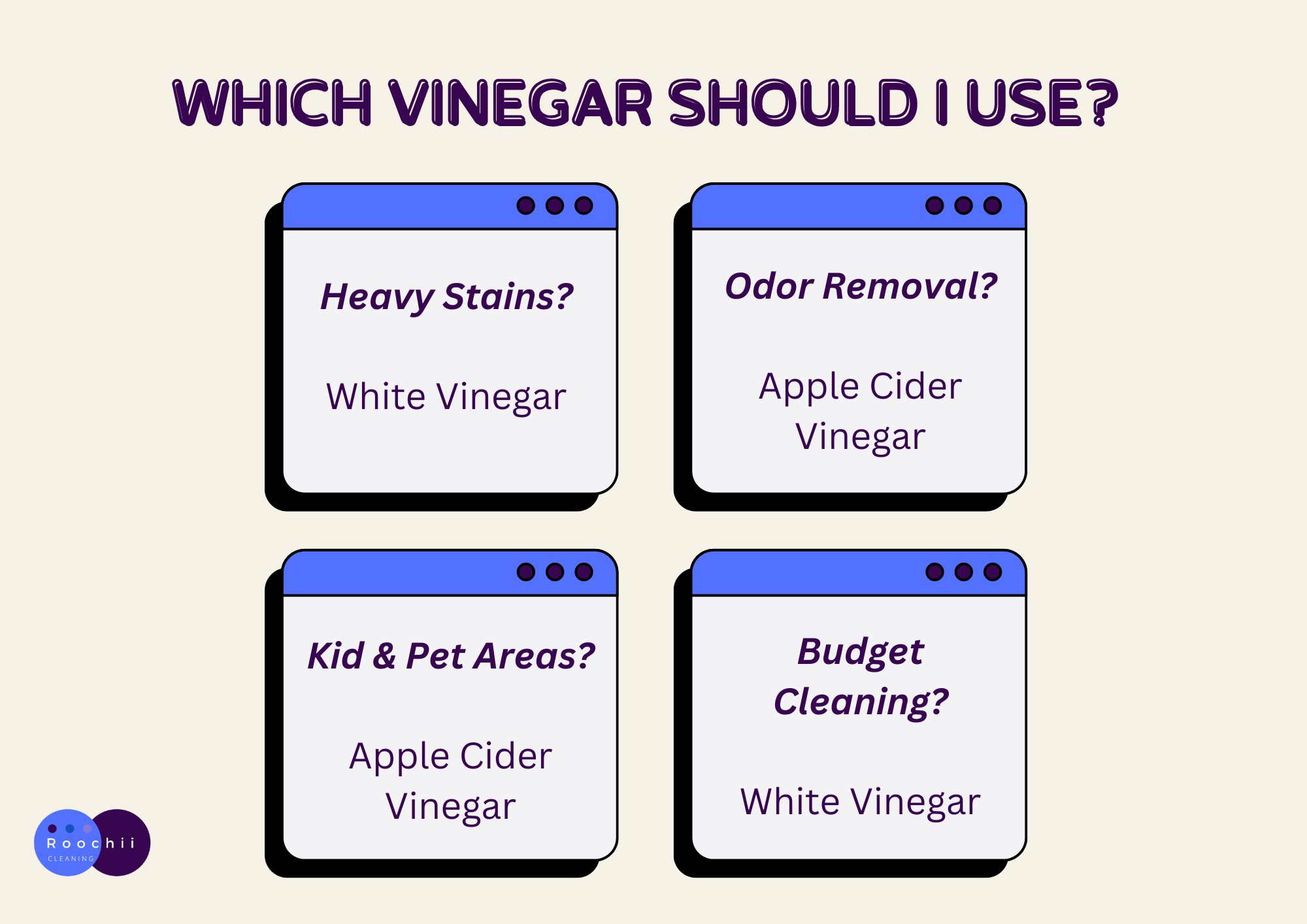
If you’re wondering who’s the winner between apple cider vinegar vs white vinegar for cleaning, the short answer is: white vinegar. Apple cider vinegar still has its place, but it’s best for lighter jobs or when you want a gentler, less pungent option.
White vinegar is stronger, cheaper, and a beast at tackling grease, soap scum, and limescale. Apple cider vinegar, meanwhile, smells nicer, plays well with pets and kids, and won’t fade your laundry’s favorite colors.
In other words, white vinegar is your heavy-duty cleaner, and apple cider vinegar is the one you bring in when you don’t want your house smelling like you’ve been pickling cucumbers all day.
Use the wrong vinegar, though, and you’ll either be scrubbing twice as hard or wondering why your coffee machine now has a weird amber tint. So yes, both work but only if you pick the right job for the right vinegar.
In this blog article, we’ll cover:
Apple Cider Vinegar vs. White Vinegar: Which Is Better for Cleaning?
While both are effective in their own right, their cleaning performance depends on the specific task at hand.
A. Kitchen Cleaning with Apple Cider Vinegar vs. White Vinegar
When it comes to kitchen cleaning, white vinegar usually wins. Its higher acidity makes it far better at cutting through grease on stovetops, baked-on food in ovens, sticky countertop messes, and even leaves stainless steel shiny and streak-free.
Apple cider vinegar can still be useful, especially for lighter cleaning jobs like wiping dining tables, freshening wooden cutting boards, or when you want a milder scent, but it doesn’t match the heavy-duty power of white vinegar.
B. Odor Removal: Apple Cider Vinegar vs. White Vinegar
For odor removal, both types of vinegar work, but apple cider vinegar usually has the edge.
White vinegar is strong at neutralizing odors in places like laundry or trash cans, though its sharp smell can stick around longer than you’d like.
Apple cider vinegar, on the other hand, is gentler and leaves behind a milder, fruity scent, making it great for freshening shoes, rugs, and pet bedding. Research from 2017 even shows it helps reduce trimethylamine (TMA), the compound behind fishy, pungent odors.
C. Cleaning Glass and Mirrors with Apple Cider Vinegar vs. White Vinegar
When cleaning glass and mirrors, both vinegars can work, but apple cider vinegar often gives a better experience.
White vinegar cuts through grime well but can leave streaks if it’s not diluted or wiped properly, and its strong smell can be unpleasant in small spaces. Apple cider vinegar, with its lighter scent, tends to leave fewer streaks and makes cleaning windows and mirrors feel easier and more pleasant.
D. Bathroom Cleaning: Apple Cider Vinegar vs. White Vinegar
In the bathroom, white vinegar is the clear winner. Its higher acidity cuts through soap scum, fights mildew, and even disinfects sinks, showers, and tubs, making it a powerful and budget-friendly alternative to chemical cleaners.
Apple cider vinegar, while useful for freshening surfaces, isn’t as effective against tough buildup or mold and works best for lighter jobs like wiping mirrors or deodorizing toilets.
E. Pet and Child-Safe Cleaning with Apple Cider Vinegar vs. White Vinegar
For homes with kids or pets, apple cider vinegar is generally the safer choice.
White vinegar cleans effectively but its sharp odor and higher acidity can be irritating, especially in large amounts.
Apple cider vinegar, with its lower acidity and milder scent, is gentler for cleaning toys, play areas, and pet accessories, making it a more family-friendly option.
F. Laundry Cleaning: Apple Cider Vinegar vs. White Vinegar
In laundry, both types of vinegar have their strengths.
White vinegar is best for brightening whites, removing detergent residue, and softening fabrics, especially when tackling tough odors like smoke or sweat.
Apple cider vinegar is gentler, making it better for colored fabrics since it’s less likely to cause fading, and it works well for freshening towels and workout clothes without risking damage.
Side-by-Side Comparison of Apple Cider and White Vinegar
| Cleaning Task | Best Choice | Reason |
| Cutting grease in the kitchen | White vinegar | Stronger acidity breaks down oils and food residue more effectively. |
| Neutralizing odors in fabrics or shoes | Apple cider vinegar | Gentler on fabrics with a fruity scent that masks mustiness. |
| Cleaning glass and mirrors | Apple cider vinegar | Leaves fewer streaks and has a less pungent odor. |
| Removing mold and soap scum in bathrooms | White vinegar | Higher acetic acid content makes it better at tackling bacteria and tough grime. |
| Pet-friendly cleaning | Apple cider vinegar | Less harsh scent and safer for areas where pets rest or play. |
| Laundry freshening | Both | White vinegar brightens whites, while apple cider vinegar is better for colored fabrics. |
While both vinegars are great DIY options, it sometimes does not work, leaving many homeowners leaving the toughest jobs to professionals.
One of our Roochii Cleaning clients, Sarah, once tried to tackle stubborn soap scum in her bathroom with apple cider vinegar. After hours of scrubbing, the buildup kept coming back, leaving her frustrated.
That’s when she decided to bring in our professional deep cleaning team. By combining natural solutions like vinegar with advanced equipment, we were able to cut through the residue and leave her bathroom as if it were new. We gave results that lasted far longer than DIY methods.
Safety and Precautions When Using Vinegars for Cleaning
While apple cider vinegar and white vinegar are natural and eco-friendly cleaning solutions, they’re not completely risk-free. Both types of vinegar contain acetic acid, which can cause damage or irritation if misused.

To get the best results and keep your home safe, it’s important to follow some key precautions.
Surfaces to Avoid with Vinegar
- Natural stone surfaces (granite, marble, limestone, and quartz): Vinegar can etch and dull the finish permanently.
- Hardwood floors: Repeated use can strip protective coatings and warp the wood.
- Electronic screens: Vinegar can damage coatings on phones, TVs, and computer screens.
- Cast iron or aluminum cookware: The acid can cause corrosion or discoloration.
Safety for Pets and Kids
- Keep vinegar away from eyes and skin: Direct contact may cause irritation or mild burns.
- Avoid inhaling fumes: Vinegar’s sharp smell, especially from white vinegar, can irritate the respiratory system in children, pets, or those with asthma.
- Store properly: Keep bottles tightly closed and out of reach to prevent accidental spills or ingestion.
Don’t Mix Vinegar with Certain Products
- Never mix vinegar with bleach: The combination produces toxic chlorine gas.
- Avoid combining vinegar with hydrogen peroxide in the same container: It creates peracetic acid, which can be harmful.
- Mixing with baking soda is safe but mostly cancels out vinegar’s acidity, making it less effective for cleaning.
Best Practices for Using Vinegar Safely
- Always test on a small area first before applying vinegar to new surfaces.
- Use protective gloves if you’re cleaning with undiluted vinegar for extended periods.
- Ensure good ventilation when using vinegar in bathrooms or kitchens to minimize strong odors.
- Rinse surfaces after cleaning if food or skin will come into direct contact.
Conclusion: Which Vinegar Reigns Supreme for Cleaning?
When it comes to apple cider vinegar vs. white vinegar for cleaning, the winner really depends on the job.
White vinegar is the clear champion for tough tasks like scrubbing bathrooms, cutting grease in the kitchen, whitening laundry, and descaling appliances. Its stronger acidity and budget-friendly price make it a household essential.
Apple cider vinegar, while not as powerful, has its own strengths. Its gentler acidity, fruity scent, and safer use around kids and pets make it ideal for deodorizing, freshening fabrics, and light surface cleaning.
The bottom line? Both vinegars earn a place in a natural cleaning routine. White vinegar excels at heavy-duty cleaning, while apple cider vinegar is perfect for everyday freshness. Keeping both in your cupboard ensures you’re prepared for any cleaning challenge.