How to Remove Dog Urine from Carpets and Eliminate Odors Permanently
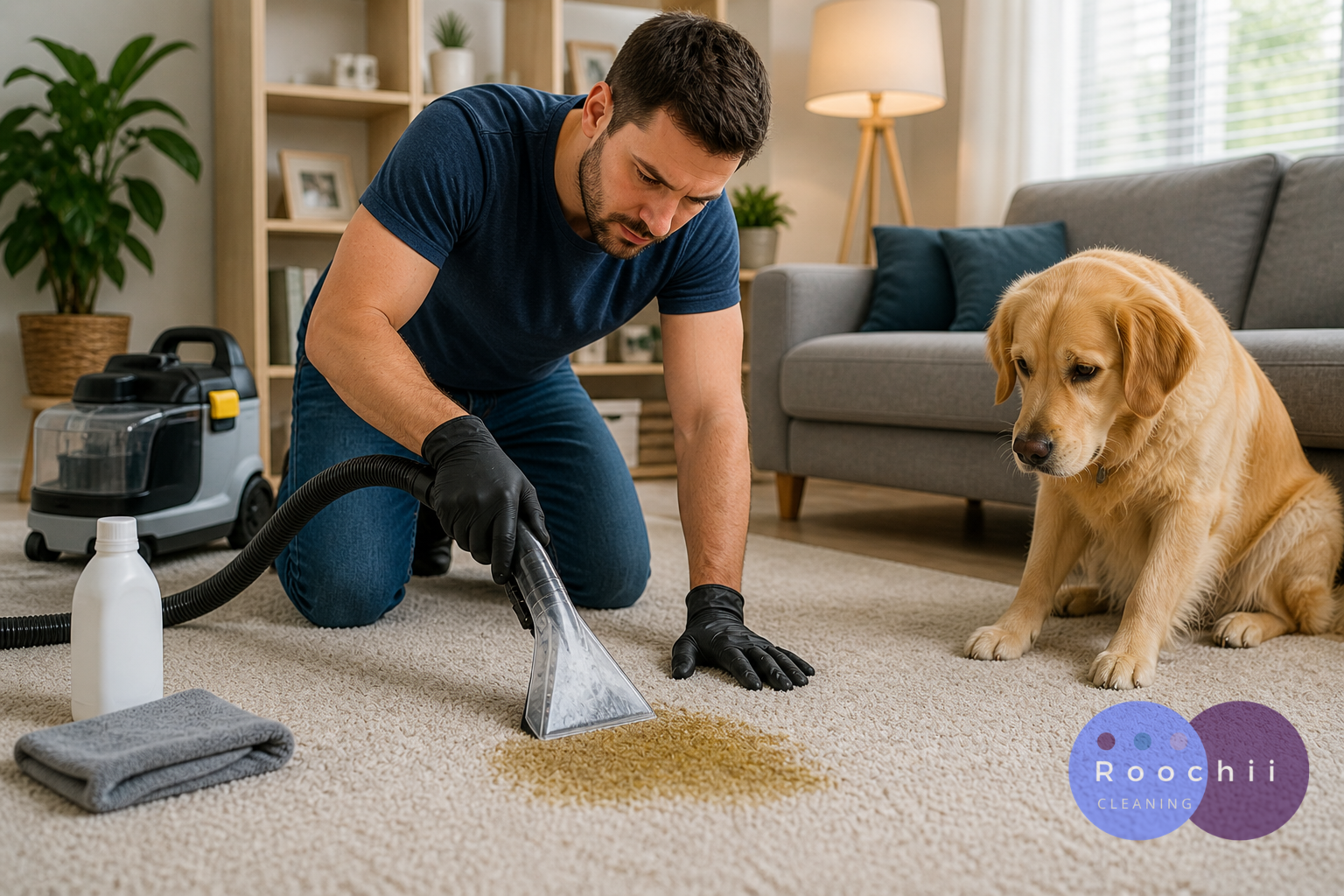
Person using a carpet cleaner to remove dog urine stain from carpet while a dog watches nearby

How to Remove Dog Urine from Carpets Effectively

Dealing with pet accidents at home can be frustrating, especially when you’re left with lingering smells and the constant worry that the odor will come back. If you’re searching for how to remove dog urine from carpets, chances are you’re not dealing with a one-time mess, but an issue that keeps resurfacing.

Dog accidents also have a way of showing up at the worst possible time and rarely in convenient locations. Unfortunately, carpets don’t forget as easily as we’d like them to.

Dog urine is more than just a surface problem. While it may look like a simple stain, it often seeps deep into carpet fibers and padding. This is why odors can persist even after cleaning, and why some spots seem to reappear over time, especially in humid conditions. What you see on the surface is often only a small part of what’s actually there.

Improper cleaning can make things worse. Using the wrong products or techniques can reactivate odors, spread the stain further, or push urine deeper into the carpet layers. In some cases, it can even encourage repeat marking, as dogs are drawn back to areas where they can still detect scent traces.

Understanding how to remove dog urine from carpets properly can make the difference between temporary relief and a lasting solution. The sections below walk you through exactly what to do based on the type of stain, how deep it has spread, and how to prevent the problem from coming back.

Table of Contents   

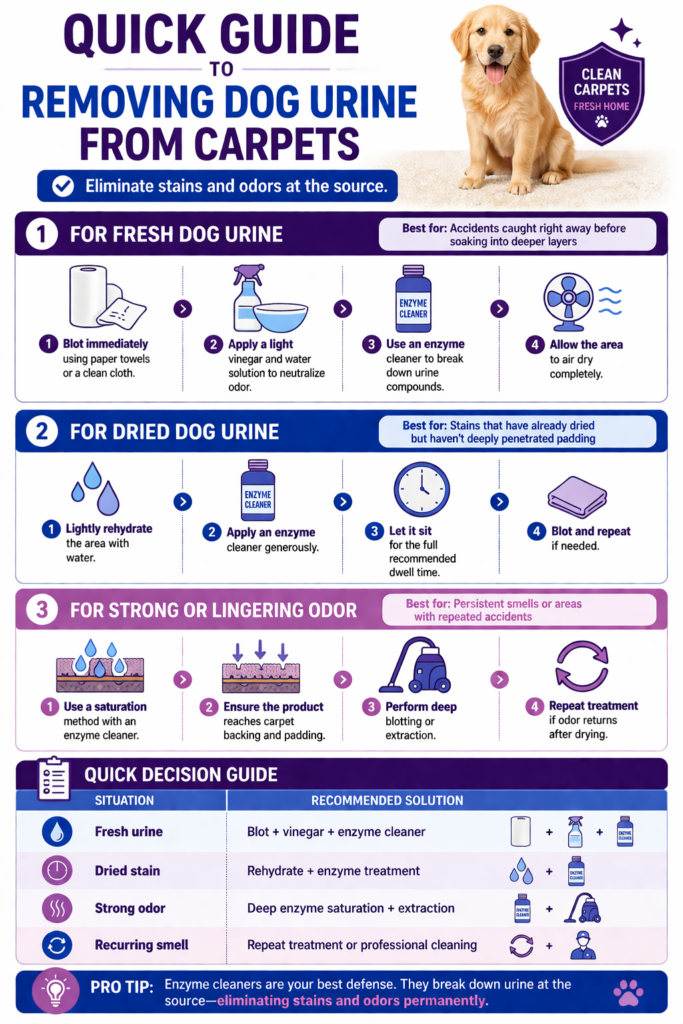
Quick guide showing how to remove dog urine from carpets using steps for fresh stains, dried urine, and strong odor removal

Why Dog Urine Is So Difficult to Remove from Carpets  

Dog urine is difficult to remove because it doesn’t stay on the surface. It spreads through multiple layers of the carpet system and leaves behind chemical compounds that standard cleaning methods cannot fully eliminate.

To understand why odors persist, it helps to break the problem down into three key factors: physical penetration, chemical composition, and environmental reactivation.

What Happens When Urine Soaks Into Carpet  

When a dog urinates on a carpet, the liquid quickly spreads beyond the visible area.

Carpet fibers absorb moisture rapidly, especially in high-traffic areas where fibers are already compressed. From there, urine moves into the carpet backing, which traps liquid and makes extraction more difficult.

If not treated properly, the urine continues downward into the padding. Carpet padding is highly absorbent and can hold both moisture and odor-causing compounds long after the surface appears dry.

In more severe cases, urine can reach the subfloor. At this stage, contamination extends beyond soft materials and may affect wood or concrete, making odor removal significantly more complex.

The Chemical Reason Odors Don’t Go Away  

Dog urine contains several compounds that contribute to persistent odor. Urea begins to break down shortly after deposition, releasing ammonia and creating a strong smell. As the liquid dries, uric acid forms crystals that bind tightly to carpet fibers and underlying materials. These crystals are not water-soluble, which means they cannot be removed with basic cleaning methods alone.

At the same time, bacteria feed on the remaining organic material. This ongoing microbial activity continues beneath the surface and produces additional odor even after the carpet looks clean. Because of this, removing the odor requires breaking down the compounds rather than cleaning the surface alone.

Why the Smell Keeps Coming Back  

Even after cleaning, odors can return if any residue remains.

Humidity plays a major role in this. Moisture in the air can reactivate dried uric acid crystals, causing them to release odor again. This is why carpets may smell worse on humid days or after light cleaning.

Incomplete extraction is another common cause. If urine has reached the padding or backing and isn’t fully treated, small amounts of residue can continue to produce odor over time.

Some cleaning products also mask smells instead of removing them. While this may provide temporary relief, the underlying compounds remain and eventually resurface.

How to Remove Dog Urine from Carpets (Step-by-Step by Situation) 

The best method depends on how old the stain is and how deeply it has spread.

Using the right approach for each situation makes full removal much more likely.

A. How to Remove Fresh Dog Urine from Carpets 

Prompt, methodical action is critical to prevent urine from penetrating deeper layers and becoming a long-term odor source. Follow these steps for effective removal:

  1. Blot Immediately to Limit Absorption: Start by using paper towels or a clean, absorbent cloth as soon as the accident occurs. Apply firm, even pressure to draw out as much liquid as possible. Remember not to scrub, as this forces urine deeper into the carpet fibers and backing.
  2. Extract Thoroughly from the Surface Layer: Continue blotting with fresh towels until little to no moisture transfers. For better results, stand on the towel briefly to increase downward pressure and improve absorption.
  3. Apply a Neutralizing Solution: Next, apply a 1:1 mixture of water and white vinegar. Lightly apply, as excess moisture can push contaminants further down. Let the solution sit for a few minutes to interact with the affected area.
  4. Use an Enzymatic Cleaner for Complete Breakdown: Apply a pet-specific enzymatic cleaner according to the manufacturer’s instructions. Ensure the product reaches the same depth as the urine contamination for full effectiveness.
  5. Allow Complete Drying: Let the area air dry fully before use. The Centers for Disease Control and Prevention recommends this, since proper drying prevents microbial growth and reduces the risk of lingering or reactivated odors.

Taking these steps immediately and correctly significantly reduces the likelihood of permanent staining or recurring odor.

B. How to Remove Dried Dog Urine from Carpet 

Dried urine presents a more complex challenge because the liquid has evaporated, leaving behind concentrated residues and uric acid crystals bonded to the carpet structure.

To remove it effectively, the dried residue needs to be reactivated and broken down.

  1. Rehydrate the contaminated area. Lightly apply water to the affected spot to dissolve and loosen dried residues.
  2. Once rehydrated, apply an enzymatic cleaner generously. Use a high-quality enzyme-based cleaner designed for pet urine. Ensure the product penetrates to the same depth as the original contamination.
  3. Let the cleaner sit for the full recommended dwell time. Do not rush the process; enzymes require time to fully digest odor-causing compounds. Follow the recommended dwell time precisely as it’s critical for breaking down uric acid crystals and organic matter.
  4. Perform deep blotting and extraction. Use clean, absorbent towels to apply firm, repeated pressure. Focus on drawing moisture out of both the fibers and the underlying layers.
  5. Repeat as necessary. Stubborn or heavily concentrated areas may require multiple treatment cycles. Each pass further reduces residual contamination and odor potential.
  6. Verify after complete drying. Inspect the area once fully dry by smelling it at close range. Recheck under humid or warm conditions, as these can reveal any remaining uric acid activity.

C. How to Remove Old Dog Urine from Carpet and Padding 

Older urine contamination typically extends beyond the carpet surface into the backing and padding, requiring more aggressive and comprehensive remediation.

  1. Assess the Extent of Contamination: Persistent or recurring odors indicate deep saturation. Strong, concentrated smells are often a sign that padding and possibly subfloor materials are affected.
  2. Use a Saturation Cleaning Method: Apply an enzymatic cleaner liberally enough to reach the full depth of the original urine penetration. Surface-level application is insufficient.
  3. Allow Extended Dwell Time: Deep contamination requires longer contact time for enzymes to break down embedded compounds fully.
  4. Perform Deep Extraction: Use repeated blotting or a wet extraction method to remove liquid from the carpet backing and padding. Professional-grade extraction equipment may be necessary for thorough removal.
  5. Evaluate the Need for Padding Replacement: If odors persist after multiple treatments, the padding has likely absorbed irreversible contamination. In such cases, removing and replacing the affected padding is often the only reliable solution.
  6. Confirm Results Under Real Conditions: After drying, reassess the area in both dry and humid environments. Any return of odor indicates residual contamination that may require further treatment or material replacement.

Addressing old urine damage effectively often requires a combination of chemical treatment and physical remediation to fully eliminate odor at its source.

Quick Guide to Removing Dog Urine from Carpets  

If you need a quick, simple reference, use this guide to choose the right cleaning approach for your situation.

For Fresh Dog Urine  

  • Blot immediately using paper towels or a clean cloth
  • Apply a light vinegar and water solution to neutralize odor
  • Use an enzyme cleaner to break down urine compounds
  • Let the area air dry fully before use 

Best for: Accidents caught right away before soaking into deeper layers

For Dried Dog Urine  

  • Lightly rehydrate the area with water
  • Apply an enzyme cleaner generously
  • Let it sit for the full recommended dwell time
  • Blot and repeat if needed

Best for: Stains that have already dried but haven’t deeply penetrated the padding

For Strong or Lingering Odor  

  • Use a saturation method with an enzyme cleaner
  • Ensure the product reaches carpet backing and padding
  • Perform deep blotting or extraction
  • Repeat treatment if odor returns after drying

Best for: Persistent smells or areas with repeated accidents

Using the right approach for each situation helps prevent the problem from getting worse and reduces the need for repeated cleaning.

How to Remove Pet Urine Odor from Carpet Permanently

Permanent elimination of pet urine odor requires more than surface-level cleaning. Effective removal comes down to neutralizing the compounds at their source.

Enzyme Cleaners vs. Household Solutions 

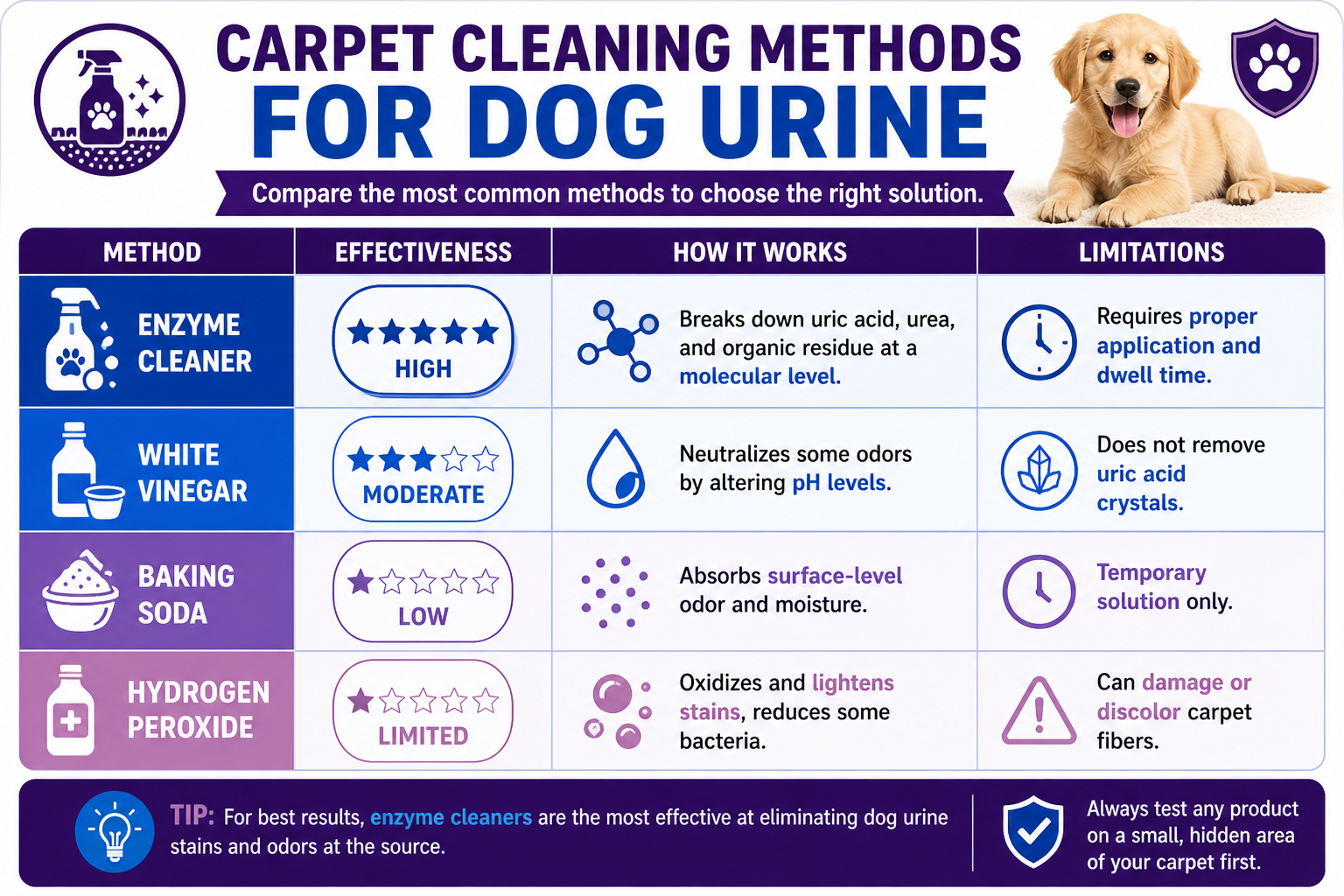
Choosing the right cleaning method is critical for permanent odor removal. While many household solutions can reduce surface-level smells, they do not address the underlying chemical compounds that cause persistent odor.

Below is a clear comparison of the most common options and how they perform.

Infographic showing how to remove dog urine from carpets comparing enzyme cleaner, vinegar, baking soda, and hydrogen peroxide methods

Key Takeaways

  • Enzyme cleaners are the only solution that removes the source of the odor, not just the smell
  • Household solutions may help with fresh or mild stains, but are not reliable for deeper contamination
  • Using the wrong method can lead to temporary results and recurring odor

Proper Application Still Matters

Even the most effective product will fail if not applied correctly. For best results:

  1. Make sure the cleaning reaches as deep as the urine has spread.
  2. Give the cleaner enough time to break down the compounds fully.
  3. Avoid over-wetting, which can spread contamination
  4. Let the area air dry naturally to allow continued enzyme activity

How to Detect Hidden Dog Urine in Carpet  

Not all pet urine contamination is visible on the surface.

In many cases, urine penetrates into carpet fibers, backing, padding, or even the subfloor, leaving behind residues that continue to produce odor long after the area appears clean. Vacuuming may help, but not in all cases.

Detecting these hidden spots is essential to fully eliminate recurring smells and prevent re-marking behavior.

A. Using a UV Blacklight (Fluorescence Detection Method) 

A UV blacklight is one of the most effective tools for identifying older or hidden urine deposits that are not visible under normal lighting conditions.

How it works:

  • Urine contains compounds that can fluoresce under ultraviolet (UV-A) light.
  • When exposed to a blacklight in a dark environment, these residues may appear as glowing yellow, green, or pale white patches, depending on age and surface type.

Proper inspection method:

  1. Turn off all lights and darken the room as much as possible.
  2. Slowly scan the carpet using a UV blacklight held close to the surface.
  3. Move methodically to avoid missing faint or scattered spots.
  4. Mark any suspicious areas for further cleaning or testing.

Where to focus attention:

  • Carpet edges and baseboards (common “boundary marking” zones)
  • Corners and low-traffic hidden areas
  • Under furniture or along furniture legs
  • Entryways and hallways
  • Any previously soiled or repeatedly cleaned locations

Dogs often return to the same spots due to lingering scent markers, even if the area appears clean to humans. Repeated fluorescence in the same location typically indicates deep or incomplete previous cleaning.

B. Moisture & Odor Detection Techniques 

Because urine contamination is often embedded below the visible surface, physical and environmental cues are just as important as visual inspection.

1. Odor-based confirmation (dry vs. humid conditions) 

Check the area only after the carpet is fully dry. Lingering or re-emerging odor often indicates that uric acid crystals are still present beneath the surface.

Smells may be faint when dry but become stronger over time as residues continue to break down.

2. Humidity reactivation test 

Moisture in the air can reactivate dried urine deposits.

If odor becomes more noticeable during rainy weather, high humidity, or steam exposure, it strongly suggests deep contamination remains in the carpet system and may need professional help.

This is one of the most reliable indicators of incomplete removal.

3. Tactile and moisture checks 

Pressing lightly on the carpet may reveal subtle dampness or stiffness in affected areas.

Repeated contamination can also cause localized texture changes due to residue buildup in backing or padding.

4. Behavioral cues from pets 

Dogs have a strong ability to detect residual scent even when humans cannot.

Signs of incomplete removal include:

  • Repeated marking in the same location
  • Hesitation or frequent sniffing in specific areas
  • Returning to previously cleaned spots shortly after treatment

Even when the correct cleaning methods are used, odors can persist if some urine deposits were missed or never fully treated. Dog urine doesn’t always stay in visible areas, and contamination can spread beyond what you can see on the surface.

In many cases, lingering odor is not caused by ineffective cleaning but by incomplete detection. If even a small amount of residue remains hidden in the carpet, backing, or padding, it can continue to produce odor and trigger repeat marking behavior.

Before repeating the cleaning process, it’s important to identify all affected areas. Detecting hidden urine is often the missing step in achieving complete and permanent odor removal.

What to Do If Dog Urine Smell Still Won’t Go Away  

Even after following the correct cleaning steps, dog urine odor can sometimes persist or return. This usually means some contamination is still present beneath the surface.

Understanding the cause of the odor is key to resolving it effectively. The scenarios below outline the most common situations and what to do in each case.

If the Smell Returns After the Carpet Dries  

If the odor disappears while the carpet is damp but comes back after drying, uric acid crystals are likely still present. These residues become more noticeable as moisture evaporates.

What to do:

  • Reapply an enzyme cleaner, ensuring it reaches the full depth of the contamination
  • Allow proper dwell time and avoid rushing the drying process
  • Repeat treatment until the odor no longer returns after drying

If the Stain Is Gone but the Odor Remains  

A clean-looking surface does not always mean the problem is resolved. Odor without visible staining usually indicates that urine has reached the backing or padding.

What to do:

  • Use a saturation method with an enzyme cleaner to reach deeper layers
  • Perform deep blotting or extraction after treatment
  • Consider padding replacement if the odor persists after multiple attempts

If the Smell Gets Worse After Cleaning  

A stronger odor after cleaning often indicates over-wetting or improper technique. Excess moisture can spread contamination and reactivate residue.

What to do:

  • Stop adding excess liquid
  • Focus on extraction and thorough drying
  • Instead, apply cleaning solutions in controlled amounts rather than soaking

If Your Dog Keeps Returning to the Same Spot

Repeat marking is usually caused by lingering scent markers that are still detectable to your pet.

What to do:

  • Re-clean the area using an enzyme-based cleaner
  • Ensure complete odor removal rather than masking
  • Limit access to the area during retraining

If the Smell Appears During Humid Weather

Humidity can reactivate residual urine compounds that were not fully removed. This often indicates deeper contamination.

What to do:

  • Apply a deeper enzyme treatment targeting underlying layers
  • Use detection methods to identify missed areas
  • Consider professional cleaning if the issue continues

If Multiple Cleaning Attempts Fail  

Repeated failure to eliminate odor suggests that contamination has extended beyond surface layers.

What to do:

  • Use professional hot water extraction
  • Consider enzyme injection treatments
  • Replace affected padding if necessary

Why Troubleshooting Matters

Dog urine issues vary depending on how deeply the contamination has spread. Identifying the cause of lingering odor allows you to apply the correct solution instead of repeating ineffective methods.

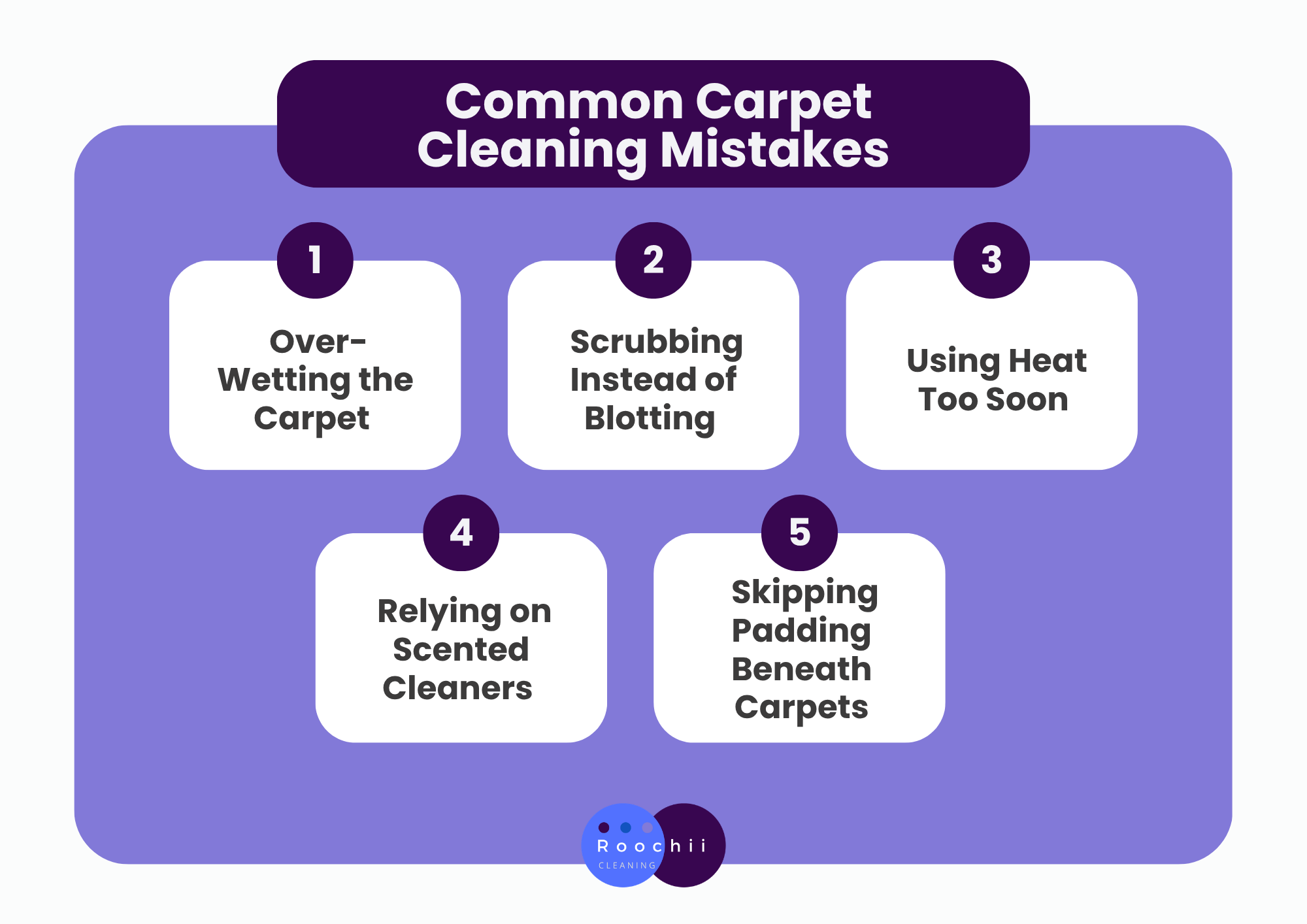
Common Carpet Cleaning Mistakes That Make Dog Urine Worse

Common mistakes to avoid when learning how to remove dog urine from carpets including over-wetting, scrubbing, and using heat too soon

When dealing with dog urine, even well-intentioned cleaning efforts can make the problem worse.

Many lingering stains and odors aren’t caused by the urine itself, but by how the carpet was cleaned afterward. Avoiding these common mistakes can save your carpet from permanent damage and recurring smells.

A. Over-Wetting the Carpet 

One of the most common mistakes is using too much liquid. While it may seem logical to “flush out” the urine, excess moisture can:

  • Push urine deeper into the carpet padding
  • Spread the stain beyond the original area
  • Create conditions for mold or mildew

Always use the minimum amount of solution needed and focus on blotting moisture out rather than soaking it in.

This has happened to a a case where repeated over-wetting caused deeper contamination after repeatedly soaking a small dog urine spot with water and household cleaner. Although the surface looked clean, a strong odor kept returning. Our inspection showed the urine had been pushed into the carpet padding due to over-wetting. After a targeted deep extraction and odor-neutralizing treatment, the smell was fully removed. This is something surface cleaning alone couldn’t achieve.

B. Scrubbing Instead of Blotting 

Aggressive scrubbing can damage carpet fibers and actually drive urine deeper into the carpet. It can also cause the stain to spread and fray the fibers, making the affected area more noticeable.

Instead, blot gently but firmly and work from the outside of the stain toward the center. It’s also important to use clean towels to avoid reintroducing residue.

C. Using Heat Too Soon 

Heat can permanently set urine stains and odors.

It causes urine proteins and crystals to bind more tightly to carpet fibers, making odor removal much harder. This happens because heat accelerates chemical reactions, as stated in a study about biofilm microbes.

Always remove urine and odor completely before using any heat-based cleaning method.

 D. Relying on Scented Cleaners or Deodorizers 

Scented cleaners may make a carpet smell better temporarily, but they don’t remove the urine itself.

Once the fragrance fades, the odor often comes back stronger.

Effective cleaning focuses on:

  • Neutralizing urine compounds
  • Breaking down bacteria
  • Removing residue, not covering it up

E. Skipping the Padding Beneath the Carpet 

Even if the surface looks clean, urine may still be trapped in the padding underneath. Ignoring this layer is a major reason odors return.

If you notice persistent smells and repeated accidents in the same area, it’s likely the padding has been affected and needs deeper treatment.

DIY vs Professional Dog Urine Carpet Cleaning 

Not all situations require the same level of cleaning. Knowing when to handle it yourself saves time and effort.

When DIY Methods Are Enough 

DIY cleaning can be highly effective, but only when the contamination is limited in depth and addressed promptly. The key factor is how quickly the urine is treated and whether it has had time to penetrate beyond the carpet fibers.

A. Fresh accidents (best-case scenario) 

DIY methods are most successful when urine is cleaned immediately after it occurs. Rapid response significantly reduces the risk of absorption into carpet backing and padding.

Early intervention prevents uric acid from crystallizing, which is what typically causes long-term odor issues.

B. Small, surface-level stains

Light contamination that has not fully soaked through the carpet structure can often be handled at home.

These cases typically respond well to proper blotting combined with enzymatic cleaner application.

When treated correctly, surface stains rarely result in persistent odor problems.

C. No lingering or returning odor after drying 

A reliable indicator that DIY treatment was sufficient is complete odor resolution once the area is fully dry. The absence of smell over time suggests that contamination did not reach deeper layers.

If no re-emergence of odor occurs after 24–48 hours under varying humidity, the issue is likely fully resolved.

Signs You Need Professional Extraction 

Some situations go beyond basic cleaning methods. Recognizing these signs helps prevent wasted effort.

  • Repeated odor after cleaning suggests deeper contamination. Surface methods may no longer work.
  • Multiple incidents build up over time. This increases the difficulty of complete removal.
  • Deep padding contamination requires specialized equipment. Large affected areas also need professional help.

What Professionals Actually Do 

Professional cleaning is designed for situations where contamination has gone beyond the surface and into the carpet system itself. In these cases, the goal isn’t just to clean what you can see, but to fully remove what’s trapped underneath to prevent odor from returning.

Deep extraction beyond surface cleaning 

Professional technicians use hot water extraction (often referred to as steam cleaning) to pull moisture, urine residues, and bacteria from deep within carpet fibers, backing, and in some cases, the upper layers of padding. This level of extraction is difficult to achieve with household equipment and is key to reducing long-term odor issues.

Targeted enzymatic treatment at the source 

Instead of applying cleaners only to the surface, professionals can inject or saturate enzymatic solutions deeper into affected areas.

This allows the enzymes to directly break down uric acid and organic matter where the contamination actually sits, rather than just treating surface residue.

Thermal fogging for widespread or persistent odor

In cases where odor has spread or lingered despite cleaning, thermal fogging may be used. This process disperses deodorizing agents in a fine mist that can penetrate hard-to-reach areas, helping neutralize odor particles that have settled beyond the carpet itself.

Padding removal in severe cases 

When urine has soaked into carpet padding and repeatedly caused odor issues, cleaning alone may not be enough.

In these situations, replacing the affected padding is often the most reliable way to fully eliminate contamination and prevent the smell from returning.

How to Prevent Dogs from Urinating on Carpet Again  
Preventing repeat accidents is just as important as removing the stain itself. Even after cleaning, dogs may return to the same spot if scent markers remain or if underlying behavioral triggers are not addressed.

A. Fully Eliminating Scent Markers

Dogs rely heavily on scent to identify areas they have previously marked. Even small traces of urine that are not fully removed can encourage repeat behavior.

Incomplete cleaning leaves behind odor molecules that are often undetectable to humans but still noticeable to pets. This is why enzyme cleaners are essential. They break down urine compounds at the source and reduce the likelihood of repeat marking.

B. Why Dogs Return to the Same Spot

Dogs do not return to the same area randomly. Repeat accidents are often linked to scent memory and habit formation.

When a dog detects even a faint trace of previous urine, it signals that the location is acceptable for elimination. Over time, this can create a pattern that becomes difficult to break without proper cleaning and behavior correction.

Environmental factors can also contribute, including:

  • Changes in routine
  • Stress or anxiety
  • Territorial marking behavior
  • Incomplete house training

Understanding these triggers helps address the root cause rather than just the symptom.

C. Practical Strategies to Prevent Repeat Accidents

Preventing repeat incidents requires a combination of proper cleaning and consistent reinforcement.

  • Clean accidents thoroughly using enzyme-based solutions to eliminate scent cues
  • Reinforce positive behavior with consistent routines and rewards
  • Limit access to previously affected areas during retraining
  • Monitor high-risk areas such as corners, entryways, and near furniture
  • Address stress-related triggers by maintaining a stable environment

Consistency is key. Preventing repeat accidents is not just about cleaning once, but about maintaining both a clean environment and predictable routines for your pet.

Long-term success depends on combining effective cleaning with behavioral awareness. When both are addressed together, it becomes much easier to prevent recurring accidents and maintain a cleaner home.


Conclusion: The Right Way to Remove Dog Urine from Carpets for Good 

Effectively removing dog urine from carpets depends on understanding how deeply it has penetrated and choosing the correct method accordingly. Surface cleaning alone is often insufficient, as urine can quickly move beyond visible fibers into the backing and padding where odor becomes trapped.

A successful approach requires matching the cleaning method to the level of contamination. Enzyme-based cleaners are essential because they actively break down uric acid, urea, and bacteria rather than simply masking odor. Proper application, including adequate dwell time and reaching the full depth of the affected area, is critical for lasting results.

Timing also plays a major role. The sooner urine is treated, the less chance it has to crystallize and spread deeper into the carpet system. Delayed cleaning significantly increases the difficulty of full removal and the likelihood of recurring odor.

If odor continues after multiple treatments or returns under humid conditions, it often indicates deeper contamination that may require professional extraction or padding replacement. With the right combination of early action, proper products, and thorough technique, long-term odor elimination is achievable.

FAQ

Frequently Asked Questions About How to Remove Dog Urine from Carpets

Leave a Reply

Your email address will not be published. Required fields are marked *