How Often to Clean Dishwasher: Maintenance Schedule & Cleaning Guide

man rinsing a dishwasher filter under running water in a sink while performing routine maintenance and learning how often to clean dishwasher filters

Why Dishwasher Cleaning Matters

Dishwashers are built to clean plates, bowls, and utensils every day. Yet the machine itself slowly collects grease, soap residue, and tiny food particles. After weeks of use, those leftovers can lead to unpleasant smells, cloudy dishes, and reduced washing performance.

Many homeowners assume the dishwasher stays clean because it runs with hot water and detergent. Unfortunately, that is not the case.

Filters trap debris, spray arms collect buildup, and hard water minerals also settle inside the machine.

That leads to a common question in many kitchens: how often to clean dishwasher parts to keep everything working properly? The answer depends on the component. Some areas need weekly attention, while others only need cleaning every few months.

This article explains a simple maintenance routine for keeping your dishwasher clean. Keep reading to learn how often to clean dishwasher components and how to keep the appliance working efficiently.

Table of Contents

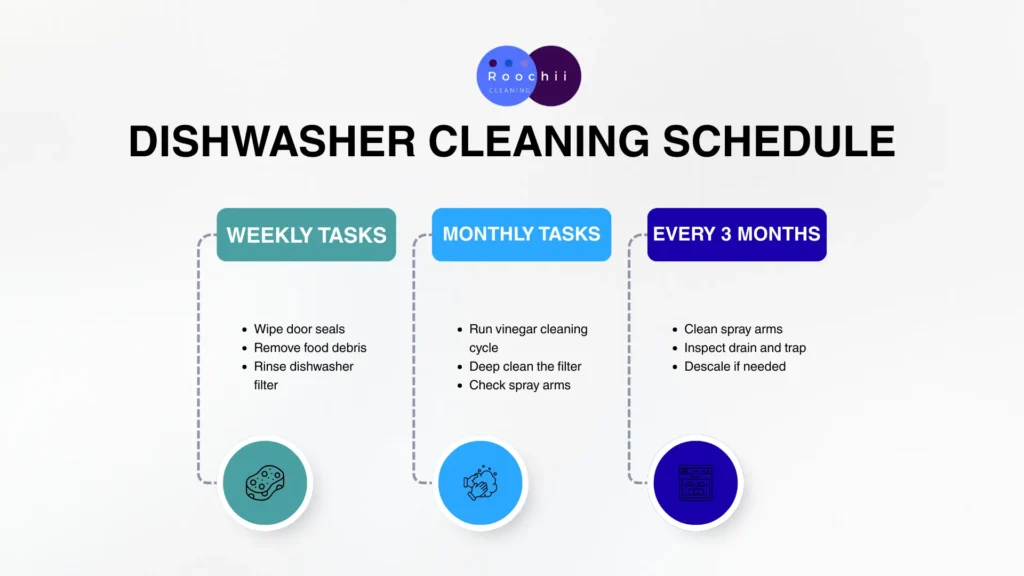
how often to clean dishwasher maintenance schedule infographic showing weekly tasks monthly cleaning cycle and quarterly deep cleaning steps

How Often to Clean Dishwasher (Recommended Cleaning Schedule)

Dishwashers contain several components that require different cleaning intervals. Filters collect food particles quickly, while spray arms and drains accumulate debris more slowly.

Following a structured schedule keeps the appliance running efficiently and prevents odors. The key is dividing tasks into weekly, monthly, and quarterly routines.

Weekly Dishwasher Maintenance Tasks

Weekly checks take only a few minutes and prevent larger problems.

Perform these quick tasks:

  • Wipe the door seals and edges using a damp cloth
  • Remove any visible food debris from the bottom of the machine
  • Rinse the dishwasher filter under warm water

Food particles often gather around the filter and door gasket. Cleaning these areas weekly helps prevent odor and bacteria buildup.

Monthly Dishwasher Cleaning Tasks

Monthly maintenance removes grease, detergent residue, and mineral deposits.

Complete the following tasks:

  • Run a cleaning cycle with vinegar or dishwasher cleaner
  • Remove the filter and clean it thoroughly with warm water and a soft brush
  • Check spray arms for clogged holes

A monthly cleaning cycle flushes residue from areas you cannot easily reach. It also helps restore washing performance.

Quarterly Deep Cleaning Tasks

Every few months, perform a deeper inspection of the appliance.

Focus on these steps:

  • Remove and clean spray arms
  • Descale the dishwasher if hard water is present
  • Inspect and clean the drain and trap

Deep cleaning prevents mineral buildup and keeps water flowing freely through the spray arms.

Dishwasher Cleaning Schedule Table

Task

Frequency

Wipe door seal

Weekly

Rinse filter

Weekly

Deep clean filter

Monthly

Run vinegar cycle

Monthly

Clean spray arms

Every 3 months

Descale dishwasher

Every 3–6 months

Why It’s Important to Clean Your Dishwasher Regularly

A dishwasher might look clean after each cycle, but hidden areas tell a different story. Food particles, grease, and detergent residue slowly collect in the system.

Without regular cleaning, the appliance becomes less effective and may develop unpleasant odors.

Food Residue and Grease Build Up

Dishwashers rely on filters to trap food debris. Over time, these particles collect in the filter, spray arms, and drain.

Grease from cooking oils can also stick to interior surfaces. The same grease buildup often affects other appliances, which is why learning how to clean a gas stove top can help keep your entire kitchen cleaner.

Bacteria and Odor Development

Warm, moist environments encourage bacterial growth. When food particles remain inside the machine, they begin to break down and produce unpleasant smells.

Cleaning the filter and running occasional cleaning cycles helps prevent lingering odors.

Reduced Cleaning Performance

A dirty dishwasher cannot wash dishes effectively. Clogged spray arms and blocked filters reduce water pressure.

This often leads to:

  • Cloudy glasses
  • Greasy plates
  • Food particles left on dishes

Routine maintenance restores normal performance.

Long-Term Appliance Damage

Ignoring maintenance can strain internal components. Filters may clog completely, forcing the pump to work harder.

Over time, this stress can shorten the lifespan of the appliance and lead to costly repairs.

How Often Should You Clean Dishwasher Filters?

The dishwasher filter is the most important component to maintain. It traps food particles and prevents them from circulating during the wash cycle.

If the filter becomes clogged, water flow slows down, and dishes remain dirty.

Why Dishwasher Filters Get Dirty

Filters collect several types of residue during normal operation.

Common causes include:

  • Food particles from dishes
  • Grease and cooking oils
  • Mineral deposits from hard water

Without regular cleaning, these materials accumulate and restrict water flow.

Recommended Filter Cleaning Frequency

Most manufacturers recommend the following schedule:

  • Weekly rinse: Remove the filter and rinse under warm water
  • Monthly deep clean: Scrub with a soft brush and mild detergent

Frequent filter cleaning keeps the dishwasher running smoothly.

Step-by-Step Filter Cleaning Process

Cleaning the filter is simple and usually takes less than five minutes.

  1. Remove the bottom rack from the dishwasher.
  2. Locate the filter assembly at the base of the machine.
  3. Twist and lift the filter to remove it.
  4. Rinse it under warm running water.
  5. Use a soft brush to remove stubborn debris.
  6. Reinstall the filter securely.

Keeping the filter clean is one of the easiest ways to maintain washing performance.

Step-by-Step Guide: How to Clean Your Dishwasher Properly

Even with regular maintenance, the dishwasher interior still benefits from occasional deep cleaning. If you need a full walkthrough, this guide explains how to clean a dishwasher step by step. This process removes grease, mineral deposits, and hidden debris.

The following steps outline a simple cleaning routine.
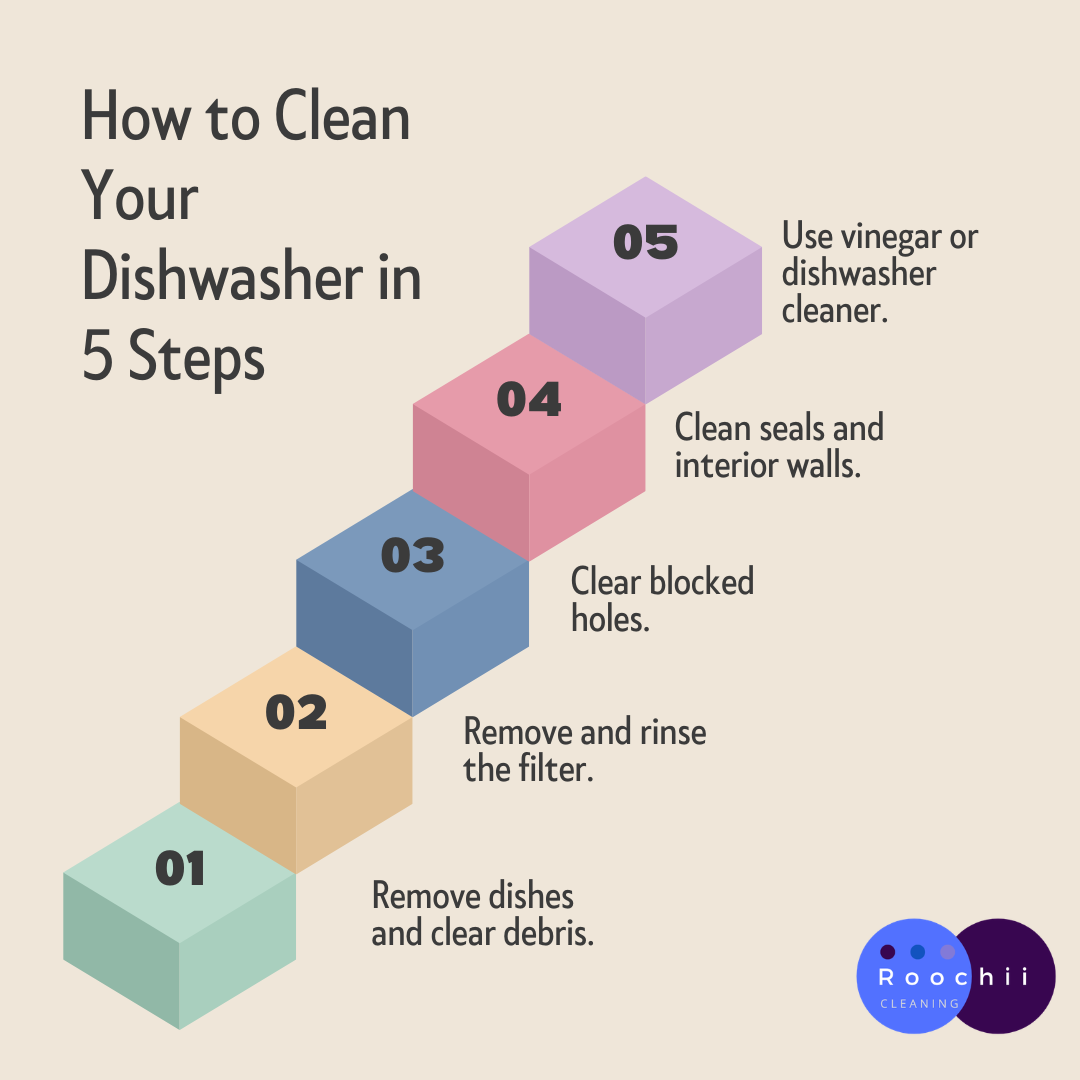
how often to clean dishwasher and how to clean a dishwasher in five steps including removing debris, cleaning the filter, clearing spray arms, wiping seals, and running a vinegar cleaning cycle

Step 1: Empty and Inspect the Dishwasher

Remove all dishes and racks if needed. Check the bottom of the machine for food particles or foreign objects.

Clear any debris before starting the cleaning process.

Step 2: Remove and Clean the Filter

Take out the filter assembly and rinse it thoroughly under warm water. Use a soft brush to remove grease or trapped debris.

Reinstall the filter once it is clean.

Step 3: Clean Spray Arms and Nozzles

Spray arms distribute water throughout the dishwasher. If the holes become clogged, water pressure decreases.

Remove the spray arms and rinse them. Use a toothpick or small brush to clear blocked holes.

Step 4: Clean Door Seals and Interior Walls

Use a damp cloth with mild detergent to wipe the interior walls and rubber door gasket.

Pay attention to corners where debris often collects.

Step 5: Run a Dishwasher Cleaning Cycle

Once the machine is clean, run a hot cycle to flush remaining residue.

You can use:

  • White vinegar placed in a bowl on the top rack
  • Baking soda sprinkled on the bottom of the machine
  • Dishwasher cleaning tablets designed for appliance maintenance

This final step removes grease and leaves the dishwasher fresh.

Hard Water and Limescale: Why Your Dishwasher Needs Descaling

Hard water contains minerals such as calcium and magnesium. These minerals accumulate inside dishwashers and create limescale deposits. 

Homes with hard water often experience faster mineral buildup inside appliances. Over time, limescale can coat spray arms and heating elements, reducing cleaning performance.

Over time, this buildup affects cleaning performance and leaves residue on dishes.

Signs of Hard Water Buildup

You may notice several indicators of mineral deposits:

  • White film on glasses and dishes
  • Chalky residue inside the dishwasher
  • Reduced water pressure from spray arms

These signs suggest that descaling is necessary.

How to Descale a Dishwasher Safely

Descaling removes mineral deposits from internal components.

Follow these steps:

  1. Empty the dishwasher completely.
  2. Place a bowl of white vinegar on the top rack.
  3. Run a hot water cycle.
  4. Wipe remaining residue from interior surfaces.

Special dishwasher descaling products can also help remove heavy mineral buildup.

How Often to Descale a Dishwasher

The frequency depends on local water hardness.

General recommendations include:

  • Every 3–6 months for areas with hard water
  • Once or twice per year in areas with soft water

Regular descaling keeps spray arms and heating elements functioning properly.

Common Dishwasher Problems Caused by Poor Maintenance

Ignoring maintenance can lead to several common appliance issues.

Clogged Spray Arms

Spray arms contain small holes that distribute water. Removing the spray arms and rinsing them under running water usually clears debris blocking the holes.

Regular cleaning prevents clogs.

Blocked Drain or Filter

A blocked filter prevents water from draining properly. This may lead to standing water and unpleasant odors.

Cleaning the filter usually resolves the issue.

Dishwasher Not Cleaning Properly

Poor washing results often come from clogged spray arms or filters. Cleaning these components usually restores normal water pressure and washing performance.

Routine cleaning restores proper water pressure.

White Residue on Glassware

Mineral deposits from hard water can leave white spots on glasses.

Descaling the dishwasher helps eliminate this problem.

Signs Your Dishwasher Needs Cleaning Immediately

Sometimes the dishwasher signals that cleaning is overdue. Recognizing these warning signs helps prevent larger problems.

Bad Dishwasher Smell

Unpleasant odors often indicate trapped food debris in the filter or drain. These particles begin to break down over time, creating bacteria and unpleasant smells inside the machine.

Cleaning the filter and running a cleaning cycle usually solves the problem.

Cloudy or Greasy Dishes

If dishes appear dull or greasy after washing, the dishwasher may be dirty. Residue inside spray arms or filters can prevent water and detergent from reaching dishes effectively.

Clogged spray arms or mineral buildup can reduce cleaning power.

Standing Water in the Bottom

Water remaining in the base of the machine may signal a clogged drain or filter.

Cleaning these components often restores proper drainage.

Visible Food Debris

Food particles left on the dishwasher floor indicate the filter needs cleaning.

Regular cleaning helps restore normal washing performance.

Preventative Maintenance Tips to Keep Your Dishwasher Clean

Simple habits help reduce buildup and keep the dishwasher running efficiently. Following practical house cleaning tips can also make it easier to maintain kitchen appliances and surfaces.

If you are organizing a broader cleaning routine, this guide explains where to start cleaning your home.

Scrape Dishes Before Loading

Remove large food scraps before placing dishes inside. This reduces debris trapped in the filter.

Load the Dishwasher Properly

Avoid overcrowding the racks. Proper spacing allows water and detergent to circulate freely and reach every surface of the dishes.

Use the Right Detergent

Choose detergents designed for your water hardness level. Incorrect detergent can cause residue buildup. 

Using the correct detergent for your water hardness level helps prevent residue buildup inside the dishwasher.

Run Hot Water Before Starting the Cycle

Running the kitchen tap for a few seconds ensures hot water enters the dishwasher immediately.

Hot water improves grease removal.

Leave the Door Slightly Open After Cycles

Allowing air circulation helps moisture evaporate. This reduces odor and bacterial growth.

Dishwasher Maintenance Checklist

This checklist can also be helpful when preparing your home before moving out of state, since cleaning appliances is often part of a final move-out routine.

Maintenance Task

Frequency

Inspect filter

Weekly

Clean door seals

Weekly

Run cleaning cycle

Monthly

Clean spray arms

Every 3 months

Descale dishwasher

Every 3–6 months


Final Thoughts on Keeping Your Dishwasher Clean and Efficient

Dishwashers make kitchen cleanup easier, but they still require regular care. Grease, food particles, and mineral deposits slowly build up inside the machine.

Following a routine helps prevent odors and keeps dishes washing properly. Weekly filter checks, monthly cleaning cycles, and occasional deep cleaning keep the appliance in good condition.

Once you understand how often to clean dishwasher components, maintenance becomes simple. A few minutes of attention each week can extend the life of the machine and keep dishes coming out clean. If you prefer expert help, professional house cleaning services in Denver can handle appliance and kitchen cleaning for you.

FAQ

Frequently Asked Questions About How Often to Clean Dishwasher

Leave a Reply

Your email address will not be published. Required fields are marked *