Skip to content

How to Get Mold On Fabric With Simple And Effective Ways
Getting Mold Out Of Your Fabric
How to get rid of mold out of fabric? The fastest and safest way is to brush off loose spores outdoors, pre-treat the stains, then dry it thoroughly in direct sunlight.
Mold on fabric is a common problem, whether it’s clothes left in the washer too long, curtains exposed to condensation, or upholstery in a humid room. It often appears as black, green, or white spots and carries that musty odor we all recognize.
Left untreated, mold can weaken fibers, leave permanent stains, and even trigger allergies or respiratory issues.
The good news is that you can remove mold on fabric using some items you have at home. In this article, you’ll learn:
Fast and Effective Methods to Remove Mold from Fabric
If you’re wondering how to get mold stains out of fabric, the key is to act fast. The longer it sits, the deeper it penetrates and the tougher it is to clean. Your approach should depend on the type of fabric and how severe the mold growth is, but with the right method, most stains can be lifted effectively.
Below is a practical step-by-step process you can follow, with alternatives for different levels of contamination.
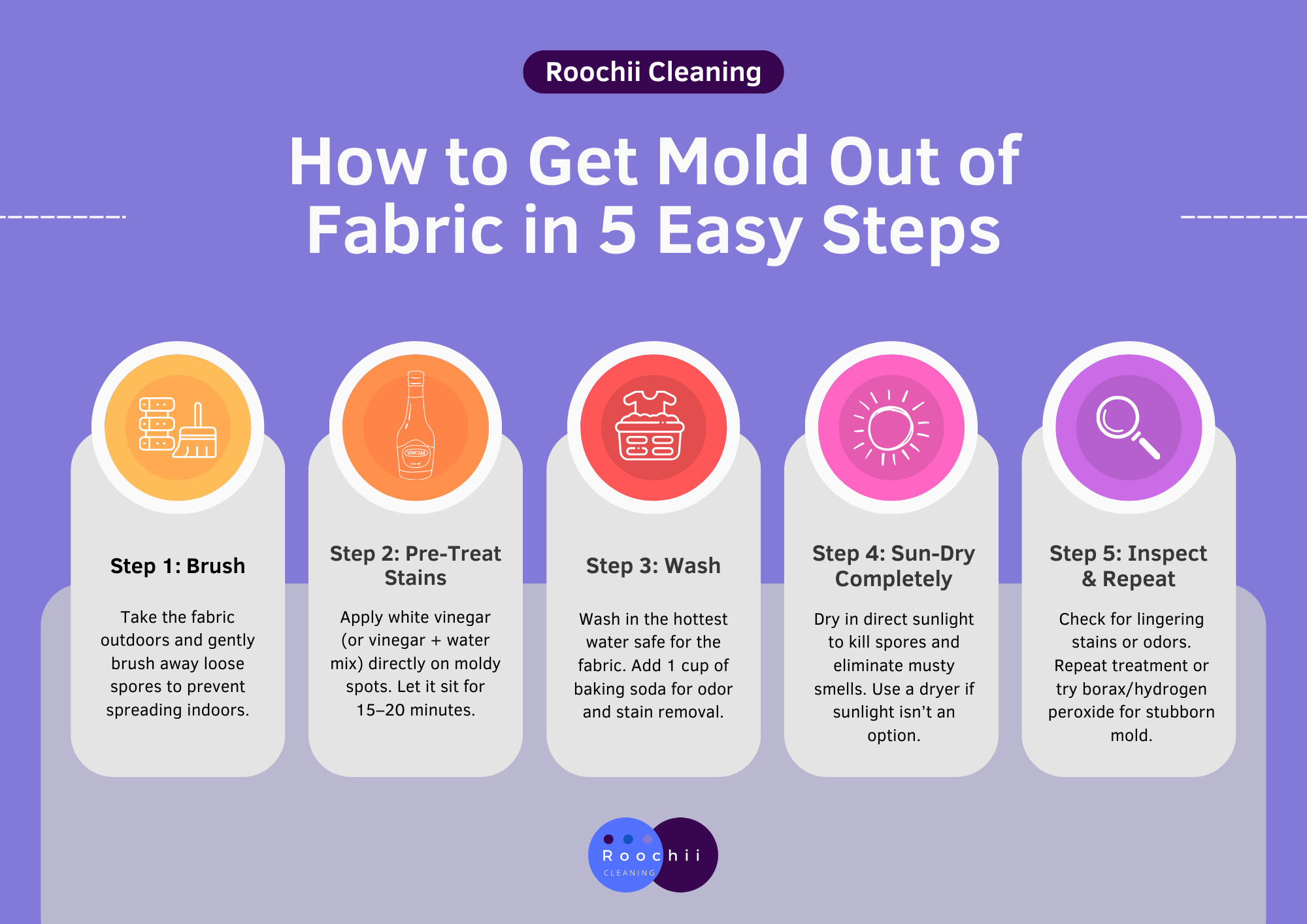
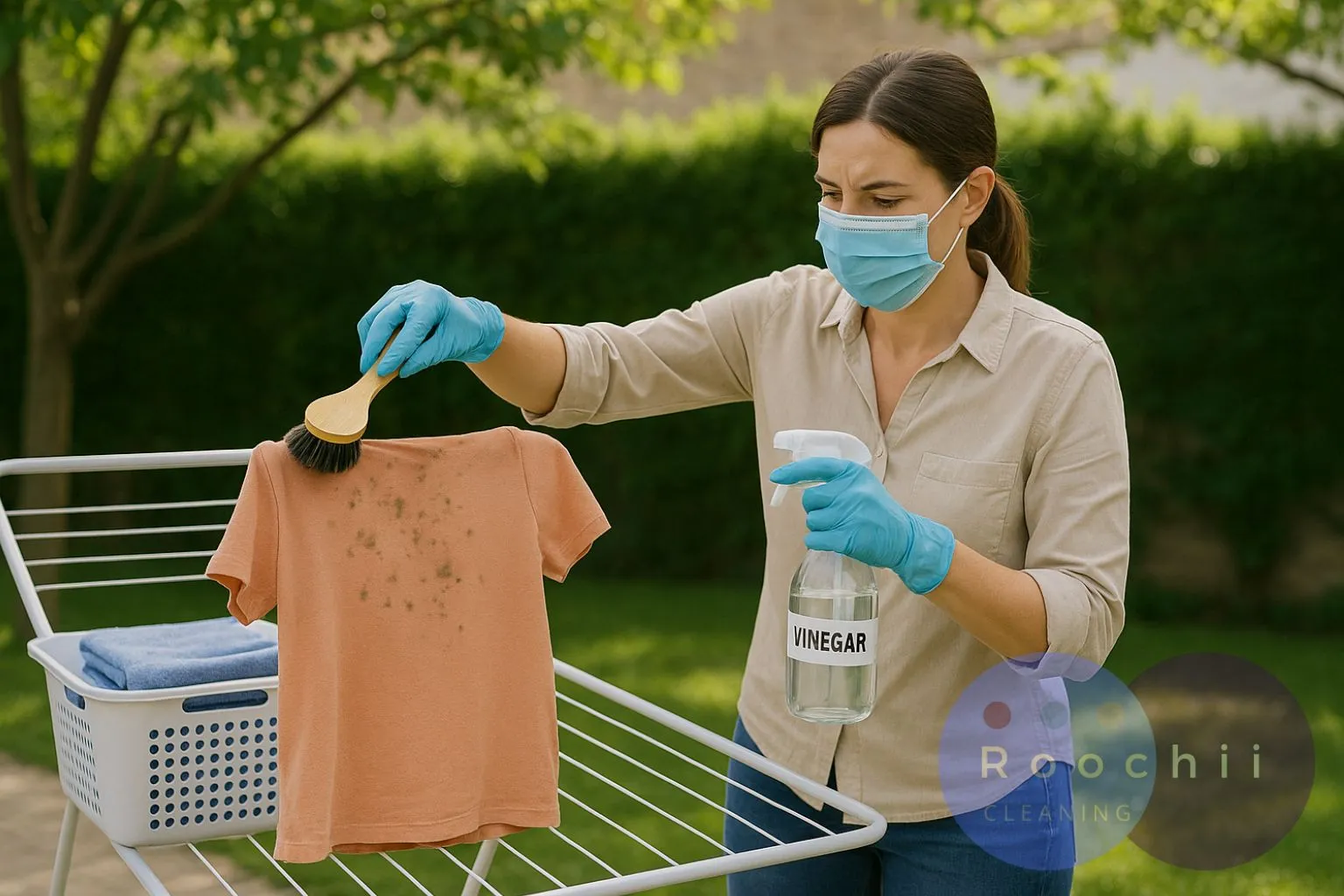
Step 1: Brush Off Loose Mold Outdoors
Before applying any solution, take the fabric outside to prevent spores from spreading indoors.
Although your first thought might be doing this in your laundry room, avoid it! Spores can easily settle into carpets, furniture, and air vents.
Use a soft-bristled brush to gently scrape away as much surface mold as possible.
Pro Tip: If possible, place the fabric on a disposable surface (like old newspaper) that can be thrown away afterward.
Step 2: Pre-Treat the Mold Stains
If you’re dealing with mold on fabric, you’ve got a few solid options. You can try hydrogen peroxide, baking soda with water, or a mold-killing laundry detergent found in most stores.
But among them all, white vinegar stands out as one of the safest and most effective solutions. It’s non-toxic, widely available, and especially good at breaking down mold without damaging most fabrics.
To use white vinegar:
- Mix the Solution – Combine equal parts white vinegar and water in a spray bottle or bowl.
- Apply to the Affected Area – Spray or dab the mixture directly onto the moldy fabric.
- Let It Sit – Allow the solution to sit for 15–20 minutes so the vinegar can break down and kill mold spores.
- Rinse or Wash – After soaking, rinse or launder the fabric as usual to remove any residue and odor.
Vinegar is naturally anti-fungal and works well on most fabrics without causing damage.
For delicate fabrics like silk or wool, use a more diluted solution or test a hidden area first.
Alternative Solutions for Stubborn Mold
If vinegar isn’t enough, try these additional treatments:
Hydrogen Peroxide
- Apply directly – Pour or spray 3% hydrogen peroxide onto the moldy areas.
- Let it sit – Allow it to sit for 10 minutes to disinfect and break down mold spores.
- Rinse & wash – Rinse the fabric thoroughly, then wash as usual.
- Caution – Avoid using on dark or brightly colored fabrics, as peroxide can bleach them.
Borax Treatment
- Dissolve the Borax – Mix ½ cup of borax in a large container of hot water until fully dissolved.
- Soak the Fabric – Submerge the moldy fabric and let it soak for at least 1 hour.
- Wash Normally – After soaking, wash the fabric in your machine as you normally would.
- Air Dry in Sunlight – Whenever possible, dry the fabric outside to help kill lingering spores and odors.
Step 3: Wash the Fabric Thoroughly
After pre-treating, it’s time to wash the fabric. The washing should depend on the fabric you have, and according to the Center for Indoor Air Research, washing with appropriate agents can remove spores and toxins.
- For durable fabrics (cotton, linen, polyester): Wash in the hottest water safe for the fabric, as indicated on the care label. Hot water kills spores more effectively. Add one cup of baking soda to the wash cycle to neutralize odors and lift stains.
- For delicate fabrics: Hand wash in lukewarm water with a gentle detergent. Avoid excessive scrubbing, which can damage fibers.
If the mold smell persists after one wash, repeat the cycle. Sometimes multiple washes are needed for heavy infestations.
Step 4: Dry Fabric in Direct Sunlight
Sunlight is a natural enemy of mold.
After washing, air-dry fabrics outside in full sun if possible. The UV rays kill remaining spores, while fresh air helps eliminate musty odors.
For fabrics that can’t be dried outside, use the dryer on a high-heat setting (if allowed by the care label).
Pro Tip: Never put a fabric back into your closet or drawer until it is 100% dry. Even a little dampness can cause mold to return.
Step 5: Inspect and Repeat if Necessary
After drying, carefully inspect the fabric.
If stains or odors remain, repeat the treatment process. In severe cases, multiple applications may be needed. If the fabric still smells strongly of mold after several washes, it may be too damaged to salvage.
Preventing Mold Growth on Fabric
Once you’ve removed mold, the last thing you want is for it to return. Prevention is just as important as treatment.
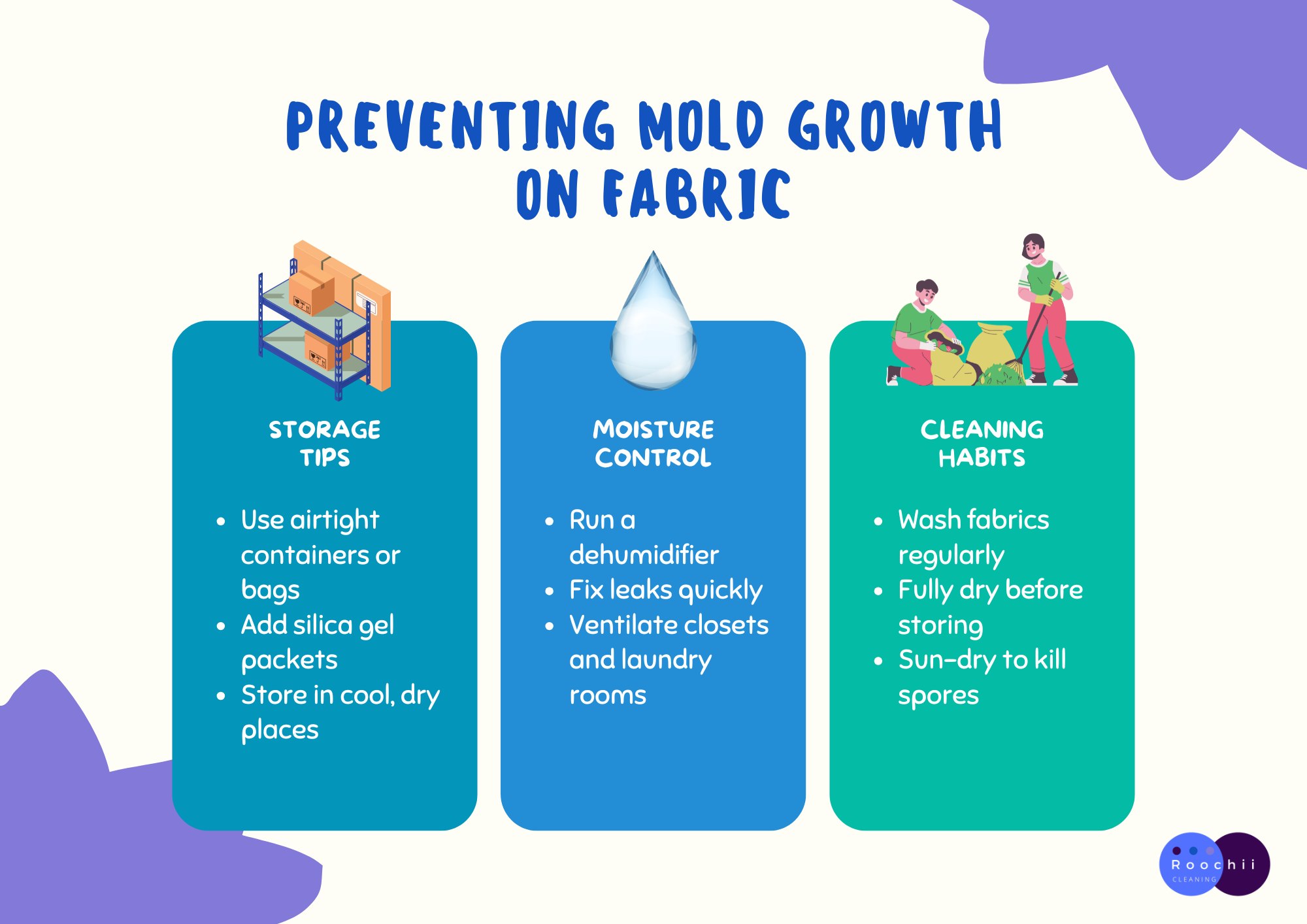
Storage Tips to Prevent Mold Growth on Fabric
- Store fabrics in a cool, dry place.
- Use airtight containers or vacuum-sealed bags for seasonal clothing.
- Add silica gel packets to storage boxes to absorb excess moisture.
Moisture Control to Keep Mold Away
- Run a dehumidifier in damp rooms.
- Fix leaks or condensation issues promptly.
- Ensure proper ventilation in closets and laundry rooms.
Cleaning Habits for a Mold-Free Home
- Wash clothes regularly, especially after sweating.
- Dry fabrics completely before folding or storing them.
- Shake out and sun-dry linens and fabrics periodically, even if they look clean. Exposure to sunlight can significantly decrease fungal growth, as proven in a study from 2014.
While these prevention tips go a long way, sometimes mold problems are linked to bigger household issues like excess humidity, poor ventilation, or general buildup of dust and dirt.
In such cases, scheduling regular home cleaning services from Roochii Cleaning can help maintain a healthier environment and keep your entire home fresh and mold-free.
By creating an environment that mold can’t thrive in, you extend the life of your fabrics and save yourself the hassle of constant cleaning.
Conclusion: Keep Your Fabrics Mold-Free for Good
More than just being an aesthetic issue, mold on fabric can also be a health and safety concern, which means that it needs immediate action. When you learn how to get mold out of clothes and fabrics fast and safely, you can rescue a lot of the stuff you have in your house without causing further damage.
From natural remedies like vinegar and sunlight to stronger solutions like borax and hydrogen peroxide, there’s a method for every type of fabric and level of infestation. More importantly, preventing mold through proper storage, moisture control, and cleaning habits ensures your fabrics stay fresh and safe in the long run.