How to Remove Mold on Towels Easily

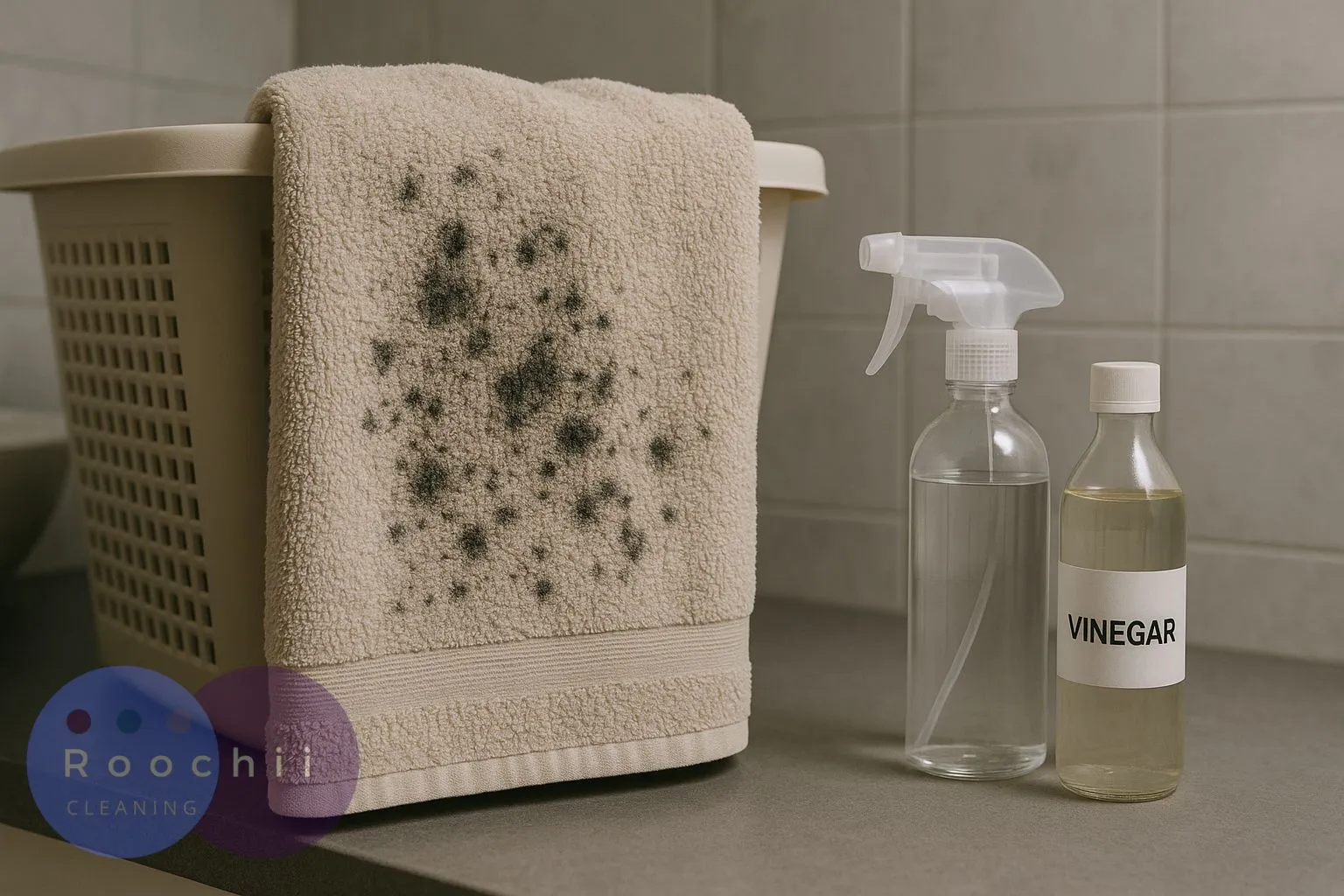
Mold on towels being treated with vinegar and water spray bottles on a bathroom counter.

What Can Black Specks on My Towel Be?

What exactly is mold on towels? Think of it as the unpleasant cousin of freshness: a musty, spotty invader that thrives on damp fibers.

Mold on towels is in the same family of fungi that loves dark, humid spaces. Your towel just happens to be the perfect little vacation spot when it doesn’t get the chance to fully dry.

You’ve probably noticed it creeping in as black or greenish specks along the edges or seams, or worse, that stubborn “wet dog” smell that doesn’t quit even after a wash. It’s mold’s way of saying, “Nice towel, I think I’ll move in.”

The good news is that your towels don’t have to be mold’s permanent home. With the right cleaning methods and a few preventive habits, you can kick mold out for good and get back to that fluffy, fresh-out-of-the-dryer feeling you actually signed up for.

In this article, you’ll learn:

What Causes Mold on Towels? 

Mold isn’t something mystical that appears out of nowhere. It’s simply a fungus that needs three basic things: moisture, warmth, and a food source (which in this case is basically anything organic). Towels check all those boxes.

Here are the main culprits.

A. Damp Towels and Slow Drying Lead to Mold Growth

Every time a towel is used, it soaks up water. That’s exactly its job. The problem: if it stays damp for hours (or overnight) without proper airflow, mold gets to work. Bathrooms tend to stay humid, especially without fans or ventilation.

B. Poor Towel Storage and Air Circulation Cause Mold

If you throw a damp towel into a basket, fold it before it’s fully dry, or press it against other towels in a cramped closet, moisture gets trapped.

Mold loves tight, stagnant spaces.

C. Residue, Fabrics & Buildup  Promote Mold on Towels

Detergents, fabric softeners, body oils, soaps all leave behind films or residues. That residue can trap moisture or even feed microbial life.

Add hard water minerals (like calcium or magnesium) into the mix, and you get scale that locks in dampness.

D. Washing Towels at Low Temperatures Lets Mold Spores Survive

If you always wash towels on cool or delicate settings, you might not kill mold spores lurking inside the fibers. Some spores survive milder cycles.

E. Reusing Towels Without Washing Encourages Mold and Mildew

Using the same towel day after day without washing gives time for mold to slowly colonize. The longer spores have to settle and grow, the harder “cleanup” becomes.

Identifying Mold on Towels 

Spotting mold on towels early can save you time, effort, and sometimes even the towel itself.

Mold is sneaky. Sometimes, it hides in the fibers, showing up only as a faint odor or a subtle texture change. By learning how to recognize the early warning signs of mold and mildew, you can act before the problem spreads to the rest of your laundry.
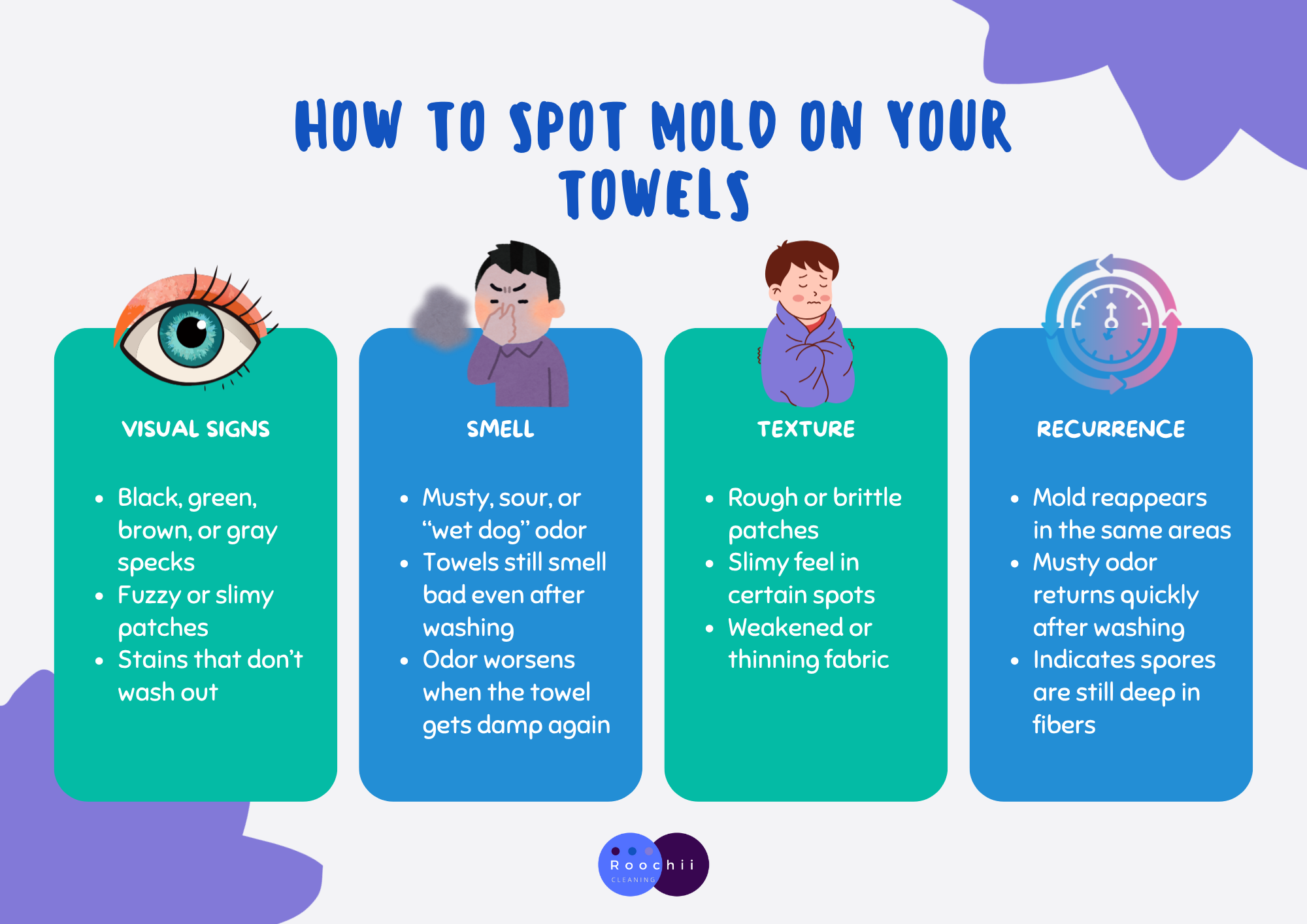
Infographic showing how to identify mold on towels through signs like smell, texture, and stains.

Visual Signs of Mold and Mildew on Towels 

The most obvious clue is what you can see.

Mold on towels doesn’t always look the same, but common appearances include:

  • Dark or discolored spots: Mold often appears as gray, green, black, or brown blotches, typically along seams, edges, or folds where moisture lingers.
  • Fuzzy or slimy texture: While some mold looks like a flat stain, other types may appear fuzzy, slimy, or slightly raised on the surface of the towel.
  • Persistent stains: If you notice patches that don’t wash out with your usual laundry routine, that’s a strong indication of mold spores deep in the fibers.

Tip: Always inspect both sides of the towel. Mold likes to hide in creases or spots that don’t dry properly.

Odor: The Musty Smell of Mold on Towels 

Sometimes you can’t see mold, but you can definitely smell it. That unpleasant, sour, or “wet dog” scent is a telltale sign of mold or mildew.

If a freshly laundered towel smells musty even after drying, the odor is likely from mold spores that survived washing. This is backed up by a study from 2020 that states that if a lingering odor stays on your laundry, it’s due to fungi like mold.

This odor tends to intensify when the towel becomes damp again, which means mold is still present in the fibers.

A healthy, clean towel should smell neutral or fresh. So, anything else might mean there’s an underlying issue.

Texture and Fabric Changes in Moldy Towels 

Mold doesn’t just stain. It also slowly damages the fabric, so you’ll most likely see changes in the texture of your towels.

  • Weakened fibers: The towel may feel thinner in spots where mold has taken hold.
  • Brittleness or rough patches: Mold can make certain areas feel stiff, crunchy, or fragile.
  • Fraying or breakdown: Over time, mold actually eats away at natural fibers like cotton, leading to holes or tearing.

If your once-plush towel now feels tired and scratchy, mold may be partially to blame.

Reappearing Mold on Towels After Washing 

One of the most frustrating signs is when mold keeps coming back after washing:

  • If the same areas of a towel repeatedly develop spots or odor, it means spores weren’t fully killed during previous washes.
  • Recurring mold usually indicates that the towel isn’t drying properly or that spores are hiding deep in the fibers.
  • It can also signal a broader issue, such as mold inside the washing machine or too much humidity in storage areas.

When this happens, it’s a clear sign you need a stronger cleaning method or to rethink how and where you dry and store your towels.

Why Early Detection of Mold on Towels Matters 

The sooner you recognize mold, the easier it is to remove.

Early stains and smells can often be treated with vinegar, baking soda, or hot washes, while long-term infestations may require harsher treatments or even replacement.

And remember: don’t shake moldy towels indoors, as spores can easily spread to your air and other fabrics.

Bottom line: If your towel looks stained, smells musty, feels weak, or keeps getting moldy, it’s time to take action before the problem spreads.

Step-by-Step Guide to Removing Mold from Towels 

If you’ve spotted mold on towels, don’t panic! In most cases, they can be treated with the right combination of cleaning agents, hot water, and proper drying.

The process may take a little extra time compared to a regular wash, but it’s worth it to kill spores, eliminate odors, and restore your towels to freshness.

Here’s a reliable, step-by-step method.

Step 1: Safety First and Initial Prep for Moldy Towels 

Before you dive in, take a few precautions:

  • Work in a ventilated area: Mold spores are airborne, so you should open windows or use an exhaust fan.
  • Wear gloves and a mask: This prevents irritation from both mold and cleaning chemicals.
  • Shake out towels outdoors: Gently shake or brush the towel outside to remove loose spores. Never do this indoors, where spores can spread to other fabrics.

This step might seem minor, but it reduces your exposure and ensures you’re not accidentally spreading the problem further.

Step 2: Pre-Soak Towels in Mold-Killing Solutions 

A simple wash won’t cut it if mold has worked its way deep into the fibers. Pre-soaking is what loosens stains and neutralizes spores before they hit the washing machine. You have several options, depending on what you have at home and the type of towel you’re dealing with:

  • Vinegar soak: Hot water mixed with white vinegar is one of the most effective natural treatments. Let the towel soak for at least half an hour to dissolve buildup and weaken the mold.
  • Hydrogen peroxide: A cup of 3% peroxide diluted in a couple gallons of warm water is great for colored towels, as it disinfects without stripping dye. A study from the University of Ljubljana proves that hydrogen peroxide improved microbial disinfection.
  • Chlorine bleach: For white, bleach-safe towels only. Soak them around 5 to 10 minutes in a diluted bleach solution (¼ cup per gallon of water), then rinse thoroughly.

Step 3: Wash with Heat and Mold-Fighting Boosters 

Once pre-soaked, toss the towels into the washing machine.

Heat is your best friend here, so always select the hottest water temperature that’s safe for the fabric (check the care label).

Add your regular detergent, but boost the cycle with one of these tricks: a cup of vinegar in the rinse, half a cup of baking soda in the wash, or bleach if the towel is bleach-safe.

In severe cases, running two back-to-back cycles is better than risking spores sticking around.

Step 4: Dry Towels Thoroughly 

Drying is the make-or-break step. Even if you’ve killed 99% of the mold, leaving the towel damp will just invite it right back.

Machine drying on high heat works well, but hanging towels outside in full sunlight is even better. UV rays naturally kill lingering spores while the breeze carries away odors.

Whatever method you use, check the towel before folding or storing it. If you feel even a hint of dampness, dry it longer.

Step 5: Tackle Stubborn Cases with Persistence 

Some infestations won’t give up easily. If mold stains remain after one wash, repeat the soaking and washing process. Alternating between vinegar and baking soda cycles often does the trick.

Lingering odor is another sign spores are still present, so don’t ignore it. And if, after multiple attempts, the towel still smells musty or feels weakened, it may be time to admit defeat and replace it. No one wins every battle.

Step 6: Post-Cleaning Care and Safety Tips 

  • Sanitize your washing machine: After cleaning moldy towels, run an empty hot cycle with vinegar or bleach to kill any spores in the drum.
  • Don’t mix chemicals: Never combine bleach with vinegar or ammonia, or vinegar with hydrogen peroxide. It only creates toxic fumes.
  • Use protective care: Always ventilate the room and handle bleach carefully to protect skin and lungs.

By following these steps, you’ll not only remove existing mold but also set the stage for long-term towel freshness.

Preventing Mold Growth on Towels

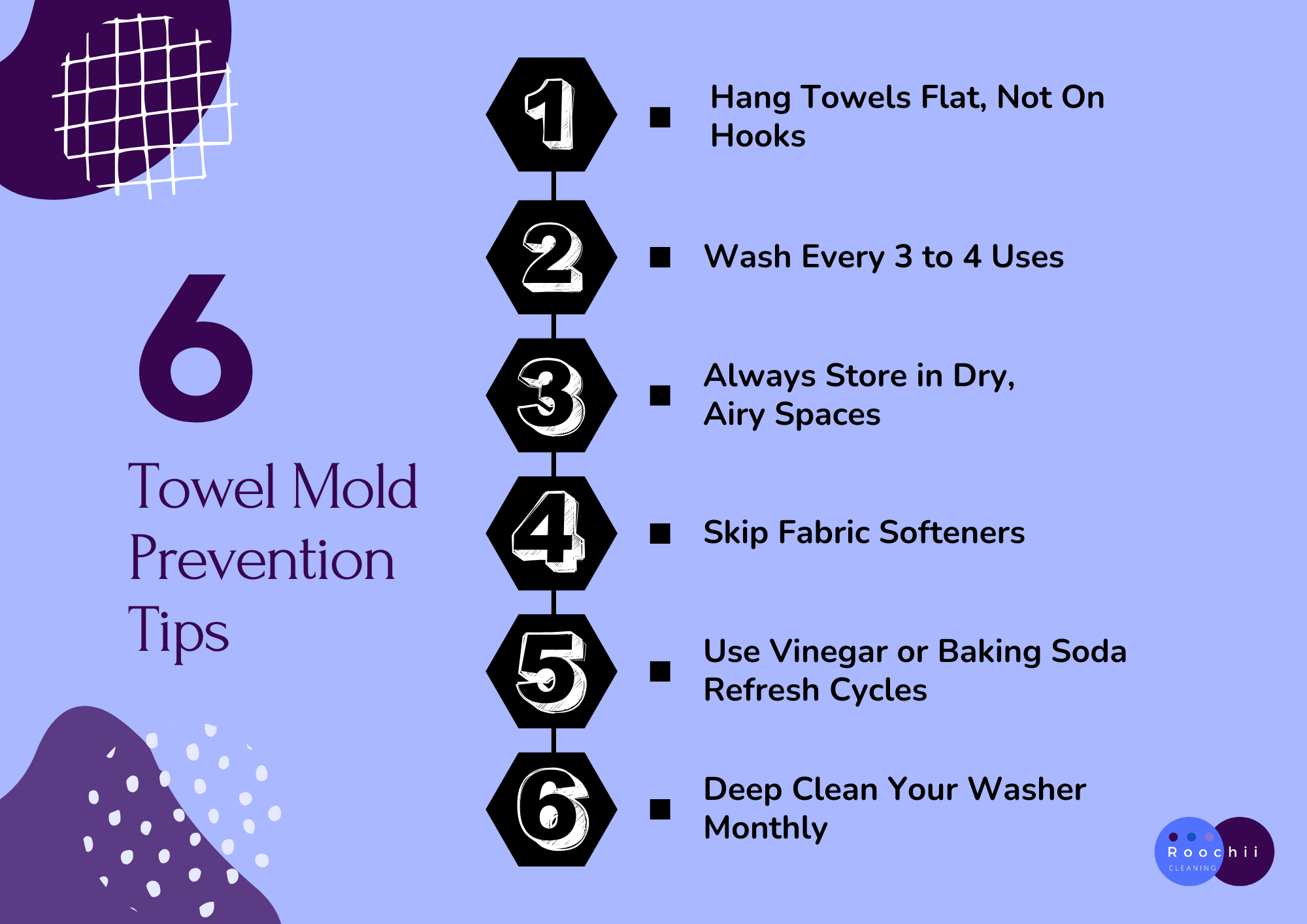
Infographic listing six prevention tips to stop mold on towels.

Once you’ve gone through the trouble of removing mold from towels, the last thing you want is for it to come back.

Prevention is really about one thing: denying mold the damp, stagnant conditions it loves. The good news is that with a few smart habits, you can keep your towels fresh, fluffy, and fungus-free.

Dry Towels Quickly After Every Use 

The single biggest mistake people make is leaving towels damp for too long.

After a shower, give your towel a good shake to release trapped moisture and hang it wide and flat on a towel bar. Avoid hooks or bunching because the folds trap dampness, and that’s prime mold territory.

If possible, keep bathroom doors or windows open so air can circulate, or run the exhaust fan for at least 15–20 minutes after showering. In humid climates, a small dehumidifier in the bathroom can be a game changer.

Store Towels with Airflow in Mind 

Even clean towels can develop a musty odor if they’re crammed into a closet or hamper without air circulation.

Always wait until towels are completely dry before folding or storing them. Open shelving or slatted racks are better than sealed cabinets, and breathable laundry baskets help prevent the “sour hamper smell.”

If you’re storing towels for longer periods, make sure the space is cool, dry, and not overcrowded.

Rotate and Wash Towels Regularly 

Reusing the same towel for days on end is basically giving mold a running start.

Ideally, bath towels should be washed after three uses, and hand towels every two to three days. Rotating between multiple towels ensures each one has time to dry completely before its next use.

Clean Towels Thoroughly, Not Just Often 

When it comes to our house, we think that cleaning often leads to a clean and mold-free home. This may not always be the case for your towels.

How you wash matters as much as how often you wash. Use the hottest water the fabric can handle, and once in a while, add a cup of vinegar or baking soda to strip away residue that regular detergent leaves behind.

It’s crucial to be able to clean your towels enough so they don’t become a place for mold to enjoy. And just like your towels, your home also benefits from deeper cleans that go beyond the surface.

That’s why at Roochii Cleaning, we specialize in thorough deep cleaning services which help prevent mold and other unwanted guests from sneaking into overlooked spaces. A little extra care makes all the difference.

Best Practices for Washing Towels 

Even if you’re not currently battling mold on towels, how you wash them plays a big role in whether mold becomes a problem later.

Towels are designed to be absorbent, but that also means they hold onto water, detergent, and residue more than most fabrics.

A few smart laundry habits will keep them fresh and extend their lifespan.

  • Use hot water whenever possible – Heat kills lingering bacteria and mold spores that survive cooler washes.
  • Measure detergent carefully – Too much soap leaves residue that traps moisture and feeds mildew.
  • Do a vinegar or baking soda refresh – Every few washes, run a cycle with 1 cup of vinegar (rinse cycle) or ½ cup of baking soda (wash cycle) to strip buildup and eliminate odors.
  • Skip fabric softeners – They coat towel fibers, reduce absorbency, and slow drying, all of which encourage mold.
  • Use dryer balls instead of softener – They naturally fluff towels without harmful residue.
  • Dry towels immediately after washing – Never leave towels sitting in the machine; even a short delay can cause musty odors.
  • Ensure towels are completely dry before storing – Whether you use a dryer or line-dry in sunlight, double-check for damp spots.

When to Replace Moldy Towels 

Most of the time, you can rescue a towel with the right cleaning routine. But sometimes, no amount of soaking, scrubbing, or rewashing can bring it back. Here are the signs it’s time to retire a towel and invest in a fresh one:

  • Persistent odor – If a towel still smells musty after multiple deep cleans, mold spores are likely embedded too deeply in the fibers.
  • Stubborn stains – Dark blotches that refuse to fade after several treatments are a sign the mold has permanently discolored the fabric.
  • Weakened or brittle fabric – Towels that feel rough, thin, or start tearing in moldy areas aren’t just unsightly; they’ve lost their absorbency.
  • Recurring mold growth – If mold keeps coming back no matter how carefully you wash and dry, it means the towel is compromised.
  • Health concerns – Anyone with asthma, allergies, or sensitive skin should avoid using towels that have been heavily moldy, even if they look “clean” afterward.

At that point, replacement is the safer, healthier choice. And when buying new towels, consider opting for quick-dry fabrics or thinner weaves that resist holding moisture — they’re less likely to become a mold magnet.


Conclusion: Keep Towels Mold-Free for Good 

Mold on towels is annoying, smelly, and a little embarrassing, but it’s not unstoppable. With the right cleaning methods and a few smart habits, you can kick mold out and keep your towels fresh, fluffy, and safe to use.

The trick is simple: wash hot, dry fast, and don’t let damp towels sit around plotting their fungal takeover. And if a towel refuses to smell clean no matter what you do? That’s not a towel anymore. It already belongs in the trash. Retire it and move on.

In short, treat your towels well, and they’ll treat you well. Keep them dry, keep them clean, and mold won’t stand a chance.

FAQ

Frequently Asked Questions on Mold on Towels

Leave a Reply

Your email address will not be published. Required fields are marked *