A Quick Guide: How to Remove Mold from Ceiling
Is It Possible to Remove Mold From Your Ceiling?
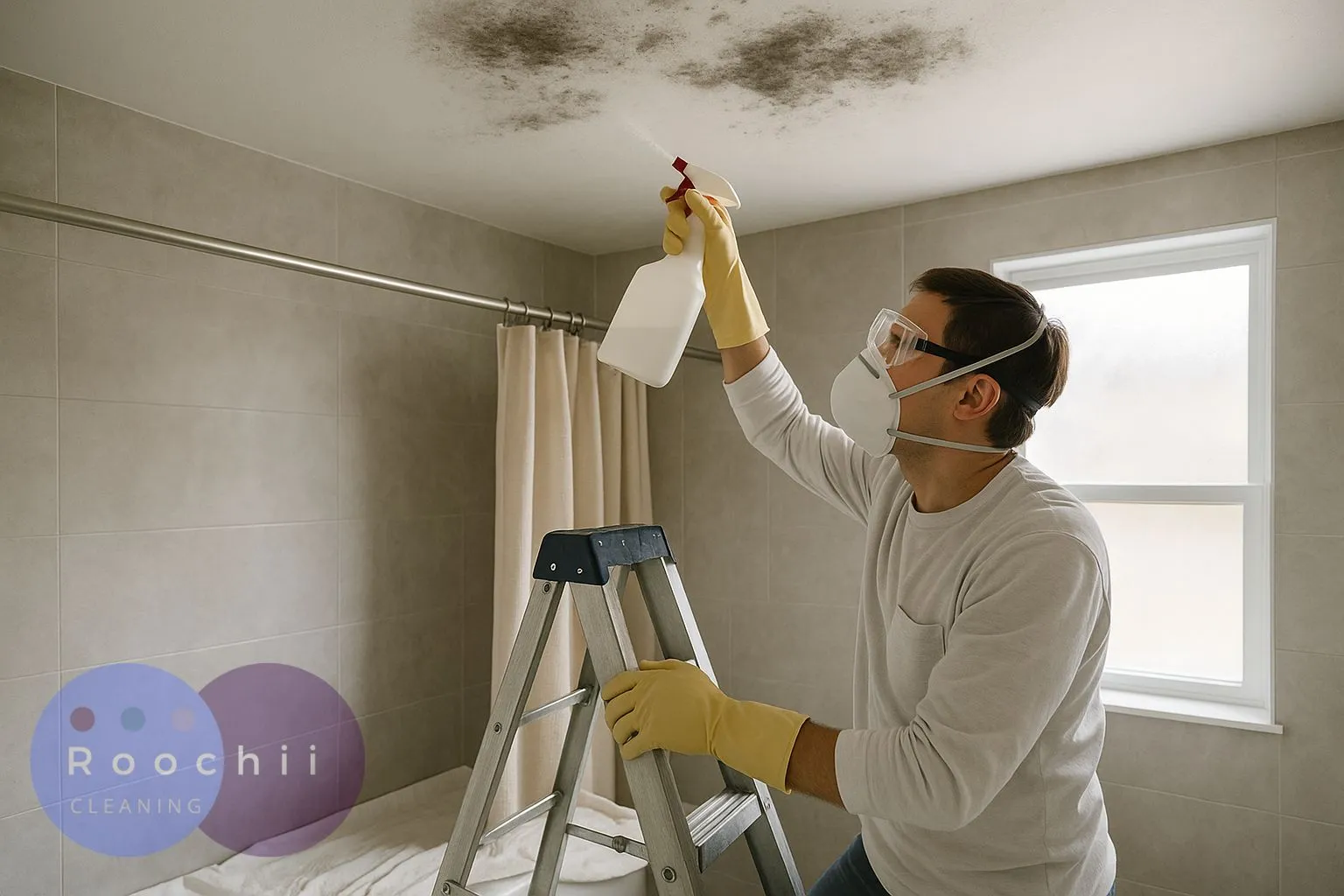
Wondering how to remove mold from ceiling? In most cases, the fix is hiding in plain sight: vinegar, baking soda, or hydrogen peroxide.
With the right tools (and a bit of elbow grease), you can scrub away those creepy dark patches before they turn your ceiling into a horror-movie set piece.
Of course, mold isn’t just ugly. It’s also a health hazard and a sign your home may have a moisture problem. That’s why tackling it the right way matters. In this guide, we’ll walk you through:
Understanding Mold: Causes and Risks
Mold has one goal in life: to spread. And unfortunately, it’s very good at it.
Thriving in damp, humid environments with poor airflow, mold often sets up camp in places you’d least like it, like your ceilings, for example.
Ceilings are particularly vulnerable because moisture rises and tends to linger near the top of a room. The material used in most ceilings (wood, drywall) also affects how much it retains moisture, per a 2022 study. It’s not exactly a glamorous topic, but understanding why mold forms in the first place is the first step to eliminating it for good.
Common Causes of Mold in Ceiling
A. Ceiling Mold from Roof Leaks
Even the tiniest roof leak can let moisture seep into your ceiling.
A small roof leak may not seem like a big deal at first, but it can quickly lead to hidden mold growth in your ceiling. When water seeps through roofing materials and saturates insulation or drywall, it creates a high-humidity environment ideal for mold spores to thrive.
In fact, according to the U.S. Environmental Protection Agency (EPA), mold can start growing within 24 to 48 hours of water exposure if the area remains damp.
B. Bathroom Ceiling Mold from Steam and Humidity
Hot showers without proper ventilation can turn your ceiling into a humid jungle.
Without an exhaust fan, steam sticks around like a nosy neighbor, eventually condensing on your ceiling.
C. Ceiling Condensation Leading to Mold Growth
When warm, humid air meets a cold ceiling, condensation forms. If you’ve ever noticed droplets on windows in winter, your ceiling can suffer the same fate.
For example, in places like Denver, where winters are cold and dry outside but indoor air is often kept warm and humid, that temperature clash can create the perfect conditions for condensation.
Unfortunately, unlike windows, ceilings don’t come with a handy squeegee.
D. Plumbing Leaks Causing Hidden Ceiling Mold
It’s not only roof leaks that you should be worried about. Burst or leaking pipes above ceilings can lead to hidden mold growth.
By the time you notice the stains, the mold has already RSVP’d to the party weeks earlier.
Why Mold on Your Ceiling is Risky
A. Mold Health Risks and Allergic Reactions
Mold releases microscopic spores that easily spread through the air and into your lungs. According to the EPA, they produce spores and allergens that can trigger allergic reactions such as sneezing, watery eyes, skin irritation, and persistent coughing.
For people with asthma or respiratory issues, mold exposure often causes flare-ups, making breathing more difficult. Prolonged exposure to different mold types like red or orange mold, can even lead to chronic respiratory conditions, sinus infections, and other long-term health complications, especially in children, the elderly, and those with weakened immune systems.
B. Mold Damage to Walls, Wood, and Home Structures
Mold doesn’t just look bad, but it also damages the structure of your home without you noticing it.
Mold growth weakens drywall, peels wallpaper, and causes unsightly paint stains. In more severe cases, it penetrates deeper into building materials, leading to rotting wood, damaged flooring, and compromised insulation.
Over time, structural repairs caused by mold can become costly, sometimes requiring full replacements rather than minor fixes.
C. Mold Odors and Stains That Create an Unpleasant Home Environment
A home with mold growth often carries a strong, musty odor that lingers in the air, making rooms feel damp and uncomfortable. These odors can seep into furniture, clothing, and carpets, making them difficult to remove even after cleaning.
Visually, mold leaves behind black, green, or brown stains that ruin the appearance of walls, ceilings, and floors. This not only creates daily discomfort but also causes embarrassment when guests notice the unpleasant smell or appearance.
Simply painting over mold won’t solve the problem. It will only resurface unless the root cause is addressed. That’s why it’s crucial to act quickly.
Identifying Mold on Your Ceiling
Before jumping into cleanup, it’s important to confirm whether the discoloration you’re seeing is truly mold.
Other household issues such as dirt, soot, or water stains can sometimes look similar, which makes accurate identification essential.
How to Tell If It’s Mold On Your Ceiling
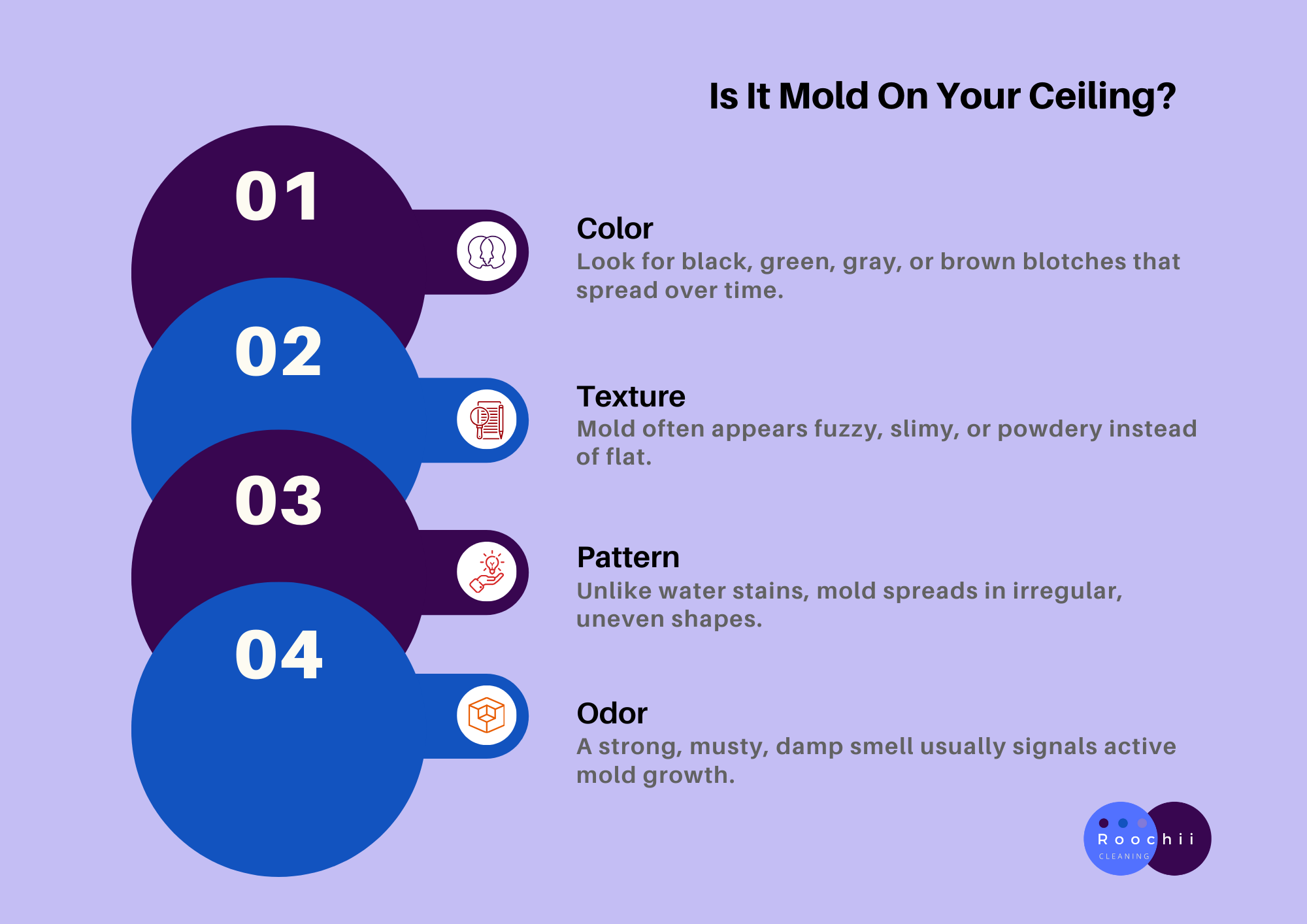
- Color: Mold often shows up as black, dark green, gray, or brown blotches. These patches may start small but gradually spread across walls, ceilings, or even furniture.
- Texture: Unlike stains, mold growth typically has a distinct texture. It may appear fuzzy, slimy, powdery, or uneven to the touch.
- Pattern: Water stains usually form more uniform, circular marks. Meanwhile, the most telling characteristic of mold is its irregular shape and patches that expand unpredictably, as stated by the Medical Mycology Training Network.
- Odor: Perhaps the most telling sign is the smell. A persistent musty or damp odor is a strong indicator of active mold growth, even if it’s not immediately visible.
When Should You Test for Mold?
For small patches in obvious places, visual confirmation is usually enough to know you’re dealing with mold.
However, if the growth covers a larger area, keeps coming back, or appears in hidden or unexpected locations, it’s wise to dig deeper. A DIY home mold test kit can give you basic insights, but a professional mold inspection provides a more accurate assessment. Specialists can identify the exact type of mold and determine whether you need targeted removal or remediation.
Step-by-Step Guide to Removing Mold from Your Ceiling
Once you’re sure it’s mold, you can move forward with cleaning.
Here’s a detailed step-by-step guide on how to remove mold from ceiling effectively.
What You’ll Need For Ceiling Mold Removal
- Safety gear: gloves, goggles, N95 mask
- Ladder or step stool
- Drop cloths to protect floors/furniture
- Spray bottle or bucket
- Scrub brush or sponge
- Cleaning solution (vinegar, peroxide, baking soda, or bleach solution for non-porous surfaces)
- Clean rags or paper towels
Cleaning Solutions You Can Use For Mold Removal
- Vinegar (undiluted): Kills up to 82% of mold species naturally.
- Hydrogen peroxide (3%): Safe, disinfects, and removes stains.
- Baking soda: Gentle, deodorizes, and safe for kids/pets.
- Bleach (diluted): Effective for tiles or non-porous ceilings, but not recommended for drywall since it won’t penetrate deeply.
- Commercial mold cleaners: Available at hardware stores, often stronger but may contain harsh chemicals.
Step-by-Step Process for Safe Mold Removal
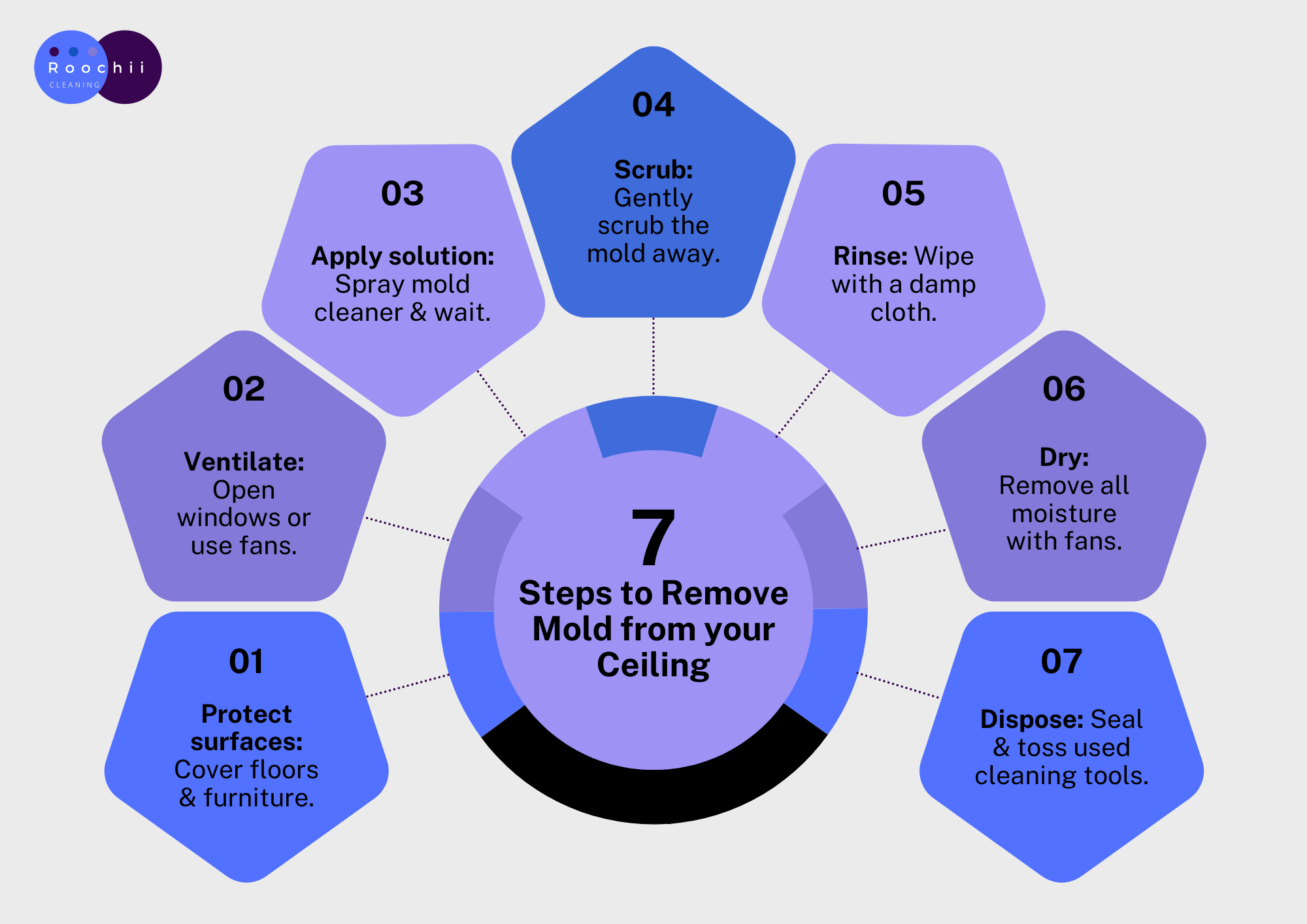
1. Protecting Surfaces Before Mold Cleaning
Before you begin, safeguard your home by covering floors, furniture, and nearby belongings with drop cloths or plastic sheeting.
Mold spores can spread easily, and cleaning solutions may drip or splash, so protecting surfaces helps prevent unnecessary damage and contamination.
2. Ventilating the Room During Mold Removal
Good airflow is critical when dealing with mold. Open windows to let in fresh air, and use fans to direct spores outside whenever possible.
Proper ventilation not only reduces exposure to airborne spores but also speeds up the drying process afterward, which helps keep mold from returning.
3. Applying a Mold Removal Solution Effectively
Once the area is prepped, apply your chosen cleaning solution from the options stated above.
Directly put it to the moldy surface. Allow it to sit for 10–15 minutes so it can penetrate deeply and kill the mold at its roots.
4. Scrubbing Mold from Walls and Ceilings Safely
Use a stiff-bristled brush or a sponge to gently scrub the affected area.
Avoid overly aggressive scrubbing, as this can damage drywall, paint, or other delicate surfaces. The goal is to loosen and lift the mold without causing unnecessary surface damage.
5. Rinsing Mold Residue After Cleaning
If the cleaning solution leaves behind residue, wipe the area with a damp cloth. This step ensures that leftover cleaner or mold particles don’t linger on the surface. This is also recommended by the United States EPA.
For porous materials like unsealed wood or drywall, take extra care not to soak the surface with water.
6. Drying Mold-Affected Surfaces Completely
Moisture is mold’s best friend, so drying is one of the most important steps in the process. Use fans, open windows, or a dehumidifier to remove lingering moisture.
Surfaces should be completely dry to prevent mold spores from regaining a foothold.
7. Safe Disposal of Mold-Contaminated Materials
After cleaning, don’t reuse contaminated sponges, rags, or brushes. Seal them in a plastic bag before throwing them away to avoid spreading spores elsewhere in your home. This extra step helps ensure your cleaning efforts aren’t undone.
Safety Precautions For Mold Removal
When it comes to mold removal, safety should always come first. Mold spores can easily spread into the air during cleaning, increasing the risk of inhalation and cross-contamination in other parts of the home.
Taking the right precautions will help protect your health and make the cleanup more effective.
Protective Gear for Safe Mold Cleaning
Before starting any mold removal, always wear the right protective equipment.
- Gloves to protect your skin from irritation
- Goggles to keep spores and cleaning chemicals out of your eyes
- A mask or respirator to prevent inhalation of mold spores.
Wearing long sleeves and pants adds an extra layer of protection against direct contact.
Keeping Children and Pets Safe During Mold Removal
Mold cleanup is not safe for kids or pets. The airborne spores and harsh cleaning agents can trigger allergic reactions or cause respiratory issues.
However, it is possible to keep your house clean even with children or pets. Simply keep the affected area closed off and make sure they stay out until the space is completely cleaned and dried.
Cleaning Mold in Small, Controlled Sections
Tackling mold in smaller areas instead of all at once is safer and more manageable. This approach reduces the risk of releasing too many spores into the air, keeps you from feeling overwhelmed, and helps ensure a more thorough cleaning process.
When to Call Professional Mold Remediation Services
For minor mold growth, careful DIY removal can be effective.
However, if the mold covers more than 10 square feet, professional mold remediation services is already needed. Experts have specialized equipment and training to remove large infestations safely, preventing mold from spreading or returning.
That’s exactly where our deep cleaning services come in. We don’t just remove visible mold; we identify the root cause and eliminate it completely.
For example, one homeowner, Sarah, contacted us after noticing black mold spreading across her basement wall following a heavy rainstorm. At first, she tried scrubbing it away herself, but the stains and musty odor kept coming back.
Our team performed a full inspection, discovered hidden moisture behind the drywall, and used professional remediation methods to restore her basement. Within two days, the space was clean, safe, and free of odors, giving her family peace of mind.
Preventing Mold Growth in the Future
Getting rid of existing mold is only part of the solution.
To ensure it doesn’t return, you’ll need to create conditions where mold can’t thrive. Since mold feeds on moisture and organic material, prevention is all about controlling dampness, improving airflow, and making small but effective home improvements.
Long-Term Mold Prevention Tips
- Control humidity: Indoor humidity should ideally stay between 30–50%. A dehumidifier is especially helpful in basements, bathrooms, or other moisture-prone areas.
- Improve ventilation: Proper airflow reduces moisture buildup. Install exhaust fans in bathrooms, kitchens, and laundry rooms, and make sure they vent to the outside, not just into the attic.
- Fix leaks promptly: Even a small drip under the sink or around a window can provide the perfect environment for mold. Address leaks as soon as they’re noticed to prevent water from seeping into walls or flooring.
- Insulate ceilings and walls: Condensation often forms in poorly insulated areas. By insulating ceilings, walls, and even pipes, you maintain more consistent indoor temperatures and reduce moisture buildup.
- Use mold-resistant paint: In high-humidity spaces like bathrooms, laundry rooms, and kitchens, applying mold-resistant paint provides an added layer of protection against growth.
- Practice regular cleaning: Mold thrives in places that stay damp and dirty. Wipe down walls and ceilings in moisture-heavy areas, and don’t forget overlooked spots like shower curtains, window sills, and behind appliances.
By keeping moisture under control and ensuring good ventilation, you’ll create an environment that’s far less inviting to mold.
Prevention may take a little effort, but it’s much easier and more cost-effective than dealing with recurring mold infestations.
Conclusion: Maintaining a Mold-Free Home
Mold on your ceiling doesn’t have to spell disaster. With the right supplies, safety precautions, and prevention strategies, you can tackle small mold problems yourself and restore a healthier living space.
Remember that identifying the cause is just as important as the cleaning process. Whether it’s a leaky roof, poor ventilation, or humidity, addressing the source ensures the mold won’t return.
For larger infestations, or if you suspect toxic black mold, don’t hesitate to contact a professional such as Roochii Cleaning for safety removal.
By following these steps and keeping up with regular maintenance, you can enjoy a clean, fresh, and mold-free home long-term.
FAQ
FAQs About Ceiling Mold Removal
Yes. Spray undiluted vinegar directly on mold, let it sit for an hour, then scrub and dry thoroughly.
Only on non-porous surfaces like tile. On drywall or plaster, bleach doesn’t penetrate deeply enough to kill mold roots.
Vinegar, baking soda, or hydrogen peroxide are safer natural alternatives to harsh chemicals.
If the moisture problem isn’t fixed, mold can return within days or weeks.
If the mold covers more than 10 square feet, causes persistent health symptoms, or keeps returning despite cleaning.
Yes. Mold spores can cause allergies, asthma, and respiratory irritation. Prolonged exposure may lead to more severe health effects.