Skip to content

Pink Mold on Shower Curtain: Removal & Prevention Tips
Effective Solutions for Pink Mold on Shower Curtain
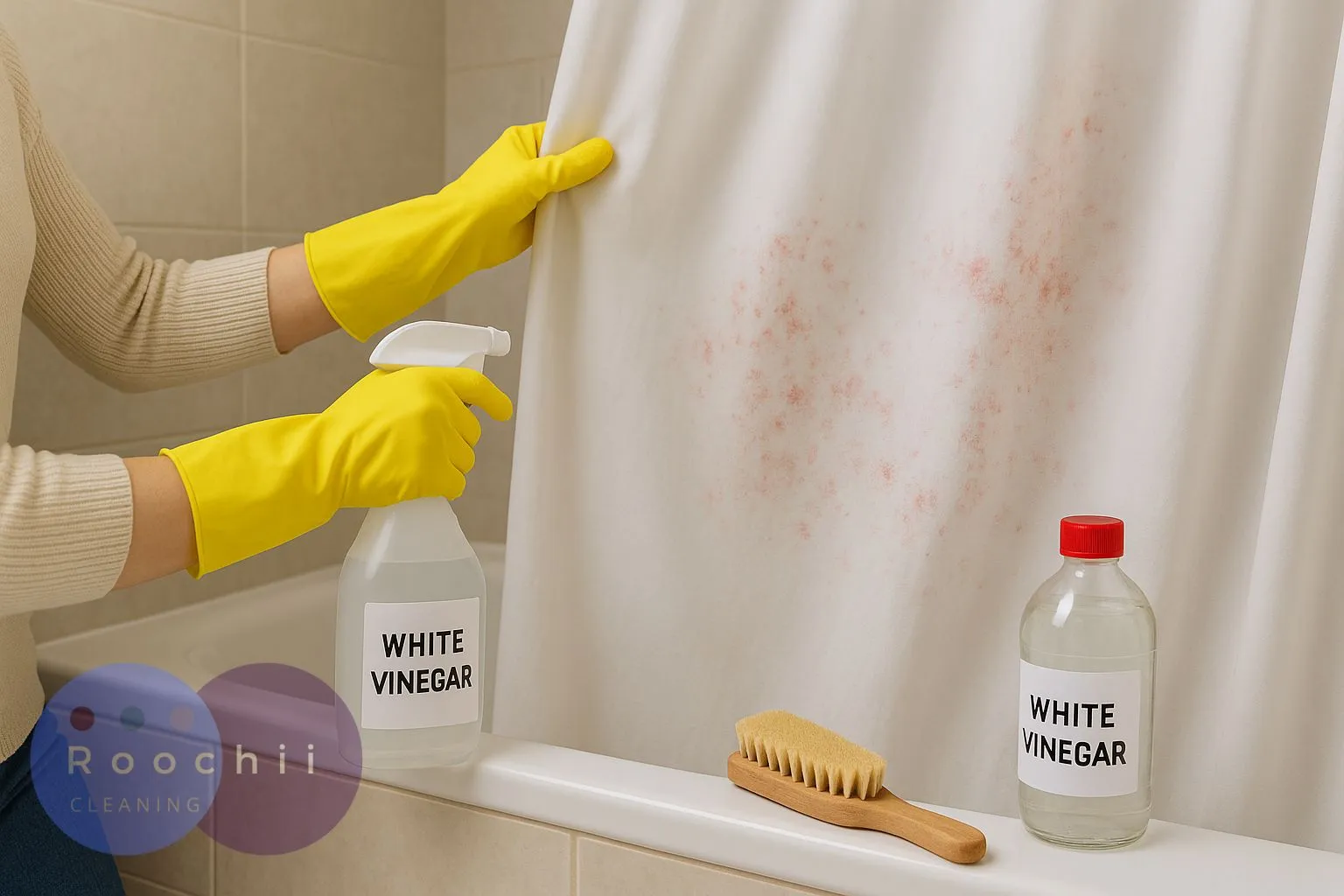
Pink mold on a shower curtain is usually a pink, salmon, or orange biofilm associated with moisture-loving bacteria such as Serratia marcescens, not a true mold. It has an impressive talent for showing up exactly where you would rather not see it.
The safest first move is to clean the curtain according to its material and care label, using one compatible product at a time. Rinse away cleaner residue when directed, let the curtain dry fully, and avoid reaching for stronger chemical combinations just because the stain is stubborn.
If the liner is cracked, permanently slimy, musty, or still stained, professional cleaning or replacement is often more practical.
In this article, we’ll discuss what pink mold actually is, how to clean shower curtains and liners by material, which cleaners are safe to use, which combinations to avoid, how to prevent the pink film from returning, and when replacing the curtain makes more sense than cleaning it again.
Table of Contents
- What Is the Pink Stuff on a Shower Curtain?
- How to Remove Pink Mold from Shower Curtain
- Which Cleaners Should You Use for Pink Mold?
- Why Pink Mold Keeps Coming Back on Shower Curtains
- How to Prevent Pink Mold Buildup
- When to Replace Curtain or Liner
- Is Pink Mold on a Shower Curtain Dangerous?
- When to Hire a Professional for Pink Mold
What Is the Pink Stuff on a Shower Curtain?

The pink or orange film on a shower curtain is usually better understood as a biofilm, not simply “pink mold.”
Biofilms form when microorganisms attach to a damp surface and build up alongside moisture, soap residue, body oils, and other material left behind after showering. Pink-pigmented bacteria, including Serratia marcescens, may be part of that growth, but color alone cannot tell you which microorganisms are present.
Shower curtains are especially prone to this buildup because the lower hem and folded sections often stay wet longer than the rest of the curtain. Once the film develops, the important issue is not identifying the exact organism by sight. It is removing the buildup with a method appropriate for the curtain material and allowing the curtain to dry fully so the same damp conditions do not keep supporting regrowth.
A pink film also does not mean someone in the home has an infection. It is visible microbial buildup that should be cleaned, especially when it keeps returning.
How to Remove Pink Mold from a Shower Curtain by Material
Start with the care label. “Shower curtain” can mean polyester fabric, coated fabric, vinyl or PVC, PEVA, EVA, or another plastic. Heat, bleach, abrasion, and machine washing that work for one material can damage another.
Fabric or Polyester Shower Curtains
If the care label says the curtain is machine washable:
-
Remove the curtain from the hooks and shake or rinse off loose residue.
-
Wash it with regular laundry detergent using the water temperature and cycle listed on the care label.
-
If the label permits, add one or two clean towels to the load for gentle agitation.
-
Do not add vinegar, bleach, hydrogen peroxide, or another cleaner unless both the curtain-care instructions and the product label support that use.
-
Remove the curtain promptly and dry it. If machine drying is not permitted, hang it fully extended so both sides can dry.
For printed, colored, coated, or water-resistant fabric, avoid assuming that chlorine bleach is safe. Bleach is an oxidizer and can fade dyes or damage some finishes.
Plastic, Vinyl, PEVA, or EVA Liners
For a plastic liner, begin with the least aggressive method:
-
Remove the liner and place it flat in the tub or another washable area.
-
Use warm water plus a small amount of mild dishwashing liquid or another cleaner the manufacturer allows.
-
Wipe the pink film with a soft cloth or non-scratch sponge. Pay attention to the bottom hem, folds, magnets, and grommets.
-
Rinse thoroughly so soap and cleaner residue do not remain on the surface.
-
Rehang the liner inside the tub and pull it fully closed so the material can dry without wet folds touching each other.
Avoid aggressive scrubbing on soft plastic. Repeated abrasion can roughen the surface, making it harder to clean and easier for residue to cling.
If Pink Film Remains After Washing
Do not automatically reach for a stronger homemade mixture. First check the liner or curtain label. If disinfection is appropriate, use an EPA-registered disinfectant whose label permits the intended surface and follow its dilution, application method, contact time, ventilation, and rinsing directions.
If the curtain has no usable care instructions and you cannot confirm that a stronger product is compatible, replacement is a safer choice than experimenting with bleach or multiple cleaners on an unknown material.
Choose a Cleaning Method by Curtain Material
| Material | Best first method | Use caution with |
|---|---|---|
| Machine-washable fabric or polyester | Laundry detergent, using the cycle, temperature, and drying instructions on the care label. | Hot water, bleach, vinegar, peroxide, and machine drying unless the label permits them. |
| Plastic, vinyl/PVC, PEVA, or EVA | Warm water, a small amount of mild dishwashing liquid, and a soft cloth or non-scratch sponge. Rinse and hang fully open. | Strong oxidizers, abrasive scrubbing, high heat, printed coatings, grommets, and unknown chemical compatibility. |
| Unknown material or missing care label | Use the least aggressive cleaning method first and verify manufacturer compatibility before escalating. | Bleach, acidic cleaners, peroxide, heat, and multi-product routines. Replacement may be safer than guessing. |
Which Cleaners Should You Use for Pink Mold?
For most shower curtains and liners, cleaning with detergent, water, gentle agitation, and thorough drying is the safest baseline. Disinfection is a separate step and is not automatically necessary every time a pink stain appears.
A commercial EPA-registered disinfectant is different from a DIY household mixture. Registered disinfectants have label directions for approved surfaces, dilution or ready-to-use application, contact time, and precautions.
Vinegar
Household white vinegar is acidic, with standard 5% vinegar typically measuring around pH 2.4. That acidity can help loosen mineral deposits and some soap-related buildup, but vinegar is not a catch-all disinfectant.
It also is not suitable for every surface. Avoid using it on natural stone such as marble, limestone, or travertine, and take care around metal curtain hardware because acid can damage sensitive finishes and materials over time.
Before using vinegar on the curtain itself, check the care label or manufacturer instructions to make sure acidic cleaners are allowed.
Baking Soda
Baking soda is sodium bicarbonate, a mildly alkaline material. A freshly prepared 0.1 molar solution is around pH 8.3. Its main household-cleaning value here is mild abrasion, not reliable disinfection.
That abrasion may be useful on some durable, nonporous hard surfaces, but it is not a good default for flexible plastic liners, printed curtains, polished natural stone, aluminum, copper, brass, painted finishes, or coated materials.
On a shower curtain, gentler wiping is usually the better first choice.
Chlorine Bleach
Household chlorine bleach contains sodium hypochlorite, which makes it strongly alkaline. According to ATSDR data, solutions containing about 5 to 6 percent sodium hypochlorite can have a pH of roughly 10.7 to 11.4. The exact pH can vary depending on the product’s strength, brand, stabilizers, age, and formulation.
Bleach can disinfect when used according to an appropriate product label, but it is also an oxidizer. It can discolor fabrics and dyes, damage some coatings, and corrode metals. Do not assume it is safe for colored fabric, printed liners, metal grommets, aluminum hardware, brass, copper, or any curtain whose label does not specifically allow bleach.
Why pH Matters
pH helps explain why a cleaner behaves differently on different materials. Acidic vinegar can affect acid-sensitive stone and some metals. Alkaline bleach can damage dyes, finishes, and metal components while also acting as a strong oxidizer. Baking soda is only mildly alkaline, but its particles can abrade materials that do not tolerate scrubbing.
The pH of a mixture is not a simple average of the ingredients. It changes with concentration, ratio, buffering ingredients, stabilizers, temperature, and the chemical reactions that occur.
Cleaner Chemistry and Compatibility Matrix
| Cleaner | Type and pH | Compatible or cautious use | Avoid and why |
|---|---|---|---|
| Mild dishwashing liquid or suitable detergent | Surfactant-based cleaner; exact pH varies by formulation. | Good first choice for many plastic liners and washable fabrics when the care label permits it. | Do not assume every printed, coated, or specialty fabric tolerates the same detergent or washing method. |
| White vinegar, about 5% acetic acid | Acidic cleaner, typically around pH 2.4. Exact pH varies by concentration and formulation. | Only on curtain or liner materials whose care guidance permits acidic cleaners. Can help with some mineral or soap residue. | Never combine with bleach. Avoid marble, limestone, and travertine nearby. Use caution around metal grommets, brass, copper, aluminum, dyed coatings, and unknown materials because acid can attack sensitive materials or finishes. |
| Baking soda | Sodium bicarbonate. About pH 8.3 in a fresh 0.1 M solution. Mildly alkaline and abrasive. | Mainly useful as gentle abrasion on durable, manufacturer-approved hard surfaces. | Not a default cleaner for flexible liners, printed or coated curtains, polished stone, aluminum, copper, brass, painted finishes, or other abrasion-sensitive materials. |
| Chlorine bleach | Sodium hypochlorite oxidizer. Strongly alkaline; cited 5–6% product examples are roughly pH 10.7–11.4. | Use only when the bleach label and curtain or surface manufacturer permit it, with the stated concentration, contact time, ventilation, and rinsing instructions. | Never mix with vinegar, other acids, ammonia, or another cleaner. Avoid unapproved colored fabrics, printed or coated liners, aluminum, brass, copper, and unknown materials because of bleaching, finish damage, corrosion, or gas-release risk. |
Mixture pH is not a simple average. Concentration, ratio, stabilizers, buffering ingredients, temperature, and reaction progress can all change the final pH.
Cleaner Safety: Do Not Mix Products
Use one cleaner at a time. Never mix chlorine bleach with vinegar, other acids, ammonia, or another cleaner.
Acidifying bleach can cause chlorine gas to be released, which creates a serious inhalation hazard.
Vinegar and baking soda are also unnecessary as a combined shower-curtain cleaner. They react with each other and produce carbon dioxide, water, and sodium acetate, so the fizz does not make the mixture a stronger disinfectant.
Use one product, wipe or rinse away residue if the surface and label allow it, let the area dry fully, then decide whether a second product is actually needed. Never layer wet products directly on top of each other.
If you accidentally mix bleach with vinegar or another acid, stop using the products, leave the area for fresh air, and do not add another chemical.
Why Pink Mold Keeps Coming Back on Shower Curtains
Recurring pink film usually means the environment is still doing the same thing after cleaning.
The Curtain Stays Bunched Up
When the liner is pushed to one side, water gets trapped between the folds and can take much longer to dry. After each shower, keep the liner inside the tub and pull it fully closed so both sides are exposed to more airflow.
The Bottom Hem Never Fully Dries
If the liner is too long, the bottom may bunch on the tub floor or fold over the edge, where water can collect. Adjust it so the hem hangs inside the tub without sitting in pooled water.
Soap and Body-Care Residue Keeps Building Up
Shampoo, conditioner, body wash, skin oils, and soap residue tend to collect along the lower part of the liner.
A quick rinse or gentle wipe helps remove that buildup before it turns into a sticky film that is harder to clean.
The Bathroom Holds Moisture Too Long
A curtain will dry more slowly in a bathroom that stays humid after a shower. Run the exhaust fan during and after showering, and open a window when practical.
Better airflow helps the liner, walls, and tub dry faster.
Nearby Surfaces Are Reintroducing the Buildup
Cleaning only the liner may not solve the problem if pink film is still present on the tub edge, shower walls, curtain rings, or the lower part of a fabric curtain. Clean the surfaces that touch or sit close to the liner at the same time so residue is less likely to transfer back.
How to Prevent Pink Mold Buildup
Getting rid of pink mold is one thing, but keeping it gone is another.
The secret? Starve it of what it loves most: moisture, poor airflow, and leftover soap scum.
Here’s how to keep your curtain clean, dry, and pink mold–free for good:
After every shower:
- Keep the liner inside the tub.
- Pull it fully closed instead of bunching it to one side.
- Separate folds that are stuck together.
- Run the exhaust fan during and after the shower.
- Wipe obvious standing water from the tub edge.
Once a week:
- Rinse or wipe the lower section of the liner.
- Remove soap film from the tub edge and wall where the liner touches.
- Check hooks, magnets, and the hem for slippery or pink residue.
- Look for a leak, pooling water, or a liner that is too long.
On the curtain’s regular care schedule:
- Wash or hand-clean it before residue becomes thick.
- Follow the material care label.
- Replace the liner if the material is breaking down instead of repeatedly using harsher chemicals.
Keep the Safe Cleaning Steps Handy
Use this printable guide to choose a curtain-safe method, avoid unsafe cleaner combinations, and check the steps that help prevent pink film from returning.
When to Replace a Shower Curtain or Liner
Cleaning is not always worth repeating. Replace the curtain or liner when:
- Pink, orange, or dark staining remains after a proper material-safe cleaning.
- The liner becomes slimy again soon after cleaning even after you improve drying.
- Plastic is cracked, brittle, permanently cloudy, rough, or torn.
- A musty odor remains after washing and full drying.
- Magnets or grommets are corroded.
- A coating is peeling or the curtain can no longer be cleaned according to its care instructions.
- The liner is so long or misshapen that it stays pooled in water.
If dark or fuzzy growth appears on caulk, drywall, wood, or another porous building material, treat that as a different problem from a pink shower-curtain biofilm. Fix the moisture source and follow appropriate mold guidance for the affected material.
Is Pink Mold on a Shower Curtain Dangerous?
The pink film on a shower curtain is worth cleaning, but seeing it does not automatically mean there is a health problem in the home.
Serratia marcescens, one bacterium sometimes associated with pink bathroom biofilm, can cause infections in certain situations. Those risks are mainly documented in healthcare settings and among people who are medically vulnerable. A pink stain on a household shower curtain, by itself, is not evidence that someone has an infection.
For routine home cleaning:
-
Avoid touching the buildup with bare hands if you have cuts, cracked skin, or irritation.
-
Wash your hands after cleaning the curtain.
-
Keep cleaners away from your eyes and skin, and follow the product label.
-
Clean recurring pink film rather than allowing it to continue building up.
If someone in the household is immunocompromised or medically vulnerable, it may be better for another person to handle recurring biofilm. They can also ask their healthcare professional whether any additional precautions are appropriate for their situation.
When to Hire a Professional for Pink Mold on the Shower Curtain
Pink mold on your shower curtain might seem like a small issue, but if it keeps returning or spreads, it could signal a bigger problem, like excess moisture or poor ventilation.
Here are clear signs it’s time to bring in a pro:
Recurring Pink Stains Despite Cleaning
If pink mold comes back soon after cleaning, it may be due to stubborn biofilms that regular cleaners can’t remove.
Spread Beyond the Shower Curtain
If pink mold spreads to grout, tile, or walls, it may mean nearby surfaces are staying wet or buildup is present beyond the curtain.
We’ve seen this happen with Roochii clients, too. Michael contacted our team after pink buildup kept returning and had spread beyond the most visible shower surfaces, including grout and shower corners. Routine cleaning was not reaching all of the residue collecting in those harder-to-clean areas.
His experience is a good reminder that repeatedly cleaning only the shower curtain may not solve the problem when buildup is also present nearby.
When Pink Mold Triggers Allergies
Pink mold can worsen asthma, allergies, and respiratory conditions, and research in Pathogens and Disease links pink mold to infections in immunocompromised individuals.
With our expertise, we understand how frustrating it can be to deal with persistent pink mold on your shower curtain. We take a thorough approach to not only remove the mold but also address the causes, like moisture and poor ventilation, to prevent it from coming back.
With our expertise, you can enjoy a cleaner, healthier environment without the worry of mold reappearing.
Final Thoughts on Pink Mold on Your Shower Curtain
Pink mold on a shower curtain is usually a sign that moisture, soap residue, and slow drying are giving pink biofilm the conditions it needs to return. The most effective approach is simple: clean the curtain according to its material and care label, use one compatible cleaner at a time, rinse away residue when needed, and let the curtain dry fully after every shower.
Prevention matters just as much as cleaning. Keep the liner stretched out instead of bunched up, improve bathroom airflow, wipe the lower hem and nearby surfaces regularly, and deal with leaks or standing water before buildup gets another chance to settle in.
If the curtain stays slimy, stained, musty, or damaged after proper cleaning, replacing it may be more practical than repeatedly using stronger products. And if pink buildup keeps spreading to other bathroom surfaces, addressing the moisture source will do more good than simply cleaning the curtain again.
FAQ
Pink Mold Cleaning & Prevention: Frequently Asked Questions
Yes, if the care label says the curtain is machine washable.
Use the cycle, water temperature, detergent, and drying method specified by the manufacturer. Do not assume a plastic or coated liner can tolerate hot water, bleach, or a dryer.
Vinegar can help with some mineral and soap-related residue, but it is not a universal disinfectant and it is not appropriate for every curtain material. Use it only if the curtain manufacturer allows acidic cleaners, and never combine it with chlorine bleach.
Only if both the liner manufacturer and the bleach product label support that use. Plastic formulations, printed coatings, dyes, grommets, and hardware vary.
If compatibility is unknown, use a mild detergent first or replace a low-cost liner rather than guessing.
No. The fizz is an acid-base reaction that produces carbon dioxide, water, and sodium acetate. It does not make the mixture a stronger disinfectant. For a shower curtain, material-safe detergent and thorough drying are a better baseline.
Usually because moisture and residue are still present. Keep the liner inside the tub, pull it fully closed to dry, clean the tub edge and rings at the same time, remove soap film regularly, and improve ventilation.
There is no single schedule for every bathroom.
A frequently used shower with slow drying needs more attention than a well-ventilated guest bath. Check the lower hem weekly and wash or hand-clean the curtain according to its care label before slippery or pink buildup becomes established.
Not necessarily.
Pink biofilm is strongly associated with persistent moisture and residue. Even a regularly cleaned bathroom can develop it if the liner stays wet in folds, the fan is weak, or soap film collects along the bottom edge.