Skip to content

How to Keep Your House Clean and Healthy: 10 Expert Tips for Colorado Homes

Why a Clean Home is Essential in Colorado
Colorado, most notably Denver, is known for its stunning mountain views, vibrant outdoor lifestyle, and fluctuating climate. While these factors make the Mile High City a fantastic place to live, they also pose unique challenges when it comes to home cleanliness and maintenance.
Between dust from the dry air, mud from outdoor activities, and allergens carried in from the Rocky Mountains, keeping a home clean requires a strategic approach. Research shows that a clean home reduces stress, improves indoor air quality, and minimizes the risk of allergies and respiratory issues.
If you want to keep your Colorado home clean, organized, and maintained, follow these 10 ways to keep house clean and healthy, using expert-approved strategies designed specifically for the state’s unique environment.
Table of Contents
- Create a Daily Cleaning Routine
- Focus on High-Traffic Areas First
- Declutter Before You Deep Clean
- Improve Your Indoor Air Quality
- Follow a Weekly Cleaning Schedule
- Complete Seasonal Home Maintenance
- Keep Cleaning Supplies Organized
- Stay Ahead of Laundry and Linens
- Prevent Dust, Allergens, and Pests
- Know When to Hire Professional Cleaners
1. Create a Daily Cleaning Routine
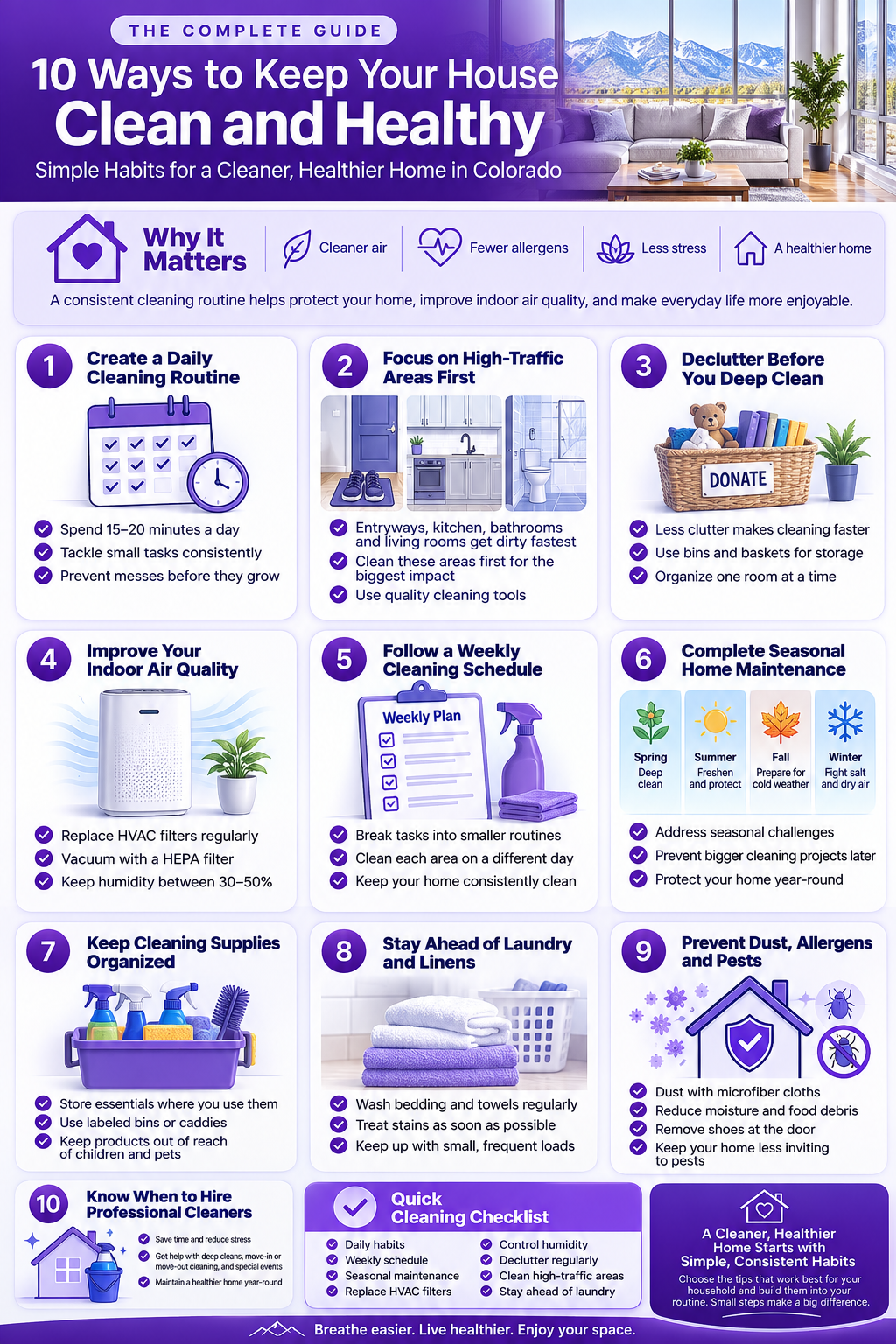
One of the biggest misconceptions about keeping a clean home is that it requires hours of work every day. In reality, the cleanest homes are usually maintained through small, consistent habits rather than occasional marathon cleaning sessions.
Instead of waiting until the weekend to tackle every chore, it’s important to clean by doing simple tasks throughout the day.
Spending just 15 to 20 minutes on routine maintenance can prevent clutter, dust, and grime from becoming overwhelming.
Daily Cleaning Checklist
Morning
- Make the beds.
- Open curtains and blinds to let in natural light.
- Wipe bathroom counters after getting ready.
Throughout the Day
- Wash dishes or load the dishwasher after meals.
- Wipe kitchen countertops after food preparation.
- Put items back where they belong instead of letting clutter accumulate.
Evening
- Sweep or vacuum high-traffic areas if needed.
- Empty full trash bins.
- Spend ten minutes tidying common living spaces before bed.
From our experience, many homeowners believe they need to schedule large cleaning days every week. In practice, homes that stay consistently clean usually follow simple daily routines that prevent messes from accumulating in the first place.
2.Focus on High-Traffic Areas First
Not every room gets dirty at the same pace. Kitchens, bathrooms, entryways, mudrooms, and living rooms typically experience the most daily use, making them the first places where dirt, dust, and clutter begin to build up.
If you’re short on time, cleaning these high-traffic areas first provides the biggest improvement with the least effort.
Entryways
Colorado’s outdoor lifestyle means shoes often bring in dirt, gravel, pollen, snow, and mud. Placing durable, washable mats inside and outside your entrances helps reduce the amount of debris that reaches the rest of your home.
Creating a designated shoe storage area near the door can also significantly reduce tracked-in dirt.
Kitchens
Food preparation naturally creates crumbs, grease, and spills. Wiping countertops after every meal, cleaning the sink daily, and disinfecting high-touch surfaces like refrigerator handles helps prevent bacteria and keeps the kitchen looking tidy.
Bathrooms
Bathrooms benefit from frequent light cleaning rather than occasional heavy scrubbing. Wiping sinks, mirrors, and shower walls regularly helps prevent soap scum, hard water deposits, and mildew from becoming difficult to remove.
Living Rooms
Dust electronics, shelves, and furniture weekly, and vacuum upholstered furniture regularly to remove dust, pet hair, and allergens before they become embedded in fabrics.
Use the Right Cleaning Tools
Rather than purchasing a specialty product for every cleaning task, invest in a few quality essentials:
- Microfiber cloths
- A HEPA-filter vacuum
- A microfiber mop
- Washable entry mats
- A reliable all-purpose cleaner suitable for your home’s surfaces
| Area | Recommended Cleaning Frequency | Why It Gets Dirty |
|---|---|---|
| Entryway | Daily | Tracks in dirt, mud, pollen, snow, and debris from outside. |
| Kitchen | Daily | Food preparation creates crumbs, grease, spills, and bacteria. |
| Bathroom | 2–3 Times Per Week | Moisture encourages soap scum, hard water deposits, and mildew. |
| Living Room | Weekly | Dust, pet hair, and everyday household traffic quickly accumulate. |
| Bedrooms | Weekly | Dust, allergens, and bedding fibers build up over time. |
3. Declutter Before You Deep Clean
Cleaning becomes much easier when there is less clutter to work around.
Stacks of mail, unused kitchen appliances, children’s toys, and seasonal gear all create extra surfaces that collect dust and make routine cleaning more time-consuming.
Before reaching for the vacuum or spray bottle, spend a few minutes putting items back where they belong.
Practical Decluttering Tips
- Follow the “one in, one out” rule for clothing and household items.
- Store seasonal decorations and outdoor gear in clearly labeled containers.
- Use baskets or bins to organize frequently used items.
- Donate or recycle items you no longer use.
- Focus on one room at a time rather than trying to organize the entire house at once.
For Colorado homeowners, garages, mudrooms, and basements often become storage spaces for skis, snowboards, camping equipment, bicycles, and hiking gear. Decluttering these areas not only reduces the mess but also makes it easier to access equipment when you need it.
Homeowners are often surprised by how much easier cleaning becomes after decluttering. Vacuuming, dusting, and mopping take significantly less time when surfaces and floors are clear, allowing you to focus on cleaning instead of moving items from place to place.
4. Improve Your Indoor Air Quality
A clean home isn’t just about what you can see. Dust, pet dander, pollen, and other airborne particles can build up indoors even when floors and countertops look spotless. Improving your indoor air quality helps create a healthier living environment while reducing the amount of dust that settles throughout your home.
This is especially important for homeowners across Colorado, including Denver, Lakewood, Littleton, Centennial, Boulder, and Fort Collins, where dry conditions, seasonal pollen, wildfire smoke, ongoing construction, and changing weather can all affect indoor air quality.
Replace HVAC Filters Regularly
Your HVAC system continuously circulates air throughout your home. A dirty filter allows dust and allergens to recirculate while making your heating and cooling system work harder.
As a general guideline:
- Check filters every month.
- Replace disposable filters every 1 to 3 months, depending on your household, pets, and manufacturer recommendations.
- Consider higher-efficiency filters if they’re compatible with your HVAC system.
One of the biggest reasons homes seem dusty shortly after cleaning isn’t poor housekeeping. It’s an HVAC filter that’s overdue for replacement.
Vacuum with a HEPA Filter
Standard vacuums may recirculate fine dust back into the air. A vacuum equipped with a HEPA filter captures much smaller particles, helping reduce allergens and improving overall air quality.
Pay extra attention to:
- Area rugs
- Carpets
- Upholstered furniture
- Under beds
- Baseboards
Control Indoor Humidity
Colorado’s dry climate can increase static electricity and allow fine dust to stay airborne longer.
Maintaining indoor humidity between 30% and 50% can help improve comfort while reducing airborne dust. Depending on your home’s conditions, a portable or whole-home humidifier may help maintain this range.
Be careful not to over-humidify your home, as excess moisture can contribute to mold growth and other moisture-related issues.
5. Follow a Weekly Cleaning Schedule
Trying to clean your entire home in one day can feel overwhelming. A weekly cleaning schedule spreads the workload into smaller, manageable tasks that are easier to maintain.
Instead of asking, “What should I clean today?”, you’ll already have a plan.
Example Weekly Cleaning Schedule
Monday
Kitchen
- Clean appliance exteriors
- Wipe cabinet fronts
- Sanitize countertops
- Empty refrigerator leftovers
Tuesday
Bathrooms
- Scrub sinks
- Clean toilets
- Wipe mirrors
- Sanitize frequently touched surfaces
Wednesday
Dusting
- Shelves
- Baseboards
- Ceiling fans
- Window sills
- Electronics
Thursday
Floors
- Vacuum carpets
- Mop hard floors
- Clean entryways
- Shake out rugs
Friday
Bedrooms
- Change bed linens
- Dust furniture
- Vacuum under beds
- Organize nightstands
Weekend
Reserve weekends for:
- Laundry
- Outdoor maintenance
- Decluttering
- Family projects
- Catch-up cleaning if needed
This schedule is flexible. Adjust it to fit your schedule and household, especially if you have kids or are living with pets.
6. Complete Seasonal Home Maintenance
Every season brings different cleaning challenges. Staying ahead of seasonal maintenance helps protect your home while preventing larger cleaning projects later.
Spring
Spring is the perfect time to remove the dust and debris that accumulate during winter.
Focus on:
- Washing windows
- Cleaning window screens
- Deep cleaning carpets and rugs
- Organizing closets
- Cleaning patios and outdoor furniture
Summer
Summer often means more outdoor activities, which also means more dirt tracked inside.
Take time to:
- Vacuum entryways more frequently
- Clean ceiling fans
- Wash pet bedding
- Clean grills and outdoor kitchens
- Inspect weather stripping around doors
Fall
Prepare your home before colder weather arrives.
Tasks include:
- Cleaning gutters
- Washing exterior windows
- Deep cleaning upholstery
- Rotating seasonal clothing
- Cleaning behind large furniture
Winter
Winter cleaning focuses on protecting your home from snow, salt, and dry indoor air.
Prioritize:
- Vacuuming entryways often
- Cleaning salt residue from floors
- Monitoring indoor humidity
- Washing blankets and comforters
- Replacing HVAC filters if needed
Seasonal cleaning is often overlooked because homeowners focus on visible messes.
Preventive maintenance throughout the year usually makes deep cleaning much easier and helps protect flooring, furniture, and other household surfaces.
7. Keep Cleaning Supplies Organized and Accessible
One of the easiest ways to stay consistent with cleaning is to make supplies easy to access. If you have to search through closets every time you need a microfiber cloth or all-purpose cleaner, small messes are more likely to become larger ones.
Consider keeping a small set of cleaning essentials in the rooms where you use them most.
Where to Store Cleaning Essentials:
- Kitchen: Keep all-purpose cleaner, dish soap, and sponges under the sink.
- Bathroom: Store toilet cleaner, disinfecting wipes, and scrub brushes nearby.
- Living Room: Have microfiber cloths handy for dusting.
- Entryway: Keep a small vacuum or broom for fast cleanups.
When supplies are easily accessible, you’re more likely to use them regularly.
Keep safety in mind: Store cleaning products according to their labels, keep them out of reach of children and pets, and never mix cleaning chemicals unless the product instructions specifically state that it’s safe to do so.
8. Stay Ahead of Laundry and Linens
Laundry is one of those household tasks that never truly ends, but staying on top of it can make your entire home feel cleaner and more organized.
Clean clothes, fresh bedding, and regularly washed towels help reduce dust, allergens, and odors while preventing overwhelming piles from building up.
Instead of dedicating an entire day to laundry, try spreading loads throughout the week as part of your regular cleaning routine.
Laundry Tips That Save Time
- Wash full loads to improve efficiency without overloading your machine.
- Treat stains as soon as possible to prevent them from setting.
- Fold and put away clothes shortly after drying to reduce wrinkles and clutter.
- Wash reusable cleaning cloths separately from clothing.
- Keep a laundry basket in bedrooms and bathrooms to encourage everyone to put dirty clothes in one place.
Don’t forget about items that are easy to overlook. Pillowcases, blankets, bath mats, and pet bedding collect dust, hair, and allergens over time and should be cleaned regularly.
For households with pets or family members who have allergies, washing bedding and vacuuming mattresses periodically can also help improve indoor air quality.
9. Prevent Dust, Allergens, and Pests Before They Become Problems
Colorado’s diverse climate and outdoor lifestyle create unique pest challenges, from bats nesting in attics to mice sneaking in through basement pipes during cold winters. The state’s dry climate also attracts pests like spiders and ants seeking moisture indoors.
Reduce Dust Throughout Your Home
Dust accumulates quickly, especially in Colorado’s dry climate.
To reduce dust buildup:
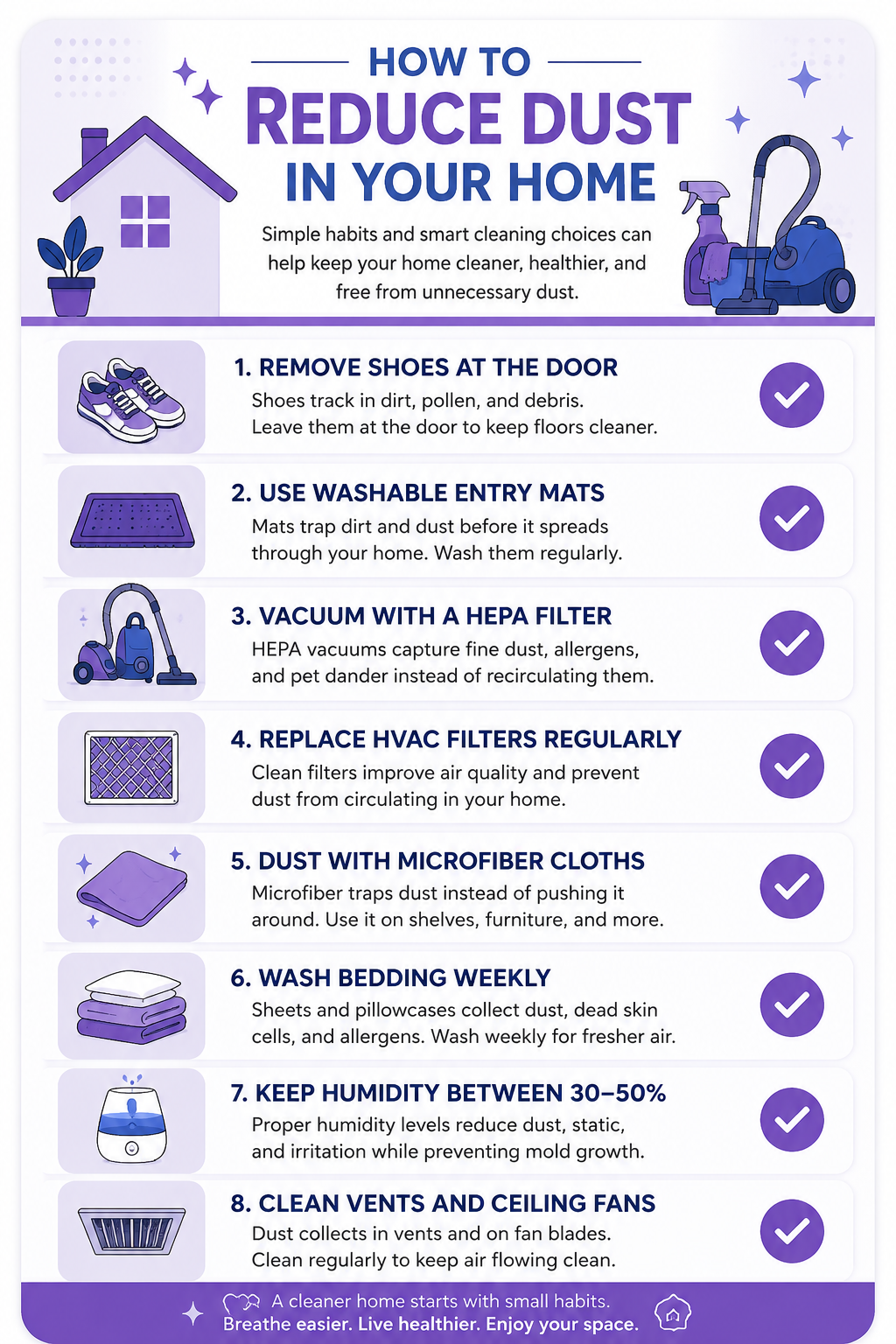
- Dust with microfiber cloths that trap particles instead of spreading them around.
- Vacuum carpets, rugs, and upholstered furniture regularly using a HEPA-filter vacuum.
- Clean ceiling fans, vents, and baseboards as part of your weekly routine.
- Remove shoes at the door to reduce dirt and outdoor debris.
- Wash or vacuum entry mats frequently.
Entryways are one of the biggest sources of dust and debris inside a home. A quality doormat combined with a no-shoes policy can make a noticeable difference in how quickly floors become dirty.
Help Prevent Household Pests
- Install fine mesh covers on dryer vents and chimneys to block raccoons and bats, which are common in the Rockies.
- Store firewood at least 20 feet from your home to prevent termites and carpenter ants from invading.
- Pour vinegar and baking soda down drains to stop fruit flies, which thrive in Denver’s urban kitchens.
- Use diatomaceous earth around entry points to eliminate ants and cockroaches, especially in drier regions like Colorado Springs.
By taking preventative measures suited to Colorado’s environment, you can keep pests out year-round and maintain a cleaner, healthier home.
10. Know When to Hire Professional Cleaners
Even with a consistent cleaning routine, there are times when professional cleaning services can save time and help maintain your home.
Routine maintenance keeps your home looking its best, but certain situations often require specialized equipment, additional time, or a deeper level of cleaning than most homeowners can accomplish on their own.
What to Look for in a Cleaning Service:
- Check online reviews and testimonials.
- Choose eco-friendly options with non-toxic products.
- Ask about certifications and insured professionals.
Professional cleaning can also be a practical option for busy families, older adults, or anyone who wants to spend less time cleaning and more time enjoying their home.
A Clean Colorado Home is a Healthy Home
Keeping your house clean and healthy doesn’t require perfection. The key is building simple habits that fit your lifestyle and staying consistent throughout the year.
By focusing on daily routines, prioritizing high-traffic areas, improving indoor air quality, following a weekly cleaning schedule, and completing seasonal maintenance, you can create a home that’s easier to maintain and more comfortable for everyone who lives there.
For homeowners across Colorado, adapting your cleaning routine to the local climate can make an even bigger difference. Dry air, seasonal pollen, and outdoor activities all contribute to faster dust buildup, but a proactive approach can help keep your home cleaner between deep cleans.
Remember that every home is different. Choose the strategies that work best for your household, build them into your routine, and adjust them as your needs change. Small, consistent habits often make the biggest difference over time.
Frequently Asked Questions About Keeping Your House Clean in Colorado
Focus on small daily habits like making the bed, wiping kitchen counters after meals, loading the dishwasher, and spending 10 minutes tidying up before bed.
Consistency is usually more effective than saving all your cleaning for one day each week.
Most Colorado homes benefit from a thorough deep cleaning every three to six months. High-traffic homes, households with pets, or families with young children may need deep cleaning more often.
Replace HVAC filters regularly, vacuum with a HEPA-filter vacuum, dust with microfiber cloths, clean vents and ceiling fans, and use washable entry mats to reduce dirt tracked inside.
High-traffic areas are best vacuumed at least once a week. Homes with pets, children, or allergy sufferers may benefit from vacuuming more frequently.
Colorado's dry climate, seasonal winds, construction, outdoor recreation, and low humidity can all contribute to faster dust buildup. Regular HVAC maintenance and consistent cleaning routines can help minimize dust inside your home.
For many homeowners, yes. Breaking cleaning tasks into smaller daily or weekly routines makes them easier to manage and helps keep your home consistently clean without spending an entire weekend cleaning.
The amount of time depends on your home's size, the number of people living there, and your cleaning routine.
Most homeowners can keep their home in good condition by spending 15 to 30 minutes a day on routine tasks and setting aside a few hours each week for deeper cleaning.