Skip to content

How to Keep a Clean House with Cats: The Ultimate Guide

Can You Keep A Clean House With Cats?
Cats have a remarkable talent for making themselves at home. Unfortunately, they often extend that hospitality to your couch, countertops, carpets, and just about every black shirt you own.
Between shedding, tracked litter, scratched furniture, and the occasional hairball or accident, it’s easy to feel like you’re constantly cleaning. The good news is that keeping a clean home with cats isn’t about cleaning more. It’s about cleaning smarter and preventing messes before they spread.
The short answer is yes. You can absolutely keep a clean house while sharing it with one or more cats. The key is controlling the four biggest sources of mess: fur, litter, odors, and stains. With the right routines, pet-friendly cleaning products, and a few strategic adjustments around your home, you can enjoy both a tidy living space and happy feline companions.
In this blog, you’ll learn practical ways to reduce shedding, control litter tracking, remove pet odors safely, clean cat urine effectively, choose pet-safe cleaning products, and create a cleaning routine that keeps your home fresh without spending every weekend vacuuming.
Table of Contents
- Quick Answer: How Do You Keep a Clean House With Cats?
- Why Cat Messes Build Up So Quickly
- Cleaning Cat Urine
- Create Designated Areas for Cats
- Control Cat Hair Before It Covers Your Home
- Build a Cleaning Routine You Can Actually Stick To
- Protect Your Furniture and Fabrics
- Manage the Litter Box Before Odors Spread
- Keep Pet Odors Under Control
- Choose Pet-Safe Cleaning Products
Quick Answer: How Do You Keep a Clean House With Cats?
The easiest way to maintain a clean home with cats is to prevent messes before they spread.
Focus on these daily habits:
- Brush your cat regularly to reduce loose fur.
- Scoop the litter box at least twice a day.
- Vacuum high-traffic areas several times each week.
- Clean accidents immediately before odors set.
- Use pet-safe cleaning products around your home.
- Wash cat bedding, blankets, and furniture covers regularly.
These small habits take far less time than trying to deep clean an entire house after fur, litter dust, and odors have accumulated.
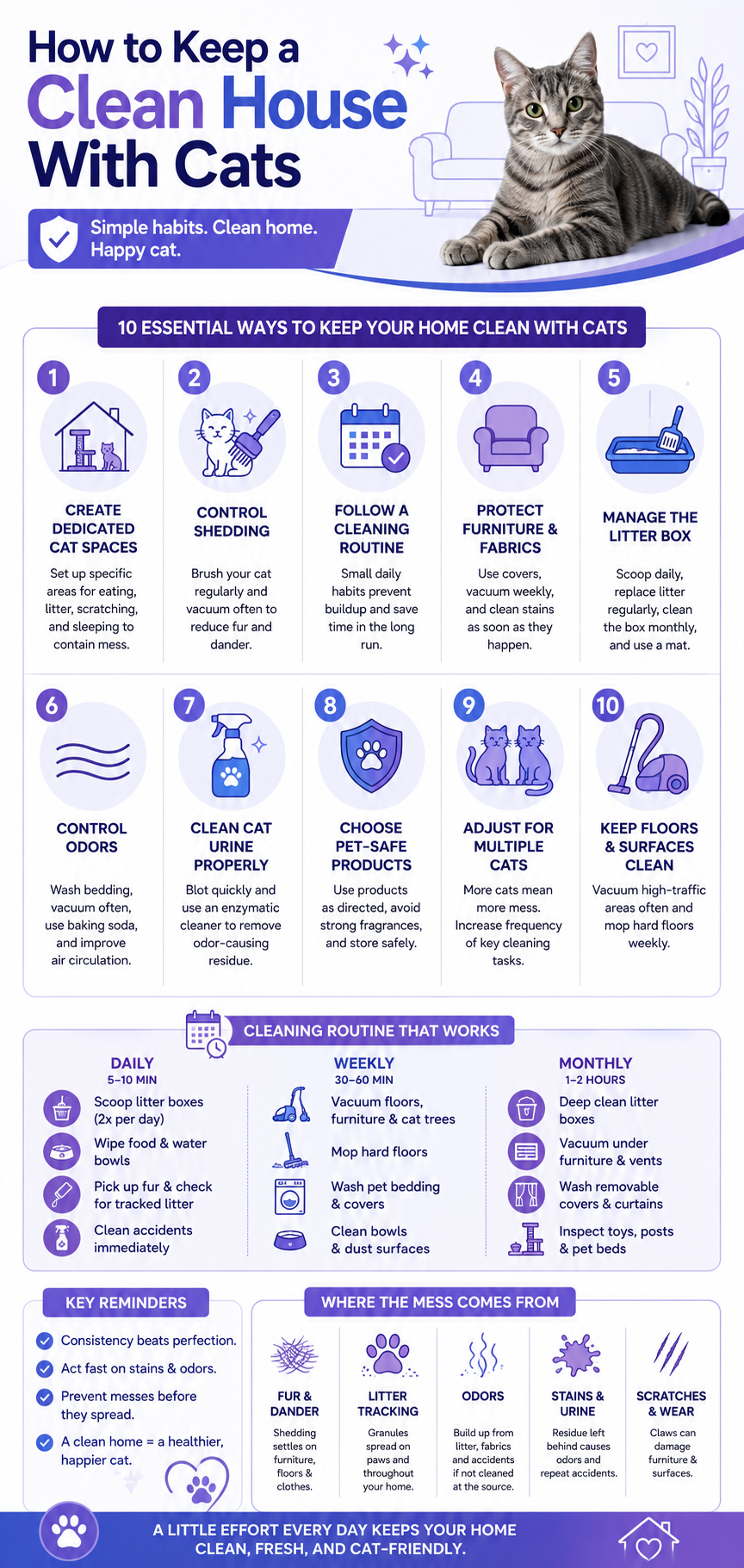
Jovany Explains how to keep a clean house with Cats
Why Cat Messes Build Up So Quickly
Cats are naturally clean animals, but living with them creates unique cleaning challenges.
Loose hair settles into carpets, upholstery, and air vents. Fine litter dust spreads far beyond the litter box. Natural skin oils, dander, and tracked dirt gradually collect on floors and furniture. Even homes that appear clean can accumulate pet-related residue over time.
One thing our cleaning team often notices is that many homeowners in Denver focus on the visible fur while overlooking the invisible buildup. Fine dander, litter dust, and airborne oils settle into soft furnishings and along baseboards long before they’re obvious.
The science behind this is surprisingly simple. Cat dander consists of microscopic skin flakes that are much lighter than loose fur, allowing them to stay airborne longer before settling onto surfaces. Combined with natural oils from your cat’s coat, these tiny particles can cling to fabrics and attract dust, which is why regular grooming and frequent vacuuming are usually more effective than waiting for dirt to become visible.
Understanding where these messes come from makes them much easier to prevent.
Cleaning Cat Urine
When addressing fresh cat urine stains, it’s essential to understand the pH dynamics of feline urine and select appropriate cleaning agents accordingly.
pH Characteristics of Cat Urine
- Fresh Urine: Typically acidic, with a pH ranging from 6.0 to 6.6.
- Over Time: Exposure to air can cause the urine to become more alkaline.
Cleaning Recommendations
- Immediate Treatment: For fresh, acidic urine stains, using an alkaline cleaning solution can effectively neutralize the acid and aid in stain removal. A mixture of baking soda (sodium bicarbonate) and hydrogen peroxide is often recommended:
- Preparation: Combine baking soda and a 3% hydrogen peroxide solution.
- Application: Apply the mixture to the affected area promptly.
- Repetition: Multiple rinses may be necessary to ensure complete removal.
- Aged Stains: For urine stains that have become alkaline over time, acidic cleaning agents, such as a diluted vinegar solution, can be more effective in breaking down the residues.
Important Considerations
- Enzymatic Cleaners: While baking soda and hydrogen peroxide can be effective for immediate treatment, enzymatic cleaners are specifically designed to break down uric acid crystals in cat urine, addressing both stains and odors. These are particularly useful for older or persistent stains.
- Fabric Safety: Always test any cleaning solution on a small, inconspicuous area of the fabric to ensure it doesn’t cause discoloration or damage.
By understanding the pH progression of cat urine and selecting cleaning agents that counteract its current state, you can effectively treat and remove stains from fabrics.
Create Designated Areas for Cats
As highly territorial animals, cats love owning their specific areas. Plus, one of the best ways to keep your house tidy as a pet owner is to create specific spaces where your cats can eat, sleep, and play. This technique is known to reduce stress and encourage playful behavior. Here are some ideas you could use when exploring how to keep a clean house with cats:
Set Up Special Resting Areas
Instead of letting your cats nap on the couch or your bedding, set up resting spots for them. To make cleanup easier, top these spaces up with accessories like washable bedding and cat blankets. Your feline friends will love the comfort!
Use Scratching Posts
According to PubMed Central, unwanted scratching is a pretty usual feline behavior, but more often than not, your furniture has to pay the price. Since they usually target textured surfaces like furniture, it’s worth investing in scratching posts or cat cabinets to keep them busy.
Keep them Off Kitchen Countertops
It’s no surprise that cats love jumping on kitchen countertops, which may be super unhygienic. To limit their access, you can use baby gates, especially when you’re not around. Plus, constructing heightened counters near windows works as a great alternative in such cases.
Separate Feeding and Litter Areas
When spilled, certain cat foods can create messy, sticky floors. Similarly, nobody likes the odor of kitty litter all around the space. Therefore, it’s essential to separate feeding and litter areas for your cat. This, in turn, will keep your house way tidier than otherwise.
Control Cat Hair Before It Covers Your Home
Shedding is one of the biggest reasons cat owners feel like they’re constantly cleaning. Loose fur doesn’t stay where it falls. It drifts under furniture, settles into carpets, clings to upholstery, and finds its way onto clothing, making it seem like cat hair appears faster than it can be cleaned.
The good news is that most loose hair can be managed before it ends up on furniture and floors.
Brush Your Cat Regularly
Regular brushing removes loose hair before it’s naturally shed around the house.
The ideal schedule depends on coat length:
| Coat Type | Recommended Brushing |
|---|---|
| Short-haired cats | 2 to 3 times per week |
| Medium-haired cats | Every other day |
| Long-haired cats | Daily |
Brushing also distributes natural skin oils throughout the coat, helping keep fur healthier while reducing tangles and loose hair.
Our cleaning team often finds that homes with regularly groomed cats require noticeably less time removing embedded pet hair during deep cleaning visits.
Bathe Your Cat Only When Appropriate
Unlike dogs, most healthy cats rarely need frequent baths because they spend a significant amount of time grooming themselves.
However, occasional bathing may be helpful when:
- Your cat has gotten into something sticky.
- Older cats can no longer groom effectively.
- Long-haired breeds develop oily coats.
- Your veterinarian recommends bathing for medical reasons.
Always use shampoos specifically formulated for cats.
Reduce Hair on Furniture
Even with regular brushing, some shedding is unavoidable.
Simple habits can dramatically reduce cleanup time:
- Wash removable furniture covers regularly.
- Keep lint rollers in convenient locations.
- Vacuum upholstered furniture weekly.
- Use washable throws on favorite sleeping spots.
- Rotate and wash cat blankets frequently.
These small maintenance tasks prevent fur from becoming deeply embedded in fabrics.
Build a Cleaning Routine You Can Actually Stick To
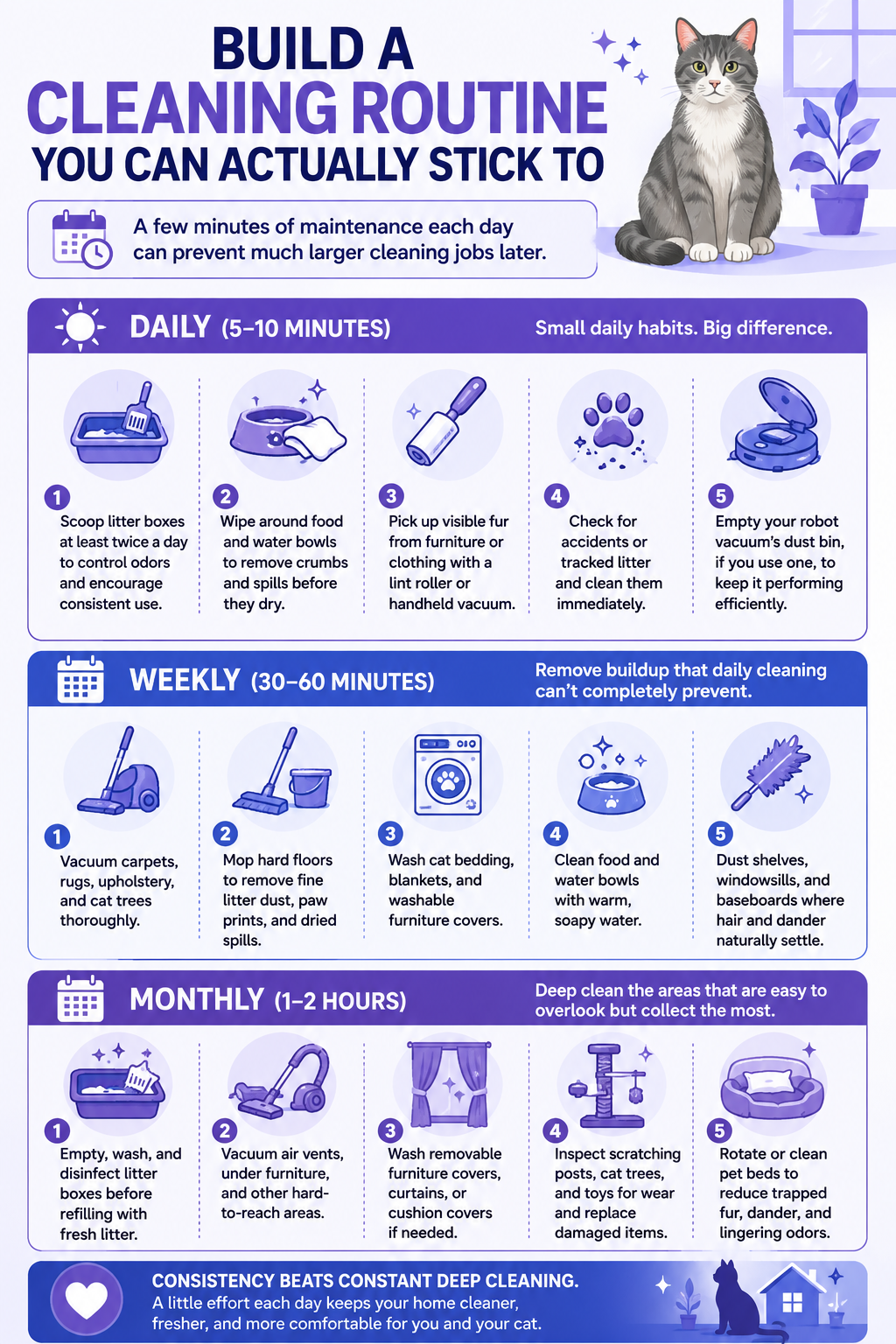
Keeping a clean house with cats isn’t about spending hours cleaning every weekend. It’s about staying ahead of fur, litter, and odors before they have a chance to build up. A few minutes of maintenance each day can prevent much larger cleaning jobs later.
Daily (5–10 Minutes)
These quick tasks help prevent messes from spreading throughout your home.
- Scoop litter boxes at least twice a day to control odors and encourage consistent litter box use.
- Wipe around food and water bowls to remove crumbs and spills before they dry.
- Pick up visible fur from furniture or clothing with a lint roller or handheld vacuum.
- Check for accidents or tracked litter and clean them immediately.
- Empty your robot vacuum’s dust bin, if you use one, to keep it performing efficiently.
Weekly (30–60 Minutes)
Set aside time once a week to remove the buildup that daily cleaning can’t completely prevent.
- Vacuum carpets, rugs, upholstery, and cat trees thoroughly.
- Mop hard floors to remove fine litter dust, paw prints, and dried spills.
- Wash cat bedding, blankets, and washable furniture covers.
- Clean food and water bowls with warm, soapy water.
- Dust shelves, windowsills, and baseboards where hair and dander naturally settle.
Monthly (1–2 Hours)
Monthly deep cleaning helps reach areas that are easy to overlook but gradually collect pet hair, dust, and odors.
- Empty, wash, and disinfect litter boxes before refilling them with fresh litter.
- Vacuum air vents, under furniture, and other hard-to-reach areas.
- Wash removable furniture covers, curtains, or cushion covers if needed.
- Inspect scratching posts, cat trees, and toys for wear and replace damaged items.
- Rotate or clean pet beds to reduce trapped fur, dander, and lingering odors.
A Consistent Routine Beats Constant Deep Cleaning
One thing our cleaning team often notices is that the cleanest homes with cats aren’t necessarily cleaned more often. They’re cleaned more consistently. Spending a few minutes each day managing fur, litter, and odors is usually far easier than trying to remove weeks of accumulated buildup in one afternoon.
Protect Your Furniture and Fabrics
Cats naturally gravitate toward the softest places in your home, whether that’s the couch, your favorite chair, or the bed you just made.
Over time, these areas collect loose fur, dander, natural oils, and the occasional muddy paw print or accident. While some wear is inevitable, a few preventative habits can keep your furniture cleaner and make routine maintenance much easier.
Use Washable Covers in High-Traffic Areas
If your cat has a favorite place to nap, protect that spot with a washable throw blanket or furniture cover.
Instead of vacuuming your entire couch every few days, you can simply remove the cover and toss it in the washing machine. This helps control fur buildup while protecting your upholstery from dirt, minor spills, and everyday wear.
For homes with multiple cats or heavy shedders, keeping a second cover on hand makes it easy to swap one out while the other is being washed.
Vacuum Upholstery Every Week
Floors aren’t the only surfaces that need regular vacuuming.
Make sure to give attention to:
- Sofas
- Dining chairs
- Fabric headboards
- Other upholstered furniture
These trap pet hair, dust, and dander between their fibers, where they’re much harder to remove with a lint roller alone.
Vacuum upholstered furniture at least once a week using an upholstery attachment. If someone in your household has pet allergies, using a vacuum with a HEPA filter can help capture fine dander particles instead of releasing them back into the air.
Clean Stains Before They Set
Accidents happen, especially with kittens, senior cats, or pets adjusting to a new environment. The sooner you clean a stain, the better your chances of removing it completely.
Blot fresh spills with a clean microfiber cloth instead of rubbing them deeper into the fabric. Then use a cleaner that’s appropriate for the material and always spot-test it in an inconspicuous area first.
Quick action doesn’t just improve stain removal. It also helps prevent lingering odors from developing as organic residue dries into the fabric.
Keep Everyday Cleanup Simple
Even with regular grooming, some fur is always going to end up on your furniture and clothing. Keeping a lint roller or reusable pet hair remover nearby makes it easy to tidy up between vacuuming sessions.
For fabrics that attract static, a damp microfiber cloth or rubber pet hair brush can often lift stubborn hairs more effectively than adhesive rollers alone.
Manage the Litter Box Before Odors Spread
No matter how clean the rest of your home is, a poorly maintained litter box can quickly become the biggest source of odors, tracked litter, and dust.
Fortunately, keeping the area clean doesn’t require a lot of effort. A few consistent habits can prevent most problems before they spread throughout your home.
Invest in Litter Mats
If your cat tracks litter out of the box, getting your hands on litter mats can be a lifesaver. These mats trap stray litter before it spoils your floor or carpets, which largely reduces the mess around your house. Plus, they reduce the need for frequent carpet cleaning.
Scoop Everyday
A major part of keeping the litter box clean is to scoop out the waste clumps regularly. However, many cat owners don’t scoop daily. Generally, it’s recommended to do the needful at least two-three times a day to prevent odor buildup.
Place Litter Boxes in Dedicated Areas
Choosing the right location for litter boxes is equally important in maintaining your home’s hygiene. Make sure they have dedicated litter areas away from living rooms, and it’s best to opt for well-ventilated spots.
Keep Pet Odors Under Control
Even in a clean home, pet odors can gradually build up if they’re not addressed at the source. Air fresheners may temporarily mask smells, but they won’t remove what’s causing them.
The key is to eliminate odor-causing residue before it has time to settle into fabrics, carpets, and other porous surfaces.
Odor Control
For effective odor control, regular home airing and using pet-friendly odor removers are fantastic strategies. However, keep away from any chemicals or products that might harm your cat.
Although airing minimises odour, over the year buildup will require a deep cleaning from top to bottom, which includes ceiling, walls, inside cabinets, and floors and/or carpet steam cleaning.
According to research, odor-causing bacteria can persist on walls and surfaces by forming biofilms. These are complex communities of microorganisms encased in a protective extracellular matrix. They adhere to various materials and can be challenging to eliminate due to their resistance to standard cleaning methods and antimicrobial agents.
Vacuuming and Cleaning
As a cat owner, vacuuming and cleaning are non-negotiable requirements. Since these little creatures walk everywhere, their hair and dandles settle into carpets and furniture. Regular vacuuming, sweeping, and mopping help keep your spaces free from debris.
However, not any vacuum will be sufficient: For carpet vacuuming to effectively remove cat dander, the ideal CFM (Cubic Feet per Minute) depends on the vacuum type:
-
Standard Upright & Canister Vacuums
- 100–150 CFM is recommended for deep carpet cleaning.
- HEPA Filtration: High-Efficiency Particulate Air (HEPA) filters are designed to trap microscopic particles, including pet dander, preventing them from being released back into the air.
-
High-Performance Pet Vacuums
- 150–200 CFM provides superior dander and hair removal, especially in thick carpets.
- Look for models with a motorized brush roll to agitate and lift dander.
-
Commercial/Professional Vacuums
- 200+ CFM is ideal for heavily contaminated carpets.
- Wet/dry vacuums and central vacuum systems can exceed 250 CFM for deep extraction.
Key Considerations
✔ HEPA Filtration
Essential for capturing microscopic dander.
✔ Sealed System
Prevents dander from leaking back into the air.
✔ Strong Brush Roll
Helps lift embedded dander from fibers.
For optimal results, a vacuum with 150+ CFM and a HEPA filter is best for removing cat dander from carpets.
Choose Pet-Safe Cleaning Products
Keeping your home clean shouldn’t come at the expense of your pet’s safety. Cats spend a lot of time walking across floors, grooming their paws, and resting on recently cleaned surfaces, so the products you choose matter.
Whenever possible, use cleaners according to the manufacturer’s directions and allow surfaces to dry completely before letting your cat return to the area.
Read Product Labels Carefully
Not every household cleaner is suitable for every surface or situation.
Before using a new cleaning product, check that it’s appropriate for the material you’re cleaning and follow the instructions for dilution, application, and drying time.
Using more cleaner than recommended doesn’t usually improve cleaning performance. In many cases, it simply leaves behind additional residue that attracts dirt.
Avoid Strong Fragrances Around Cats
Cats have a much more sensitive sense of smell than people.
Heavily scented products may temporarily cover odors for humans but can be overwhelming or toxic for pets, particularly in smaller or poorly ventilated rooms.
If possible, choose lightly scented or fragrance-free products designed for household cleaning.
Store Cleaning Products Safely
Even products labeled as pet-friendly should always be stored securely.
Keep cleaners in their original containers, close lids tightly after use, and store them in cabinets or areas that curious pets can’t access.
Spot-Test Delicate Surfaces
Before applying any cleaner to upholstery, rugs, painted furniture, or other delicate materials, test it on a small, hidden area first.
This simple step helps reduce the risk of discoloration, fading, or damage, especially on natural fibers or specialty fabrics.
Less Is Often More
One of the most common cleaning mistakes is using too much product.
Excess cleaner can leave behind a sticky residue that attracts dust, dirt, and pet hair, causing surfaces to become dirty again more quickly. Using only the recommended amount and removing any excess residue helps keep surfaces cleaner for longer.
Conclusion
Well, how to keep a clean house with cats does require some effort, but it pays off in more ways than one. With a solid cleaning (yet pet-friendly) strategy, you can enjoy the perks of bonding with your feline without fretting over the mess. A happy cat and a neat home can co-exist!
Living in Denver means enjoying the outdoors—but it also means tracking in plenty of pet hair and dander. If you’re looking for reliable home cleaning services to stay ahead of the mess, Roochii Cleaning Denver offers local support to help keep your space clean, comfortable, and pet-friendly.
FAQ
House Cleaning With Cats Questions
Consistency is key—use barriers, positive reinforcement, and scent deterrents like citrus or lavender to discourage access to restricted areas.
HEPA-filter air purifiers with activated carbon filters help remove pet dander, odors, and allergens, improving indoor air quality.
High-sided litter boxes, micro-textured litter mats, and larger grain litter types can help contain mess and reduce tracking.
Yes, high-quality diets can reduce excessive shedding and improve digestion, which can lead to fewer accidents or odor issues.
Washing fabrics with a dryer sheet or using a pet hair removal laundry tool can help. Regularly running items through a dryer on an air-only cycle before washing also loosens pet hair.