Depression Cleaning Checklist: Simple Help & Tips

Person using a depression cleaning checklist to remove trash and declutter a messy living room during a low-energy cleaning session.

The Depression Room Cleaning List You Need

You don’t need a sudden burst of productivity to start cleaning while depressed. Most days, that’s simply not how it works. What does help is a depression cleaning checklist that focuses on the essentials and leaves perfection at the door.

When depression makes everyday tasks feel heavier than they should, cleaning is often one of the first things to fall apart. Dishes pile up, laundry migrates to the floor, and the idea of deep cleaning can start to feel unrealistic. Part of this comes from executive dysfunction, which can make it difficult to start or organize even small tasks. The solution isn’t better discipline, but a simpler structure.

A useful depression cleaning checklist focuses only on what actually improves your space: removing trash, gathering dishes, clearing your sleeping area, and creating safe walking paths. These small actions restore basic livability without turning cleaning into an overwhelming project.

Even small changes can make your space feel more manageable, and this checklist is designed to help you start without feeling overwhelmed.

Table of Contents 

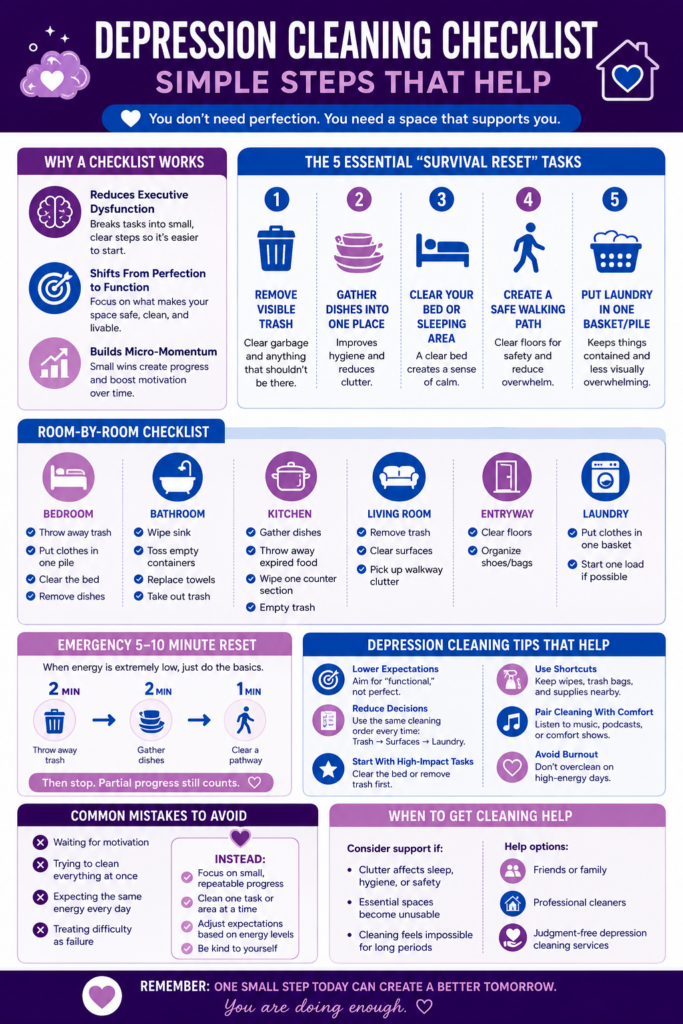
Infographic showing a depression cleaning checklist with survival reset tasks, room-by-room cleaning steps, emergency cleaning reset tips, and depression cleaning help strategies for low-energy days.

Why a Depression Cleaning Checklist Works 

Depression is a mental health condition that can affect how a person thinks, feels, and functions day to day, as proven by numerous research on depression. Common symptoms include persistent fatigue, low motivation, difficulty concentrating, and a reduced ability to complete everyday tasks. According to the American Psychological Association, depression can significantly impair daily functioning, including the ability to initiate routine activities. When this happens, even simple tasks like washing dishes or picking up clothes can feel far more demanding than they normally would.

This is one reason traditional cleaning routines often fail during periods of depression. Most cleaning systems assume a person has enough energy, focus, and motivation to plan tasks and follow through. A depression cleaning checklist works differently because it removes much of that mental burden and replaces it with a clear, supportive structure.

Reduces Executive Dysfunction Load 

One of the biggest barriers to cleaning while depressed is executive dysfunction. This refers to difficulty starting tasks, organizing steps, and maintaining focus long enough to complete them.

Without structure, cleaning requires dozens of small decisions, and each of these choices adds decision fatigue, which can quickly drain already limited mental energy. A checklist removes much of that cognitive load. Instead of planning the process, you simply follow the next small step on the list.

This structure lowers the psychological barrier to getting started. When the task becomes “take out the trash” rather than “clean the whole apartment,” the brain is more likely to engage.

Shifts From Perfection to Function 

Another reason a depression cleaning checklist works is that it redefines the goal of cleaning.

Traditional cleaning advice often focuses on appearance. During depression, those expectations can feel overwhelming and discouraging.

A checklist shifts the focus toward what could be called a functional safety baseline. Instead of aiming for perfection, the goal becomes making the space usable and supportive.

This might include:

  • Removing trash that could cause odor or pests
  • Clearing dishes to maintain basic hygiene
  • Creating safe walking paths through rooms
  • Resetting the bed or sleeping area

These tasks protect health and comfort without demanding excessive effort. By emphasizing function over perfection, the checklist helps remove the shame that often accompanies an untidy space during depression.

Builds Micro-Momentum Through Completion 

Small accomplishments matter, especially when motivation is low. Completing even a minor task can trigger a sense of progress that makes the next step slightly easier.

Psychologists often refer to this effect as part of behavioral activation, a therapeutic strategy that encourages manageable actions to interrupt depressive cycles. A narrative review from 2021 shows that engaging in small, achievable activities can gradually improve mood and increase engagement with daily life.

For example, someone might start by placing all visible trash into one bag. That single action immediately makes the room look clearer. Seeing that visible improvement can provide a small psychological boost, sometimes enough to move on to the next step.

These micro-wins build momentum. Each completed task reinforces the idea that progress is possible, even on difficult days.

Over time, this combination of structure, realistic goals, and small successes is what makes a depression cleaning checklist so effective. Rather than demanding energy that may not be available, it works with the brain’s current capacity.

The Core Depression Cleaning Checklist (Essential Survival Reset) 

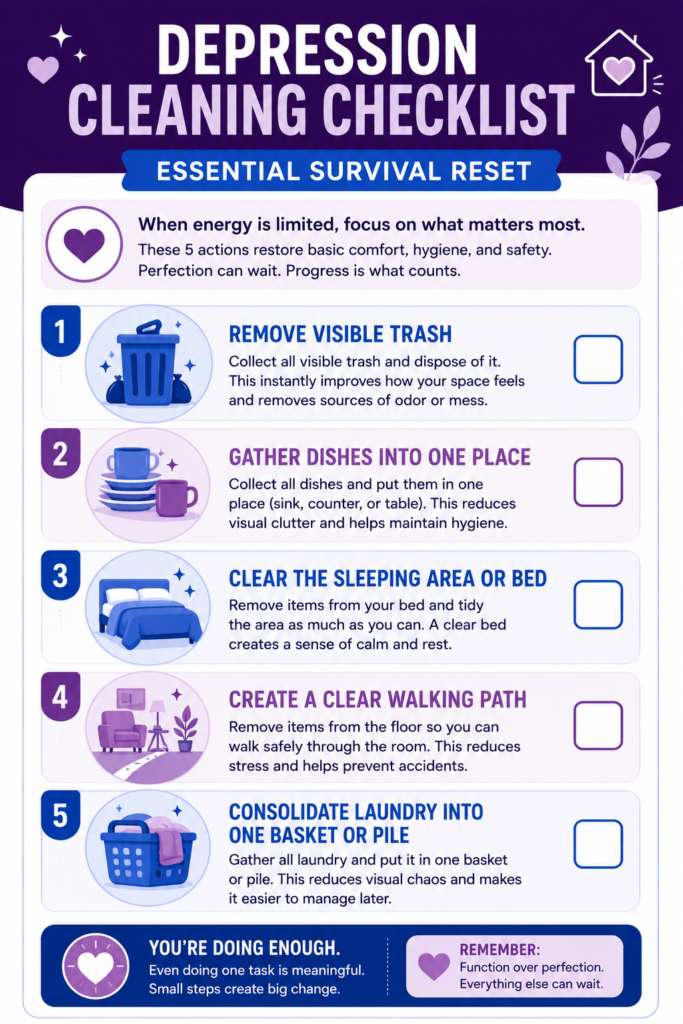
When energy is limited, the goal of cleaning is not perfection, but restoring a space to a basic functional level. These five tasks create a quick “survival reset” that improves comfort, hygiene, and safety in almost any living environment.

By focusing only on the most impactful actions, this checklist removes the pressure of trying to clean everything. Completing even one or two tasks can immediately make a space feel more manageable. These steps also create visible progress, which can make it easier to continue later.

These tasks are prioritized because they address the areas that usually create the most visual stress and disruption in daily life. Trash, dishes, blocked walking paths, and cluttered sleeping spaces tend to make a room feel more overwhelming very quickly. Focusing on these first creates a noticeable improvement with relatively little effort. Even if the room is still messy afterward, restoring basic function can make the environment feel calmer and easier to manage.

The core depression cleaning guide checklist includes:

  1. Remove visible trash
  2. Gather dishes into one place
  3. Clear the sleeping area or bed
  4. Create a clear walking path
  5. Consolidate laundry into one basket or pile

Together, these five actions restore basic livability. They reduce clutter, remove sources of odor or mess, and ensure the space is safe and usable. Everything else can wait until energy returns.

Core Depression Cleaning Checklist

ChatGPT Image May 8 2026 07 09 13 AM

Room-by-Room Depression Cleaning Checklist 

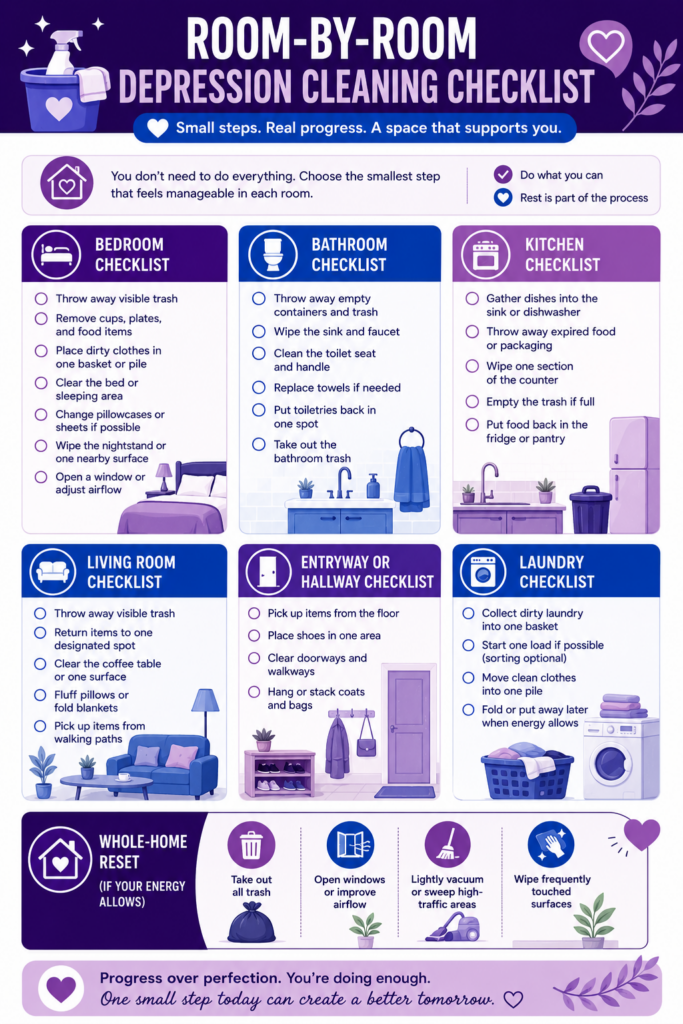
The following sections break the checklist down by room. Each room includes a minimum baseline task that restores the most important function of that space. You don’t need to complete every item. Instead, choose the smallest step that feels manageable.

Bedroom Depression Cleaning Checklist

The bedroom plays a major role in rest and emotional recovery. A cluttered or crowded sleeping space can make it harder to relax or get quality sleep. Resetting this room can create a calmer environment for rest.

  • Throw away visible trash
  • Remove cups, plates, and food items
  • Place dirty clothes in one basket or pile
  • Clear the bed or sleeping area
  • Change pillowcases or sheets if possible
  • Wipe the nightstand or one nearby surface
  • Open a window or adjust airflow

Bathroom Depression Cleaning Checklist

The bathroom is closely tied to hygiene and self-care. When this space feels manageable, it can make daily routines like brushing teeth or showering easier to maintain.

  • Throw away empty containers and trash
  • Wipe the sink and faucet
  • Clean the toilet seat and handle
  • Replace towels if needed
  • Put toiletries back in one spot
  • Take out the bathroom trash

Kitchen Depression Cleaning Checklist 

The kitchen can become overwhelming quickly because dishes, food waste, and clutter build up fast. Resetting even a small part of this space can reduce odors and make future meals easier to prepare.

  • Gather dishes into the sink or dishwasher
  • Throw away expired food or packaging
  • Wipe one section of the counter
  • Empty the trash if full
  • Put food back in the fridge or pantry

Living Room Depression Cleaning Checklist

The living room is often where people spend most of their waking time. A small reset here can make the space feel calmer and more comfortable for relaxing.

  • Throw away visible trash
  • Return items to one designated spot
  • Clear the coffee table or one surface
  • Fluff pillows or fold blankets
  • Pick up items from walking paths

Entryway or Hallway Checklist 

Entryways tend to collect clutter quickly. Clearing this space improves movement through the home and can create a small sense of order when entering or leaving.

  • Pick up items from the floor
  • Place shoes in one area
  • Clear doorways and walkways
  • Hang or stack coats and bags

Laundry Depression Cleaning Checklist 

Laundry often piles up gradually during difficult periods. Consolidating clothing into one place can make the task feel more manageable and easier to return to later.

  • Collect dirty laundry into one basket
  • Start one load if possible (sorting optional)
  • Move clean clothes into one pile
  • Fold or put away later when energy allows

Whole-Home Reset (If Your Energy Allows)

  • Take out all trash
  • Open windows or improve airflow
  • Lightly vacuum or sweep high-traffic areas
  • Wipe frequently touched surfaces

Room-by-Room Depression Cleaning Checklist

Room-by-room depression cleaning checklist infographic with simple cleaning tasks for the bedroom, bathroom, kitchen, living room, laundry area, and whole-home reset.

Emergency 5–10 Minute Depression Cleaning Reset 

Some days, even basic tasks feel impossible. On those days, a short reset instead of a full checklist can help reduce overwhelm without requiring much effort.

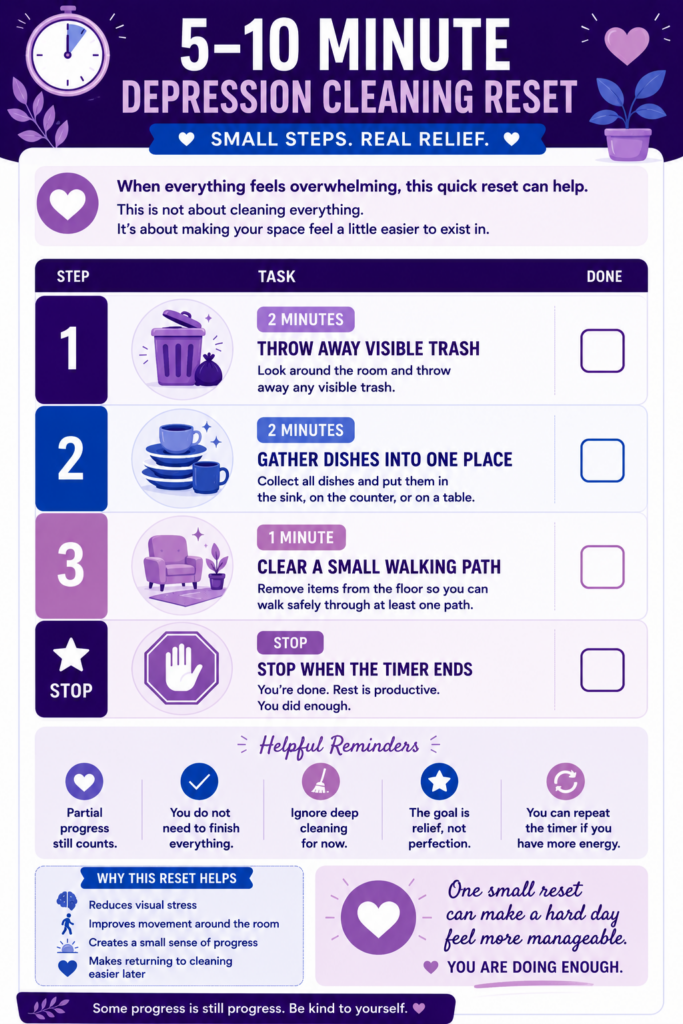
The goal of a 5–10 minute reset is not to clean the entire space. It’s simply to make the room feel slightly easier to exist in.

A helpful strategy is to set a timer for five minutes and focus only on the most visible issues. Once the timer starts, move quickly through a few simple actions.

Suggested reset steps:

  1. Spend two minutes throwing away visible trash
  2. Spend two minutes gathering dishes into one place
  3. Spend one minute clearing a small walking path
  4. Stop when the timer ends

If you have a little more energy, you can repeat the timer once more. If not, stopping after one round is completely valid.

During this reset, it helps to ignore everything else. Don’t worry about organizing drawers, folding laundry, or deep cleaning surfaces. The goal is only to remove the most noticeable clutter.

Even a short reset can make a difference. A clearer space can reduce visual stress, improve movement around the room, and create a small sense of progress. That feeling of progress, no matter how small, can make it easier to return to the checklist later when energy improves.

5–10 Minute Depression Cleaning Reset Checklist

5–10 minute depression cleaning reset checklist infographic with quick low-energy cleaning tasks including trash removal, dish collection, walking path clearing, and supportive reminders.

Depression Cleaning Tips That Actually Help

Practical strategies can make cleaning more manageable during periods of low energy or motivation. Follow these tips to help you slowly get through what you’re feeling.

A. Set expectations that match your capacity 

One of the most important adjustments is redefining what “clean” means during periods of depression.

The goal is not to maintain a picture-perfect home, but to support daily functioning. A space that allows you to rest comfortably, move safely, and access essential items is enough. Lowering expectations reduces pressure and makes starting a task feel less overwhelming.

Actionable tip: Define a minimum standard for your room (e.g., clear bed, accessible floor path, reachable essentials) and treat that as your baseline.

B. Reduce decision fatigue before you start 

Cleaning involves constant small decisions, which can be exhausting when mental energy is limited. Studies have shown that constantly making decisions can reduce mental focus and increase fatigue. Reducing the number of choices required can significantly lower the barrier to starting.

Helpful ways to do this include:

  • Using a preset cleaning checklist
  • Cleaning one room or category at a time
  • Following the same order each session

Actionable tip: Use a simple repeatable system, such as always starting with trash → surfaces → laundry. Keep a printed checklist so you don’t have to decide in the moment.

C. Focus on tasks with the biggest immediate impact 

Some cleaning tasks create noticeable improvements quickly, which can help motivate continuation. These high-impact tasks reduce visual clutter and make the space feel more manageable.

For example, removing trash bags or clearing your bed instantly changes how the room feels, even if other areas are still messy.

Actionable tip: Start each session by choosing only one high-impact task (like clearing your bed or throwing out trash) before deciding whether to continue.

D. Use shortcuts to conserve energy 

Shortcuts reduce the physical and mental effort required to clean. This works because lowering the number of steps makes tasks less intimidating and more achievable on low-energy days.

For example, instead of deep-cleaning a surface with multiple products, using disinfecting wipes can save time and reduce setup effort.

Actionable tip: Place cleaning wipes, small trash bags, and basic supplies in visible, easy-to-reach areas so starting a task takes minimal effort.

E. Pair cleaning with low-effort stimulation 

Cleaning can feel less demanding when paired with passive engagement. Listening to music, podcasts, or familiar television shows can reduce resistance and help time pass more easily.

Actionable tip: Choose one “cleaning companion” (music playlist, podcast, or comfort show) and only use it during cleaning sessions to build a consistent association.

F. Avoid overcleaning on high-energy days 

On days when energy improves, it may be tempting to do everything at once. However, overcleaning often leads to exhaustion and makes future sessions harder to start. Stopping while there is still energy left helps maintain a more sustainable routine.

Cleaning should support well-being, not create additional setbacks.

Actionable tip: Set a time limit (e.g., 20–40 minutes) even on high-energy days and stop while you still feel capable. This helps sustain progress without creating setbacks.

When to Get Cleaning Help 

There are times when managing cleaning alone is no longer realistic, especially during prolonged or severe periods of depression. Needing help is not a failure, nor does it reflect a lack of effort. In many cases, outside support can reduce stress and make it easier to maintain progress over time.

Cleaning help can be temporary or ongoing, and it can take many forms. Additional support may help when cleaning begins affecting safety, hygiene, or daily functioning.

Signs Cleaning Help is Necessary 

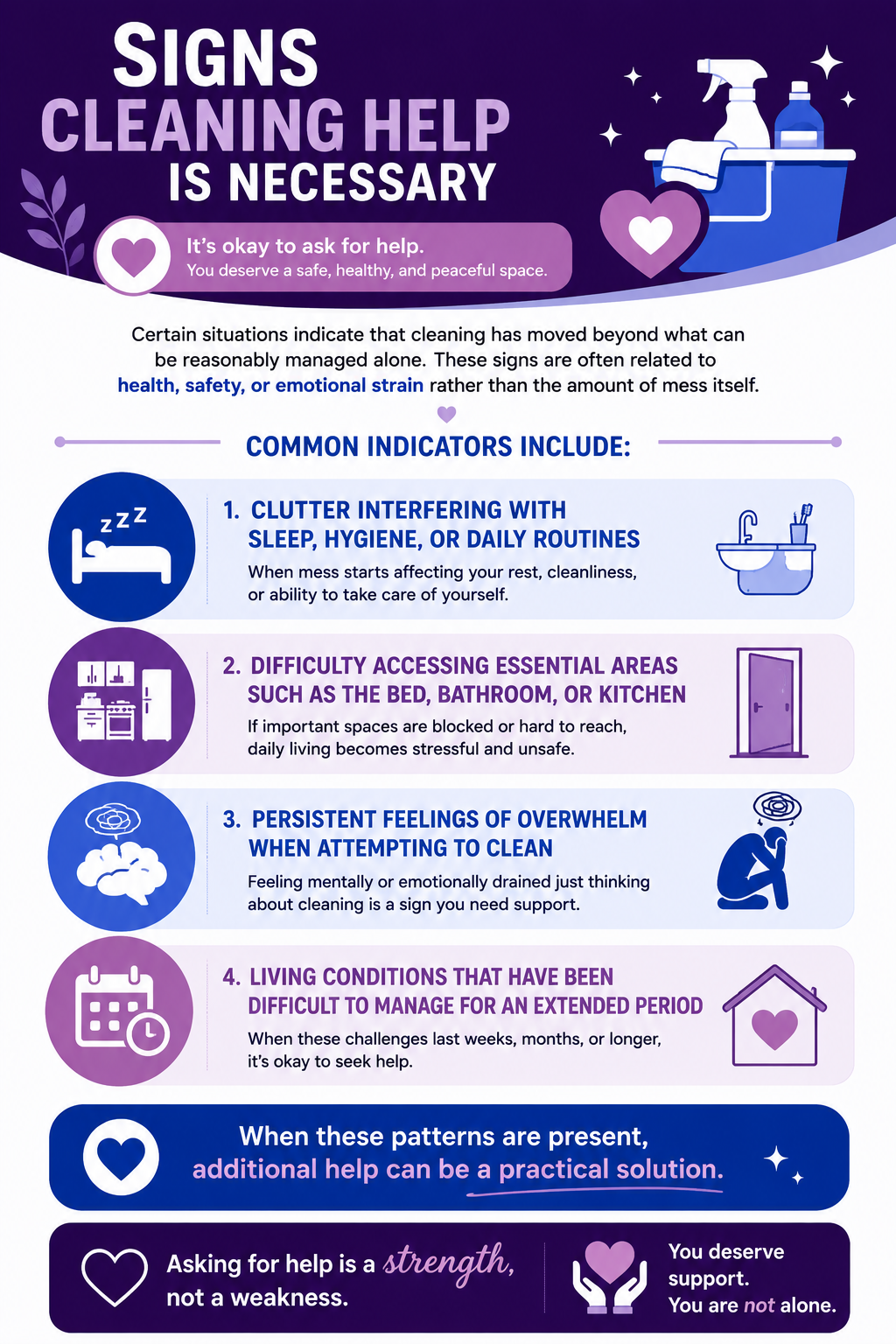
Certain situations indicate that cleaning has moved beyond what can be reasonably managed alone. These signs are often related to health, safety, or emotional strain rather than the amount of mess itself.

Common indicators include:

  • Clutter interfering with sleep, hygiene, or daily routines
  • Difficulty accessing essential areas such as the bed, bathroom, or kitchen
  • Persistent feelings of overwhelm when attempting to clean
  • Living conditions that have been difficult to manage for an extended period

When these patterns are present, additional help can be a practical solution.

Infographic showing signs that depression cleaning help is necessary, including clutter affecting hygiene, blocked essential spaces, emotional overwhelm, and long-term cleaning difficulties.

Types of Cleaning Help to Consider 

Cleaning support does not always mean a full-service or long-term arrangement. Different levels of help may be appropriate depending on circumstances and resources.

Some options include:

  • A one-time professional cleaning to reset the space
  • Periodic maintenance cleaning to prevent buildup
  • Assistance from trusted friends or family for specific tasks
  • Depression-focused or judgment-free cleaning services

What Depression Cleaning Services Actually Do  

Many depression cleaning services focus less on perfection and more on restoring a space to a functional condition. This may include removing trash, clearing heavily cluttered areas, handling dishes or laundry buildup, and improving sanitation in frequently used spaces.

These services are often designed to be supportive and low-judgment, recognizing that mental health challenges can make cleaning significantly harder. Some people use professional help as a one-time reset, while others schedule occasional maintenance visits to prevent conditions from becoming overwhelming again.

Each option can reduce the overall burden and make regular upkeep feel more achievable. Take note that many cleaning services are accustomed to working in sensitive situations and can provide support without judgment.

For some individuals, occasional or regular cleaning help becomes part of managing depression more sustainably. External support can help prevent conditions from becoming overwhelming.

Accepting help can be a practical step toward maintaining a functional, supportive living environment.

Creating Your Own Depression Room Cleaning List 

A personalized depression room cleaning list is often more effective than a general checklist because every living space, routine, and energy level is different. Instead of following a rigid system, building your own list helps you focus on what actually matters in your day-to-day life.

The goal is to make cleaning feel clearer, smaller, and easier to start, especially when decision-making is already difficult.

Once created, this list can be reused whenever things feel overwhelming. It removes the need to think from scratch and gives you a simple starting point on low-energy days.

A. Organize tasks by energy level (not importance) 

When dealing with depression, the most helpful structure is not prioritizing “what’s most important,” but rather “what is realistically possible.” Energy changes daily, so tasks should be grouped based on effort.

Example 3-level system:

  • Low energy: throw away trash, make the bed, wash a few dishes
  • Medium energy: wipe surfaces, do laundry, gather clutter into one spot
  • High energy: vacuum, reorganize items, deep clean specific areas

This system helps you choose tasks based on how you feel in the moment instead of forcing a full routine.

B. Sample personalized checklist 

Your checklist doesn’t need to be long or complex. In fact, shorter lists are often easier to follow and maintain.

Example checklist:

  • Bedroom: trash + make bed
  • Kitchen: wash dishes only
  • Bathroom: clean sink + throw away trash

This type of structure keeps expectations realistic while still improving key areas of your home.

C. Start with the rooms you use most 

Begin by identifying the spaces that affect your daily comfort the most. For many people, this is the bedroom, followed by areas like the kitchen or bathroom. These spaces tend to impact rest, eating, and basic routines the most.

Write down only 1–3 rooms to focus on first. Avoid including the entire home at the beginning. Expanding the list later is always an option.

D. Keep tasks specific and easy to start 

Vague tasks like “clean room” can feel overwhelming because they don’t clearly define what to do first. Specific actions reduce hesitation and make starting easier.

Example:

  • Instead of “clean bathroom,” write “wipe sink” or “throw away trash.”
  • Instead of “organize bedroom,” write “put clothes in laundry basket.”

The smaller and clearer the task, the easier it is to begin.

E. Limit the length of your list 

A long checklist can feel discouraging, especially on low-energy days. A shorter list is more realistic and easier to return to consistently.

Aim for 5–10 total tasks across all rooms. If your list is only 3–5 items, that is completely valid if it still helps you maintain your space.

F. Adjust the list as needs change 

Energy levels, living situations, and daily routines are not constant. Your cleaning list should change with them. You may expand the list during better weeks and simplify it again during harder periods.

Review your list once a month and ask: “Is this still realistic for me right now?” Adjust without pressure to keep it updated and usable.

Common Mistakes to Avoid When Cleaning with Depression 
When cleaning feels difficult, it’s common to fall into patterns that unintentionally make the process more stressful.

These patterns can unintentionally make cleaning feel harder to maintain.

When depression becomes overwhelming, it can be difficult to recognize habits that increase stress or exhaustion. It’s important that you become aware of them so you can get a more supportive approach.

A. Expecting The Same Results Every Time 

Depression can cause energy levels and motivation to fluctuate from day to day. Depression can cause significant fluctuations in energy, focus, and motivation from day to day. This means you can’t expect the same things all the time.

Expecting the same cleaning outcome each time will only lead to unnecessary frustration.

What to do instead: Shift your focus from consistent output to flexible effort. For example, define “success” as doing one helpful task, no matter how small. This makes progress possible even on low-energy days and reduces pressure to perform the same way every time.

B. Waiting To Feel Motivated Before Starting 

It’s common to wait for motivation before cleaning because it feels like the “right” time to begin. However, depression often disrupts motivation, making it unreliable or absent altogether. This can lead to long delays where nothing gets started.

The issue is that motivation usually follows action, not the other way around. Waiting for it can unintentionally keep you stuck in inaction, even when small tasks are actually manageable.

What to do instead: Start without relying on motivation by choosing a very small task. For example, cleaning just your bedside table can sometimes create enough momentum to continue.

C. Trying to Clean Everything At Once 

Large cleaning goals can feel overwhelming and lead to shutdown. Attempting to clean multiple rooms or complete every task in one session often results in exhaustion or burnout.

What to do instead: Use a “one-task or one-area rule.” Focus on just one surface, one corner, or one category. For example, instead of cleaning the entire room, you might only clear your bed. Breaking tasks down makes them easier to start and finish.

D. Interpreting Difficulty as Failure 

Living with depression is already hard as it is. Some days, even basic daily activities can feel difficult to manage. So be kinder to yourself and don’t think that not doing anything is a failure.

Difficulty completing tasks is simply a common symptom of the condition, not a reflection of character or effort.

What to do instead: Reframe cleaning as a form of support, not a performance measure. Even putting away a few items or taking out trash is still meaningful progress. The goal is not to prove anything, but to make your environment slightly easier to live in, one step at a time.


Conclusion: Building a Cleaning Routine That Works for You 

A depression room cleaning list is most effective when it focuses on maintaining usability. The goal is not to create a flawless space, but to maintain a room that feels safe, usable, and supportive of your daily needs.

At its core, the checklist is built around a few essential tasks such as clearing trash, managing laundry, tidying surfaces, organizing key items, and maintaining basic hygiene in your space. Even completing just one or two of these can make a meaningful difference in how your room feels.

It’s also important to recognize that energy levels will vary. Some days, you may only manage a single task, while other days allow for more progress. Both are valid. Inconsistency is normal, and it does not take away from the effort you’re putting in.

You don’t need to complete every step each time. What matters more is returning to the list when you can and building small, repeatable habits over time. With consistency, you can maintain a space that supports you, rather than overwhelms you.

Using a depression cleaning checklist regularly can also reduce the mental effort required to decide where to begin. Instead of relying on motivation or energy alone, the checklist provides a repeatable structure that can be adjusted based on how you feel each day. Over time, even small routines can help make cleaning feel less intimidating and more manageable.

FAQ

FAQs About Depression Cleaning Checklist

Leave a Reply

Your email address will not be published. Required fields are marked *