How Much Water to Vinegar for Cleaning: Easy Ratio Guide
How Much Vinegar to Mix with Water?
Finding the right ratio of how much water to vinegar for cleaning depends on what you’re trying to clean, but most everyday tasks work well with a simple 1:1 mixture. This balanced blend is strong enough to break down grime yet gentle enough for routine use on common household surfaces.
The question of how much water to vinegar for cleaning comes up often because vinegar’s strength can surprise people. Undiluted vinegar is great for certain tough jobs, but it can be too harsh for others.
That’s why understanding how to adjust the mixture is important for getting good results without damaging your home’s surfaces.
Table of Contents
- Quick Answer: How Much Water to Vinegar for Cleaning?
- Best Vinegar-to-Water Ratios for Everyday Cleaning
- Understanding Vinegar Strengths
- How Much Water to Vinegar for Cleaning Floors
- How Much Water to Vinegar for Cleaning Windows & Glass
- How Much Water to Vinegar for Cleaning Fabrics & Laundry
- What Surfaces Should You Avoid Cleaning with Vinegar?
Quick Answer: How Much Water to Vinegar for Cleaning?
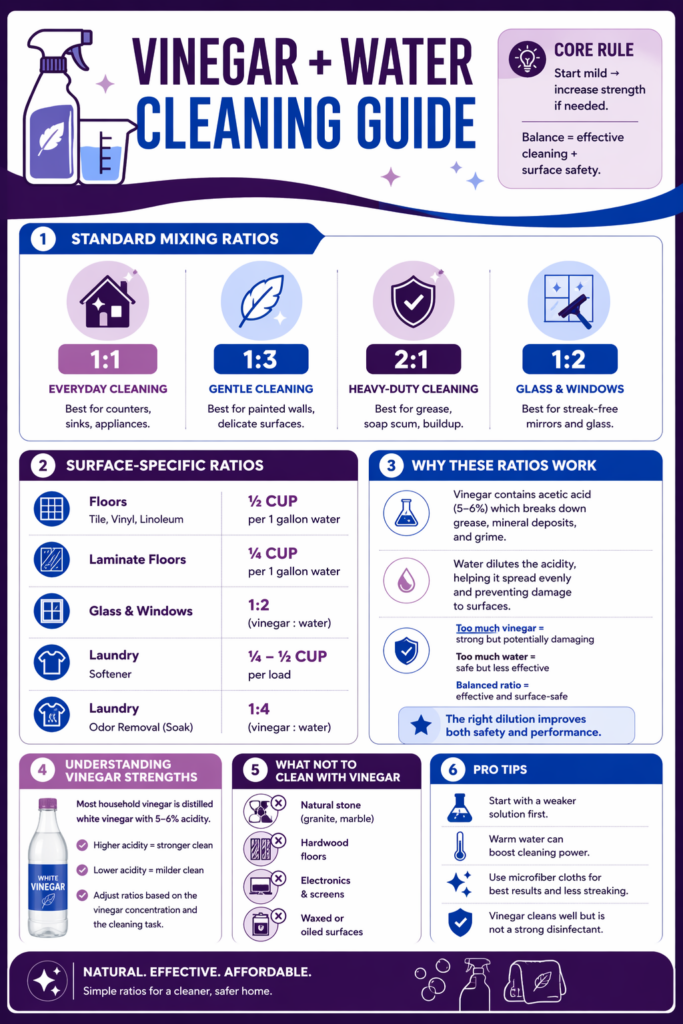
The right vinegar-to-water ratio depends on the type of cleaning you’re doing. Use these standard mixes:
- 1:1 (equal parts vinegar and water) → Best for everyday cleaning like countertops, sinks, and appliances
- 1:3 (1 part vinegar, 3 parts water) → Best for delicate surfaces like painted walls or light cleaning
- 2:1 (2 parts vinegar, 1 part water) → Best for heavy-duty cleaning like grease, soap scum, and buildup
Quick tip: Start with a weaker solution and increase the vinegar only if needed. This helps prevent surface damage while still getting effective results.
Best Vinegar-to-Water Ratios for Everyday Cleaning
Getting the right vinegar-to-water ratio is what makes this natural cleaner truly effective. While vinegar on its own is strong, diluting it helps you clean safely without damaging surfaces.
Here’s how to choose the right mix based on everyday household needs.
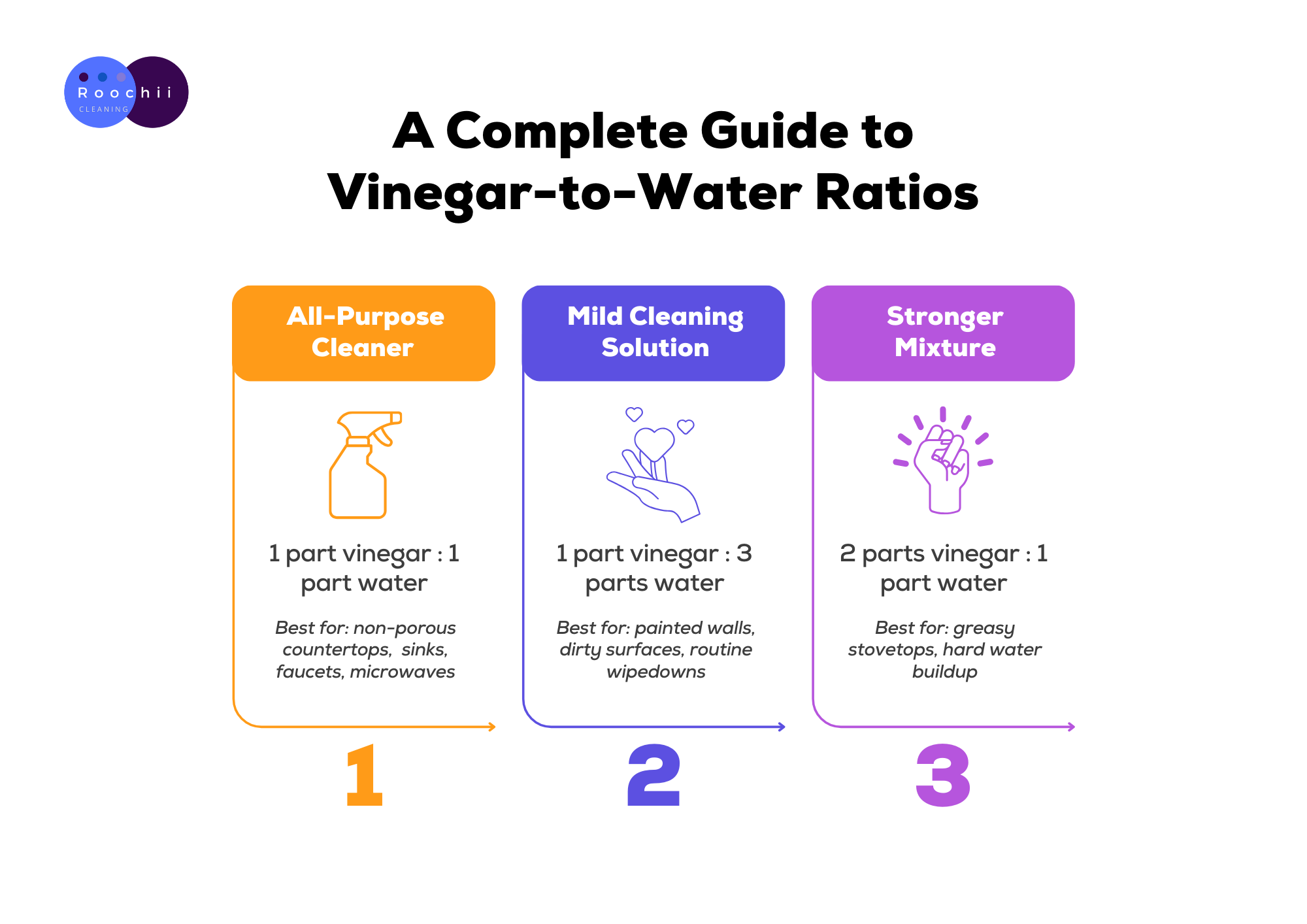
General All-Purpose Water to Vinegar Cleaning Ratio
For most daily cleaning jobs like wiping down counters or refreshing appliances, the ideal mix is:
1 part vinegar: 1 part water
This 50/50 blend is strong enough to cut through grime but gentle enough for regular use on:
- Non-porous countertops
- Sinks and faucets
- Refrigerators
- Microwaves
- Stovetops
It’s the most universal ratio and a great starting point when you’re unsure what to use.
Mild Cleaning Water to Vinegar Ratio for Delicate Surfaces
Some surfaces benefit from a softer solution. In fact, some surfaces need a softer solution to ensure that they won’t be damaged. When you need something gentler, use:
1 part vinegar: 3 parts water
This light dilution works well for:
- Painted walls
- Lightly dirty surfaces
- Areas where you want minimal scent
- Routine kitchen wipe-downs
It still cleans effectively but avoids unnecessary acidity.
Stronger Vinegar and Water Mix for Heavy-Duty Cleaning
For stubborn grime, grease, or any buildup that needs a tougher solution, use:
2 parts vinegar: 1 part water
This is ideal for:
- Greasy stovetop areas
- Soap-scum-heavy bathroom surfaces
- Hard water buildup in sinks or tubs
Be cautious when using this ratio on surfaces that can dull or etch.
Vinegar Cleaning Ratio Cheat Sheet
|
Cleaning Task |
Ratio |
Best For |
|
Everyday cleaning |
1:1 (vinegar:water) |
Counters, sinks, appliances |
|
Delicate surfaces |
1:3 |
Painted walls, light cleaning |
|
Heavy-duty cleaning |
2:1 |
Grease, soap scum, buildup |
|
Glass & windows |
1:2 |
Streak-free mirrors and glass |
|
Floor cleaning (general) |
1/2 cup per gallon water |
Tile, vinyl, linoleum |
|
Laminate floors |
1/4 cup per gallon water |
Gentle cleaning |
|
Laundry (softener) |
1/4–1/2 cup per load |
Softening fabrics |
|
Odor removal (soak) |
1:4 |
Musty clothes, mildew |
Why These Ratios Work
Vinegar contains acetic acid, typically around 5–6%, which is what breaks down grease, mineral deposits, and grime.
However, using vinegar at full strength can be too aggressive. High acidity can damage finishes, dull surfaces, or cause etching over time.
Water plays an important role by diluting the acid, allowing it to spread more evenly across surfaces while still maintaining cleaning power.
In simple terms:
- Too much vinegar = strong but potentially damaging
- Too much water = safe but less effective
- Balanced ratio = effective and surface-safe cleaning
This is why dilution improves both safety and performance, not just one or the other.
Through our experience providing home cleaning services at Roochii Cleaning, we’ve seen first-hand how much difference the correct water-to-vinegar ratio makes. Most homeowners either make their mixture too weak to clean effectively or too strong for sensitive surfaces.
Using the proper dilution not only protects finishes but also improves cleaning results dramatically.
Understanding Vinegar Strengths
Vinegars have different components and acidity levels, and the acidity level you’re working with directly affects how much water to vinegar for cleaning you’ll need. In fact, different concentrations have different effects on surfaces and bacteria.
Most households have distilled white vinegar sitting in their cabinet, but even that can come in different acidity percentages that change how effective your cleaning solution becomes.
Standard White Vinegar (5% Acid)
This is the most common household vinegar.
- Safe for everyday surfaces
- Ideal for light cleaning, dust, fingerprints, and general wipe-downs
- Typically used in most recipes for diluted cleaning solutions
It’s gentle enough for routine use yet strong enough for basic grime
Cleaning Vinegar (6% Acid)
Cleaning vinegar is slightly stronger. It’s about 20% more powerful than regular white vinegar.
- Great for soap scum, hard water deposits, and tougher stains
- Needs more dilution to avoid damaging delicate surfaces
Because it’s stronger, the water-to-vinegar ratio becomes even more important.
Apple Cider Vinegar (5% Acid)
Apple cider vinegar also has about 5% acidity, but:
- It can leave a tint or scent
- It’s better for deodorizing or fabric-related uses
- Not ideal for streak-free surfaces like glass
Although apple cider vinegar may work for molds or stains, most people still choose white vinegar for general cleaning because it dries clear.
Why Acidity in Vinegar Matters
Understanding acidity is only part of the story. The purpose of your cleaning task also shapes how strong your mixture should be. Light dust, fingerprints, and basic wipe-downs don’t require the same punch as soap scum, mildew, or greasy kitchen spills.
When the vinegar strength is higher, the water ratio needs to increase accordingly to keep surfaces safe. That’s why homeowners often struggle: using undiluted vinegar on the wrong material can cause etching, dulling, or stripping of finishes.
As a rule of thumb, vinegar works best when balanced with water in a way that maintains cleaning power without becoming overly acidic.
How Much Water-to-Vinegar Ratio for Cleaning Floors
Floors require a more careful vinegar-to-water ratio because different materials react differently to acidity. Using the right mix keeps your floors clean without risking dullness, streaks, or long-term damage. Here’s how to get it right based on the type of flooring you have.
Best Water-to-Vinegar Ratio for Tile, Vinyl, and Linoleum Floors
Hard, non-porous floors handle vinegar the best. These surfaces aren’t affected by mild acidity and usually benefit from vinegar’s ability to break down dirt, disinfect, and dissolve sticky residue.
Standard Mix: 1/2 cup vinegar per 1 gallon of warm water
Why it works:
- The acidity cuts through kitchen grease and bathroom grime
- Warm water helps loosen dirt and improve shine
- Doesn’t leave film or residue
Tile, vinyl, and linoleum are generally the safest surfaces for vinegar, making this ratio ideal for routine weekly cleaning.
Safe Water to Vinegar Ratio for Laminate Floors
Laminate is more sensitive because it has a wear layer that can cloud or become damaged by repeated exposure to acidic solutions. Too much water can also seep into seams and cause swelling, so dilution and moisture control are essential.
Recommended Mix: 1/4 cup vinegar per 1 gallon of warm water
Why it works:
- Keeps the acidity low enough to preserve the protective coating
- Prevents hazy buildup
- Gives just enough cleaning strength for footprints, crumbs, and everyday dirt
Laminate requires a “less is more” approach. A mild dilution protects the finish while still keeping the floor fresh.
Using Vinegar on Hardwood Floors (Proceed With Caution)
Hardwood is the most controversial surface when it comes to vinegar. Even when diluted, vinegar can slowly erode polyurethane finishes, making floors look dull over time.
Maximum Safe Mix: 1/2 cup vinegar per 1 gallon warm water
If not explicitly approved or mentioned by your manufacturer, avoid vinegar altogether. For most hardwood floors, a pH-neutral wood cleaner is safer for long-term care.
How Much Water to Vinegar for Cleaning Windows & Glass
Windows, mirrors, and glass surfaces are some of the areas where the water-to-vinegar ratio matters most.
Use too much vinegar, and you can end up with streaks or a strong lingering smell. Use too much water, and the solution may not cut through fingerprints, haze, and spots effectively.
The key is finding the perfect balance that leaves a streak-free finish every time.
Best Water to Vinegar Ratio for Streak-Free Glass Cleaning
For most windows and glass surfaces, the ideal vinegar-to-water mix is:
1 part vinegar: 2 parts water
This 1:2 ratio is strong enough to remove fingerprints, grime, water spots, and even light mineral deposits. Yet it’s diluted enough to evaporate cleanly without leaving streaks.
This solution works beautifully in a spray bottle for everyday use.
How to Apply for the Best Results
To achieve a flawless, streak-free finish:
- Use a microfiber cloth instead of paper towels (paper can leave lint).
- Spray lightly. Too much liquid can leave streaks.
- Wipe in long, overlapping strokes.
For mirrors, start from the top and work down. For windows, clean on a cloudy day to avoid sunlight drying the solution too fast
If streaking happens, it’s usually due to leftover residues from previous cleaners. In that case, wipe once with undiluted vinegar, then follow with the normal diluted ratio.
How Much Water to Vinegar for Cleaning Fabrics & Laundry
Vinegar has become a popular laundry booster and fabric cleaner because it softens fibers and breaks down detergent residue. However, just like with other cleaning tasks, the right water-to-vinegar ratio is crucial. Too much vinegar can weaken some fabrics or leave a strong scent, while too little may not make much difference.
Below is a practical guide on how much water to vinegar you should use for laundry, spot cleaning, and fabric care.
Using Vinegar as a Fabric Softener (Correct Ratio)
Recommended Ratio:
-
1/4 to 1/2 cup vinegar per standard laundry load
This is the most common ratio used for fabric softening.
- No need to pre-mix with water
- Add directly to the fabric softener compartment
- The washing machine automatically dilutes it during the rinse cycle
When to use this ratio:
- Regular weekly laundry
- Towels and clothing that feel stiff from detergent buildup
- General fabric softening needs
Odor Removal (Fabric Care Ratio Guide)
Recommended Ratio:
-
1/2 cup vinegar per load OR 1:4 vinegar-to-water soak (for stronger odors)
Use this depending on how strong the odor is.
- Light odors: Add 1/2 cup directly to the wash
- Strong odors: Soak fabric in 1:4 solution before washing
When to use this ratio:
- Sweat or everyday odors
- Musty or damp-smelling clothes
- Gym or heavily used fabrics
Whitening & Brightening Fabrics
Recommended Ratio:
-
1 cup vinegar in a warm water soak (no strict dilution needed beyond soaking water)
Soak whites for 1–2 hours before washing. Works best for dull or greyed fabrics.
When to use this ratio:
- Dingy white clothing
- Fabrics with mineral buildup from detergent or hard water
What Surfaces Should You Avoid Cleaning with Vinegar?
While vinegar is a versatile and effective natural cleaner, it is not safe for every surface. Its acidity can react with certain materials, leading to damage, dulling, or long-term wear. Knowing what not to clean with vinegar is just as important as knowing the right water-to-vinegar ratio.
A. Natural Stone (Granite, Marble, Quartz)
Avoid using vinegar on natural stone surfaces. The acid can slowly etch and dull polished finishes, leaving permanent marks over time. Instead, use a pH-neutral stone cleaner designed specifically for these materials.
B. Hardwood Floors (Especially Sealed or Treated Wood)
Even when diluted, vinegar can gradually break down protective coatings on hardwood floors. This may cause dullness, streaking, or finish damage. If unsure, it’s safer to use a wood-safe, pH-neutral floor cleaner recommended by the manufacturer.
C. Electronics and Screens
Never use vinegar directly on electronics such as TVs, laptops, or phone screens. The liquid can damage coatings and seep into sensitive components. Use a microfiber cloth slightly dampened with water or a screen-safe cleaner instead.
D. Waxed or Oiled Surfaces
Vinegar can strip away wax or oil finishes, leaving surfaces uneven or unprotected. This includes waxed furniture, certain countertops, and specialty-treated wood surfaces.
Final Thoughts: Getting the Right Water to Vinegar Ratio
Choosing the right water-to-vinegar ratio ultimately comes down to what you’re cleaning and how strong your vinegar is. Tough grime and buildup call for stronger solutions, while delicate surfaces need gentler mixes to prevent damage. Once you understand both, finding the right balance becomes simple and effective.
For most everyday cleaning, a 1:1 ratio is a reliable go-to. If you’re unsure, start with a milder solution and gradually increase the strength only when needed. This method helps protect your surfaces while still delivering solid cleaning results.
Vinegar remains one of the most budget-friendly and versatile cleaning solutions—but only when used correctly. By adjusting your ratios based on the task, you can clean more efficiently, extend the life of your home’s finishes, and streamline your routine with a single, easy-to-mix solution.
If you’d rather skip the trial and error, professional cleaning services can handle the right solutions for every surface, saving you time while ensuring your home is cleaned safely and thoroughly.
FAQ
FAQs About How Much Water to Vinegar for Cleaning
A 1:1 ratio works for most daily cleaning tasks like counters, sinks, and general wipe-downs.
Yes. Warm or hot water helps vinegar work better by loosening dirt and grime. Just avoid boiling water, especially when cleaning glass.
A vinegar-and-water mix lasts about 6–8 weeks when stored in a closed spray bottle. Keep it out of direct sunlight to maintain potency.
Vinegar has mild antibacterial properties but isn’t strong enough to replace disinfectants. It’s great for cleaning but not for sanitizing high-germ areas.
Vinegar is generally safe once dry, but avoid using strong solutions around pets with sensitive skin or respiratory issues.