What is Soap Scum and How Can You Prevent It Effectively?
Everything You Need to Know About Soap Scum
You clean your bathroom regularly, scrub your tiles, rinse everything down, and yet, that stubborn cloudy film keeps coming back like it pays rent. If you’ve ever wondered what is soap scum and why it seems immune to your best cleaning efforts, you’re not alone.
Soap scum forms when soap mixes with minerals in hard water, creating a residue that clings to surfaces like glass, tiles, and fixtures. It’s not just unsightly; it can make your bathroom feel dull, grimy, and harder to maintain over time. And unfortunately, the more it builds up, the tougher it becomes to remove.
Once you understand what causes it, preventing it becomes much easier (and far less frustrating). Keep reading to learn exactly how soap scum forms and the simple ways you can stop it before it takes over your bathroom again.
Table of Contents
What Is Soap Scum?
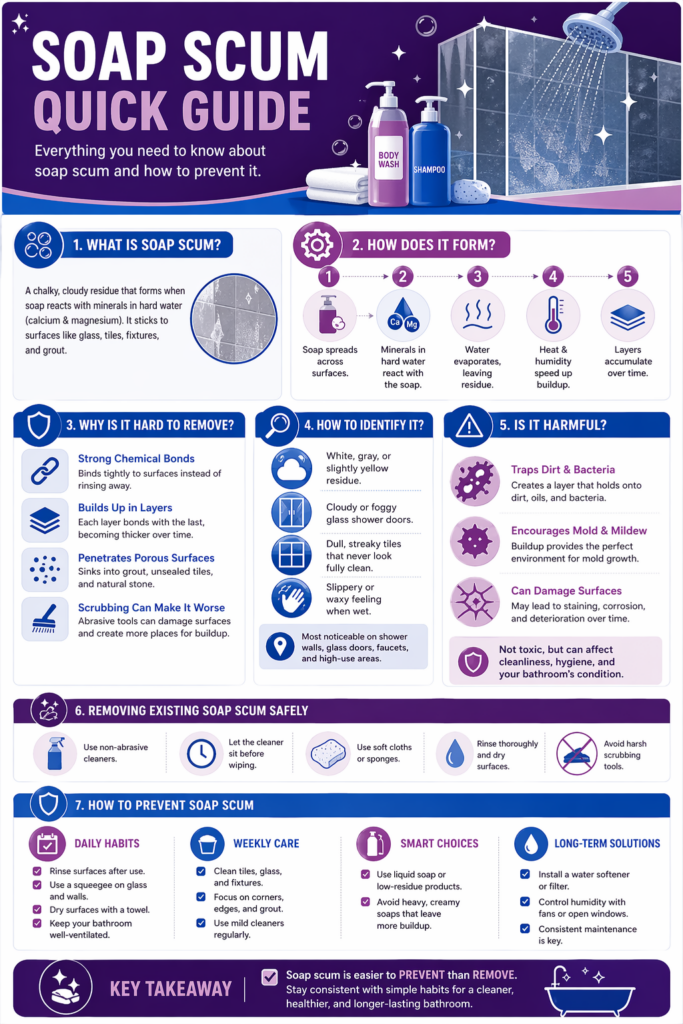
Soap scum is a chalky, filmy residue that forms when traditional soap reacts with minerals in water. Most bar soaps are made from fatty acid salts, which are created by combining fats or oils with an alkaline substance.
When these fatty acid salts come into contact with hard water, they react with calcium and magnesium ions. This reaction produces an insoluble compound that does not dissolve in water. Instead of rinsing away, it sticks to nearby surfaces and begins to accumulate.
This is where soap differs from synthetic detergents. Detergents are chemically designed to avoid reacting with minerals, so they remain soluble and wash away more easily. That is why liquid body washes and modern cleansers tend to leave less residue compared to traditional bar soap.
Over time, repeated exposure leads to buildup. The residue forms a dull, cloudy layer that can feel waxy or slightly sticky. It commonly appears on shower walls, glass doors, tiles, and fixtures, especially in areas with frequent use and limited airflow.
How Does Soap Scum Form?
Soap scum doesn’t appear overnight. It builds gradually through repeated use, especially in bathrooms with hard water and frequent showers.
Here’s how the process works step by step:
- Soap spreads across surfaces: During a shower, soap mixes with water and coats your skin, tiles, glass, and fixtures. Some of this soapy water remains on surfaces after rinsing.
- Minerals react with the soap: Hard water contains calcium and magnesium ions. These minerals react with the fatty acid salts in soap, forming an insoluble residue.
- Water evaporates and concentrates the residue: As leftover water dries, it leaves behind a more concentrated layer of minerals and soap. This makes the film more noticeable over time.
- Heat and humidity speed things up: Hot showers increase mineral activity and evaporation. Warm, humid air also helps the residue settle and stick more firmly.
Layers build on top of each other: Each use adds a thin layer over the previous one. As these layers stack, the buildup becomes thicker and harder to remove.
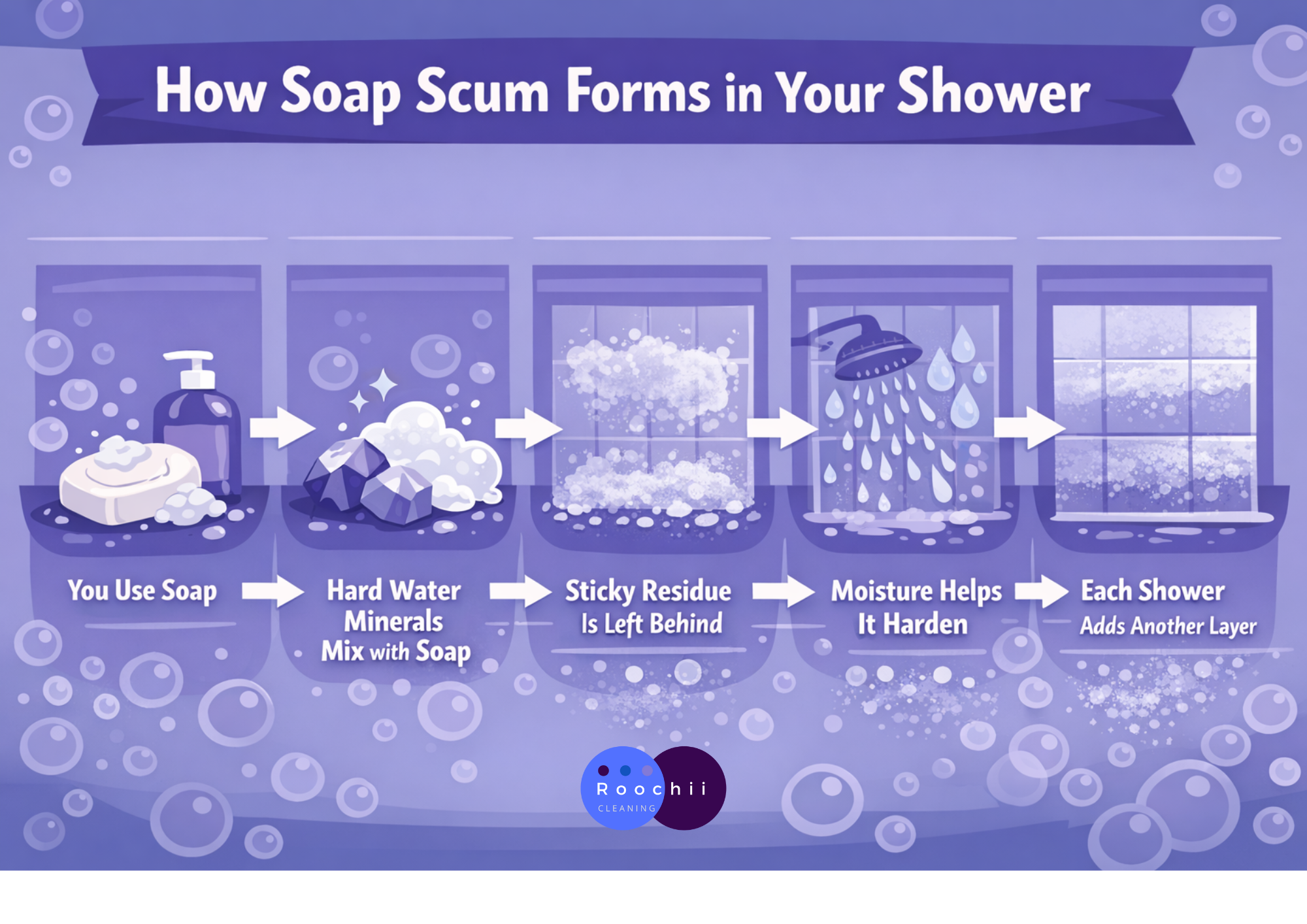
For example, if you take daily hot showers in a poorly ventilated bathroom, small amounts of residue are left behind each time. After a week, you may notice a faint haze on the glass. After a few weeks, that haze turns into a visible, stubborn coating.
Why Is Soap Scum So Hard to Remove?
Soap scum is difficult to remove because it does more than sit on the surface. It forms both chemical bonds and physical adhesion, which allow it to cling tightly instead of rinsing away easily.
The fatty acid salts in soap react with calcium and magnesium ions, creating a solid compound that attaches to surfaces. This is different from simple dirt, which usually rests on top and can be wiped away. Soap scum, by contrast, anchors itself and becomes more resistant over time.
Surface type also plays a major role. Porous materials like grout, unsealed tiles, and natural stone absorb the residue into tiny openings. Once inside, it becomes harder to reach and remove. Non-porous surfaces like glass and metal do not absorb it, but buildup can still stick firmly and spread across the surface.
Scrubbing alone is often ineffective and can cause damage. Abrasive tools may scratch glass, wear down finishes, or roughen surfaces. These small imperfections create more areas for soap scum to cling to, which can make the problem worse after cleaning.
Buildup also becomes harder over time due to layering. Each new layer bonds with the previous one, creating a thicker and more compact deposit. As it hardens, it resists mild cleaners and requires more effort to break down, especially if left untreated for long periods.
How Do You Identify Soap Scum?
Soap scum doesn’t usually show up as obvious spots or stains. Instead, it forms a cloudy, dull film that makes bathroom surfaces look dirty even after you’ve cleaned them.
Common Signs of Soap Scum
- A white, gray, or slightly yellow residue on surfaces
- Glass shower doors that look cloudy or foggy instead of clear
- Tiles that appear dull or streaky and never seem fully clean
- A slippery or waxy feeling when the surface is wet
Soap scum is easiest to notice in areas where water dries over and over again, such as shower walls, corners, shelves, and around faucets and handles.
Simple Tests to Confirm Soap Scum
If you’re unsure what you’re dealing with, a quick test can help:
- Wipe test: Use a damp cloth and wipe the surface. Soap scum will smear or partially come off, but may leave a hazy streak behind.
- Vinegar test: Apply a small amount of vinegar to the area. If it starts to break down and clear up, it is likely soap scum or mineral-related buildup.
Soap Scum vs. Other Types of Buildup
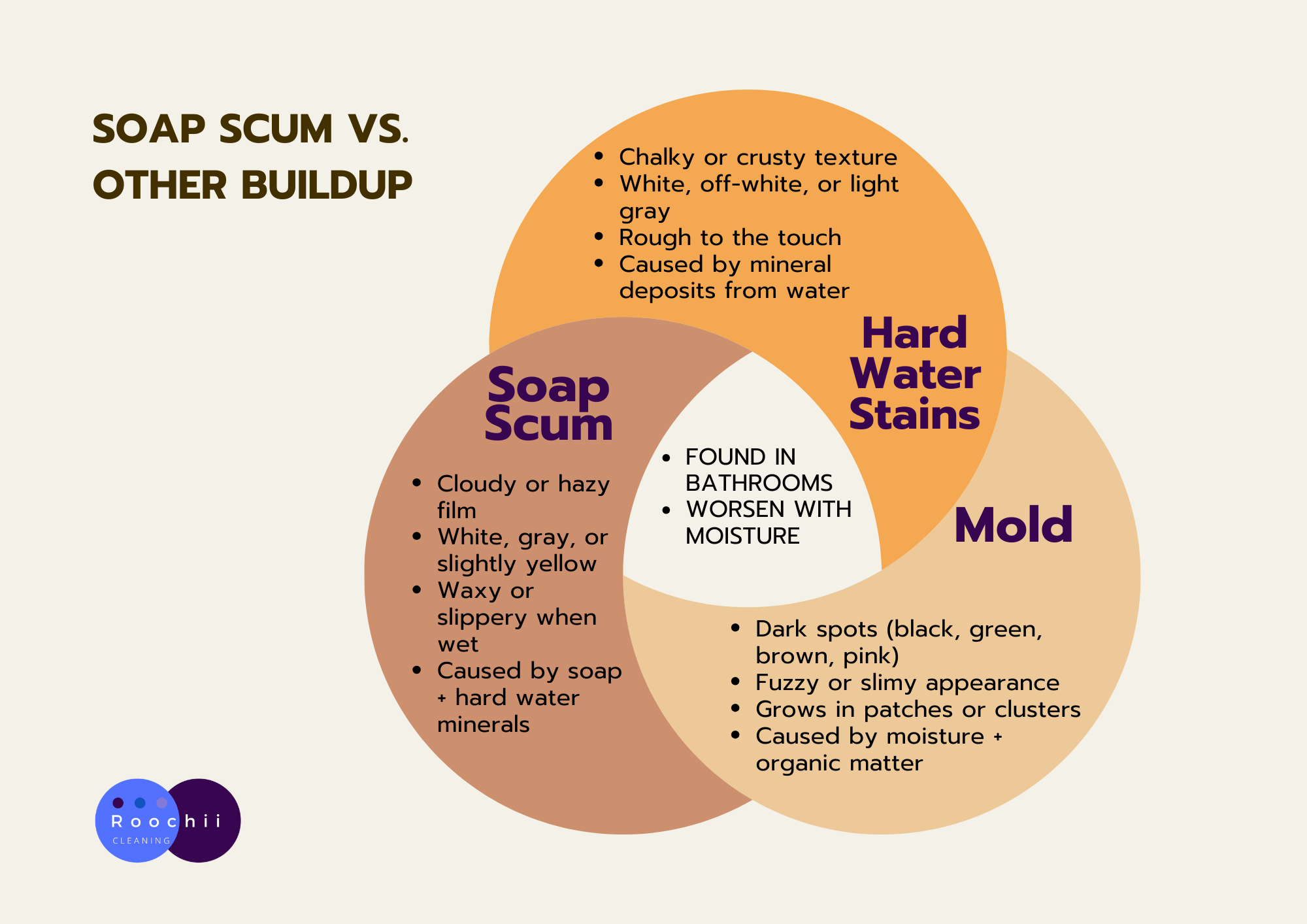
Soap scum is often mistaken for other bathroom problems, but there are a few simple ways to tell the difference:
- Soap scum feels waxy or slippery and gives surfaces a cloudy appearance
- Hard water stains are made of mineral deposits and usually look chalky, rough, or crusty
- Mold appears as dark spots or patches and commonly grows in grout lines, corners, or damp areas
Knowing what you’re dealing with makes it much easier to choose the right cleaning method and avoid wasting time on products that won’t work.
Is Soap Scum Harmful?
Soap scum is not considered toxic, but that does not mean it is completely harmless. On its own, it is simply a residue formed from soap and minerals. The concern comes from what it collects and supports over time.
Hygiene and Bacteria Buildup
As soap scum accumulates, it creates a sticky layer that traps dirt, body oils, and dead skin cells. This buildup can also hold bacteria, especially in frequently used areas like showers and sinks. While it may not pose immediate health risks, it can reduce overall cleanliness.
Mold and Mildew Growth
Bathrooms are naturally humid, which creates a suitable environment for mold and mildew. Soap scum helps retain moisture and organic material, making it easier for mold to grow and spread. Over time, this can lead to visible stains and unpleasant odors.
Surface and Structural Damage
Soap scum can affect more than just appearance. On porous surfaces like grout and unsealed tiles, residue can seep in and cause gradual weakening or discoloration. Glass and fixtures may also become dull, making them harder to maintain with regular cleaning.
When It Becomes a Problem
Soap scum becomes a sanitation issue when buildup is left untreated for long periods. Thick layers can hide grime and bacteria, making surfaces look cleaner than they actually are. In high-use bathrooms, this can impact both hygiene and long-term maintenance.
Regular cleaning helps prevent these issues from developing. Small amounts are manageable, but buildup can quickly turn into a more persistent problem if ignored.
In these cases, a professional deep cleaning service can help remove stubborn residue more thoroughly and restore surfaces to a more manageable condition. It also helps reset areas so regular maintenance becomes more effective moving forward.
Removing Existing Soap Scum Safely
Removing soap scum requires more patience than force. The goal is to break down the residue without damaging the surface underneath.
Follow these steps to remove soap scum safely and effectively.
Step 1: Choose a gentle, non-abrasive cleaner
Start with a bathroom cleaner made to dissolve soap residue and mineral buildup. These cleaners are designed to break down soap scum without scratching or etching surfaces.
Avoid harsh chemicals or gritty formulas, especially surfaces prone to etching like glass, tile, or stone.
Step 2: Apply the cleaner generously
Spray or apply the cleaner evenly over the affected areas. Make sure the soap scum is fully coated so the cleaner can do its job.
Spot-treat heavier buildup instead of scrubbing harder.
Step 3: Let the cleaner sit and work
Patience matters here.
Allow the cleaner to sit for a few minutes, following the product’s instructions. This gives it time to loosen and soften the soap scum so it can be wiped away more easily. Don’t let the cleaner dry on the surface.
Step 4: Wipe with a soft tool
Use a soft cloth, sponge, or microfiber towel to gently wipe away the loosened residue.
Work in small sections and rinse your cloth often to avoid spreading the buildup around.
Step 5: Rinse thoroughly and dry
Rinse the surface well with clean water to remove any leftover cleaner and residue. Dry the area with a towel to prevent new soap scum from forming as water evaporates.
Step 6: Avoid damaging tools and shortcuts
Stay away from steel wool, rough scrub pads, or harsh chemicals. These can scratch surfaces permanently, making them harder to clean in the future and more likely to collect buildup.
Surface-Specific Removal Guidance
Different materials react differently to cleaners and scrubbing, so matching the method to the surface helps prevent damage while still removing soap scum effectively.
- Glass: Use a non-abrasive bathroom cleaner or diluted vinegar solution. A microfiber cloth or soft sponge works best for wiping. Avoid rough pads or blades, which can leave permanent scratches or a hazy finish.
- Ceramic tile: Most mild cleaners are safe for ceramic surfaces. For textured areas and grout lines, use a soft-bristle brush with light pressure. Avoid overly strong acids that may weaken grout over time.
- Natural stone (marble, granite, etc.): Do not use vinegar, lemon juice, or any acidic cleaners. These can etch and dull the surface. Stick to pH-neutral, stone-safe cleaners and wipe gently without soaking the area.
- Fiberglass or acrylic: Use only mild, non-abrasive cleaners. Harsh chemicals or scrubbing pads can cause micro-scratches that build up over time and make the surface look dull. Soft sponges are the safest option.
- Grout: Apply cleaner directly to buildup and use a soft brush for targeted scrubbing. Avoid excessive force or prolonged exposure to strong acids, as these can break down grout and shorten its lifespan.
How to Prevent Soap Scum
Preventing soap scum is much easier than removing it once it builds up.
With a few simple habits and smart product choices, you can keep bathroom surfaces cleaner for longer and reduce the need for heavy scrubbing.
A. Make Prevention Part of Your Daily and Weekly Routine
Small, consistent actions go a long way in stopping soap scum before it starts.
1. Rinse shower surfaces after each use
A quick rinse helps wash away leftover soap and minerals before they have time to stick and dry on walls, doors, and fixtures.
2. Use a squeegee to remove standing water
Pulling water off glass, tile, and walls takes less than a minute and dramatically reduces residue.
Less water left behind means fewer minerals and less soap scum forming.
3. Dry surfaces when possible
Wiping down high-use areas with a towel helps prevent moisture from lingering and turning residue into hardened buildup.
4. Reduce humidity in the bathroom
Run exhaust fans during and after showers, or open a window if possible. Lower humidity helps surfaces dry faster, which slows the spread of soap scum.
B. Weekly Care to Control Early Buildup
Even with daily habits, a light weekly clean keeps residue from accumulating.
- Wipe down tiles, glass, and fixtures using a mild bathroom cleaner
- Pay attention to corners, edges, and grout lines where water lingers
- Dry surfaces after cleaning to remove remaining moisture
This prevents thin layers of soap scum from hardening into thicker buildup.
C. Choose Products That Leave Less Residue
The type of soap you use matters more than most people realize.
Traditional bar soaps are one of the biggest contributors to soap scum because they react strongly with hard water minerals. Switching to liquid body washes, soap-free cleansers, or low-residue bar soaps can significantly reduce buildup on shower walls and fixtures.
Using fewer products overall can also help minimize residue that sticks to surfaces.
D. Address Water Quality at the Source
Hard water makes soap scum form faster and more stubborn.
Installing a water softener or filtration system reduces the amount of calcium and magnesium in your water. With fewer minerals present, soap rinses away more cleanly and leaves less residue behind.
Even smaller solutions, like a showerhead filter, can make a noticeable difference over time by slowing soap scum buildup and making routine cleaning easier.
E. Ventilation Strategy
Moisture control directly affects how quickly residue forms.
- Run exhaust fans during and after showers
- Keep bathroom doors open when possible
- Reduce humidity so surfaces dry instead of staying damp
Less lingering moisture means fewer chances for soap and minerals to bond and harden.
Conclusion: Preventing Soap Scum In The Long-Term
Soap scum forms through a simple reaction, but its effects can build up quickly. Once soap mixes with hard water minerals, it creates a residue that sticks, layers, and becomes harder to remove over time.
The key to managing it is consistency. Recognizing early signs, using the right cleaning methods, and making small daily adjustments can prevent heavy buildup. Simple habits like rinsing surfaces, improving ventilation, and choosing low-residue products help reduce how much soap scum forms in the first place.
It also helps to match your approach to your environment. Homes with hard water or high humidity may need more frequent maintenance. Paying attention to these factors makes cleaning more efficient and less frustrating over time.
When buildup becomes thick or difficult to remove, a deeper clean may be needed to reset surfaces. Once cleared, regular upkeep becomes much easier and more manageable.
With the right understanding and routine, soap scum becomes less of a recurring problem and more of something you can control.
FAQ
FAQs on Soap Scum and Preventing It
Soap scum forms when soap reacts with minerals like calcium and magnesium in hard water. This reaction creates an insoluble residue that sticks to surfaces instead of rinsing away. Over time, repeated exposure leads to visible buildup in bathrooms.
Soap scum is usually white, gray, or slightly yellow. It often appears as a cloudy film on glass, tiles, or fixtures rather than a clear stain.
In thicker layers, it can look dull and uneven.
No, they are different. Soap scum is a mix of soap and minerals, while hard water stains are only mineral deposits. Soap scum often feels smoother or waxy, while hard water stains tend to be rough or crusty.
Yes. Bar soaps contain fatty acid salts that react more easily with hard water minerals.
Liquid soaps and synthetic cleansers are designed to rinse away more cleanly, which reduces residue buildup.
Yes, hot water can contribute to faster buildup. Higher temperatures increase evaporation, which leaves behind concentrated minerals and soap residue. This can make soap scum form more quickly over time.
Yes, vinegar can help break down soap scum due to its mild acidity. It works best on glass, tiles, and other non-sensitive surfaces. However, it should be avoided on natural stone because it may cause damage.
Not completely. Liquid soap reduces the amount of soap scum but does not eliminate it entirely. Hard water minerals can still react with some ingredients, though buildup is usually lighter and easier to clean.
Soap scum returns quickly because the conditions that cause it often remain the same. Hard water, humidity, and daily shower use continue to create residue. Without regular wiping or rinsing, new layers form on top of old ones.