How to Clean Your Oven Fast & Safely: 5 Easy Ways

How to Clean an Oven Quickly? Your Complete Guide
Cleaning an oven is one of those household tasks that you delay for as long as possible because you might be unsure how to clean your oven properly.
Grease splatters build up slowly, spills bake onto the bottom, and before long the oven starts producing burnt smells, smoke during preheating, or uneven cooking. At that point, cleaning feels overwhelming. Many homeowners worry that it will require hours of heavy scrubbing or complicated steps that still don’t fully remove the residue.
Most people only remember it needs cleaning when the oven starts smoking during preheating.
The truth is that oven cleaning becomes much easier when you understand what type of buildup you’re dealing with and which method works best for it. Burnt-on grease, carbonized food, and lingering odors each respond differently to cleaning solutions, which is why some techniques work far better than others.
Using the right approach can loosen stubborn residue quickly, reduce scrubbing, and restore a clean, odor-free oven without turning the job into an all-day project.
The sections below break down each method so you can choose the approach that fits your oven and the level of cleaning required.
Table of Contents
- Why Regular Oven Cleaning Matters
- What to Use to Clean Your Oven (Tools, Products & Natural Alternatives)
- Step-by-Step Guide on How to Clean Your Oven
- How to Clean a Self-Cleaning Oven Safely
- Cleaning Specific Oven Parts
- Common Mistakes to Avoid When Cleaning Your Oven
- Preventative Care & Maintenance Tips for your Oven
- When to Call a Professional
Why Regular Oven Cleaning Matters
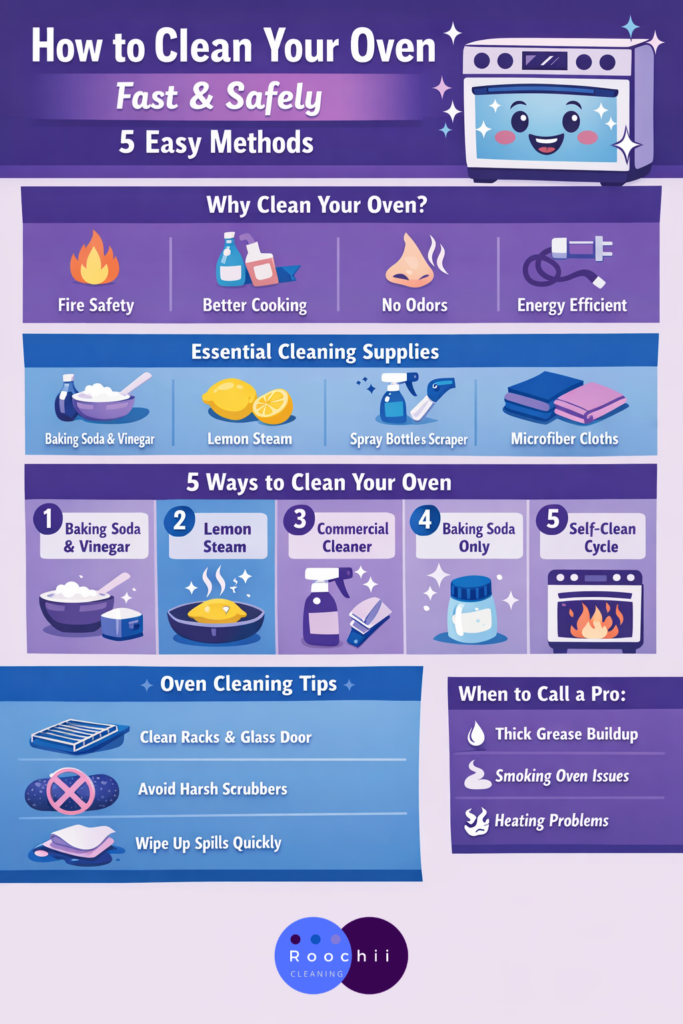
A clean oven does far more than make your kitchen look tidy. It helps keep your home safer, your food tasting better, and your appliances running efficiently.
Over time, ovens naturally collect grease, food splatters, and small spills from everyday cooking. Even if you regularly wipe the exterior, the interior can slowly accumulate layers of residue that go unnoticed.
Regular maintenance is an important part of caring for your overall cooking environment. Learning how to clean your oven properly is a simple form of proactive care that prevents small messes from turning into stubborn buildup.
Clean Ovens Are Safer Ovens
When grease and old food particles sit on hot surfaces, they can ignite far more easily than most people realize.
That sudden puff of smoke when you preheat your oven? It’s usually leftover residue burning off. It’s a sign that your oven is working harder.
In fact, it might be a little harmful because a study from 2023 identifies these buildups as a factor that can trigger fires.
Removing those layers helps prevent flare-ups and keeps your kitchen environment more stable and predictable.
Better Cooking Results Every Time
A dirty oven doesn’t heat evenly. When burnt-on buildup absorbs heat or blocks airflow, you end up with hot spots that can ruin a recipe.
A clean oven provides consistent heat, allowing your food to cook as the recipe intended, which means you’ll have more delicious meals.
Improved Air Quality and Fewer Odors
Burnt spills release fumes that linger long after you turn the oven off. These odors can drift into nearby rooms and even cling to the food you cook next.
For people with allergies or sensitivities, this can be especially irritating. A clean oven eliminates these lingering smells and keeps the air in your kitchen fresh, clear, and comfortable.
Energy Efficiency and Longer Appliance Life
When grime builds up, your oven must work harder to reach and maintain temperature. That extra effort uses more energy and places unnecessary strain on the heating elements and internal components.
Regular cleaning helps your oven heat faster and operate with less power. In turn, it will last longer. These are all real savings that compile over time.
What to Use to Clean Your Oven (Tools, Products & Natural Alternatives)
Before you start scrubbing, it helps to know exactly what you should use and what you should avoid. The truth is you don’t need harsh chemicals or heavy-duty oven cleaners to get great results. In fact, some of the safest and most effective cleaning solutions are already in your kitchen.
If you’re also maintaining other kitchen surfaces, learning about cleaning a glass stovetop safely can help prevent scratches and buildup over time.
Below, you’ll find simple tools and natural alternatives that make oven cleaning safer and easier.
|
Cleaning Type |
Best For |
Time Required |
Chemical Exposure |
|
Baking Soda & Vinegar |
Deep grime |
8–12 hrs |
None |
|
Lemon Steam |
Light grease |
30 min |
None |
|
Commercial Cleaner |
Heavy neglect |
1–2 hrs |
High |
|
Self-Clean Cycle |
Carbonized buildup |
2–4 hrs |
Moderate |
Essential Tools You’ll Need For Oven Cleaning
You don’t need professional equipment to clean an oven. A few basic items go a long way:
- Soft microfiber cloths — gentle on glass and enamel surfaces
- Non-scratch scrub pads or sponges — effective but safe for coatings
- A plastic scraper — removes stubborn spots without scratching
- A spray bottle — perfect for applying vinegar or water
Gloves — protects your hands from grime and hot water - A small bowl or container — for mixing baking soda paste
Different cleaning methods vary in time, strength, and safety. The table below helps you choose the right approach based on your needs.
Natural Cleaners That Actually Work
Many homeowners prefer natural solutions for two reasons: they’re safer and they’re surprisingly powerful. In fact, it has been proven in a 2022 study that green and homemade cleaning products reduce inhalation of harsh chemicals.
Here are the most reliable options:
|
Cleaner |
Main Action |
Best For |
Quick Tip |
|
Baking Soda |
Mild abrasive; deodorizes |
Deep cleaning, baked-on grime |
Mix with water to form a paste |
|
White Vinegar |
Cuts grease; reacts with baking soda |
Loosening residue, final wipe |
Use in a spray bottle for fizzing action |
|
Lemons |
Natural degreaser; deodorizer |
Quick refresh, odor removal |
Heat in water for steam cleaning |
|
Salt |
Absorbs fresh spills |
Preventing spills from burning |
Sprinkle immediately on hot spills |
A. Baking Soda
Baking soda is the star of natural oven cleaning.
It’s a mild abrasive, so it’s able to gently break down grime and absorb odors.
When mixed with water, it forms a paste that clings to surfaces and dissolves grease without scratching the oven’s interior.
B. White Vinegar
Because of its acidity, vinegar can cut through grease. It works beautifully with baking soda to lift buildup.
When sprayed over baking soda paste, it creates a fizzing reaction that helps loosen stubborn residue.
C. Lemons
Lemons offer a natural degreasing effect and a fresh, clean scent. When heated in the oven with water, lemon steam helps soften grime so it wipes away more easily.
D. Salt
Salt might seem basic, but it’s excellent for absorbing fresh spills. A quick sprinkle on a hot spill keeps it from burning and makes it much easier to clean later.
Natural vs. Chemical Cleaners for Ovens
Some people prefer traditional oven cleaners because they work quickly.
However, they also come with strong fumes and require more caution. Natural cleaners are:
- Safer for households with kids or pets
- Gentle on oven surfaces
- Budget-friendly
- Effective for routine and deep cleaning
Chemical cleaners can be helpful for extremely neglected ovens, but for regular maintenance, natural products are more than enough.
Step-by-Step Guide on How to Clean Your Oven
Cleaning your oven doesn’t have to feel overwhelming. Once you understand the right approach, it becomes a straightforward task that can be done safely using simple ingredients.
Each method below is designed for a different level of buildup, from deep cleaning to light weekly maintenance.
In many cases, natural solutions like baking soda, vinegar, and lemon are effective at breaking down grease, softening burnt spills, and removing odors without exposing your kitchen to strong chemical fumes.
The best method depends on how dirty your oven is and how quickly you need results. Some methods work best for deep cleaning, while others are better suited for quick refreshes or routine maintenance.
Below are several practical approaches you can choose from based on your situation. Each method below is designed for a different level of buildup, from deep cleaning to light weekly maintenance.
Method 1: Deep Clean Method (Baking Soda & Vinegar)
Estimated time: 8–12 hours (including soaking time)
Difficulty level: Moderate
Best for: Heavy grease buildup, baked-on spills, and stubborn residue
This is one of the most popular natural methods for deep-cleaning an oven. Baking soda acts as a gentle abrasive that loosens grime, while vinegar reacts with the baking soda to help lift residue from oven surfaces.
Step-by-Step Guide to Deep Cleaning
- Remove the oven racks and set them aside for separate cleaning.
- Mix ½ cup of baking soda with a few tablespoons of water to form a spreadable paste.
- Spread the paste across the oven bottom, walls, and inside the door.
- Let the paste sit 8–12 hours or overnight to break down buildup.
- Spray vinegar over the dried baking soda paste. The mixture will foam as it reacts.
- Wipe the interior clean with a damp cloth or sponge.
- For stubborn spots, gently scrape residue with a plastic scraper.
Safety reminder: Always ensure the oven is turned off and completely cool before cleaning. Avoid applying the paste to heating elements or gas vents, and use gloves if your skin is sensitive to cleaning solutions. Keep the kitchen well ventilated while cleaning.
Method 2: Quick Clean Method (Lemon Steam)
Estimated time: 30–40 minutes
Difficulty level: Easy
Best for: Routine maintenance, removing mild grease, and eliminating odors
Lemon steam cleaning is a simple way to refresh an oven that isn’t heavily soiled. The steam loosens light residue while the citrus helps neutralize odors. However, this method is not strong enough for heavy carbon buildup or thick grease deposits.
Step-by-Step Guide for a Quick Clean
- Fill an oven-safe bowl with water and 2–3 sliced lemons (you can squeeze the juice in too).
- Place the bowl on the middle rack of your oven.
- Heat the oven to 250°F (120°C) and let the mixture steam for 20–30 minutes.
- Turn the oven off, but keep the door closed for another 10 minutes.
- Open the door and carefully remove the bowl.
- Wipe down the interior with a soft cloth. The steam will have loosened grease and residue, so wiping would be an easy task.
Safety reminder: Ensure the oven is cool enough to clean comfortably before wiping surfaces. Use oven mitts when removing the hot bowl, and keep the kitchen ventilated while steaming. Avoid direct contact with heating elements when wiping interior surfaces.
Method 3: Light Maintenance Clean (Baking Soda Only)
Estimated time: 20–30 minutes
Difficulty level: Easy
Best for: Weekly upkeep and light residue removal
Sometimes a full deep clean isn’t necessary. A quick baking soda treatment can help remove light grease and keep the oven fresh between deeper cleanings.
This approach works well for routine weekly maintenance, but it should not replace occasional deep cleaning when the buildup becomes heavier.
Step-by-Step Guide to Use Baking Soda To Clean Your Oven:
- Sprinkle baking soda evenly across the dirty areas (including the door).
- Spray warm water lightly over the baking soda until it becomes damp but not runny.
- Let it sit for 20–30 minutes to soften the grime.
- Scrub gently using a sponge or non-scratch pad.
- Wipe clean with a warm, damp cloth.
Safety reminder: Make sure the oven is completely off and cool before starting. Avoid scrubbing heating elements, and use a soft sponge to prevent scratching interior coatings. Wearing gloves may help protect your hands during scrubbing.
Method 4: Using Commercial Oven Cleaner (When Necessary)
Estimated time: 30–60 minutes (depending on product instructions)
Difficulty level: Moderate
Best for: Severe grease buildup, thick carbon deposits, or neglected ovens
When natural methods aren’t enough, commercial oven cleaners can break down heavy grime more quickly. These products are formulated to dissolve stubborn grease and burnt residue, but they should be used carefully and only when needed.
Step-by-Step Guide to Use Commercial Cleaners
- Ensure the oven is turned off and completely cool.
- Remove oven racks and loose debris from the interior.
- Apply the cleaner according to the manufacturer’s instructions.
- Allow the cleaner to sit for the recommended time so it can break down grease.
- Wipe the surfaces thoroughly with damp cloths or sponges.
- Rinse all cleaned surfaces carefully to remove chemical residue before using the oven again.
Safety reminder: Always use gloves and proper ventilation when applying chemical cleaners. In some cases, wearing a mask may help reduce exposure to fumes. Avoid spraying directly on heating elements, and check the cleaner’s label to confirm it is compatible with your oven’s interior surface. Thorough rinsing is essential before cooking again.
How to Clean a Self-Cleaning Oven Safely
Many modern ovens come with a self-cleaning feature, but it’s important to understand how it works and how to use it safely.
The self-clean cycle uses extremely high heat, typically between 800°F and 900°F, to burn away food residue and grease inside the oven cavity. Instead of scrubbing heavy buildup manually, the intense heat turns leftover spills and grime into a fine ash that can be wiped away once the cycle is complete.
Although the feature is designed to simplify maintenance, a little preparation helps the process work more effectively and safely.
What the Self-Clean Function Actually Does
During the self-clean cycle, the oven heats to a temperature far higher than normal cooking levels. At these temperatures, baked-on grease and food particles break down and carbonize. This process reduces the residue to a light ash that can easily be wiped away afterward.
Because the oven reaches such high temperatures, the appliance door automatically locks during the cycle. This prevents accidental opening while the oven interior is extremely hot.
Method 5: How to Use the Self-Clean Cycle
Follow these steps to safely run your oven’s self-clean function:
1. Remove oven racks
Most racks are not designed to withstand the intense heat of the self-clean cycle. Take them out beforehand to prevent discoloration or damage.
2. Wipe away large debris
Use a damp cloth or paper towel to remove loose food particles, grease puddles, or large spills before starting the cycle. This helps reduce excess smoke during cleaning.
3. Lock the oven door and start the cycle
Select the self-clean setting on your oven control panel. The door will automatically lock once the cycle begins.
4. Ventilate your kitchen
Open windows or turn on your kitchen exhaust fan. Proper airflow helps disperse smoke and odors produced as residue burns off.
5. Allow the oven to cool completely
Once the cleaning cycle finishes, the oven will remain locked until it cools down to a safe temperature. This cooling period can take an hour or more.
6. Wipe away the ash
After the oven has cooled, use a damp cloth to wipe away the remaining ash from the interior surfaces.
The self-clean cycle is most effective for moderate buildup but may not be suitable for ovens with excessive grease, as this can produce heavy smoke and strong odors.
Important Safety Warnings
While self-cleaning ovens are designed to be safe, there are a few precautions to keep in mind:
- Some smoke or odor during the cycle is normal, especially if the oven has significant buildup.
- Pets should be kept away from the kitchen during the cycle because the fumes can be irritating to sensitive respiratory systems.
- Do not apply chemical oven cleaners before running the self-clean function, as leftover chemicals can react at high temperatures and damage the oven interior.
When used correctly and only when necessary, the self-clean cycle can be a helpful tool for tackling heavier buildup while reducing the amount of manual scrubbing required afterward.
The self-clean cycle is most effective for moderate buildup but may not be suitable for ovens with excessive grease, as this can produce heavy smoke.
In addition to cleaning the main oven interior, certain parts require more focused attention.
Cleaning Specific Oven Parts
While cleaning the main oven interior is essential, certain components require more focused attention for best results.
While the methods above focus on cleaning the oven interior as a whole, certain components require more focused attention for best results: the racks, the glass door, and those stubborn grease spots that seem to reappear no matter how often you clean.
Each part requires a slightly different approach, but all can be cleaned using simple, natural ingredients you likely already have at home.
Similar residue can build up on cookware, so understanding how to remove black residue from cast iron cookware can help improve overall cleaning results in your kitchen.
Below are the most effective methods for tackling the most commonly neglected areas of your oven.
How to Clean Your Oven Racks
Oven racks collect grease and residue that can make them appear dull or sticky. Because they’re removable, you have more flexibility in how you clean them. Luckily, natural cleaners work extremely well here.
Deep Clean Method: Baking Soda Soak (Best for Deep Cleaning)
- Remove the racks and place them in a bathtub, large sink, or a plastic tub.
- Sprinkle baking soda generously over the racks.
- Pour hot water over them until fully submerged.
- Add a cup of white vinegar and let the mixture fizz.
- Allow them to soak for 4–6 hours, or overnight for heavy buildup.
- Scrub with a non-scratch pad, rinse, and dry thoroughly.
Quick Method: Lemon & Salt Scrub
Ideal for lighter buildup:
- Sprinkle coarse salt on the racks.
- Rub with a cut lemon, using the lemon as a natural scrubber.
- Rinse and wipe clean.
Allow racks to dry completely before placing them back to prevent rust or residue buildup.
How to Clean Your Oven Glass Door
Oven glass easily becomes cloudy from grease splatters, baking spills, and smoke residue. Fortunately, it’s also one of the easiest parts to clean naturally.
Avoid disassembling the oven door unless recommended by the manufacturer, as internal glass panels can be difficult to access safely.
Method: Baking Soda Paste
- Mix baking soda + water until it forms a thick paste.
- Spread it across the interior glass.
- Let it sit for 20–30 minutes (longer for heavy buildup).
- Wipe clean using a damp microfiber cloth.
- Polish with a little vinegar for a streak-free finish.
Remember: For tough spots, you can use a plastic scraper. Never use metal tools, as oven glasses can scratch easily.
Bonus: How to Handle Stubborn Grease Spots
For areas that refuse to budge:
- Apply a baking soda + lemon juice paste and let it sit for 15 minutes.
- Scrub with a non-scratch sponge.
- Mist lightly with vinegar for extra lifting power.
This combination works beautifully on burnt-on corners and tough grease patches. Repeat the process if needed, as heavily carbonized areas may require repeating the process more than once to fully break down the residue.
Common Mistakes to Avoid When Cleaning Your Oven
Cleaning your oven can be straightforward, but certain mistakes can cause damage or make the process less effective.
Using steel wool or abrasive tools can scratch the oven’s interior coating, making it more prone to future buildup. It’s safer to use non-scratch sponges or soft scrub pads instead.
Spraying cleaning solutions directly onto heating elements can damage internal components or create safety risks. Always apply cleaners carefully and avoid sensitive areas.
Mixing different chemical cleaners should also be avoided, as it can produce harmful fumes. Stick to one cleaning solution at a time and follow product instructions closely.
Some homeowners place foil directly on the oven floor to catch spills, but this can interfere with heat distribution and damage the appliance. Instead, use a tray on a lower rack.
Running the self-clean cycle with racks inside can cause discoloration or warping. Always remove racks before starting the cycle.
Preventative Care & Maintenance Tips for your Oven
Keeping your cooking area in good condition often includes knowing how to clean a gas stove top properly, especially if you use multiple appliances regularly.
With a few simple habits, you can prevent spills from baking onto surfaces, reduce smoke and odors, and make your next deep clean much easier. The key is consistency. You need to take small steps regularly to keep your oven looking and performing its best.
It also helps to recognize early signs that your oven needs cleaning. If you notice smoke during preheating, a burnt smell when the oven heats up, or food baking unevenly, grease and food residue may already be accumulating inside. These residues burn when the oven reaches high temperatures, which explains why ovens sometimes smoke during preheat. As old grease heats up, it releases fumes and particles that cause both smoke and strong odors.
To stay ahead of buildup, many homeowners follow a simple monthly maintenance checklist:
- Wipe interior surfaces and racks
- Clean the oven door glass
- Check for baked-on spills or grease spots
- Remove crumbs or debris from the bottom of the oven
- Inspect seals around the door for trapped residue
Below are practical maintenance tips you can start using right away.
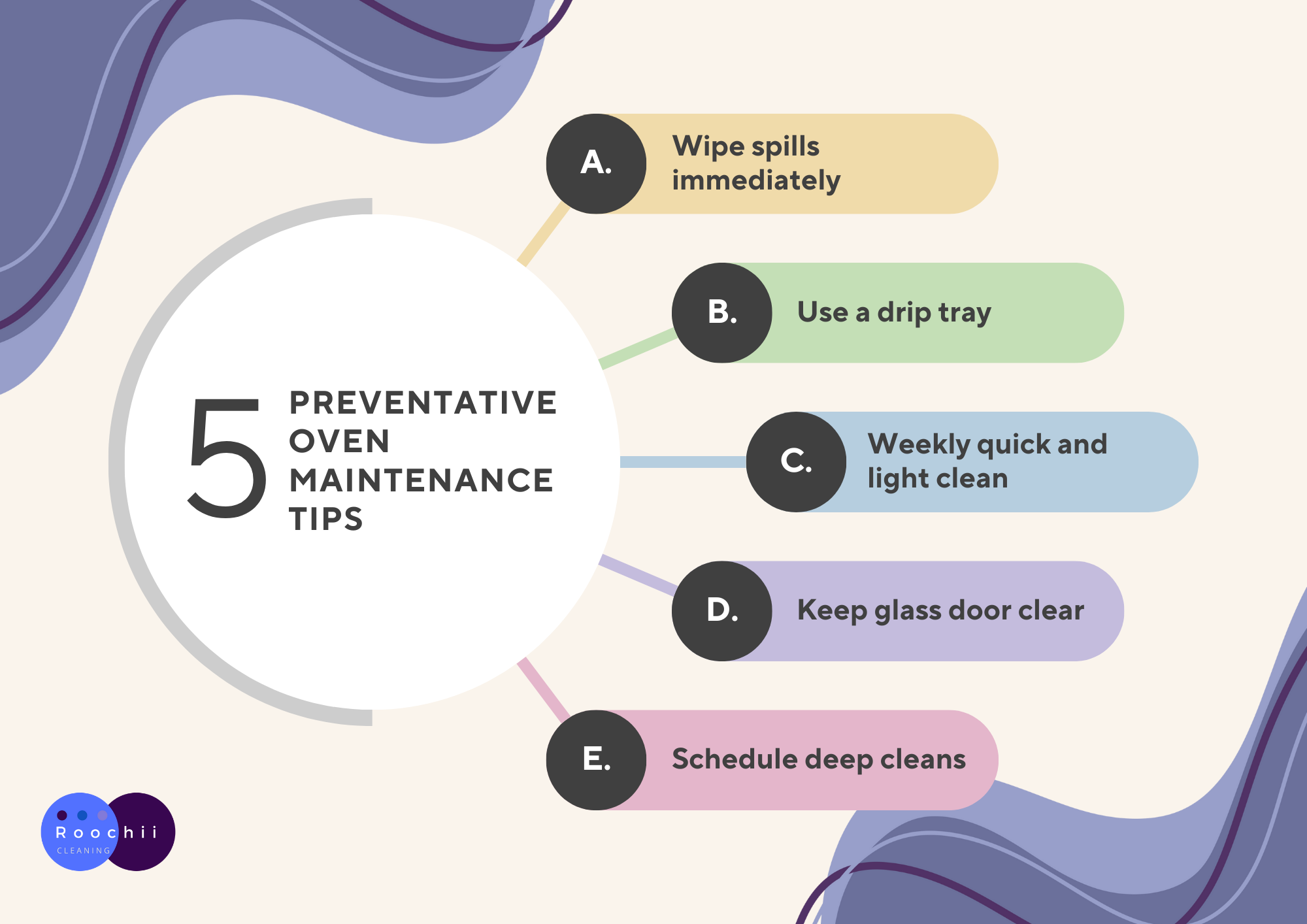
A. Wipe Small Spills Immediately (Once the Oven Cools)
Fresh spills are a lot easier to clean than burnt ones.
When something bubbles over or splatters:
- Wait until the oven cools completely
- Wipe the area with a damp cloth or sponge
- Sprinkle a little baking soda if the residue is sticky
This quick 30-second cleanup prevents weeks’ worth of buildup later.
B. Use a Cover or Baking Sheet to Catch Drips
One of the simplest ways to prevent messes is to catch them before they happen.
You can do this by simply placing a baking sheet lined with foil on the lower rack or use an oven-safe drip tray.
This protects the oven floor from sauces, cheeses, and oils that tend to spill during baking or roasting. Just avoid placing foil directly on the oven bottom as this can damage the heating elements.
C. Give Your Oven a Light Weekly Clean
What makes cleaning your oven hard is the hardened residue that happens the more you use it. To avoid it, a weekly refresh is the best solution! You don’t need a full deep clean. A quick wipe is enough.
You can do these steps:
- Sprinkle a little baking soda on problem spots
- Spray with warm water or vinegar
- Wipe clean after a few minutes
Allotting five minutes per week for this can save you hours later.
D. Keep the Door Glass Clear
Since the oven door is the most visible part, keeping it clean goes a long way in making your whole kitchen feel fresher.
A quick weekly wipe with vinegar or warm, soapy water prevents streaks and grease buildup.
E. Schedule a Deep Clean Every 1–3 Months
How often you clean depends on how frequently you use your oven:
- Heavy use (daily): Clean every month
- Moderate use (2–3 times per week): Clean every 2 months
- Light use: Every 3 months is usually enough
Regular deep cleaning improves performance and extends your oven’s lifespan. While natural DIY methods work beautifully for routine maintenance, there are times when a professional touch makes all the difference, though.
When to Call a Professional
In some situations, routine cleaning methods may not be enough to restore your oven safely and effectively. In these cases, seeking professional oven cleaning services in Denver can help restore your appliance safely and efficiently.
Professional servicing may be worth considering when there is extreme grease buildup, thick carbon deposits, or hardened food residue that cannot be removed with standard DIY techniques.
Another sign that professional attention may be helpful is persistent smoke or strong burnt odors, especially if they continue even after a thorough cleaning. This can indicate hidden grease or debris in areas that are difficult to access.
If your oven’s self-cleaning cycle fails to complete properly or repeatedly shuts off, it may signal mechanical or electrical issues that require inspection. Similarly, concerns involving heating elements, such as uneven heating, visible damage, or unusual smells during operation, should be handled carefully to avoid further complications.
In these cases, trained technicians can safely access internal components, remove heavy buildup, and assess whether any parts require maintenance or replacement. This approach helps ensure the oven continues to operate safely and efficiently.
While many cleaning tasks can be handled at home, professional servicing can save time and reduce risk when dealing with heavy buildup or internal issues. This helps ensure your oven continues to operate safely and efficiently.
Final Thoughts on How to Clean Your Oven Fast & Safely
Knowing how to clean your oven fast and safely is essential for maintaining a healthier kitchen, better cooking performance, and an appliance that lasts longer. Over time, residue can build up inside the oven, leading to smoke, unpleasant odors, and reduced efficiency. Regular cleaning prevents these issues and helps your oven operate the way it should.
Selecting the right cleaning method depends on the level of buildup. For light to moderate grime, natural solutions such as baking soda paste, vinegar spray, or lemon steam can effectively loosen grease without exposing your kitchen to harsh chemicals. These methods are safe, affordable, and suitable for routine cleaning. For heavier buildup, a deeper cleaning approach, or a professional service may be the most efficient solution.
A simple maintenance rhythm makes a big difference. Wiping spills quickly and performing a deeper clean every one to three months helps prevent stubborn buildup. With consistent care, your oven will remain efficient, reliable, and ready to deliver better cooking results for years to come.
FAQ
Frequently Asked Questions on How to Clean Your Oven
One of the fastest natural methods is using baking soda and vinegar.
Sprinkle baking soda over dirty areas, lightly spray with warm water or vinegar, and allow it to sit for about 20–30 minutes so the residue softens. Afterward, wipe the surface with a damp cloth or sponge. This method works well for light to moderate grime and avoids harsh chemical fumes.
For most households, a light weekly wipe helps prevent spills from hardening into stubborn buildup. A deeper clean every one to three months is usually enough to maintain good performance.
If you cook frequently, you may want to clean it more often. Consistent maintenance makes future cleaning faster and easier.
Yes, lemon can be surprisingly effective for light cleaning and deodorizing. When heated with water, lemon creates steam that helps loosen grease and soften residue inside the oven. It also leaves behind a fresh citrus scent that helps neutralize burnt food odors. While it won’t remove heavy carbon buildup, it’s a great option for routine maintenance.
A common method is soaking the racks in hot water with baking soda and vinegar. Let them sit for several hours so the grease and residue soften. After soaking, gently scrub with a sponge or non-abrasive brush and rinse thoroughly. This method helps loosen stubborn grime without damaging the rack’s finish.
A baking soda paste works well for removing grease and cloudy buildup from oven door glass.
Spread the paste across the glass surface and allow it to sit for about 20–30 minutes to break down residue. Wipe it away with a damp cloth, then finish with a light vinegar spray for a streak-free shine. This method is gentle and avoids scratching the glass.
Self-clean cycles can be effective because they heat the oven to extremely high temperatures that burn residue into ash. However, they also generate strong odors and can produce smoke if there is heavy grease buildup. It’s usually best to wipe away large spills before running the cycle. Proper ventilation during the process is also important.
Chemical cleaners can be effective for removing thick, baked-on grease, but they should be used carefully.
Always follow the product instructions, wear gloves, and ensure the kitchen is well ventilated. Residue from strong cleaners should be wiped away thoroughly before using the oven again. Many people prefer natural methods for routine cleaning and reserve chemical products for heavy buildup.
If smoke continues after cleaning, there may still be hidden grease or residue inside hard-to-reach areas. Grease trapped beneath heating elements or along interior seams can burn during preheating. Another possibility is leftover cleaning product residue that hasn’t been fully wiped away. Running the oven empty at a moderate temperature for a short period can sometimes help burn off remaining residue.
Steel wool is not recommended because it can scratch the oven’s interior surfaces, making them more prone to damage and buildup over time. Instead, use a non-scratch sponge or soft scrub pad to clean safely without damaging the coating.