Skip to content

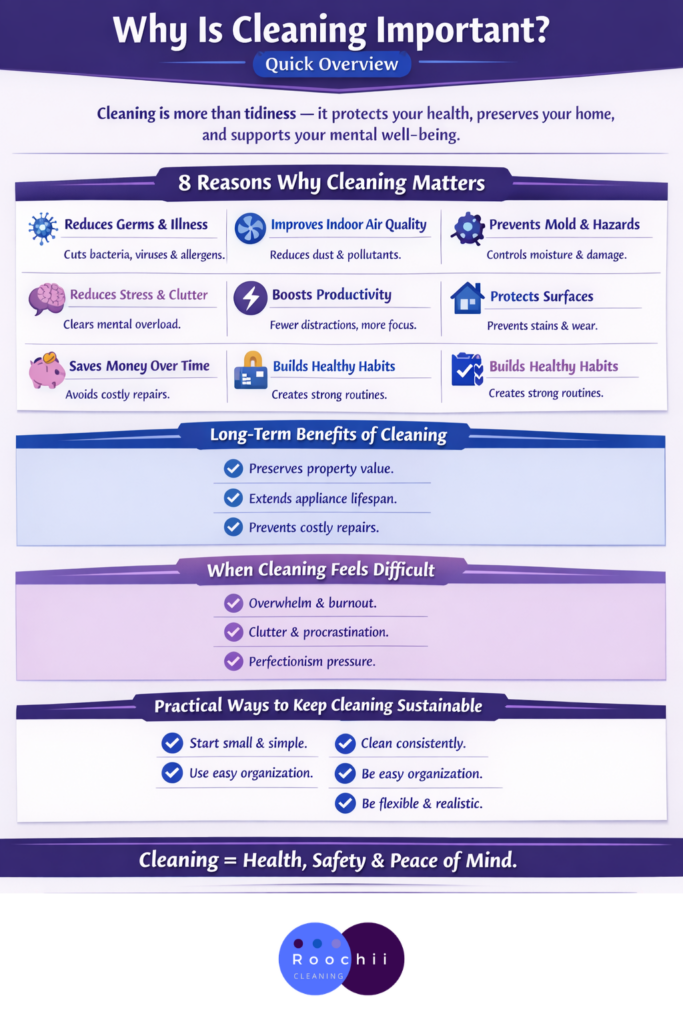
Why Is Cleaning Important? 8 Reasons Why It Truly Matters
Why Is Cleaning Important in Everyday Life?
Let’s be honest: cleaning isn’t exactly thrilling. No one wakes up thinking, “You know what would make today amazing? Scrubbing the bathroom.” Most of us clean because we have to, not because it’s a dream hobby.
But why is cleaning important in the first place? The real answer goes beyond appearances. When people ask why cleaning is important, they’re usually thinking about neatness. But cleaning plays a much bigger role in our everyday life. It protects your health by reducing germs and allergens. It protects your home by preventing buildup and long-term damage. And it protects your mindset by creating a space that feels calm instead of chaotic.
In this guide, we’ll walk through eight clear, practical reasons why cleaning is important. By the end, you won’t just see cleaning as a chore. You’ll understand exactly why it matters.
Table of Contents
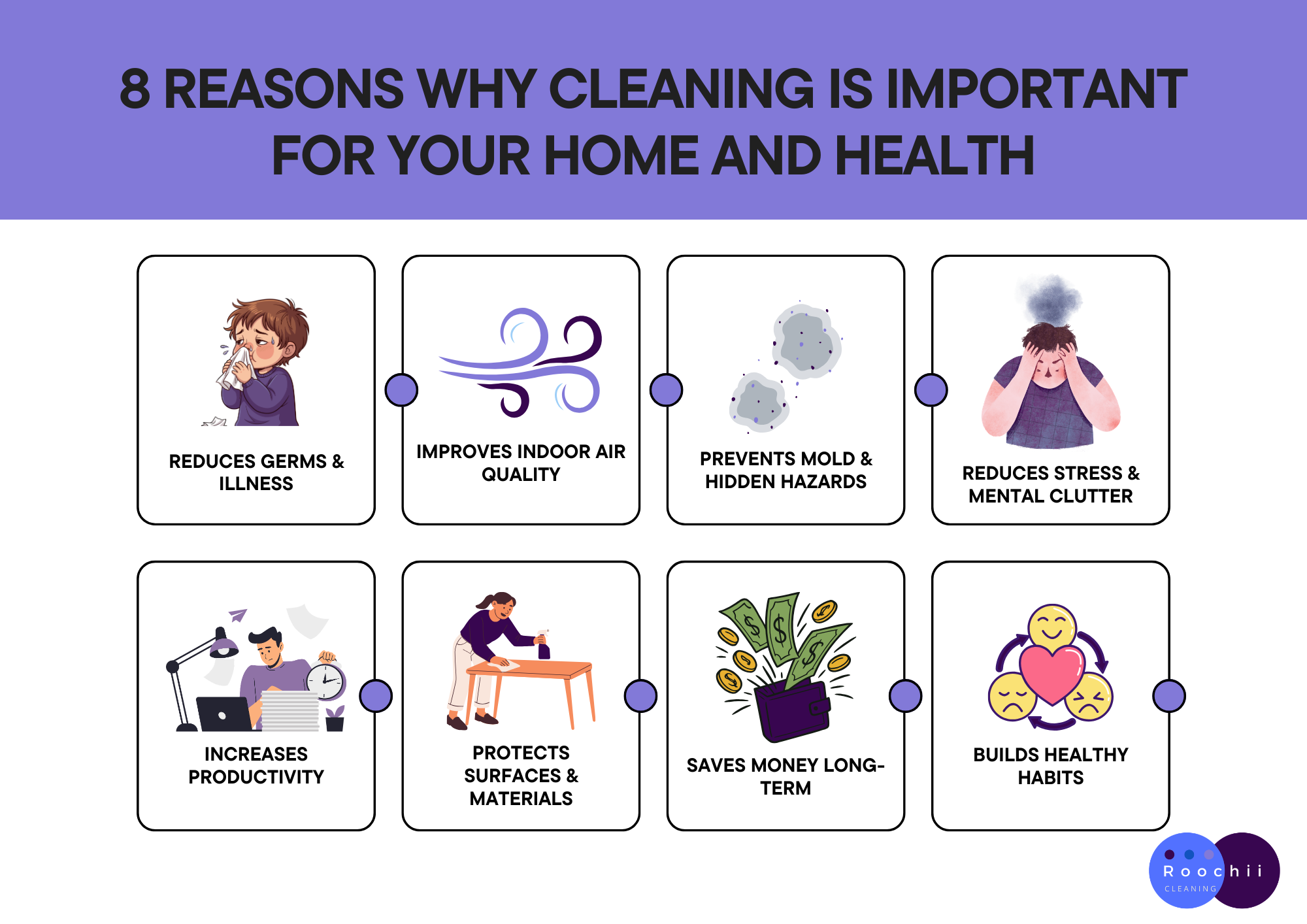
8 Reasons Why Cleaning Is Important
If you’ve ever wondered why cleaning is important, the clearest way to answer it is to break it down into practical, everyday impact.
Cleaning isn’t about perfection, but about prevention, protection, and performance. This is all for your body, your mind, and your home.
Here are eight reasons why cleaning is important.
1. Cleaning Reduces Germs and Illness
One of the most immediate reasons why cleaning is important relates to hygiene and disease prevention. Cleaning directly limits the conditions that allow germs to spread.
Homes are constantly exposed to bacteria and viruses carried in from outside environments. Shoes, clothing, groceries, and even hands introduce microorganisms that can quickly spread across common surfaces.
High-touch areas such as light switches or remote controls act as transmission points. Studies on household contamination consistently show that these surfaces can harbor bacteria capable of causing illness when not cleaned regularly.
Routine cleaning and disinfecting interrupt this cycle. By removing contaminants from frequently touched surfaces, you significantly reduce the likelihood of germs spreading among household members.
This becomes particularly important in homes with children, elderly residents, or individuals with compromised immune systems. In these environments, maintaining clean surfaces isn’t just a matter of comfort or aesthetic but a preventive health measure.
2. Cleaning Improves Indoor Air Quality
Air quality inside the home is often overlooked when discussing why cleanliness is important, yet it plays a major role in respiratory health.
Indoor air can contain a wide range of particles, including dust mites, pet dander, pollen, mold spores, and microscopic debris from fabrics and building materials. These particles accumulate on surfaces and become airborne whenever people move around the home.
Without routine cleaning, this buildup increases the concentration of irritants circulating through the air. Over time, poor indoor air quality can trigger allergies, asthma symptoms, sinus irritation, and persistent coughing.
Regular vacuuming, dusting, and washing fabrics help reduce these airborne particles. Cleaning HVAC vents and replacing air filters also improve airflow and reduce the distribution of dust throughout the home.
Even small actions, such as wiping surfaces with a damp cloth instead of dry dusting, can significantly reduce the number of particles released back into the air.
3. Cleaning Prevents Mold and Hidden Hazards
Moisture is one of the most common environmental risks inside a home.
When moisture lingers on surfaces, it creates ideal conditions for mold and mildew to grow. Mold can begin developing in as little as 24 to 48 hours in damp environments. Once established, it spreads quickly and may release spores into the air.
These mold spores can lead to several health concerns, including:
- Respiratory irritation
- Worsening allergy symptoms
- Asthma flare-ups
- Persistent coughing or sinus congestion
Routine cleaning helps control this risk in several ways. Wiping down damp surfaces, ventilating bathrooms, and cleaning tile grout prevent moisture from accumulating. Regular inspections during cleaning also help identify leaks, water stains, or condensation before they become larger problems.
4. Cleaning Reduces Stress and Mental Clutter
While physical health benefits are significant, the psychological impact of cleaning is equally important.
Cluttered spaces increase cognitive load, which is the mental effort required to process information. When a room contains numerous misplaced items or visible mess, the brain continues to register these signals even when attention is focused elsewhere.
This subtle but persistent background processing can contribute to feelings of stress or mental fatigue.
Cleaning helps simplify the visual environment. As surfaces are cleared and items are returned to their designated places, the brain processes fewer distractions. This reduction in visual noise can make a space feel calmer and more manageable.
Research in environmental psychology often links organized surroundings with improved focus and reduced anxiety. When the environment feels orderly, it supports a greater sense of control and predictability.
For many people, this is a key reason why is cleaning important beyond hygiene. A clean home can create a mental environment that feels easier to relax in and easier to concentrate within.
5. Cleaning Increases Productivity and Efficiency
A clean and organized environment makes everyday tasks easier to manage. When spaces are cluttered or disorganized, even simple activities can take longer than necessary.
Clutter often leads to small but frequent disruptions like digging through drawers or cabinets to find supplies. These interruptions may seem minor, but they add up throughout the day and can slow down routines.
Cleaning and organizing help eliminate these inefficiencies by creating structure within a space. When items have designated locations, daily tasks become more efficient.
Some of the ways cleaning supports productivity include:
- Reducing distractions so you can focus on the task at hand
- Saving time by making frequently used items easy to find
- Improving workflow in kitchens, offices, and shared spaces
- Creating mental clarity by minimizing visual clutter
6. Cleaning Protects Surfaces and Materials
The dirt you see isn’t simply a cosmetic concern. Over time, they can damage the materials that make up your home.
Kitchen grease can break down cabinet finishes. Hard water deposits can stain faucets and shower glass. Dirt tracked across flooring acts like fine sandpaper, slowly wearing down protective coatings.
Without regular cleaning, these substances accelerate deterioration. What begins as minor buildup eventually leads to permanent staining or material damage.
Routine cleaning removes these contaminants before they cause lasting harm. Floors last longer when debris is regularly removed. Appliances operate more efficiently when grease and residue are cleaned away.
This preventative maintenance preserves the appearance and functionality of household materials.
For homeowners, this is another major reason why cleaning the house is important. Proper care helps extend the lifespan of flooring, furniture, fixtures, and appliances.
7. Cleaning Saves Money Long-Term
What many might not realize is that cleaning has financial upsides.
Because neglecting cleaning your home can cause damage, you’ll end up spending money on repairs or replacements. There’s also the issue of mold remediation and pest control, which can become expensive if underlying issues are not addressed early.
Routine cleaning allows small problems to be identified before they escalate. A minor water leak discovered during cleaning may prevent significant water damage. Removing grease buildup from appliances may prevent mechanical failure.
Viewed over time, consistent cleaning protects both the physical structure of a home and the financial investment tied to it.
8. Cleaning Builds Healthy Habits and Consistency
Finally, cleaning supports long-term habits that make household maintenance easier and more sustainable.
When cleaning becomes part of a regular routine, tasks remain manageable. Small daily efforts prevent large-scale messes from developing. This consistency reduces the likelihood of overwhelming cleaning sessions later.
Habit formation also reinforces responsibility within the household. When cleaning tasks are shared and routine, they help establish expectations around maintaining a healthy living environment.
Cleaning may not always feel exciting, but its impact on the quality of a living environment is both measurable and lasting.
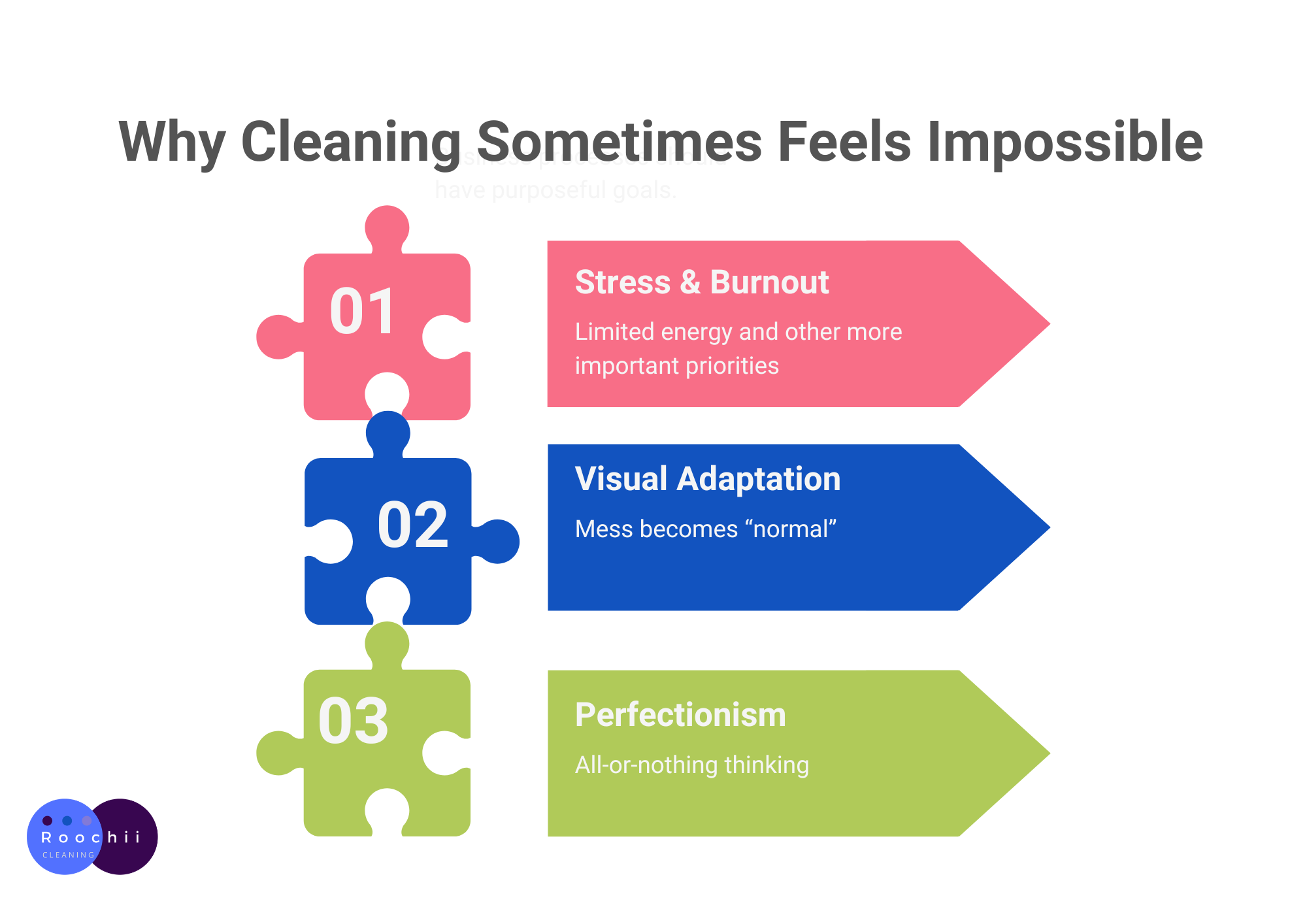
When Cleaning Doesn’t Feel Important
Let’s be realistic: there are times when cleaning falls to the bottom of the priority list.
Understanding why cleaning is important doesn’t mean ignoring the reality that motivation and energy fluctuate. In fact, recognizing why cleaning sometimes feels unimportant can help you approach it more realistically and sustainably.
Several common situations can make cleaning feel less like a priority.
During Stress or Burnout
When you’re overwhelmed, your brain naturally prioritizes the most immediate or emotionally demanding tasks.
In those moments, cleaning can feel trivial compared to larger problems. Energy is limited, and tasks like wiping counters or organizing a closet may seem insignificant.
That response is normal. When people are under stress, the brain shifts into problem-solving mode, focusing on what appears most urgent.
However, small cleaning tasks can sometimes help restore a sense of control. Completing a simple, contained task, like clearing a surface or putting away a few items, can create visible progress without requiring much mental effort.
When Mess Becomes “Background Noise”
Clutter rarely appears all at once. It builds gradually. Over time, people adapt to these changes.
What once felt messy starts to feel normal simply because it’s familiar. This phenomenon is sometimes referred to as “visual adaptation.” When the brain sees the same environment repeatedly, it stops registering certain details. The mess becomes background noise.
The challenge is that the underlying buildup continues. That’s often why deep cleaning sessions feel so daunting. The reset requires addressing weeks or months of gradual accumulation.
Regular maintenance prevents this cycle by keeping small messes from becoming large ones.
When Perfectionism Kills Motivation
Another reason cleaning may feel unimportant is when the standard feels unattainable. If the expectation is a perfectly spotless home, starting can feel discouraging.
Perfectionism often creates an all-or-nothing mindset:
- If everything can’t be cleaned, it doesn’t feel worth starting.
- If a space won’t stay perfectly organized, the effort feels pointless.
But effective cleaning rarely works that way. Homes are living spaces, not showrooms. Mess will always return to some degree.
The goal of cleaning shouldn’t be flawless results. It should be consistent maintenance.
Small improvements still make a meaningful difference. Over time, those small efforts add up to a healthier and more manageable environment.