8 Cleaning Tips for Cat Owners: A Practical Guide
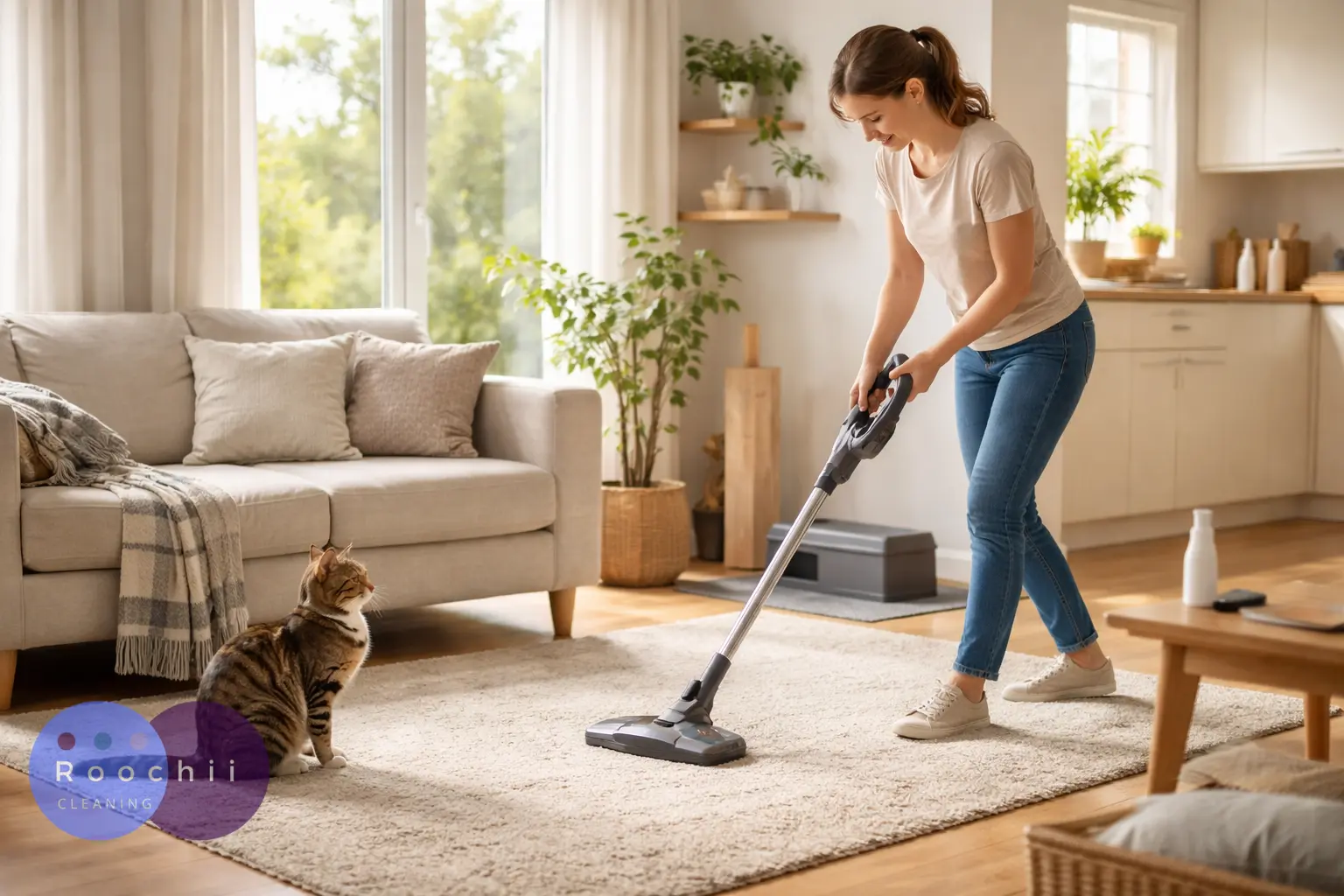
Woman vacuuming a living room carpet while her cat watches, illustrating cleaning tips for cat owners to manage pet hair and maintain a tidy home.

How to Keep a Clean House with Cats

A home with cats can start to feel messy quickly, even when you’re cleaning regularly. Fine fur, litter dust, and subtle odors build up faster than most cat owners expect. Finding the right cleaning tips for cat owners doesn’t have to mean constant cleaning or feeling like you’re always behind.

The key is using strategies that match how cats actually live in your space. That might mean focusing on litter zones, managing fabric surfaces, or building simple daily routines. With the right approach, you can control buildup, reduce odors, and keep your home feeling clean without turning cleaning into a full-time job.

In this article, we’ll learn:

Why Cleaning Is Different for Cat Owners 

Cleaning a home with cats presents a different set of challenges than cleaning a home without pets or even with other types of pets.

According to the Institute of Medicine (US) Committee on the Assessment of Asthma and Indoor Air, cats shed very fine and lightweight hair that clings to fabric, produce dander that becomes airborne easily, and use litter boxes that introduce odor and tracking issues unique to cat households.

Cat-related mess tends to be subtle but persistent. Hair collects along baseboards and soft furnishings rather than in obvious piles. Odors often build gradually and settle into fabric before they’re noticeable. Litter doesn’t stay confined to one room; it travels on paws and gets embedded into floors and rugs.

Another key difference is safety. Cats are far more sensitive to chemicals than most people realize. Certain ingredients commonly found in household cleaners can irritate their respiratory systems or be harmful when absorbed through paws. That’s why cleaning routines for cat owners need to balance effectiveness with cat-safe practices.

Understanding these differences is the first step toward creating a cleaning system that actually works in a cat-friendly home.

8 Essential Cleaning Tips for Cat Owners 

Keeping a clean home with cats doesn’t require constant cleaning, but it does require the right priorities.

The following tips focus on prevention, smart maintenance, and cat-safe practices that make everyday cleaning more manageable and effective, especially in homes with one or more cats.

1. Address Fine Hair and Dander, Not Just Visible Fur

Cat hair is lighter and finer than dog hair, which means it becomes airborne more easily and settles into fabric, vents, and corners. Even when floors look clean, dander may still be present.

Regular vacuuming with proper filtration like HEPA vacuums, combined with dusting and wiping hard surfaces, helps reduce buildup that affects air quality. This is less about visible mess and more about what accumulates quietly over time.

2. Treat the Litter Box Area as a Cleaning Zone

Cats rely on a litter box that concentrates odor, bacteria, and debris in one area. That area needs its own cleaning strategy.

The Centers for Disease Control and Prevention (CDC) recommends daily scooping, weekly box washing, and routine floor cleaning around the box to prevent odors from spreading. Mats help, but they only work if they’re cleaned regularly as well.

A clean litter zone makes the entire home easier to maintain.

3. Focus on Vertical Surfaces and High-Touch Areas 

Cats live vertically. They jump on furniture, shelves, windowsills, and counters. Notice something with these? These are all areas that often get skipped during routine cleaning.

Wiping down these surfaces regularly helps control hair, dander, and oils left behind from paws and fur. If you only clean floors, you’re missing a large part of where cat mess actually lives.

4. Clean Soft Surfaces Before Odors Become Noticeable 

Cat odors tend to develop slowly and embed into fabric before they’re obvious. Beds, blankets, furniture, and scratching posts all absorb scent over time.

Washing and vacuuming soft items regularly prevents lingering smells that are much harder to remove later. This is one of the most important habits in multi-cat homes.

5. Manage Scratching Areas to Reduce Debris 

Scratching posts and pads shed material and collect hair. On top of that, they also hold odor. Left unchecked, they contribute to mess that spreads to nearby floors and furniture.

Vacuum or wipe down scratching areas regularly and place them where cleanup is easy. Maintaining these spots reduces debris throughout the rest of the home.

6. Use Cat-Safe Products 

Cats groom themselves frequently, which means anything left on floors or surfaces can be ingested.

Stick to cat-safe cleaners without harsh chemicals or strong fragrances. Effective cleaning doesn’t require aggressive products, but it does require consistency.

7. Improve Air Quality, Not Just Surface Cleanliness 

Because cat dander is airborne, ventilation and air circulation matter more than most owners realize. Fresh air helps reduce lingering smells and improves overall comfort.

Opening windows when possible, keeping vents clear, and maintaining filters can significantly improve how a cat home feels and smells.

8. Adjust Expectations for Multi-Cat Homes 

Homes with multiple cats experience faster buildup of hair, dander, and litter-related mess. Cleaning routines need to scale accordingly.

This may mean more frequent fabric washing, extra litter maintenance, or periodic deep cleaning. The goal isn’t perfection but keeping buildup under control before it becomes overwhelming.
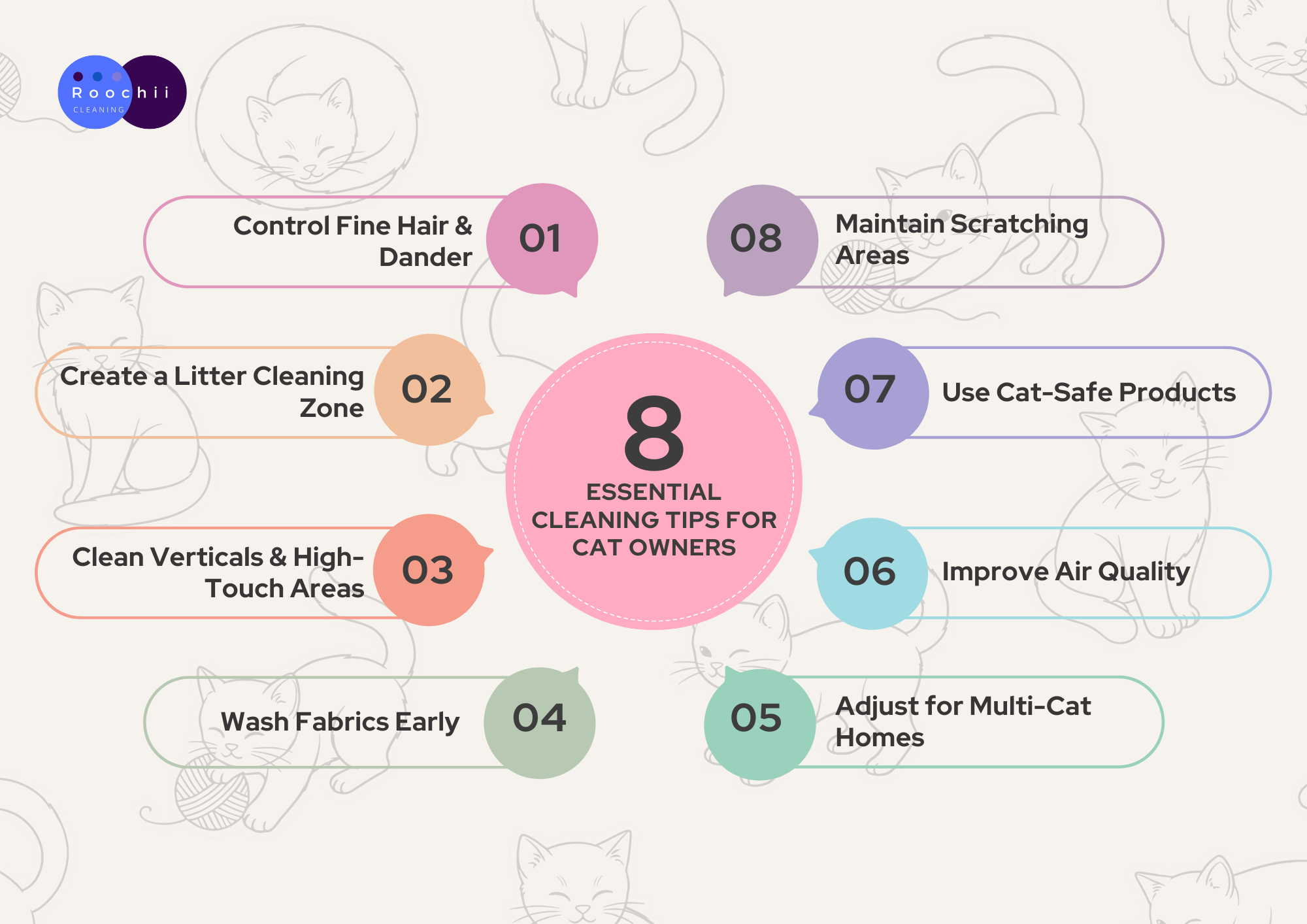
Infographic showing 8 essential cleaning tips for cat owners, including controlling fine hair and dander, maintaining scratching areas, using cat-safe products, and improving air quality.

Preventing and Eliminating Cat Odors 

Cat odors don’t usually come from the cat itself but from the buildup.

Litter boxes, fabric surfaces, and poor airflow are the most common sources. The most effective way to manage odor is to address it systematically at the source.

How to Prevent and Eliminate Cat Odors 

1. Scoop litter boxes daily 

Removing waste every day prevents odors from developing and spreading beyond the litter area. Skipping this step allows smells to settle into nearby floors and walls.

2. Wash litter boxes regularly 

Even with daily scooping, residue builds up inside the box. Washing litter boxes weekly with mild, cat-safe cleaners helps eliminate lingering odors.

3. Clean and rotate soft surfaces 

Fabric traps odor longer than hard surfaces. Wash cat beds, blankets, and throws weekly, and vacuum furniture, rugs, and scratching posts regularly.

The key is consistency. Addressing odor regularly prevents it from embedding into surfaces, where removal becomes far more difficult.

Daily and Weekly Cleaning Routines for Cat Owners 

Effective cleaning routines for cat owners are built around consistency, not intensity.

Cats create gradual, fine messes that are easiest to manage when addressed regularly rather than all at once.

Daily Cleaning Tasks

These small, routine actions prevent buildup and reduce the need for deep cleaning later:

  • Scooping litter boxes
  • Quick floor sweeps or spot vacuuming near litter areas
  • Light grooming sessions
  • Surface wipe-downs in high-touch areas

Weekly Cleaning Tasks 

Weekly routines address areas where buildup isn’t always obvious but has a big impact over time:

  • Washing cat bedding, blankets, and throws
  • Vacuuming baseboards, corners, and edges
  • Vacuuming or mopping floors throughout the home
  • Wiping hard surfaces with cat-safe cleaners

Breaking cleaning into short, predictable routines keeps maintenance manageable, even in busy households.

Over time, these habits reduce the need for intensive cleaning and help maintain a consistently clean, comfortable home.

Table: Daily vs Weekly Cleaning Routine for Cat Owners

Daily Cleaning Tasks

Weekly Cleaning Tasks

Scoop litter

Wash cat bedding

Spot vacuum near litter

Vacuum baseboards & edges

Quick wipe high-touch areas

Full floor vacuum or mop

Light grooming

Wipe surfaces with cat-safe cleaners

When to Consider Professional Cleaning Services for Cat Homes 

Even well-maintained homes can reach a point where routine cleaning isn’t enough. This is normal and doesn’t reflect a lack of effort.

Professional cleaning services for cat homes are especially helpful when:

  • Hair and dander persist despite regular cleaning
  • Odors linger in carpets or upholstery
  • Time constraints make consistency difficult

Professionals use equipment and pet-safe products that reach deeper than everyday cleaning. Many cat owners use professional cleaning as periodic maintenance to reset their home and make ongoing upkeep easier.

Don’t hesitate to call help when everything is becoming overwhelming. After all, you only want a clean and healthy environment for you and your cat, right?


Final Thoughts: Keeping a Clean Home as a Cat Owner 

Keeping a clean home as a cat owner isn’t about constant cleaning or unrealistic standards. It’s about understanding how cat-related mess forms, controlling where it settles, and maintaining it safely and consistently.

With the right habits, materials, and support when needed, a cat-friendly home can be both comfortable and genuinely clean without turning cleaning into a full-time job.

FAQ

FAQs About Keeping a Clean Home with Cats

Leave a Reply

Your email address will not be published. Required fields are marked *