How to Remove Soap Scum from Glass: Proven Methods That Work
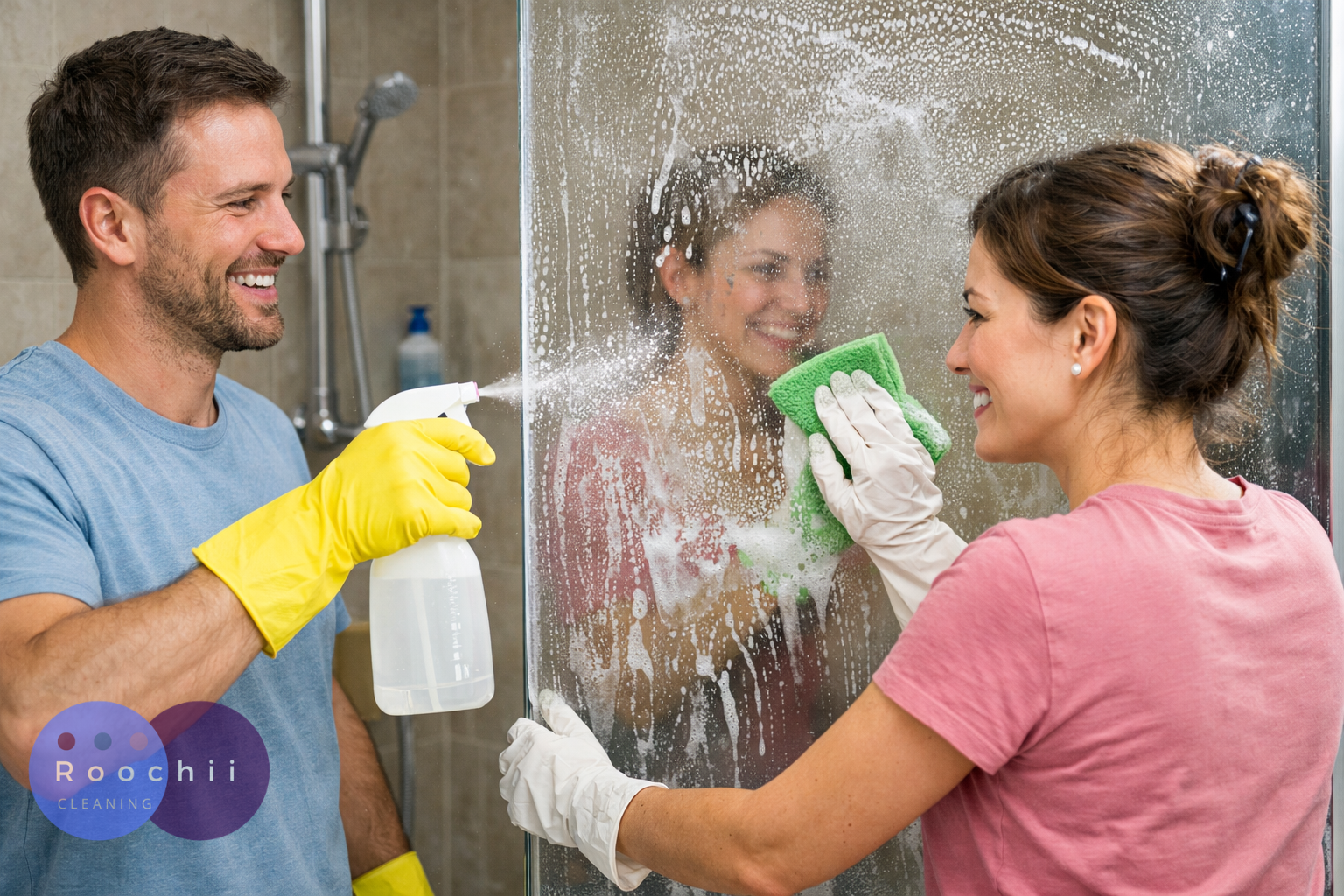
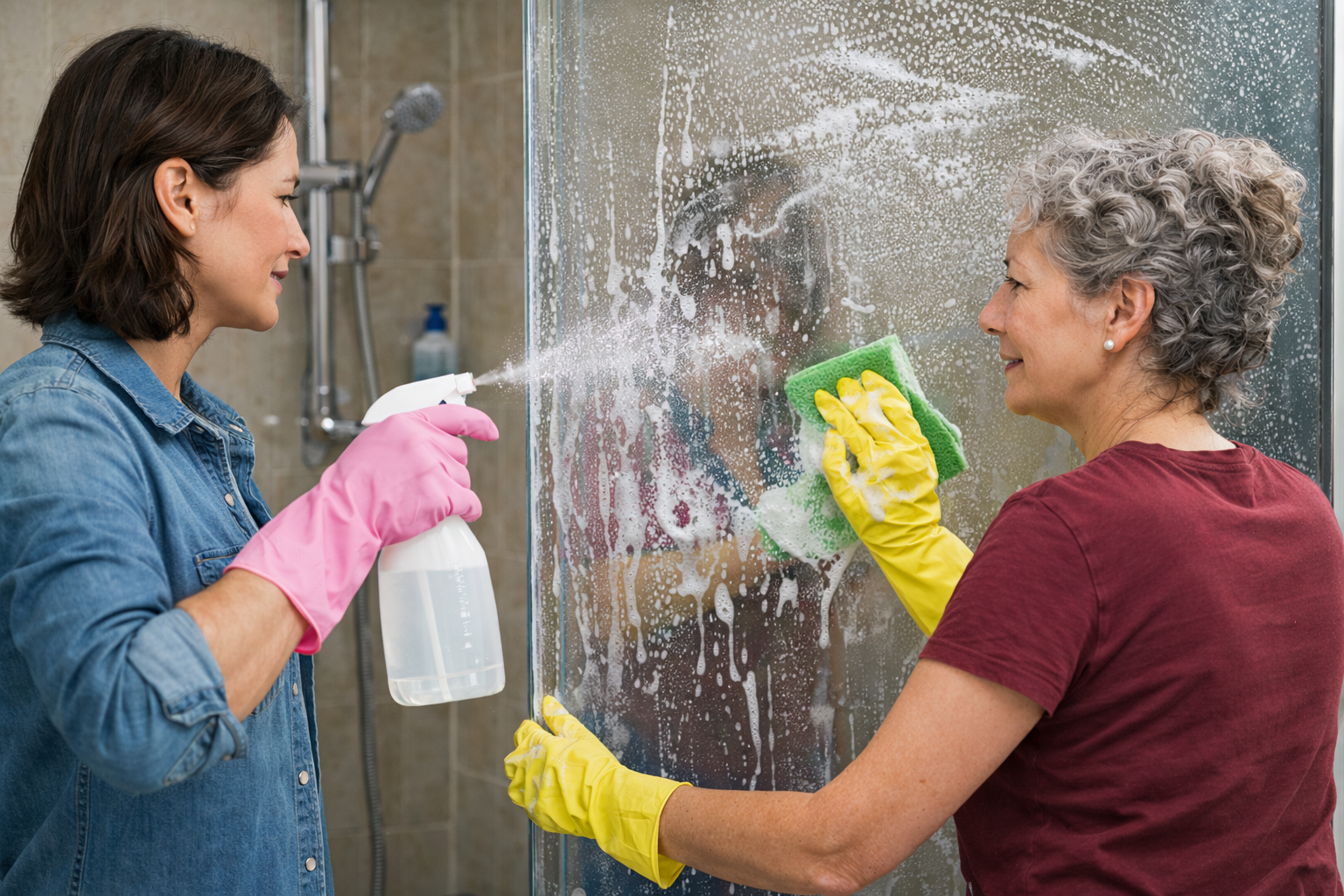
Man and woman cleaning soap scum from a glass shower door using spray cleaner and sponge.

Best Way to Remove Soap Scum From Glass

Soap scum has a way of making perfectly good shower glass look like it hasn’t seen daylight in months. Fortunately, learning how to remove soap scum from glass is usually easier than it seems when you use the right technique. 

Mild acidic solutions are often the best place to start because they dissolve mineral deposits before any scrubbing begins.

One of the simplest examples is spraying the glass with warm white vinegar, allowing it to sit for about 10 minutes, and then wiping the surface with a microfiber cloth or non-scratch sponge. The short dwell time allows the acid to break down residue so it can be removed with minimal effort.

The reason this method works lies in the chemistry of soap scum itself. It’s a stubborn blend of minerals, oils, and residue that bonds to glass like it signed a lease. Because soap scum bonds with minerals and oils, a quick wipe usually isn’t enough to remove it.

Cleaning guidance from organizations such as the CDC recommends using appropriate cleaning agents and allowing them enough contact time to break down residue before wiping or rinsing. By following this principle, you can remove soap scum more efficiently and with far less effort.

Keep reading to learn the simple system professionals use to remove soap scum from glass and keep shower doors clear with far less scrubbing.

Table of Contents

  • What Causes Soap Scum on Glass
  • How to Remove Soap Scum from Glass Using Household Cleaners
  • Natural vs Chemical Cleaners for Glass
  • Common Mistakes When Removing Soap Scum from Glass
  • Preventing Soap Scum Buildup on Glass Surfaces
  • Glass Etching vs Surface Residue: Knowing the Difference
  • When to Call a Professional Cleaning Service
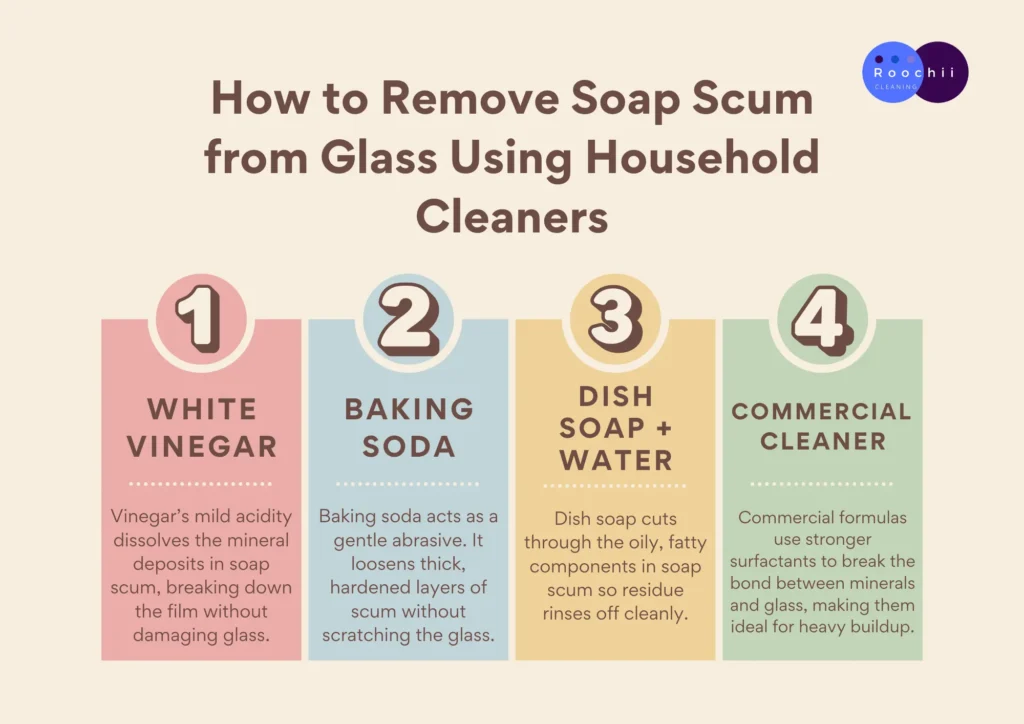
Infographic showing how to remove soap scum from glass using household cleaners including white vinegar, baking soda, dish soap and water, and commercial soap scum remover.

What Causes Soap Scum on Glass? 

Soap scum may look like a simple cloudy film, but it’s actually a combination of several stubborn residues. Soap scum can appear on tiles, sinks, and glass surfaces. On the other hand, if you’re dealing with buildup across the entire shower, this guide on how to remove soap scum from shower surfaces can help tackle tile, glass, and fixtures together.

Understanding why it forms is the first step toward removing it effectively and preventing it from returning. Even the best cleaners work better when you know what you’re fighting against.

How Soap and Hard Water Interact 

The primary cause of soap scum is the reaction between traditional bar soaps, and minerals found in hard water, such as calcium and magnesium

When these combine, they form lime soap. It’s a sticky, insoluble substance that binds firmly to glass surfaces.

Unlike regular soap residue, lime soap doesn’t rinse away easily. It dries in place, then accumulates layer by layer.

Why Soap Scum Adheres So Strongly to Glass 

Although shower glass looks sleek and smooth, it contains microscopic pores and texture variations. These tiny imperfections trap residue, allowing the film to anchor itself more deeply than on many other surfaces. Once embedded, the scum becomes more resistant to basic wiping or rinsing.

Conditions in the bathroom also influence how quickly soap scum develops.

The biggest contributors include:

  • High humidity from hot showers
  • Poor ventilation, which slows drying
  • Constant moisture that prevents residue from loosening

Together, these factors give soap scum plenty of time to harden and bond with the glass.

How to Remove Soap Scum from Glass Using Household Cleaners 

Before starting any cleaning method, it helps to gather the right tools. Using the proper materials ensures you can remove soap scum effectively without scratching or damaging the glass surface.

Below is a quick checklist of the basic supplies.

Quick Cleaning Checklist

Item

Purpose

Microfiber cloth

Wipes away loosened residue without scratching glass and helps prevent streaks

Non-scratch sponge

Provides gentle scrubbing power to remove stubborn buildup safely

Spray bottle

Evenly applies vinegar solutions or cleaning mixtures to the glass

Squeegee

Removes excess water and prevents mineral spots after rinsing

Protective gloves

Protects hands from cleaning agents and prolonged moisture exposure

Removing soap scum doesn’t always require commercial cleaning agents. In fact, some of the most effective solutions come from everyday household products you likely already have.

These methods work because they target the two primary components of soap scum: mineral deposits from hard water and oily residues from soaps and personal care products.

By using acidic solutions, mild abrasives, or degreasing agents, you can break down buildup without damaging glass or relying on harsh chemicals.

Before choosing a specific cleaning method, it helps to understand the basic cleaning framework professionals follow when removing mineral residue from glass.

The 4-Step Framework for Removing Soap Scum from Glass

Most effective cleaning methods follow the same basic process. Understanding this system helps ensure the cleaner works properly and prevents unnecessary scrubbing.

1. Assess the Severity of the Buildup

Start by determining how much residue has accumulated. Light haze can usually be removed quickly, while thick mineral layers may require stronger solutions or longer dwell times.

Look for these signs:

  • Light haze: Slight cloudiness or faint streaks after showering
  • Moderate buildup: Visible film or water spots on the glass
  • Severe buildup: Chalky layers or rough patches that resist wiping

Correctly identifying the severity helps you choose the most effective method from the start.

2. Pre-Treat the Surface

Before scrubbing, apply a cleaner and allow it to sit on the glass long enough to dissolve mineral deposits. This step is known as dwell time and is essential for breaking down the chemical bond between soap scum and glass.

Common pre-treatment solutions include:

  • Warm vinegar spray
  • Vinegar–dish soap mixtures
  • Commercial soap scum removers

Allowing the solution to work for several minutes greatly reduces the amount of scrubbing required.

3. Dissolve and Scrub Effectively

Once the cleaner has loosened the residue, use a non-scratch sponge or microfiber cloth to gently scrub the surface.

Avoid aggressive tools such as steel wool or abrasive pads, as these can scratch the surface and make future buildup more likely.

4. Rinse, Dry, and Protect

After scrubbing, rinse the glass thoroughly with warm water to remove any cleaning residue. Finish by drying the glass with a squeegee or microfiber cloth. This prevents minerals from drying back onto the surface and helps maintain clarity.

For long-term maintenance, some homeowners also apply a glass protectant or water-repellent coating to slow future soap scum buildup.

Choosing the Right Method Based on Buildup Severity

Not all soap scum requires the same cleaning solution. The table below helps match the level of buildup to the most effective cleaning method.

Buildup Severity

Common Signs

Recommended Method

Light haze (weekly buildup)

Slight cloudiness or faint streaks

Dish soap + warm water

Moderate buildup (visible film)

Water spots, noticeable soap residue

Warm vinegar solution

Heavy buildup

Chalky residue or textured patches

Baking soda paste + vinegar

Severe crusted layers (long-term neglect)

Thick mineral layers that resist cleaning

Commercial soap scum remover

Choosing the correct method from the start prevents unnecessary scrubbing and helps remove buildup more efficiently.

Below are the most reliable, homeowner-approved methods, each with a clear explanation of how it works and expert-backed steps to follow.

Method #1: White Vinegar Solution for Light to Medium  Soap Scum Buildup

Why this works: White vinegar is a natural acid that dissolves the mineral content in soap scum, making it particularly effective for early-stage or moderately stubborn buildup. In fact, a 2021 experiment proved that vinegar was much more effective at dissolving these minerals compared to other solutions.

Its ability to cut through hard-water deposits without scratching the glass makes it one of the safest and most accessible cleaning options.

Steps to Use White Vinegar for Soap Scum on Glass

  1. Warm 2 cups of white vinegar until slightly heated.
  2. Pour into a spray bottle and saturate the glass.
  3. Let sit for 8–12 minutes.
  4. Wipe with a damp microfiber cloth in circular motions.
  5. Rinse with warm water.
  6. Squeegee to dry.

Recommended frequency: Use this method every 2–4 weeks for routine maintenance or whenever light cloudiness begins to appear.

Estimated time for White Vinegar 

  • Prep time: 2–3 minutes
  • Dwell time: 8–12 minutes
  • Scrubbing time: 3–5 minutes
  • Total job duration: 15–20 minutes

Method #2: Baking Soda Paste for Thick, Stubborn Soap Scum Layers 

Why this works: Baking soda acts as a gentle abrasive, allowing it to loosen hardened soap scum without scratching glass. It’s especially effective for sections where buildup has become chalky or textured, or ones that vinegar alone can’t always break apart.

Steps to Use Baking Soda Paste for Soap Scum on Glass 

  1. Create a paste of 3 parts baking soda to 1 part water.
  2. Apply directly to heavy buildup.
  3. Let sit for 10–15 minutes.
  4. Scrub gently with a non-scratch sponge.
  5. Rinse thoroughly and dry.

Recommended frequency: Use this method once a month or as needed when moderate buildup develops.

Estimated time for Baking Soda Paste

  • Prep time: 3–4 minutes
  • Dwell time: 10–15 minutes
  • Scrubbing time: 5–7 minutes
  • Total job duration: 20–25 minutes 

Method #3: Dish Soap + Warm Water for Routine Maintenance 

Why this works: Dish soap is formulated to cut grease, making it ideal for removing the oily residue that helps soap scum adhere to glass. This method is perfect for routine care and helps slow down future buildup significantly.

Steps to Use Dish Soap and Warm Water Mixture for Soap Scum on Glass 

  1. Mix warm water with a few drops of dish soap.
  2. Spray or wipe onto the glass.
  3. Rinse thoroughly.
  4. Squeegee to finish.


Recommended frequency: Perform this quick clean once a week to slow the formation of soap scum.

Estimated time for Dish Soap + Warm Water

  • Prep time: 1–2 minutes
  • Dwell time: 2–3 minutes
  • Scrubbing time: 2–3 minutes
  • Total job duration: 5–8 minutes

Method #4: Commercial Glass or Soap Scum Cleaner for Severe or Stubborn Buildup 

Why this works: Commercial soap scum removers are formulated with stronger surfactants or mild acidic agents designed specifically to break the bond between minerals, oils, and glass surfaces. They’re especially useful when household products aren’t strong enough or when buildup has hardened over months or years.

Steps to Use Commercial Glass Cleaners for Soap Scum 

  1. Choose a cleaner labeled specifically for soap scum removal or shower glass.
  2. Spray the product evenly across the surface, ensuring full coverage of heavily affected areas.
  3. Allow the cleaner to sit for the manufacturer-recommended time which is typically 3–10 minutes.
  4. Using a non-scratch sponge or microfiber cloth, gently scrub the glass, focusing on corners, edges, and textured spots.
  5. Rinse thoroughly with warm water to remove any residue.
  6. Dry with a squeegee or microfiber cloth to prevent streaking and help maintain the glass’s clarity.

Recommended frequency: Use this method only when heavy buildup appears, typically every 1–3 months depending on water hardness and cleaning habits.

Estimated time for Commercial Cleaners

  • Prep time: 2–3 minutes
  • Dwell time: 5–10 minutes (depending on product instructions)
  • Scrubbing time: 5–8 minutes
  • Total job duration: 15–20 minutes

Natural vs. Chemical Cleaners for Glass

Choosing between natural and chemical cleaners often comes down to the condition of your shower glass, your cleaning preferences, and how much buildup you’re dealing with.

Both approaches can be effective, but they work in different ways and offer distinct advantages. Understanding these differences helps you choose the right method for your home or combine both when necessary.

Severity vs Recommended Cleaning Method

Buildup Severity

Common Signs

Recommended Cleaning Method

Typical Cleaning Frequency

Light haze

Slight cloudiness or faint streaks on glass

Dish soap + warm water or diluted vinegar solution

Weekly or biweekly

Moderate buildup

Visible film, water spots, soap streaks

Warm vinegar spray or baking soda paste

Every 2–4 weeks

Heavy buildup

Chalky layers, rough texture, stubborn spots

Commercial soap scum remover or stronger mineral cleaner

Every 1–3 months

Severe / long-term buildup

Thick crusted residue or persistent cloudiness

Professional cleaning or restoration

As needed


Natural vs Chemical Cleaner Comparison

Cleaner Type

Best For

Strength Level

Safety

Time Required

Cost

Natural cleaners (vinegar, baking soda, lemon, dish soap)

Light to moderate soap scum and regular maintenance

Mild to moderate

Generally low-toxicity and low odor

Longer dwell time and light scrubbing

Very low

Chemical cleaners (commercial soap scum removers)

Heavy buildup or neglected shower glass

Moderate to strong

May require ventilation and protective gloves

Faster results with shorter dwell time

Moderate

Natural Cleaners for Glass: Gentle and Effective for Ongoing Maintenance 

Common natural options: white vinegar, baking soda, lemon, dish soap

Best suited for: routine maintenance and light to moderate buildup

Strengths of Natural Cleaners for Glass 

  • Low-tox and low-odor: Ideal for homes that prioritize air quality or avoid harsh chemical exposure.
  • Cost-effective and readily available: Most natural agents are pantry staples.
  • Effective against mineral-based residue: Natural acids and mild abrasives excel at dissolving hard-water deposits and organic film.
  • Excellent for upkeep: When used consistently, natural solutions help keep shower glass clear, especially in well-ventilated bathrooms.

Limitations of Natural Glass Cleaners 

  • Limited impact on severe buildup: Thick, hardened, or oil-laden scum can resist natural acids and require far more physical effort.
  • Longer dwell time: Natural cleaners generally need more time to break down residue.
  • Hard-water challenges: Homes with very mineral-rich water may see minimal results without stronger agents.

Chemical Cleaners for Glass: Powerful and Designed for Stubborn Buildup 

Typical formulas include: commercial bathroom cleaners, solvent-based sprays, and specialized soap-scum remover.

Best suited for: heavy, layered, or long-neglected soap scum

Strengths of Commercial Cleaners for Glass 

  • Superior cutting power: Formulated with surfactants and solvents that aggressively break down oils and hardened mineral deposits.
  • Quicker results: Less scrubbing and shorter dwell times make them ideal for high-traffic or high-maintenance bathrooms.
  • Consistent performance: Commercial solutions produce predictable outcomes across a wide range of conditions.
  • Additional benefits: Many products include protective additives that help repel water and slow down future buildup.

Considerations When Using Commercial Cleaners 

  • Safety factors: Some formulas may irritate skin, lungs, or eyes, especially in enclosed or poorly ventilated bathrooms.
  • Surface compatibility: Not all chemical cleaners are safe for natural stone, coated glass, or specialty finishes.
  • Strict adherence to instructions: Proper ventilation, protective gloves, and careful label reading are essential.

Finding the Right Balance for Your Home 

There is no universal “best” cleaner, only what is most effective for your specific environment and needs. Many homeowners adopt a hybrid strategy:

Use natural cleaners for regular upkeep and prevention.
Use chemical cleaners for deep-cleaning or when buildup becomes resistant to gentler solutions.

The most efficient approach is the one that maintains glass clarity with minimal effort while preserving a safe, healthy bathroom environment.

Common Mistakes When Removing Soap Scum from Glass 

While removing soap scum from glass is usually straightforward, certain cleaning mistakes can make the problem worse. Many people assume that tougher buildup requires harsher tools or stronger chemicals, but that approach often leads to scratches, streaks, or unsafe chemical reactions.

Understanding what not to do is just as important as knowing which cleaning methods work best.

Avoiding the following mistakes will help protect your shower glass while ensuring that your cleaning efforts actually remove soap scum instead of spreading it around.

A. Using Steel Wool or Abrasive Pads

Steel wool and rough scouring pads may seem like an effective solution for stubborn soap scum, but they can scratch glass surfaces permanently. Even very fine steel wool can leave microscopic scratches that dull the clarity of shower doors. Over time, those scratches trap minerals and soap residue more easily, which makes future buildup occur faster.

Instead, use non-scratch sponges, microfiber cloths, or soft scrub pads designed specifically for delicate surfaces.

B. Scraping with Razor Blades Incorrectly

Razor blades can sometimes be used carefully to remove hardened residue, but improper technique can quickly damage shower glass.

If the blade is held at the wrong angle or used on dry glass, it can scratch or gouge the surface, especially near edges or seams. Scraping should only be done on well-lubricated glass and with extreme caution. In most cases, dissolving the residue with vinegar or a soap scum remover is a safer and more effective option.

C. Mixing Vinegar and Bleach

One of the most dangerous cleaning mistakes is combining vinegar and bleach.

When mixed, these two products create chlorine gas, a toxic chemical that can irritate the lungs, eyes, and skin. Even small amounts of this gas can be harmful in a confined bathroom space.

Always use cleaning products separately, and rinse surfaces thoroughly between different cleaning solutions to avoid accidental chemical reactions.

D. Not Rinsing Thoroughly

After removing soap scum, failing to rinse the glass properly can leave behind cleaning residue. This residue often dries into streaks or hazy films that make the glass appear dirty even after cleaning. It can also attract new buildup more quickly. To prevent this, always rinse the glass with clean warm water after scrubbing and before drying.

E. Skipping the Drying Step

Many people finish cleaning by rinsing the glass and then walking away, but leaving water on the surface allows minerals to dry back onto the glass. This step can quickly recreate the very residue you just removed.

Using a squeegee or microfiber cloth to dry the glass immediately after rinsing helps prevent streaks, water spots, and future soap scum buildup. Over time, this simple habit can significantly reduce how often deep cleaning is needed.

Preventing Soap Scum Buildup on Glass Surfaces

While removing soap scum is manageable with the right techniques, preventing it from forming in the first place is far easier. It also keeps your shower looking cleaner for longer.

The most effective way to prevent soap scum is to treat shower maintenance as a routine system instead of occasional spot cleaning. Many of these habits are also part of broader house cleaning tips for maintaining a clean home. 

By combining small daily habits with light weekly maintenance and periodic deeper cleaning, you can dramatically slow buildup and keep shower glass clear with minimal effort. If you’re organizing a full cleaning routine, knowing where to start cleaning your home efficiently can make maintenance much easier.

Below is a practical maintenance framework used in many professional cleaning routines.
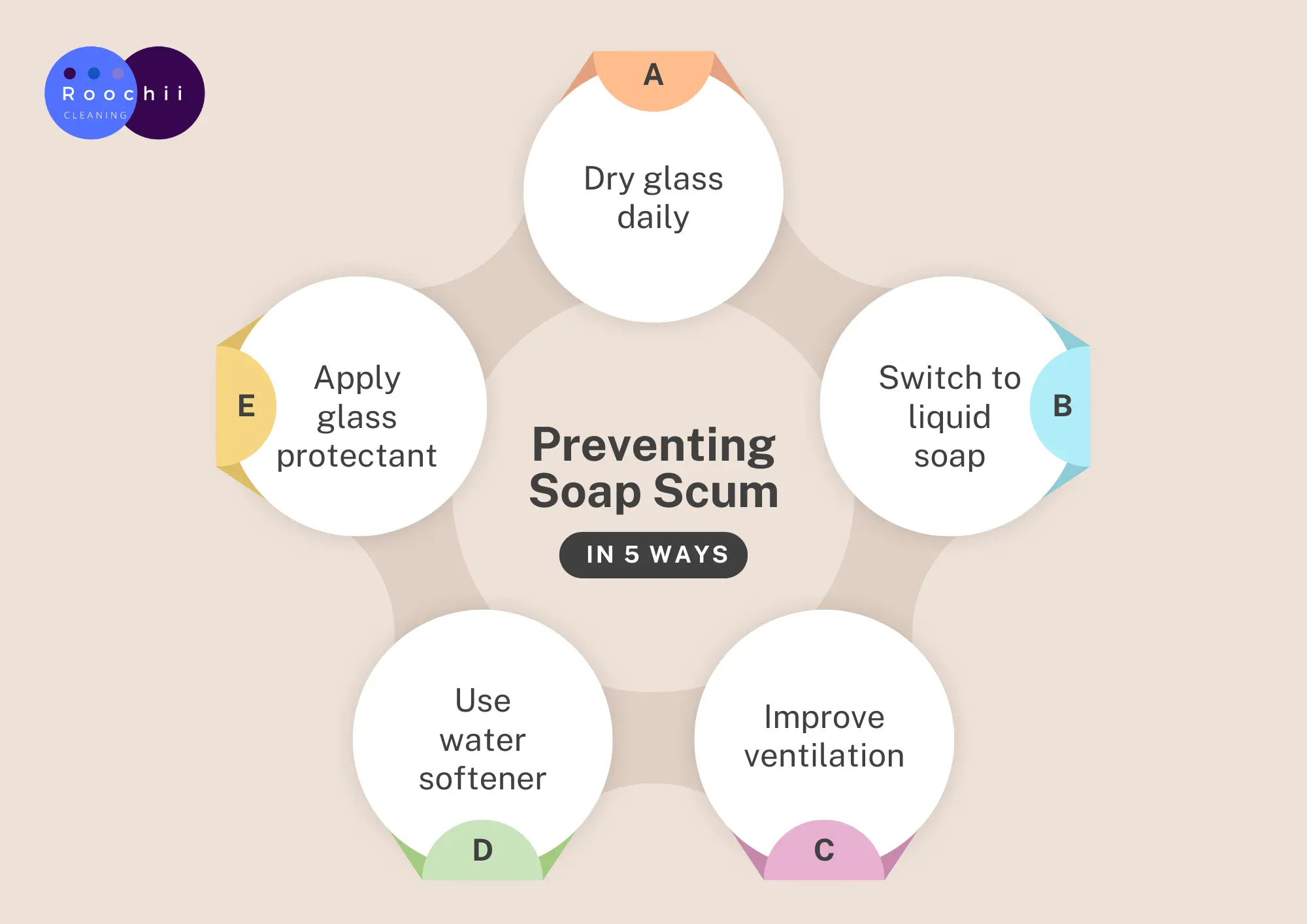
Infographic showing five ways to prevent soap scum on shower glass including drying glass daily, switching to liquid soap, improving ventilation, using a water softener, and applying glass protectant.

A. Daily Maintenance Habits 

Daily habits play the biggest role in preventing soap scum from building up on shower glass. The goal is simple: remove moisture and residue before minerals and soap have time to dry and bond with the surface.

A few small changes to your daily routine can make a noticeable difference:

  • Dry the shower glass after each use. A quick pass with a squeegee, microfiber cloth, or absorbent towel removes most of the water that would otherwise evaporate and leave mineral deposits behind. This single habit can significantly extend the time between deep cleanings.
  • Switch from bar soap to liquid body wash. Traditional bar soaps contain fatty acids that react strongly with minerals in hard water. Liquid or gel soaps reduce this reaction and slow residue buildup on glass.
  • Improve bathroom ventilation. Turn on the exhaust fan during and after showers, open a nearby window when possible, or leave the shower door open to promote airflow. Faster drying reduces humidity and gives soap scum less time to develop.

 When these simple habits become routine, soap scum rarely has the opportunity to accumulate, making the shower much easier to maintain over time.

B. Weekly Quick-Clean Routine

Even with daily drying, a light weekly clean helps remove the thin film that slowly accumulates over time.

Once a week, spray the glass with a mild cleaner like a diluted vinegar solution. Allow it to sit for several minutes so the solution can dissolve mineral residue and oils. Afterward, wipe the surface with a microfiber cloth or non-scratch sponge, rinse with warm water, and finish with a squeegee to dry.

This quick routine prevents minor buildup from hardening into the thicker layers that require scrubbing later. In most bathrooms, the entire process takes less than five minutes but can significantly reduce the need for aggressive cleaning methods.

Weekly cleaning also provides an opportunity to inspect the glass for early signs of mineral buildup or water spots. For busy households, especially families, routines like those shared in this guide on keeping a clean house with kids can make regular maintenance much easier.

C. Monthly Deep Reset

Even with consistent daily and weekly maintenance, shower glass benefits from a deeper cleaning every few weeks. A monthly deep reset helps restore clarity and removes buildup before it becomes difficult to manage.

This deeper cleaning step focuses on breaking down any lingering residue and reinforcing protective measures that slow future buildup.

  • Use a stronger cleaner for accumulated residue. Apply a dedicated soap-scum remover to areas where buildup is visible. Allow the cleaner to sit for several minutes so it can dissolve mineral deposits and oils before gently scrubbing with a non-scratch sponge.
  • Target edges, tracks, and problem areas. Soap scum tends to collect along the bottom edges of shower doors, in corners, and around hardware. These areas benefit from a little extra attention during monthly cleaning.
  • Reduce minerals at the source. In homes with hard water, installing a showerhead filter can significantly lower calcium and magnesium levels, which are major contributors to soap scum formation.
  • Apply a glass protectant or hydrophobic coating. Products designed for shower glass create a microscopic barrier that causes water to bead and slide off the surface rather than stick. This protective layer helps prevent residue from bonding to the glass.

Adding this monthly reset to your maintenance routine helps keep shower glass consistently clear and prevents small amounts of buildup from turning into stubborn soap scum layers.


Glass Etching vs. Surface Residue: Knowing the Difference

When shower glass looks cloudy or dull, it’s not always clear whether the problem is removable buildup or permanent damage. Many homeowners assume the glass is ruined when it actually just has soap scum or mineral deposits.

Understanding the difference between surface residue and glass etching helps determine whether a simple cleaning will fix the issue or if the glass has been permanently affected.

Surface Residue (Removable)

Surface residue is the most common cause of cloudy shower glass. This includes soap scum, hard water deposits, and oils from shampoos or body wash that dry onto the surface.

Key characteristics:

  • Appears as a cloudy or chalky film on the glass
  • Often feels slightly greasy or powdery when touched
  • Usually improves or disappears after cleaning
  • Can be removed with vinegar, baking soda, or soap scum removers

Because this buildup sits on top of the glass rather than inside it, proper cleaning methods can usually restore the glass to full clarity.

Glass Etching (Permanent Damage)

Glass etching occurs when mineral deposits remain on the surface for long periods and slowly react with the glass itself. Over time, this creates microscopic pitting that scatters light and makes the glass appear permanently hazy.

Key characteristics:

  • The glass looks cloudy even after thorough cleaning
  • The surface may feel slightly rough or dull
  • Cleaning products do not restore full clarity
  • The damage is caused by long-term mineral exposure

Unlike surface residue, etched glass cannot be fully reversed with standard cleaners because the glass surface has physically changed.

How to Tell the Difference 

If you’re unsure which problem you’re dealing with, try this simple test:

  1. Clean a small section of the glass thoroughly using a vinegar solution or soap scum remover.
  2. Rinse and dry the area completely.
  3. Compare the cleaned section to the surrounding glass.
  4. If the glass becomes clear, the issue was removable residue.
  5. If the cloudiness remains, the glass may be etched.

In cases of mild etching, professional polishing or restoration services may improve the appearance. However, severe etching may require replacing the glass to fully restore clarity.

When to Call a Professional Cleaning Service 

Most soap scum issues can be handled at home, but there are a few situations where calling a professional makes more sense, particularly when buildup has progressed beyond what typical home cleaning tools can safely address.

Professionals that offer deep cleaning services use stronger products and specialized tools that deliver results beyond what household cleaners can achieve.

A. Severe or Long-Standing Buildup 

When soap scum has accumulated over many months or years, it can harden into multiple mineral-rich layers that resist standard cleaning solutions. In these cases, professionals may use:

  • Commercial acidic mineral removers
  • Professional steam cleaning tools
  • Mechanical polishing pads designed for glass

These tools allow technicians to safely loosen deposits without scratching the glass. For most situations, professional soap scum removal typically ranges from $75 to $200, depending on the size of the enclosure, severity of buildup, and regional labor costs.

B. Etching or Persistent Cloudiness 

Long-term mineral exposure can etch glass, leaving it cloudy even after cleaning.

At this stage, the problem shifts from cleaning to glass restoration. Professionals may attempt polishing or surface restoration techniques to improve clarity. Mild etching can sometimes be reduced, but deep etching is usually permanent because the glass surface itself has been altered.

C. Specialty or Coated Glass 

Many modern shower doors are manufactured with factory-applied protective coatings designed to repel water and reduce mineral buildup. These surfaces require specific cleaning products to prevent damage or warranty issues.

Professionals know which products are safe and can maintain or reapply protective coatings if needed.

D. Limited Time or Physical Constraints 

In some situations, the decision to hire a professional is less about difficulty and more about practicality.

Cleaning shower glass thoroughly can require repeated applications of cleaners, proper ventilation, and careful scrubbing. In fact, many homeowners underestimate how long cleaning tasks take, a topic explored in this article on why we believe cleaning is faster than it actually is.


Final Note:  How to Remove Soap Scum from Glass Effectively

Soap scum may look stubborn, but removing it, whether from tile or glass, becomes much easier when you use the right method for the level of buildup.

For most showers, the most effective approach is simple: start with an acid-based cleaner like white vinegar to dissolve mineral deposits, follow with gentle scrubbing using baking soda or a non-scratch sponge to lift residue, and finish by rinsing and drying the glass with a microfiber cloth or squeegee. When buildup is heavier or long-standing, a specialized commercial cleaner can break down the layers more efficiently.

Just as important as removal is prevention. Small daily habits make a major difference. Squeegeeing the glass after showers, improving bathroom ventilation, switching to liquid body wash, and applying a glass protectant all help stop buildup before it hardens.

In most homes, consistent cleaning and a few simple habits are enough to keep shower glass clear and free of buildup. And if buildup has progressed to etching or severe mineral damage, professional services like Roochii Cleaning can restore clarity safely.

FAQ

FAQs on Removing Soap Scum from Glass

Leave a Reply

Your email address will not be published. Required fields are marked *