How to Clean Gas Stove Top: 7 Simple Steps to Remove Grease and Burnt Food

Why Learning How to Clean Gas Stove Top Matters
A gas stove top can go from sticky to messy quickly. One moment you are simmering pasta sauce, and the next moment the stove is covered with grease, crumbs, and stubborn stains.
Beyond appearances, a dirty stove can cause real problems. Grease buildup can block burner ports, affect flame quality, and make cooking less efficient because it can become clogged with grease.
Over time, it can produce unpleasant odors the next time you turn on the heat, since grease buildup can cause smoke during cooking.
Learning how to clean gas stove top surfaces properly is not just about keeping your kitchen looking nice. It improves hygiene, keeps burners working correctly, and helps your appliance last longer.
Cleaning a gas stove is simple with the right steps. With a few common supplies and the right steps, even stubborn grease and burnt food can be handled without much stress.
Ready to bring your stove back to life? Let’s walk through the simple steps that make cleaning your gas stove top easier and more manageable.
Table of Contents
- Safety Tips Before Cleaning a Gas Stove Top
- Tools and Supplies for Cleaning Gas Stove Top
- Step-by-Step: How to Clean Gas Stove Top Properly
- How to Clean Different Gas Stove Materials Safely
- Deep Cleaning Gas Stove Top for Heavy Grease Buildup
- Time-Saving Gas Stove Cleaning Hacks
- Troubleshooting Common Gas Stove Burner Problems
- Preventing Grease Buildup on Gas Stove Tops
- How Often Should You Clean Your Gas Stove Top
- Mistakes to Avoid When Cleaning Gas Stove Top
Safety Tips Before Cleaning a Gas Stove Top
Cleaning a stove is simple, but safety should come first. Gas appliances involve heat, fuel, and electrical igniters, so a few precautions help prevent accidents.
Taking a minute to prepare the stove ensures you avoid burns, gas leaks, or damage to delicate parts.
Turn Off the Gas Supply
Before cleaning, make sure all burners are turned off. If possible, shut off the main gas valve connected to the stove.
This step prevents accidental gas release while you handle the burners and caps.
Allow Burners to Cool Completely
Never clean a hot stove. Burner caps and grates hold heat long after cooking ends.
Wait until every part is cool to the touch. Cleaning a warm stove can cause burns and may damage cleaning cloths or brushes.
Protect Burner Ports and Igniters
Burner ports are the tiny holes where gas exits. Igniters are the small parts that create sparks.
Avoid pushing debris inside these openings. Use soft tools like toothbrushes rather than sharp metal objects.
Avoid Harsh Chemicals That Damage Stove Surfaces
Strong chemicals can stain enamel surfaces or dull stainless steel.
Avoid:
- Bleach
- Industrial oven cleaners
- Abrasive powders
Gentle household cleaners usually work better and protect the stove finish.
Tools and Supplies for Cleaning Gas Stove Top
Having the right tools makes cleaning easier and faster. Most supplies are common household items.
Essential Cleaning Supplies
Essential supplies include:
- Dish soap
- Baking soda
- White vinegar
- Microfiber cloth
- Soft scrub brush
Dish soap breaks down grease, while baking soda helps lift stubborn residue.
Optional Deep Cleaning Tools
Sometimes heavy buildup requires stronger cleaning support.
Deep cleaning tools include:
- Hydrogen peroxide
- Degreasing cleaner
- Steam cleaner
- Small brush for burner ports
These tools help remove carbon deposits and deep grease.
Natural vs Commercial Cleaning Solutions
Natural solutions are safe and inexpensive. Baking soda, vinegar, and lemon juice work well for routine cleaning.
Commercial degreasers are stronger. They help remove thick grease or older buildup.
Choose a method based on how dirty the stove is.
Step-by-Step: How to Clean Gas Stove Top Properly
Cleaning a gas stove works best when done in stages. Each component needs attention.
Follow these steps to clean the surface, burners, and grates safely.
Step 1: Remove Grates, Burner Caps, and Knobs
Start by removing loose parts from the stove.
Most gas stoves have removable:
- Grates
- Burner caps
- Control knobs
Lift them gently and place them on the counter. This exposes the full stovetop surface.
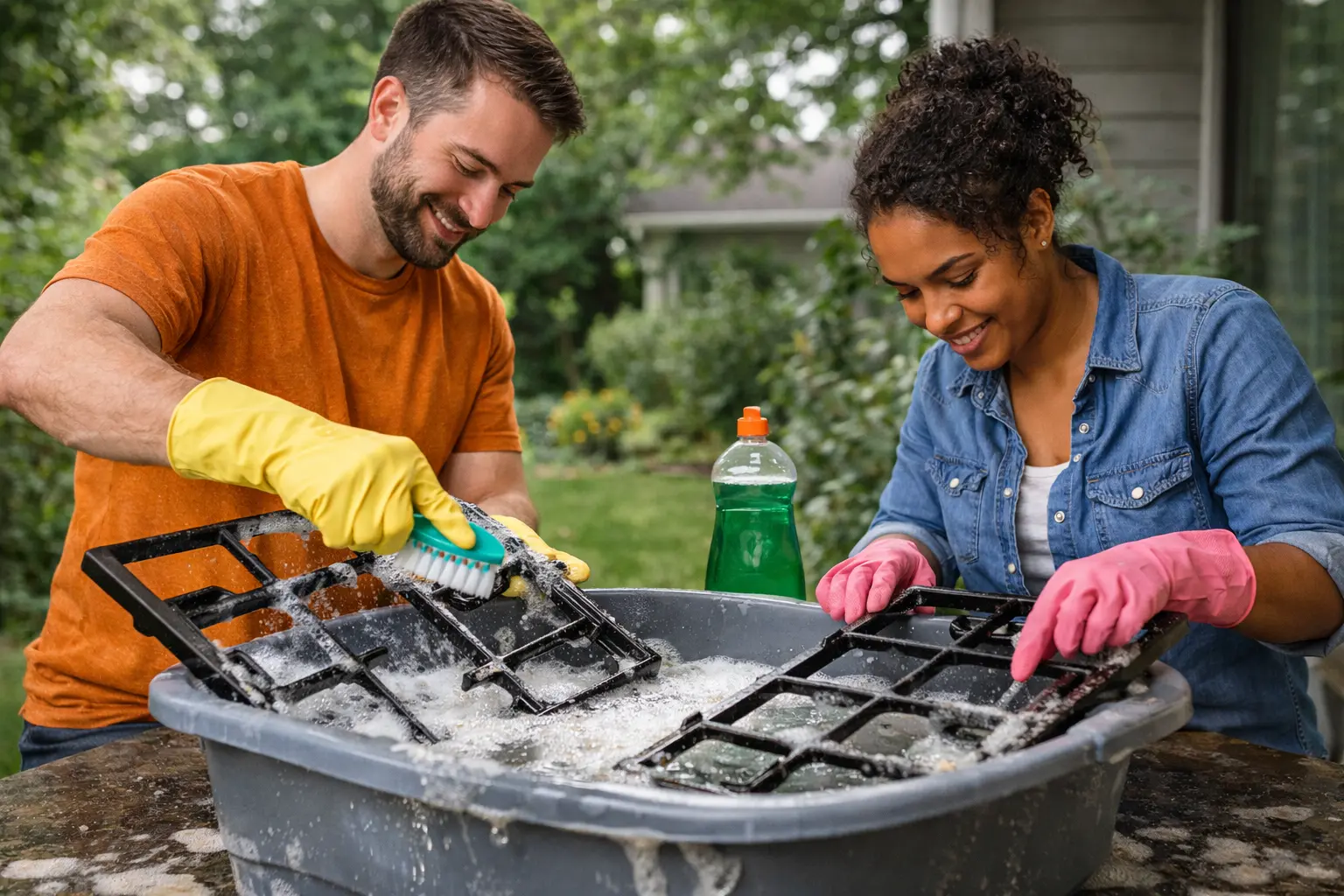
Step 2: Soak Stove Grates to Loosen Grease
Fill a sink or large basin with hot water and dish soap.
Place the grates inside and allow them to soak for 15 to 20 minutes. This softens grease and food residue.
For stubborn stains, apply baking soda paste before soaking.
Step 3: Clean Burner Caps and Burner Heads
Burner caps collect grease and carbon.
Scrub them with a soft brush and warm soapy water. If carbon buildup remains, apply baking soda paste and scrub gently.
Check burner holes and remove debris using a toothpick or small brush.
Step 4: Clean the Stove Top Surface
Now focus on the exposed stovetop.
Spray the surface with warm water mixed with dish soap. Let the solution sit for a few minutes.
Wipe the area with a microfiber cloth to remove grease and crumbs.
Step 5: Scrub Burnt Food and Stubborn Grease
Burnt residue often sticks to the stove surface.
Use baking soda and vinegar to loosen it. The mixture creates a mild reaction that helps lift stubborn food.
For deeper stains, apply hydrogen peroxide over baking soda paste and scrub gently.
Step 6: Clean Burner Ports for Proper Gas Flow
Blocked burner holes can cause uneven flames.
Use a toothbrush or small brush to remove dirt from burner ports. Avoid metal tools that could damage them.
Keeping these holes clear ensures proper gas flow.
Step 7: Dry Components and Reassemble the Stove
Dry every part before putting it back.
Use a clean towel to remove moisture from grates and burner caps. Wet components may cause ignition problems.
Once dry, place each burner cap correctly and return the grates to their original positions.
How to Clean Different Gas Stove Materials Safely
Gas stoves use several materials. Each requires slightly different care. Using the correct method prevents scratches or stains.
Cleaning Stainless Steel Stove Tops
Stainless steel surfaces show grease easily.
Use a microfiber cloth with warm, soapy water. Wipe along the metal grain to avoid streaks. Dry the surface afterward to prevent watermarks.
Cleaning Enamel Stove Surfaces
Enamel surfaces are durable but can chip if scrubbed aggressively.
Use baking soda paste and a soft sponge. Avoid metal scrubbing pads. Rinse with warm water and wipe dry.
Cleaning Cast Iron Stove Grates
Cast iron grates are strong but can rust.
Clean them using warm soapy water or the ammonia bag method. Dry thoroughly before replacing. Lightly coating grates with cooking oil can help prevent rust.
Cleaning Porcelain-Coated Burner Caps
Porcelain-coated caps resist stains but can chip. Use mild soap and a soft brush. Avoid abrasive powders.
Rinse and dry before reinstalling.
Deep Cleaning Gas Stove Top for Heavy Grease Buildup
Sometimes grease accumulates over months of cooking. Standard cleaning may not remove thick layers.
Deep cleaning methods help restore heavily used stoves. The following methods help remove different levels of grease buildup, depending on how heavily the stove surface is soiled.
|
Method |
Best For |
Time Needed |
|
Baking soda paste |
Light grease |
10–15 minutes |
|
Ammonia bag method |
Heavy grime on grates |
Overnight |
|
Steam cleaning |
Sticky residue |
10 minutes |
|
Degreaser soak |
Thick grease buildup |
30 minutes |
Removing Hardened Grease and Carbon Deposits
Carbon buildup forms after repeated cooking spills.
Apply baking soda paste to the affected area and let it sit for 15 minutes. Scrub gently using a soft brush. This loosens hardened grease without damaging the surface.
Ammonia Bag Method for Cast Iron Grates
Cast iron grates often hold stubborn grease. Place grates in a sealed plastic bag with a small amount of ammonia. Leave the bag overnight.
The fumes loosen grease, allowing it to wipe away easily the next day.
Steam Cleaning Method for Stubborn Dirt
Steam cleaners break down grease with hot vapor. Hold the steam nozzle a few inches from the stove surface. Wipe loosened grime with a cloth.
Steam works well on sticky residue around burners.
Overnight Degreasing Techniques
For heavy buildup, apply degreaser or baking soda paste before bed. Cover the area with a damp cloth and leave it overnight. In the morning, wipe the surface clean.
This method softens grease that has hardened for months.
Time-Saving Gas Stove Cleaning Hacks
A few simple tricks can shorten cleaning time, especially if you understand why cleaning often feels slower than it actually is.
These quick methods can help reduce cleaning effort between deeper stove cleanings.
Dishwasher Method for Stove Grates
Many stove grates are dishwasher safe. Place them in the dishwasher with regular detergent. Use a normal cycle.
Always check the manufacturer’s instructions first.
Baking Soda Paste for Fast Grease Removal
Mix 2–3 tablespoons of baking soda with a small amount of water to form a paste. Spread the paste over greasy areas and wait 10 minutes. Wipe away with a damp cloth.
This method works well for everyday cleaning.
Lemon and Vinegar Natural Degreaser
Lemon juice and vinegar dissolve grease effectively. Mix equal parts in a spray bottle. Spray the stove surface and wipe with a cloth.
The mixture also helps remove mild odors.
Using Paper Towels to Absorb Fresh Grease
Fresh grease is easy to wipe away. Place paper towels over spills while they are still warm. The towels absorb oil quickly.
This reduces deep cleaning later.
Hot Towel Method for Loosening Grease
Place a warm damp towel over greasy areas of the stove for a few minutes before wiping. The heat helps soften hardened grease, making it easier to remove with a cloth or sponge. This quick method reduces the need for heavy scrubbing.
Troubleshooting Common Gas Stove Burner Problems
Cleaning can reveal burner issues. Understanding common problems helps keep the stove functioning properly.
Why Burner Flames Turn Yellow
A healthy gas flame is usually blue because blue flames indicate efficient combustion in gas appliances. Yellow flames may indicate blocked burner holes or excess grease.
Cleaning burner ports usually restores normal flames.
Fixing Uneven Gas Flames
Uneven flames often result from clogged burner ports.
Remove burner caps and brush debris away. Make sure burner parts sit correctly before relighting.
How to Clear Clogged Burner Holes
Use a toothpick or soft brush to clear blocked holes. Avoid metal needles that could widen the openings.
Clear holes improve flame distribution.
Why Your Gas Burner Won’t Ignite
If a burner clicks but does not ignite, moisture may be trapped near the igniter because moisture can interfere with gas stove igniters.
Dry the burner area completely. If the problem continues, check for food debris around the igniter.
Preventing Grease Buildup on Gas Stove Tops
Regular cleaning prevents heavy buildup, and following practical house cleaning tips for a cleaner home can make everyday maintenance much easier.
Small habits after cooking make a big difference, just like other ways to keep your house clean every day.
Daily Stove Cleaning Routine
After cooking, wipe the stove surface with a damp cloth. Remove food crumbs and grease before they harden.
This habit takes less than a minute.
Weekly Deep Cleaning Schedule
Once a week, remove grates and burner caps. Clean them with warm soapy water and wipe the stovetop thoroughly.
Weekly cleaning helps prevent heavy grease buildup.
Cooking Habits That Reduce Grease Splatter
Simple cooking habits help keep the stove cleaner.
Examples include:
- Using lids when frying
- Lowering heat to prevent splattering
- Wiping spills immediately
These small steps reduce future cleaning work.
Best Stove Protectors and Liners
Stove liners sit beneath burners and catch spills.
They are easy to remove and wash. Using liners keeps the stovetop cleaner between deep cleanings.
How Often Should You Clean Your Gas Stove Top?
Cleaning frequency depends on cooking habits. Regular maintenance prevents grease from building up.
Grease and food residue gradually harden when repeatedly exposed to heat. Over time, this buildup can clog burner ports and make stains more difficult to remove. Following a regular cleaning schedule helps prevent heavy grease layers and keeps burners working efficiently.

After Every Cooking Session
Quickly wipe spills and crumbs after cooking. This prevents stains from hardening.
Weekly Maintenance Cleaning
Once a week, clean the grates and burner caps. Also wipe the stovetop thoroughly.
Monthly Deep Cleaning Routine
A deeper cleaning once a month helps remove hidden grease. This includes soaking grates and clearing burner ports.
Mistakes to Avoid When Cleaning Gas Stove Top
Avoid harsh chemicals that can damage stove surfaces, and consider safe cleaning methods for delicate surfaces when choosing cleaning tools.
Common mistakes include:
- Using abrasive scrubbers
- Pouring water into burner openings
- Reassembling wet burner parts
- Using harsh chemical cleaners
Using Abrasive Scrubbers
Metal scrubbers scratch stove surfaces. Use soft brushes or microfiber cloths instead.
Pouring Water Into Burner Openings
Water entering burner holes can block gas flow. Always clean around the openings carefully.
Reassembling Wet Burner Parts
Moisture near burners can prevent ignition. Dry all parts thoroughly before placing them back.
Using Harsh Chemical Degreasers
Strong cleaners may stain surfaces or damage finishes. Mild soap and baking soda usually work well.
Keep Your Gas Stove Clean for Better Performance and Longer Lifespan
Keeping a gas stove clean is easier when you follow a simple routine. Start by removing the grates and burner caps, soaking them to loosen grease, wiping the stovetop surface, and scrubbing away burnt residue. Clearing burner ports and drying all components before reassembly helps maintain proper burner performance and prevents ignition problems.
Keeping your gas stove clean improves cooking efficiency and kitchen hygiene because kitchen grease buildup can harbor bacteria. It also helps extend the lifespan of your appliance by preventing grease buildup and clogged burner ports.
With the right tools and a simple routine, learning how to clean gas stove top surfaces becomes quick and manageable. The same approach works when learning how to clean a dishwasher properly. Regular wiping, weekly maintenance, and occasional deep cleaning help remove grease before it becomes difficult to handle.
Consistent care prevents common burner issues such as uneven flames or ignition problems. If cleaning tasks become overwhelming, professional house cleaning services in Denver can help maintain your kitchen. By following the steps in this guide, you can keep your stove working properly while maintaining a clean and organized kitchen space.
FAQ
Frequently Asked Questions About Cleaning Gas Stove Top
Yes. Vinegar dissolves grease and food residue. Mix it with water and wipe the surface using a microfiber cloth.
Dish soap and baking soda work well for most grates. For heavy grease, the ammonia bag method can help loosen buildup.
Apply baking soda paste to the burnt area and let it sit. Scrub gently with a soft brush and wipe clean.
Some stove grates are dishwasher safe, depending on the material. Always check the manufacturer instructions before placing them in the dishwasher.
Moisture near the igniter can cause clicking. Allow the burners to dry fully before using the stove.
Clean the grates thoroughly and dry them completely. Lightly rubbing them with cooking oil can improve their appearance and help prevent rust.