Why Is Cleaning Your Room Important? Benefits, Science, and Cleaning Tips
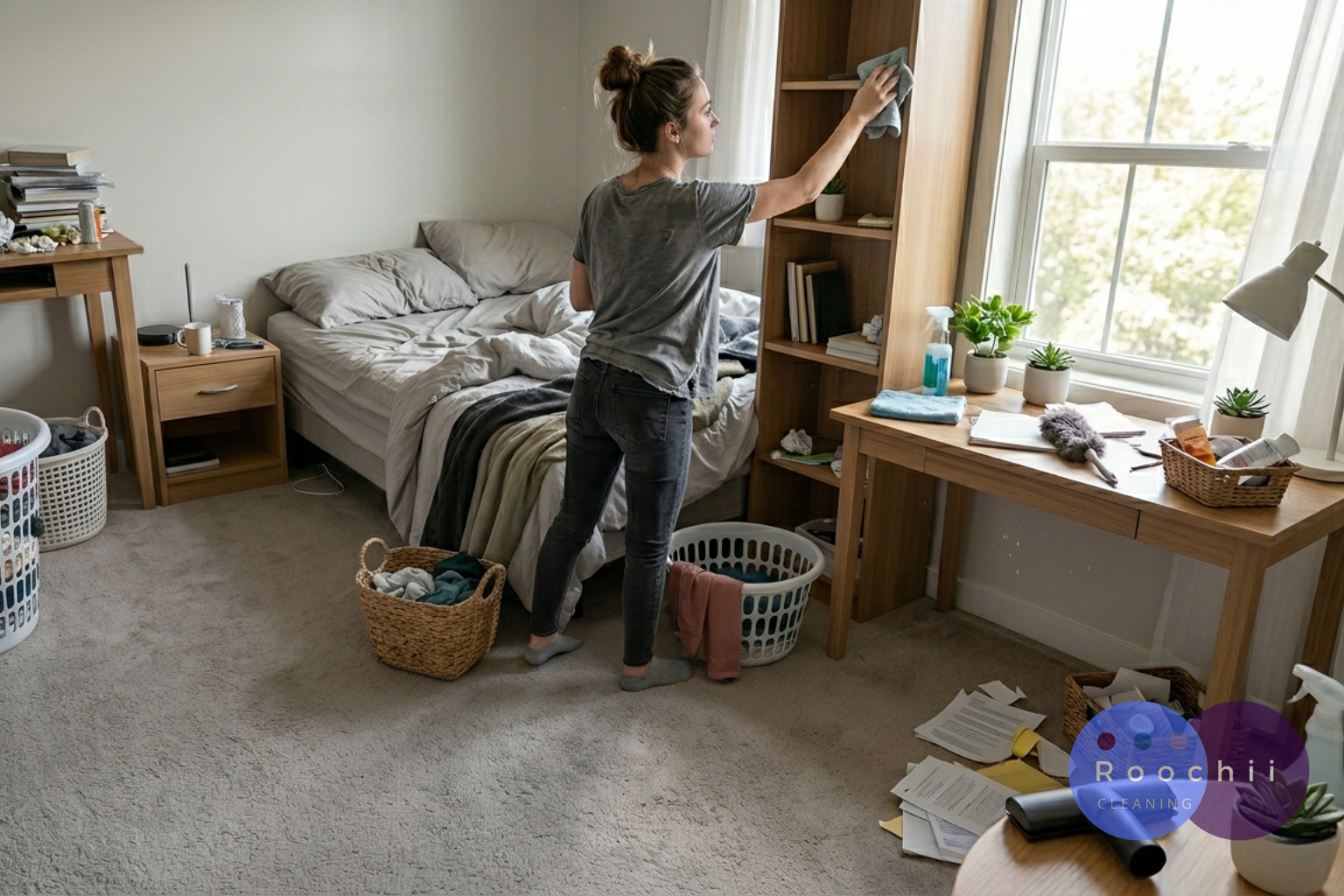
Woman cleaning her bedroom and organizing space showing why cleaning your room is important for health and productivity

Why Is Cleaning Your Room Important in Daily Life

Most people don’t realize how much their environment affects their mood, focus, and even their sleep until their room looks like a laundry basket exploded and decided to stay forever. A messy space has a funny way of making everything feel more stressful, more distracting, and somehow more tiring, even if you haven’t done anything yet.

So, why is cleaning your room important? It’s not just about making things look nice for five minutes before they get messy again. A clean room can actually improve your mental health, help you focus better, sleep more comfortably, and even build good life habits that stick with you for years.

The truth is, cleaning your room isn’t really about the room, but about how you feel and function in your daily life. Once you understand the real benefits, you might start looking at cleaning very differently.

Let’s break down why it matters more than you think.

 Table of Contents 

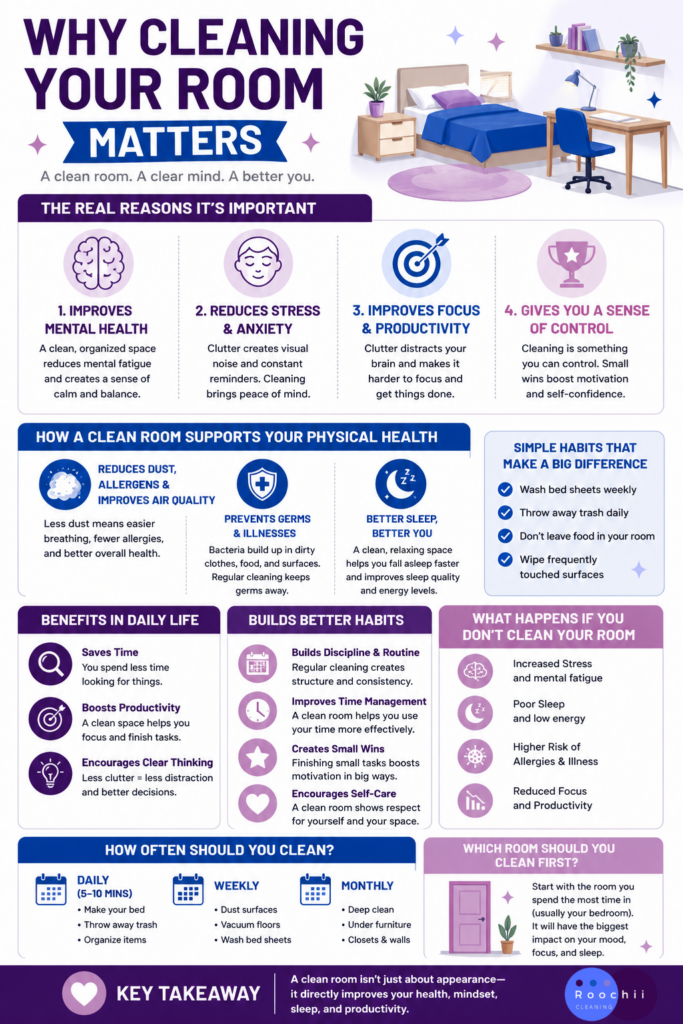
Infographic explaining why is cleaning your room important including mental health benefits productivity and cleaning habits

The Real Reasons Why Cleaning Your Room Is Important 

Your room is more than just a place where you sleep. It is where you start and end your day, where you relax, study, think, and spend a lot of your time. The way this space looks and feels can affect your mood, your focus, and even your health more than you might expect.
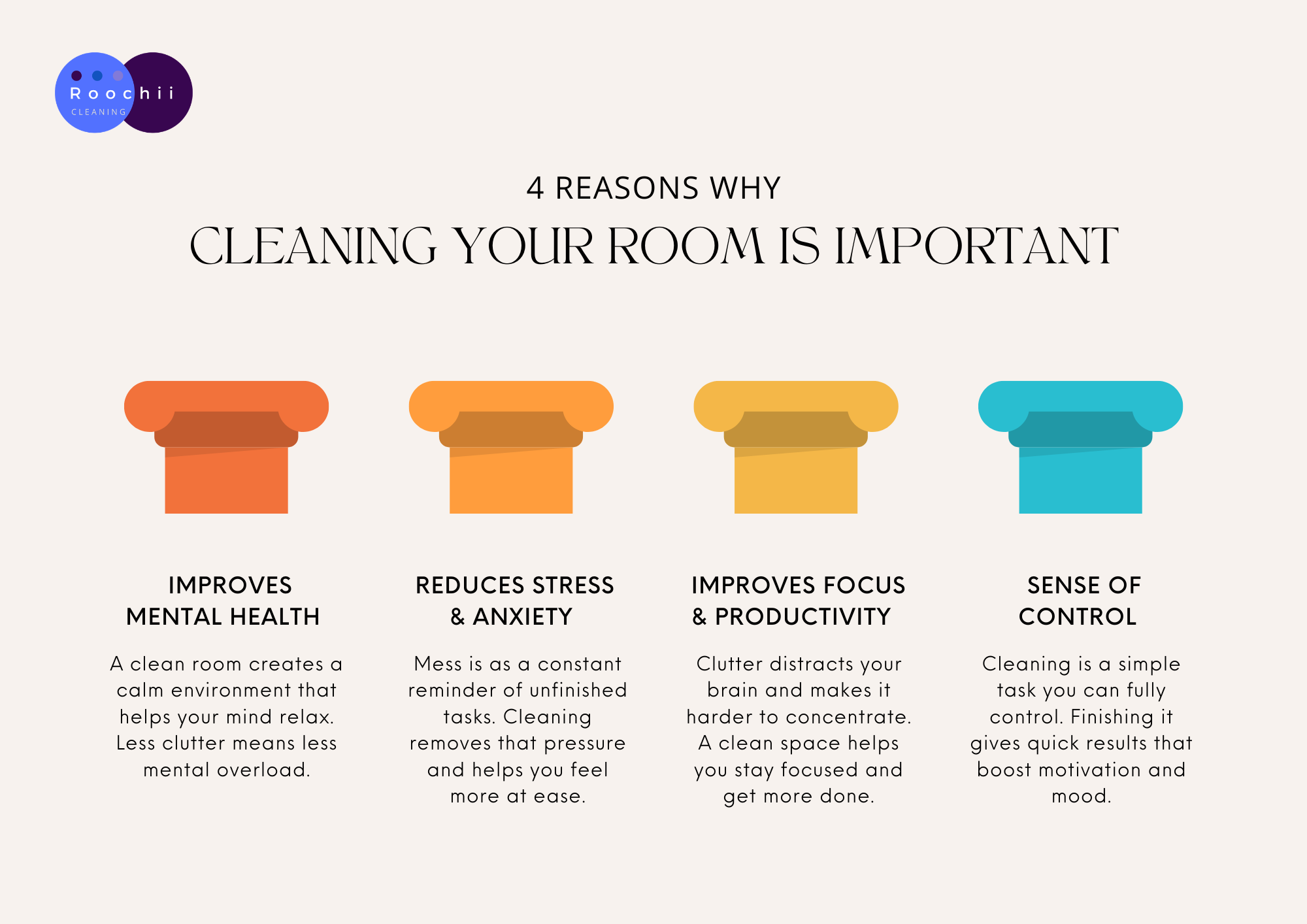
Infographic showing four reasons why is cleaning your room important including mental health stress reduction productivity and control

Understanding why cleaning your room is important starts with understanding how your environment affects your mind and daily habits.

A. A Clean Room Improves Mental Health 

Living in a clean space can have a direct effect on your mental health. When your room is organized, your brain processes the environment as calm and manageable. This can help reduce mental fatigue and improve emotional balance.

Research from the Journal of Environmental Psychology has shown that cluttered environments can increase feelings of stress and overwhelm. A clean room creates a sense of order, which helps your mind relax. This is one major reason why cleaning your room is important for your overall well-being.

B. Cleaning Reduces Stress and Anxiety 

Mess creates visual noise, which can make your brain feel overwhelmed. When everything is out of place, your mind keeps reminding you that something needs to be done. This can quietly increase stress levels over time.

Cleaning your room removes that constant reminder. Even small actions like making your bed or organizing your desk can make you feel more relaxed. A clean space often leads to a calmer mind.

C. A Clean Space Improves Focus and Productivity 

It’s difficult to focus when your environment is distracting. In fact, Princeton University Neuroscience Institute found that clutter overloads the visual cortex and makes it harder to focus and process information.

Clutter on the desk and trash on the floor can pull your attention away from important tasks.

Students and people who work from home often perform better in a clean room. You spend less time looking for things and more time finishing tasks.

D. Cleaning Your Room Gives You a Sense of Control 

Life can feel unpredictable, and many things are outside your control. Cleaning your room is one of the few things you can fully control. That simple act can make you feel more stable and organized.

Completing small cleaning tasks also gives a sense of accomplishment. When you finish cleaning, you can see the results immediately. That visual progress can improve your mood and motivation.

How a Clean Room Supports Your Physical Health

Many people think cleaning is only about making a room look nice, but it also plays a big role in your physical health.

The place where you sleep and spend a lot of time can collect allergens without you noticing. As time passes, an unclean room can affect your breathing, your skin, and even how well you sleep.

A. Dust, Allergies, and Air Quality 

Dust builds up quickly in bedrooms, especially on shelves, curtains, and under the bed. This dust can contain allergens that cause sneezing, coughing, and itchy eyes. If you don’t clean regularly, air quality in your room can get worse, which can lead to sleep disorders or poor sleep health.

Vacuuming, dusting, and opening windows can improve the air you breathe. Cleaner air helps you sleep better and feel healthier.

B. Germs, Bacteria, and Illness Prevention 

Dirty clothes, leftover food, and unwashed bed sheets can collect bacteria. These bacteria can cause unpleasant smells and even minor illnesses. Regular cleaning reduces the risk of germs spreading in your room.

Simple habits can make a big difference:

  • Wash bed sheets once a week
  • Throw away trash daily
  • Do not leave food in your room
  • Wipe frequently touched surfaces

C. A Clean Room Gives Better Sleep 

Your brain connects your bedroom with rest. When your room is messy, your brain may feel uneasy instead of relaxed. This can make it harder to fall asleep.

A clean room creates a peaceful environment that supports better sleep. Clean sheets, organized space, and fresh air all help your body relax at night. Good sleep is one of the strongest reasons why a clean room is important.

D. Safety Benefits of a Clean Bedroom 

A messy room can actually be dangerous. Items on the floor can cause trips and falls. Piles of paper or clothes can also become fire hazards if placed near outlets.

Keeping your room clean improves safety by:

  • Keeping walkways clear
  • Reducing fire risks
  • Preventing broken items on the floor
  • Making emergency exits easier to access

Safety is often overlooked, but it is an important benefit of cleaning. 

What Happens If You Don’t Clean Your Room 

Many people ignore cleaning because they think the mess is harmless. However, a messy room can slowly affect your health, mood, sleep, and productivity. The effects are not always obvious at first, but over time, they can become real problems.
Infographic showing what happens if you dont clean your room including mental effects health risks and sleep issues

Mental Effects of a Messy Room 

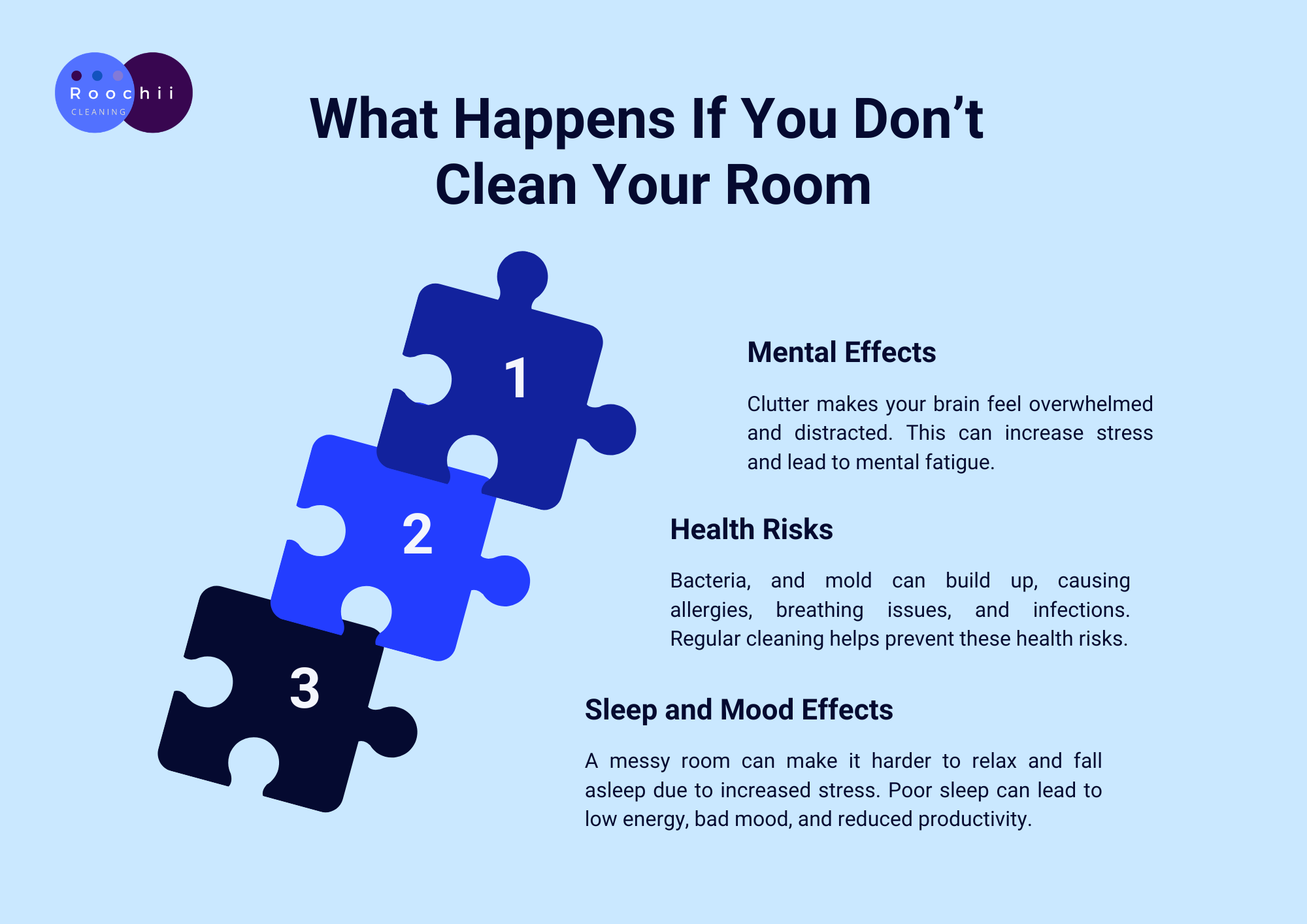
A messy room can create mental stress even if you think you are used to it. When your brain sees clutter, it registers unfinished tasks and disorganization. This can make you feel overwhelmed, distracted, and mentally tired.

Studies in environmental psychology show that clutter increases cortisol levels, which is the stress hormone. When stress levels are high, it becomes harder to focus, make decisions, and stay motivated. Over time, this can lead to procrastination, low motivation, and mental fatigue.

A clean room, on the other hand, creates a sense of order and calm. Your brain can relax because it is not constantly processing visual clutter.

Health Risks of a Dirty Room 

A dirty room can become a place where dust, bacteria, and mold build up. Bed sheets, carpets, and curtains collect dust mites, which can cause allergies and breathing problems. If food or trash is left in the room, it can attract insects and bacteria.

Common health problems caused by dirty rooms include:

  • Allergies and sneezing
  • Breathing problems
  • Skin irritation and acne
  • Headaches caused by poor air quality
  • Increased risk of infections from bacteria

Washing bed sheets, vacuuming floors, and removing trash regularly can significantly reduce these health risks.

How Mess Affects Sleep and Mood 

Your bedroom should be a place where your body and mind can rest. When your room is messy, your brain may feel uncomfortable and restless. Clutter can create a feeling of stress, which can make it harder to fall asleep.

Poor sleep can lead to:

  • Low energy
  • Bad mood
  • Difficulty concentrating
  • Lower productivity during the day

A clean room creates a calm environment that helps your brain relax before sleep. This improves sleep quality and helps you wake up feeling more rested and ready for the day.

The Role of a Clean Room in Your Daily Routine  

A clean room serves a purpose in your daily routine by helping you stay organized, think clearly, and use your time more efficiently. When your space is clean, you can move around easily and focus on what you need to do.

A. Helps You Stay Organized 

A clean room makes it easier to organize your belongings. When everything has a place, you spend less time searching for things. Organization saves time and reduces frustration.

You can stay organized by:

  • Using storage boxes
  • Keeping a laundry basket
  • Organizing your desk weekly
  • Throwing away unused items

B. Saves Time Looking for Things 

Many people waste time looking for lost items in messy rooms. Keys, notebooks, chargers, and clothes often get lost in clutter. A clean room helps you find things quickly.

Saving even a few minutes every day can make your routine smoother.

C. Helps You Think Clearly 

Your environment has a direct effect on how clearly you think and how well you make decisions. When your room is messy, your brain is constantly processing visual clutter in the background. Even if you are not paying attention to it, that clutter competes for your attention and makes it harder to focus.

A clean room removes unnecessary distractions and helps your brain focus on one task at a time. This is especially important when studying, working, reading, or planning your day. When your space is organized, your mind often feels more organized too.

D. Creates a Productive Environment 

Your room should support your daily activities, not distract you from them.

When your space is clean and organized, it becomes easier to sit down and start working or studying. You do not have to spend time moving things, cleaning your desk, or looking for lost items before you begin.

A productive environment does not have to be perfect, but it should be organized enough that you can focus on your tasks.

Productivity often depends on your environment more than people realize. Creating a clean space helps you build better work habits, manage your time better, and finish tasks more efficiently.

How Does Cleaning Your Room Help You Build Better Habits 

Cleaning your room regularly is a small habit, but it can lead to bigger positive changes in your life.

Simple routines like making your bed can teach discipline and time management. As these routines become habit, they can make your daily life more organized and less stressful.

Cleaning Creates Routine and Structure 

Habits are built through repetition. When you clean your room at the same time each day or week, your brain begins to recognize cleaning as part of your normal routine. This reduces procrastination because the task becomes automatic instead of something you keep delaying.

For example, many people build simple routines like:

  • Making the bed every morning
  • Putting clothes away before sleeping
  • Cleaning the desk before starting work
  • Throwing away trash before leaving the room

These small routines create structure in your day. Structure helps reduce chaos, saves time, and makes daily life more predictable and manageable.

Small Wins and Motivation 

Cleaning your room gives you quick and visible results. When you finish cleaning, you immediately see the difference. This creates a sense of accomplishment, even if the task was small.

Psychologists often call this a “small win.” Small wins are important because they build momentum. When you complete one small task, you are more likely to complete another task. This is how productivity and motivation grow over time.

Cleaning and Time Management 

Cleaning also teaches time management. When you clean regularly, you learn how to schedule tasks and manage your time effectively. Instead of spending hours cleaning a very messy room, you spend a few minutes cleaning every day.

This teaches an important life lesson. It is easier to maintain something regularly than to fix a big problem later.

Here is a simple example of time management through cleaning:

  • 5 minutes making the bed in the morning
  • 5 minutes organizing at night
  • 20–30 minutes cleaning once a week

This schedule keeps your room clean without taking too much time.

Cleaning as a Form of Self-Care 

Many people think cleaning is just a chore, but it can also be a form of self-care. Self-care means doing things that improve your well-being and quality of life. A clean room creates a comfortable and peaceful environment where you can rest and relax.

Taking care of your room is also a way of taking care of yourself. It shows that you respect your space, your health, and your daily life.

How Often Should You Clean Your Room 

One common question people ask is how often they should clean their room. The answer depends on your lifestyle, but in general, cleaning should be done daily, weekly, and monthly in different ways.

Having a cleaning schedule makes the task easier and prevents mess from building up.

Daily Cleaning Tasks 

Daily cleaning focuses on small tasks that prevent clutter from building up.

These tasks usually take only 5 to 10 minutes, but they make a big difference in keeping your room organized and manageable.

Recommended daily tasks include:

  • Make your bed
  • Put dirty clothes in the laundry basket
  • Throw away trash and food containers
  • Return items to their proper place
  • Wipe your desk if you use it often

These small habits prevent mess from becoming overwhelming. When done daily, they reduce the need for long cleaning sessions later.

Weekly Cleaning Tasks 

Weekly cleaning focuses on hygiene and dust removal. Dust and bacteria build up on surfaces and floors even if the room looks tidy.

Weekly cleaning helps maintain air quality and prevents allergens from building up.

Recommended weekly tasks include:

  • Change and wash bed sheets
  • Dust furniture, shelves, and electronics
  • Vacuum carpets or sweep floors
  • Clean mirrors and glass surfaces
  • Empty trash bins and disinfect them
  • Wipe frequently touched surfaces like doorknobs and light switches

Monthly Deep Cleaning Checklist 

Monthly cleaning focuses on areas that are often ignored but collect a lot of dust and dirt over time.

Deep cleaning improves air quality and keeps your room in good condition.

Recommended monthly deep cleaning tasks:

  • Vacuum under the bed
  • Clean behind and under furniture
  • Organize closets and drawers
  • Wash curtains or clean blinds
  • Wipe baseboards
  • Clean walls and doors
  • Declutter unused items
  • Check for mold or moisture

Deep cleaning once a month prevents long-term dirt buildup and keeps your room truly clean, not just visually clean.

Which Room Should You Clean First and Why 

When cleaning a home, the order you clean each room matters. Cleaning in the wrong order can spread dust and bacteria from one area to another, which makes cleaning less effective.

Professional cleaners usually prioritize rooms based on bacteria levels, moisture, and how frequently the area is used. Cleaning the most sanitary-sensitive areas first and the least contaminated areas last makes the process more efficient and hygienic.

1. Start with Your Bedroom

Begin by making your bed, putting away clutter, and wiping down surfaces. These small actions immediately improve how your space looks and feels.

Finishing your bedroom first ensures you always have a clean, comfortable place to return to, even if you don’t get to the rest of the house.

2. Clean High-Use Areas Next (Optional)

If you have more time, you can move on to other high-use spaces like the bathroom or kitchen. These areas tend to build up more bacteria and may need deeper cleaning.

However, this step is optional. Your main priority is maintaining your personal space.

3. Leave Low-Priority Areas for Later

Living rooms and other shared spaces can be cleaned after your essentials are done. These areas often collect dust and clutter but don’t impact your personal routine as directly as your bedroom.

Why Cleaning in the Right Order Matters 

Cleaning in the correct order:

  • Prevents cross-contamination
  • Saves time and energy
  • Keeps food areas sanitary
  • Improves overall cleaning efficiency
  • Helps maintain better air quality

Following a structured cleaning order makes the process faster and more organized. But for busy schedules or larger homes, keeping up with this routine can be challenging. Professional cleaning services can help you save time, handle deeper cleaning tasks, and maintain a consistently clean home without the added stress.


Conclusion: A Clean Room Can Change Your Life 

Cleaning your room is more than a chore; it’s a daily habit that shapes your health, mindset, and productivity. A clean space helps you sleep better, think clearly, and stay in control of your routine.

The key takeaway is simple: your environment influences your life more than you think. When you keep your room in order, you create a space that supports your goals instead of working against them.

Start small. Spend just 5 minutes today putting things back in place, clearing a surface, or making your bed. Done consistently, these small actions build a habit that leads to lasting change.

If you want a simple way to improve your day-to-day life, start with your room.

FAQ

FAQs About Why Keeping Your Room Clean Is Important

Leave a Reply

Your email address will not be published. Required fields are marked *