Skip to content

How to Keep a Clean House with Kids: 12 Powerful Tips & Tricks

The Challenges of Keeping a Clean House with Kids
Trying to juggle the responsibilities of being an adult, running a home, working, and raising kids can be incredibly difficult and often overwhelming. Add the challenge of keeping your house clean on top of that, and it’s easy to see why so many people struggle.
Let’s face it: children can be messy. But is it worth the effort to stay on top of the cleaning? Studies say yes. Clean homes are linked to better self-rated health and can offer physical and mental benefits.
Take Sara, a stay-at-home mom of four in Denver, CO, who was overwhelmed by the mess. It affected her health and kept her from working out. After scheduling regular cleanings with Roochii Cleaning in Denver, her stress dropped and energy returned, and she got back to feeling like herself.
So yes, it’s totally worth it, and with a few realistic habits, you can enjoy a cleaner home without expecting perfection every day.
Video of Jovany Explaining How to Keep a Clean house with Kids
Table of Contents
- Quick Answer: How Do You Keep a Clean House With Kids?
- Why Homes With Kids Get Messy So Quickly
- Declutter Before You Start Cleaning
- Build Habits Instead of Waiting for Motivation
- Create a Family Cleaning Routine That Actually Works
- Teach Kids to Help Based on Their Age
- Invest in Good Quality Cleaning Equipment
- Know When Good Enough Is Enough
Quick Answer: How Do You Keep a Clean House With Kids?
The easiest way to keep a clean house with kids is to stay ahead of the mess instead of waiting for everything to pile up.
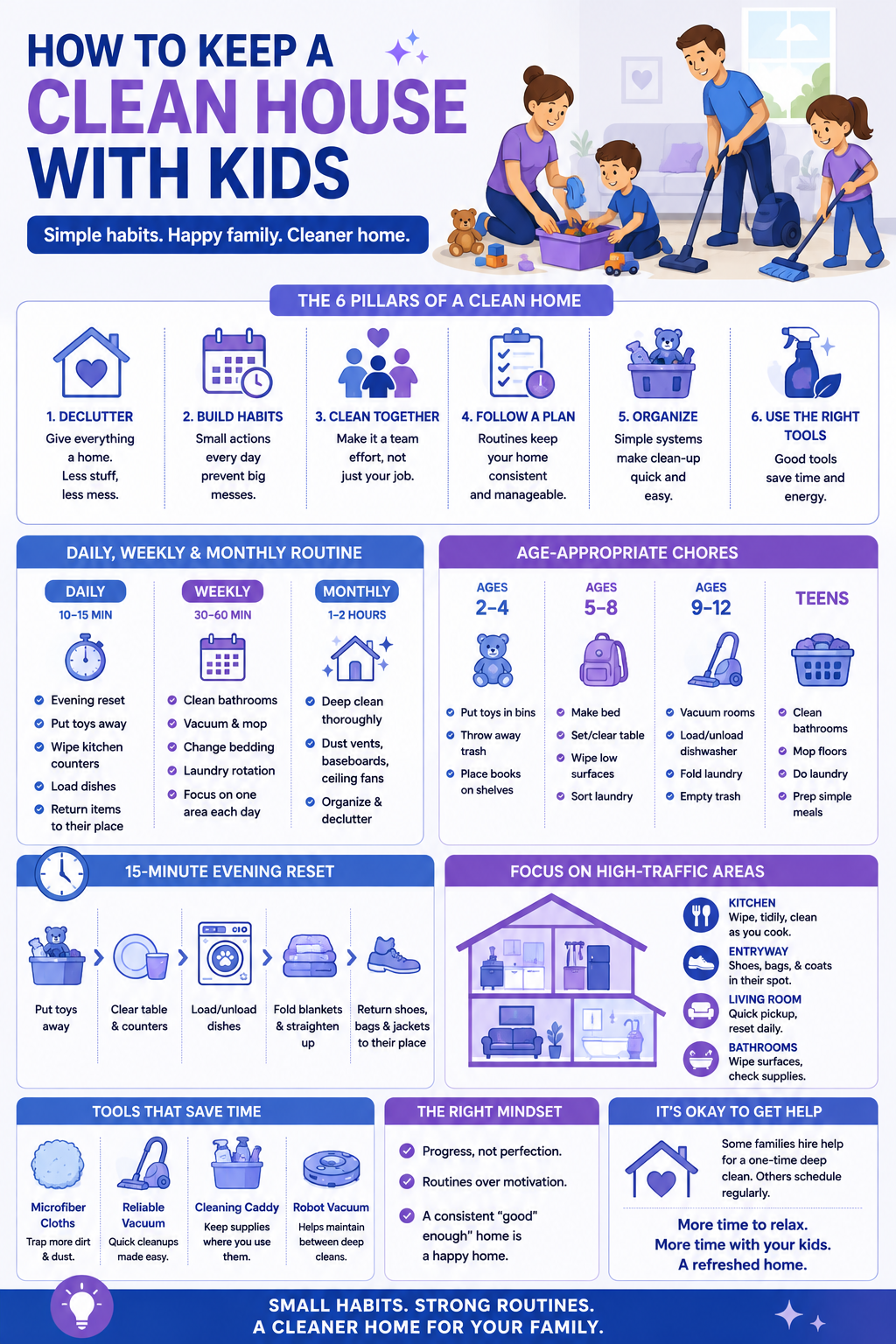
Focus on these simple habits:
- Put clutter away before it spreads.
- Clean small messes as they happen.
- Give every item a designated home.
- Involve children in age-appropriate chores.
- Follow a simple daily and weekly cleaning routine.
- Accept that a lived-in home doesn’t have to be perfectly spotless to be clean.
A few minutes of maintenance throughout the day is usually far easier than spending an entire weekend catching up.
Why Homes With Kids Get Messy So Quickly
Children are naturally curious, energetic, and constantly moving from one activity to another. Every toy, snack, craft project, and outfit change creates small messes that quickly add up throughout the day.
Unlike adult households, where clutter often stays in one room, family homes experience constant movement. Toys travel between bedrooms and living spaces, shoes pile up near the front door, school papers accumulate on kitchen counters, and everyday items rarely stay where they belong for long.
One thing our cleaning team often notices is that parents usually aren’t dealing with one large mess. They’re managing dozens of small messes that gradually combine into a home that feels overwhelming to clean.
Why Cleaning Small Messes Saves Time
Most everyday messes become more difficult to clean the longer they’re left alone.
Food spills dry and stick to countertops, juice splashes harden on floors, toothpaste residue builds up around sinks, and muddy footprints become more difficult to remove once dirt dries into textured flooring.
Cleaning these messes while they’re still fresh usually takes only a few minutes and often requires less scrubbing than waiting until they’re fully dried.
Understanding how messes build up makes it much easier to stop them before they become weekend cleaning projects.
Declutter Before You Start Cleaning
One of the biggest mistakes parents make is trying to clean around clutter.
We know that this is easier said than done when you’ve got children running about the place, but whenever possible, try to keep your home as clutter-free as possible. Experts have found evidence which suggests that clutter can lead to feelings of being overwhelmed, which in turn can lead to procrastination and other unhealthy habits.
By spending just a few minutes putting things back where they belong, the actual cleaning becomes much faster.
Give Everything a Home
Children are much more likely to put things away when they know exactly where those items belong.
Instead of asking them to “clean your room,” give specific instructions like:
- Put books on the bookshelf.
- Place stuffed animals in the toy basket.
- Return art supplies to the craft bin.
- Put shoes on the shoe rack.
Simple, predictable storage systems are easier for children to remember than constantly changing where things are kept.
Use Kid-Friendly Storage
Storage should make cleanup easier, not more complicated.
Open bins, low shelves, labeled baskets, and clear containers allow younger children to help without needing constant supervision.
For older children, labeled drawers and storage cubes make it easier to keep bedrooms and playrooms organized independently.
Declutter Regularly
Children quickly outgrow toys, clothes, books, and school supplies.
Setting aside time every few months to donate, recycle, or store items that are no longer used helps prevent clutter from gradually taking over your home.
A good rule of thumb is simple: if something hasn’t been used in months and no longer serves a purpose, it may be time to let it go.
Build Habits Instead of Waiting for Motivation
Most parents don’t struggle because they don’t know how to clean. They struggle because cleaning competes with work, school, meals, homework, activities, and everything else that fills the day.
That’s why routines are usually more effective than relying on motivation.
When small cleaning tasks become part of your daily routine, they require less thought and feel less overwhelming.
Try the Two-Minute Rule
You don’t always have to debate about where to start cleaning. If something takes less than two minutes, do it immediately.
This includes:
- Hanging up coats
- Putting dishes in the dishwasher
- Wiping kitchen counters
- Returning toys to a storage bin
- Throwing away junk mail
These quick tasks prevent small messes from turning into much larger cleaning jobs.
Clean As You Go
Instead of saving every chore for later, tidy up while you’re already in the room.
Examples:
- While dinner cooks, load the dishwasher.
- While bath water drains, wipe down the bathroom sink.
- While your child is brushing their teeth, put dirty clothes into the laundry basket.
These small moments of cleaning rarely feel overwhelming because they become part of activities you’re already doing.
Progress Is Better Than Perfection
One thing our cleaning team often notices is that the cleanest family homes aren’t necessarily cleaned for hours every day. They’re simply maintained consistently.
Some days you’ll finish every task on your list. Other days you’ll only have time to pick up toys and wipe the kitchen counters. That’s perfectly normal.
A consistently “good enough” routine usually keeps a home much cleaner than trying to achieve perfection once a week.
Create a Family Cleaning Routine That Actually Works
One of the biggest mistakes families make is waiting until the house feels out of control before cleaning. By then, every room seems to need attention, making the task feel overwhelming.
A simple routine breaks cleaning into smaller, manageable tasks throughout the week. Instead of asking, “What should I clean today?” everyone already knows what needs to be done.
Create a Daily Reset
Rather than trying to keep your house perfectly clean all day, set aside 10 to 15 minutes each evening for a family reset.
During this time, everyone helps return the house to a good starting point for the next day.
Your evening reset might include:
- Putting toys back in storage bins
- Loading or unloading the dishwasher
- Wiping kitchen counters and the dining table
- Folding blankets in the living room
- Returning shoes, backpacks, and jackets to their designated spots
Assign Weekly Responsibilities
Not every chore needs to happen every day.
Creating a simple weekly schedule helps spread the workload while ensuring important tasks aren’t forgotten.
Weekly Cleaning Schedule Sample
| Day | Major Areas to Clean | Parents’ Tasks | Children’s Tasks |
| Sunday | General Tidying | ✅ Light dusting | ✅ Put away toys |
| Monday | Kitchen | ✅ Deep clean kitchen (wipe appliances, mop floors) | ✅ Wash and dry dishes |
| Tuesday | Bathrooms | ✅ Scrub toilets | ✅ Wipe bathroom counters |
| Wednesday | Bedrooms | ✅ Wash all towels | ✅ Match socks |
| Thursday | Living Room | ✅ Dust whole house | ✅ Pick up toys |
| Friday | Floors & Windows | ✅ Vacuum | ✅ Make beds |
| Saturday | Deep Cleaning | ✅ Wash sheets | ✅ Sweep floors |
This approach makes cleaning feel much more manageable than trying to tackle the entire house at once.
Teach Kids to Help Based on Their Age
Assigning children cleaning responsibilities helps them learn about cleanliness, organization, and teamwork. Be sure to distribute tasks based on their age and abilities because children are more willing to help when the task matches their abilities.
Expecting a preschooler to organize an entire bedroom is unrealistic, but asking them to place blocks in a toy bin is something they can easily understand.
As children grow, their responsibilities can grow with them.

Ages 2–4
Young children enjoy simple tasks they can complete quickly.
They can help:
- Put toys into bins
- Throw away trash
- Place books on shelves
- Put dirty clothes into laundry baskets
At this age, the main goal is to build the habit of cleaning up after activities.
Ages 5–8
Children in this age group can begin taking responsibility for small daily chores.
They can help:
- Make their bed
- Set and clear the table
- Feed pets
- Wipe low surfaces
- Match socks while folding laundry
Providing clear instructions helps children feel more confident and successful.
Ages 9–12
Older children are often ready for more independent responsibilities.
They can:
- Vacuum bedrooms
- Empty small trash cans
- Load and unload the dishwasher
- Fold laundry
- Organize shared spaces
Teenagers
Teenagers can usually manage many of the same household chores as adults.
These may include:
- Cleaning bathrooms
- Mopping floors
- Preparing simple meals
- Doing laundry
- Taking out the trash
- Vacuuming common areas
Be sure to praise children for their efforts, no matter how small. Acknowledging effort rather than just the outcome helps build motivation and confidence. The more they feel appreciated, the more likely they’ll develop lasting cleaning habits.
Make Cleaning Feel Less Like a Chore
As adults, cleaning the home is one of the most tedious and mundane tasks out there. For children, though, things can be very different.
Turn Cleaning Into a Game
Often, kids will want to get involved and pretend to be grownups, so why not let them make a game of cleaning and find ways of making it fun? Try turning chores into a race where siblings compete to:
-
Put away their clean clothes the fastest
-
Make their beds in record time
-
Pick up toys before a timer runs out
Clean as a Family
Cleaning together not only gets the job done faster but also creates an opportunity for bonding. When kids see their parents actively participating, they feel more encouraged to help. It also helps the kids feel included and gives them a sense of autonomy, purpose, and accomplishment once finished.
Invest in Good Quality Cleaning Equipment
The right cleaning tools won’t eliminate household messes, but they can make routine cleaning much faster.
Choose Durable Cleaning Equipment
It’s said that a worker is only as good as their tools, and the same applies to keeping a home clean.
Investing in reliable cleaning equipment ensures efficiency and better results. While you don’t need to buy the most expensive brands, opting for quality over budget-friendly alternatives will make cleaning easier and more effective.
-
HEPA vacuums – HEPA vacuums with high-efficiency filters capture fine dust, allergens, and pet dander for cleaner air.
-
Microfiber cloths – Trap dust and dirt effectively without spreading debris.
-
Abrasive sponges – Ideal for scrubbing away caked-on dirt and grime.
-
Eco-friendly cellulose sponges – A sustainable, highly absorbent option for cleaning.
-
Steam cleaners – Use high-temperature steam to sanitize surfaces, especially in kitchens and bathrooms.
Use High-Quality Cleaning Solutions
The right cleaning products not only make the job easier but also help maintain a healthier home environment. While premium cleaning solutions may cost more, they tend to last longer and clean more effectively, reducing overall usage.
Know When Good Enough Is Enough
One of the biggest sources of stress for parents is expecting a perfectly clean home every day.
The reality is that homes with children are meant to be lived in. Toys will occasionally be left on the floor. Laundry will pile up. There will be days when cleaning takes a back seat to school events, family outings, or simply getting everyone through the day.
Since running a house and raising kids is hard enough, know that it is okay to get some outside help and hire a professional cleaning service.
Some people will hire a cleaner as a one-off, perhaps to deep clean the house once a year, whereas others may have a cleaner come weekly, or a couple of times a month.
We have one client who schedules a deep cleaning every few months, not because their home is out of control, but because it gives them a chance to recharge. Instead of spending an entire weekend scrubbing bathrooms and moving furniture, they get to enjoy quality time with their kids and come back to a refreshed home.
In any event, by hiring professional help, you get to relax and leave the cleaning to the experts. If you implement the strategies listed above, alongside hiring a professional cleaner, your home will be cleaner and more organized.
Final Thoughts
Keeping a clean house with kids isn’t about eliminating every mess. It’s about creating simple habits that prevent small messes from turning into overwhelming ones.
By reducing clutter, giving everything a designated place, involving your children in age-appropriate chores, and following a realistic cleaning routine, you can spend less time catching up and more time enjoying your home.
Some days your house will look perfectly organized. Other days it won’t, and that’s okay. Consistency will always have a greater impact than perfection.
FAQ
House Cleaning with Kids Questions
Yes. Children can be messy, and households with children tend to be messy. There’s absolutely nothing wrong with that.
Toddlers learn through play, which naturally creates messes throughout the day. Focus on simple storage systems, rotate toys to reduce clutter, clean spills promptly, and involve your child in quick cleanup routines. Even putting toys back into a basket helps build lifelong cleaning habits.
Younger children typically don’t understand the importance of cleanliness and hygiene. They’re children, they want to play and explore, not tidy their rooms or wash the dishes. Some children don’t clean up because they’re too busy playing and having fun.
While there is no one definitive answer to this question, most parents tend to find that children aged between 2 and 3 will begin to learn about the concept of cleaning and tidying up after themselves. By this age, kids can understand you and follow simple instructions.
If something feels like fun, it won’t feel like a chore. If you can get your kids to have fun cleaning up, they’re more likely to get involved and do a good job. Do things like playing music as you clean together, have a little dance with them, turn cleaning into a fun competition, and failing that, don’t be afraid to resort to bribery in the form of a reward.
Again, there isn’t one true answer to this question because it varies so much. Some people spend around 20 minutes per day cleaning, whereas others may clean for an hour or more. Generally speaking, experts recommend around 2 and a half hours per week for a two-bedroom home.
Start by putting away clutter before you begin cleaning. Once toys, clothes, and everyday items are back in their designated places, wipe surfaces, vacuum high-traffic areas, and tackle the kitchen and bathrooms first. Focusing on the most visible spaces creates the biggest impact in the shortest amount of time.