Skip to content

What is IICRC Certification & Why is it Essential for Service Based Businesses

Is An IICRC Certification Important?
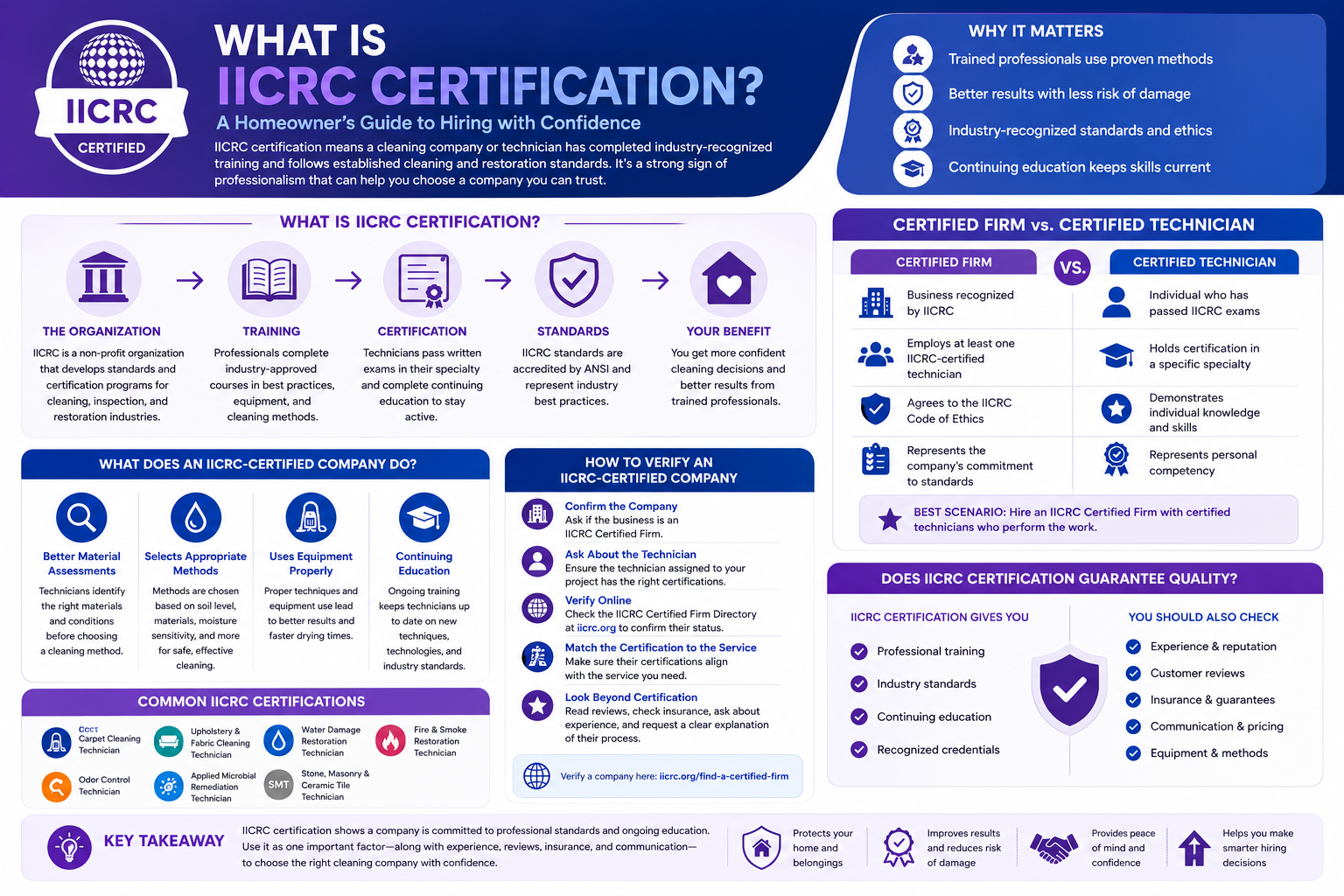
The IICRC is a non-profit organization established to create uniform standards for the cleaning, inspection, and restoration industries. The IICRC is known for its comprehensive training for those who want to make a name for themselves in the cleaning industry.
These cleaning training courses help professionals develop the expertise they need to excel in their work: how to properly clean, what tools are used best for the type of a certain cleaning job, and what cleaning programs to provide different clients with different needs.
The IICRC standards are also accredited by the American National Standards Interview (ANSI), meaning they have been thoroughly reviewed, debated, and endorsed by experts in the industry. Through IICRC, clients can be confident that the maintenance experts they employ services from meet rigorous and effective industry standards.
Earning this coveted credential is both an honor and a privilege that benefits both the cleaning professionals and the clients they serve.
Table of Contents
- What is IICRC Certification?
- What Does an IICRC Certified Company Do?
- Who Should Get IICRC Certified?
- Certified Firm vs. Certified Technician
- Is IICRC Certification Required?
- What are the Different Types of IICRC Certification?
- Does IICRC Certification Guarantee Quality?
- How to Verify a Company’s IICRC Certification
Jovany Explains Credentials: The Key to Reliable Cleaning Service
What Is IICRC Certification?
The Institute of Inspection, Cleaning and Restoration Certification (IICRC) is an independent, non-profit organization that develops standards and certification programs for professionals in the inspection, cleaning, and restoration industries.
Founded in 1972, the organization works with industry experts to establish best practices for cleaning methods, restoration procedures, and technician training. Many of its published standards are developed through an ANSI-accredited consensus process, helping create consistent guidance across the industry.
Rather than regulating cleaning companies, the IICRC provides education, examinations, and continuing education requirements that allow technicians and businesses to demonstrate competency in specific areas of cleaning and restoration.
Depending on their training, certified professionals may specialize in services such as:
- Carpet cleaning
- Upholstery cleaning
- Tile and grout cleaning
- Commercial cleaning
- Water damage restoration
- Fire and smoke restoration
- Odor control
- Applied microbial remediation
- Stone, masonry, and hard surface care
Each certification focuses on a particular discipline, meaning a company may hold several certifications rather than one general credential.
What Does an IICRC Certified Company Do?
Certification doesn’t change how often a company cleans your home. Instead, it influences how cleaning decisions are made.
An IICRC-certified company is more likely to follow documented procedures developed through industry standards and professional training.
Performing Better Material Assessments
Before beginning a job, trained technicians learn to identify flooring materials, upholstery fabrics, finishes, and construction methods that influence how a surface should be cleaned.
In our experience, one of the most common mistakes we see is treating every flooring material the same. A cleaning method that’s safe for ceramic tile may not be appropriate for natural stone, hardwood, or delicate upholstery. Proper training helps technicians evaluate the material before selecting cleaning products or equipment, reducing the risk of unnecessary damage.
Selecting Appropriate Cleaning Methods
Different cleaning situations call for different techniques.
Rather than using the same process everywhere, trained technicians evaluate factors such as:
- Soil level
- Material type
- Moisture sensitivity
- Existing damage
- Manufacturer recommendations
- Desired drying time
This helps reduce unnecessary wear while improving cleaning effectiveness.
Using Equipment Properly
Professional equipment can produce better results than consumer machines, but only when used correctly.
Training helps technicians understand:
- Proper extraction techniques
- Appropriate water temperatures
- Vacuum performance
- Drying procedures
- Equipment maintenance
Correct equipment use can improve cleaning efficiency while reducing the likelihood of overwetting carpets, leaving residue behind, or extending drying times.
Continuing Professional Education
Certification is not simply earned once and forgotten.
Many credentials require continuing education to remain active, encouraging professionals to stay informed about evolving cleaning technologies, updated standards, and new industry practices.
For homeowners, this means the company is more likely to keep its knowledge current rather than relying on outdated techniques learned years ago.
Who Should Get IICRC Certified?
The IICRC certification is essential for various professionals in the cleaning and restoration industry. Research indicates that certified professionals exhibit higher proficiency in safety, risk mitigation, and compliance with industry standards.
Here are some of the professionals who stand to gain from an IICRC certification:
- Independent Contractors – Freelance cleaning and restoration professionals seeking credibility and industry recognition.
- Cleaning Business Owners – Entrepreneurs who want to differentiate their business by offering certified cleaning and restoration services.
- Restoration Specialists – Professionals specializing in water damage, fire damage, and mold remediation who require technical training and certification.
- Carpet and Upholstery Cleaners – Those who provide residential and commercial cleaning services, including deep cleaning and stain removal.
- Water Damage Restoration Technicians – Specialists handling water extraction, drying, and structural repairs.
- Mold Remediation Experts – Professionals dealing with mold assessment, containment, and removal using standardized protocols.
- Janitorial and Commercial Cleaning Staff – Employees in large-scale cleaning operations, ensuring compliance with industry best practices.
- Insurance and Claims Adjusters – Those assessing cleaning and restoration claims who need expertise in IICRC-certified processes.
- Facility and Property Managers – Individuals overseeing maintenance and cleanliness in commercial and residential buildings.
- Health and Safety Technicians – Workers who handle biohazard cleaning and hazardous material remediation.
A 2015 study highlighted that IICRC certification ensures a minimum level of competency required to handle disaster response and restoration operations effectively. Additionally, Purdue University research found that certified professionals are better prepared for job-site challenges.
Certified Firm vs. Certified Technician
One of the biggest misconceptions about IICRC certification is that every employee at a certified company automatically holds an individual certification. That’s not always the case.
Understanding the difference can help you ask better questions before hiring a cleaning company.
IICRC Certified Technician
An IICRC Certified Technician is an individual who has completed an approved training course, passed the required examination, and met the organization’s certification requirements for a specific specialty.
Depending on their training, a technician may hold certifications in areas such as:
- Carpet Cleaning Technician (CCT)
- Upholstery & Fabric Cleaning Technician (UFT)
- Stone, Masonry & Ceramic Tile Cleaning Technician (SMT)
- Odor Control Technician (OCT)
- Water Damage Restoration Technician (WRT)
- Applied Microbial Remediation Technician (AMRT)
Each certification focuses on a different discipline, so a technician may hold multiple credentials based on their experience and responsibilities.
IICRC Certified Firm
An IICRC Certified Firm is a business that meets the organization’s participation requirements and employs at least one active IICRC-certified technician. Certified firms also agree to uphold the IICRC Code of Ethics and maintain their certification requirements.
This means the company has demonstrated a commitment to professional standards, but it doesn’t necessarily mean every employee performing work holds an individual certification.
Is IICRC Certification Required?
In most areas, cleaning companies are not legally required to hold IICRC certification to provide residential or commercial cleaning services.
However, many reputable companies choose to become certified because it demonstrates a commitment to recognized industry standards and continuing education.
Certification is particularly valuable for specialized services where improper cleaning techniques can cause expensive damage, including:
- Carpet cleaning
- Upholstery cleaning
- Natural stone cleaning
- Water damage restoration
- Fire and smoke restoration
- Mold remediation
- Commercial floor care
For routine house cleaning, certification may be less critical than factors such as experience, reliability, communication, insurance, and consistent customer reviews.
What are the Different Types of IICRC Certification?
The ICRC provides different types of certifications and courses for professionals in the cleaning and restoration industries. Here are some of them:
| Certification | Primary Focus | Typical Service |
|---|---|---|
| CCT | Carpet Cleaning Technician | Residential & commercial carpet cleaning |
| UFT | Upholstery & Fabric Cleaning Technician | Upholstery and fabric care |
| SMT | Stone, Masonry & Ceramic Tile Technician | Tile, grout, and natural stone |
| WRT | Water Damage Restoration Technician | Water extraction and structural drying |
| FSRT | Fire & Smoke Restoration Technician | Fire and smoke damage restoration |
| OCT | Odor Control Technician | Persistent odor removal |
| AMRT | Applied Microbial Remediation Technician | Mold remediation support |
Not every cleaning company needs every certification.
For example, a residential house cleaning company may focus on carpet, upholstery, hard surfaces, and floor care, while a restoration contractor may maintain additional credentials for water, fire, and mold restoration.
Does IICRC Certification Guarantee Quality?
IICRC certification is an excellent indicator that a company or technician has completed industry-recognized training and understands established cleaning and restoration standards. However, it isn’t a guarantee that every job will be performed perfectly or that one certified company is automatically better than another.
Think of certification as one piece of the puzzle. It shows a commitment to professional education and best practices, but the overall quality of service also depends on many factors.
When comparing cleaning companies, consider the full picture, including:
- Relevant IICRC certifications for the services you need
- Years of hands-on experience
- Recent customer reviews and testimonials
- Proper licensing and insurance (where applicable)
- Transparent pricing and clear communication
- Satisfaction guarantees or service warranties
- Professional-grade equipment and cleaning methods
- Experience with your specific flooring, furniture, or surfaces
For example, if you’re hiring a company to clean delicate wool carpets or restore water damage after a leak, you’ll want more than a certification. Look for a company that has successfully handled similar projects, can explain its cleaning process, and has a proven track record of positive customer experiences.
How to Verify a Company’s IICRC Certification
If a cleaning company advertises itself as IICRC certified, it’s a good idea to verify its credentials before scheduling a service. Fortunately, the process only takes a few minutes and can give you added confidence in your hiring decision.
Here’s what to check:
Confirm the Company Is an IICRC Certified Firm
Ask whether the business is currently recognized as an IICRC Certified Firm.
Certified firms agree to uphold the IICRC Code of Ethics and maintain at least one active IICRC-certified technician on staff.
Ask About the Technician’s Qualifications
A certified company doesn’t necessarily mean every employee holds an individual certification. If you’re hiring the company for a specialized service, such as carpet cleaning or water damage restoration, ask whether the technician assigned to your project has the appropriate IICRC certification.
Verify the Company’s Status Online
The IICRC maintains an official Certified Firm Directory, where you can search by company name or location to confirm that a business’s certification is current. This is one of the easiest ways to verify that a company is legitimately certified.
Make Sure the Certification Matches the Service
Different IICRC certifications cover different specialties.
For example, a company certified in carpet cleaning may not have the same expertise in water damage restoration or stone floor care. Ask which certifications are relevant to the specific service you need.
Look Beyond Certification
While certification is an important credential, it shouldn’t be your only deciding factor. Take time to read recent customer reviews, verify that the company is properly insured, ask about its experience with your type of flooring or furnishings, and request a clear explanation of its cleaning process.
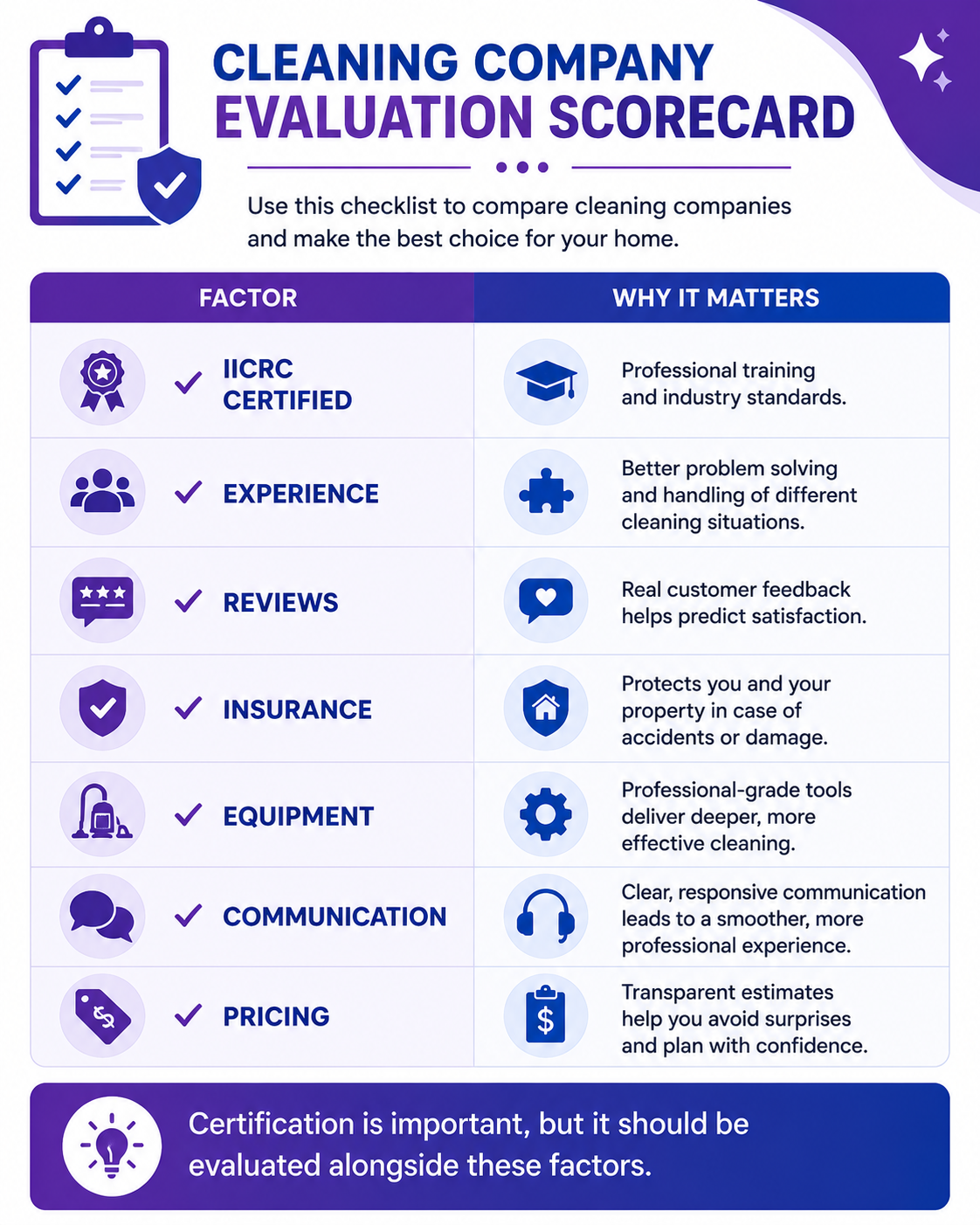
The best cleaning companies combine professional training, practical experience, high-quality equipment, and excellent customer service. IICRC certification is a strong sign that a company values industry standards, but it should be considered alongside these other factors when making your decision.
Final Note: How IICRC Certification Helps You Choose the Right Cleaning Company
Choosing a cleaning company is about more than finding the lowest price or the closest provider. It’s about trusting professionals to care for your home, belongings, and investment.
While IICRC certification doesn’t guarantee exceptional service, it does demonstrate a commitment to industry-recognized training, continuing education, and professional standards. When combined with positive customer reviews, relevant experience, proper insurance, and clear communication, certification can help you identify companies that take their work seriously.
If you’re comparing cleaning services, take a few extra minutes to verify credentials, ask questions, and choose a company that has both the qualifications and the reputation to deliver quality results. A little research upfront can help you make a more informed decision and enjoy greater peace of mind.
FAQ
Certification Questions
IICRC stands for the Institute of Inspection, Cleaning and Restoration Certification. It is a non-profit organization that develops industry standards and certification programs for cleaning, restoration, and inspection professionals.
No. Most residential and commercial cleaning companies are not legally required to hold IICRC certification. However, many choose to become certified to demonstrate professional training, adherence to industry standards, and a commitment to continuing education.
Certification is a strong indicator of professionalism, but it shouldn't be the only factor you consider. It's best to evaluate a company based on its certifications, customer reviews, experience, insurance, communication, and reputation for quality service.
You can ask the company whether it is an IICRC Certified Firm and whether the technician assigned to your project holds the appropriate certification. You can also verify the company's status using the official IICRC Certified Firm Directory.
There isn't a single "best" certification. The most relevant credential depends on the service you need. For example:
- Carpet Cleaning Technician (CCT) for professional carpet cleaning
- Upholstery & Fabric Cleaning Technician (UFT) for furniture cleaning
- Water Damage Restoration Technician (WRT) for flood and water damage restoration
- Stone, Masonry & Ceramic Tile Technician (SMT) for natural stone and tile care
Individual certifications must be maintained through continuing education and renewal requirements. Certified Firms must also maintain their standing by meeting the IICRC's ongoing participation requirements.
Certification is a valuable credential, but it shouldn't be your only deciding factor.
The best companies combine professional training with experience, positive customer reviews, transparent pricing, proper insurance, and excellent customer service.