I Can’t Clean My House, Depression Has Paralyzed Me: Your Ultimate Step-by-Step Cleaning Guide

How to Get Motivated to Clean When Depressed
“I can’t clean my house, depression has paralyzed me.” If you’ve felt this way, you’re not alone. Many people find that a messy home worsens stress and anxiety, yet cleaning feels impossible when depression drains your energy.
The good news? Cleaning doesn’t need to feel overwhelming. By breaking tasks into small, manageable steps and shifting your mindset, you can regain control without exhaustion.
This article provides practical, easy-to-follow strategies specifically for low-energy days, helping you create a comforting, organized home environment to support your mental well-being.
Step-by-Step Cleaning Guide When You’re Depressed
- Start small
- Use a timer
- Try the 20/10 method
- Prioritize essential areas
- Use a checklist
- Focus on high-impact tasks
- Boost motivation with tools & rewards
- Ask for help
- Hire professional help
- Practice self-compassion
The Connection Between Mental Health and Cleaning
Research indicates that cluttered and messy environments can heighten feelings of anxiety and stress. A study in the Personality and Social Psychology Bulletin revealed that individuals living in disorganized homes experienced elevated levels of cortisol, the stress hormone, in contrast to those residing in clean and calming environments.
At Roochii Cleaning, we witness this firsthand when welcoming new clients referred by the Senior Resource Center in Denver, Colorado. Our Denver cleaning team begins each relationship with care and attention. While new senior clients may not always be in the best spirits initially, they often brighten up significantly after our thorough cleaning services, particularly during subsequent appointments.
Similarly, a study from Princeton University Neuroscience Institute demonstrated that a messy house competes for attention, leading to decreased focus and increased cognitive overload that leads to depression and anxiety.
The cycle of depression and messiness often reinforces itself: Depressive symptoms hinder cleaning efforts, while clutter exacerbates guilt and stress. Recognizing this cycle is key to overcoming it and finding peace in your home.
Practical Cleaning Strategies for People with Depression
1. Start Small with Chores
Experts say that starting with small cleaning tasks can positively impact mental health, particularly for those experiencing depression. For instance, Dr. Adam Borland, a clinical psychologist, suggests beginning with a specific, small task to build momentum. Below are some ways:
- Choose one simple task to begin with, such as making the bed or washing a few dishes.
- Breaking tasks into smaller steps makes them more manageable.
- If a task feels overwhelming, divide it into micro-tasks. For example, instead of tackling an entire kitchen, start by cleaning just one countertop.
2. Use a Timer
Using a timer when cleaning can be a powerful tool for managing depression. It helps break tasks into small, manageable chunks, reducing overwhelm and making it easier to start. Here’s how it can help:
- Set a timer for 5 or 10 minutes and clean as much as you can within that time.
- Knowing that you only have to clean for a short period can make it easier to start to clean your whole house.
- If you struggle with time management, consider using a visual timer to help maintain focus.
3. The 20/10 Method to Make House Clean
The 20/10 Method is a cleaning approach that helps maintain motivation, prevents burnout, and is especially useful for those struggling with depression. Here is how to do it:
- Clean for 20 minutes, then take a 10-minute break. Repeat as needed.
- This method prevents exhaustion and keeps cleaning from feeling overwhelming.
- Use breaks to do something restorative, such as stretching, drinking water, or practicing deep breathing.
4. Prioritize Essential Areas
Prioritizing essential areas when cleaning helps focus your energy on the ones that have the most impact on daily life. Let’s look into the guide below.
- Start on the most-used spaces like your bed, kitchen, and bathroom.
- Cleaning just these areas can make a significant impact on personal hygiene, self-worth, and overall well-being.
- If deep cleaning feels unmanageable, focus on surface-level tidying. Even simple tasks like wiping down counters or stacking loose papers can make a room feel noticeably neater.
5. Use a Checklist
Using a checklist when cleaning provides structure, keeps tasks organized, and helps track progress, making the process more efficient and less overwhelming. Even at Roochii Cleaning, we rely on cleaning checklists to ensure effectiveness, consistency, and high-quality results.
- Write down tasks and check them off as you complete them.
- Seeing progress in writing can be motivating and rewarding.
- If creating a list makes it feel like you’re doing too much, start with a “done” list instead, where you write down tasks as you complete them rather than planning ahead. This approach can help reinforce a sense of accomplishment.
6. Focus on High-Impact Cleaning Tasks
When struggling with cleaning due to depression, focusing on high-impact tasks can make a noticeable difference in your living space without feeling overwhelmed. These are the tasks that create the biggest improvement in comfort, functionality, and mental clarity with minimal effort as claimed by Everyday Health.
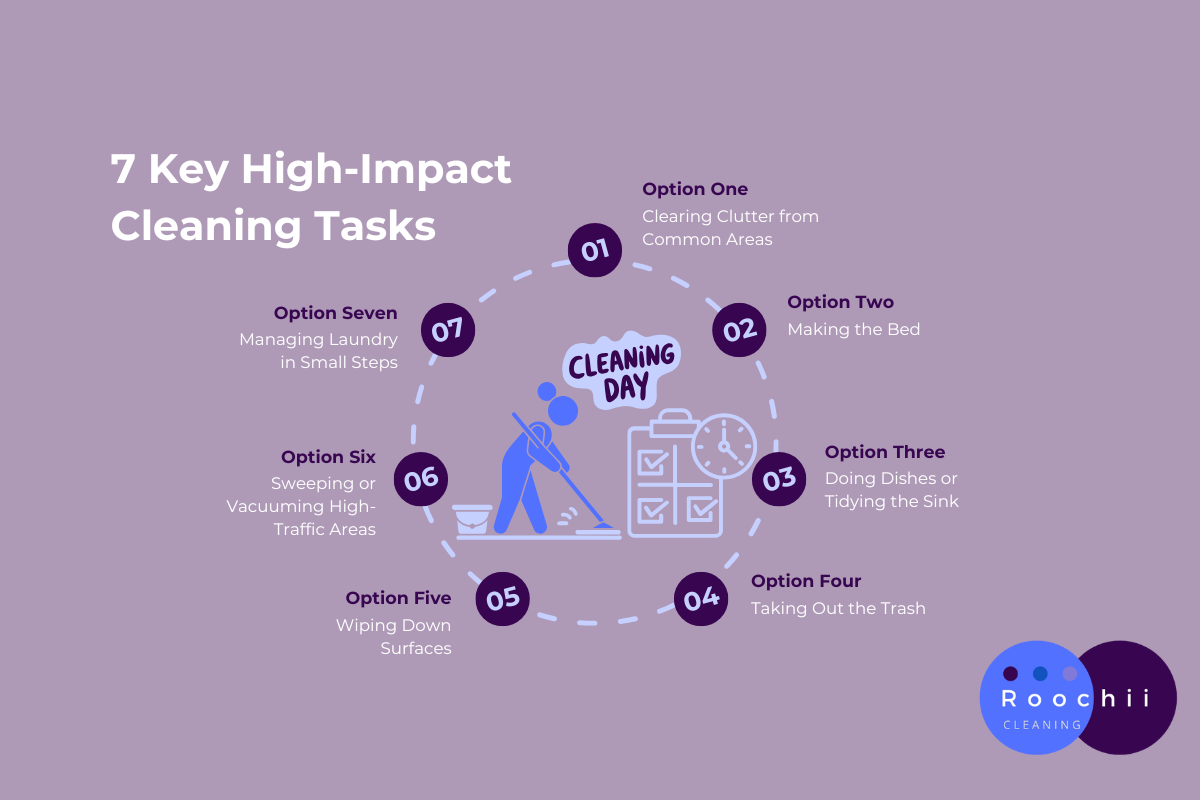
Key High-Impact Cleaning Tasks
Clearing Clutter from Common Areas
Removing visible clutter from surfaces like tables, countertops, and floors instantly makes a space feel more organized and less chaotic.
Making the Bed
A made bed provides a sense of order and accomplishment, setting a positive tone for the day.
Doing Dishes or Tidying the Sink
Keeping the sink clear prevents buildup, reduces stress, and makes meal preparation easier.
Taking Out the Trash
Eliminating trash improves air quality and removes potential sources of bad odors, making the home feel fresher.
Wiping Down Surfaces
A quick wipe of kitchen counters, bathroom sinks, or a coffee table can make the space feel noticeably cleaner.
Sweeping or Vacuuming High-Traffic Areas
A few minutes of sweeping or vacuuming can dramatically improve the look and feel of a room, reducing dust and allergens.
Managing Laundry in Small Steps
Even folding a few items or starting one load can prevent an overwhelming pile from accumulating.
7. Hiring Professional Help
When cleaning feels overwhelming due to depression, hiring professional help can be a practical solution to maintain a healthy and comfortable living space. Professional cleaning services can take the pressure off, allowing you to focus on your well-being without feeling guilty or stressed about household tasks.
Benefits of Professional Cleaning Services
Reduces Overwhelm
A cleaning service can handle deep cleaning or regular maintenance, preventing tasks from piling up and becoming unmanageable.
Creates a Fresh Start
Even a one-time professional cleaning can reset your space, making it easier to maintain moving forward.
Saves Time and Energy
Instead of spending your limited energy on cleaning, you can focus on self-care, work, or other priorities.
Customizable Services
Many cleaners offer flexible options, from full-home deep cleaning to specific tasks like dishes, laundry, or organizing cluttered areas.
Provides Consistency
Scheduling recurring cleanings can help keep your home manageable, even on low-energy days.
8. Seek Help
When depression makes cleaning feel overwhelming, asking for help can be a valuable way to lighten the burden and create a more manageable living space. Whether from friends, family, or support groups, receiving assistance can make a significant difference in both your home and mental well-being.
Ways to Seek Help with Cleaning
Ask a Trusted Friend or Family Member
A loved one may be willing to help with basic tasks like dishes, laundry, or tidying up, especially if they understand your struggle.
Try “Body Doubling”
Cleaning alongside someone, either in person or on a video call, can provide motivation and accountability while making the process feel less isolating.
Join a Cleaning Support Group
Online communities or local groups exist such as Nami Colorado where people support each other in tackling household tasks, often through shared encouragement or structured cleaning sessions.
Exchange Help
If asking outright feels difficult, consider trading tasks with someone—help them with something they find challenging in return for assistance with cleaning.
Use Professional or Volunteer Assistance
Some organizations or local services like Roochii Cleaning offer free or low-cost cleaning help for individuals struggling with mental health challenges.
9. Self-Compassion and Mental Health Support
If you’re struggling to clean due to depression, practicing self-compassion and seeking mental health support can make a significant difference, according to the Anxiety and Depression Association of America.
Self-Compassion in Cleaning
Acknowledge Your Struggle Without Judgment
Depression can make even simple tasks feel overwhelming. Remind yourself that struggling doesn’t mean failure; it’s a symptom, not a reflection of your worth.
Start Small & Celebrate Wins
Even washing a single dish or clearing a small space is progress. Acknowledge these efforts instead of focusing on what’s left undone.
Speak Kindly to Yourself
Replace self-criticism with encouragement. Instead of “I’m so lazy,” try “I’m doing the best I can today.”
Adjust Expectations
Some days, “clean enough” is okay. Your space doesn’t have to be perfect—just functional and comfortable for you.
Mental Health Support
Seek Mental Wellness Help
If cleaning feels impossible due to depression, a therapist can help with coping strategies and emotional support like the NAMI.
Ask for Help Without Shame
Friends, family, or support groups can provide assistance such as Mental Health First Aid. Even virtual “body doubling” (cleaning while on a call with someone) can be motivating.
Use Accessible Tools
Consider timers, checklists, or apps that break cleaning into manageable steps.
Focus on Your Well-being First
Your mental health matters more than a spotless home. Taking care of yourself, even in small ways, is a step toward feeling better.
Motivational Tips and Tools
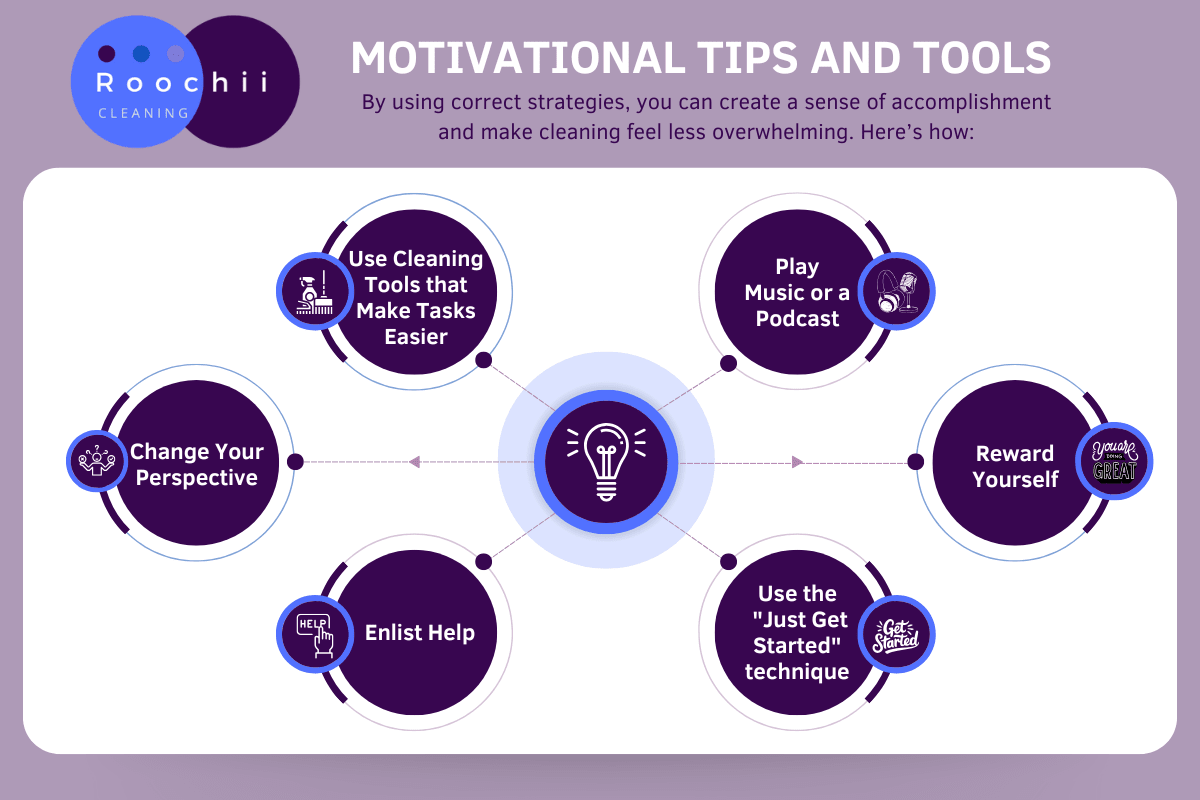
Finding the motivation to clean while struggling with depression can be challenging, but the right tips and tools can make the process more manageable. By using correct strategies, you can create a sense of accomplishment and make cleaning feel less overwhelming.
Here’s how:
Play music or a podcast
Listening to something enjoyable can make cleaning and accomplishing daily tasks less tedious.
Reward yourself
Treat yourself after finishing a task, whether it’s a snack, a short break, or watching a favorite show. As discussed in The Power of Habit by Charles Duhigg, the power of habit is rooted in the brain’s ability to form automatic routines through repetition, making tasks like cleaning feel less effortful over time. According to the study of the reward loop, habits are reinforced through a cycle of cue, routine, and reward—where a trigger prompts an action, and a satisfying outcome like a clean house strengthens the behavior, encouraging consistency.
Use the “Just Get Started” technique
Tell yourself you’ll clean for just one minute. Often, getting started is the hardest part that’s why it’s important to break the stigma.
Enlist help
If possible, ask a friend or family member to assist you and help you get on track. Accountability can be helpful.
Change your perspective
Instead of viewing cleaning as a chore, see it as a way to create a sanctuary for yourself keeping your living conditions better.
Use cleaning tools that make tasks easier
A handheld vacuum, disinfectant wipes, or a robotic vacuum can help minimize effort while keeping your space tidy.
Always Remember!
Struggling to clean when dealing with depression is a common challenge, but small, manageable steps can make a big difference. By practicing self-compassion, prioritizing high-impact tasks, using tools like timers and checklists, and seeking help when needed—whether from loved ones or professionals—you can create a more comfortable and supportive living environment.
Remember, progress is more important than perfection, and every small effort counts. Be kind to yourself, take breaks when necessary, and celebrate even the smallest victories on your journey to a cleaner, more manageable home.
Taking control and making your house clean can foster a sense of empowerment and relief. By focusing on small, achievable tasks, you can break the cycle of depression and messiness, creating a home environment that works best for you and your mental health.
If you are struggling or know someone who is, support is available. You can contact the Suicide & Crisis Lifeline at 988 for free, confidential help, 24/7.