How to Remove Soap Scum from Shower

Understanding Soap Scum
Wondering how to remove soap scum from shower walls or tiles without endless scrubbing? Simple DIY solutions like vinegar or baking soda might help, but they usually don’t clean deeply or last long. The key is using the right combination of products to break down the stubborn film caused by hard water minerals reacting with soap.
Soap scum is a chalky, white or gray film that forms when soap mixes with hard water minerals like calcium and magnesium. They stick firmly to surfaces and and resist basic cleaners.
Over time, soap scum can trap dirt, body oils, and bacteria, leading to a grimy appearance and even contributing to mildew growth.
Understanding what causes it is the first step toward effectively removing and preventing it.
In this guide, you’ll learn:
Scientifically Proven Ways on How to Remove Soap Scum

Getting rid of stubborn soap scum for good takes more than just scrubbing. You also need the right combination of cleaning ingredients.
1. Best Acidic Cleaners to Remove Soap Scum from Showers
Research claims that acids can break down soap scum by dissolving mineral deposits, like calcium and magnesium, that form when soap reacts with hard water. This weakens the bond between the scum and the surface, making it much easier to wipe or rinse off.
Two common types of acidic cleaners include:
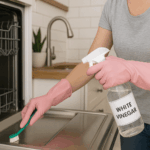
- Vinegar (Acetic Acid): Works well on light soap scum.
- Phosphoric Acid: Stronger than vinegar and better for thick buildup. Studies show it works even better when combined with gentle cleaning agents called surfactants.
2. Using Surfactants for Stubborn Soap Scum in Showers
Surfactants are cleaning agents that break up greasy, oily parts of soap scum. A research published in American Oil Chemists’ Society indicates that combining surfactants with chelating agents at high pH levels enhances the dissolution of calcium and magnesium soap scums.
- Anionic Surfactants (like SLS): Strong cleaners that cut through grease.
- Nonionic Surfactants (like Alkyl Polyglucosides): Milder, but still effective. Research shows they work even better when mixed with chelating agents at higher pH levels.
3. Chelating Agents for Soap Scum Removal in Showers
These ingredients grab onto hard water minerals (like calcium and magnesium) and help wash them away. The study Dissolution of Soap Scum by Surfactants highlights the role of chelating agents in enhancing soap scum removal efficiency.
- EDTA: Often used in industrial cleaners to remove metal ions.
- Citric Acid and GLDA: Safer, more eco-friendly options that also work well. Studies confirm they boost cleaning power when used with surfactants.
4. Eco-Friendly Enzymatic Cleaners for Soap Scum in Showers
Research says that enzymes, such as lipase, break down the fatty acid chains found in soap scum, offering an eco-friendly cleaning solution.
- How They Work: Lipase cuts up fatty acids in soap scum, making them easier to wash away.
Why Use Them: They’re gentle on surfaces, biodegradable, and safer for both people and the environment compared to harsh chemicals.
The Best Soap Scum Remover for Showers: A Combined Approach
The best way to clean soap scum is by using a mix of of four-acids, surfactants, chelating agents, and enzymes.
Each one attacks a different part of the buildup, so your shower or tub gets cleaner with less scrubbing and without damaging the surface as supported by researches from the Journal of Surfactants and Detergents and ACS Publications. This combination breaks down all parts of the residue, leaving no film behind.
Best Practices for Application of Soap Scum Cleaners

Using cleaning products the right way is key to removing soap scum and mineral buildup effectively. It helps the cleaner work better and keeps surfaces safe.
Here’s a simple, science-backed guide to getting the best results:
1. Pre-wet the Surface to Help the Cleaner Work Better
Research from the Journal of Surfactants and Detergents shows that pre-wetting helps cleaning agents break down soap scum and mineral buildup more effectively.
Wetting the surface before applying cleaner helps it stick better and work faster. It softens the soap scum, making it easier for the cleaner to soak in and break it down. It also keeps the cleaner from drying too quickly, especially in warm or dry areas.
2. Apply Cleaner and Allow 5–15 Minutes of Dwell Time
After wetting the surface, spray on the cleaner and wait 5–15 minutes before scrubbing. This wait time, called dwell time, gives the active ingredients time to break down the mineral deposits and fatty acids in soap scum.
Giving cleaners more time to work makes them much more effective at dissolving soap scum.
3. Scrub with Microfiber Cloth or Non-Scratch Pad
Once the cleaner has soaked in, scrub the surface using a microfiber cloth or a non-scratch pad.
Microfiber is great for lifting soap scum and grime because its tiny fibers grab and trap dirt. Non-scratch pads are gentle enough for surfaces like glass and tile but still help scrub away buildup.
4. Rinse Thoroughly with Hot Water
After scrubbing, rinse the area well with hot water.
Hot water helps wash away any leftover soap scum and cleaner. It also makes it easier to dissolve the minerals and fatty acids in soap scum because heat increases how well they break down, as supported by study from the EPA.
5. Keep the Area Well-Ventilated
When using strong cleaners like bleach or acid-based products, always make sure the area has good airflow. These cleaners can release fumes that are harmful to breathe, especially in small or enclosed spaces.
Open windows, use fans, or turn on an exhaust fan to keep the air moving and protect your lungs. Highlighted in a study from NIOSH that poor ventilation can let dangerous fumes build up, which can irritate your lungs and even cause serious health problems.
Preventing Soap Scum from Shower: Easy Ways to Keep Your Bathroom Clean
Soap scum can be a persistent problem, but there are simple ways to stop it from building up in the first place.
Here’s how you can prevent soap scum from forming on your bathroom surfaces, based on scientific research:

1. Use Synthetic Detergents: They Don’t React with Hard Water
Soap scum forms when regular soap reacts with minerals like calcium and magnesium in hard water. Synthetic detergents don’t have the fatty acids that cause this reaction, so they work well in hard water without creating buildup.
According to the Journal of Surfactants and Detergents, synthetic detergents are designed to prevent soap scum, making them a better choice for reducing residue in showers and tubs.
2. Install Water Softeners: Remove Calcium and Magnesium Ions
Water softeners work by removing the calcium and magnesium minerals from hard water. When these minerals are removed, soap scum is less likely to form, keeping your bathroom surfaces cleaner.
3. Use Water-Repellent Coatings to Prevent Soap Scum
Water-repellent coatings like Rain-X can be applied to glass and tile to help prevent soap scum and mineral buildup. These coatings make water slide off surfaces, so minerals and residue don’t have a chance to stick.
Research in the Journal of Applied Polymer Science shows that these coatings reduce soap scum by stopping minerals from clinging to surfaces, making it harder for buildup to form.
Additional Tips to Prevent Soap Scum
- Wipe Surfaces After Each Shower: Use a squeegee or microfiber cloth to wipe down glass and tiles after every use. This helps prevent soap and water from drying and forming soap scum.
- Increase Ventilation: Using an exhaust fan or opening a window helps reduce humidity and prevents minerals from sticking to surfaces, making it harder for soap scum to form.
- Rinse with Hot Water: After each shower, rinse surfaces with hot water to dissolve soap scum or mineral deposits before they can build up.
At Roochii Cleaning, we know that removing soap scum from the shower is more than just a cosmetic fix; it’s a step toward a healthier, more comfortable home.
Soap scum can trap bacteria, dull surfaces, and make even a freshly cleaned bathroom feel uninviting. In the homes we care for across Denver, we focus on these overlooked details. For us, creating a clean home means making sure every space feels safe, cared for, and easy to maintain.