How to Clean a Dishwasher: A Step-by-Step Guide

Why It’s Important For You To Clean Your Dishwasher
Your dishwasher performs tirelessly in the background, tackling everything from dried sauce to stubborn grease, but it’s often overlooked that it also requires cleaning. Even if your dishes look clean, your dishwasher could be harboring hidden grime, mineral buildup, or mold that slowly reduces its effectiveness.
Fortunately, you don’t need a professional service to maintain it. With just a few household supplies and a simple schedule based on how often you run your dishwasher, you can keep it running smoothly and smelling fresh without much effort.
In this article, we’ll break down how to clean dishwasher, how often to clean key parts, show you the best tools and methods, and share practical tips for long-term care. By the time you’re finished, you’ll be able to address any problems you might be experiencing with foggy glasses, odd smells, or just wanting to prolong it.
Table of Contents
Jovany Explains: How to Clean a DIshwasher the Right Way
How Often Should You Clean a Dishwasher?
How often you clean your dishwasher depends on how frequently you use it. Regular cleaning is necessary if you use it everyday to avoid accumulation, odors, and decreased performance. If you only use it occasionally, you can clean it less frequently, but you still need to prevent moisture and residue buildup.
Here’s a simple guideline to keep your machine in excellent shape:
| Dishwasher Part | Cleaning Frequency |
| Filter | At least once a week |
| Interior | Once a month |
| Spray arms | Monthly or if you notice dirty dishes |
| Door seal/gasket | Bi-weekly |
| Drain | Every few months or as needed |
For a deeper dive into what happens if you skip regular maintenance and how natural vs. commercial cleaners compare, check out our detailed guide on how often should you clean your dishwasher.
Tools & Supplies You’ll Need to Clean a Dishwasher
Having the right cleaning tools makes the job easier and ensures a more thorough clean that protects your dishwasher in the long run.
Here’s a breakdown of essential supplies and why each one matters:
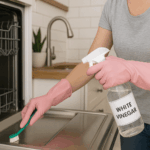
1. White Vinegar
A mild acid that breaks down grease, limescale, and soap scum. When used in a hot cycle, it cleans and deodorizes the interior naturally.
2. Baking Soda
A gentle abrasive and natural deodorizer. Sprinkling it on the dishwasher floor before a short cycle helps eliminate odors and scrub away residue.
3. Dish Soap
Perfect for hand-cleaning racks, filters, and utensil holders. Dish soap effectively cuts through grease and leaves surfaces clean without being harsh.
4. Microfiber Cloth
This soft, lint-free cloth is ideal for wiping down interior walls, door edges, gaskets, and the exterior without scratching surfaces.
5. Old Toothbrush
It is ideal for getting into tight corners, around the rubber door gasket, and in filter crevices. Its size and flexibility make it perfect for scrubbing small areas.
6. Soft-Bristle Scrub Brush
This tool is particularly beneficial for larger components such as racks and baskets. It provides the reach and power to remove dried-on food and buildup without damaging coatings.
7. Toothpick or Pin
Essential for unclogging the tiny holes in spray arms, which can become blocked by food particles or mineral deposits. It keeps water flowing freely during cycles.
Optional Products for Extra Cleaning Power
These items aren’t strictly necessary, but they can elevate your routine and provide extra care for specific cleaning needs:
1. Dishwasher-Safe Cleaning Table
Great for monthly use, these tablets dissolve tough grease, food residue, and limescale—even in places you can’t reach manually. They help keep your machine running smoothly between deep cleans.
2. Lemon Juice
A natural alternative that adds a fresh scent and enhances the cleaning power of vinegar. Its citric acid helps to break down scale buildup.
3. Stainless Steel Cleaner
If your dishwasher has a stainless steel exterior, this specialized cleaner keeps the surface smudge-free and polished. It helps prevent streaks and protects against daily wear.
Step-by-Step Guide: How to Clean Dishwasher
Maintaining the best possible condition for your dishwasher does not have to be complicated. This simple, step-by-step guide will quickly have your machine smelling great and looking clean.
Cleaning the Dishwasher’s Interior
Step 1: Turn Off Power & Empty the Dishwasher
Unplug the dishwasher or switch off the circuit breaker. Remove all dishes, utensil baskets, and racks for full access to the interior.
Step 2: Clean the Filter
Locate the filter at the bottom of the dishwasher, twist it out, and rinse it under warm, soapy water. Use an old toothbrush to scrub away grease and debris. Rinse thoroughly and let it dry before reinstalling.
Step 3: Clean Spray Arms
Remove the spray arms following your manual’s instructions. Clear out any food particles from the holes using a toothpick or pin. Rinse them under warm water and place them back once clean.
Step 4: Run a Vinegar Wash
Place a dishwasher-safe cup filled with white vinegar on the top rack. Run a full hot water cycle. The vinegar breaks down grease, soap scum, and mild limescale buildup.
Step 5: Deodorize with Baking Soda
After the vinegar cycle, sprinkle one cup of baking soda across the bottom of the tub. Run a short hot water cycle to freshen and eliminate odors.
Step 6: Inspect and Clean the Drain
Remove the bottom rack and check the drain area for trapped food or debris. Pour ½ cup of baking soda followed by ½ cup of vinegar down the drain. Let it sit for 15 minutes, then flush it with hot water.
Cleaning the Dishwasher’s Exterior
Step 1: Clean the Door Edges and Gasket
Dip a toothbrush in dish soap or vinegar and scrub the rubber gasket around the door, as well as the door edges. Wipe with a damp microfiber cloth to remove loosened grime and residue.
Step 2: Wipe Down the Control Panel
Use a soft, damp microfiber cloth and a mild cleaner to wipe the control panel gently, buttons, and handle. Avoid spraying cleaner directly on the electronics to prevent damage.
Step 3: Clean the Outer Surface
- Plastic or Painted Surface: Use a cloth dampened with soapy water or all-purpose cleaner to wipe down the door.
- Stainless Steel Surface: Apply a stainless steel cleaner or vinegar-water solution, then buff with a dry microfiber cloth for a streak-free finish.
Step 4: Polish
For stainless steel models, use a polishing cloth or a product made for appliances to keep the finish fingerprint-resistant and shiny.
Optional: Use a Dishwasher Cleaning Tablet
After letting the mixture fizz for about 15 minutes, flush the drain thoroughly with hot water. This final rinse helps to wash away any loosened debris, neutralizes lingering odors, and leaves the drain cleaner and more efficient.
Common Mistakes to Avoid
A. Using Bleach in a Stainless Steel Dishwasher
Bleach may seem like a powerful cleaner, but it can do more harm than good—especially in stainless steel dishwashers. It can corrode internal components, discolor surfaces, and weaken rubber seals. Always opt for dishwasher-safe cleaners specifically designed for the job.
B. Skipping the Filter Clean
Neglecting the filter is one of the most common causes of a smelly and underperforming dishwasher. Over time, food particles and grease collect in the filter, blocking water flow and spreading odors. Cleaning it regularly keeps your dishwasher running smoothly and your dishes coming out spotless.
C. Not Checking Spray Arms
If dishes come out dirty or with residue, the spray arms might be clogged or misaligned. Spray holes can get blocked by food debris or mineral deposits, preventing water from reaching every item. Regular inspection and cleaning ensure optimal water distribution throughout each cycle.
D. Running Only Cold Cycles
While cold water cycles are energy-efficient, they’re not suitable for thorough cleaning. Hot water is crucial for dissolving grease, breaking down detergent, and sanitizing your dishes. Make sure at least one full-hot cycle is part of your routine to maintain hygiene and performance.
E. Ignoring the Gasket and Drain
The rubber gasket around the door and the drain at the bottom of the tub often go unnoticed—but they’re magnets for mold, grime, and food scraps. Ignoring these areas can lead to unpleasant smells and even mechanical issues. A quick wipe-down and drain check every couple of weeks can make a big difference.
Maintenance Tips to Keep Your Dishwasher Cleaner & Longer
Regular maintenance not only improves cleaning performance but also helps prevent breakdowns and extends the life of your appliance. These detailed tips go beyond the basics to help you get the most out of your dishwasher.
A. Scrape, Don’t Rinse
Instead of fully rinsing dishes, just scrape off food chunks before loading. Modern dishwashers are designed to clean better when Sensors in modern dishwashers detect soil levels and adjust cycle settings to clean better when residue remains. Some residue is left, as sensors detect soil levels to adjust cycle settings accordingly.
B. Run Hot Water Before Starting
Before starting a wash cycle, turn on the hot water at your kitchen sink and let it run for a few seconds. This practice ensures the dishwasher begins its cycle with hot water, improving cleaning power from the very first spray.
C. Leave the Door Ajar After Each Cycle
After the dishwasher finishes a cycle, leave the door slightly open to let excess moisture escape. By doing this, you can speed up the drying process, avoid condensation, and lessen the likelihood that mold and mildew will grow inside.
D. Don’t Overload the Dishwasher
Resist the temptation to cram in every dish. Overloading can obstruct the spray arms, restrict water flow, and lead to poorly cleaned dishes. Make sure each item has enough space around it so water and detergent can circulate freely.
E. Use Rinse Aid
To combat limescale buildup, especially in hard water areas, use a rinse aid. It helps wash dishes and prevents mineral deposits on glassware and inside components. In areas with very hard water, consider using a water softener or dishwasher tablets formulated for hard water protection.
F. Consult Your User Manual
Dishwashers vary by model, and some have specific maintenance requirements. Check your manual for instructions on removing parts like filters or spray arms and for recommended cleaning products. Some brands also include internal diagnostics or cleaning reminders that you might not be aware of.
G. Address Common Problems Promptly
If you notice a leaky door seal, check for debris around the gasket or consider replacing the seal if it’s cracked. For slow drainage, inspect the filter and drain area for clogs before assuming there’s a plumbing issue. Addressing these small issues early can prevent larger repairs later.
Key Takeaways
Keeping your dishwasher clean is more than just routine maintenance. It is essential for ensuring efficiency, preventing breakdowns, and extending the life of the appliance. Regular tasks such as unplugging the machine, cleaning the racks, spray arms, and filter, and using natural cleaners like white vinegar and baking soda help remove grease, residue, and buildup. It is also important to pay attention to areas like the door gasket and the drain, where grime and bacteria often collect unnoticed.
Once your dishwasher is clean and you’re feeling a little bit motivated, it might be the perfect time to expand your efforts to the rest of the kitchen. To help you get started, check out our guide on where to start cleaning first for a clear, step-by-step approach.
Incorporating simple habits like leaving the door slightly open after each cycle, using a rinse aid to reduce water spots, and avoiding overcrowding can significantly improve your dishwasher’s performance.
And when a deeper clean is needed, Roochii Cleaning in Denver offers reliable, professional services to help keep your kitchen running smoothly. A little regular care, paired with expert support when needed, can make a big difference in the long-term performance of your dishwasher.
FAQ
Dishwasher Cleaning Questions
Running an empty cycle can help rinse out light debris, but it won’t effectively clean filters, spray arms, or break down limescale. For a true clean, you need to use a vinegar or cleaning tablet cycle and manually clean key components.
Yes, soaking removable parts like racks, utensil holders, and filters in warm soapy water or vinegar solutions helps loosen grease and grime. Just make sure they're completely dry before reinstalling.
If you notice cloudy glassware, standing water, persistent odors, or dishes coming out dirty despite normal cycles, it's likely time for a deep clean. These signs often point to clogged filters or spray arms and interior buildup.
Yes, hard water can cause mineral deposits on heating elements and spray arms, reducing efficiency and cleaning power. Using a rinse aid or citric acid cleaner monthly can help prevent buildup and maintain performance.
Leaving the door slightly ajar after a cycle helps air out the interior, preventing moisture buildup and mold growth. It’s a simple habit that makes a big difference in keeping your dishwasher fresh.
Natural options like vinegar, baking soda, and citric acid work well for routine cleaning and odor control. However, commercial cleaners are formulated to break down heavier grease and limescale, making them ideal for deep cleaning or monthly maintenance.