Does Apple Cider Vinegar Kill Mold? Here’s What You Need to Know

Can Apple Cider Vinegar Really Get Rid of Mold?
You don’t have to be the mold version of the Ghostbusters to kill mold. The secret weapon might just be lying in your pantry: apple cider vinegar.
It’s more than just a salad dressing. Apple cider vinegar has been praised for its natural cleaning abilities. Maybe it’s just what you need to rid your home of mold.
Gone are the days of using bleach or ammonia all the time, which may pose risks for you and your home. Now you might have a mold-free home au naturel.
But will apple cider vinegar kill mold and live up to the hype? In this guide, we’ll break down everything you need to know about using apple cider vinegar for mold removal.
Table of Contents
- What Is Apple Cider Vinegar?
- Apple Cider Vinegar vs. White Vinegar for Mold Removal
- Does Apple Cider Vinegar Kill Mold?
- How To Use Apple Cider Vinegar To Remove Mold
- Safety Tips for Using Apple Cider Vinegar on Mold
- Tips for Preventing Mold Growth in Your Home
- Other Mold Removal Methods (When ACV Isn’t Enough)
Jovany Explains if Apple Cider Vinegar Kills Mold:
What Is Apple Cider Vinegar?
Apple cider vinegar (ACV) is a fermented liquid that comes from crushed winter and fall varieties of apples. According to an article by Luke LaBorde, Ph.D., a food science expert, summer and green apples do not have enough sugar to be converted into alcohol in the fermentation process.
ACV is fermented twice. Once, to convert the crushed apple’s juices to alcohol using yeast. Twice, to disintegrate the alcohol using acetic acid bacteria so it yields vinegar. Acetic acid gives ACV its strong smell and antimicrobial properties.
Although ACV is mostly used as a salad dressing, it’s also known for its health benefits and household uses. Thanks to its natural acidity and anti-fungal properties, many people use it as an alternative to chemical cleaners, especially for removing mold and mildew.
Apple Cider Vinegar vs. White Vinegar for Mold Removal
When it comes to mold removal, both apple cider vinegar and white vinegar can be effective. This is because acetic acid is the primary component of vinegar, and acetic acid has anti-fungal properties.
Acetic acid is able to penetrate fungal cells and then lower its internal pH. According to an article from the Sichuan Agricultural University College of Food Science, acetic acid has a low pKa, a value that determines an acid’s strength, which enables it to stop fungi from growing.
Although both types of vinegar are okay for mold removal, taking note of their acetic acid concentration and other properties will help you figure out which one you can use for specific types of molds.
Here are the key differences:
-
Acidity
-
White Vinegar:
According to a study published in the National Library of Medicine, white distilled vinegar usually contains 4% to 7% acetic acid. A higher concentration of acetic acid helps break down mold spores and prevents further growth. -
Apple Cider Vinegar:
On the other hand, cider vinegar, including apple cider, contains 5% to 6% acetic acid. Although it is also high, white vinegar generally has a stronger acidity.
-
-
Composition
-
White Vinegar:
White vinegar is more refined. It’s made up mostly of just acetic acid and water. Its purity makes it an effective mold remover without additional residues. -
Apple Cider Vinegar:
Other than acetic acid, ACV has natural sugars, vitamins, and minerals that come from the apples. While these are beneficial for other applications, it makes ACV less effective for mold removal on surfaces where organic residues might linger, like wood and fabric.
-
-
Smell
-
White Vinegar:
White vinegar has a stronger and sharper odor, but it dissolves quickly after application. -
Apple Cider Vinegar:
ACV has a milder and fruity scent because of the organic compounds it has. Some people find it more appealing than white vinegar, but it leaves behind a lingering smell for longer.
-
-
Application
-
White Vinegar:
White vinegar is best used for non-porous surfaces like bathroom tiles, kitchen counters, and walls. The high acidity concentration of white vinegar may cause discoloration on surfaces like wood and marble. -
Apple Cider Vinegar:
It’s best used for porous surfaces like wood and drywall, but it may not be as effective as white vinegar and it can leave behind residue, so it’s important to rinse it properly.
-
While both white vinegar and apple cider vinegar are effective in killing mold, the higher acidity level of white vinegar makes it more powerful against mold. ACV may still work for mold issues but may not be as effective for long-term prevention.
Does Apple Cider Vinegar Kill Mold?
The simple answer is yes, apple cider vinegar can kill mold. In a University of Adelaide study, they found that apple cider vinegar’s 4-4.2% acetic acid was effective in removing Penicillium chrysogenum, a common household mold. However, the same study pointed out that it wasn’t effective against Aspergillus fumigatus, which is another common household mold. So while ACV is a good alternative for treating mold issues, it isn’t effective against all types. You may still do better with commercial mold cleaners that contain biocidal agents like ammonia.
Apple cider vinegar is most effective for:
- Surface mold on porous and non-porous materials because apple cider cannot reach mold roots
- Preventing mold growth for short periods
- Light mold removal in bathrooms and kitchens
However, ACV may not be effective for:
- Heavy black mold infestations
- Deep-rooted mold in porous materials like wood, drywall, and carpets
- Mold in HVAC systems or air ducts because apple cider vinegar’s effectivity is only observed in direct applications and doesn’t apply to airborne mold spores.
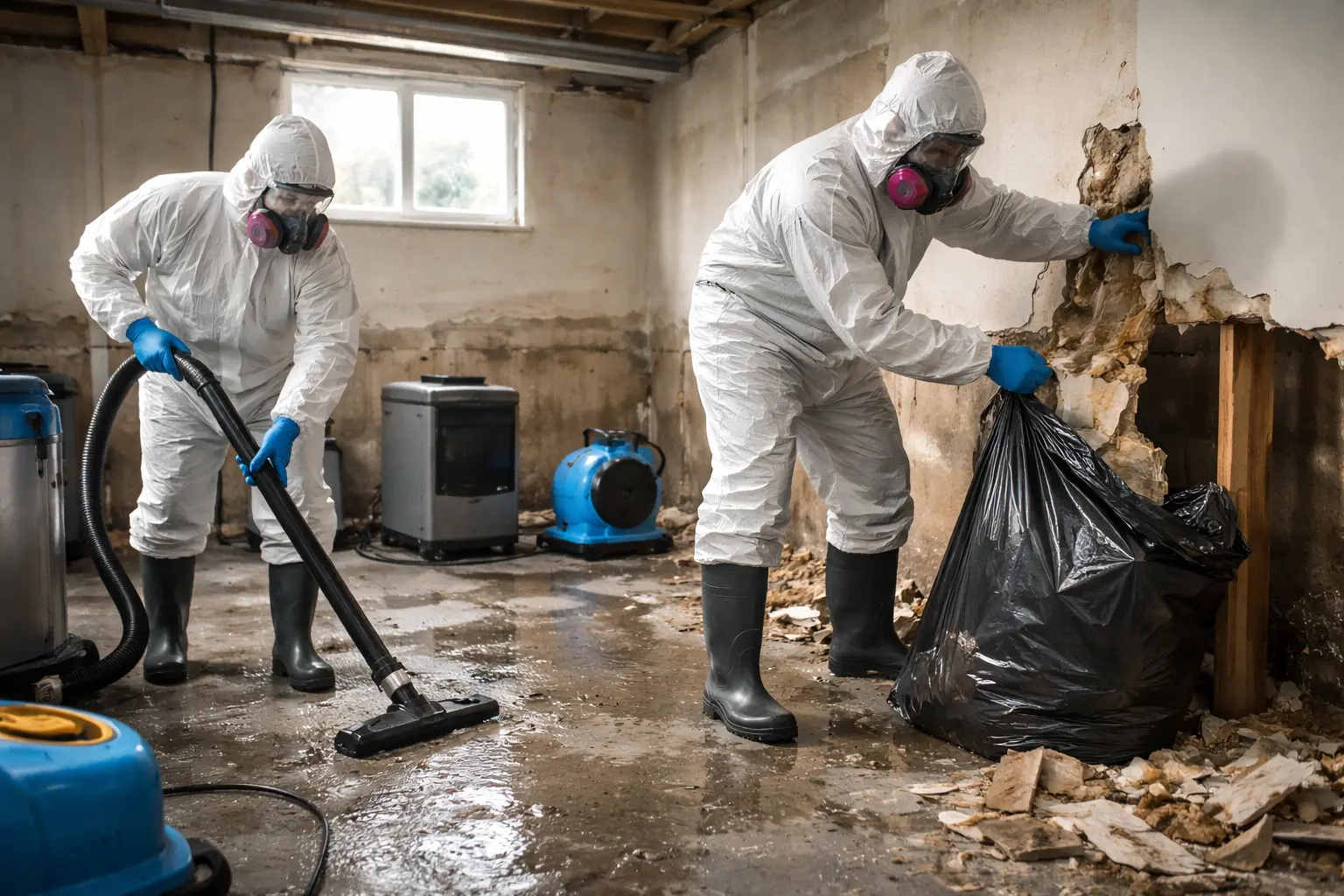
For serious mold problems, a professional mold removal or stronger treatment may be needed. At Roochii Cleaning, we focus and address hard-to-reach areas, making sure that mold is removed and prevented from returning. Our team uses safe, science-backed cleaning methods that effectively target mold spores.
How To Use Apple Cider Vinegar To Remove Mold
If you’re looking to eliminate some light mold growing in your home, apple cider vinegar can be a natural and effective way to do so. But there is a right way to use it to ensure the mold is fully removed and doesn’t return. Simply spraying ACV on mold isn’t enough.
If you want to use apple cider vinegar for mold removal, follow these steps for the most efficiency:
1. Prepare Your Materials and the Area
Before you begin, it’s important to keep yourself safe. When disturbed, mold spores can become airborne. In fact, research found that even mild disturbances can cause mold spores to scatter in the air in less than a second.
To lessen your mold exposure, open windows for ventilation. You should also wear gloves and a mask to avoid inhaling the mold spores. Although it won’t be applicable if you’re just using apple cider to treat mild mold, wearing protective eyewear may be necessary for larger mold problems.
Once you’re protected, make sure you have everything you need before you start:
-
Raw, unfiltered apple cider vinegar
Go for the apple cider vinegar with the highest acetic acid concentration that you can find. The reason why you should not dilute or filter your apple cider is to ensure that the mold is treated with as much acetic acid as possible. The vinegar concentration to kill mold matters, as stronger acidity works more effectively. -
Spray bottle
Spraying the mold will ensure even application on the mold. -
Scrubbing brush or sponge
Some mold will not go away on their own, so you need a tool to help you loosen and remove them. -
Clean, dry cloth or paper towels
You will need it to wipe away the vinegar and mold residue.
2. Apply the Apple Cider Vinegar
Pour the undiluted apple cider vinegar into the bottle and spray it directly on the area with mold. Make sure to saturate the area completely; the more acetic acid that comes into contact with the mold, the better. Saturating the moldy surface allows the ACV to penetrate and break down mold spores.
How long does it take vinegar to kill mold? It’s best to let it sit for at least an hour to expose the mold to an acidic environment for a long time. Studies show that mold grows in environments with a pH level of 5 or 6, but anything below that will stop mold from spreading. Apple cider vinegar typically has a pH of 2.5 to 3.0, making it highly acidic and effective at stopping mold growth.
3. Scrub the Mold Away
After the vinegar has had the time to work, use a scrubbing brush or sponge to remove the mold. Depending on the surface you’re cleaning, you’ll need to choose the right tool so you can avoid any damage to the surface.If you’re working with porous surfaces like wood or drywall, using a sponge or soft brush can remove the mold without doing any damage.
If you’re working with non-porous surfaces like tiles or countertops, you can opt for a firm scrubbing brush to that you can remove the mold more effectively.
4. Wipe and Dry
Research from Kansas State University specified that environments with over 70% humidity is the ideal condition for mold proliferation. This is why it’s so important to keep surfaces dry after mold removal.
Use a clean cloth or paper towel to wipe away any remaining mold and vinegar residue. If the surface remains moist after you clean it, you just cleaned it for nothing because mold will just quickly return.
5. Repeat If Needed
If any mold remains after the first cleaning, repeat the process. Some tougher mold stains may require two or three applications until they go away completely.
Safety Tips for Using Apple Cider Vinegar on Mold
For the most part, you wouldn’t have to worry about using ACV when cleaning because it’s natural and safe. But like any cleaning solution, there are still safety precautions to follow:
- Use undiluted vinegar for maximum efficiency.
- Never mix vinegar with bleach. The sodium hypochlorite in bleach reacts with the acetic acid in vinegar which releases chlorine gas. Exposure to chlorine gas, no matter how minimal, can cause respiratory issues.
- Always ventilate the room while cleaning mold.
- Test on a small area first to make sure that it won’t cause damage or discoloration.
- Wear gloves and a mask to protect yourself from mold spores.
Tips for Preventing Mold Growth in Your Home
Even after successfully removing mold with apple cider vinegar, prevention is key to keeping it from coming back. After all, it’s easier to prevent it than keep dealing with it.
Here’s how to keep your home mold-free:
- Control Humidity: Keep indoor humidity below 50%. You can use dehumidifiers if needed.
- Improve Ventilation: Open windows and use exhaust fans in kitchens and bathrooms.
- Fix Leaks Promptly: Water leaks are usually unseen suspects of allowing mold to grow in your home. Fix any leaks in roofs, pipes, or walls to prevent moisture buildup.
- Clean Regularly: Wipe down damp and moist areas with vinegar.
- Use Mold-Resistant Materials: If you’re remodeling your home, choose mold-resistant paint, drywall, and flooring for high-moisture areas.
Other Mold Removal Methods (When ACV Isn’t Enough)
Because apple cider vinegar isn’t effective against all types of molds, you may need other and stronger options. If you’re experiencing heavy mold growth, try these alternatives:
- White Vinegar: As mentioned earlier, white vinegar has 4% to 7% acetic acid, making it slightly stronger and more effective than apple cider vinegar.
- Hydrogen Peroxide: A study from the Nofima-Norwegian Institute of Food showed that hydrogen peroxide is effective in reducing mold after 2 to 4 hours of exposure. This is best used for hard, non-porous surfaces.
- Tea Tree Oil: Tea tree oil has been confirmed to exhibit anti-fungal properties that are effective against common mold affecting fruits. But studies also prove that it disrupts mold’s membrane, which makes it effective in breaking down small and light molds.
- Commercial Mold Cleaners: If any of these natural remedies aren’t enough, you may have to go for commercial mold cleaners with fungicides and biocides, which are specifically made to kill and prevent mold.
For large or toxic mold problems, call a professional mold removal or cleaning service like Roochii Cleaning to ensure safety.
Final Thoughts
Apple cider vinegar is a good natural and affordable solution for light mold problems, but it isn’t the best option for heavy mold. It works best for light, surface mold on non-porous materials. If you have a serious mold issue at home, stronger treatments or professional removal may be necessary.
FAQ
Apple Cider Vinegar Questions
ACV is safe for most non-porous surfaces like glass, tiles, and countertops. However, avoid using it on natural stone (like marble and granite), as the acidity can cause damage. If you're unsure, you can do a test on a small area of the surface.
For best results, let undiluted apple cider vinegar sit on mold for at least one hour before scrubbing.
Yes, mold can return if moisture levels remain high. To prevent regrowth, keep the area dry and well-ventilated.
ACV may help with light black mold, but for deep-rooted infestations, stronger treatments like hydrogen peroxide or professional services are needed.
To make the cleaning process efficient, remove clutter and personal items from floors, countertops, and furniture. Ensure access to all areas that need cleaning and communicate any specific concerns in advance. This helps the cleaning team work efficiently and focus on key areas.