Skip to content

How to Get Detergent Stains Out of Clothes

Removing Detergent Stains Made Easy
If you’re wondering how to get detergent stains out of clothes, the solution is surprisingly simple: rinse with warm water, treat it with a vinegar or baking soda solution to break down the buildup, then rewash like nothing ever happened. There’s a little variety to this depending on your needs.
Detergent stains, or those ironic little reminders that cleaning can sometimes make things dirtier, usually pop up when too much soap is used, it’s not fully dissolved, or your washer forgets its one job: rinsing.
Thankfully, fixing them is far less dramatic than discovering them.
We at Roochii Cleaning understand that without knowing the science behind how these stains form, you could be stuck in an endless cycle of re-washing and disappointment.
In this guide, you’ll learn the following:
What Are Detergent Stains and Why Do They Happen?
Detergent stains may look like dirt, but they’re actually caused by leftover soap.
Detergent stains are marks or streaks left on clothing after washing, often appearing as blue, white, or greasy-looking patches.
They occur when laundry detergent doesn’t fully dissolve or rinse out during the wash cycle. This can happen for a few reasons: using too much detergent, adding detergent directly onto dry clothes, washing in very cold water, or having a washer that isn’t rinsing effectively.
While they may look stubborn, detergent stains are usually just soap residue and that means they’re easy to remove once you know the right steps.
Why Detergent Stains Happen
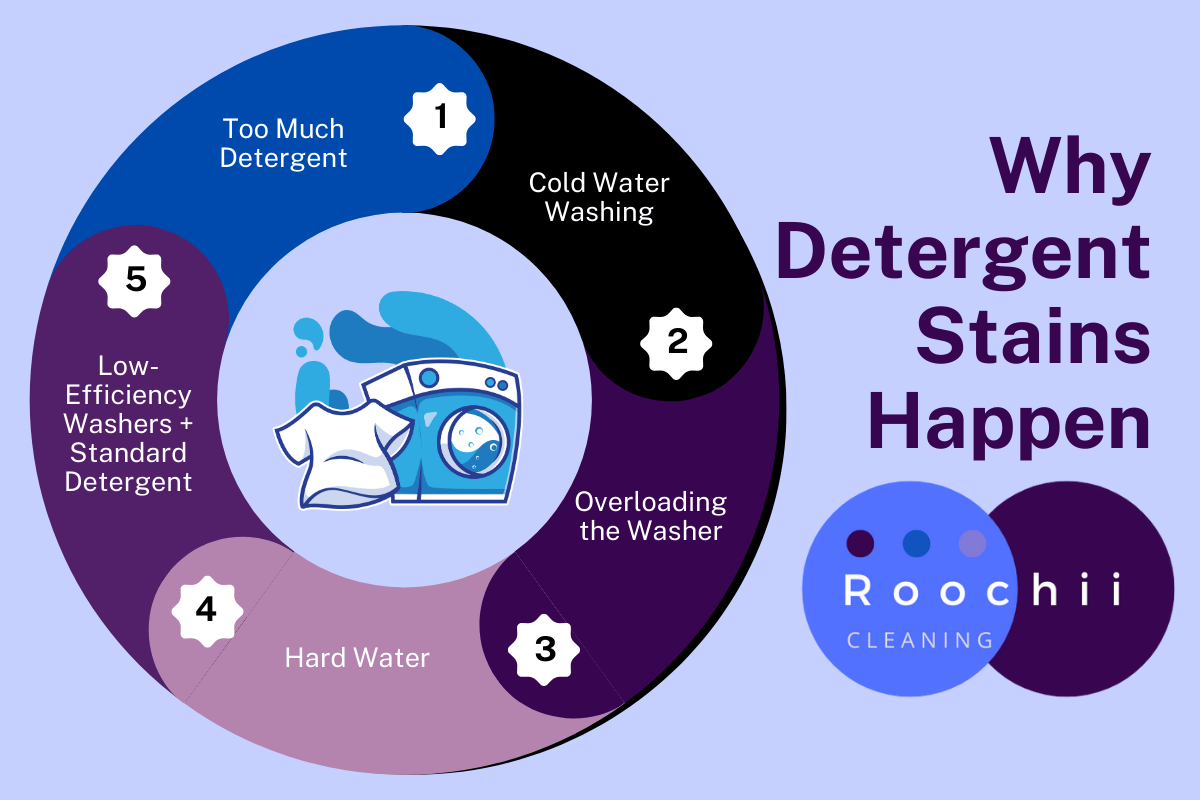
1. Using Too Much Laundry Detergent Causes Residue Stains
Using too much detergent doesn’t make clothes cleaner. Instead, it can leave a sticky film on your clothes.
Too many soap suds can stop the washer from rinsing everything out. Studies show that using extra detergent leaves more soap behind, which can cause those stubborn stains.
2. Cold Water Washing and Detergent Residue Problems
Powdered detergents don’t always dissolve well in cold water, which can leave behind soap residue on your clothes. This is a common issue with energy-saving or cold wash settings.
Research shows that in cooler water, detergents don’t work as well because key cleaning ingredients don’t dissolve properly. This makes it easier for residue to build up.
3. Overloading the Washing Machine Leads to Detergent Build-Up
Overloading your washing machine can prevent clothes from getting properly cleaned.
When the drum is too full, water and detergent can’t move freely, especially in thick or layered fabrics. This makes it harder for detergent to rinse out, leaving residue behind. Research has shown that improper loading disrupts detergent dispersion and increases the risk of buildup, particularly in heavy or multi-layered garments.
To avoid these issues, ensure you’re not overloading your machine and that clothes have enough room to move freely during the wash cycle.
4. Hard Water Can Cause Laundry Detergent Stains
Hard water contains minerals like calcium and magnesium that can interfere with laundry detergent. These minerals react with detergent, making it less effective and leaving behind a chalky residue on clothes. This residue can make fabrics feel stiff and look dull.
5. Using Standard Detergent in High-Efficiency Washers Causes Soap Film
High-efficiency (HE) washers use less water, so they need special low-sudsing detergents.
Using regular detergent can create too many suds, which the washer can’t rinse away properly. This can leave detergent residue on your clothes and even cause the washer to overflow. Research recommends using only HE detergent in HE washers to avoid these issues.
How to Prevent Detergent Stains
Understanding the science behind their formation and implementing preventive measures can help maintain the cleanliness and longevity of your garments.
Below are evidence-based strategies to prevent detergent stains, supported by scientific research.

1. Measure Your Detergent
Using too much detergent doesn’t mean cleaner clothes. It can also cause residue buildup and even skin irritation. A study in the Journal of Allergy and Clinical Immunology found that detergent residues can affect lung cell barriers, showing possible health risks from overuse.
Plus, Consumer Reports notes that many people use too much detergent because measuring guides aren’t clear, which wastes detergent and leaves stains on clothes. To avoid this, always measure detergent carefully following the package instructions.
2. Switch to Liquid or Dissolve Powder First
Powder detergent often doesn’t dissolve well in cold water, leaving white or chalky stains on clothes or in the washer.
Research shows powdered detergents work less effectively in cold water because they don’t break down fully. To avoid residue, try dissolving the powder in hot water before adding it to your laundry.
3. Don’t Overload Your Washer
Clothes need space to move so detergent rinses away properly. Overloading the washer limits this movement, leaving detergent residue on fabrics.
A study in the Textile Research Journal found that good fabric movement improves cleaning and rinsing, while overloading reduces it. Experts recommend filling the washer no more than 75% full to let clothes tumble freely and rinse well.
4. Clean Your Detergent Drawer
Detergent residue can build up in washing machine dispensers, causing stains and poor detergent flow. Research shows this buildup can also cause mold, bacteria, and odors that may transfer to your clothes.
Regularly cleaning the detergent drawer helps prevent these issues and keeps your laundry fresh and clean.
5. Soften Hard Water
Hard water has minerals like calcium and magnesium that react with detergents, leaving stiff fabrics and visible stains. Hard water makes detergents less effective, requiring up to 30% more detergent and causing more residue. Using a water softener or detergent designed for hard water helps improve cleaning and reduce these stains.
“As dry-cleaning professionals, detergent residue is one of the most common and most misunderstood causes of fabric discoloration and stiffness. We see firsthand how excess product and improper rinsing can bind to fibers and trap soil, ultimately dulling the garment’s finish. Understanding how to properly remove detergent buildup is essential because the right techniques can significantly extend the life, appearance, and comfort of clothing,” 24/7 Dry Cleaners said.
At Roochii Cleaning, we understand how annoying it can be to find detergent stains on your freshly washed clothes. These stubborn marks can be frustrating, especially when you’re unsure how to remove them.
That’s why we offer specialized cleaning services to help homes in Parker tackle this issue effectively. We can work on your home and laundry with a deep clean or regular maintenance.
Final Thoughts
Detergent stains can be frustrating, but they’re easy to fix and prevent. Knowing why detergent builds up and how to tackle it helps keep your clothes clean and fresh.
Simple habits like using the right amount of detergent, choosing the right water temperature, and treating stains with vinegar or baking soda make a big difference. Regularly cleaning your washing machine and using water softeners also helps reduce residue.
With these small steps, you can keep your clothes looking their best for longer.